Quick Navigation:
| | | |
Pressure, Winds, Storms, and Cyclones
1. Understanding Pressure
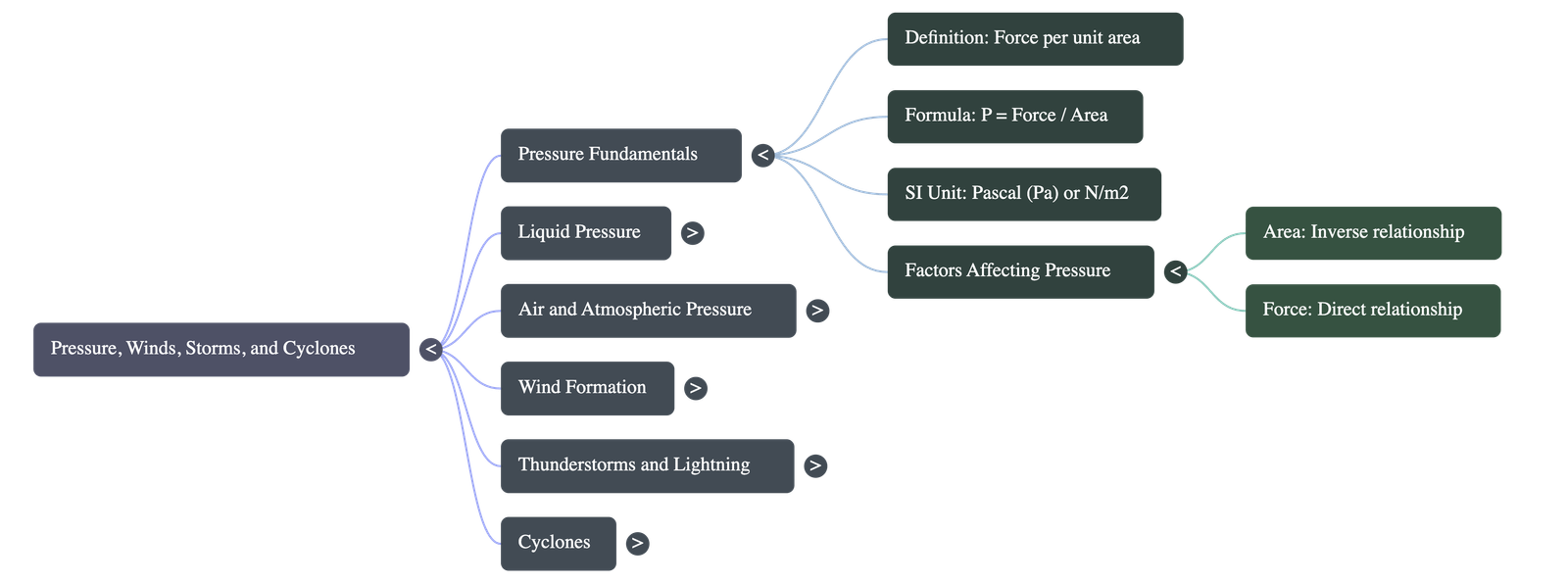
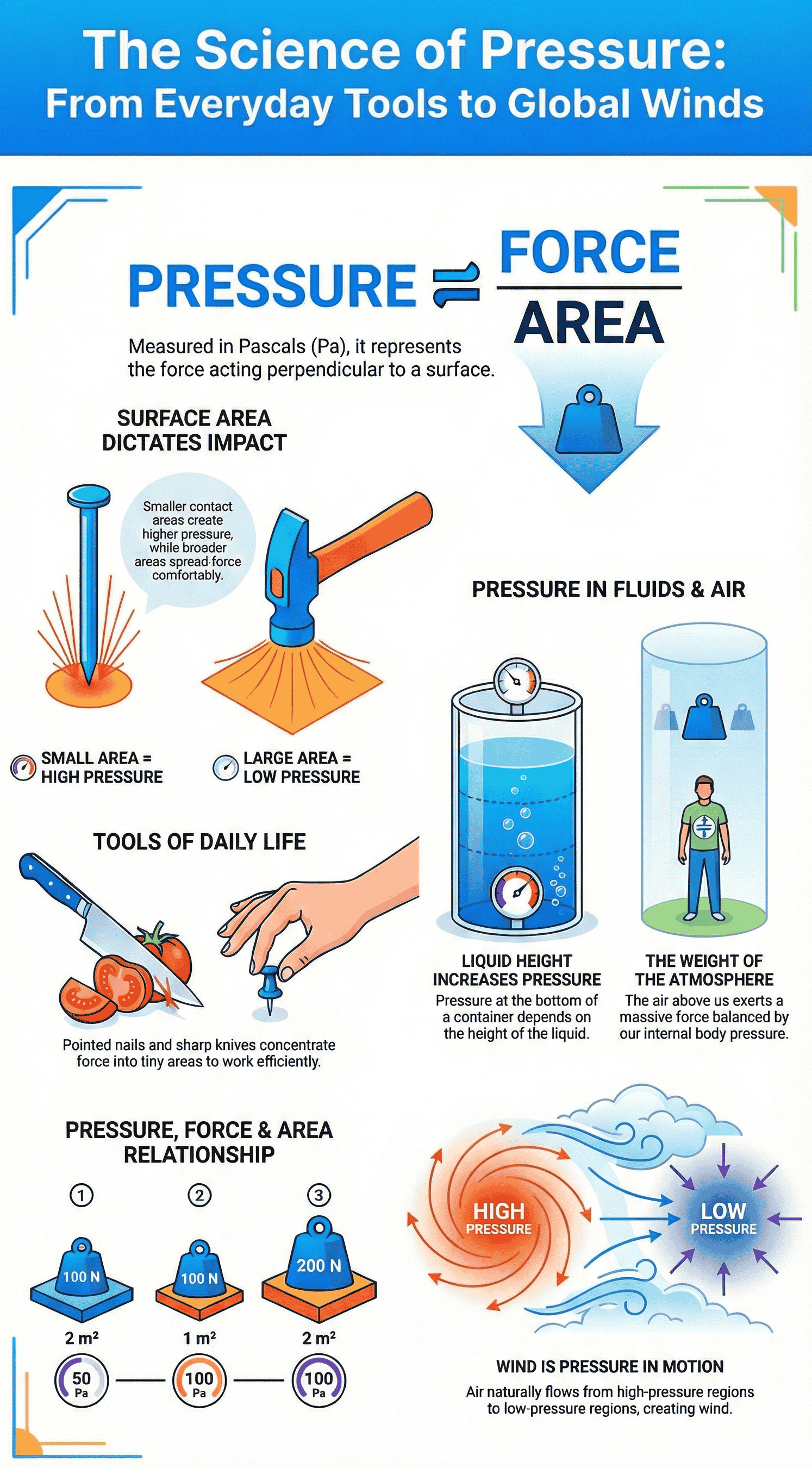
- Definition: Pressure is defined as the force exerted per unit area. The mathematical relationship is Pressure = Force / Area.
- Unit of Measurement: The SI unit of force is the newton, and area is square metres. Thus, the SI unit of pressure is newton/metre² (N/m²), which is also known as a pascal (Pa).
- Real-Life Applications:
- Bags with broader straps are more comfortable to carry because the weight is distributed over a larger area, reducing the pressure on the shoulders.
- Porters place a round piece of cloth on their heads to increase the area of contact, lowering the pressure from heavy loads.
- Conversely, a sharp knife or the pointed end of a nail decreases the area, thereby increasing the pressure to make cutting or piercing easier.
2. Pressure Exerted by Liquids and Gases
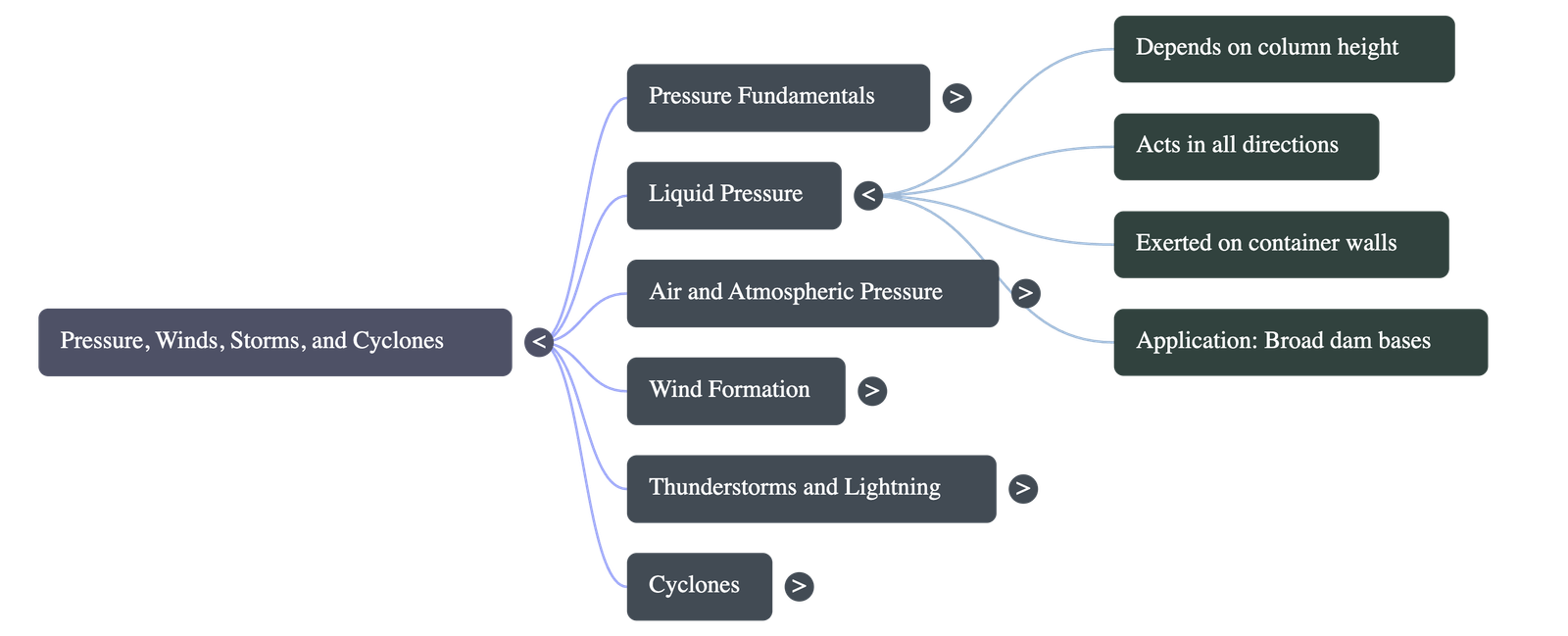
- Liquid Pressure and Depth: The pressure exerted by a liquid increases with the height of its column. This is why overhead water tanks are placed at great heights—to ensure a powerful stream of water in the taps below.
- Pressure in All Directions: Liquids and gases exert pressure not just at the bottom, but on the walls of their containers and in all directions.
- Structural Design: Dams are built with a much broader base than top to withstand the intense horizontal water pressure at greater depths.
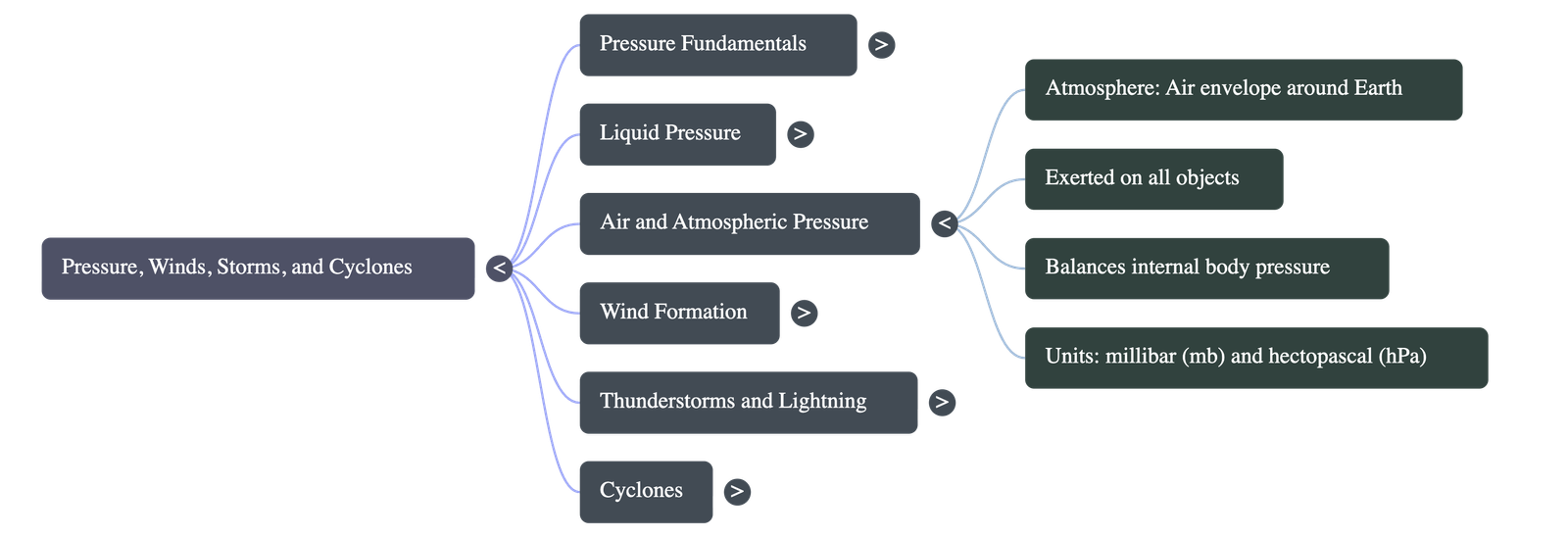
- Atmospheric Pressure: The envelope of air surrounding Earth is the atmosphere. The pressure exerted by this air is immense. For example, a rubber sucker sticks firmly to a smooth surface because the air pressure outside is much higher than the vacuum created inside.
- Human Body: We are not crushed by the heavy atmospheric pressure because the pressure inside our bodies (caused by moving fluids and gases) equals and balances the pressure exerted from the outside.
3. Formation of Wind
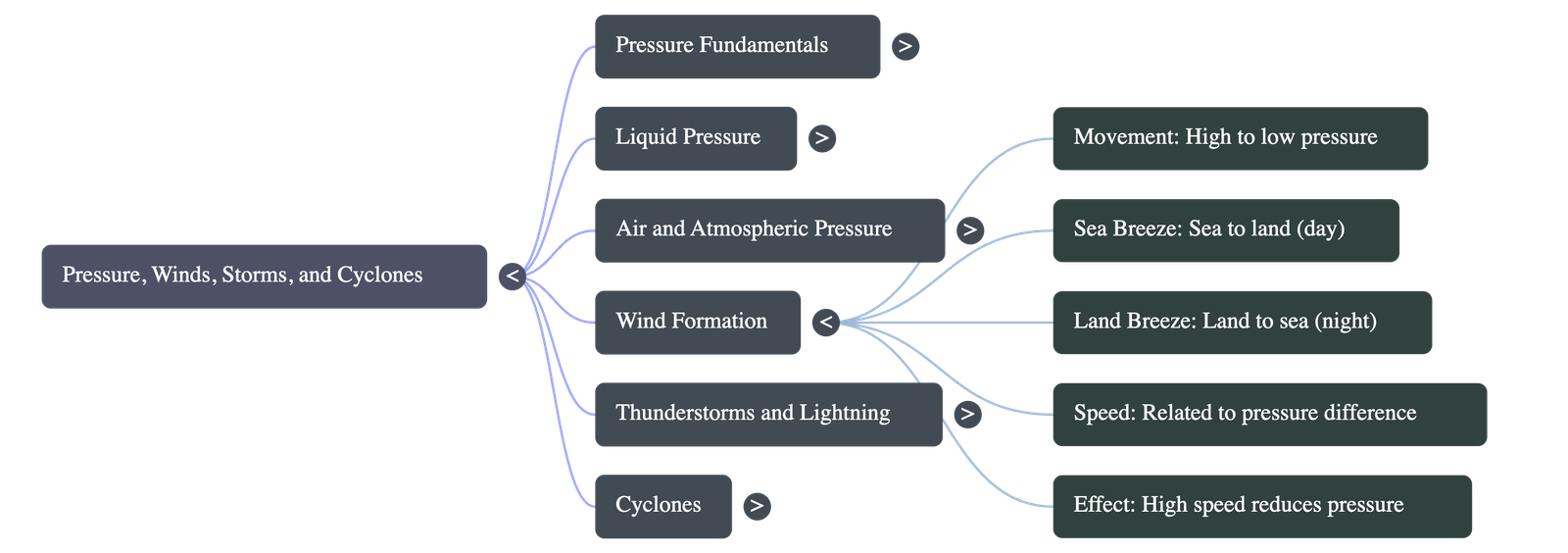
- Wind Movement: Air always moves from a region of high air pressure to a region of low air pressure. The greater the difference in pressure, the faster the air moves.
- Measurement: In meteorology, air pressure is practically measured in millibars (mb) or hectopascals (hPa).
- Temperature's Role: Heating creates wind. Warm air is lighter and rises, creating a low-pressure area. Cooler, heavier air from surrounding high-pressure areas rushes in to fill the space. This continuous cycle creates wind currents like sea and land breezes.
4. High-Speed Winds and Lowered Air Pressure
- The Principle: High-speed winds are accompanied by reduced air pressure.
- Danger to Structures: When high-speed winds blow over the weak roof of a house, they create a low-pressure area above it. The higher air pressure inside the house pushes upward, which can blow the roof completely off.
- Safety Precaution: Keeping doors and windows open during a storm helps equalize the pressure between the inside and outside, preventing the roof from blowing away.
5. Storms, Thunderstorms, and Lightning
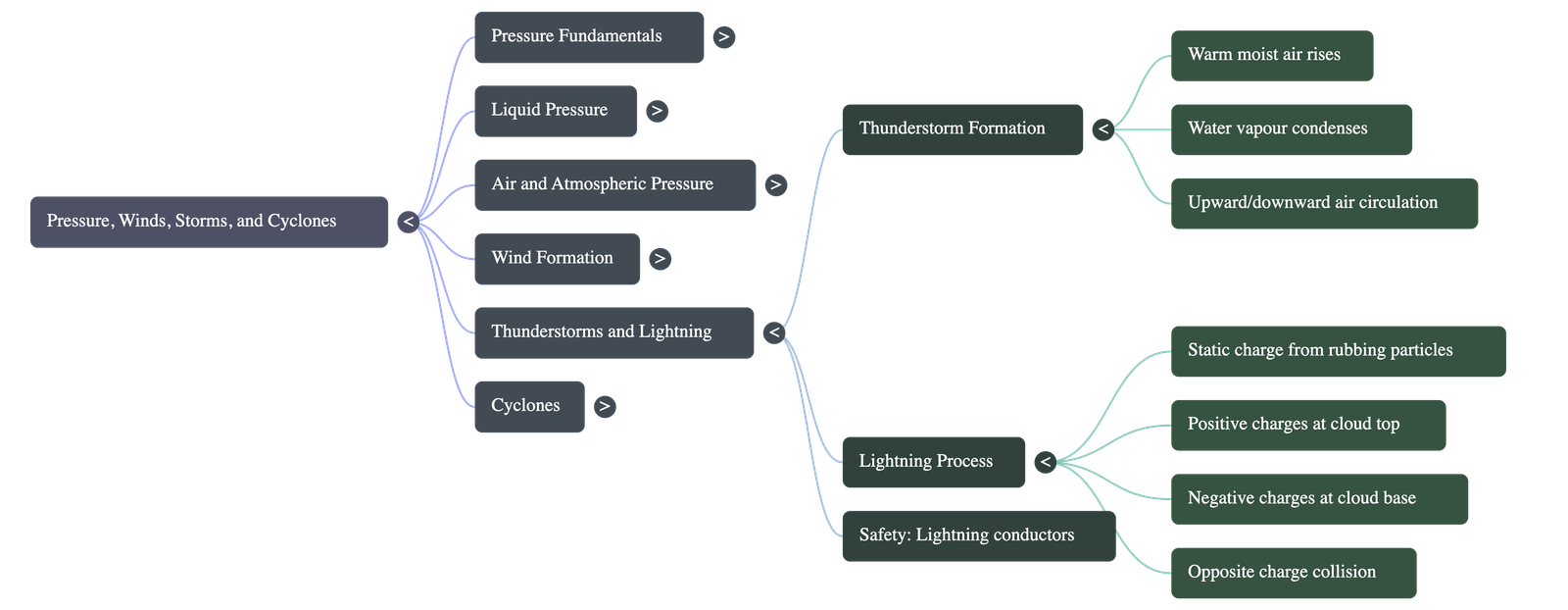
- Storm Formation: Warm, moist air rises and cools. The moisture condenses into water droplets to form clouds, which eventually fall as rain, hail, or snow. A storm is characterized by strong winds accompanied by heavy rain.
- Development of Lightning: Inside storm clouds, strong vertical winds cause ice particles and water droplets to rub against each other, building up static electricity. Lighter, positively charged ice particles gather at the top, while heavier, negatively charged water droplets collect at the bottom.
- Lightning Strike: The negative lower part of the cloud induces a positive charge on the ground. When the charge build-up is large enough, the insulating property of the air breaks down, and a sudden flow of charges creates a brilliant flash of light.
- Thunder: The lightning rapidly heats the surrounding air, causing it to violently expand. This rapid expansion produces the loud sound known as thunder.
- Lightning Safety:
- Avoid tall objects and do not use umbrellas with metallic rods.
- Find a low-lying open area and crouch down (minimizing ground contact). Do not lie flat.
- Get out of bodies of water immediately. Staying inside closed vehicles (like cars or buses) is safer.
- Lightning Conductors: Buildings are protected by a metallic rod installed from the top to deep inside the earth, providing a safe path for the electrical charge to travel into the ground.
6. Cyclones
- Formation Mechanism: Cyclones are massive storms that form over warm ocean waters. As moist air rises and condenses into rain, it releases heat. This heat warms the surrounding air, causing it to rise further and creating an intense low-pressure center.
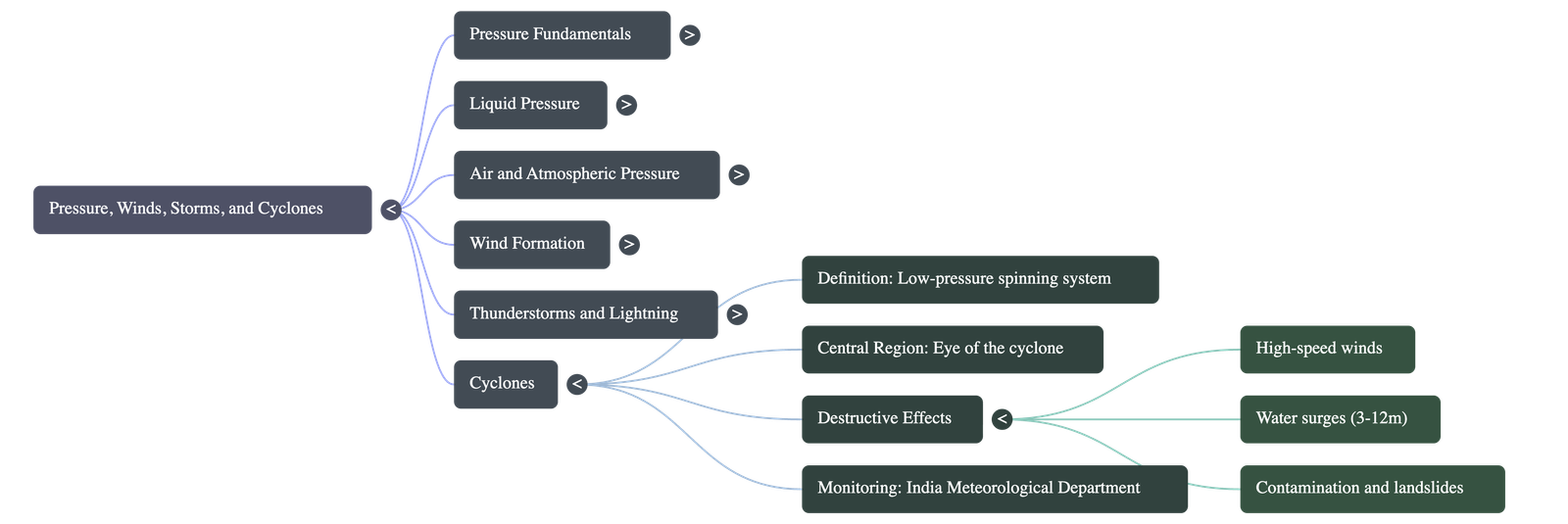
- Spinning System: Earth's rotation causes the rushing winds to spin circularly. This spinning weather system of clouds, heavy rain, and winds is a cyclone.
- The Eye: The calm, low-pressure center of a cyclone is called the "eye," where winds are calm, surrounded by extremely violent weather.
- Impact and Destruction:
- Cyclones push massive walls of ocean water (storm surges) toward the shore, flooding coastal areas.
- They cause severe heavy rainfall, triggering floods and landslides.
- Saltwater ruins soil fertility and contaminates drinking water. Trees fall, power lines are destroyed, and infrastructure is severely damaged.
- Protection Measures: The India Meteorological Department (IMD) uses satellites to track cyclones and issue alerts. Citizens in prone areas should keep emergency kits ready and relocate to designated cyclone shelters when warnings are issued.
Do checkout all questions & answers of this chapter.
Quick Navigation:
| | | |
1 / 1
Quick Navigation:
| | | |