Quick Navigation:
| | | |
Light: Mirrors and Lenses
1. Introduction to Spherical Mirrors
- While a plane mirror always forms an erect image of the exact same size as the object, curved or spherical mirrors behave differently.
- Spherical mirrors have curved reflecting surfaces and are shaped like a part of a hollow glass sphere. They are made by grinding and polishing flat glass into a curve, then adding a reflective coating.
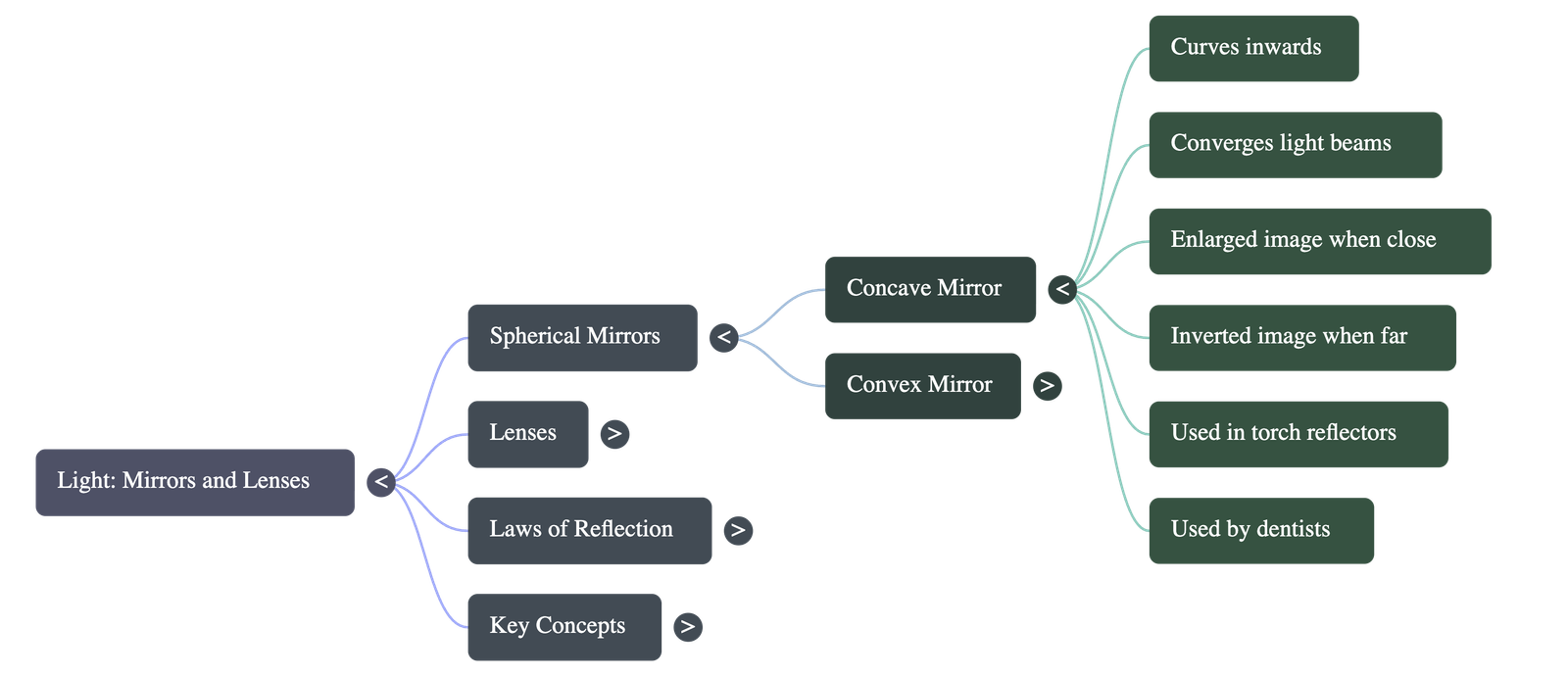
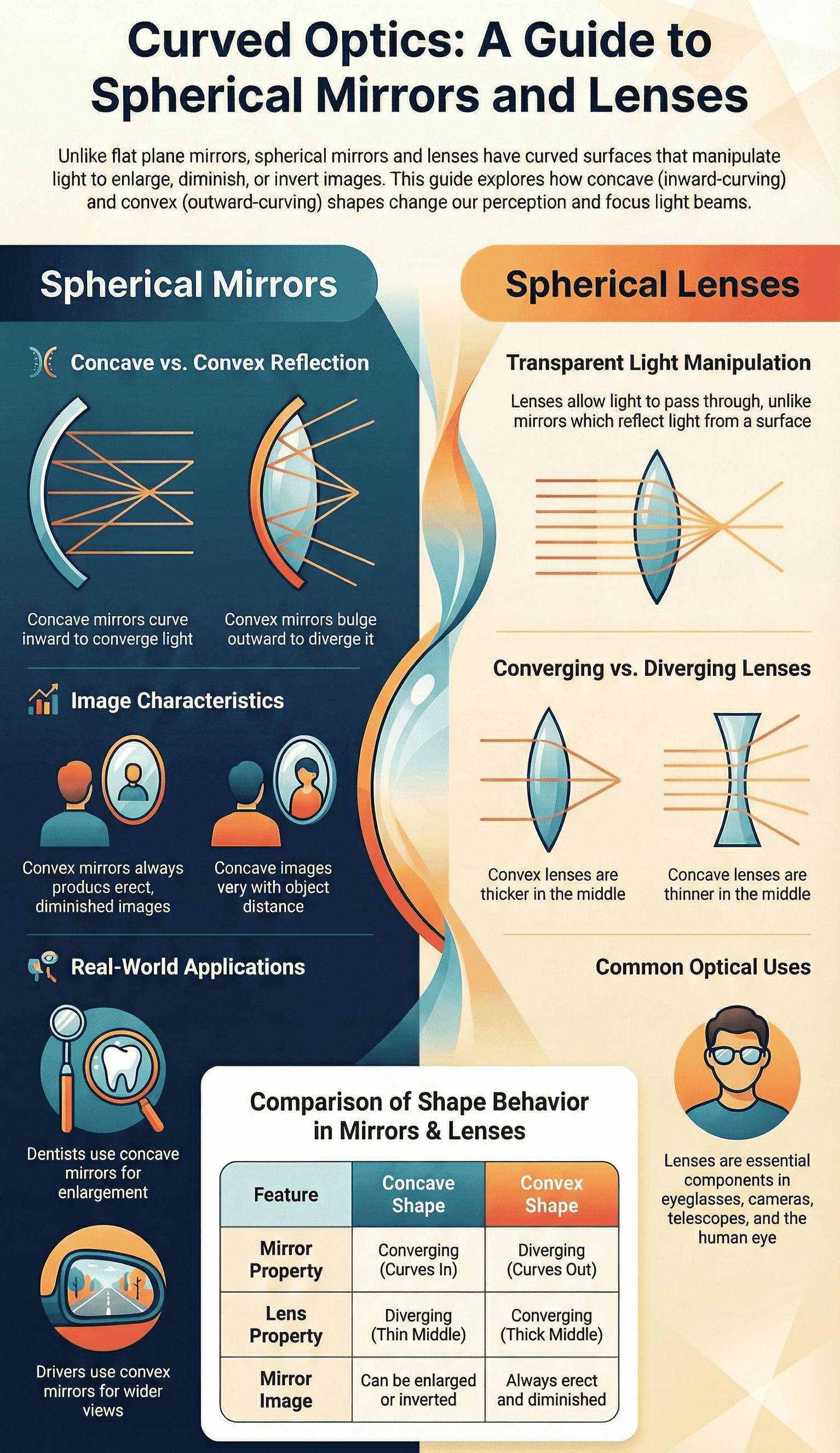
- Concave Mirror: A spherical mirror with a reflecting surface that curves inwards. Looking into the inner curve of a shiny spoon is a good example.
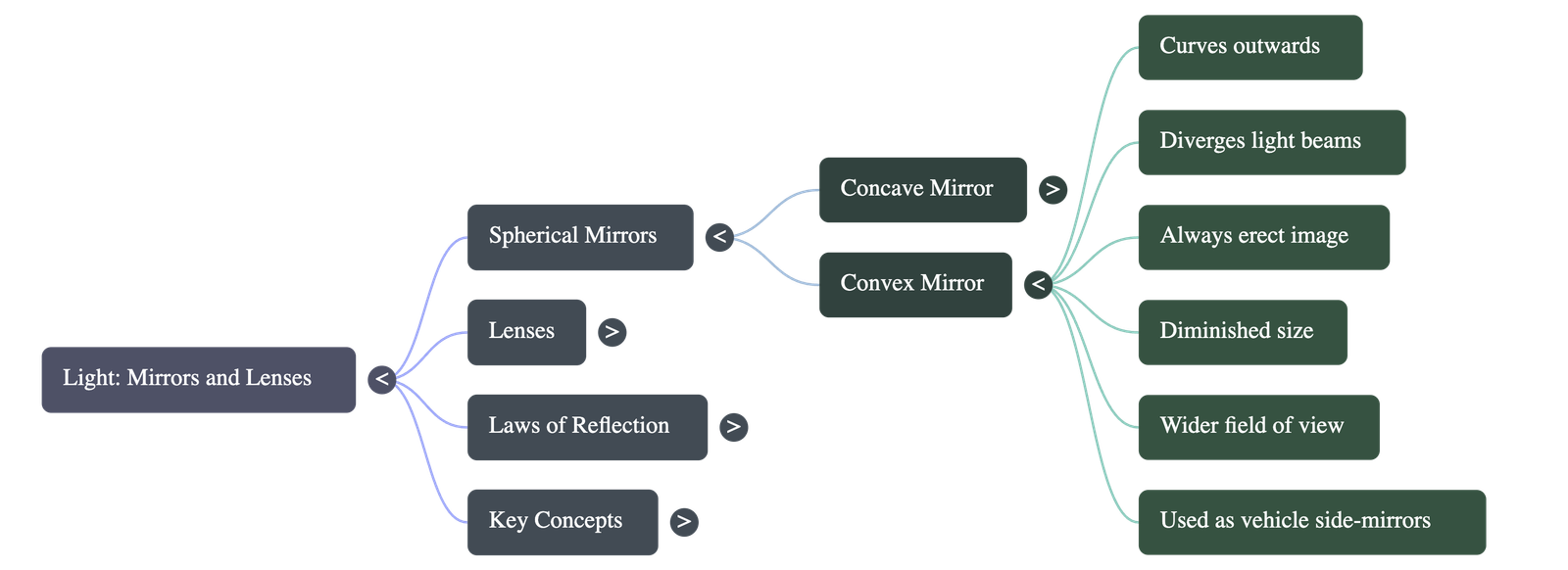
- Convex Mirror: A spherical mirror with a reflecting surface that curves outwards. Looking at the outer bulge of a shiny spoon represents this.
2. Characteristics of Images Formed by Mirrors
- Concave Mirrors: When an object is placed very close to the mirror, the image is erect and enlarged. As the object moves farther away, the image becomes inverted (upside down) and its size keeps getting smaller.
- Convex Mirrors: The image formed is always erect and diminished (smaller than the object). As the object moves farther away, the image size decreases slightly.
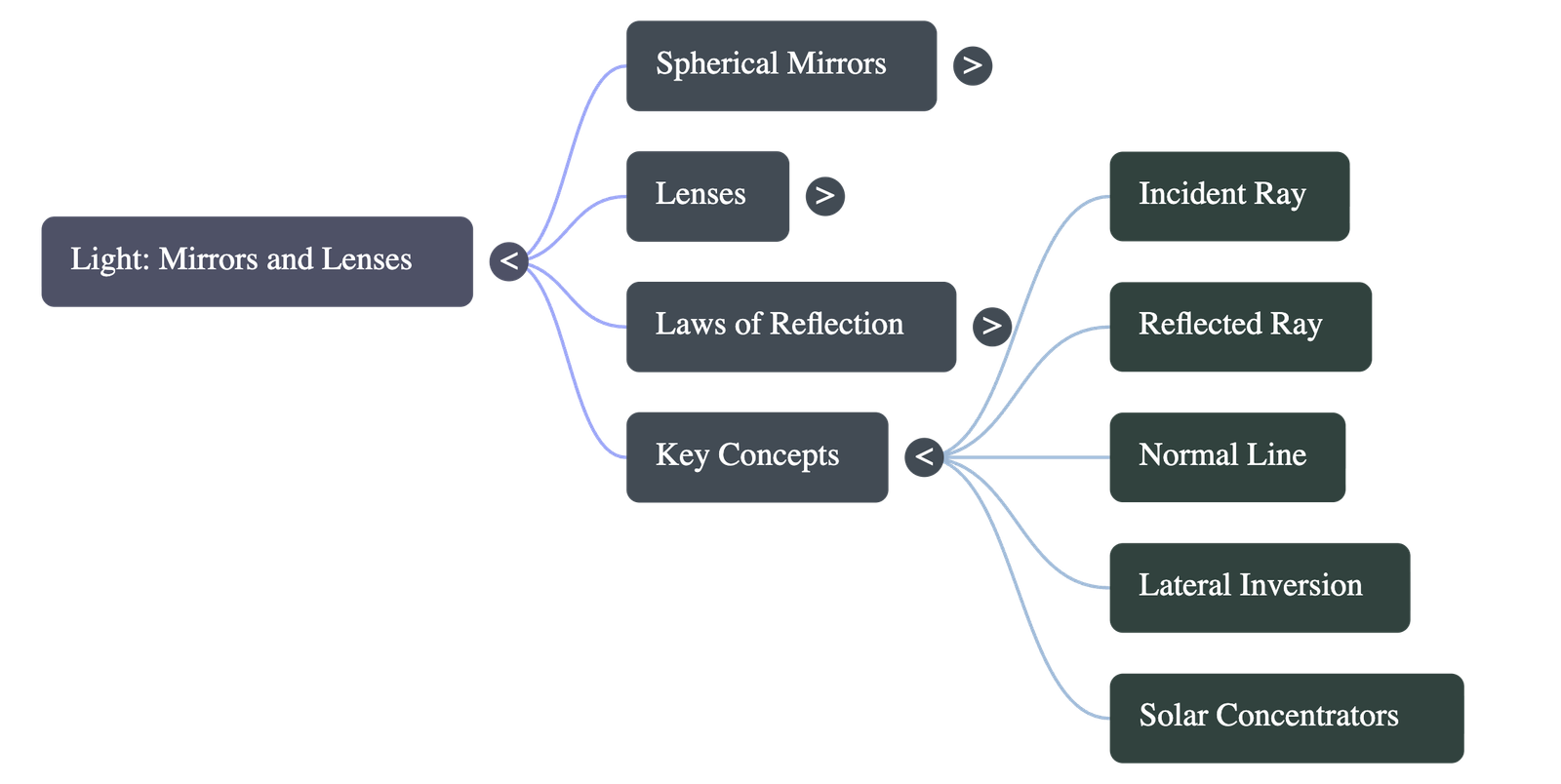
- Lateral Inversion: Like plane mirrors, both concave and convex mirrors display lateral inversion (left-to-right reversal) of the image.
3. Real-World Applications of Spherical Mirrors
- Uses of Concave Mirrors: They are used as reflectors in torches and vehicle headlights. Dentists use them to get an enlarged view of teeth, and they are also the main mirror used in modern reflecting telescopes.
- Uses of Convex Mirrors: Because they curve outwards and create smaller images, they provide a much wider viewing area. This makes them ideal for side-view mirrors on vehicles, safety mirrors at sharp road bends or intersections, and surveillance monitoring in large stores.
4. The Laws of Reflection
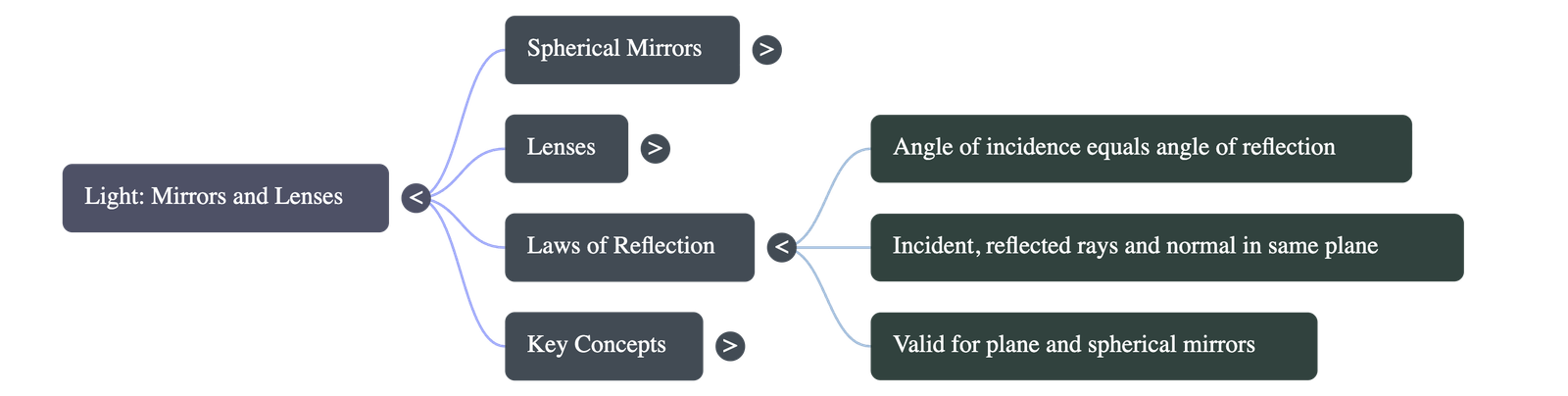
- These laws apply universally to all types of mirrors (plane, concave, and convex).
- Key Terms:
- Incident Ray: The light ray falling on the mirror.
- Reflected Ray: The light bouncing back from the mirror.
- Normal: An imaginary line drawn at a 90° angle to the mirror's surface exactly at the point where light hits it.
- First Law: The angle of incidence (the angle between the incident ray and the normal) is always equal to the angle of reflection (the angle between the reflected ray and the normal).
- Second Law: The incident ray, the normal at the point of incidence, and the reflected ray all lie on the exact same plane.
5. Converging and Diverging Beams
- When multiple parallel light beams hit a plane mirror, the reflected beams remain parallel to each other.
- Concave Mirrors (Converging): Parallel light beams falling on a concave mirror get closer together, converging into a concentrated point. This ability is used in solar concentrators and solar furnaces to generate extreme heat from sunlight.
- Convex Mirrors (Diverging): Parallel light beams falling on a convex mirror spread out, or diverge.
6. Lenses: Structure and Characteristics
- Unlike mirrors which reflect light, a lens is a transparent material (like glass or plastic) with curved surfaces that allows light to pass directly through it.
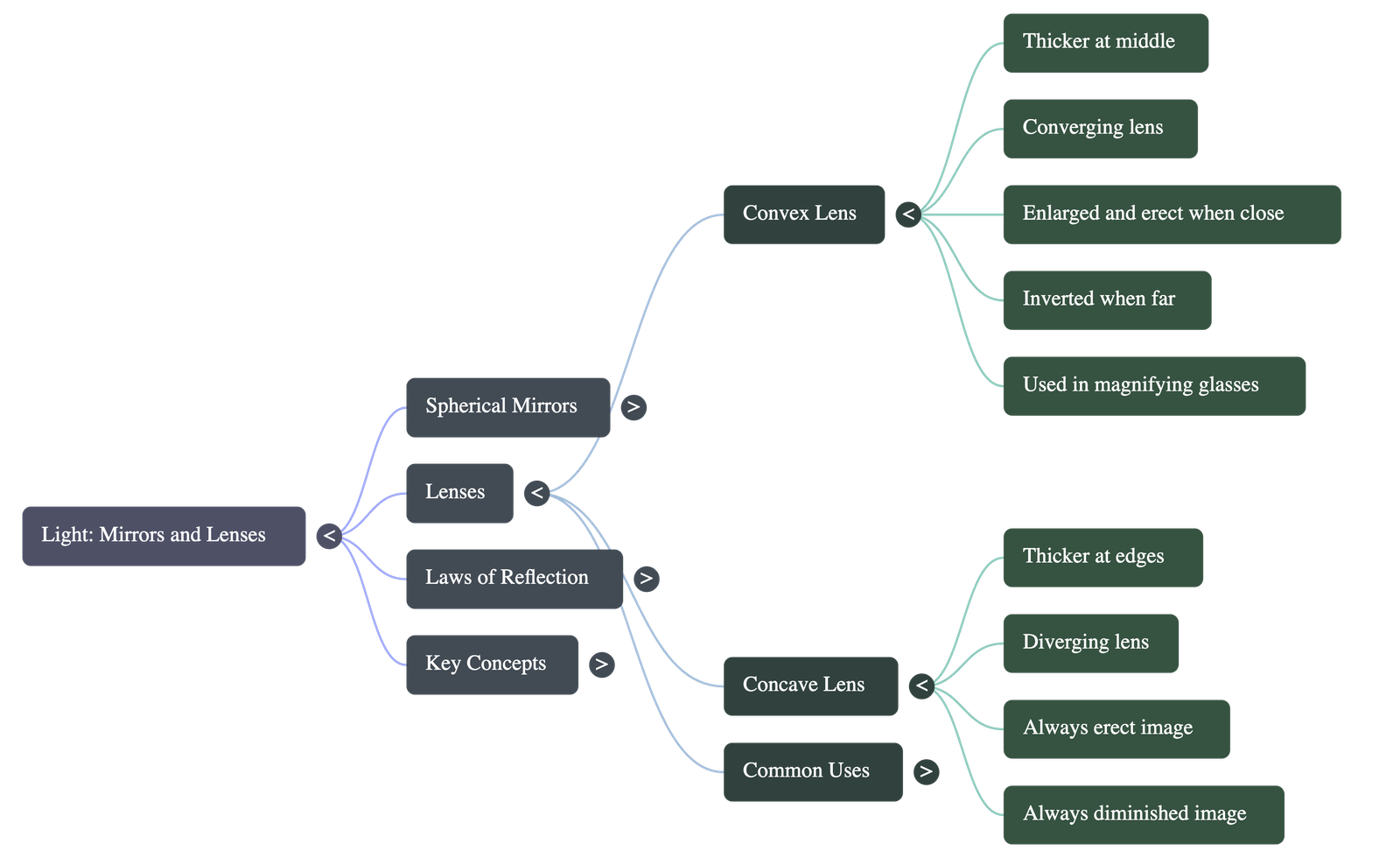
- Convex Lens (Converging Lens): It is thicker in the middle and thinner at the edges. It converges light passing through it. When an object is close, it forms an erect, enlarged image (acting like a magnifying glass). As the object moves farther, the image becomes inverted and its size decreases.
- Concave Lens (Diverging Lens): It is thicker at the edges and thinner in the middle. It diverges light passing through it. A concave lens always forms an erect and diminished image, regardless of the object's distance.
7. Practical Uses of Lenses
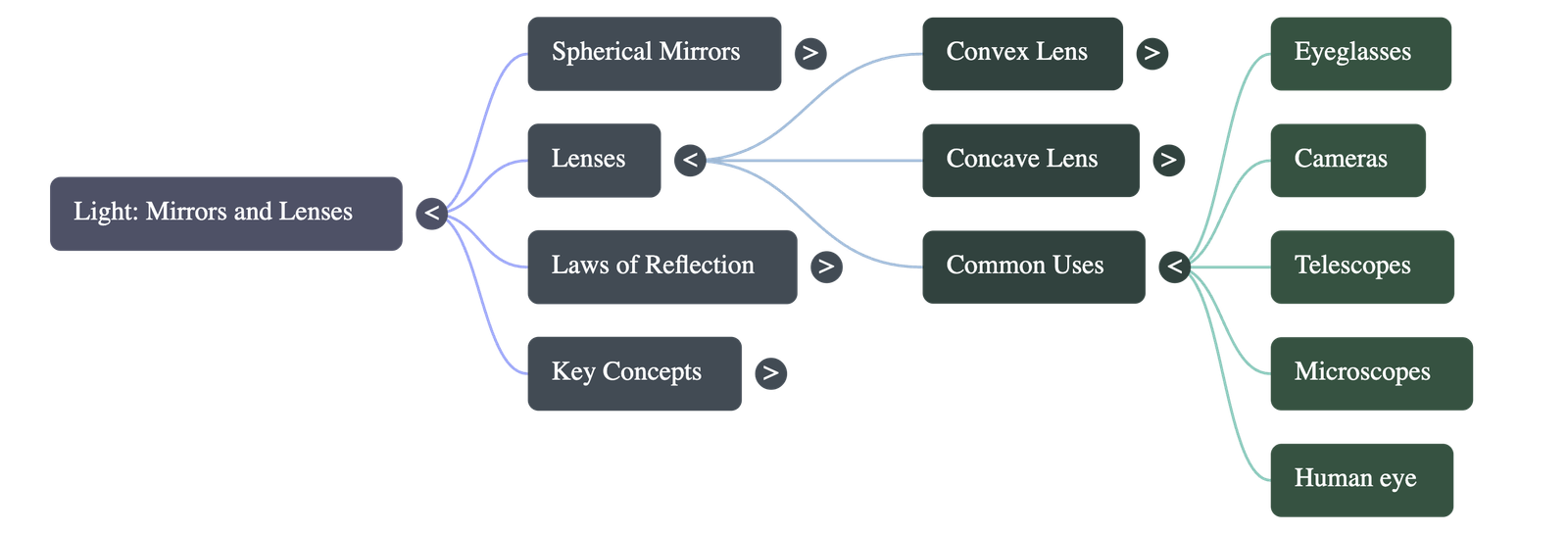
- Lenses are critical in everyday objects, primarily used in reading eyeglasses to correct vision.
- They are the core components allowing cameras, telescopes, and microscopes to capture and enlarge images.
- The human eye contains its own natural, flexible convex lens that automatically changes shape to allow us to read a book up close or focus on distant objects.
Do checkout all questions & answers of this chapter.
Quick Navigation:
| | | |
1 / 1
Quick Navigation:
| | | |