Quick Navigation:
| | | |
Exploring the Investigative World of Science
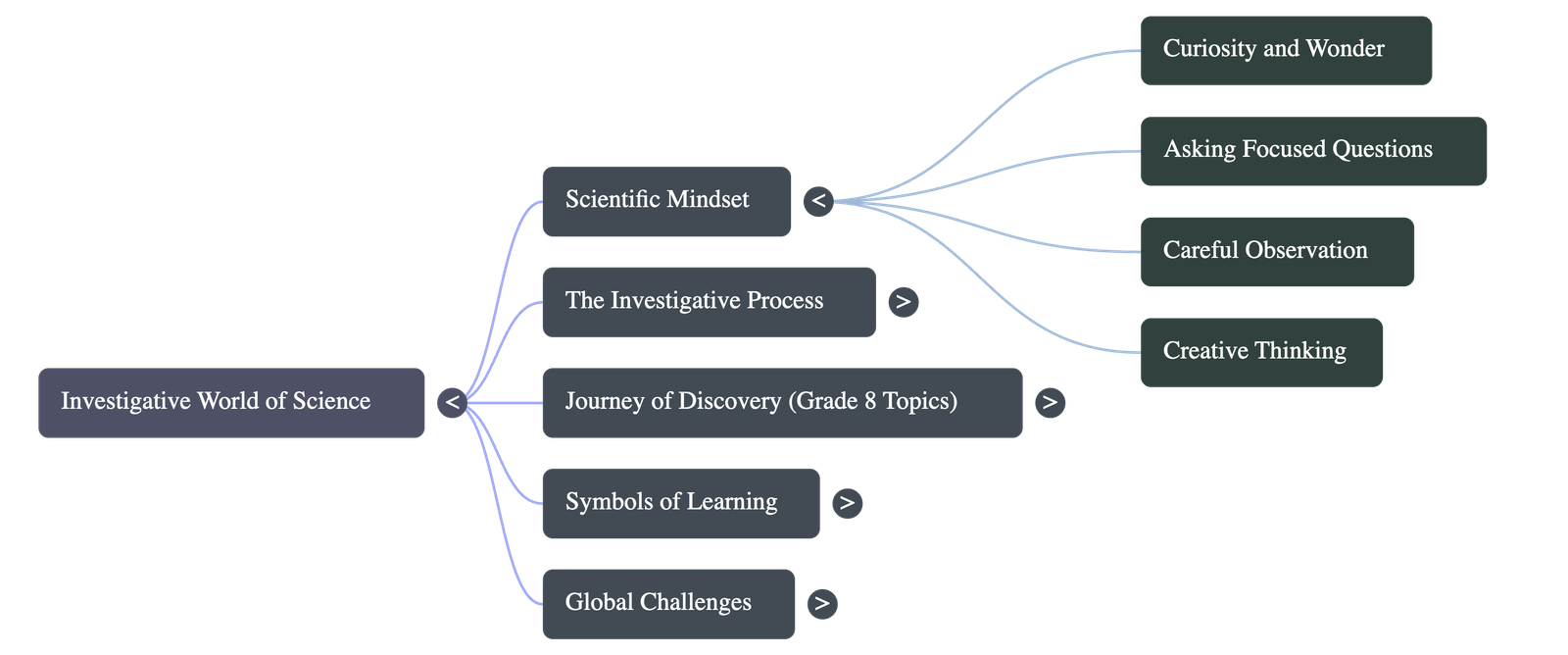
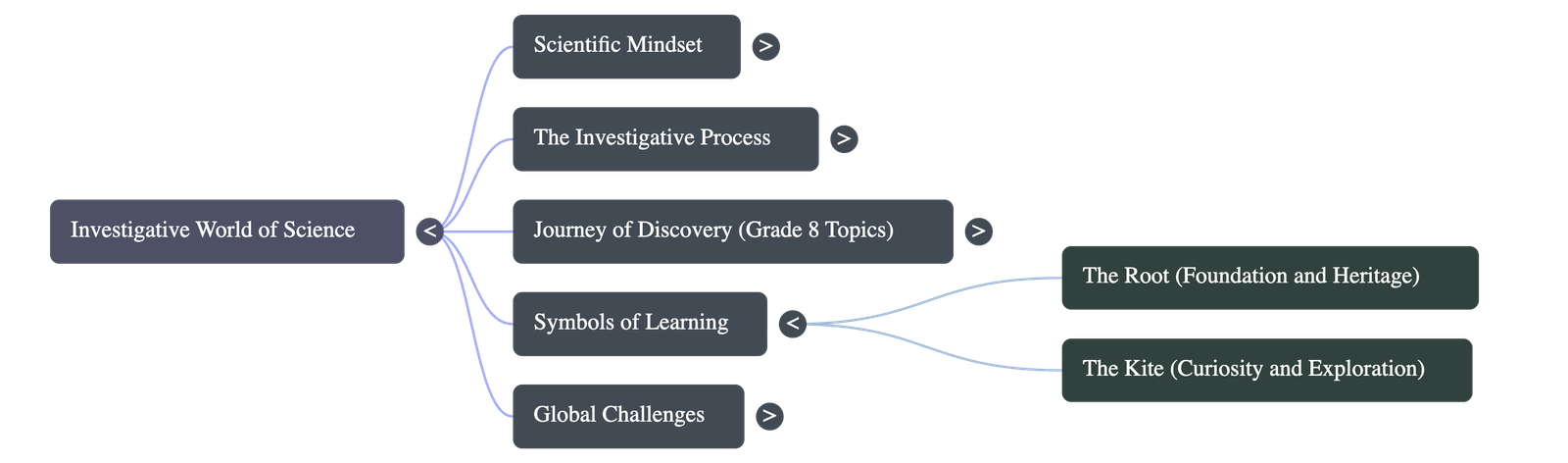
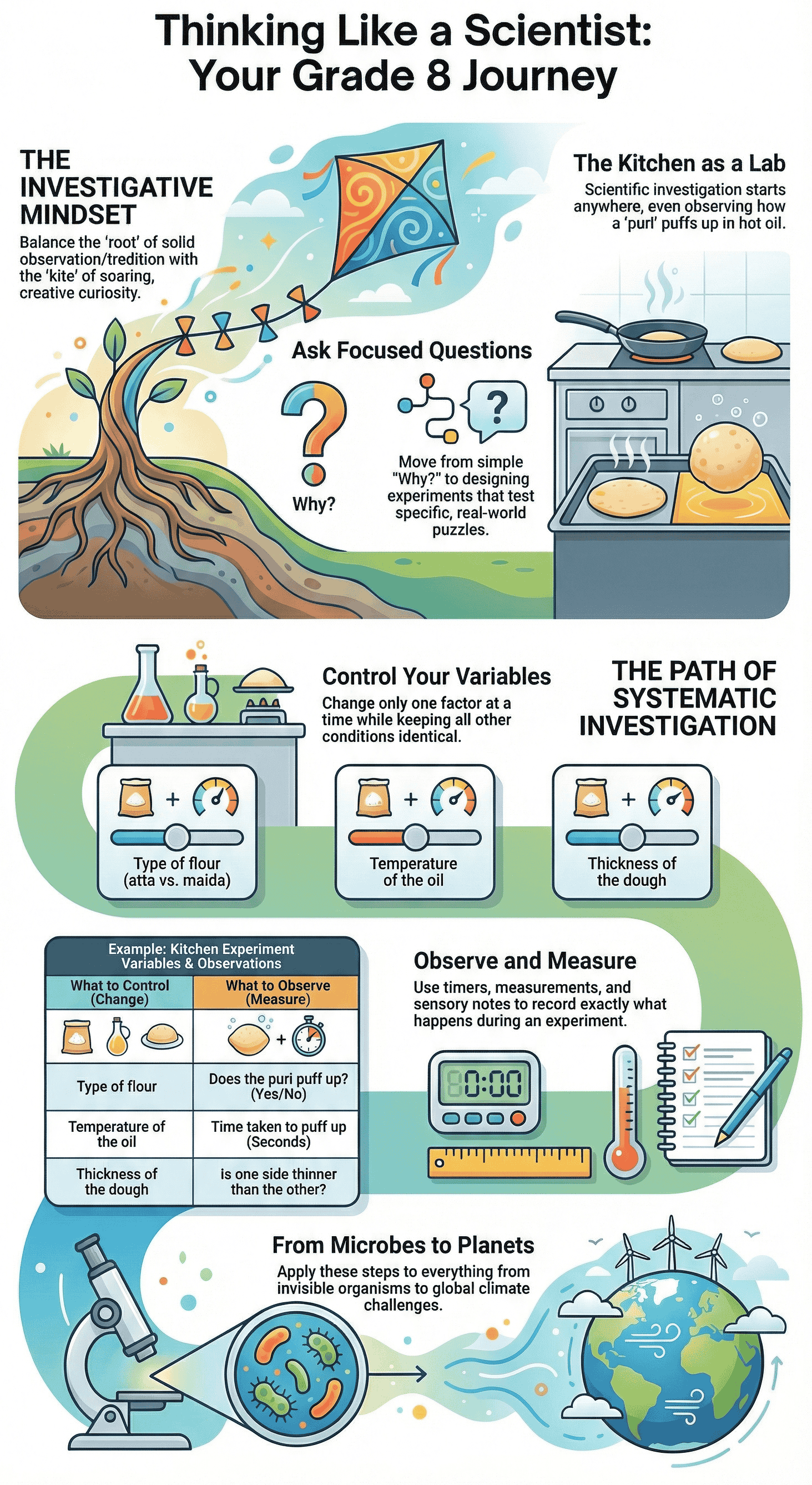
- The Root and the Kite: The chapter uses two symbols to represent scientific learning. The root symbolizes a solid foundation grounded in careful observation and natural heritage, while the kite represents allowing curiosity and creative thinking to soar toward new ideas.
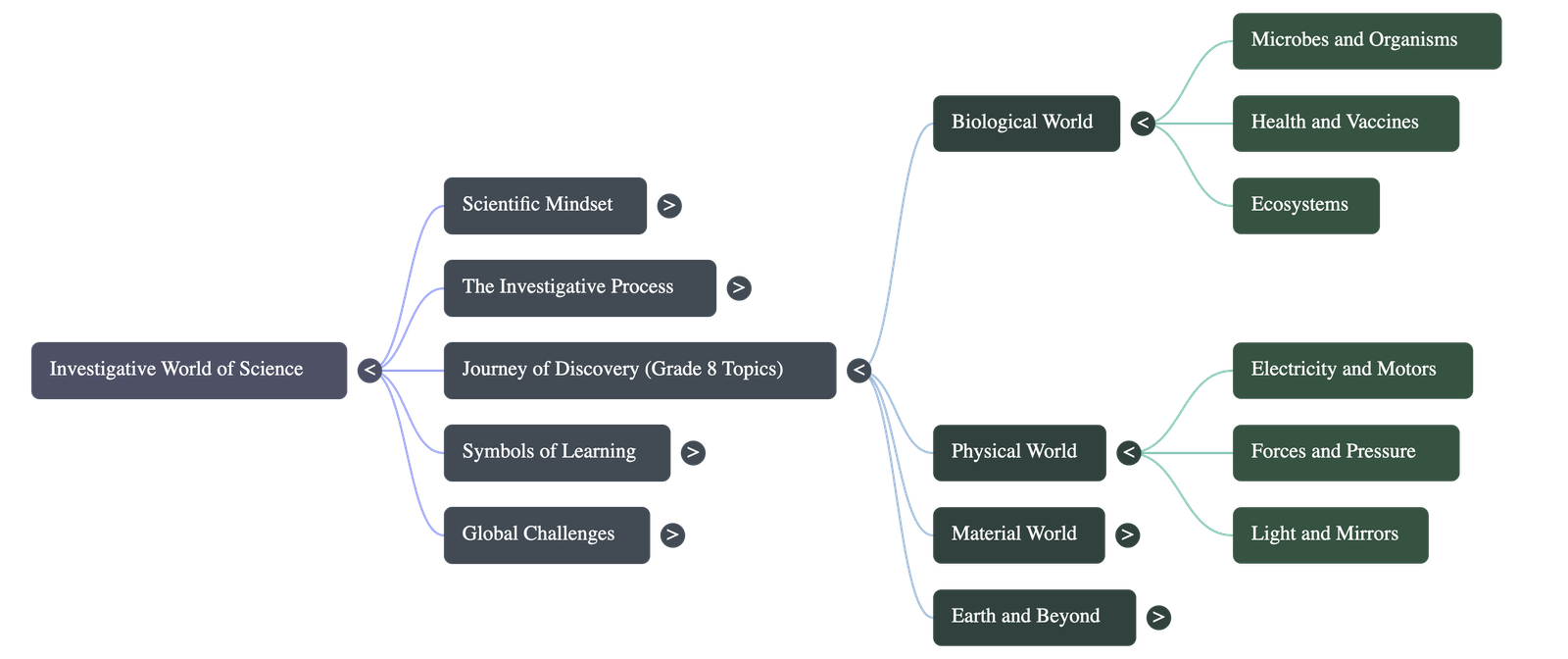
- Microbes and Human Health: The scientific journey begins at the microscopic level, exploring tiny, unseen organisms. It highlights the difference between helpful microbes (which aid digestion and produce medicines) and harmful ones (which cause infections), while stressing the importance of nutrition, exercise, and vaccines for maintaining health.
- Electricity and Fundamental Forces: Science improves our daily lives through phenomena like electric current, which provides heating and magnetic effects. The text also introduces fundamental forces that cause objects to move, speed up, slow down, or change direction, explaining everyday actions like throwing a ball or stopping a car.
- Pressure and Weather Systems: The concept of force leads to the understanding of pressure. Differences in air pressure are responsible for moving air, creating everything from gentle breezes to powerful, dangerous weather events like storms and cyclones.
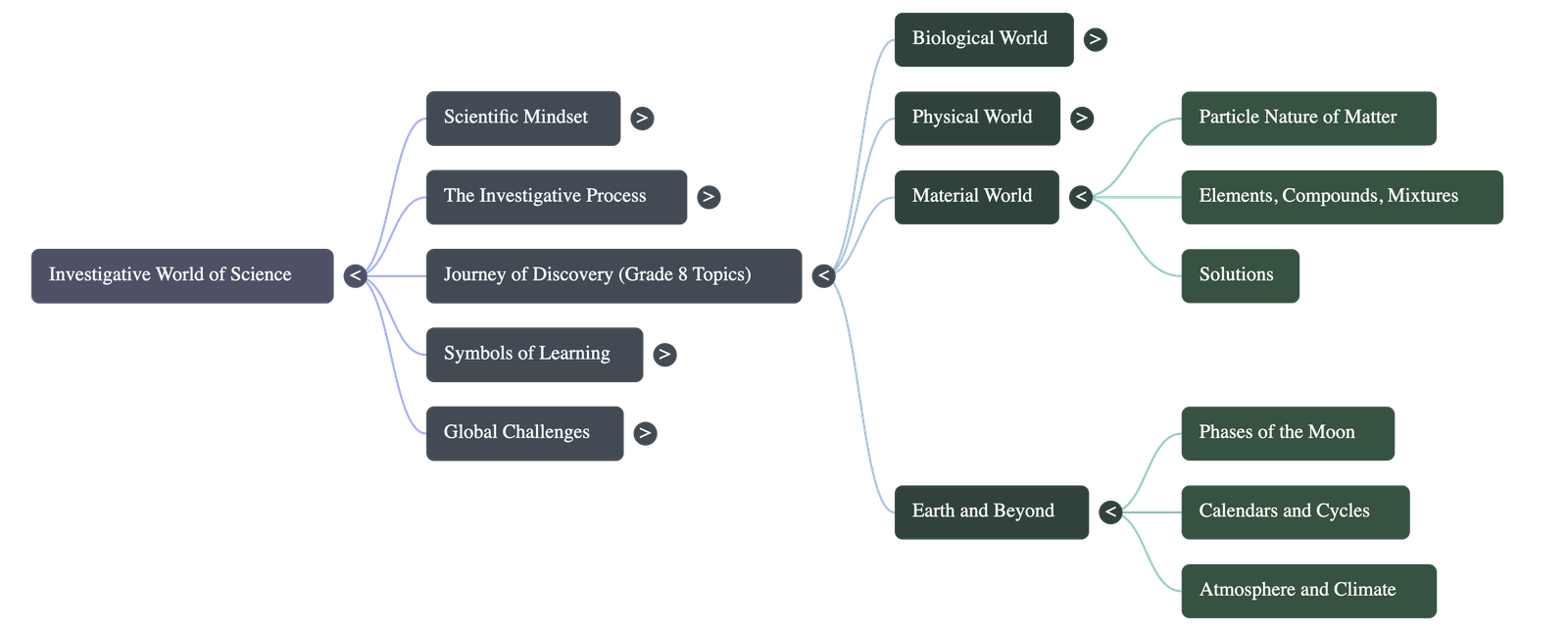
- Particles, Matter, and Mixtures: Everything is made of tiny particles that behave differently depending on their state (restricted in solids, free-moving in gases). It introduces the scientific classification of materials into elements, compounds, and mixtures, which helps explain concepts like how sugar dissolves in tea to create a solution.
- Light, Mirrors, and the Moon: The chapter covers how light reflects off flat, curved, and rough surfaces, and how it bends through lenses (explaining mirrors and corrective glasses). This extends to space, explaining how the sun's light reflects off the moon, creating the lunar phases based on the alignment of the Earth, Moon, and Sun.
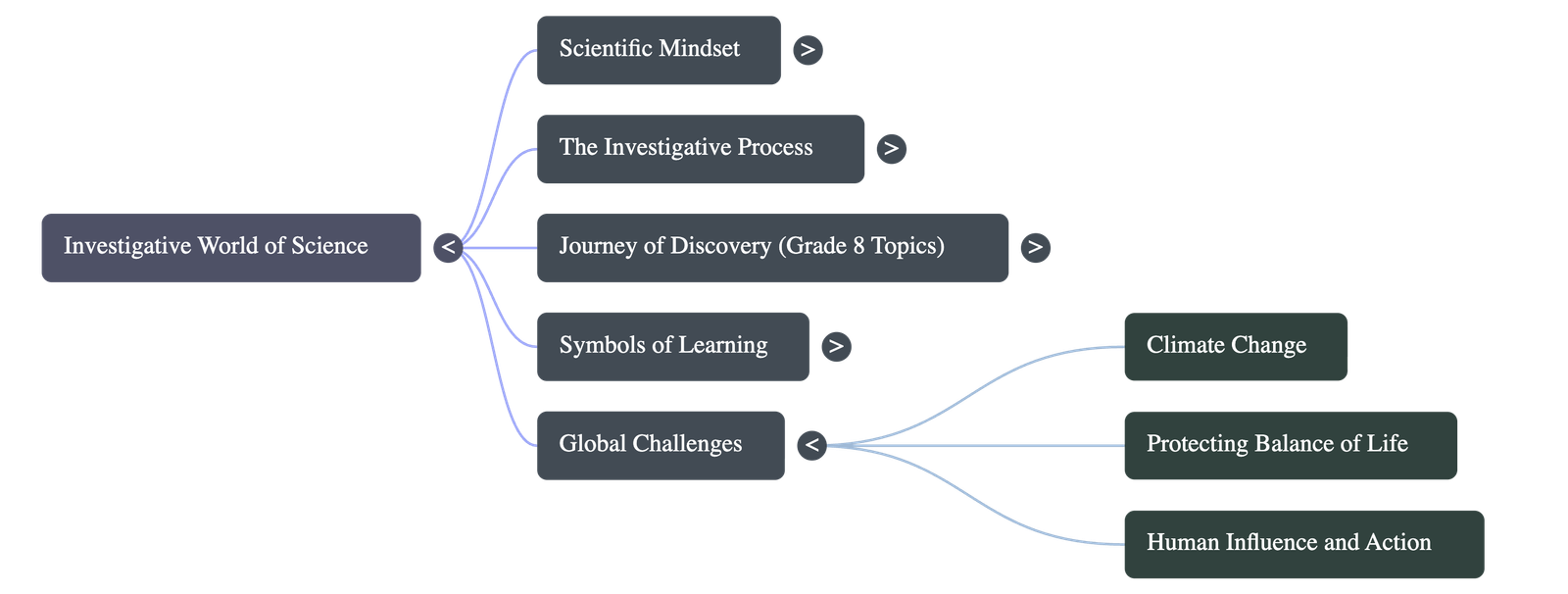
- Ecosystems and Global Challenges: The text highlights the interconnectedness of the universe, noting how human calendars are based on lunar cycles. On Earth, this interconnectedness is seen in ecosystems where all living beings rely on each other and their environment. It addresses the perfect conditions that allow life on Earth to thrive and warns against human activities that disrupt the climate.
-
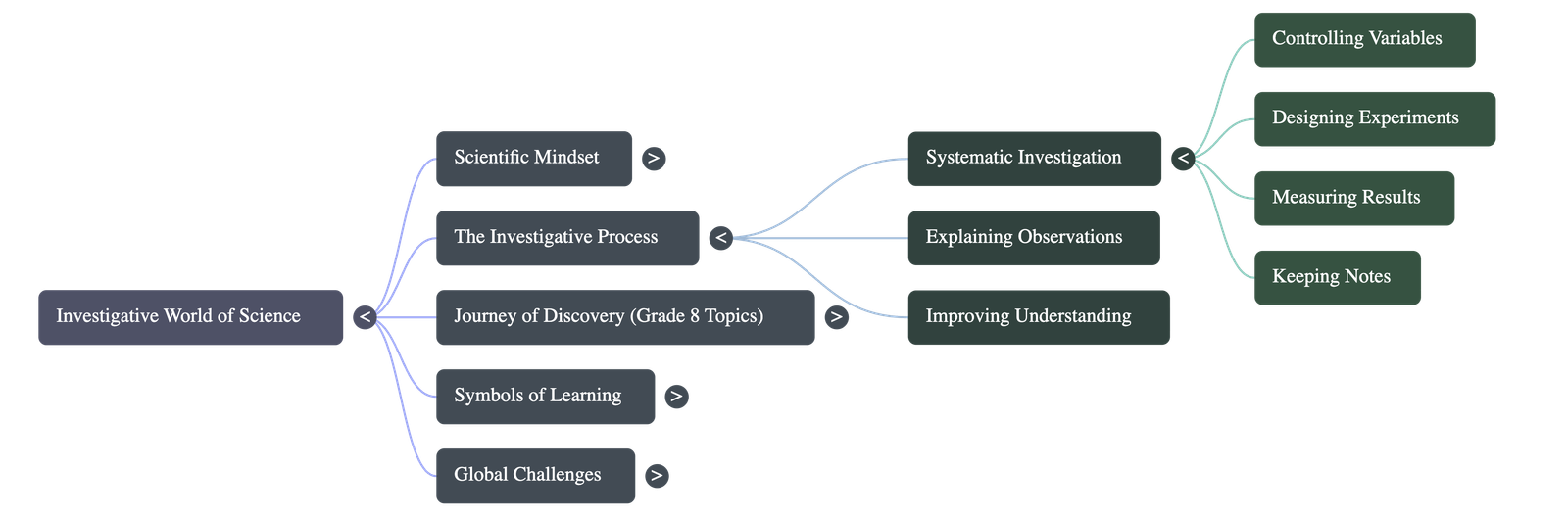
The Scientific Method in Everyday Life: To teach students how to think like scientists, the chapter uses the everyday example of frying a puri. It outlines the steps of systematic investigation:
- Formulating questions based on observation (e.g., why does a puri puff up unevenly?).
- Identifying variables to control, such as dough thickness, flour type, and oil temperature.
- Determining what to measure or observe, like the time it takes to puff.
- Conducting experiments by changing only one variable at a time while taking detailed notes.
Do checkout all questions & answers of this chapter.
Quick Navigation:
| | | |
1 / 1
Quick Navigation:
| | | |