Quick Navigation:
| | | |
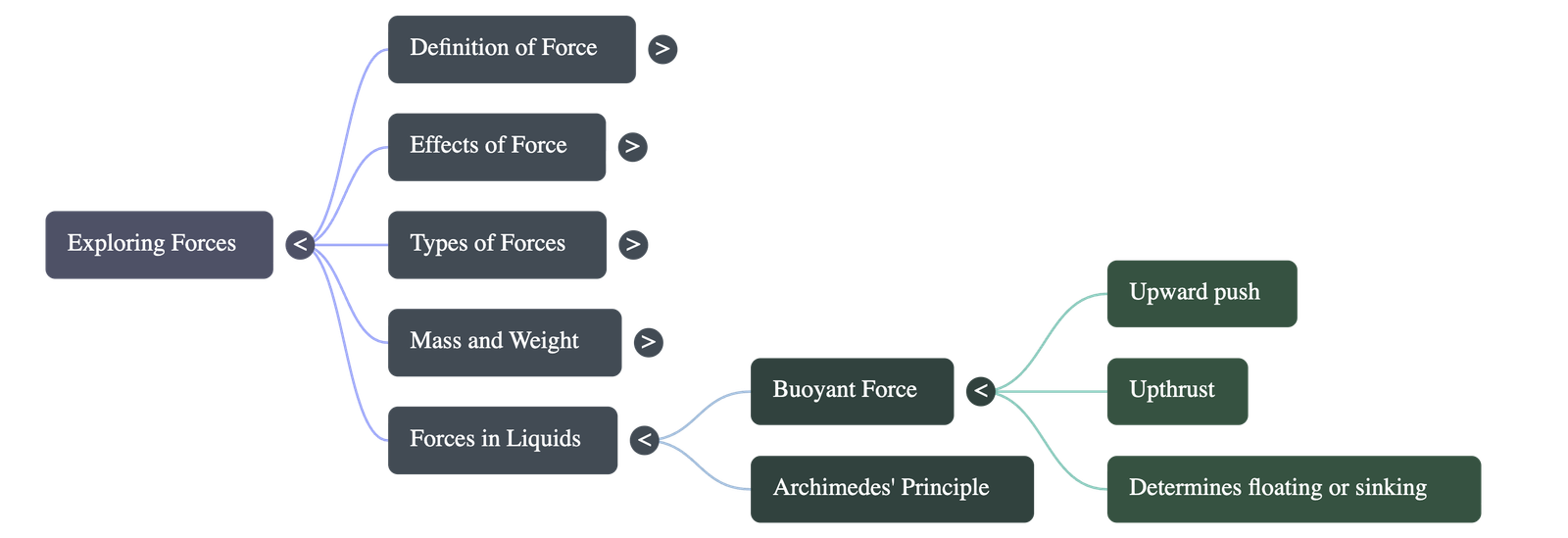
Exploring Forces
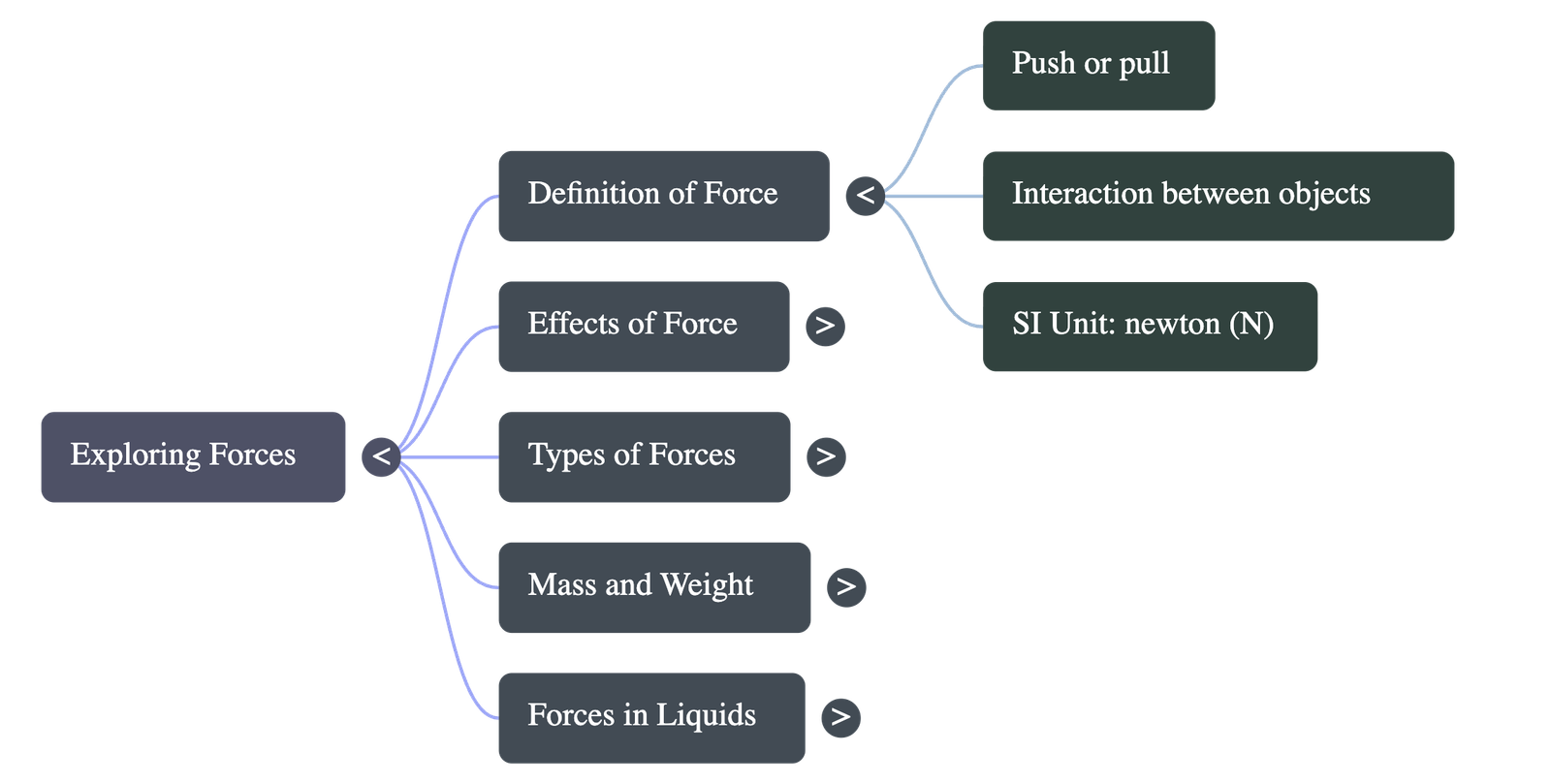
1. What is a Force?
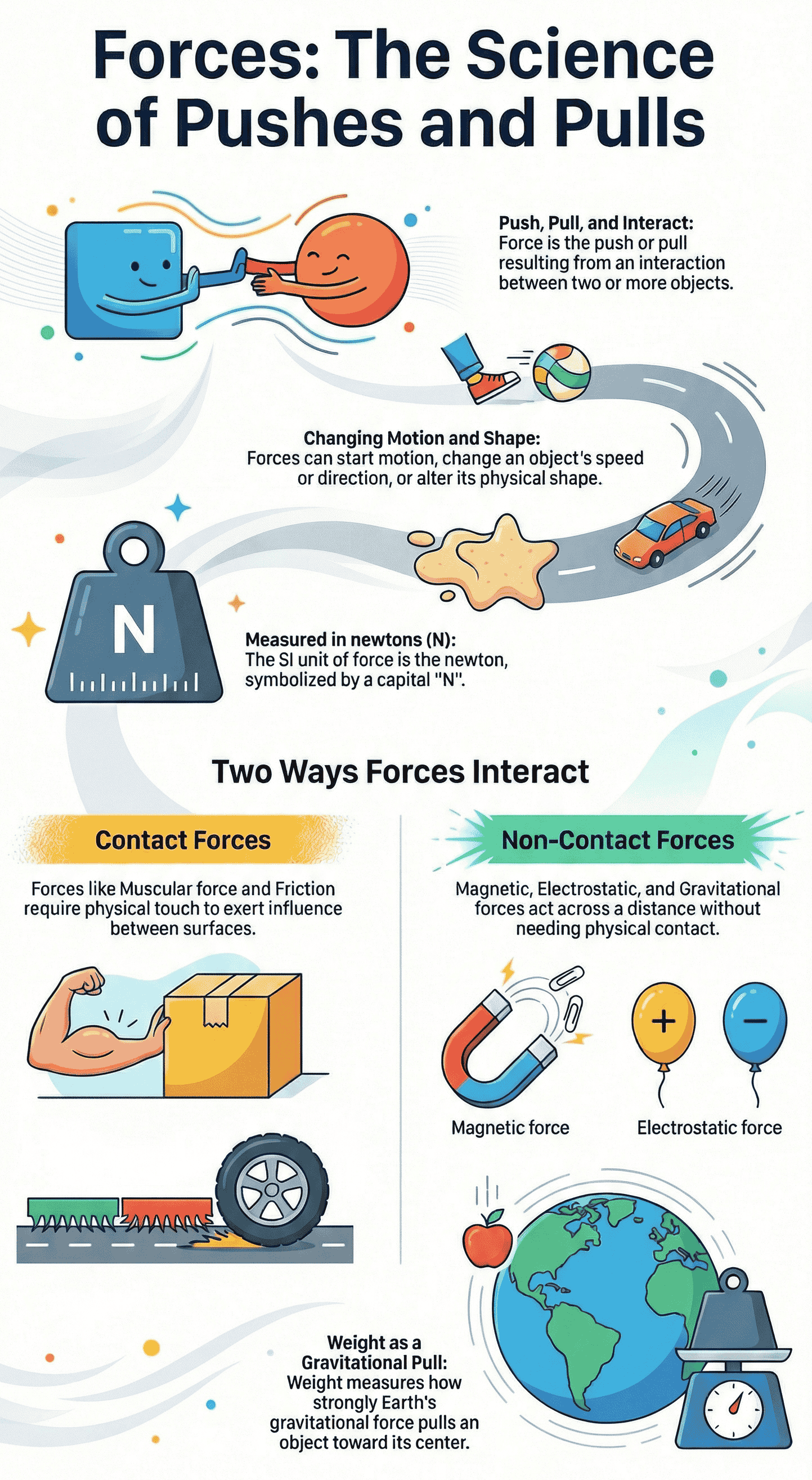
- • A force is generally defined as a push or a pull applied to an object.
- • Forces only come into play when there is an interaction between at least two objects.
- • The standard scientific unit (SI unit) of force is the newton (N).
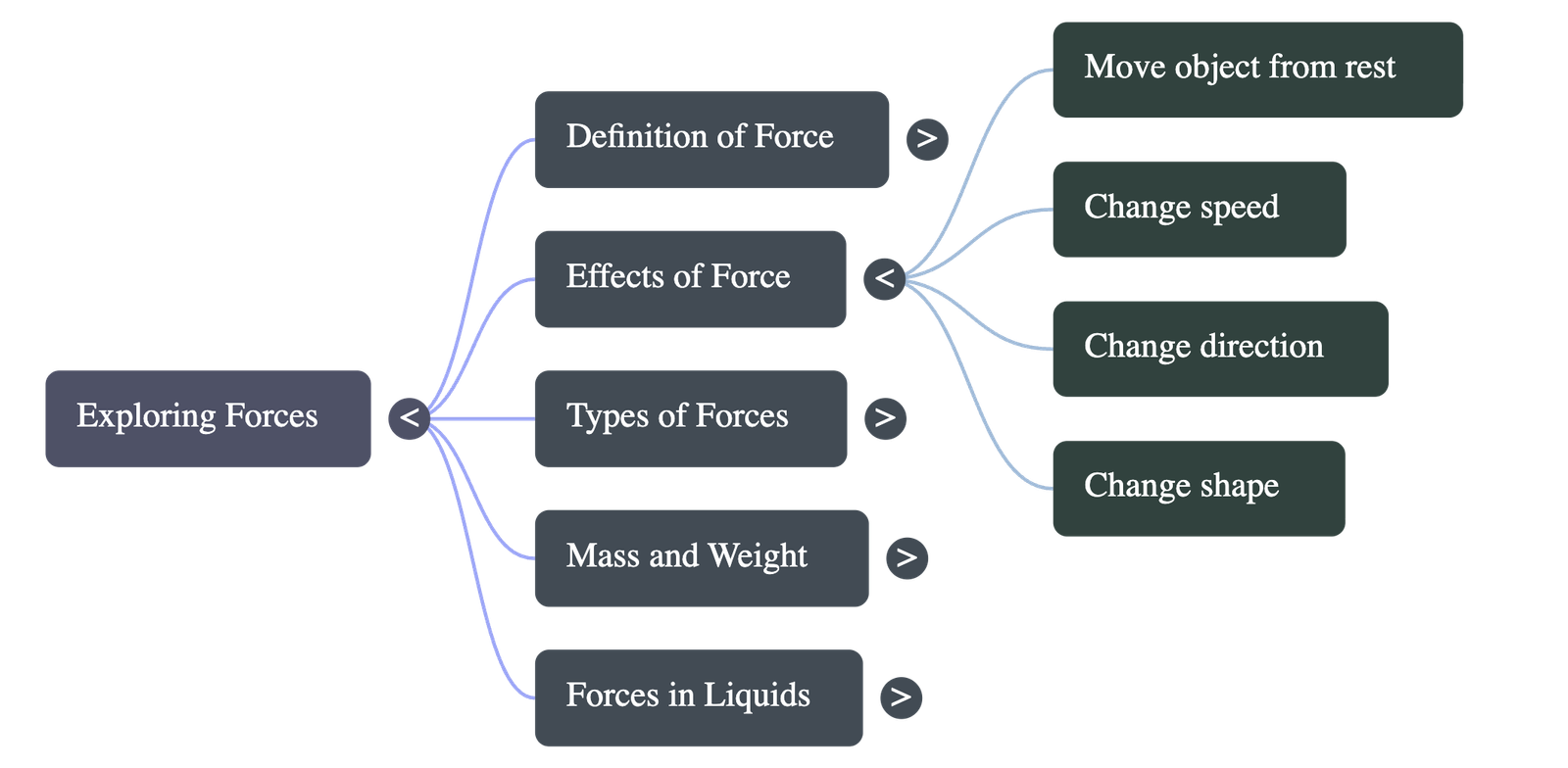
2. Effects of a Force
- • Make a stationary object move from a state of rest.
- • Change the speed of a moving object (e.g., slowing it down or speeding it up).
- • Change the direction of motion of an object.
- • Alter the shape or size of an object (e.g., stretching a rubber band or pressing a balloon).
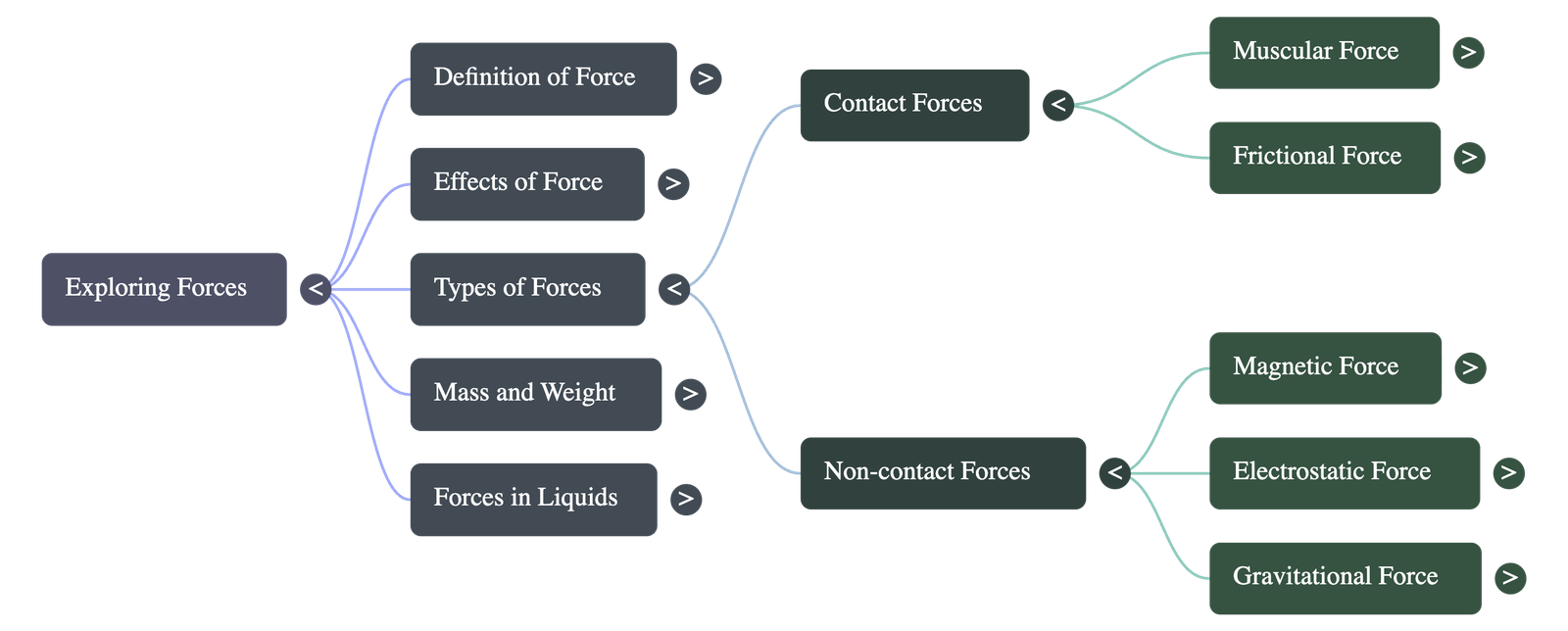
3. Types of Forces: Contact Forces
Forces that act only when there is physical contact (direct or indirect) between the objects.
- Muscular Force: Caused by the action, contraction, and elongation of muscles. It is used by humans and animals for daily physical activities, carrying heavy loads, and crucial internal body functions (like chewing food, digesting, and pumping blood through the heart).
- Frictional Force (Friction): A force that always opposes motion when an object moves or tries to move over another surface. It arises from minute irregularities locking together between two surfaces. Friction is higher on rough surfaces. Gases (like air) and liquids (like water) also exert friction on objects moving through them.
4. Types of Forces: Non-Contact Forces
Forces whose effect can be experienced even when the objects are at a distance and not physically touching.
- Magnetic Force: The push or pull exerted by a magnet on another magnet or a magnetic material. Like magnetic poles repel each other, while unlike poles attract each other.
- Electrostatic Force: The force exerted by a charged body on another charged or uncharged body. Objects can acquire static charges (positive or negative) when rubbed together. Similar (like) charges repel, while opposite (unlike) charges attract.
- Gravitational Force (Gravity): The continuous, attractive pull exerted by the Earth on all objects, pulling them downwards. Unlike magnetic and electrostatic forces, gravity is always attractive.
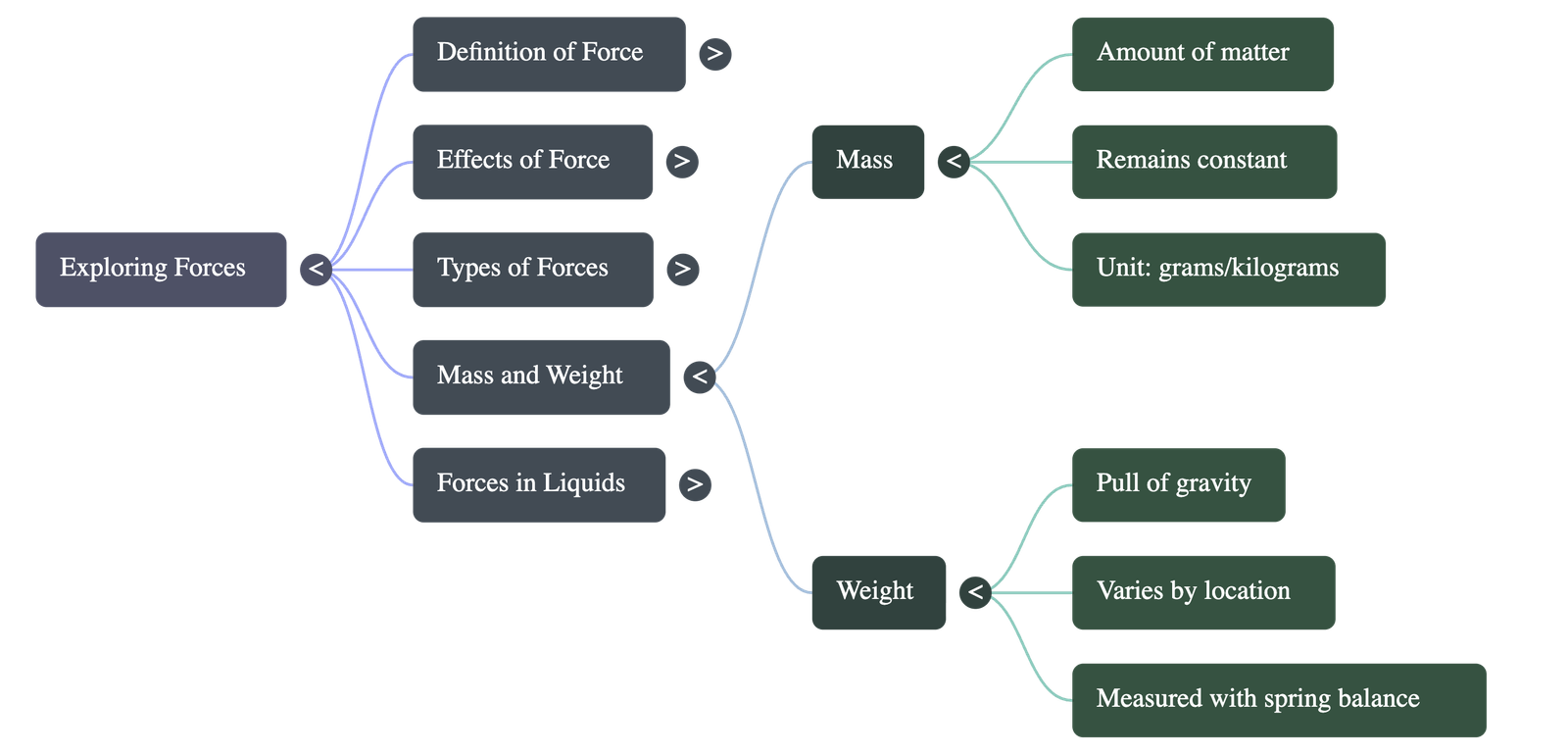
5. Weight vs. Mass
- • Weight is the gravitational force with which the Earth pulls an object towards itself. It is measured in newtons (N) using an instrument called a spring balance.
- • Mass is the amount of matter in an object, measured in grams (g) or kilograms (kg).
- • Key Difference: An object's mass remains exactly the same everywhere in the universe. However, its weight changes depending on the gravitational force of the specific planet or location (e.g., an object weighs less on the Moon than on Earth).
6. Floating and Sinking (Buoyancy)
- • Upthrust / Buoyant Force: When an object is placed in a liquid, the liquid applies an upward push on the object.
- • Floating vs Sinking: An object sinks if the Earth's downward gravitational force (its weight) is greater than the upward buoyant force. If the two forces are equal, the object floats.
- • Archimedes’ Principle: A famous scientific principle stating that an object fully or partially immersed in a liquid experiences an upward force exactly equal to the weight of the liquid it displaces.
Do checkout all questions & answers of this chapter.
Quick Navigation:
| | | |
1 / 1
Quick Navigation:
| | | |