Quick Navigation:
| | | |
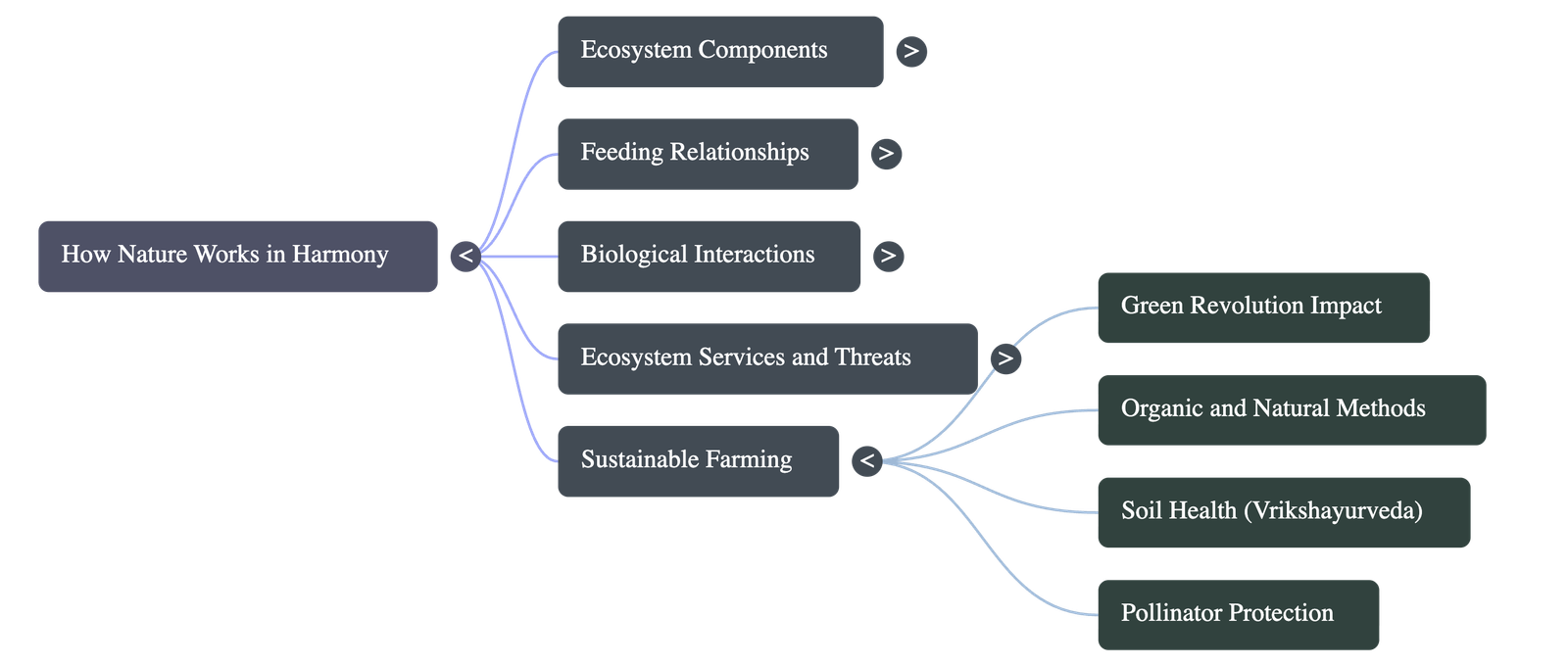
How Nature Works in Harmony
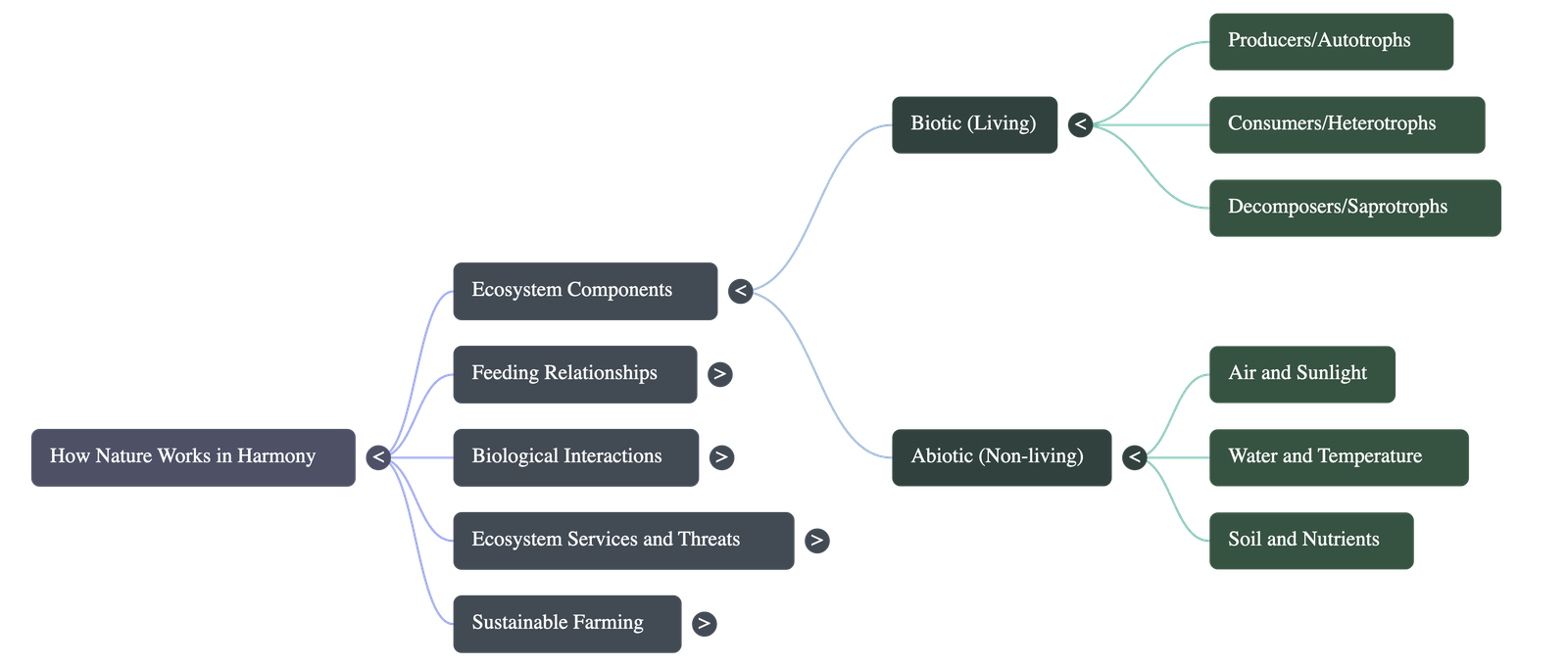
1. Habitats and Their Components
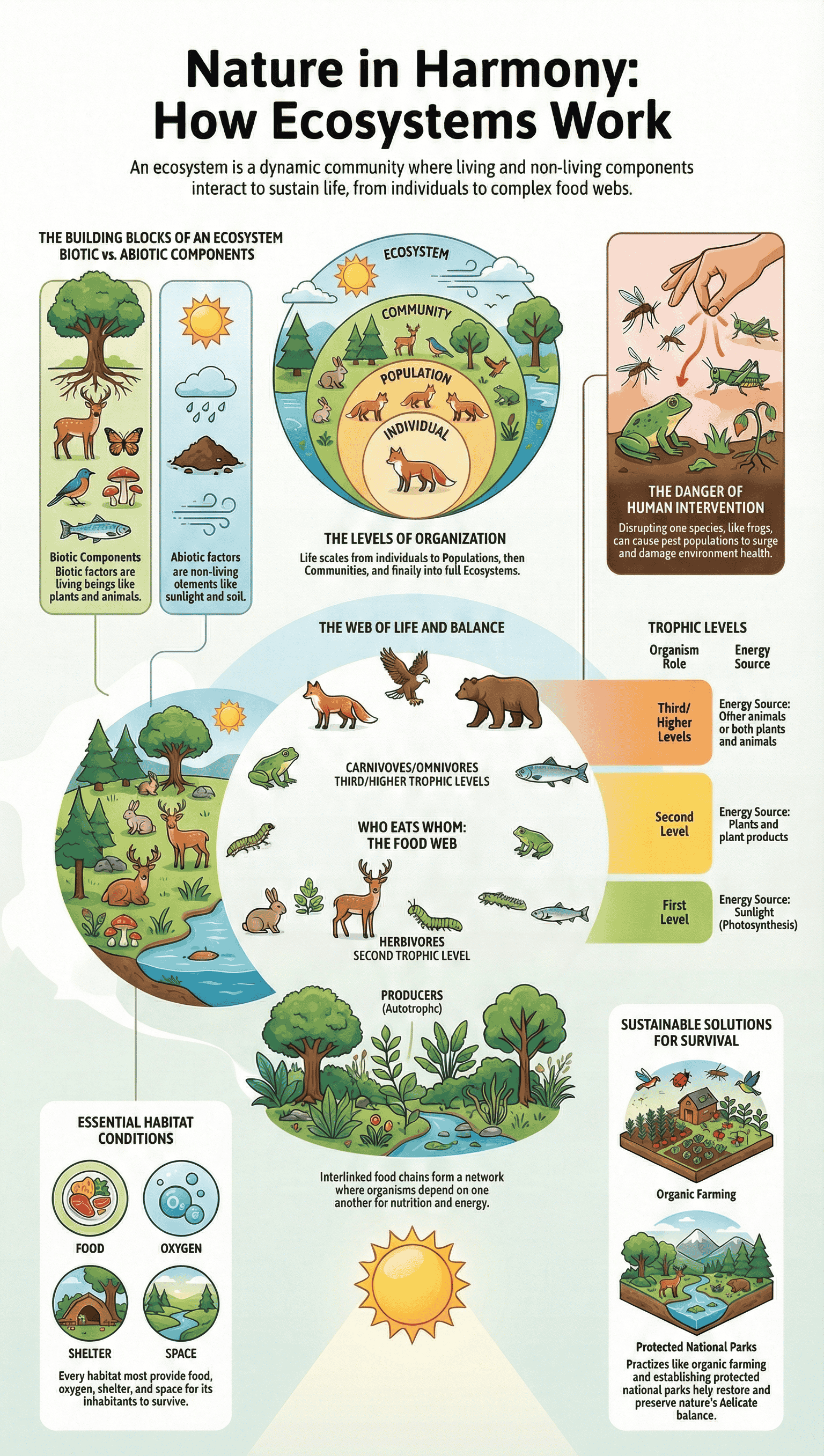
- •Habitat: A specific place where an organism lives, providing essential conditions for survival such as food, water, oxygen, shelter, and space.
- •Biotic Components: The living beings in a habitat, including plants, animals, and microorganisms.
- •Abiotic Components: The non-living elements of a habitat, such as air, water, sunlight, temperature, and soil.
2. Populations and Communities
- •Population: A group of the same type of organisms living together in a specific habitat at a given time.
- •Community: Different populations of organisms sharing and interacting within the same habitat. A habitat relies on diverse communities to prevent intense competition and resource scarcity.
- •Every organism matters; for example, fewer fish in a pond can lead to an increase in bees and butterflies, which in turn increases flower pollination and seed production nearby.
3. Understanding Ecosystems
- •Ecosystem: Formed when biotic components interact with each other and with the abiotic components in their environment.
- •Types of Ecosystems: Include aquatic ecosystems (ponds, rivers, oceans) and terrestrial ecosystems (forests, grasslands, farms). Ecosystems can overlap and vary greatly in size.
- •Producers (Autotrophs): Organisms like green plants that make their own food through photosynthesis.
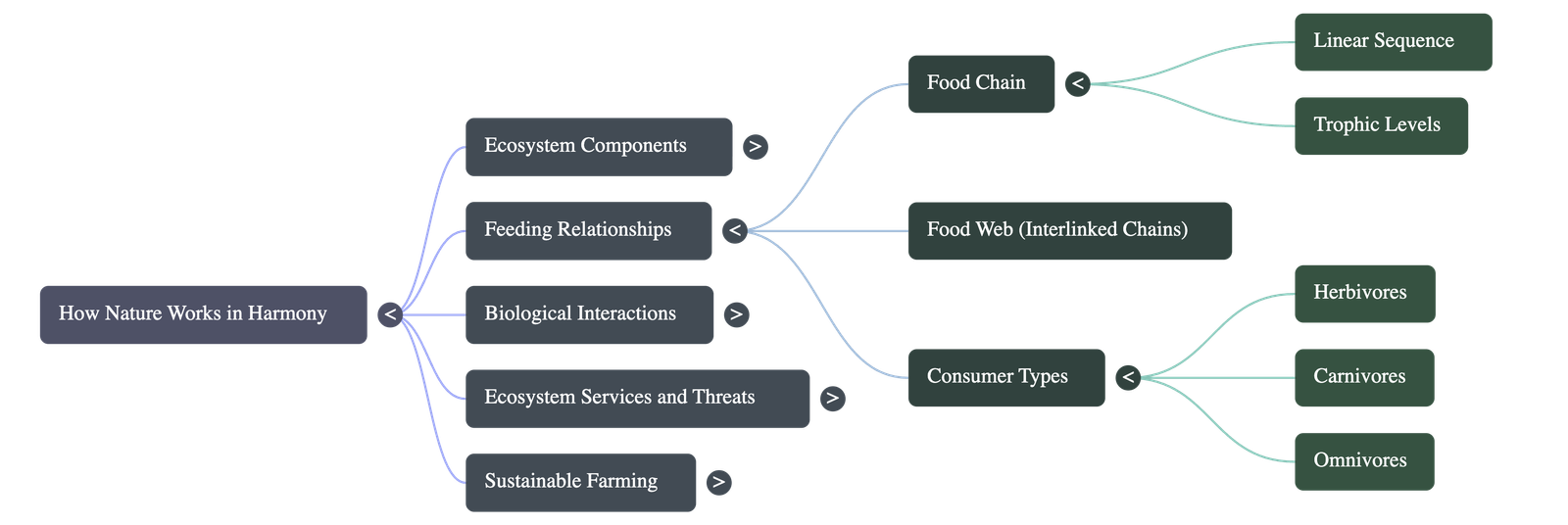
- •Consumers (Heterotrophs): Organisms that cannot produce their own food. This includes herbivores (plant-eaters), carnivores (animal-eaters), and omnivores (eat both).
4. Food Chains and Food Webs
- •Food Chain: A linear sequence showing "who eats whom" in an ecosystem (e.g., Grass → Grasshopper → Frog → Snake → Eagle).
- •Trophic Levels: The specific position an organism occupies in a food chain (Level 1: Producers, Level 2: Herbivores, Level 3: Small carnivores, Level 4: Large carnivores).
- •Food Web: A complex network of interconnected food chains, showing that an organism can be eaten by multiple different predators.
5. Managing Waste in Nature
- •Decomposers (Saprotrophs): Microorganisms like fungi and bacteria, as well as insects, that break down complex dead plants and animal waste into simpler substances.
- •This process returns essential nutrients to the soil, proving that in nature, nothing is truly wasted—everything is reused and recycled.
6. Balance and Relationships in Ecosystems
- •Cascading Effects: One small change impacts the whole ecosystem. (e.g., Pollution kills pond plants → fish die → insects multiply → pests damage crops → farmers use harsh pesticides).
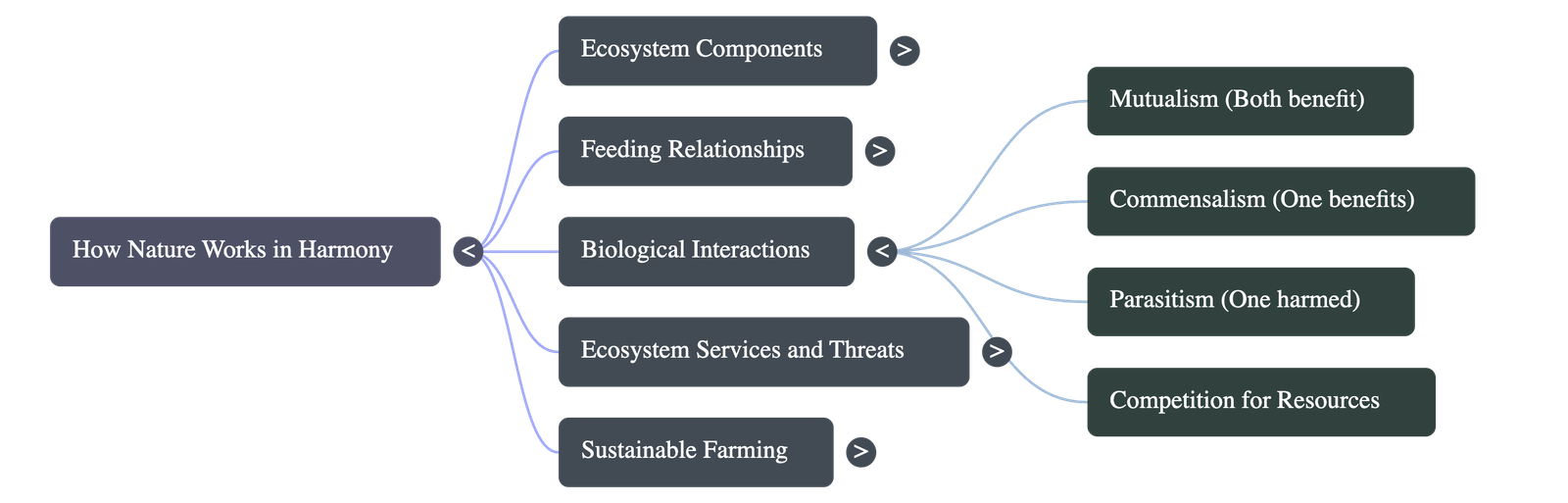
- •Competition: Organisms compete for food, water, and space. This competition naturally controls population sizes and maintains balance.
- •Symbiotic Relationships:
- Mutualism: Both organisms benefit (e.g., honeybees and flowers).
- Commensalism: One benefits, the other is unaffected (e.g., orchids growing on trees).
- Parasitism: One benefits, the other is harmed (e.g., ticks feeding on dogs).
7. Ecosystem Benefits and Conservation
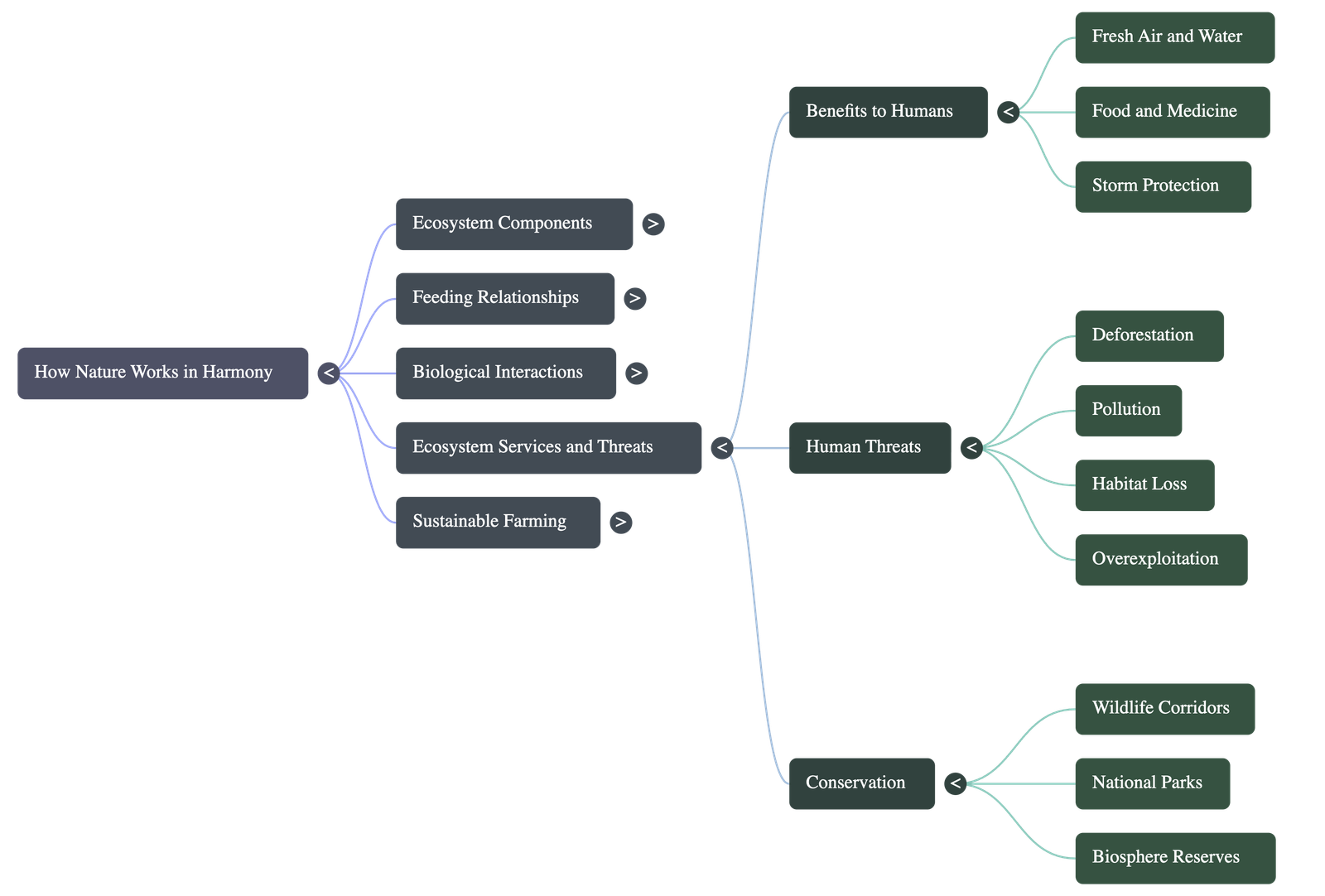
- •Benefits: Ecosystems provide clean air, water, fertile soil, food, medicine, climate regulation, and recreational value.
- •Threats: Deforestation, pollution, overuse of resources, and invasive species threaten natural balance (e.g., the endangered Sundarbans mangrove forests).
- •Protected Areas: National parks, wildlife sanctuaries, and biosphere reserves are established to conserve wildlife and their native habitats.
8. Human-made Ecosystems and Sustainable Farming
- •Artificial Ecosystems: Farms, parks, and fish ponds created by humans. Unlike natural ecosystems, these require human care and management.
- •Impact of the Green Revolution: Increased food production through synthetic fertilizers and pesticides, but led to unsustainable practices resulting in soil degradation and loss of biodiversity.
- •Monoculture vs. Diversity: Growing a single crop repeatedly degrades soil and harms pollinators. Embracing crop diversity protects food security.
- •Sustainable Agriculture: Shifting towards natural and organic farming (using organic manure, like the ancient Kunapa Jala method) to maintain soil health, restore natural predators, and minimize chemical use.
Do checkout all questions & answers of this chapter.
Quick Navigation:
| | | |
1 / 1
Quick Navigation:
| | | |