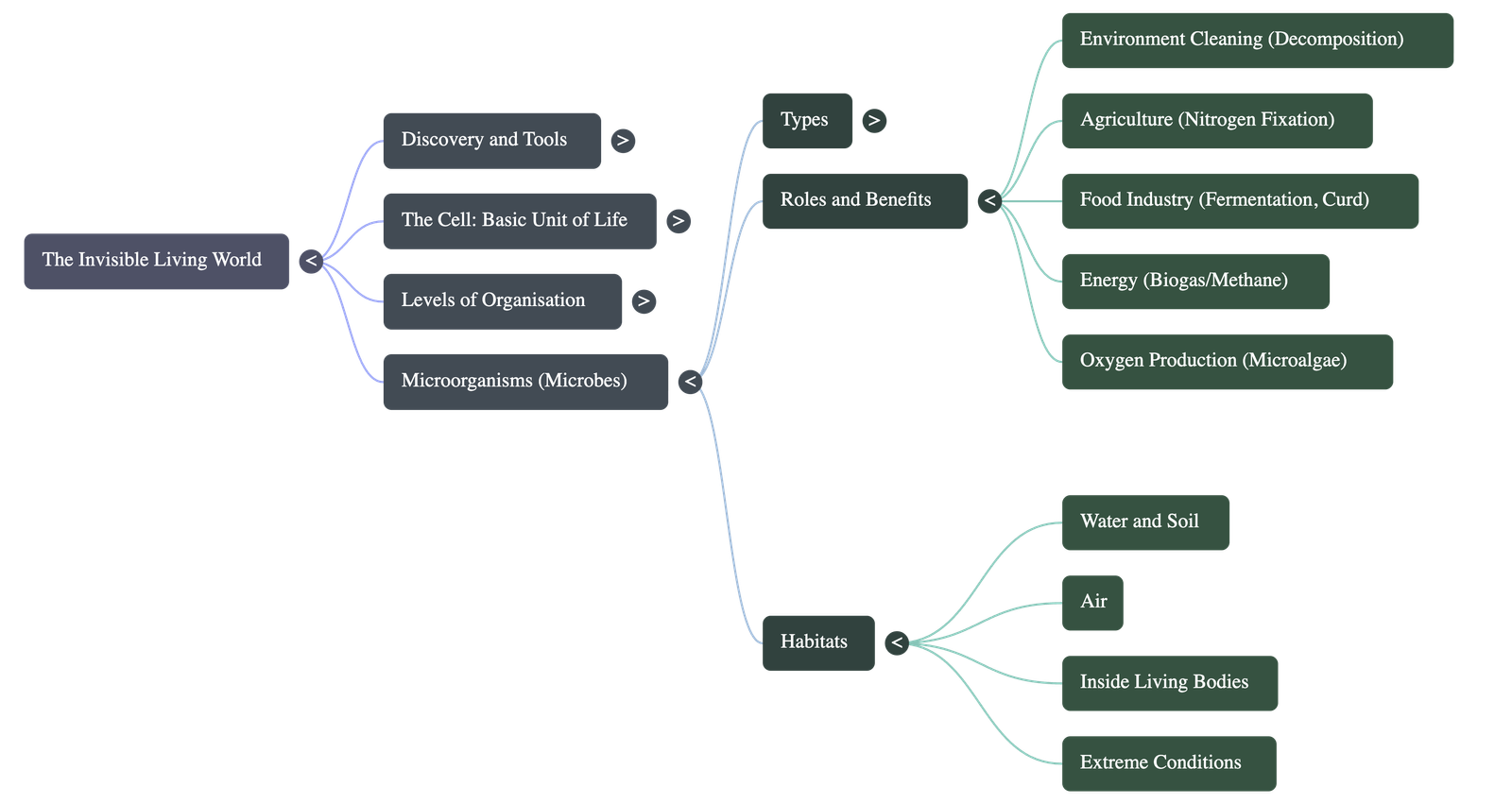
Quick Navigation:
| | | |
The Invisible Living World: Beyond Our Naked Eye
1. Discovery of the Microscopic World
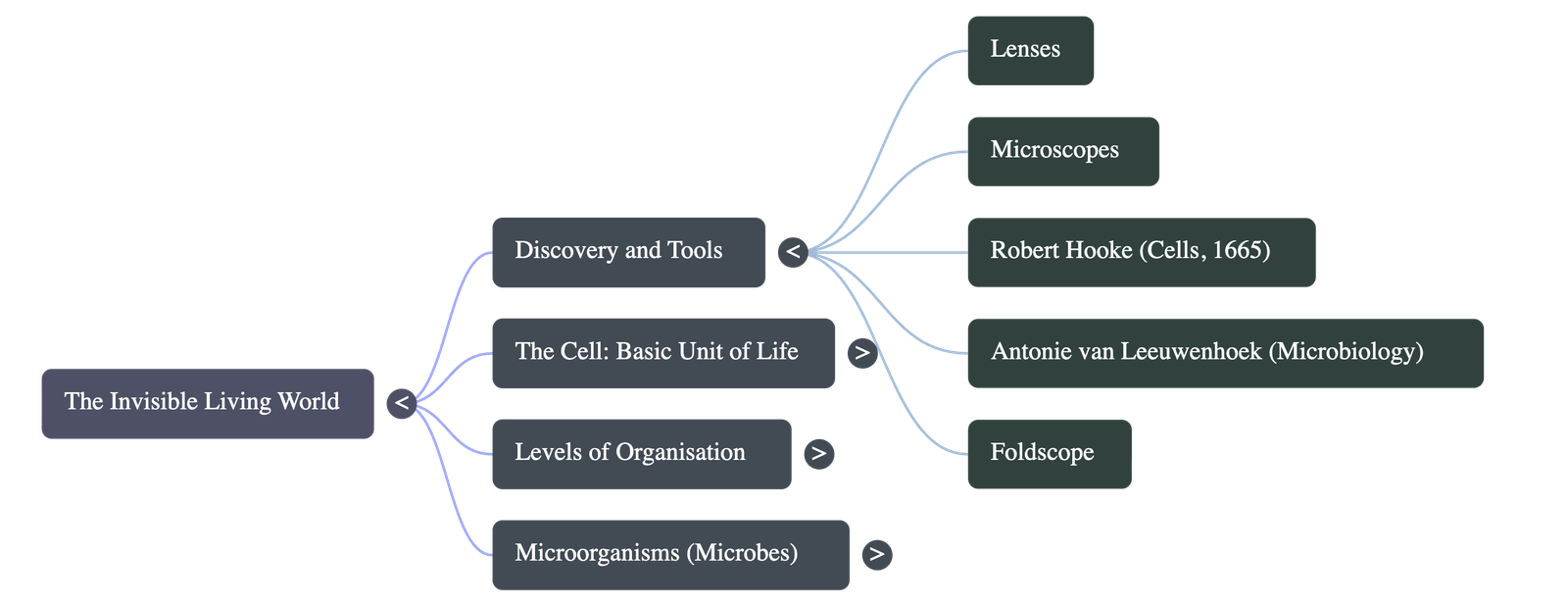
- The invention of lenses and microscopes unlocked a hidden world of tiny living creatures that the human eye cannot see alone.
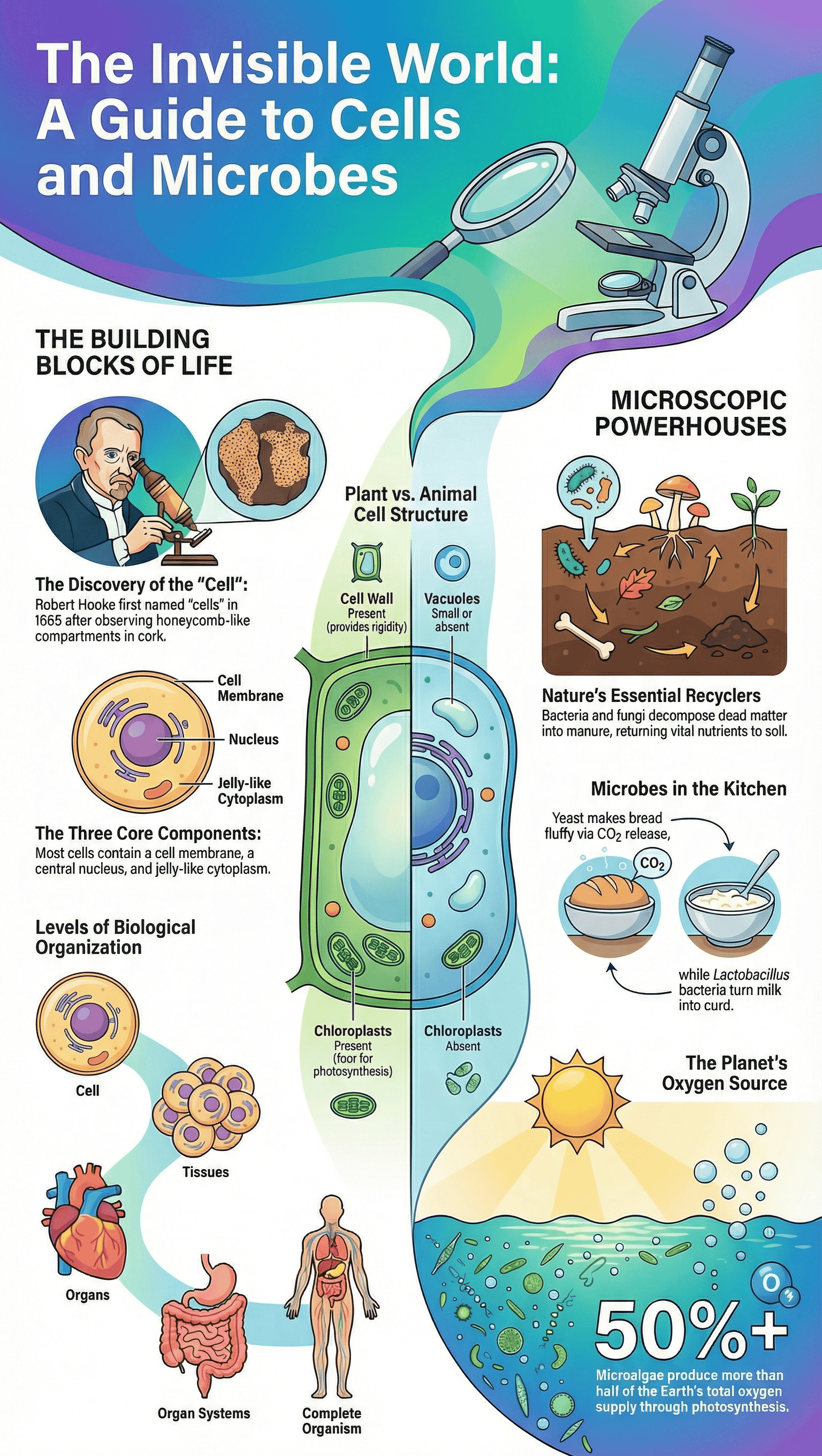
- Scientist Robert Hooke observed a thin slice of cork under a microscope, saw small empty spaces resembling a honeycomb, and was the first to call them "cells".
- Antonie van Leeuwenhoek built better microscopes and was the first to clearly describe bacteria and blood cells, becoming known as the Father of Microbiology.
2. The Cell: The Basic Unit of Life
- All living beings are made of building blocks called cells. Cells form the basic structural unit of life.
- Key Components of a Cell:
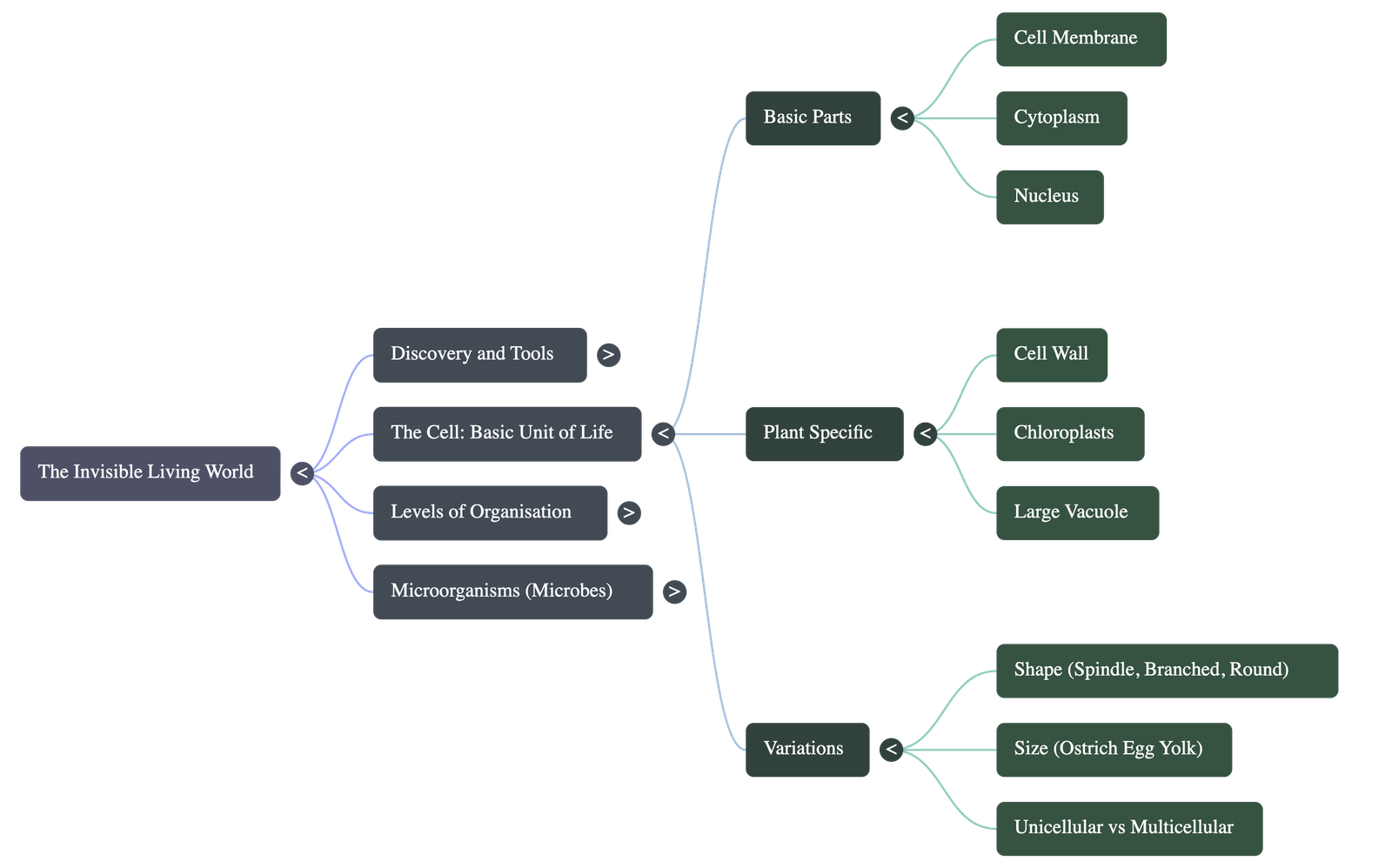
- Cell Membrane: The porous outer lining that separates cells and regulates the entry/exit of materials.
- Cytoplasm: The jelly-like region containing compounds like carbohydrates and proteins, where most life processes occur.
- Nucleus: The central structure that regulates growth and all cellular activities.
- Plant vs. Animal Cells: Plant cells possess an additional outer layer called the cell wall for rigidity, plastids (like chloroplasts for photosynthesis), and large vacuoles for storage and shape. Animal cells lack cell walls and usually have very small or no vacuoles.
- Cell Variation: Cells differ greatly in shape depending on their function. For example, muscle cells are spindle-shaped to contract and relax, while nerve cells are long and branched to transmit messages rapidly across the body.
3. Levels of Biological Organisation
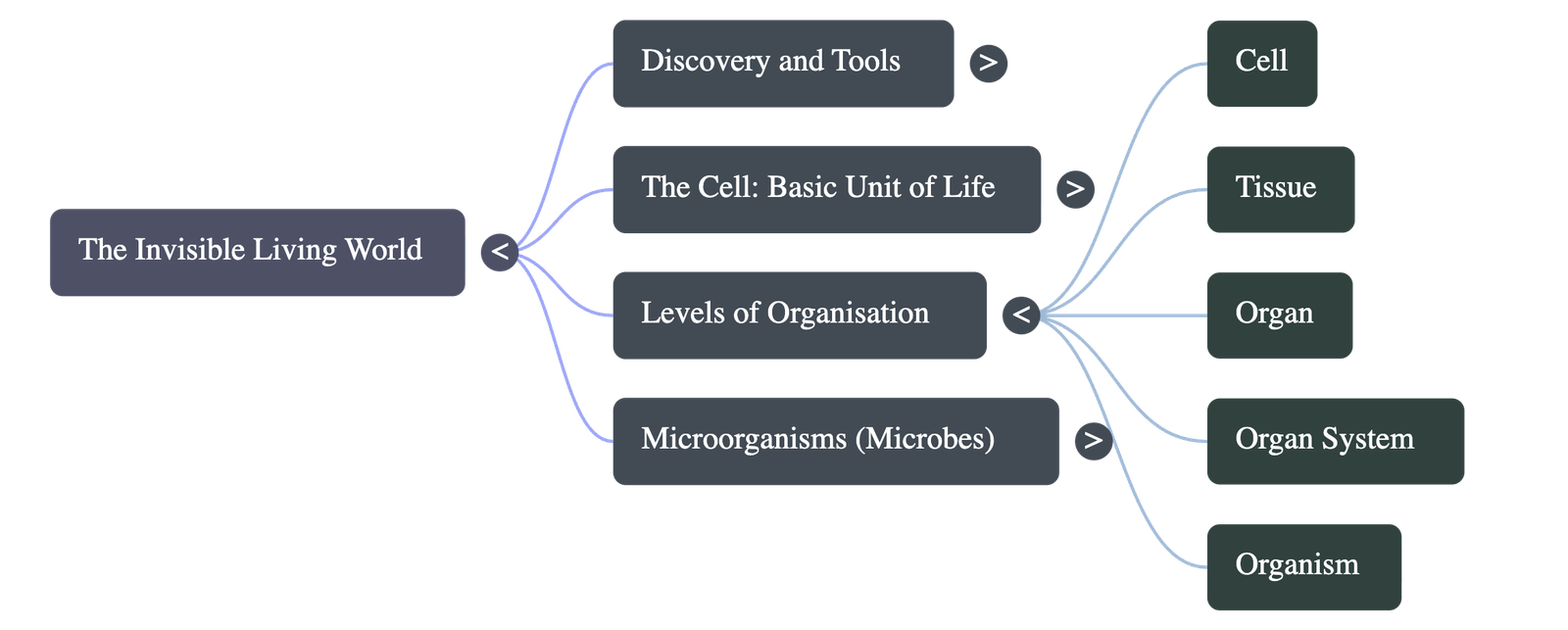
- The body of a complex organism is highly organized in the following sequence: Cell → Tissue → Organ → Organ System → Organism.
- Multicellular organisms (like plants and animals) are made of many cells but always begin their lives as a single cell known as an egg.
- The yolk of an ostrich egg is currently the largest known single cell in the living world.
4. Understanding Microorganisms (Microbes)
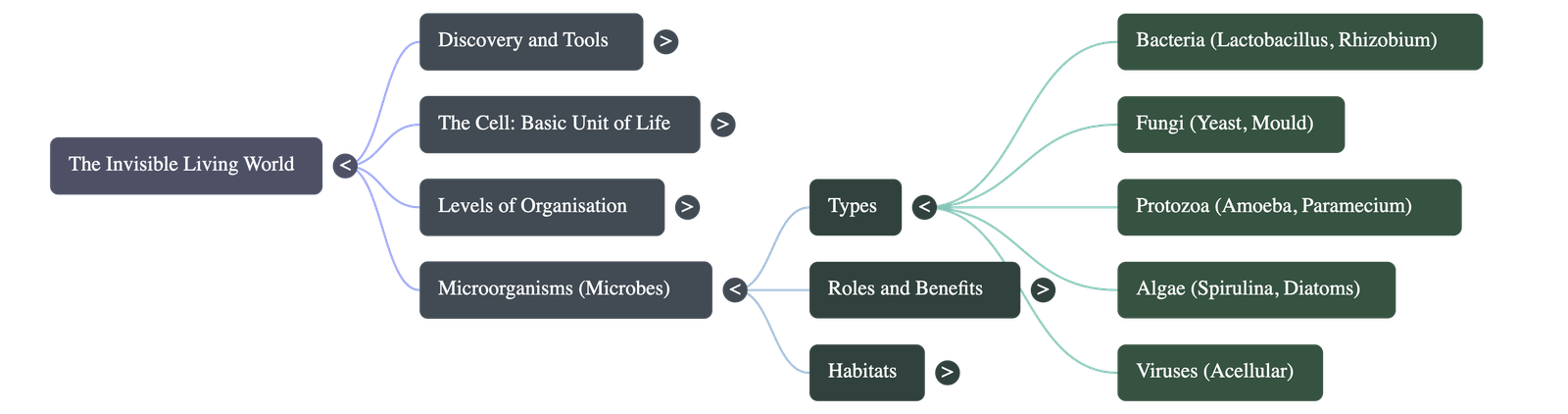
- Microorganisms are living beings so small that they can only be seen with a microscope (or foldscope). They can be unicellular (like Amoeba and bacteria) or multicellular (like some fungi and algae).
- They are omnipresent—found in soil, water, air, hot springs, snow, and even inside the human gut.
- Major Categories: Protozoa, Algae, Fungi (e.g., bread mould, yeast), and Bacteria.
- Viruses are also microscopic but are considered acellular; they only multiply when they enter a living host cell.
5. How Microbes Help the Environment
- Natural Recyclers: Microbes like bacteria and fungi decompose dead plants and animal waste, breaking them down into simpler, nutrient-rich manure that fertilizes the soil.
- Biogas Production: In oxygen-free environments, certain bacteria decompose waste and release a mixture of gases, highly rich in methane, which can be used as fuel.
- Nitrogen Fixation: Rhizobium bacteria live in the root nodules of leguminous plants (like peas and beans). They trap atmospheric nitrogen and make it usable for plants, reducing the need for chemical fertilizers.
- Microalgae: These tiny plant-like organisms produce over half of the Earth's oxygen supply, clean water, serve as food for aquatic life, and can be used to generate biofuels.
6. Microorganisms in Our Food
- Baking: Yeast is a unicellular fungus that breaks down sugar for energy, releasing carbon dioxide gas in the process. This gas forms bubbles that make bread, cakes, and dough fluffy. It also produces a small amount of alcohol during fermentation.
- Curd Formation: The bacterium Lactobacillus feeds on lactose (milk sugar), multiplies in warm conditions, and produces lactic acid. This acid sours and thickens the milk into curd.
- Superfoods: Certain microalgae, like Spirulina, are incredibly rich in proteins and Vitamin B12, making them excellent nutritional supplements for humans.
7. Cellular Uniqueness of Microbes
- Unicellular microorganisms carry out every single function necessary for their survival (eating, respiring, reproducing) entirely within one cell.
- Fungal cells differ from animal cells because they have a cell wall, but unlike plant cells, they lack chloroplasts and cannot photosynthesize.
- Bacterial Cells: Bacteria possess a unique cell structure. They do not have a well-defined nucleus or a nuclear membrane. Instead, their genetic material is found in a region called the nucleoid.
Do checkout all questions & answers of this chapter.
Quick Navigation:
| | | |
1 / 1
Quick Navigation:
| | | |