Quick Navigation:
| | | |
Sound
Hello students! Welcome to our Class 10 Physics lesson. Below is your detailed, point-wise study guide for the entire chapter on Sound. Make sure to understand each section thoroughly for your exams!
(A) Reflection of Sound Waves and Echoes
7.1 Sound Waves
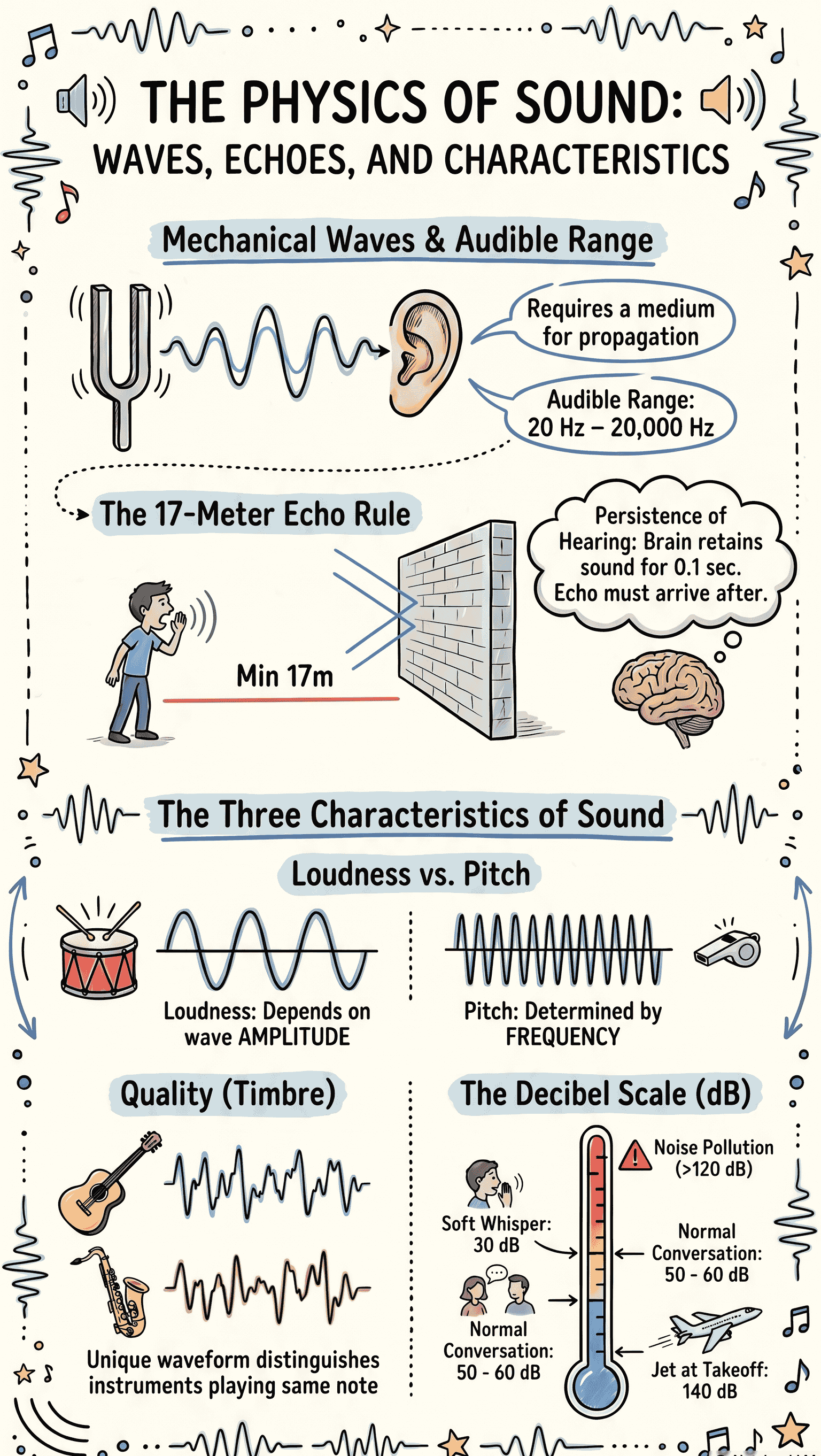
- Nature of Sound: Sound is a mechanical wave produced by vibrating bodies. It requires a material medium (solid, liquid, or gas) for propagation and cannot travel in a vacuum.
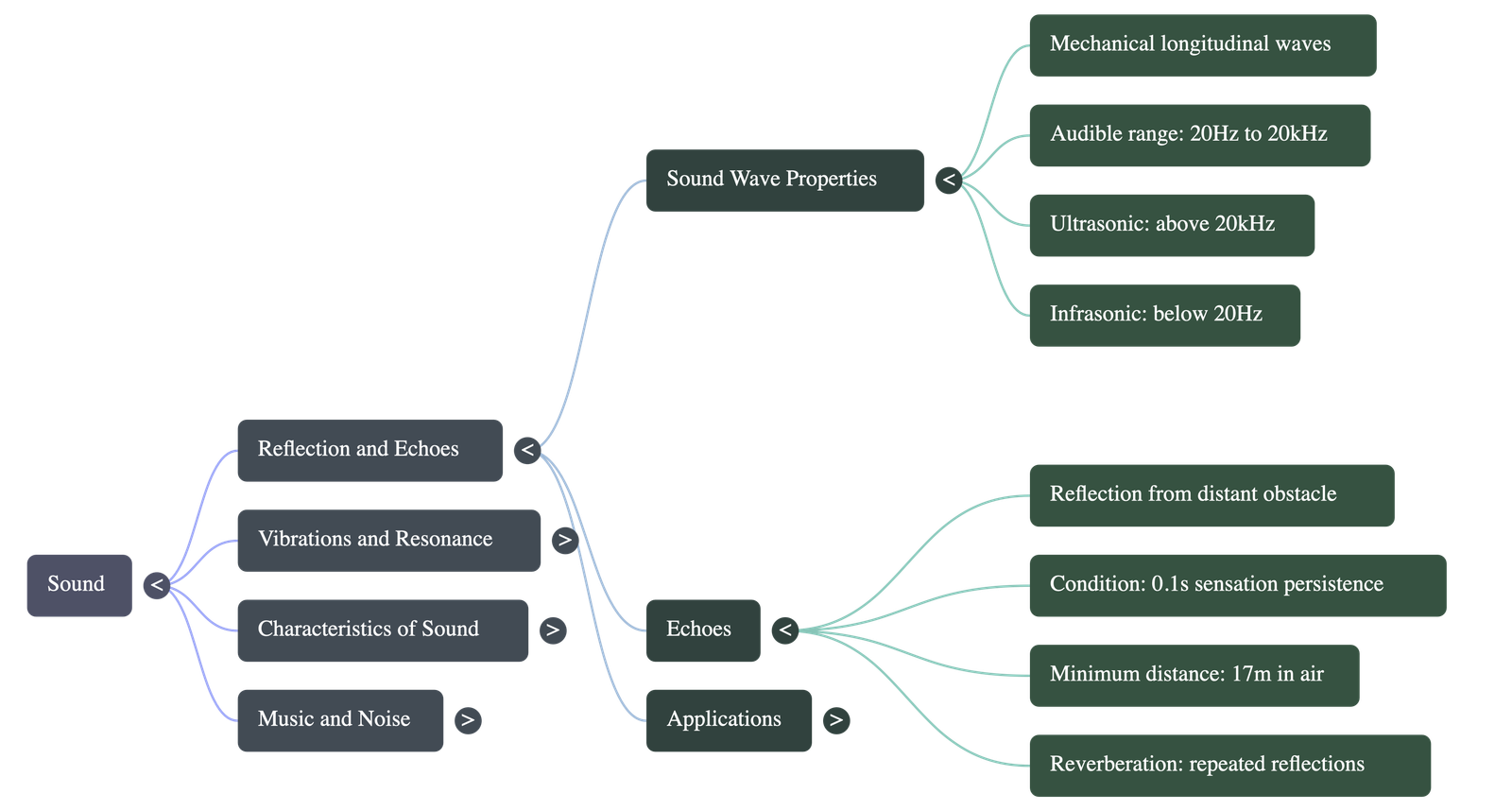
- Audible Range: The human ear can only hear frequencies between 20 Hz and 20,000 Hz. Frequencies above 20,000 Hz are called ultrasonic, and below 20 Hz are called infrasonic.
- Wave Properties:
- Amplitude: Maximum displacement of the medium's particle from its mean position.
- Frequency (f): Number of vibrations in one second.
- Wavelength (λ): Distance travelled by a wave in one time period.
- Wave Velocity (V): Speed of the wave, calculated as V = f × λ.
- Types of Waves:
- Longitudinal Waves: Particles vibrate along the direction of propagation (forms compressions and rarefactions). E.g., Sound in air.
- Transverse Waves: Particles vibrate perpendicular to the direction of propagation (forms crests and troughs). E.g., Sound in solids or on liquid surfaces.
- Light vs. Sound Waves: Light waves are electromagnetic, travel very fast (3 × 10⁸ m/s), and can pass through a vacuum. Sound waves are mechanical, travel much slower (approx. 330 m/s in air), and require a medium.
7.2 Reflection of Sound Waves
- When sound waves strike a hard surface, they bounce back into the same medium, obeying the laws of reflection (Angle of incidence = Angle of reflection).
- Unlike light, sound does not require a highly polished surface. The only condition is that the reflecting surface must be larger than the wavelength of the sound wave.
- Applications: Megaphones, speaking tubes, and ear trumpets use multiple reflections to guide sound.
7.3 Echo
- Definition: An echo is the sound heard after reflection from a distant obstacle (like a cliff or wall) after the original sound has ceased.
- Conditions for hearing an echo:
- Time Gap: The reflected sound must reach the ear at least 0.1 seconds after the original sound (due to the persistence of hearing in human ears).
- Minimum Distance: The obstacle must be at a minimum distance of 17 meters in air (for sound travelling at 340 m/s).
- The reflecting surface must be large, and the sound must be loud enough to be audible after reflection.
7.4 Determination of Speed of Sound by the Method of Echo
- By standing at a known distance (d) from a reflecting surface and measuring the time (t) it takes to hear the echo, the speed of sound (V) can be calculated using the formula: V = 2d / t.
7.5 Use of Echoes
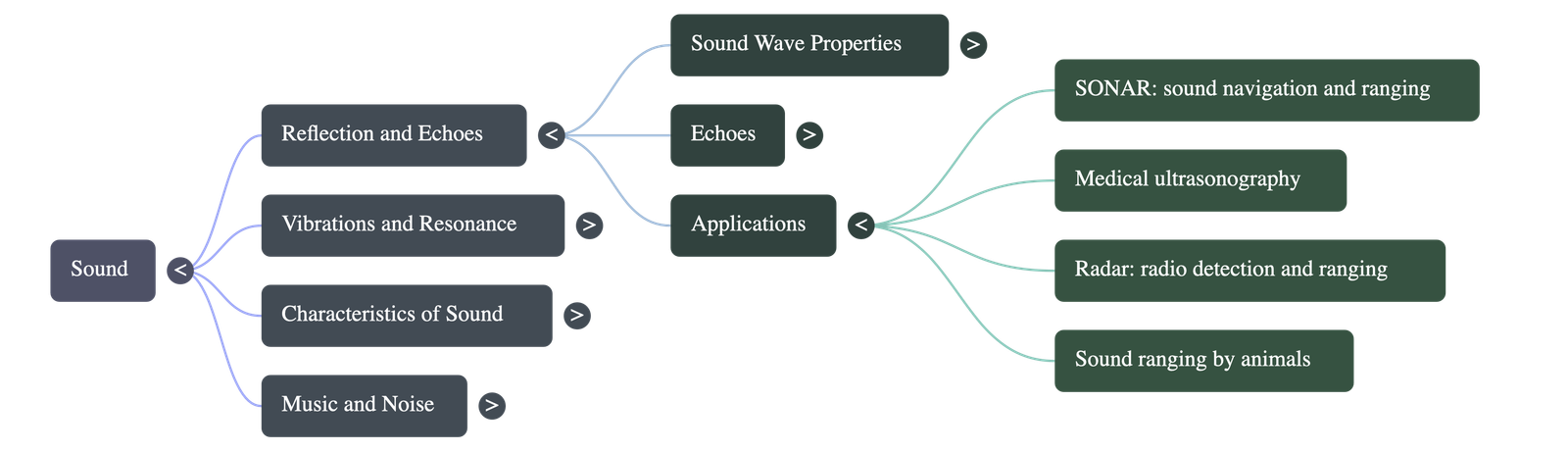
- Why Ultrasonic Waves? They can travel undeviated over long distances, be confined to narrow beams, and are not easily absorbed by the medium.
- Animals: Bats and dolphins emit ultrasonic squeaks. By hearing the reflected echoes, they detect obstacles, navigate safely in the dark (sound ranging), and hunt prey.
- SONAR (Sound Navigation and Ranging): Used by ships to find the depth of the sea and to detect underwater obstacles like enemy submarines or sunken ships.
- Medical Field: Echoes of ultrasonic waves are used for imaging human organs (Ultrasonography) and the heart (Echocardiography).
(B) Natural, Damped and Forced Vibrations; Resonance
7.6 Natural Vibrations
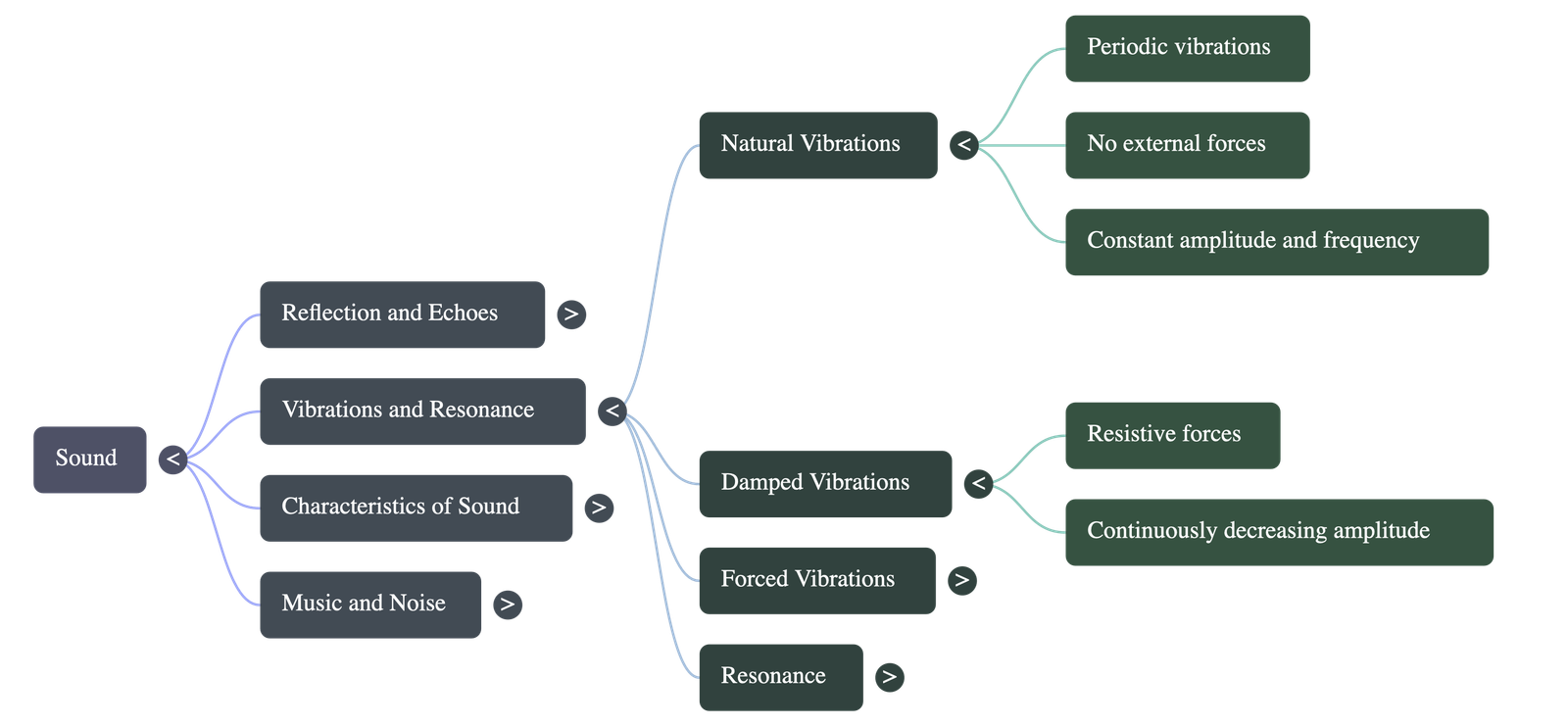
- Definition: Periodic vibrations of a body in the absence of any external force are called natural (or free) vibrations.
- Key Feature: The amplitude and frequency remain perfectly constant. These can practically occur only in a vacuum where there is no friction or air resistance.
- Examples: A simple pendulum oscillating in a vacuum, a tuning fork struck against a rubber pad, strings of musical instruments, and air columns in flutes.
7.7 Damped Vibrations
- Definition: Periodic vibrations of a body of decreasing amplitude in the presence of a resistive force (like air friction) are called damped vibrations.
- Key Feature: The vibrating body loses energy continuously as heat to the surrounding medium, causing the amplitude to decrease until it ultimately stops.
- Examples: A simple pendulum oscillating in air, or a plucked string of a guitar left to vibrate on its own.
7.8 Forced Vibrations
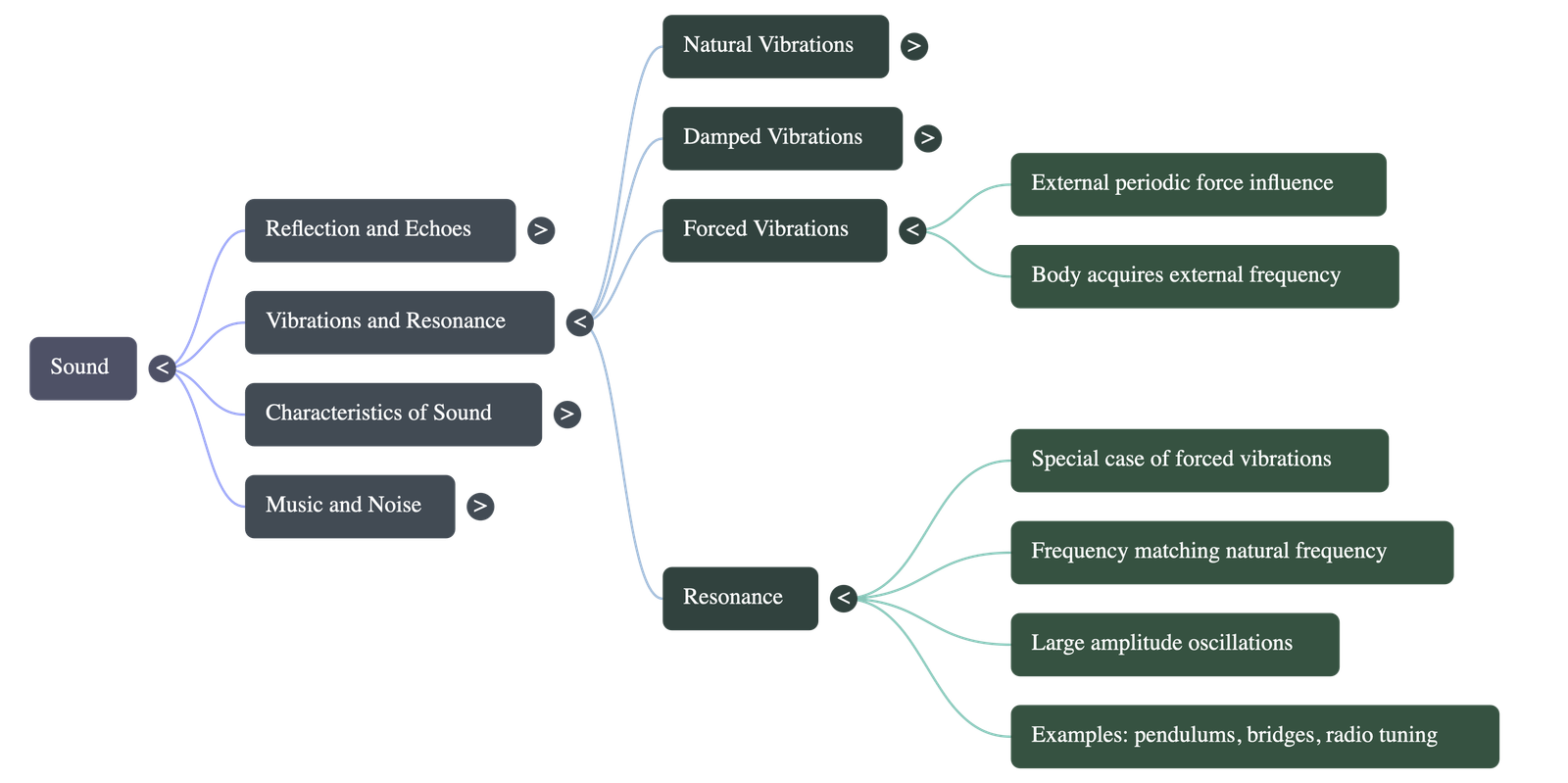
- Definition: Vibrations of a body taking place under the influence of an external periodic force are called forced vibrations.
- Key Feature: The body vibrates not with its own natural frequency, but with the frequency of the external applied force. The amplitude is usually very small.
- Examples: Vibrations produced in a microphone diaphragm by a speaker's voice, or a tuning fork's stem pressed against a tabletop causing the table to vibrate.
7.9 Resonance (A Special Case of Forced Vibrations)
- Condition: Resonance occurs when the frequency of the externally applied periodic force becomes exactly equal to the natural frequency of the vibrating body.
- Result: The body begins to vibrate with a massively increased (very large) amplitude and produces a loud sound.
7.10 Some Examples of Resonance
- Pendulums: If multiple pendulums are suspended from the same rubber string, and one is made to vibrate, another pendulum of the exact same length will start vibrating with maximum amplitude due to resonance.
- Machine Parts: A rattling sound may come from a vehicle at a specific speed when the engine's vibrations match the natural frequency of loose vehicle parts.
- Musical Instruments: Stringed instruments have hollow sound boxes containing air. When strings vibrate, forced resonance happens in the air column, creating a loud sound.
- Suspension Bridges: Marching soldiers are asked to break step when crossing a bridge to prevent their synchronized steps from matching the natural frequency of the bridge, which could cause structural collapse.
- Radio & TV Receivers: Tuning into a specific station involves changing the electronic circuit's frequency to perfectly match (resonate with) the frequency of the broadcast signal.
(C) Characteristics of Sound & Their Subjective and Objective Nature
7.11 Characteristics of Sound
There are three primary characteristics used to distinguish different sounds:
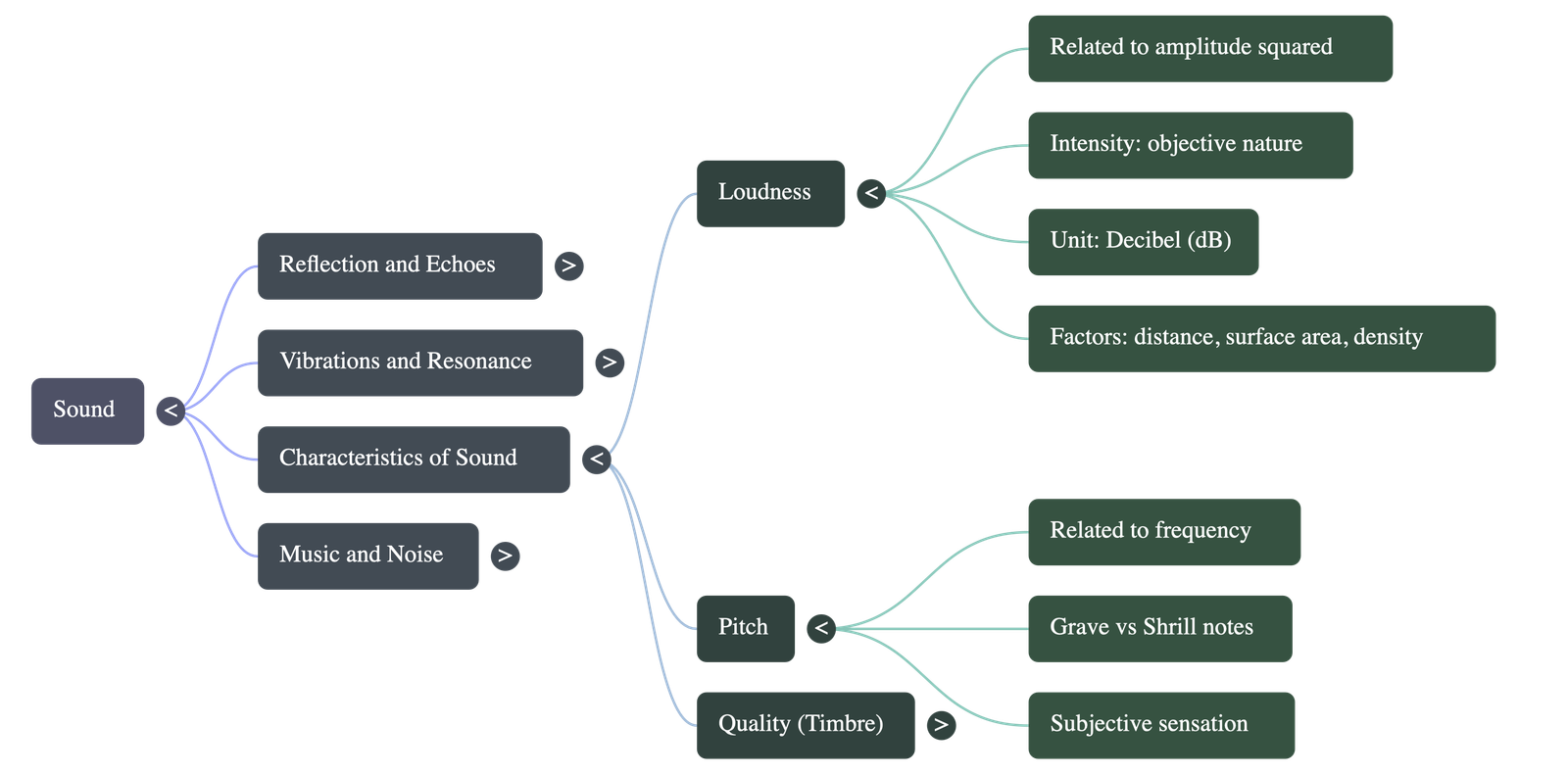
- 1. Loudness and Intensity:
- Loudness (Subjective): It is a sensation perceived by the ear. It allows us to distinguish between a faint and a loud sound of the same pitch.
- Intensity (Objective): The amount of sound energy passing per second normally through a unit area. Measurable quantity (W/m²).
- Factors Affecting Loudness:
- Proportional to the square of the amplitude of the wave.
- Inversely proportional to the square of the distance from the source.
- Depends on the surface area of the vibrating body.
- Depends on the density of the medium.
- Increases in the presence of resonant bodies.
- Units: Measured in decibels (dB) or phon.
- Noise Pollution: Sound levels continuously above 120 dB are unpleasant, cause headaches, and can permanently damage hearing. The safe limit is 0 to 80 dB.
- 2. Pitch (or Shrillness) and Frequency:
- Pitch (Subjective): The characteristic of sound that helps distinguish an acute (shrill) note from a grave (flat) note of the same loudness.
- Frequency (Objective): Pitch strictly depends on the frequency of the wave.
- A high frequency produces a high-pitch (shrill) sound (e.g., a woman's voice or a flute).
- A low frequency produces a low-pitch (flat/grave) sound (e.g., a man's voice or a bass drum).
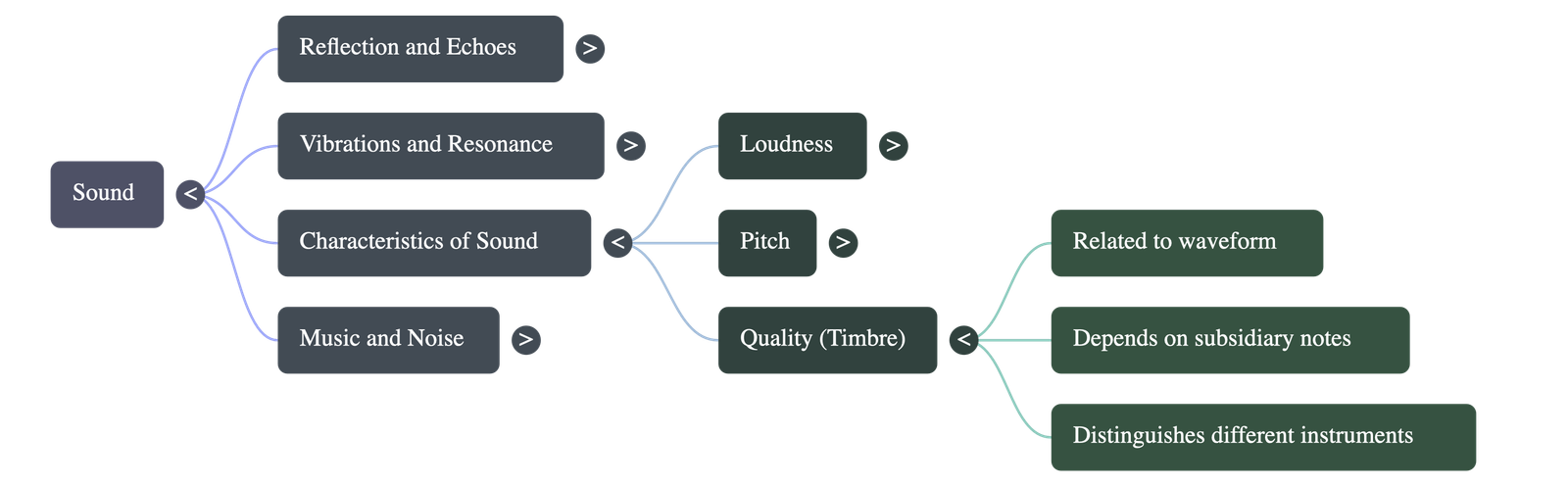
- 3. Quality (Timbre) and Wave Form:
- Quality (Subjective): The characteristic that allows us to distinguish between two sounds having the exact same loudness and same pitch, but produced by different instruments or sources.
- Wave Form (Objective): Quality depends entirely on the wave form.
- Different instruments emit different subsidiary notes (harmonics) of varying amplitudes alongside the principal vibration. The blending of these notes changes the overall shape (wave form) of the wave, allowing us to distinguish a piano from a violin even if they play the exact same note.
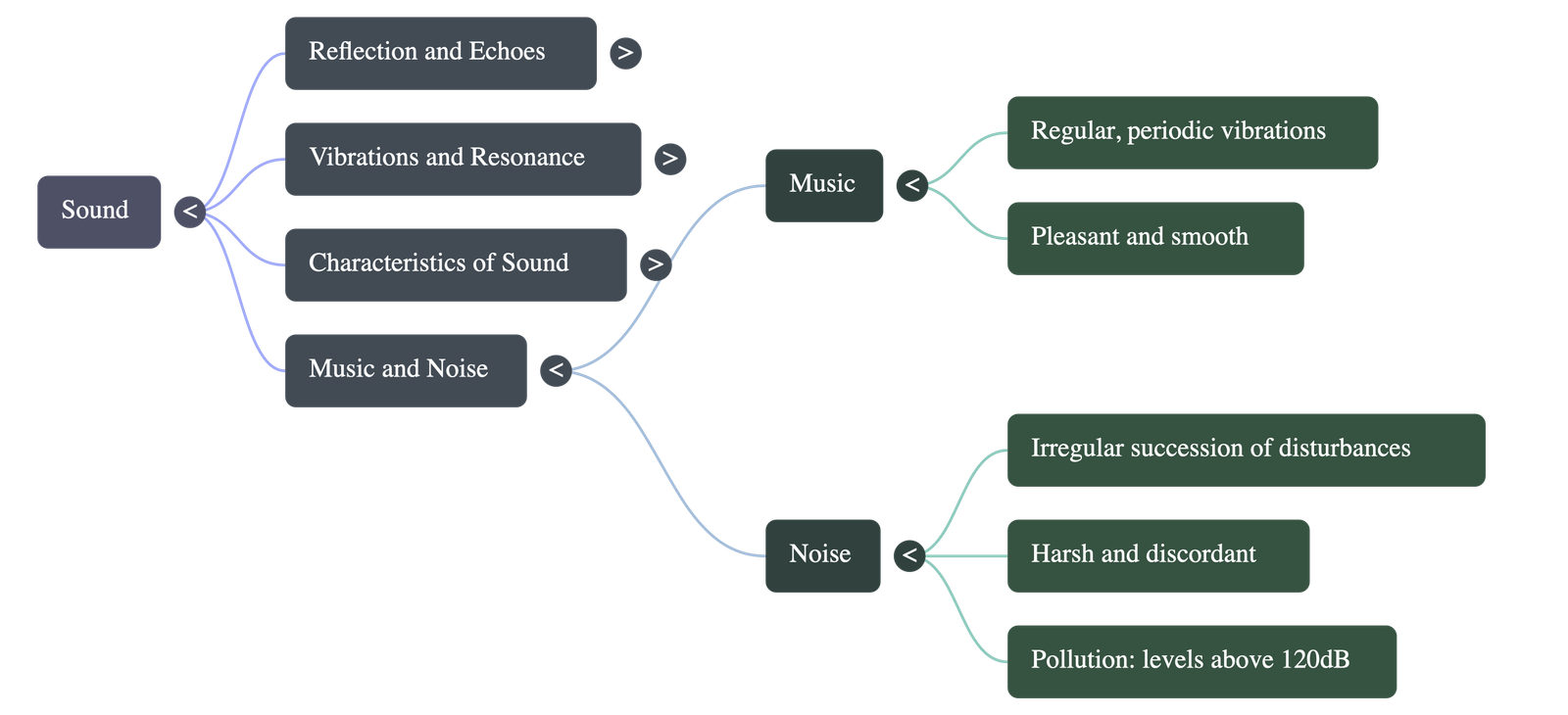
7.12 Music and Noise
- Music: A pleasant, smooth, continuous, and uniform sound produced by regular, periodic vibrations. The waveform is completely regular, with no sudden changes in amplitude or wavelength. Sound levels are generally low (10 dB to 30 dB). Examples: Sounds from a violin, piano, or flute.
- Noise: An unpleasant, harsh, and discordant sound to the ears, produced by an irregular succession of disturbances. The waveform is irregular and short in duration. Sound levels are high (above 120 dB). Examples: Sounds from an aeroplane, industrial machines, or dropping a stone on a tin sheet.
Note for my Class 10 students: Physics is all about understanding concepts rather than just memorising them. Pay special attention to the difference between subjective sensations (loudness, pitch, quality) and objective measurements (intensity, frequency, waveform) in Part C, as well as the exact conditions required for echoes and resonance. Good luck!
Do checkout all questions & answers of this chapter.
Quick Navigation:
| | | |
1 / 1
Quick Navigation:
| | | |