Quick Navigation:
| | | |
Radioactivity
Class 10 Physics Detailed Summary
Dear Students,
Below is the complete, point-wise summary of our chapter on Radioactivity. I have broken it down section-by-section so you can easily revise the concepts for your board exams. Happy studying!
(A) Atomic Structure and Radioactivity
12.1 & 12.2: Structure of Atom and Nucleus
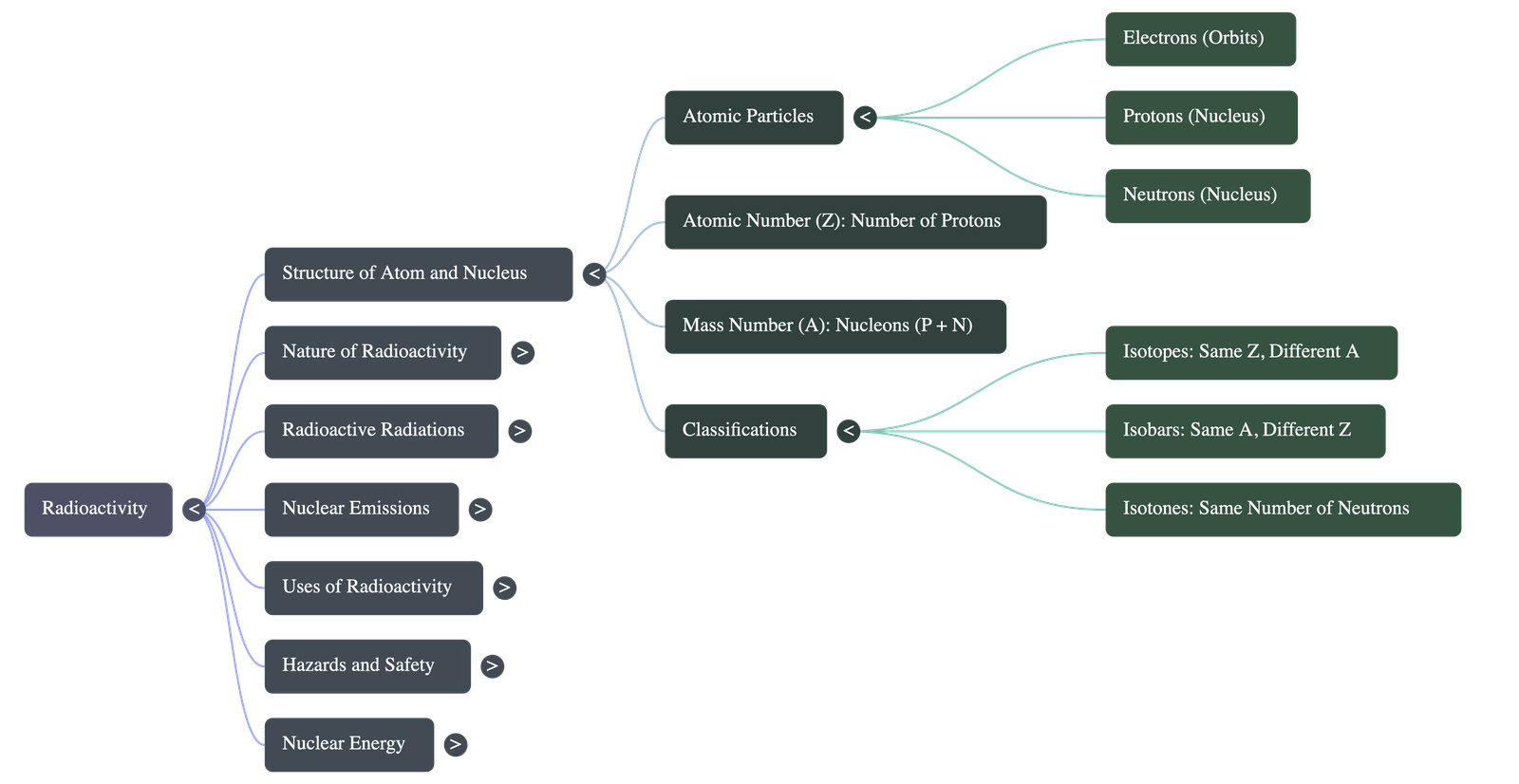
- An atom consists of a central nucleus containing protons (positively charged) and neutrons (neutral), collectively called nucleons.
- Electrons (negatively charged) revolve around the nucleus in specific stationary orbits.
- Atomic Number (Z): The number of protons in the nucleus (equal to the number of electrons in a neutral atom).
- Mass Number (A): The total number of nucleons (protons + neutrons) in the nucleus. Number of neutrons = A - Z.
- An atom is electrically neutral because the number of protons equals the number of electrons.
12.3 to 12.5: Isotopes, Isobars, and Isotones
- Isotopes: Atoms of the same element having the same Atomic Number (Z) but different Mass Number (A). They have identical chemical properties but different nuclear properties. Example: Hydrogen has three isotopes (Protium, Deuterium, Tritium).
- Isobars: Atoms of different elements having the same Mass Number (A) but different Atomic Numbers (Z). Example: 14C and 14N.
- Isotones: Atoms having a different number of protons but the exact same number of neutrons (A - Z).
12.6 & 12.7: Radioactivity & Emission of Radiations
- Discovered by Henry Becquerel in 1896 using uranium salts.
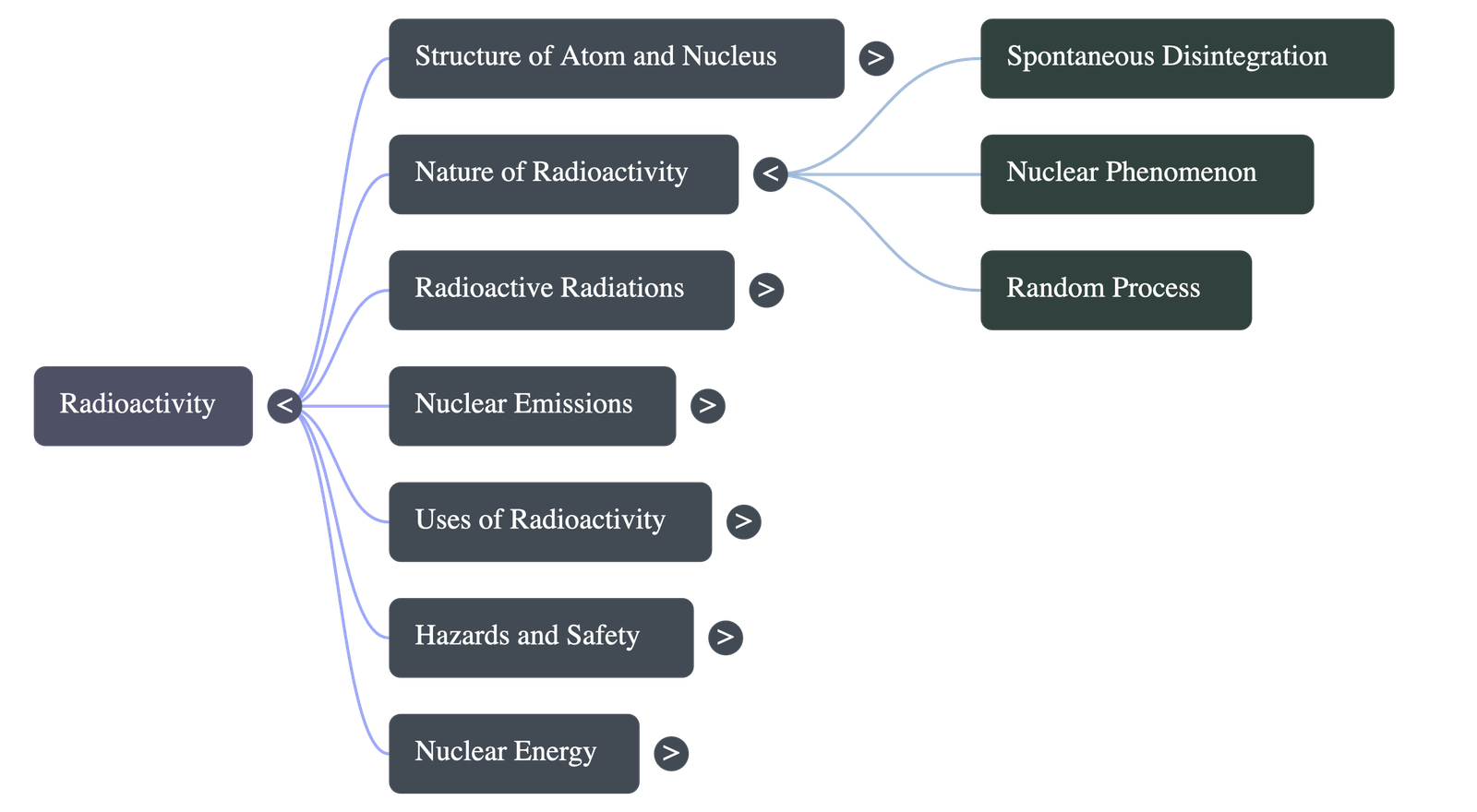
- Radioactivity is the spontaneous emission of alpha (α), beta (β), or gamma (γ) radiations from the nucleus of unstable atoms.
- It is strictly a nuclear phenomenon and a completely random process. It is unaffected by physical changes (like temperature or pressure) or chemical changes.
- In an electric/magnetic field, α particles deflect towards the negative plate, β particles deflect strongly towards the positive plate, and γ rays pass completely undeflected.
12.8 to 12.11: Properties of Alpha, Beta, and Gamma Radiations
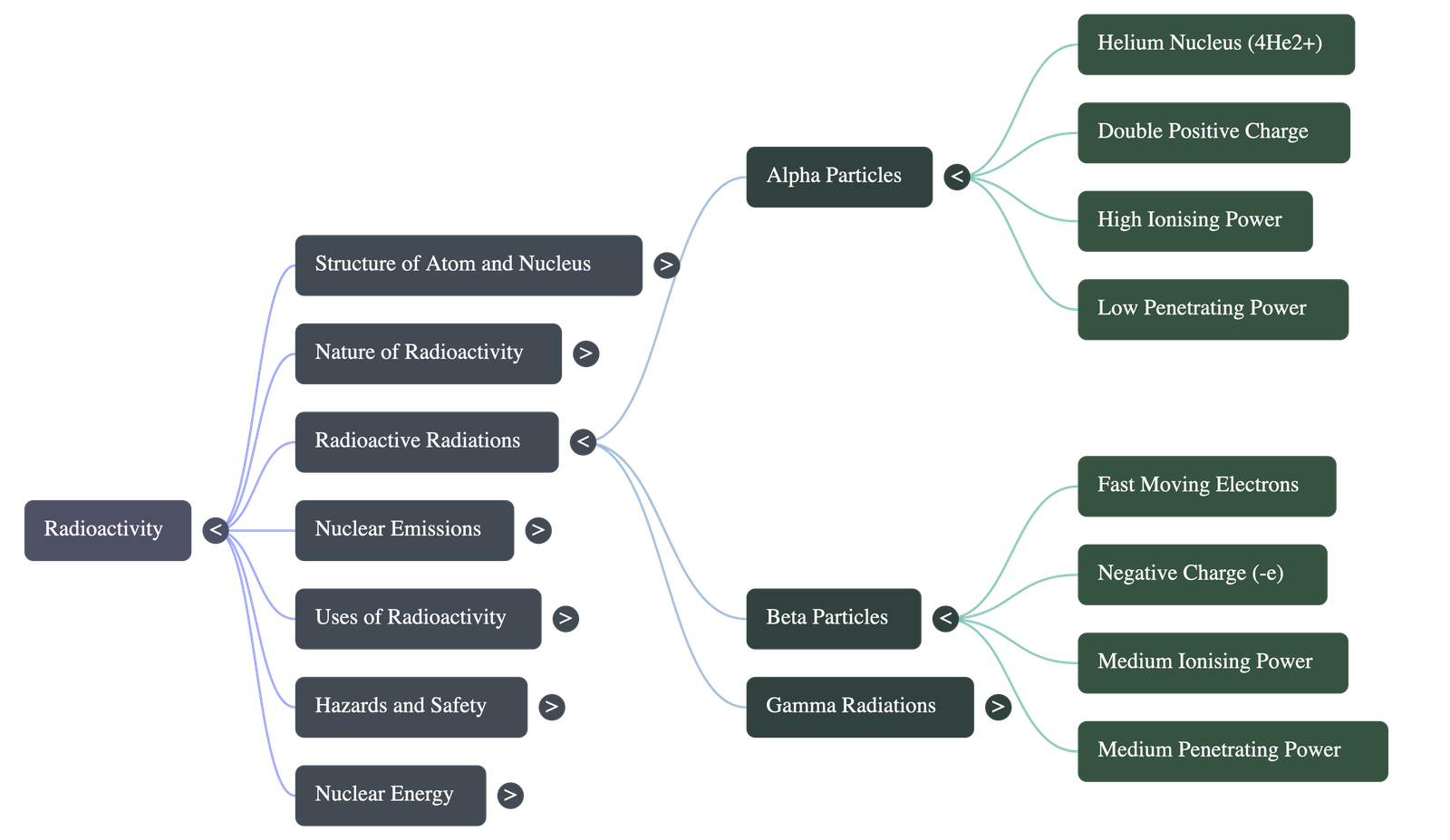
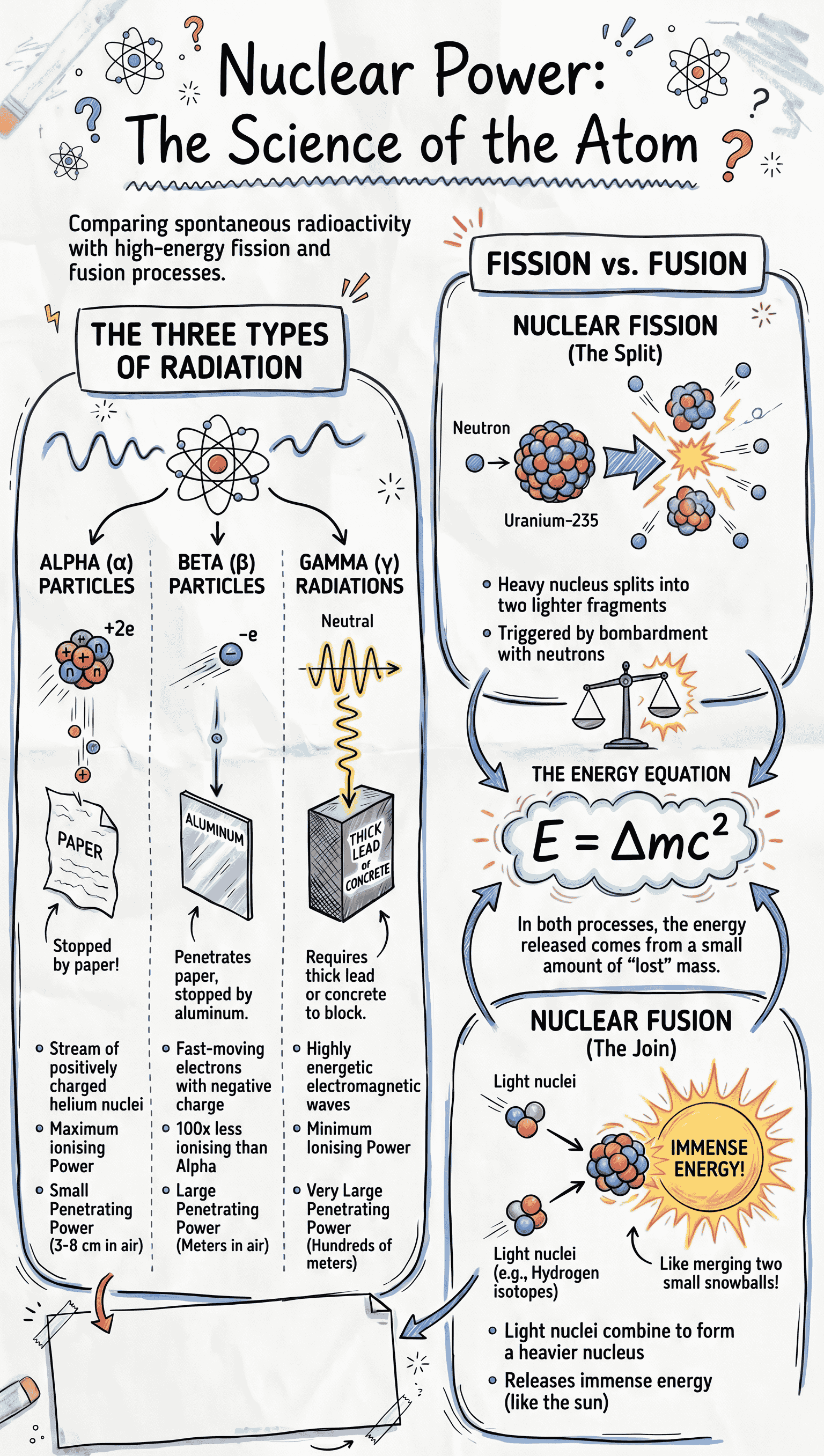
- Alpha (α) Particles: Positively charged helium nuclei (2 protons, 2 neutrons). They have a high mass, extremely high ionizing power (10,000 times that of gamma), but the lowest penetrating power (stopped by thin paper).
- Beta (β) Particles: Fast-moving electrons emitted from the nucleus. They have less mass, moderate ionizing power, and moderate penetrating power (stopped by ~5 mm thick aluminium).
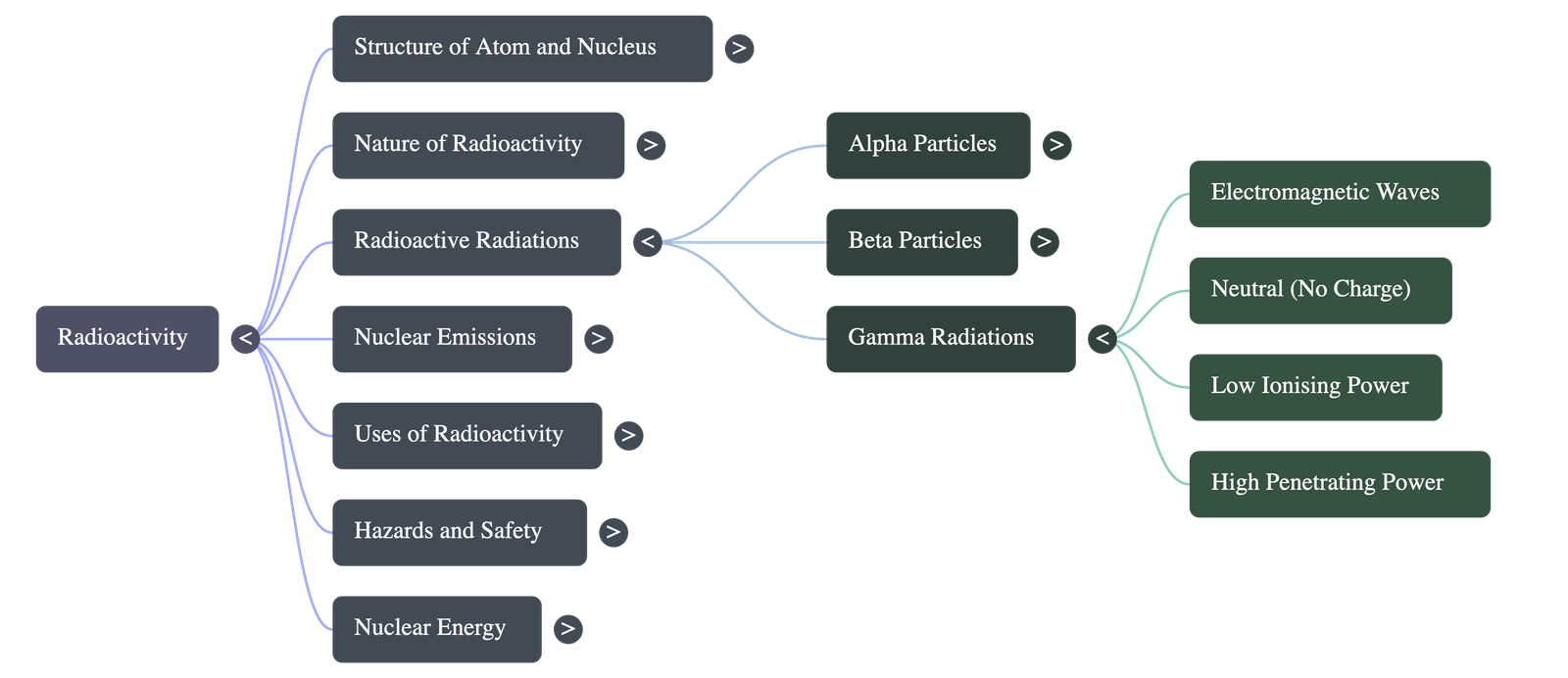
- Gamma (γ) Radiations: Highly energetic electromagnetic waves moving at the speed of light. They have zero mass and charge, very low ionizing power, but the highest penetrating power (requires thick lead or concrete to stop).
12.12: Changes within the Nucleus
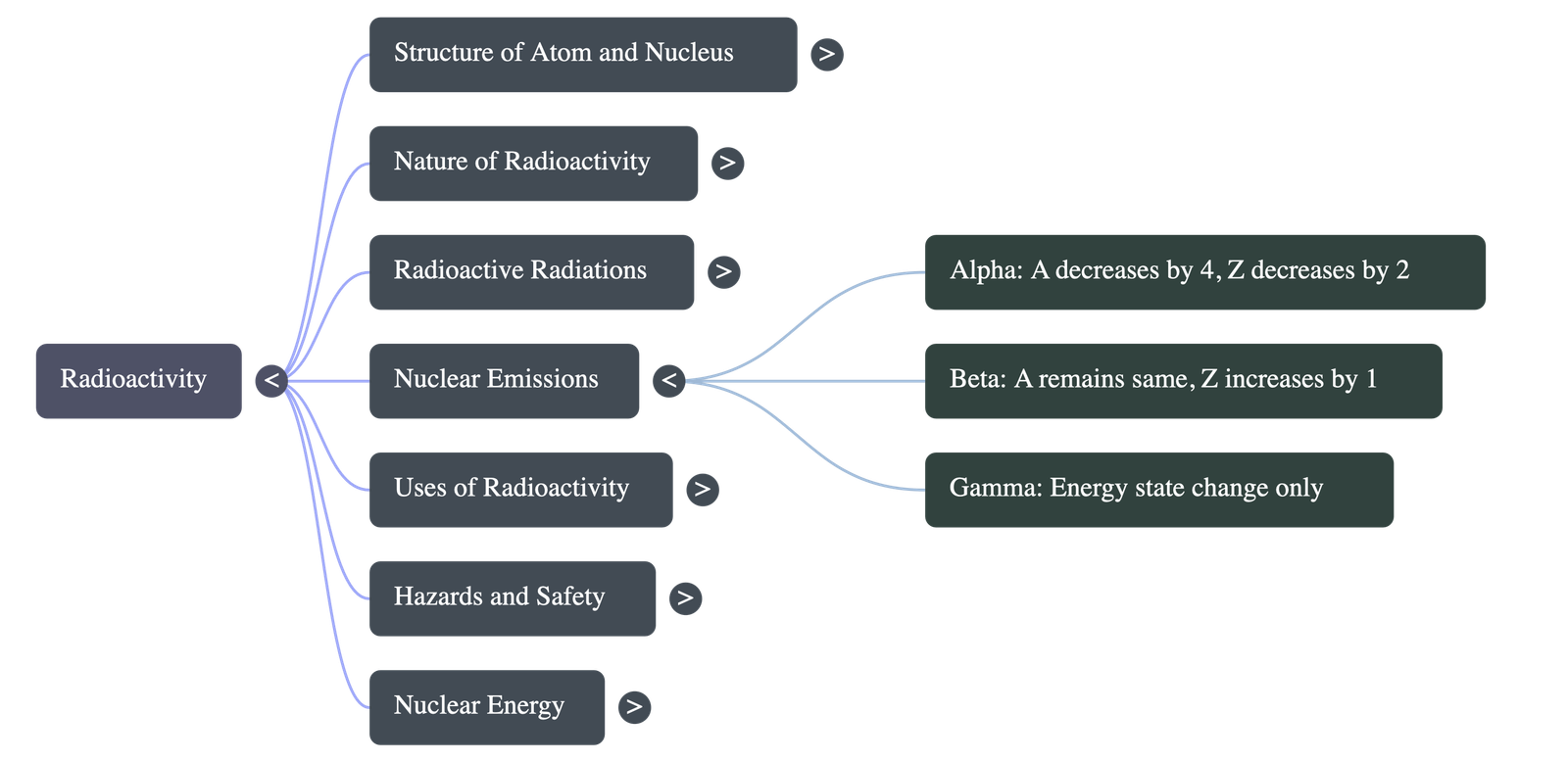
- Alpha Emission: The parent nucleus loses 2 protons and 2 neutrons. Atomic Number (Z) decreases by 2, Mass Number (A) decreases by 4.
- Beta Emission: A neutron turns into a proton and an electron. Atomic Number (Z) increases by 1, Mass Number (A) remains unchanged. The daughter nucleus is an isobar of the parent.
- Gamma Emission: The nucleus sheds excess energy to return from an excited state to its ground state. There is no change in Z or A.
12.13: Uses of Radioactivity
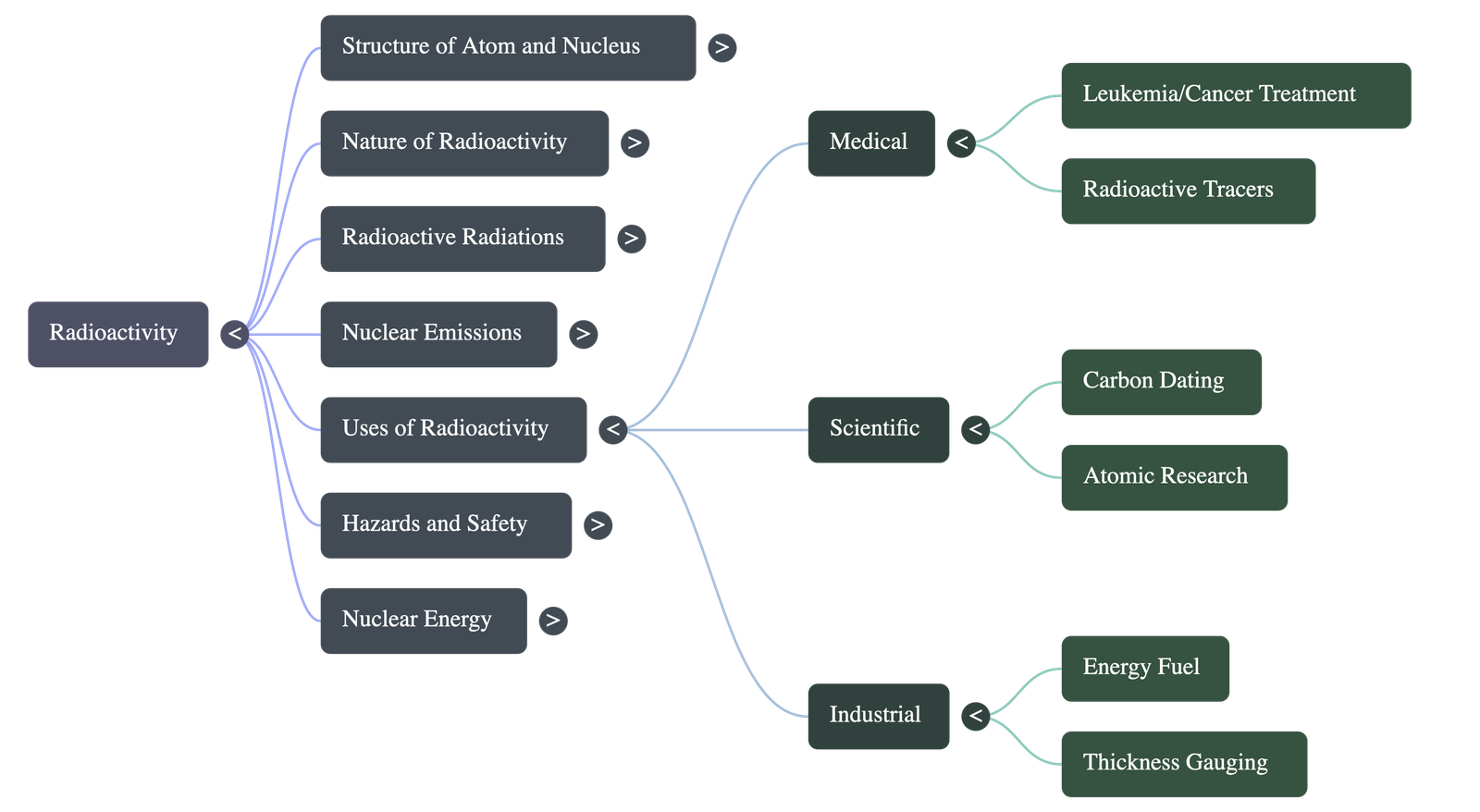
- Medical: Cobalt-60 is used in radiotherapy to cure cancer. Radioactive tracers (like radio-iodine) help diagnose brain tumors.
- Scientific: Carbon-14 is used for carbon dating to estimate the age of archaeological artifacts.
- Industrial: U-235 is used as fuel in atomic energy reactors. Penetrating power is used to control the thickness of paper, plastic, and metal sheets during manufacture.
12.14 & 12.15: Harmful Effects of Radiations
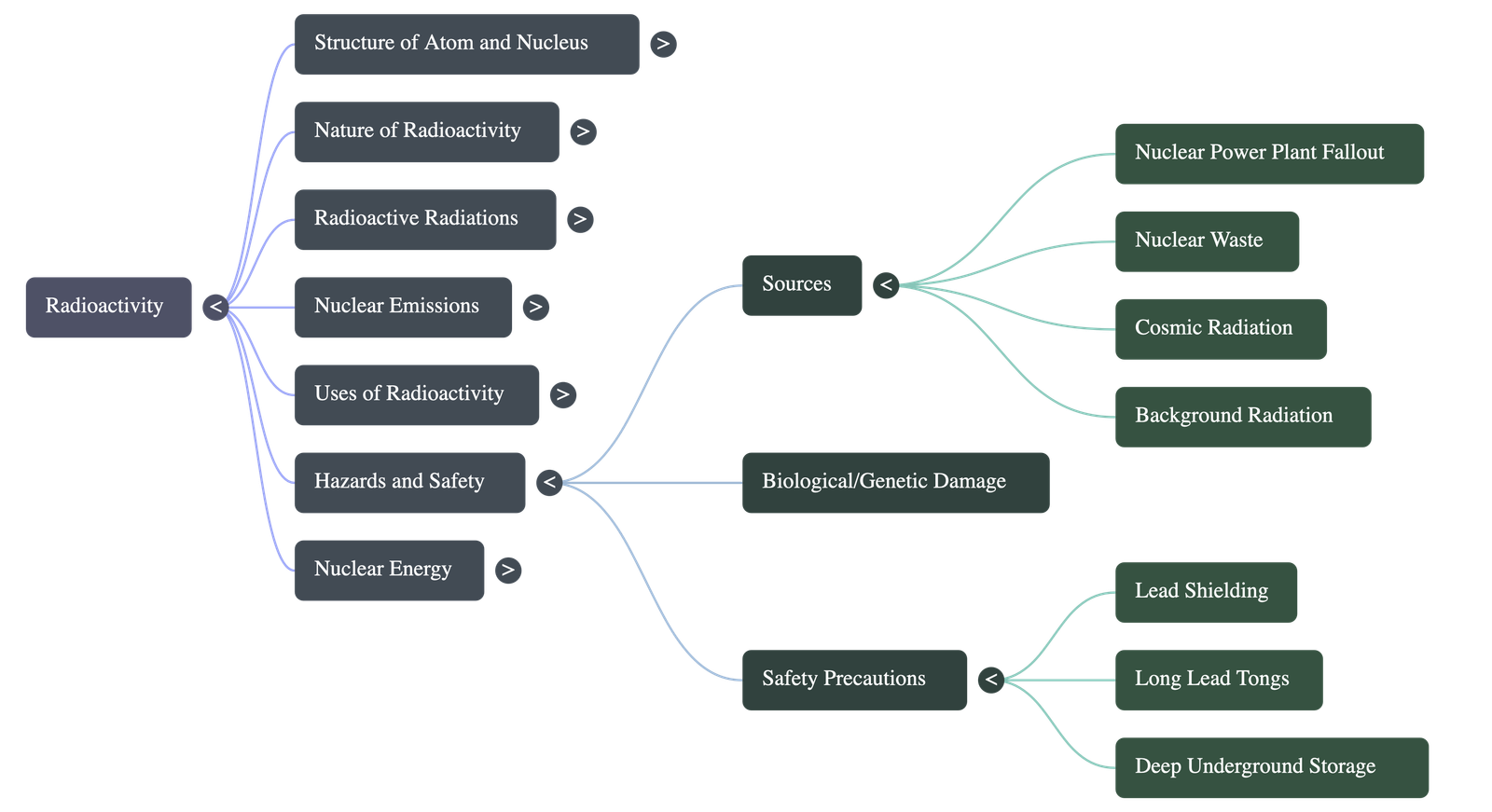
- Sources: Radioactive fallout from power plant accidents, improper disposal of nuclear waste, and cosmic radiations.
- Biological Damage: Causes short-term effects (diarrhea, hair loss), long-term effects (leukemia, cancer), and genetic effects (mutations passed to future generations).
12.16 & 12.17: Safety Precautions and Background Radiation
- Safety Measures: Workers must use special lead-lined aprons, lead gloves, and long lead tongs. Nuclear reactors must be shielded with thick lead and steel walls. Nuclear waste must be sealed in thick casks and buried in deep underground mines.
- Background Radiation: Constantly present around us. Internal sources include K-40 and C-14 inside our bodies. External sources include cosmic rays and solar radiation. Usually, it does not exceed the permissible safe dose.
(B) Nuclear Fission and Fusion
12.18: Nuclear Energy
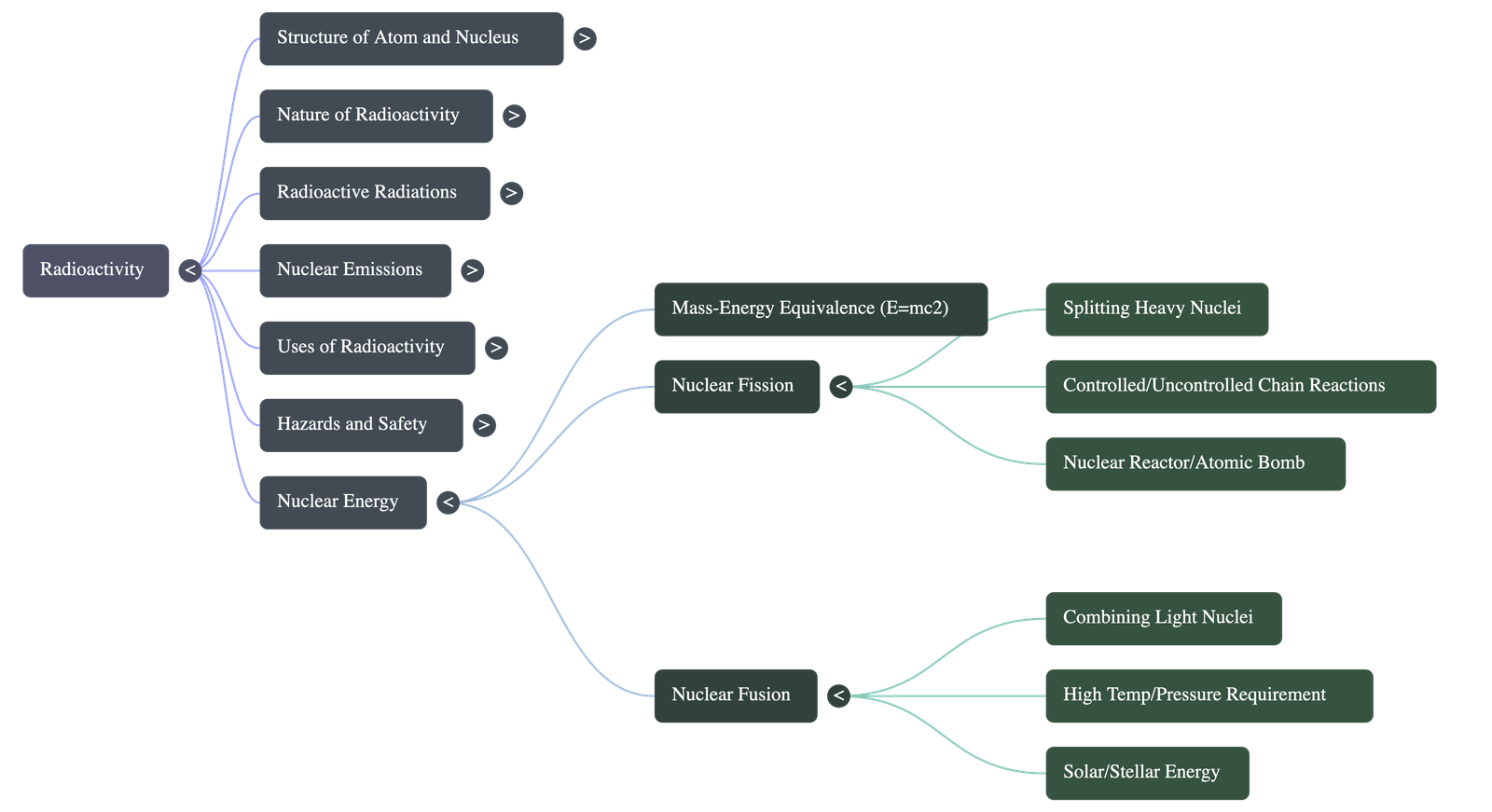
- In nuclear reactions, there is a loss of mass (mass defect, Δm) which is converted entirely into energy.
- Governed by Einstein's mass-energy equivalence: E = (Δm)c².
- The loss of 1 atomic mass unit (a.m.u.) releases 931 MeV of energy.
12.19 & 12.20: Nuclear Fission
- Nuclear Fission is the process where a heavy nucleus (like U-235) splits into two lighter nuclei of nearly equal size upon being bombarded with slow neutrons.
- This process releases tremendous energy (approx. 190 MeV per uranium atom) and 3 new neutrons.
- These new neutrons can cause further fissions, leading to a chain reaction.
- An uncontrolled chain reaction forms the basis of a nuclear bomb. A controlled chain reaction (using moderators and control rods) is used in nuclear reactors to generate electricity safely.
- Fission vs Radioactive Decay: Fission is initiated by neutron bombardment, whereas radioactive decay is a spontaneous, self-occurring process.
12.21 & 12.22: Nuclear Fusion
- Nuclear Fusion is the process where two light nuclei combine to form a single heavy nucleus, releasing a huge amount of energy.
- It requires extremely high temperatures (~107 K) and high pressure to overcome the electrostatic repulsion between the positively charged nuclei. Thus, it is called a thermo-nuclear reaction.
- Fusion is the primary source of energy for the sun and stars. It is also the underlying principle of the hydrogen bomb.
- Fusion vs Fission: Fusion involves combining light nuclei at extreme temperatures and yields more energy per unit mass than fission. Fission involves splitting heavy nuclei at ordinary temperatures and creates radioactive waste disposal problems, whereas fusion generally does not.
Keep revising these key points, class! Understanding the fundamental difference between nuclear structure, radiation types, and nuclear reactions is the key to mastering this chapter.
Do checkout all questions & answers of this chapter.
Quick Navigation:
| | | |
1 / 1
Quick Navigation:
| | | |