Quick Navigation:
| | | |
Other Sectors of Indian Economy
1. Introduction
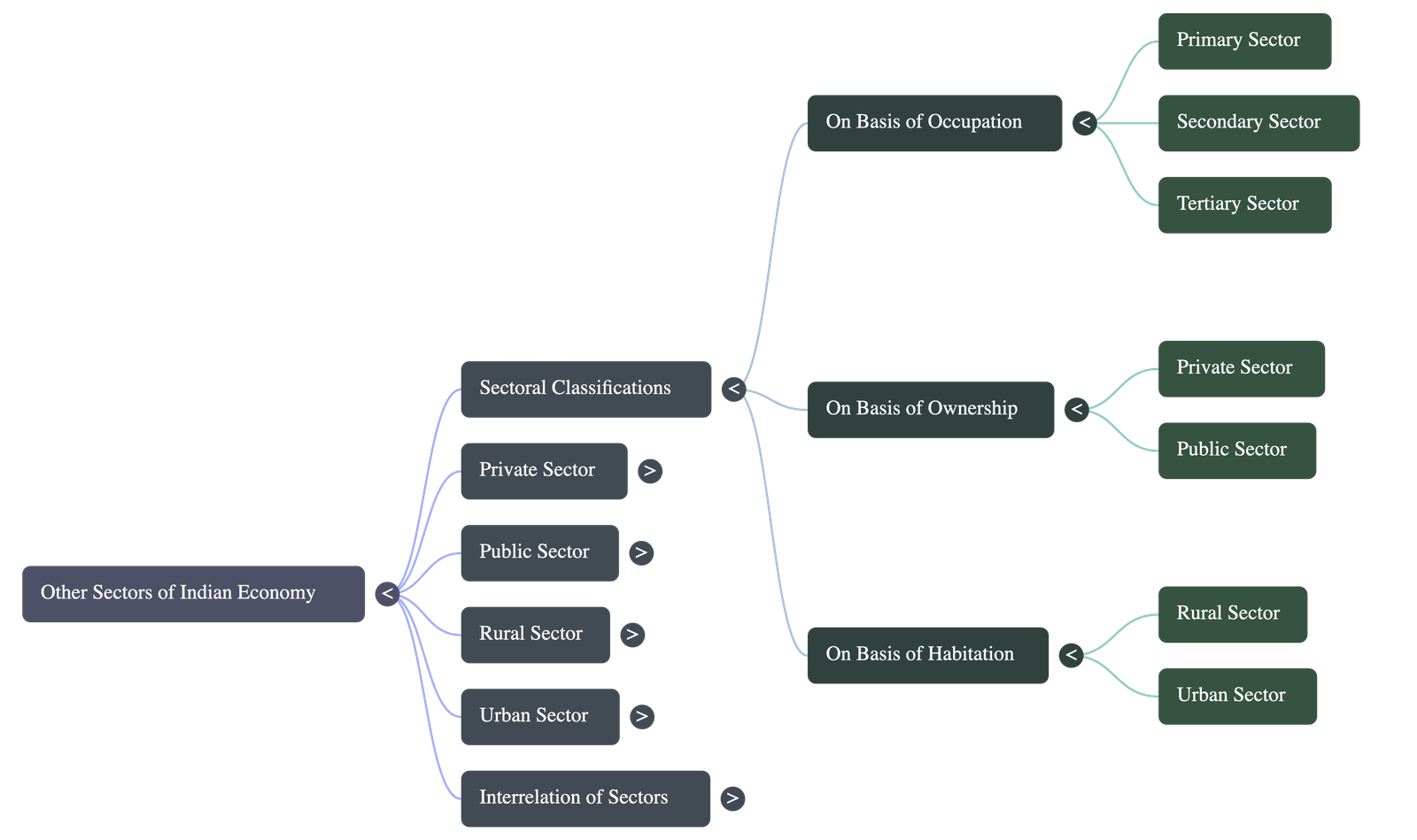
The Indian economy can be classified in several different ways based on various factors:
- On the Basis of Occupation: Divided into Primary, Secondary, and Tertiary sectors.
- On the Basis of Ownership: Divided into Private and Public sectors.
- On the Basis of Habitation: Divided into Rural and Urban sectors.
2. Classification on the Basis of Ownership of Enterprises
- After Independence, the Industrial Policy Resolutions of 1948 and 1956 divided the Indian economy into the public and private sectors.
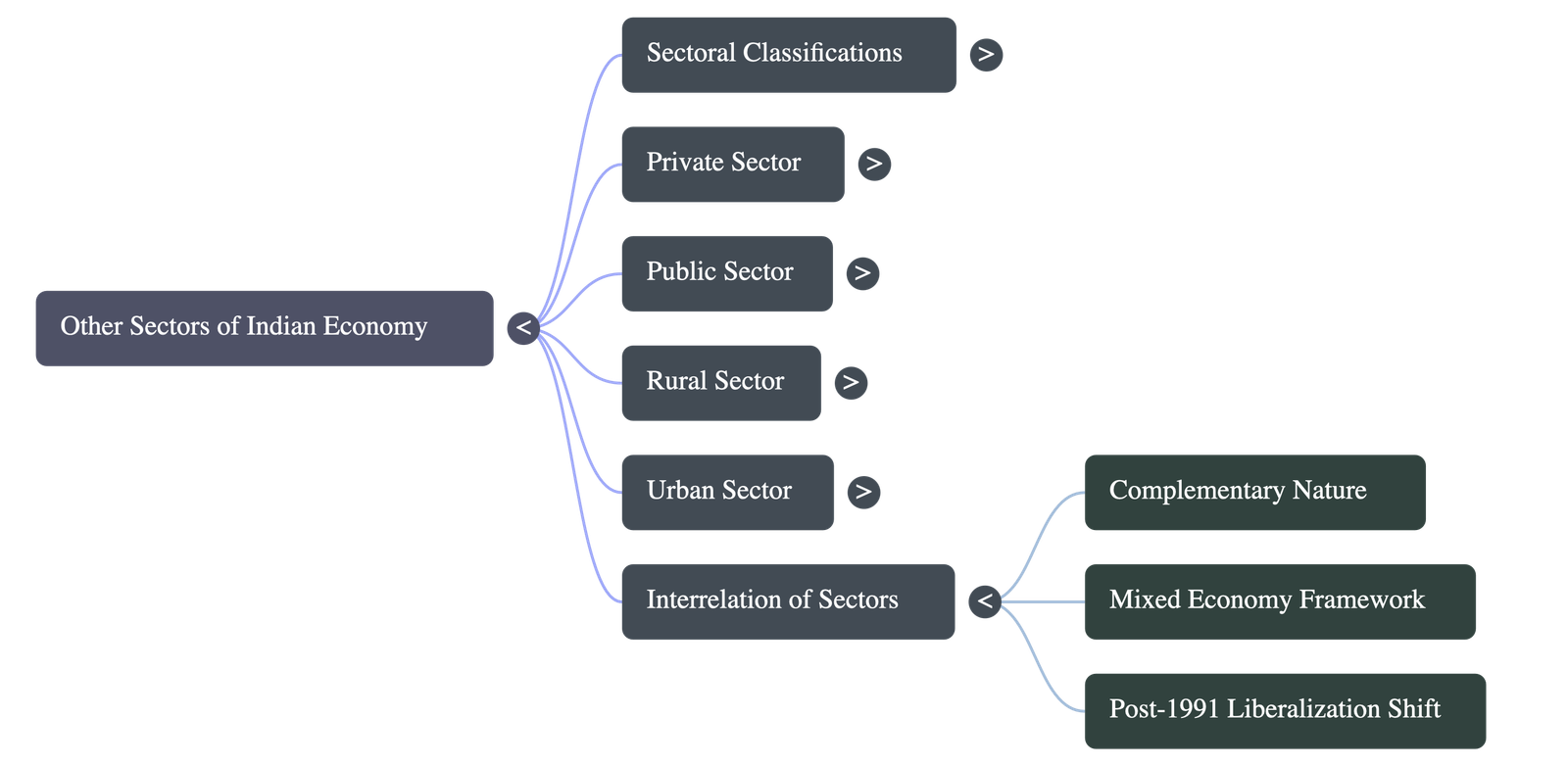
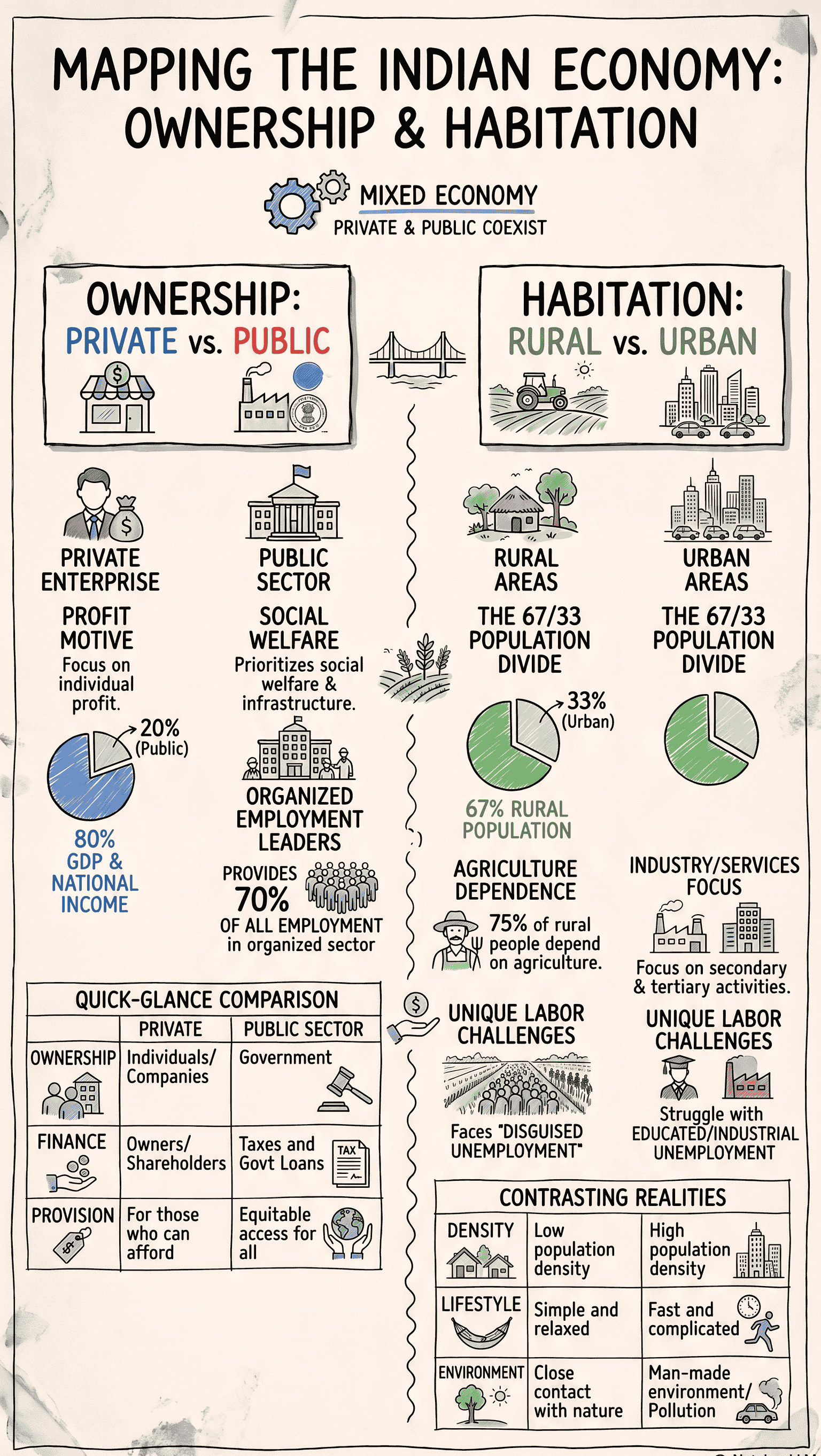
- India adopted a mixed economy, meaning both the government (public) and individuals (private) operate side-by-side.
- This structure was designed to combine the benefits of capitalism and socialism, recognizing that large-scale government investment was initially needed to build infrastructure so the private sector could eventually grow.
3. Private Sector
3.1 Meaning
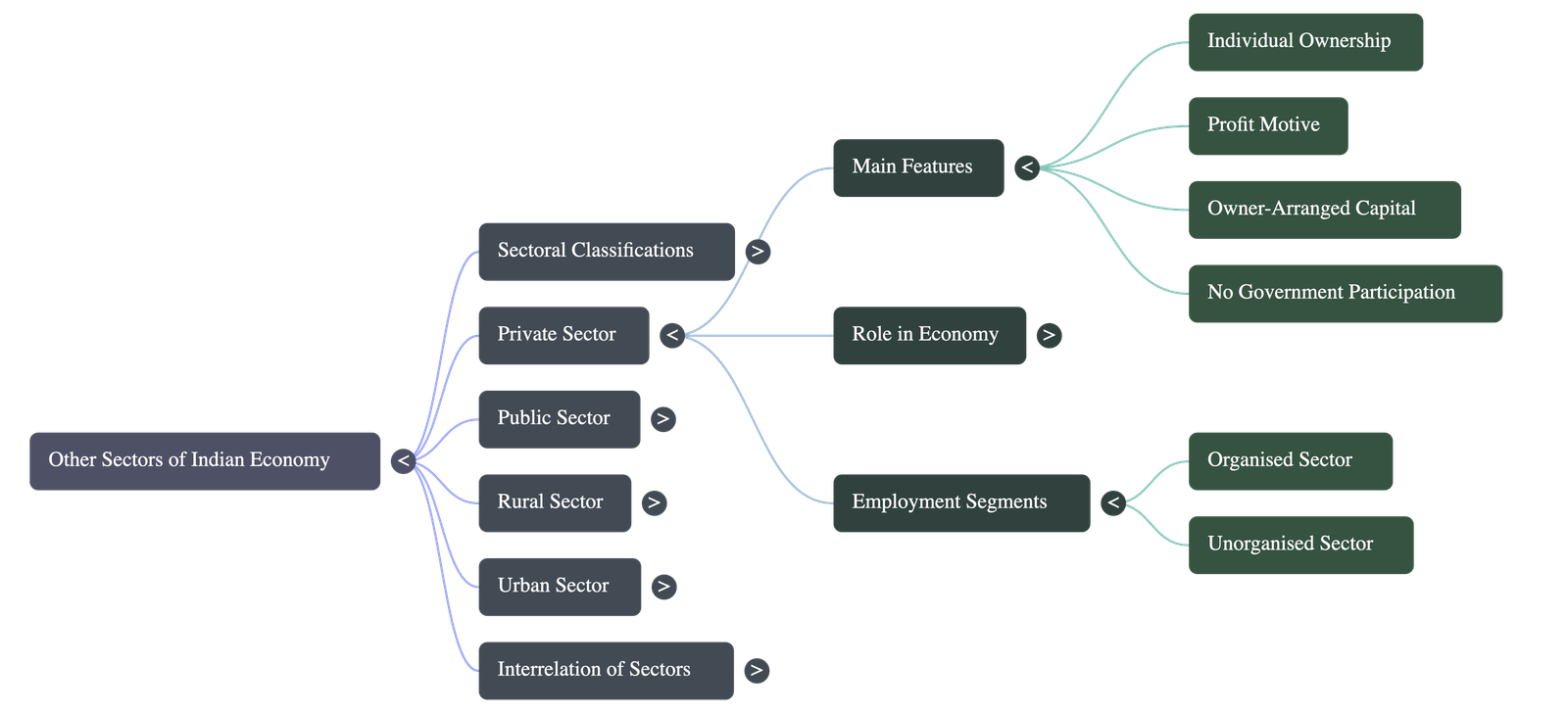
- The private sector consists of businesses run by individuals or groups of individuals without direct government participation.
- The main motive is to make a profit, and the owners arrange their own capital.
- Examples include Tata Consultancy Services (TCS) and ICICI Bank.
3.2 Growth of Private Sector in India
- At independence, the private sector was small and mostly limited to agriculture and small-scale industries.
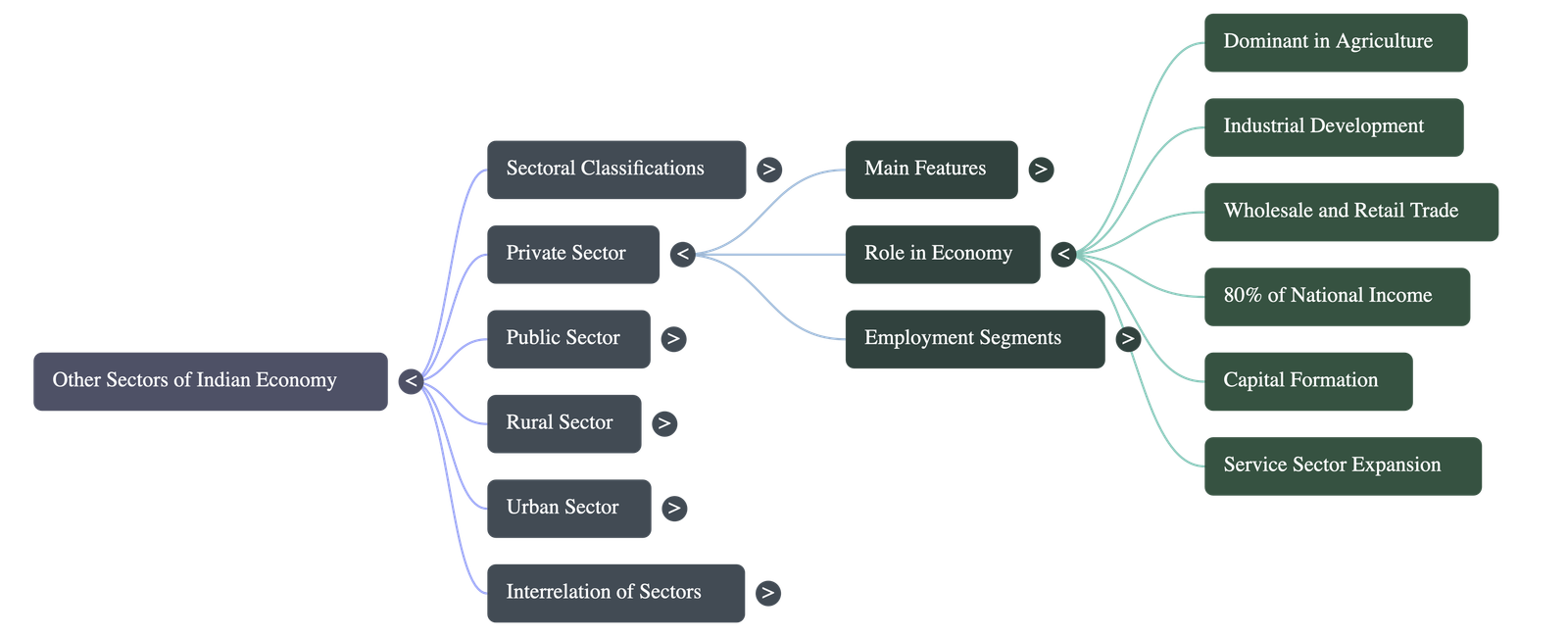
- Today, it is vast and accounts for nearly 80% of the Gross Domestic Product (GDP), covering agriculture, trade, hotels, and large-scale manufacturing.
3.3 Role of Private Sector in India
- Agriculture: Entirely owned by the private sector, employing half the country's population and providing essential foodgrains.
- Industrial Development: Instrumental in producing consumer goods, chemicals, plastics, and machinery.
- Trading: Almost all wholesale and retail trade is managed by private businesses.
- Income & Employment: Contributes about 80% to the national income and employs around 80% of the working population (mostly in the unorganized sector).
- Capital Formation: Contributes over 75% to domestic savings and capital formation.
- Services: Has heavily expanded the service sector, especially in banking, insurance, and telecommunications since the 1990s.
4. Public Sector
4.1 Meaning
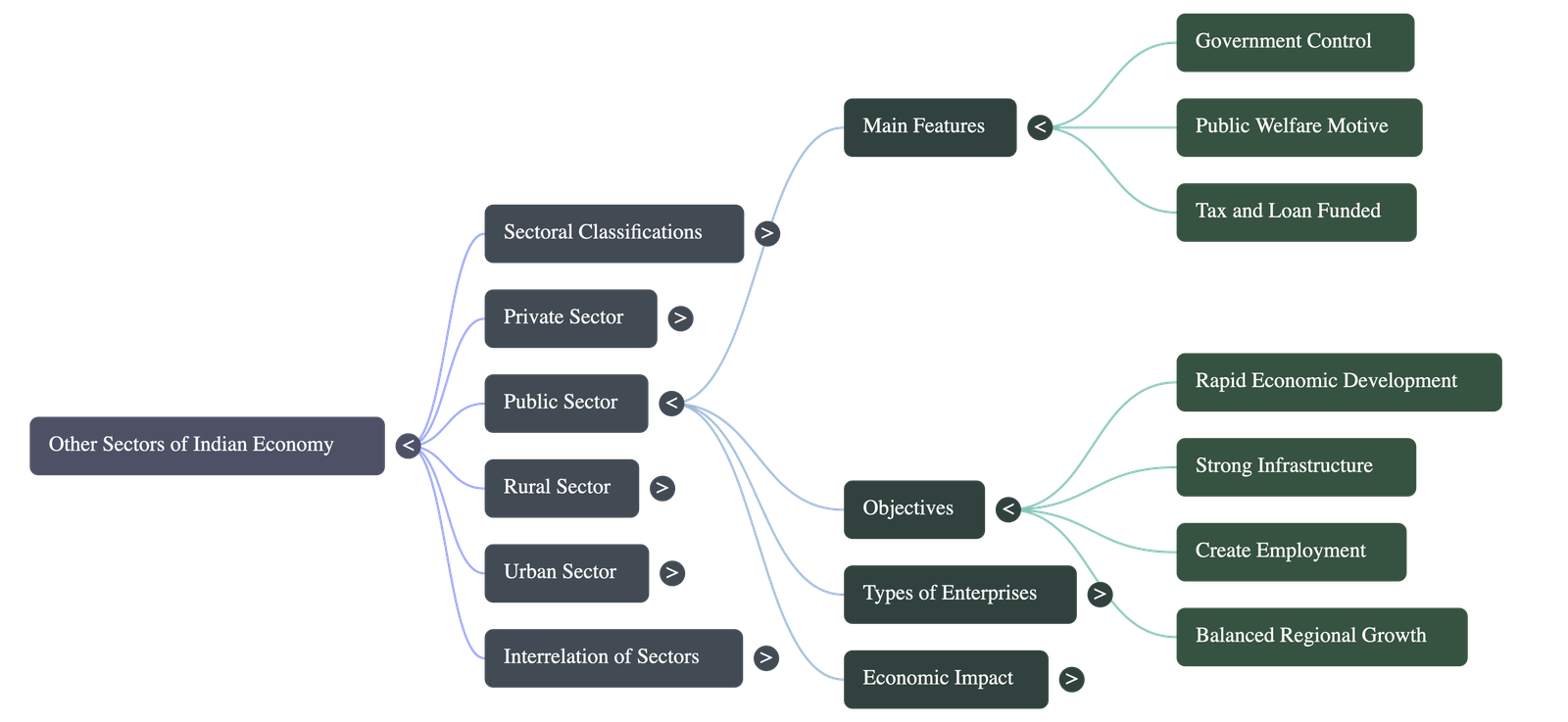
- The public sector is the part of the economy under the control of the government (Central, State, or both).
- It focuses on public welfare, creating laws, managing infrastructure, and providing essential services like education and healthcare.
- Examples include Indian Railways, SAIL, and NTPC.
4.2 Evolution of Public Sector in India
- Before 1947, it was limited to basic services like post and railways.
- The Industrial Policy Resolution of 1956 gave the public sector a strategic role to accelerate industrialization and reduce poverty.
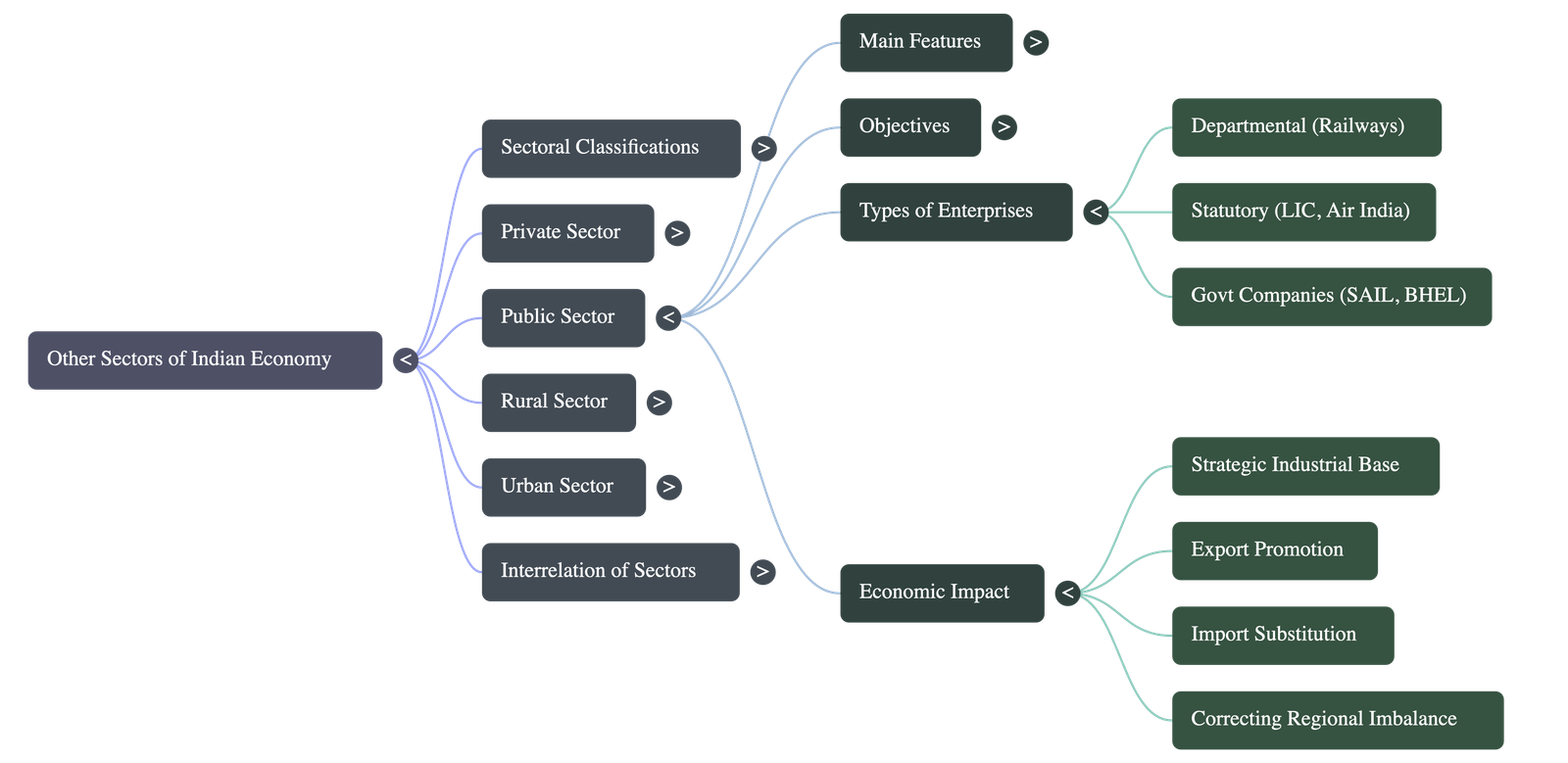
4.3 Objectives of Public Sector
- To build strong infrastructure for rapid economic development.
- To generate financial resources and create employment opportunities.
- To ensure balanced regional growth across all states.
- To reduce wealth inequalities and promote exports while substituting imports.
4.4 Types of Public Sector Enterprises
- Departmental Enterprises: Run exactly like a government department and financed from the government budget (e.g., Railways, Post).
- Statutory Undertakings: Set up under special acts of Parliament with some day-to-day freedom (e.g., LIC, Air India).
- Public Sector Companies: Joint stock companies where the government holds majority shares (e.g., BHEL, HAL).
4.5 Role of Public Sector in the Indian Economy
- Employment: Employs 70% of workers in the organized sector.
- Income & Capital: Its share in national income grew from 7.5% in 1950 to 14% in 2020. It builds physical assets like dams and railways.
- Infrastructure & Industry: Developed essential infrastructure (power, transport) and established heavy industries (steel, petroleum).
- Balanced Development: Set up large plants in backward regions like Bihar and Odisha to promote equal development.
4.6 Distinction between Public and Private Sectors
- Motive: Public welfare vs. Profit-making.
- Finance: Funded by government taxes vs. Financed by owners/shareholders.
- Jobs: Creates stable, large-scale jobs vs. Creates highly competitive, skilled jobs.
4.7 Interrelation between Public and Private Sectors
- They are two sides of the same coin and depend on each other. The private sector needs government infrastructure (roads, electricity), while the government buys goods/services from the private sector.
- Since 1991, the government has reduced the number of industries reserved for the public sector to give the private sector more room to grow.
5. Classification on the Basis of Habitation
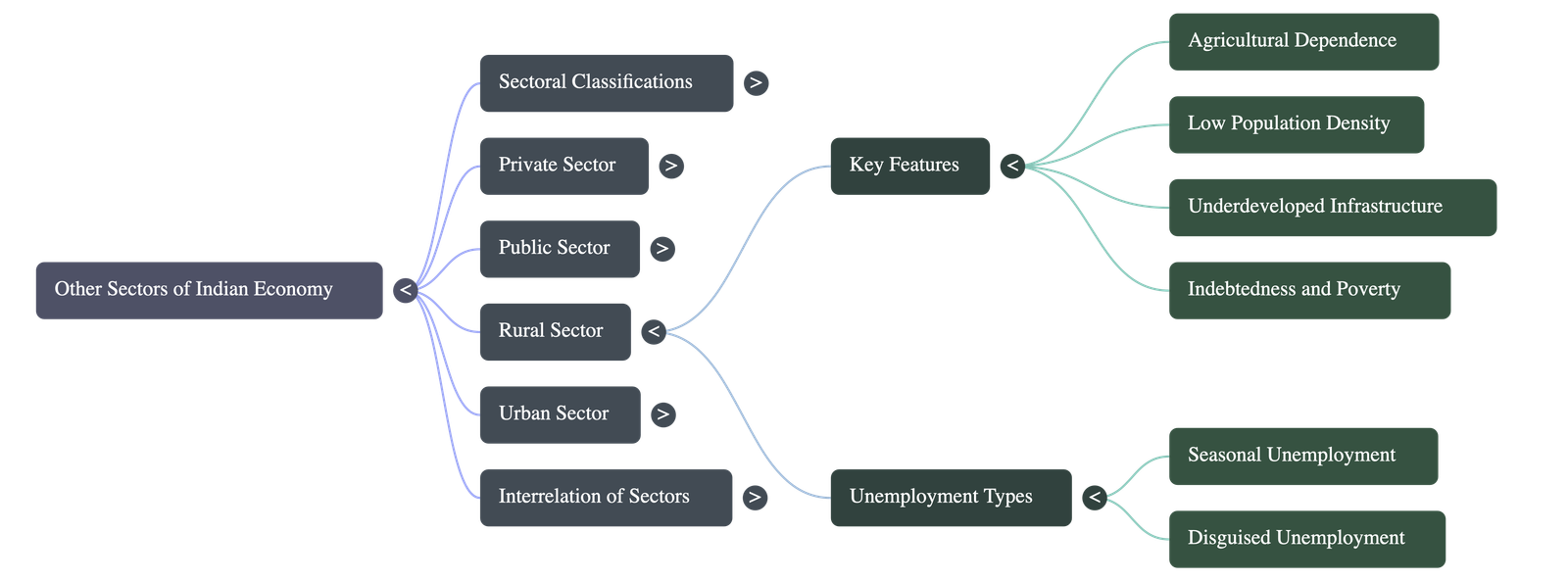
5.1 Rural Sector
- Refers to villages with open spaces, natural resources, and low population density.
- Houses about 72% of the total population.
- Key Features:
- Around 75% of rural people depend on agriculture.
- Simple traditional lifestyles based on faith and customs.
- High levels of poverty (approx. 22 crore people below poverty line) and underdeveloped infrastructure.
- Suffers from Seasonal Unemployment (no work during off-seasons) and Disguised Unemployment (more people working on a farm than actually required).
- High indebtedness to local moneylenders due to lack of formal banking.
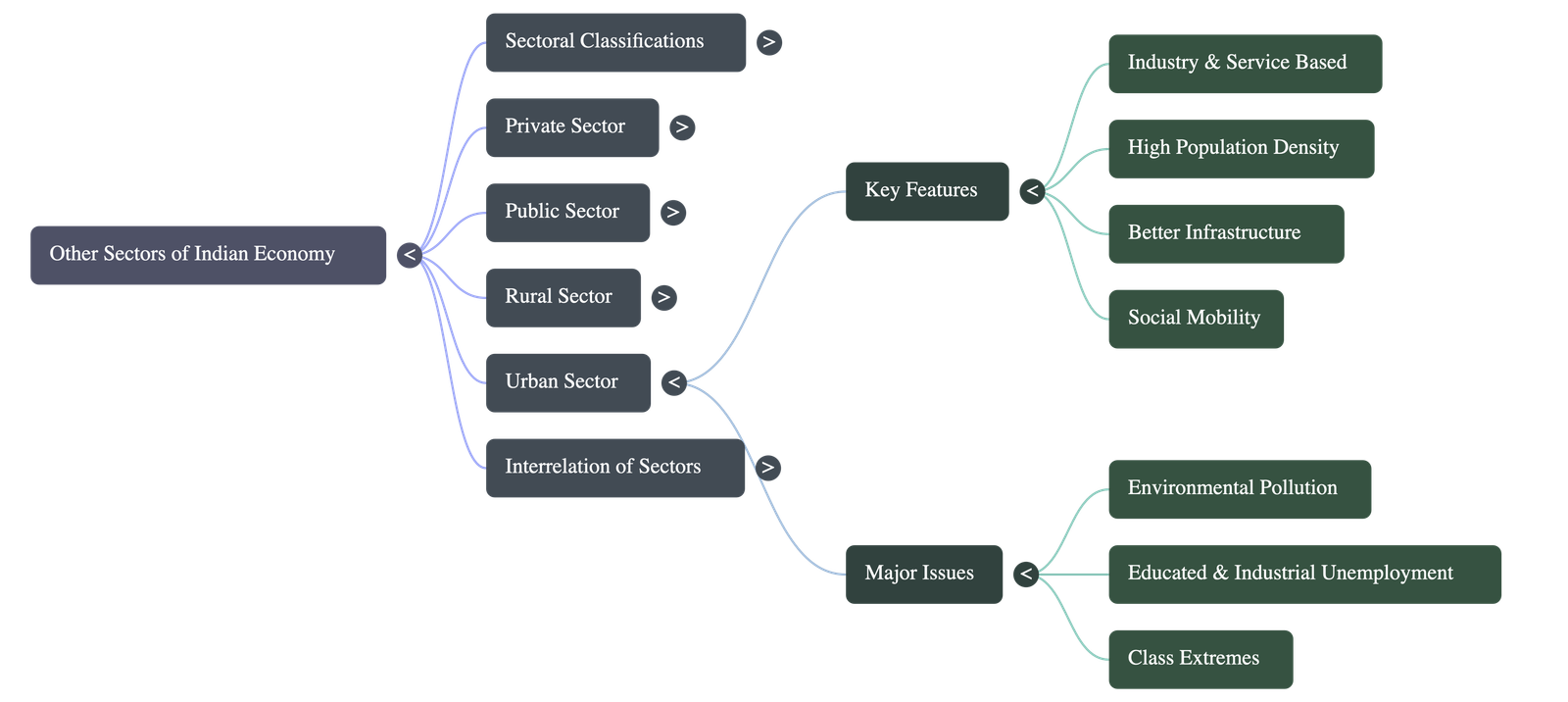
5.2 Urban Sector
- Refers to towns and cities with built environments, developed infrastructure, and high population density.
- Urban population is growing rapidly (about 33% in 2012) due to people migrating from villages for better jobs and facilities.
- Key Features:
- Economy depends heavily on industries and services (factories, IT, commerce).
- Better availability of transport, education, and healthcare networks.
- Presence of extreme class differences (luxurious bungalows right next to slums).
- Higher levels of air and water pollution from vehicles and industries.
- Suffers from Educated and Industrial Unemployment.
5.3 & 5.4 Differences and Relative Importance
- Differences: Rural life is simple, close to nature, with intimate personal relationships. Urban life is fast-paced, complex, man-made, and features formal relationships.
- Shifting Importance: The trend is moving strongly toward urbanisation. The urban sector's share in national income has increased drastically, and the per capita income in urban areas is roughly 2.5 times higher than in rural areas.
Do checkout all questions & answers of this chapter.
Quick Navigation:
| | | |
1 / 1
Quick Navigation:
| | | |