Quick Navigation:
| | | |
Basic Economic Entities in an Economy
1. Economy and Its Main Sectors
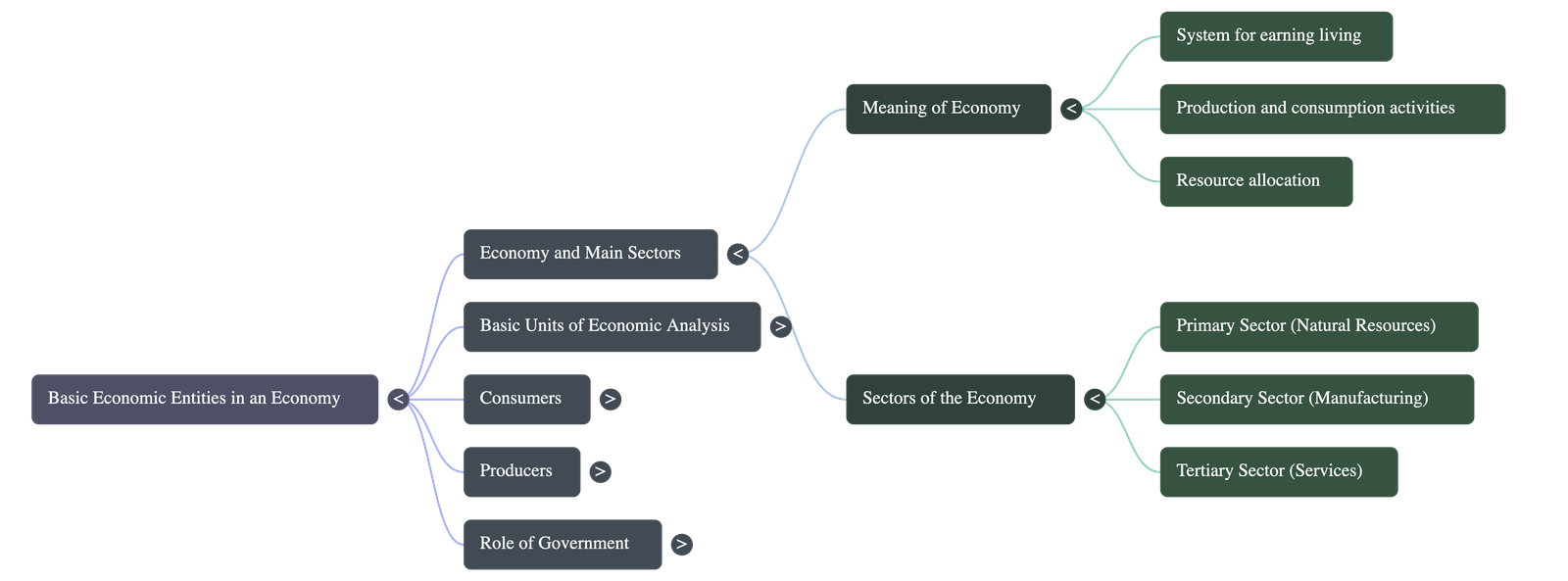
1.1 Meaning of an Economy
- An economy refers to the system of activities related to the production, consumption, and trade of goods and services in an area.
- It helps to allocate scarce resources to satisfy unlimited human wants.
- It enables people to earn their living.
- Two main functions:
- To produce goods and services to satisfy human wants.
- To provide employment or income-earning opportunities for its people.
1.2 Sectors of the Economy
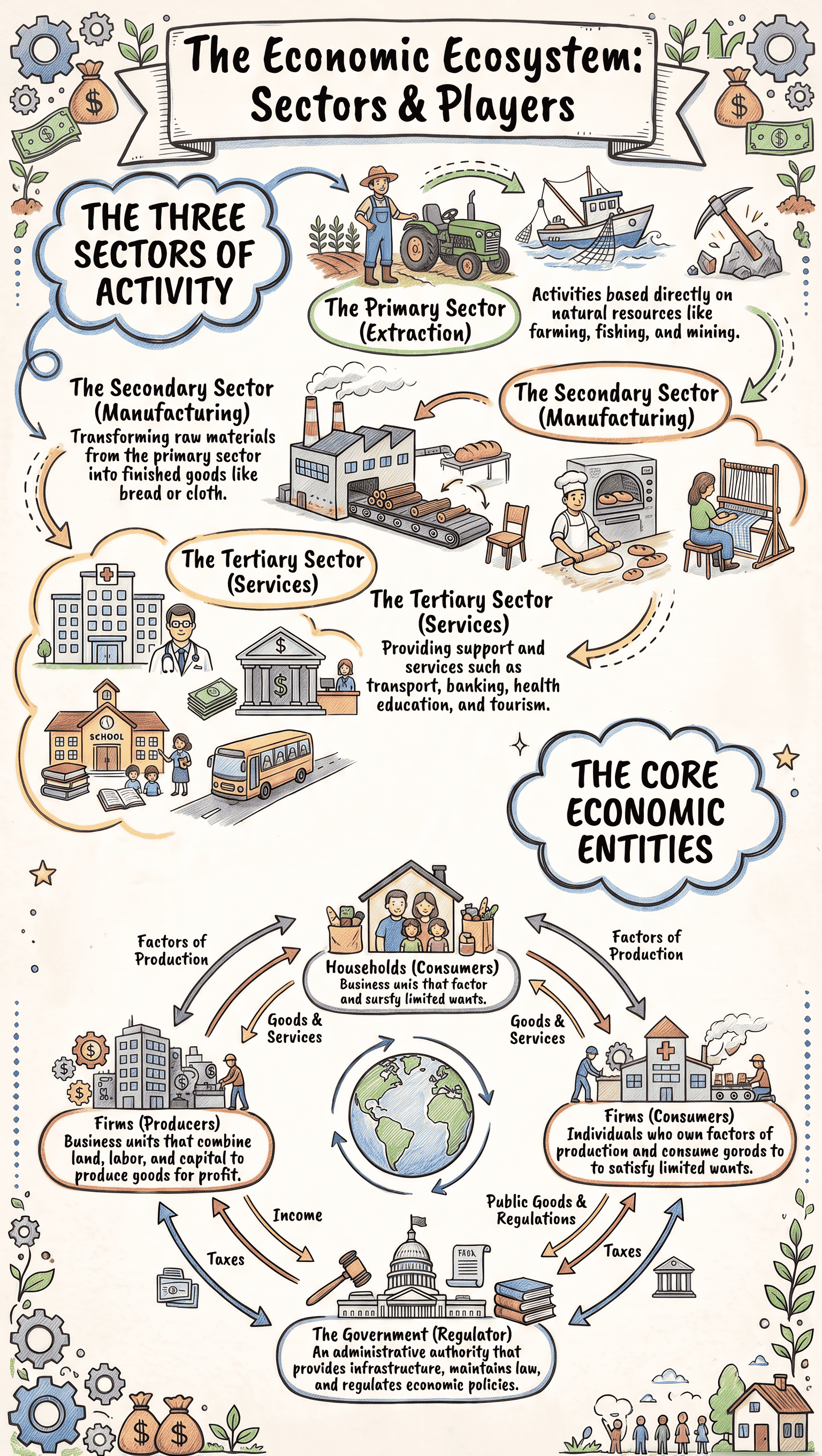
- Primary Sector: Activities based directly on exploiting natural resources (e.g., agriculture, forestry, mining, fishing). Goods produced here form the base for all other products.
- Secondary Sector (Manufacturing Sector): Activities that transform natural products from the primary sector into other forms of manufactured goods (e.g., a baker making bread from wheat, weaving cloth from cotton).
- Tertiary Sector (Service Sector): Activities that do not produce goods but provide vital support services to the primary and secondary sectors (e.g., transport, banking, communication, healthcare, tourism).
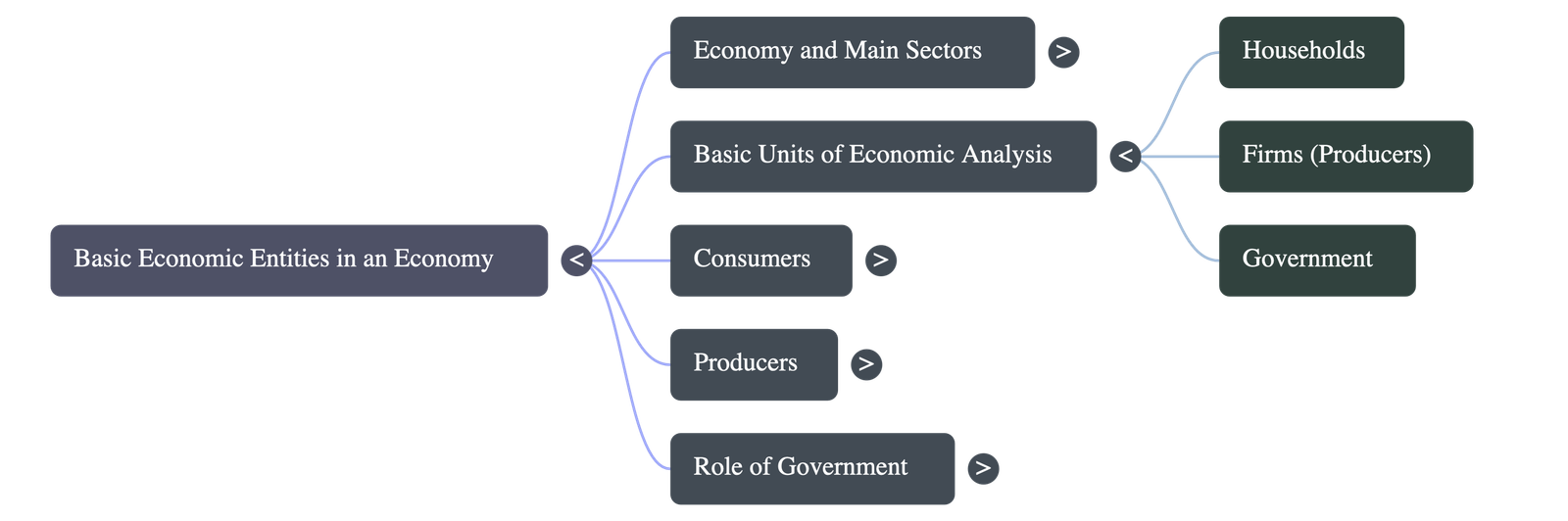
2. Basic Units of Economic Analysis
2.1 Meaning of an Economic Entity
- An institutional unit capable of doing economic activities independently.
- Activities include: Acquiring assets, taking up responsibilities/incurring liabilities, participating in economic activities, and transacting with other entities.
2.2 Classification of Basic Economic Entities
- 2.2.1 Households/Consumers: Individuals or groups living together. They are the primary consumers of goods and services. They own factors of production (land, labor, capital) and provide them to firms in exchange for income (wages, rent, etc.).
- 2.2.2 Firms (Producers/Businesses): Entities that combine resources to produce goods or services to make a profit. They sell these to households, the government, or other firms.
- 2.2.3 Government: The administrative body that maintains law and order, intervenes by collecting taxes, provides public goods (like infrastructure and defense), redistributes income, and creates the legal framework.
3. Consumers
Consumers purchase goods and services to obtain maximum satisfaction with their limited income.
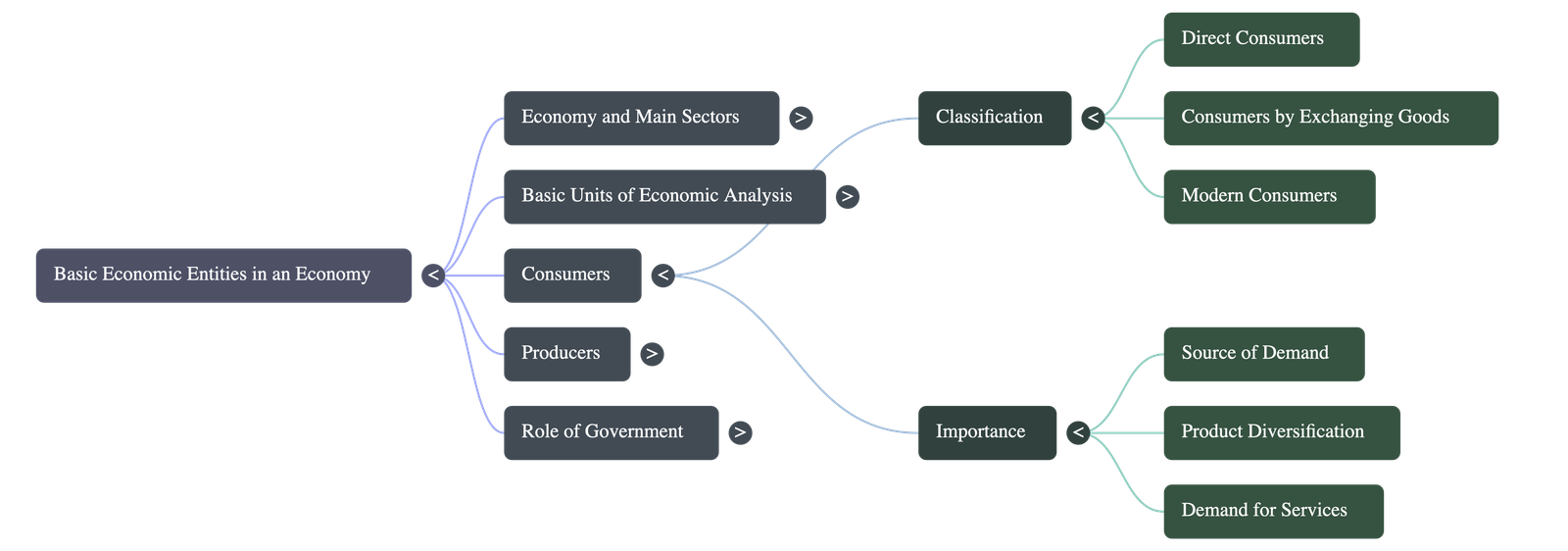
3.1 Classification of Consumers
- 3.1.1 Direct Consumers: Early producers who created goods (like food, clothes, and huts) purely for their own self-consumption.
- 3.1.2 Consumers by Exchanging Goods: Evolved with specialization, where people exchanged surplus production with each other directly (the Barter System).
- 3.1.3 Modern Consumers: Purchase goods and services from the market using money to get the best bargain.
3.2 Importance of Consumers
- Source of Demand: They are the largest source of demand; greater demand leads to higher production.
- Diversification in Production: Different preferences encourage producers to create varied designs, colors, and products.
- Demand for Services: Consumer needs extend beyond physical goods to services (health, education, banking), driving the growth of the tertiary sector.
4. Producers
A producer is someone who creates goods and services to earn a profit.
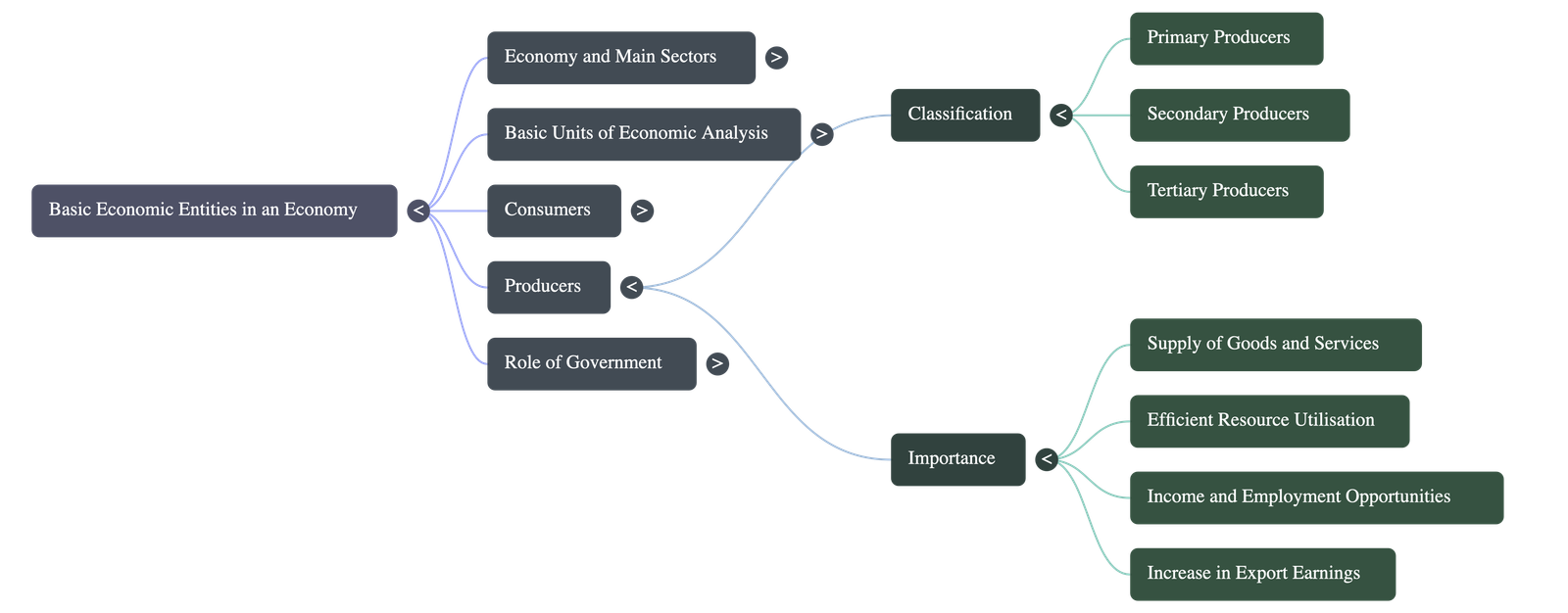
4.1 Classification of Producers
- 4.1.1 Primary Producers: Produce goods by exploiting natural resources (e.g., farmers, fishermen, milkmen).
- 4.1.2 Secondary Producers: Produce manufactured/finished goods from primary materials (e.g., bakers, weavers, tailors).
- 4.1.3 Tertiary Producers: Provide essential services required by the other sectors and consumers (e.g., doctors, transport networks like railways, banks).
4.2 Importance of Producers
- Supply of Goods and Services: They ensure the continuous availability of items needed by the economy.
- Efficient Utilisation of Resources: They make productive use of the economy’s available resources (land, raw materials).
- Expansion of Income and Employment: Increasing production scales creates jobs and raises income levels.
- Increase in Export Earnings: Producing exportable goods boosts a country's foreign exchange earnings.
5. Government
The government acts as the regulatory authority to maintain law and order while guiding economic growth.
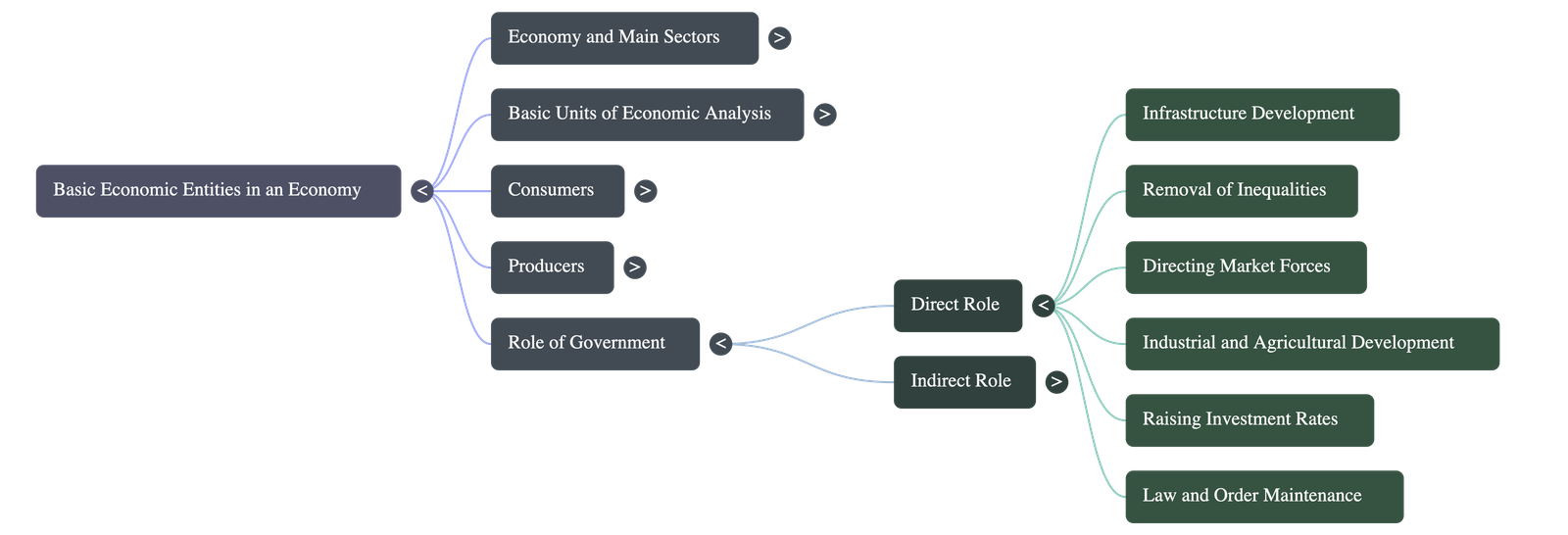
5.1 Direct Role
- Development of Infrastructure: Investing in power, transport, education, and health (areas often ignored by the private sector due to high risks/low profits).
- Removal of Inequalities: Reducing the wealth gap using a progressive tax system, social security schemes (pensions, unemployment allowance), and nationalization of industries.
- Directing Market Forces: Allocating resources to produce necessities for poorer sections, rather than just luxury goods favored by the rich.
- Industrial Development: Establishing basic and heavy industries (steel, fertilizers) that require huge investments and have long gestation periods.
- Agricultural Development: Improving productivity through institutional measures, providing easy credit to farmers, building storage facilities, and offering crop insurance.
- Raising the Rate of Investment: Encouraging savings in underdeveloped countries through compulsory schemes, taxation, or inflation.
- Maintenance of Law and Order: Creating a stable environment necessary for basic economic development.
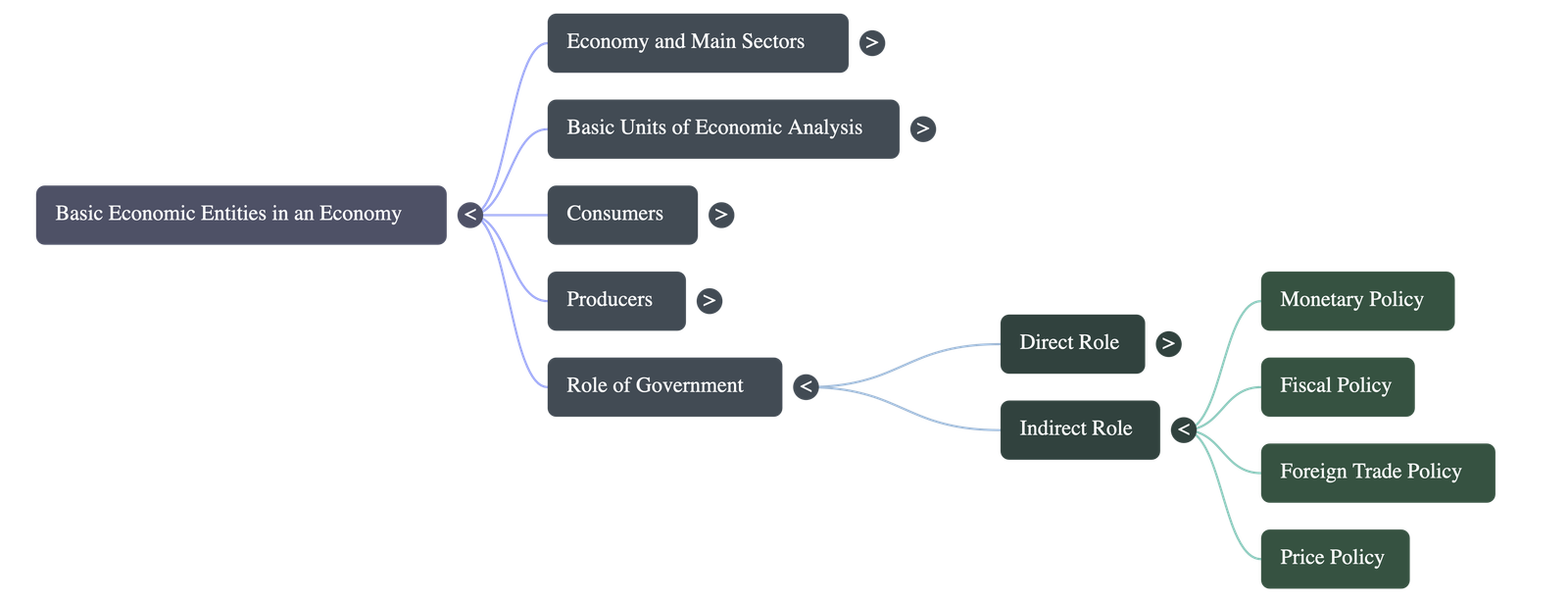
5.2 Indirect Role
- Monetary Policy: Controlling the supply of money and credit availability (e.g., through the Reserve Bank of India) to prevent severe inflation (excess money) or deflation (less money).
- Fiscal Policy: Managing government revenue and expenditure to increase savings, reduce wealth inequality, control inflation, and correct demand levels.
- Foreign Trade Policy: Promoting exports and regulating imports to solve balance of payments deficits and protect domestic industries.
- Price Policy: Stabilizing prices to protect workers from inflation (loss of purchasing power) and preventing price crashes that cause producers to halt production and lay off workers.
Do checkout all questions & answers of this chapter.
Quick Navigation:
| | | |
1 / 1
Quick Navigation:
| | | |