Main Sectors of Indian Economy: Industry
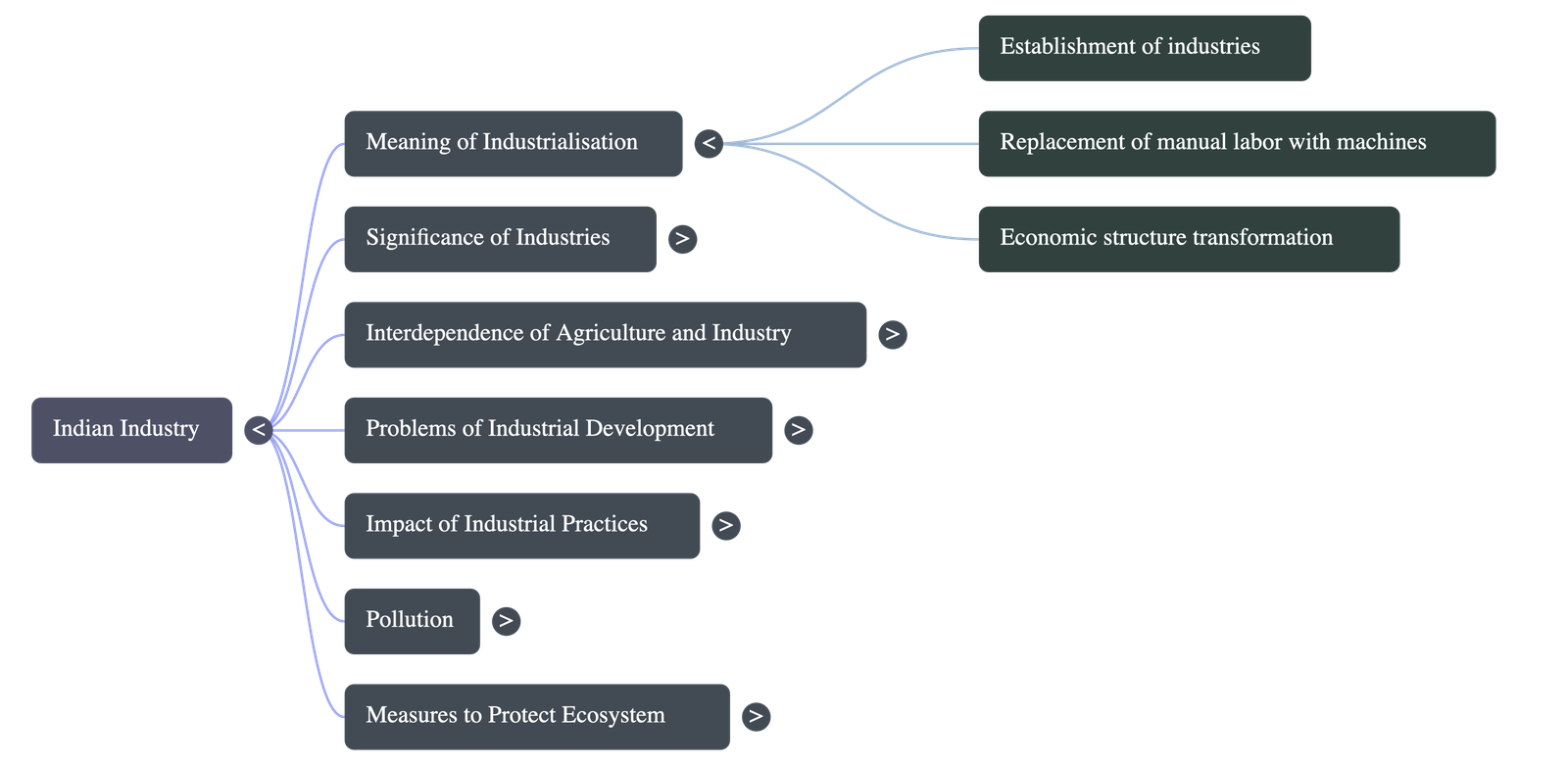
1. Meaning of Industrialisation
Industrialisation is a process where a country establishes more and more industries. During this time, old and outdated tools are replaced by modern machines, and human or animal labor is replaced by electric or mechanical power. This changes the entire economic structure of a country through the setup of factories, railways, power plants, and communication networks.
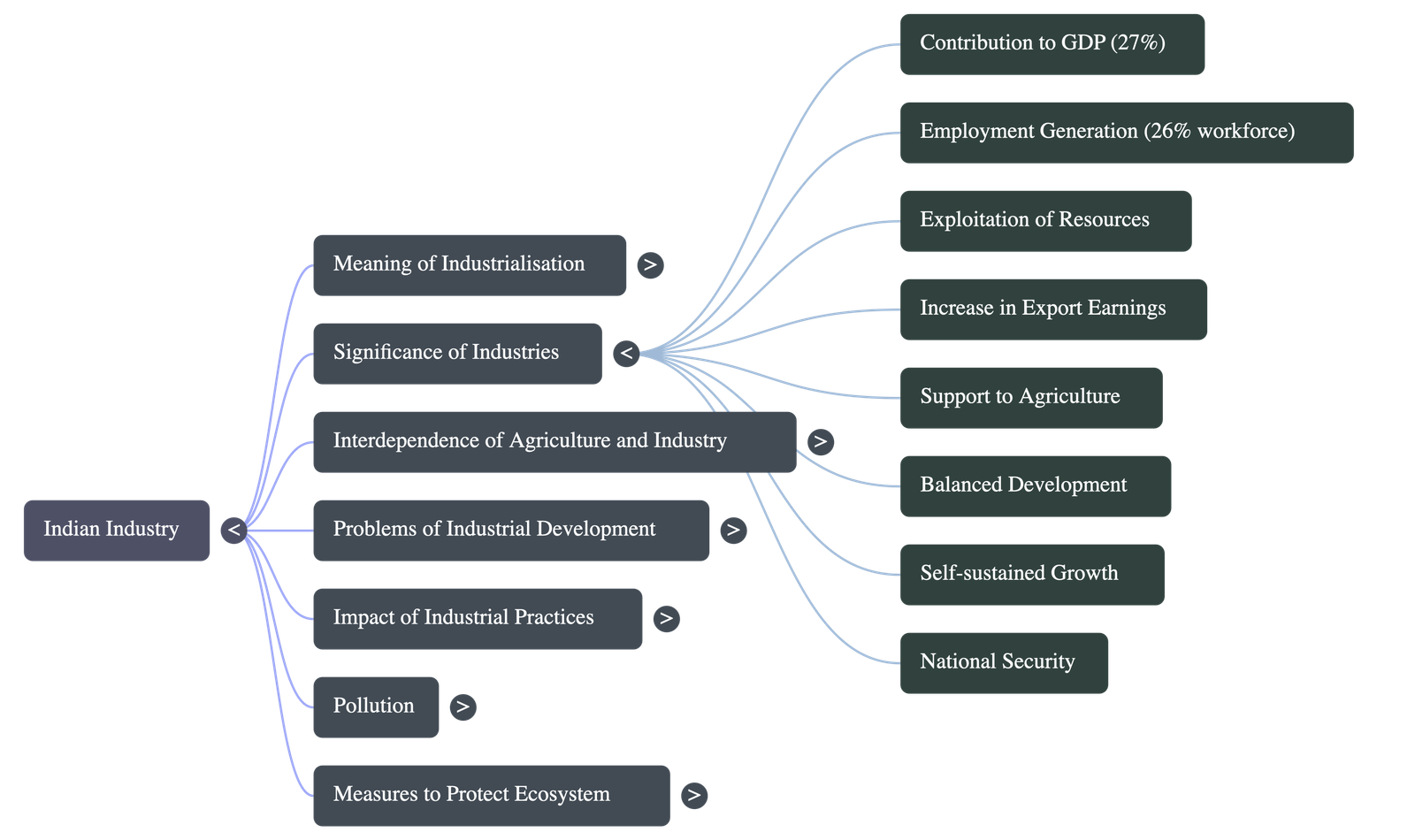
2. Importance of Industrialisation in India
Industrialisation is crucial for the economic development of under-developed countries like India. Its significance includes:
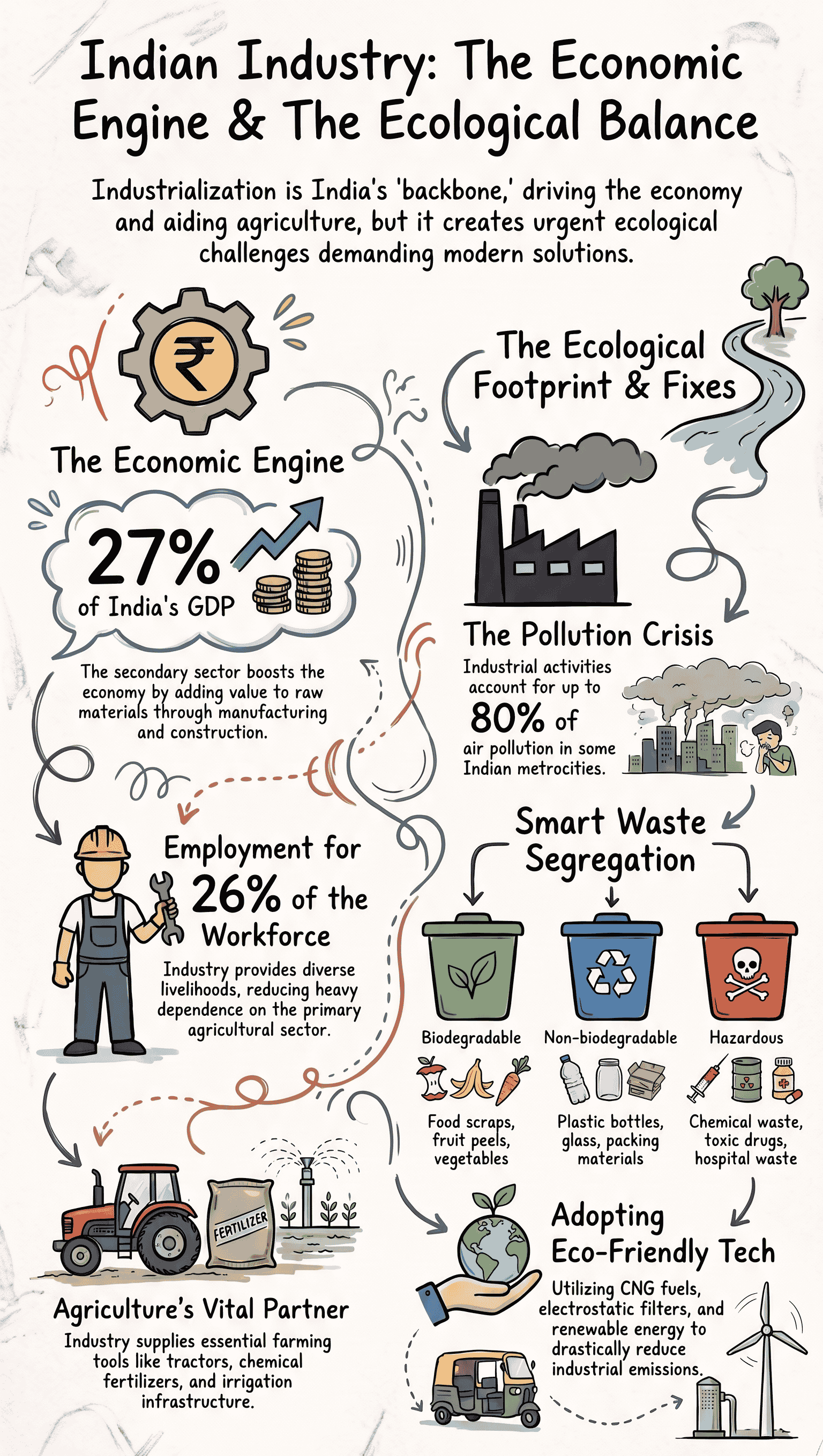
- Contribution to GDP: The industrial (secondary) sector adds value to raw materials and contributes around 27% to India's Gross Domestic Product.
- Employment Generation: It provides low-skilled to high-skilled jobs, employing about 26% of the workforce, and reduces dependence on agriculture.
- Exploitation of Resources: Industries can properly utilize vast natural resources and even waste materials (scraps) that agriculture cannot use.
- Increase in Export Earnings: Producing and exporting high-value industrial goods helps India earn more foreign exchange compared to exporting cheap primary products.
- Support to Agriculture: It solves the problem of hidden unemployment in farming, provides essential tools and fertilizers, and creates a ready market for agro-based products like cotton and sugarcane.
- Balanced Development: Creating more industries helps balance an economy that is too heavily dependent on agriculture.
- Self-sustained Growth: Producing capital goods (machines, equipment) locally eliminates dependence on other countries for essential goods.
- Nation's Security: A strong industrial base allows a country to produce its own defense goods, reducing risky reliance on foreign countries.
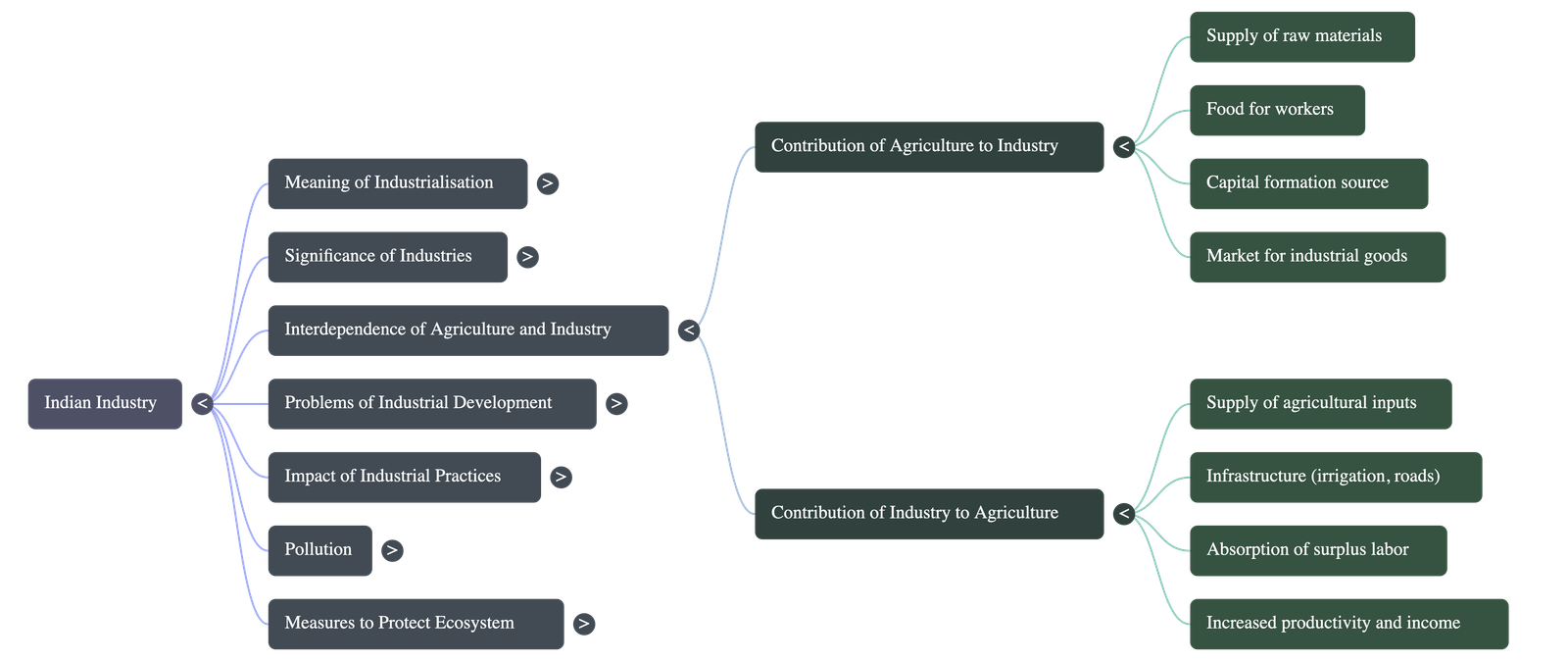
3. Interdependence of Agriculture and Industry
Agriculture and industry are closely linked and act as the inseparable backbone and energy of the economy. They cannot develop without each other.
3.1 Contribution of Agriculture to Industry
- Supplies raw materials (cotton, jute, tea, sugarcane).
- Provides food for industrial workers.
- Farmers' savings are invested to help form industrial capital.
- Acts as a large market for industrial goods (consumer items and machines).
- Provides healthy and strong labor for factories.
3.2 Contribution of Industry to Agriculture
- Supplies farming inputs like chemical fertilizers, pesticides, tractors, and pumps.
- Builds necessary infrastructure like irrigation projects, roads, and transport vehicles.
- Absorbs surplus agricultural labor caused by overpopulation.
- Increases farmers' income by boosting agricultural productivity.
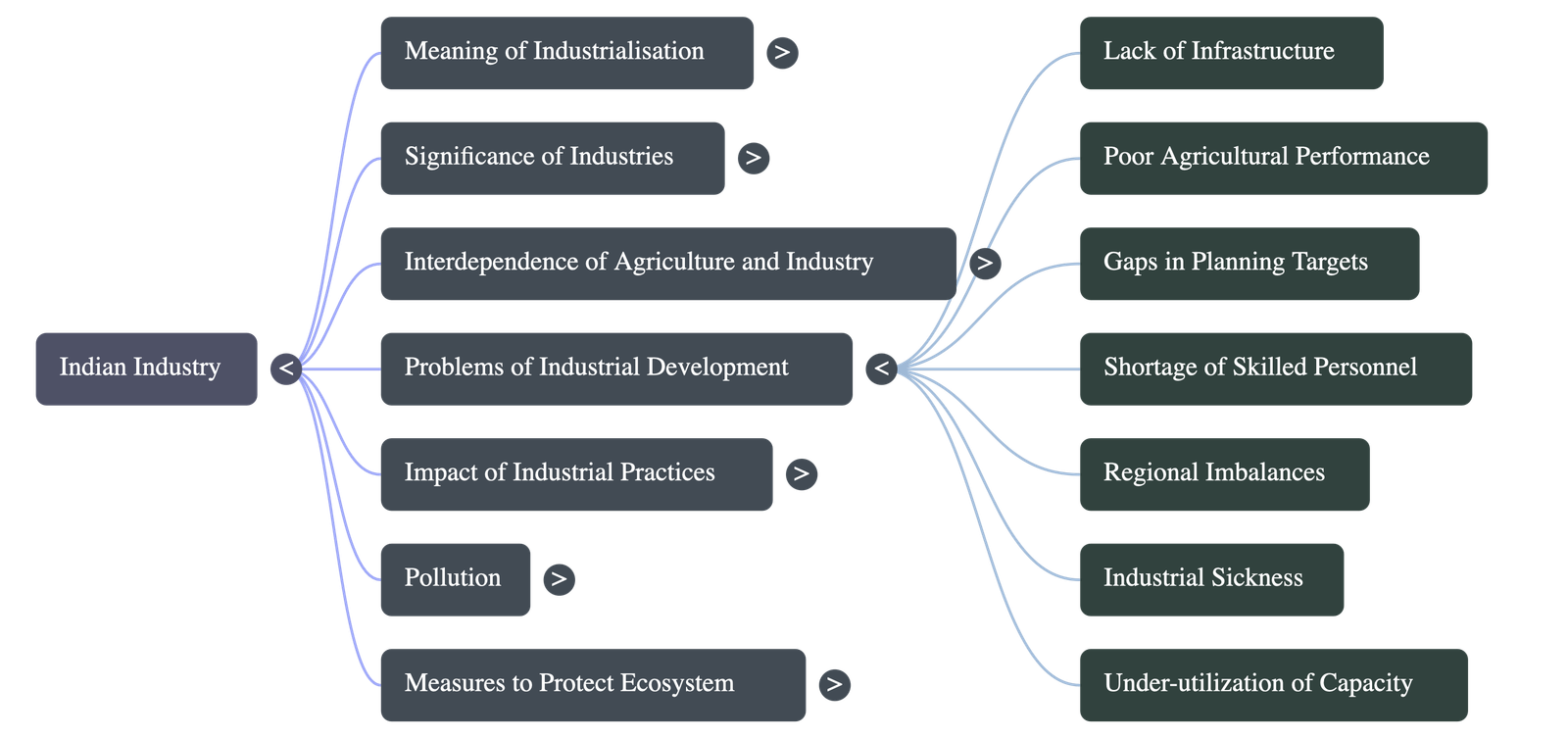
4. Problems of Industrial Development in India
The major obstacles facing India's industrial sector include:
- Lack of Infrastructural Facilities: Poor transportation (roads, railways) and communication networks in many regions.
- Poor Agricultural Performance: Since industries rely on agriculture for raw materials and market demand, weak farming sectors hurt industries.
- Gaps Between Targets and Achievements: The industrial sector often fails to meet its growth targets.
- Dearth of Skilled Personnel: Lack of technically trained workers makes it hard to handle highly sophisticated, computerized machinery.
- Poor Performance of the Public Sector: Many government-owned businesses (PSUs) suffer huge losses due to bad pricing and poor management.
- Regional Imbalances: Industries are concentrated in a few wealthy states (like Maharashtra and Gujarat), leaving poorer states (like Bihar and Odisha) neglected.
- Industrial Sickness: Increasing numbers of failing industries cause unemployment and a bad climate for development.
- Underutilization of Capacity: Many industries only run at 50% to 60% of their actual capacity.
- Growth of Big Houses: Economic power is becoming concentrated in the hands of a few giant business groups.
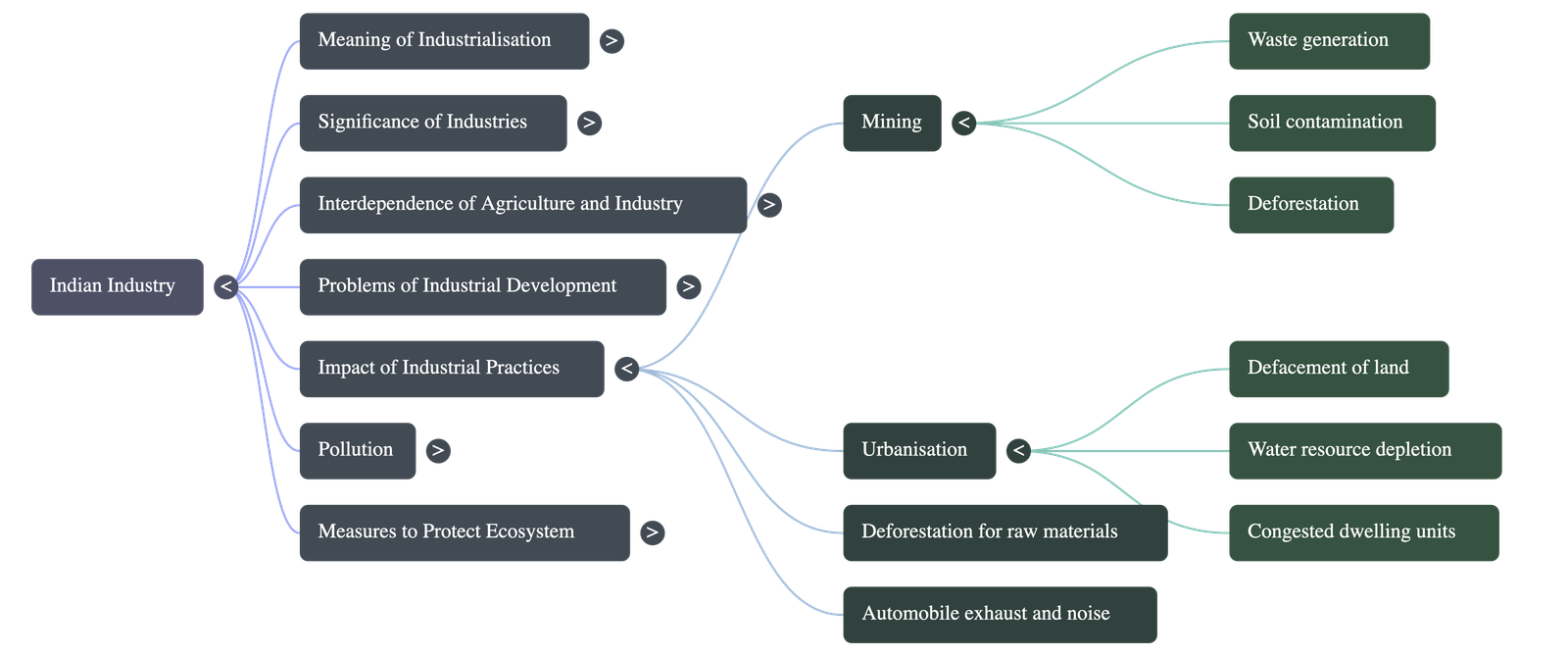
5. Impact of Industrial Practices on the Ecosystem
5.1 Impact of Industrialisation
Rapid industrial growth generates severe environmental problems. Petroleum industries release hydrocarbons and sulfur compounds. Manufacturing industries generate chemical wastes. Discharging solid wastes spoils the landscape, making the soil toxic and areas unhygienic.
5.2 Mining
Extracting minerals (coal, copper, iron) generates massive waste. It contaminates soil with heavy metals, disrupts groundwater, reshapes the natural topography, causes deforestation, and emits harmful dust leading to air pollution.
5.3 Urbanisation
Migration from rural to urban areas causes:
- Defacement of land: Clearing land for housing destroys biological diversity.
- Depletion of Water Resources: High population demands drain local groundwater.
- Dwelling Units: Croplands and forests are converted into roads and buildings.
5.4 Deforestation
Forests are cleared to construct dams, gather wood for cooking, and supply raw materials for paper, furniture, and plywood industries. This leads to rising global temperatures, reduced rainfall, and soil erosion.
5.5 Impact of Automobiles
The rapid increase in vehicles creates severe air pollution in cities. Poor fuel quality, congested traffic, two-stroke engines, and bad roads make automobile exhaust a major threat, particularly to urban residents and traffic police.
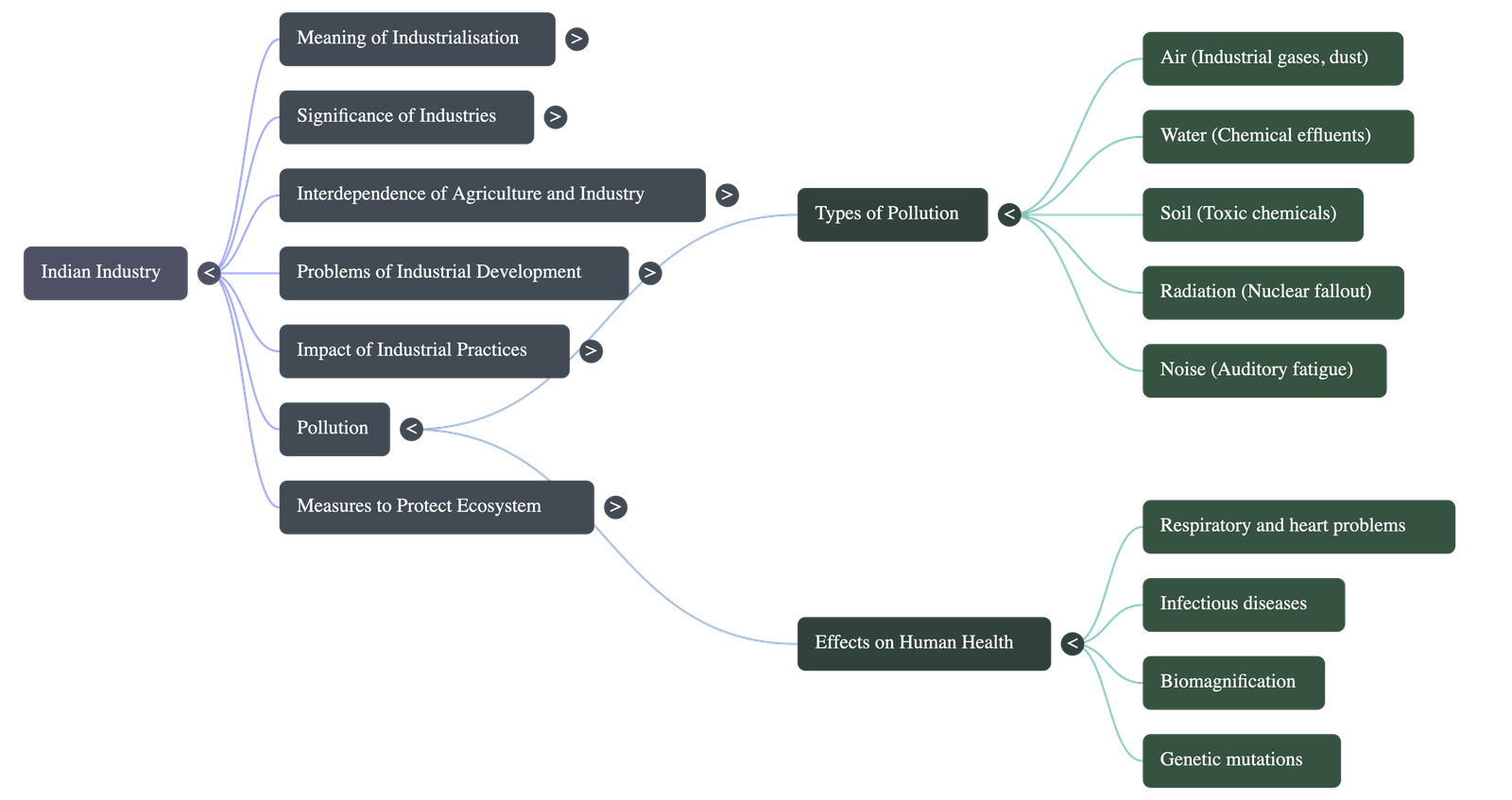
6. Pollution
Pollution is the unfavorable change of surroundings caused by human activities, threatening life.
6.1 Types of Pollution
- Air Pollution: Accumulation of health-hazard substances (like SO2, NO2, CO) from chemical plants, petroleum refineries, and vehicle exhausts.
- Water Pollution: Contamination by industrial waste, acids, alkalis, and poisons from mines and factories, making water harmful.
- Soil Pollution: Presence of toxic chemicals in the soil due to improper disposal of solid waste. It causes diseases in humans and animals.
6.2 Effects of Pollution on Human Health
- Air Pollution: Causes immediate respiratory disorders and delayed effects like asthma, chronic bronchitis, and lung cancer. (Example: The tragic 1984 Bhopal Gas Disaster caused by deadly MIC gas).
- Water Pollution: Causes infectious outbreaks (cholera, hepatitis) and chemical poisoning.
- Soil Pollution: Toxins enter the food chain and accumulate in living tissues (biomagnification), leading to respiratory and skin diseases.
- Radiation Pollution: Causes genetic changes, cancer, and radiation sickness. (Example: The 1986 Chernobyl nuclear disaster).
- Noise Pollution: Causes temporary or permanent deafness, psychological issues (impatience, reduced mental efficiency), and auditory fatigue.
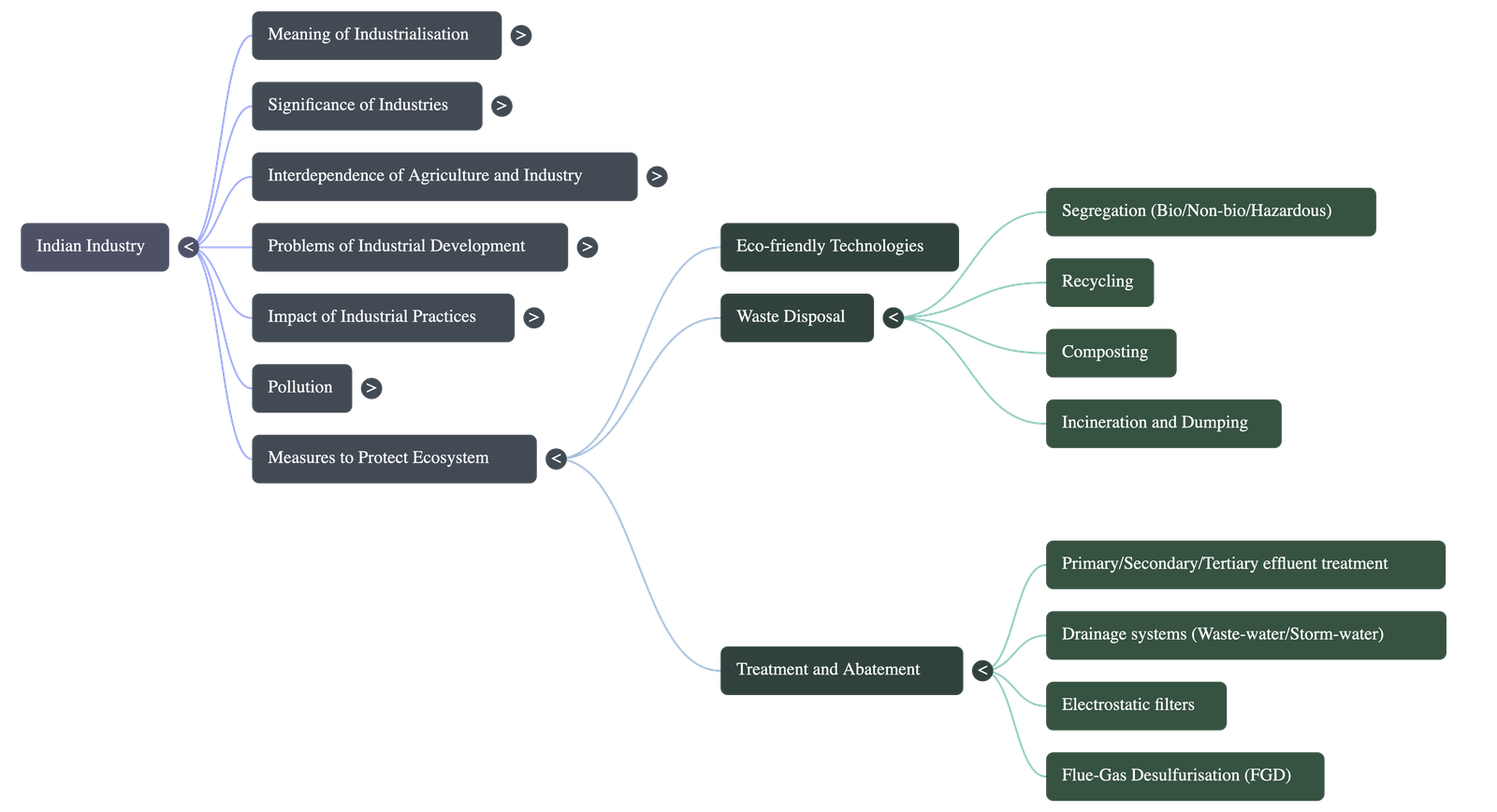
7. Measures to Protect Ecosystem
To save the ecosystem from further destruction, the following control measures must be taken:
(1) Introduction of Eco-friendly Technologies
- Adopting indigenous practices like ponds for irrigation to maintain groundwater levels.
- Replacing chemical fertilizers with organic manure (cow dung) and using biofertilisers for pests.
- Using renewable energy (solar and nuclear) instead of fossil fuels to prevent pollution.
(2) Disposal of Wastes
Proper treatment is necessary to avoid environmental hazards:
- I. Segregation of Waste: Separating waste into Biodegradable (food, peels), Non-biodegradable (plastics, glass), and Hazardous (medicines, hospital waste).
- II. Recycling: Separating waste into materials that can be reused (like turning old plastic bottles into new ones) to conserve resources.
- III. Incineration: Burning garbage to turn it into ash and gases (though it can be environmentally dangerous).
- IV. Dumping: Disposing of solid waste in low-lying areas and covering it (Landfills).
- V. Composting: Natural process converting organic waste (food, plants) into nutrient-rich manure using microbes. It can be Aerobic (with oxygen) or Anaerobic (without oxygen).
- VI. Drainage & Treatment of Effluents: Using waste-water pipes and storm-water pipes to transport water to treatment plants. Treatment involves Primary (removing sludge/solids), Secondary (aerating the liquid to reduce pathogens), and Tertiary (using UV light to destroy all pathogens before releasing into the sea).
(3) Abatement of Air Pollution
- Using electrostatic and baghouse filters to remove particulate matter from power plants.
- Using Flue-Gas Desulfurisation (FGD) devices to control sulfur dioxide emissions.
- Using Selective Catalytic Reduction (SCR) to reduce nitrogen oxide emissions.
- Shifting to low sulfur coal in industries.
Do checkout all questions & answers of this chapter.