Quick Navigation:
| | | |
Main Sectors of Indian Economy : Agriculture
1. Main Sectors of Indian Economy – An Introduction
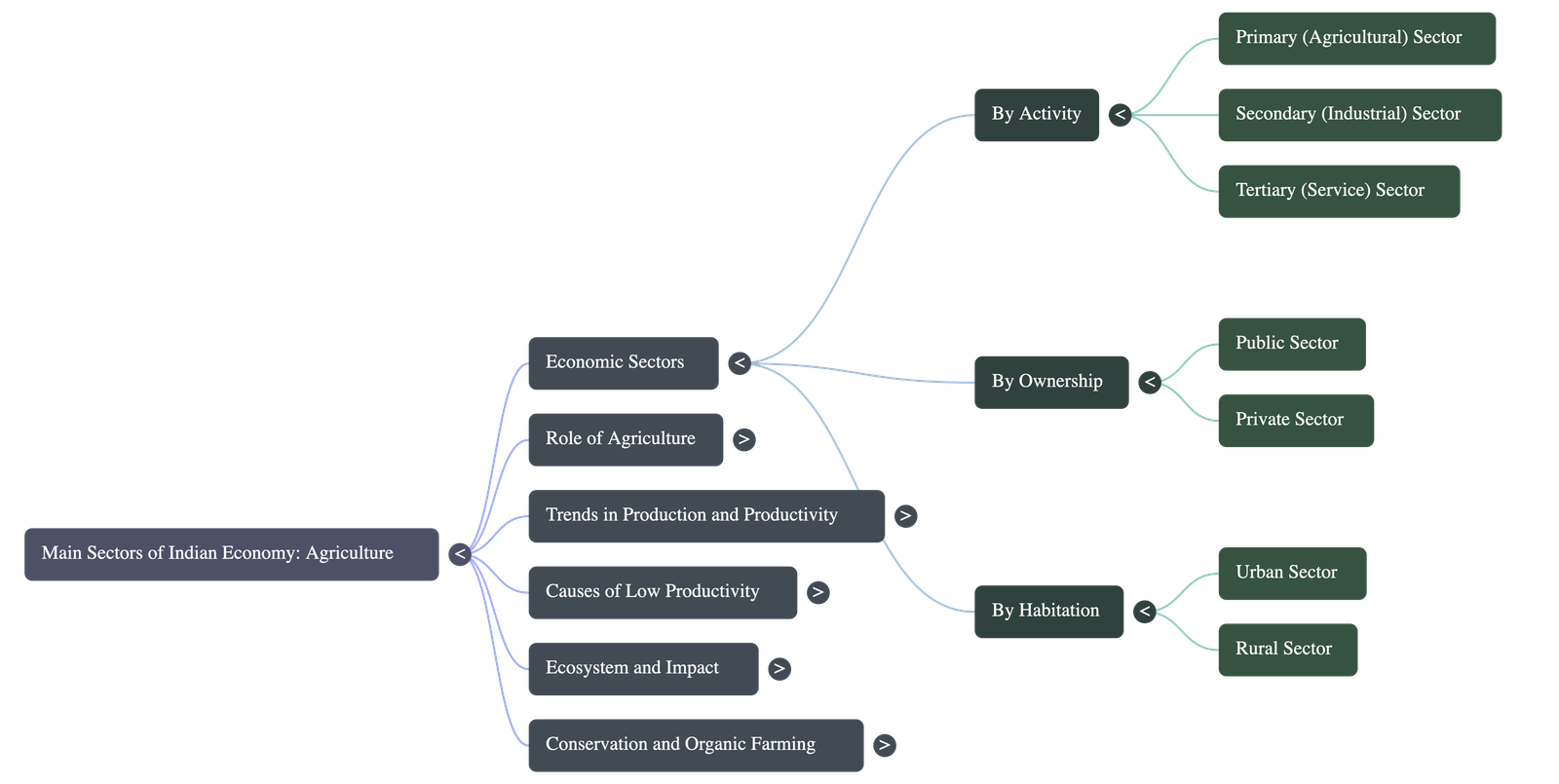
The Indian economy is broadly grouped into three main sectors based on occupational activities:
- Primary Sector: This sector produces goods by directly utilizing natural resources. It is also called the agricultural and allied sector. It includes agriculture, animal husbandry, forestry, and fishing. The goods produced here form the base for all other products.
- Secondary Sector: Also known as the industrial sector, this involves manufacturing and construction. It takes raw materials produced by the primary sector and transforms them into finished or manufactured goods using machinery and industries.
- Tertiary Sector: Known as the service sector, it does not produce physical goods but provides essential services that support the primary and secondary sectors. Examples include transportation, banking, communication, and professional services like teaching and medicine.
2. Meaning of Agriculture
- The word "agriculture" comes from two English words derived from Latin roots: "Agri" meaning field, and "culture" meaning cultivation.
- It is formally defined as the art or science of producing crops and raising livestock on a farm.
3. Role (or Contribution) of Agriculture
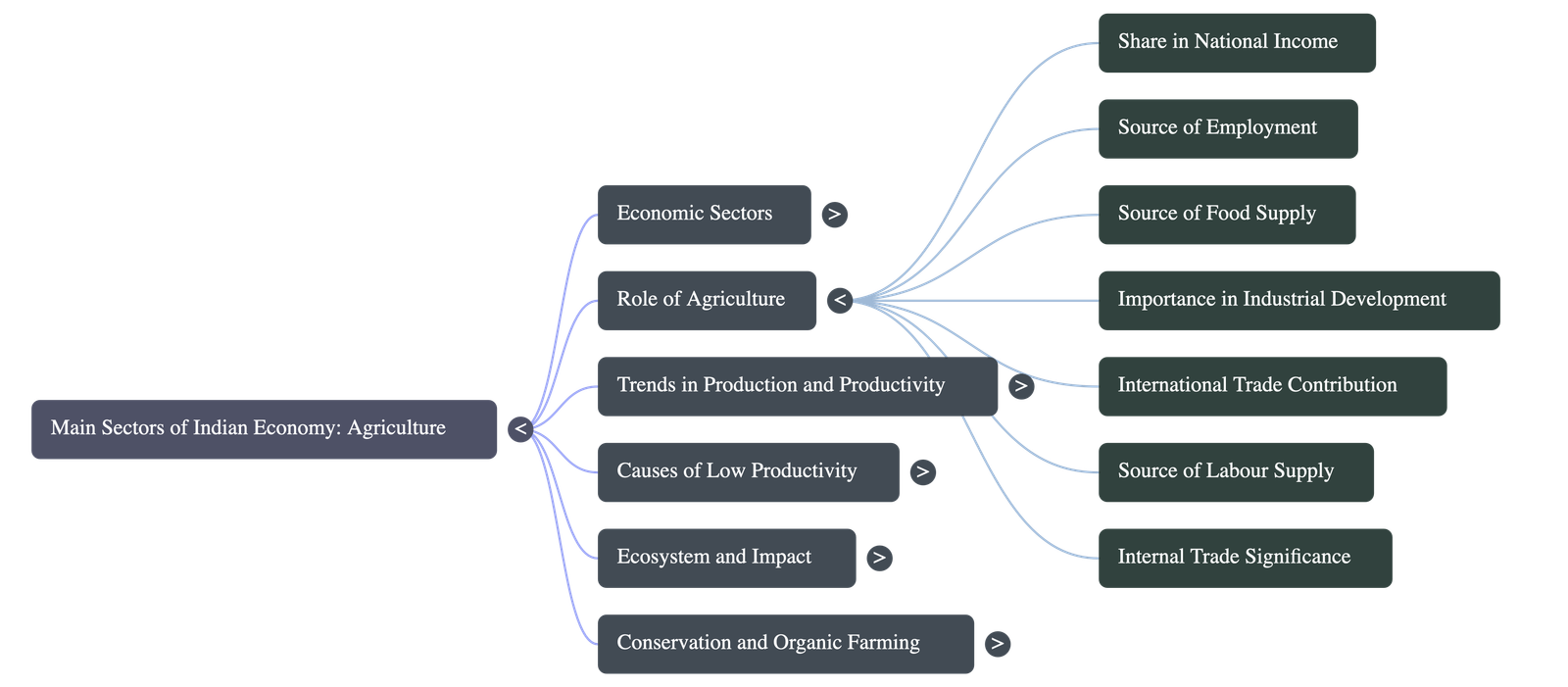
Agriculture is considered the backbone of the Indian economy. Its importance is highlighted by the following points:
- Share in National Income: Although its share has decreased over time due to industrial growth, it still makes a massive contribution to the nation's total income (around 18.1% in 2022-23).
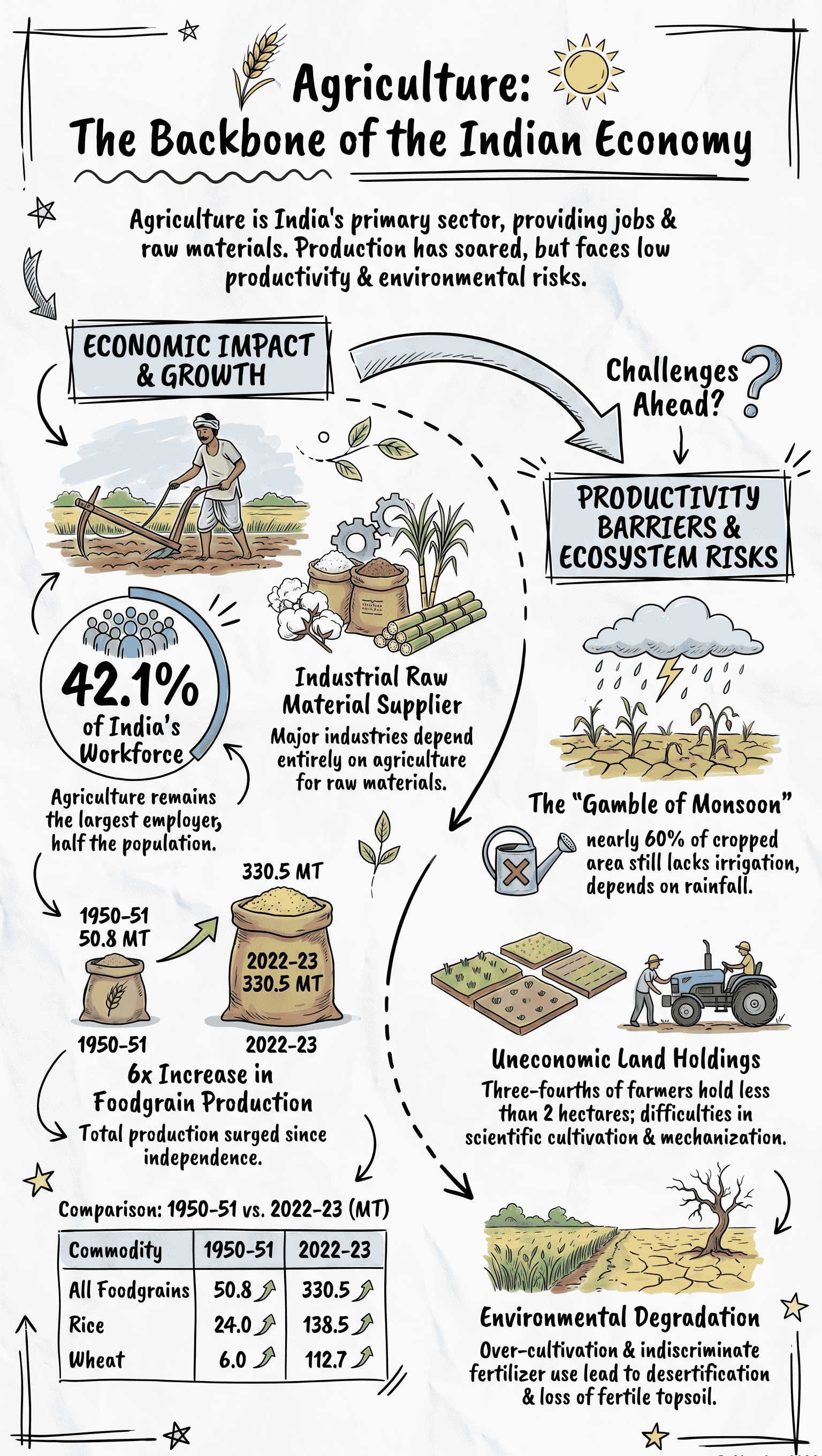
- Source of Employment: It remains the largest employer in India. Nearly 42.1% of the total labor force depends directly on agriculture for their livelihood.
- Source of Food Supply: It ensures food security by feeding India's massive population and provides fodder for millions of cattle.
- Importance in Industrial Development: Agriculture supplies vital raw materials to large agro-based industries (like cotton textiles, jute, and sugar). A prosperous agricultural sector also creates a massive market for industrial goods like tractors and fertilizers.
- Importance in International Trade: Agricultural exports (like tea, coffee, spices, marine products, and cereals) earn valuable foreign exchange for the country, which helps pay for imports.
- Source of Labour Supply: It supplies semi-skilled and unskilled labor to urban areas for construction and other casual jobs.
- Internal Trade: Since a large part of the population spends maximum income on food items, agriculture dominates the domestic trade of the country.
4. Trends in Agricultural Production and Productivity
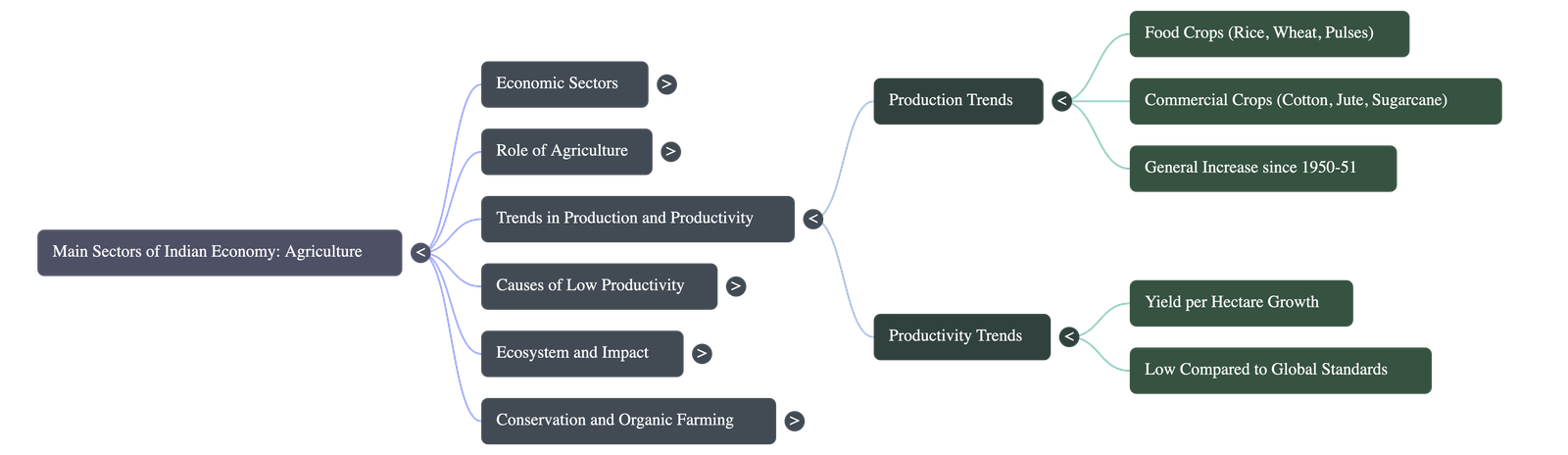
- Trends in Production: Total agricultural production has increased massively since independence. Foodgrain production jumped from 50.8 million tonnes in 1950-51 to 330.5 million tonnes in 2022-23. This has transformed India from a food-scarce country to a self-sufficient, food-surplus nation. However, pulse production has grown at a much slower rate compared to cereals.
- Trends in Productivity (Yield per Hectare): The average yield of crops per hectare has increased substantially due to better farming techniques (Green Revolution). For example, overall foodgrain productivity grew from 520 kg per hectare to 2419 kg per hectare over seven decades.
5. Causes of Low Productivity (Problems of Indian Agriculture)
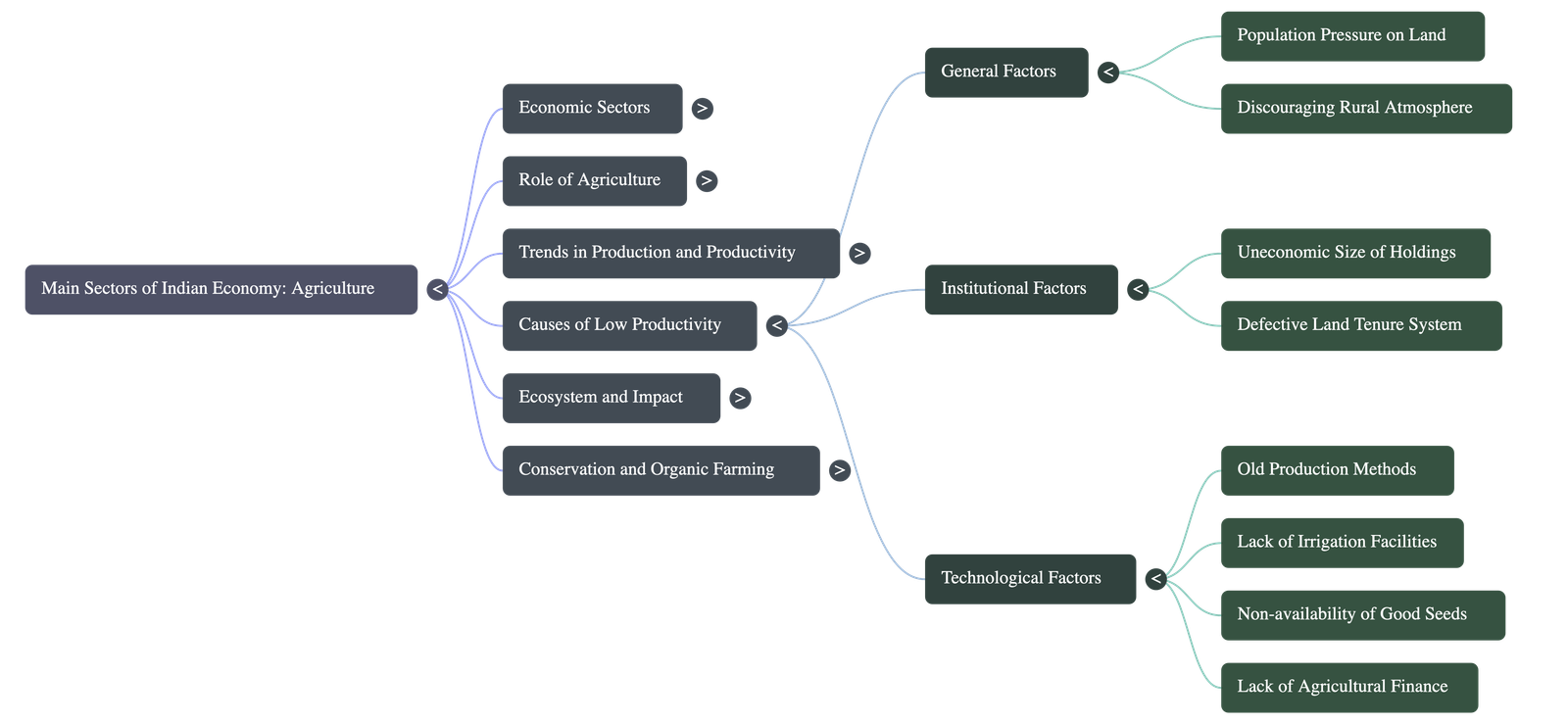
Despite overall growth, the productivity of Indian agriculture per hectare is still very low compared to countries like China and the USA. The main reasons are:
5.1 General Factors
- Heavy Population Pressure: Too many people depend on land, leading to shrinking farm sizes per capita.
- Discouraging Rural Atmosphere: Many farmers are constrained by illiteracy, superstition, and conservative mindsets, preventing the adoption of modern techniques.
5.2 Institutional Factors
- Uneconomic Size of Holdings: Most farm plots are extremely small (less than 2 hectares) and fragmented, making scientific farming and use of machinery impossible.
- Defective Land Tenure System: Tenant farmers often have no security on the land they plow and must pay high rents. Consequently, they do not invest in improving the land.
5.3 Technological Factors
- Old Methods of Production: Many still rely on outdated tools like wooden ploughs instead of modern tractors.
- Lack of Irrigation Facilities: With only 40% of land irrigated, farming heavily relies on uncertain monsoon rains, making Indian agriculture a "gamble of monsoon".
- Lack of Good Seeds & Fertilizers: High-Yielding Variety (HYV) seeds and chemical fertilizers are often expensive or unavailable.
- Lack of Agricultural Finance: Farmers lack funds for equipment and seeds. They often borrow from village moneylenders who charge huge interest rates and exploit them.
6. Impacts of Agricultural Practices on the Ecosystem
6.1 & 6.2 Ecosystem Basics
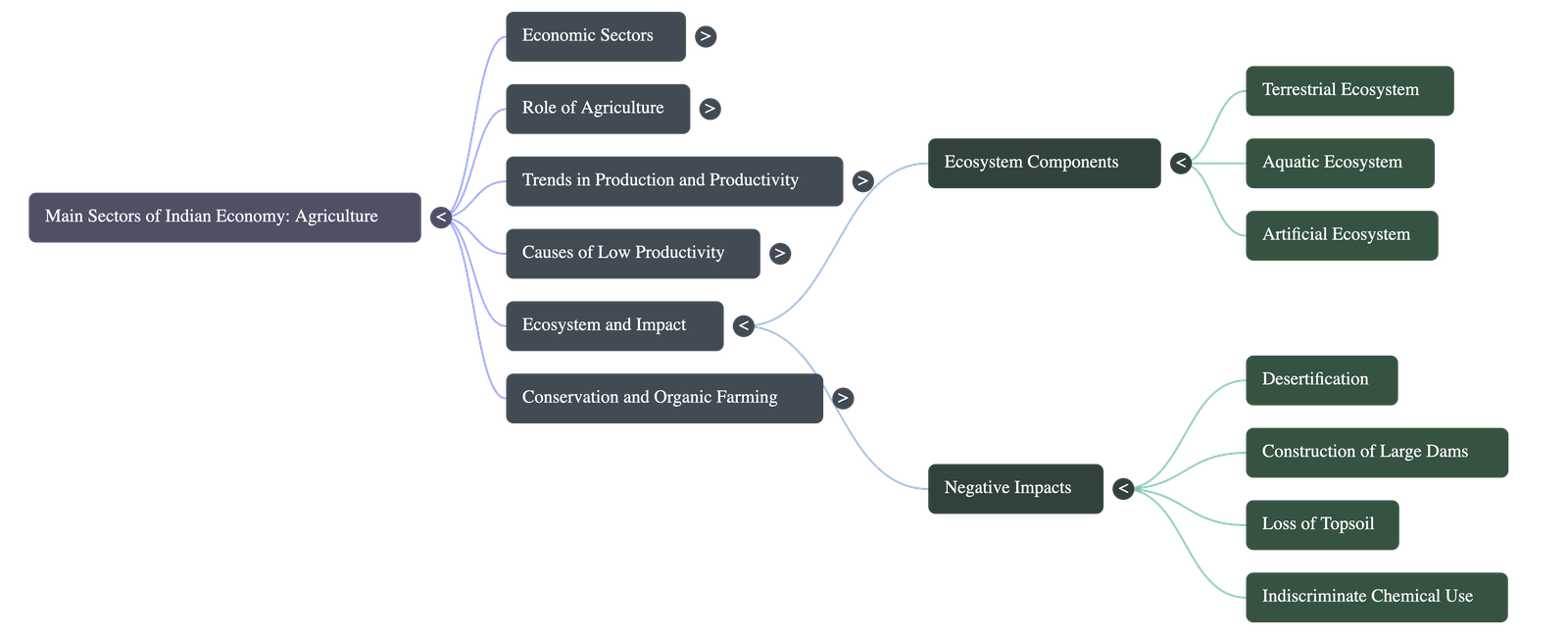
- Meaning: An ecosystem is a geographical region where living things (biotic components like plants and animals) interact with non-living things (abiotic components like soil, weather, water).
- Types: They can be Terrestrial (forests, deserts), Aquatic (marine, freshwater), or Artificial (man-made like crop lands or dams).
6.3 Negative Impacts of Agriculture
- Desertification: The washing away of fertile topsoil. It is caused by over-cultivation, overgrazing by growing cattle populations, and deforestation to clear land.
- Loss of Habitat via Dams: Building large hydroelectric dams floods forest areas, destroying massive ecosystems and displacing wildlife (like tigers) and human communities.
- Loss of Top Soil: Overgrazing removes protective vegetation. Tillage breaks the soil into powder that washes away easily in the rain.
- Indiscriminate Use of Chemicals: Excessive use of synthetic fertilizers and pesticides contaminates groundwater, reduces natural soil fertility over time, and destroys aquatic ecosystems in rivers and lakes.
6.4 Measures to Check and Improve the Ecosystem
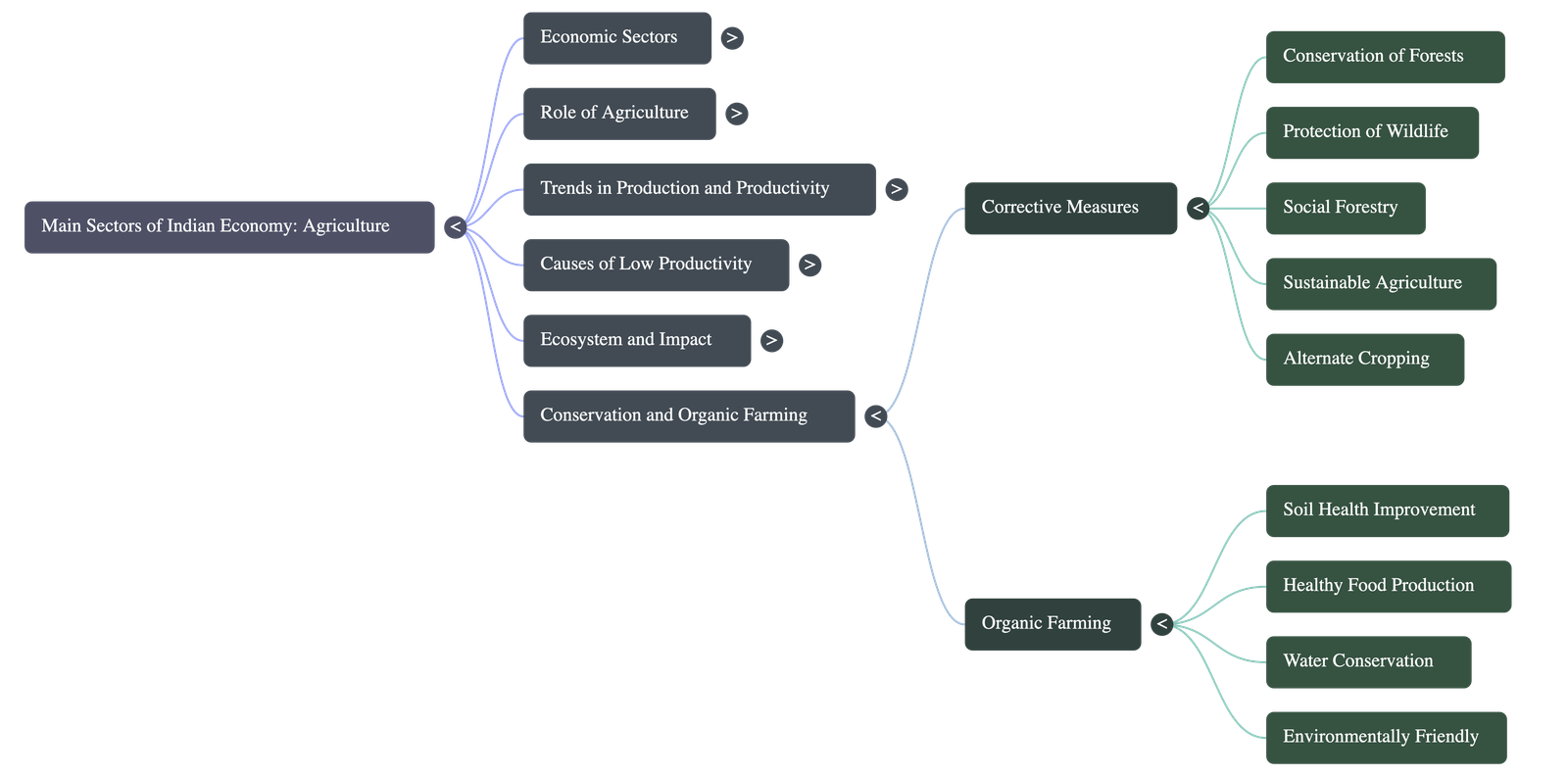
- Conserving forests and planting trees (Afforestation and Social Forestry).
- Protecting wildlife through strict laws against hunting.
- Practicing Sustainable Agriculture and Alternate Cropping to maintain soil health.
- Building mini-hydro projects that do not disrupt land use patterns instead of massive ecosystem-destroying large dams.
Organic Farming
- Concept: Farming using traditional methods and organic inputs (like animal manure, dry leaves, compost) without any harmful synthetic chemicals or pesticides.
- Benefits: It improves soil fertility naturally, produces healthier and safer food with more nutrients, heavily conserves water, and is extremely environmentally friendly as it protects local biodiversity.
Do checkout all questions & answers of this chapter.
Quick Navigation:
| | | |
1 / 1
Quick Navigation:
| | | |