Globalisation
Introduction: The 1991 Crisis and New Economic Policy
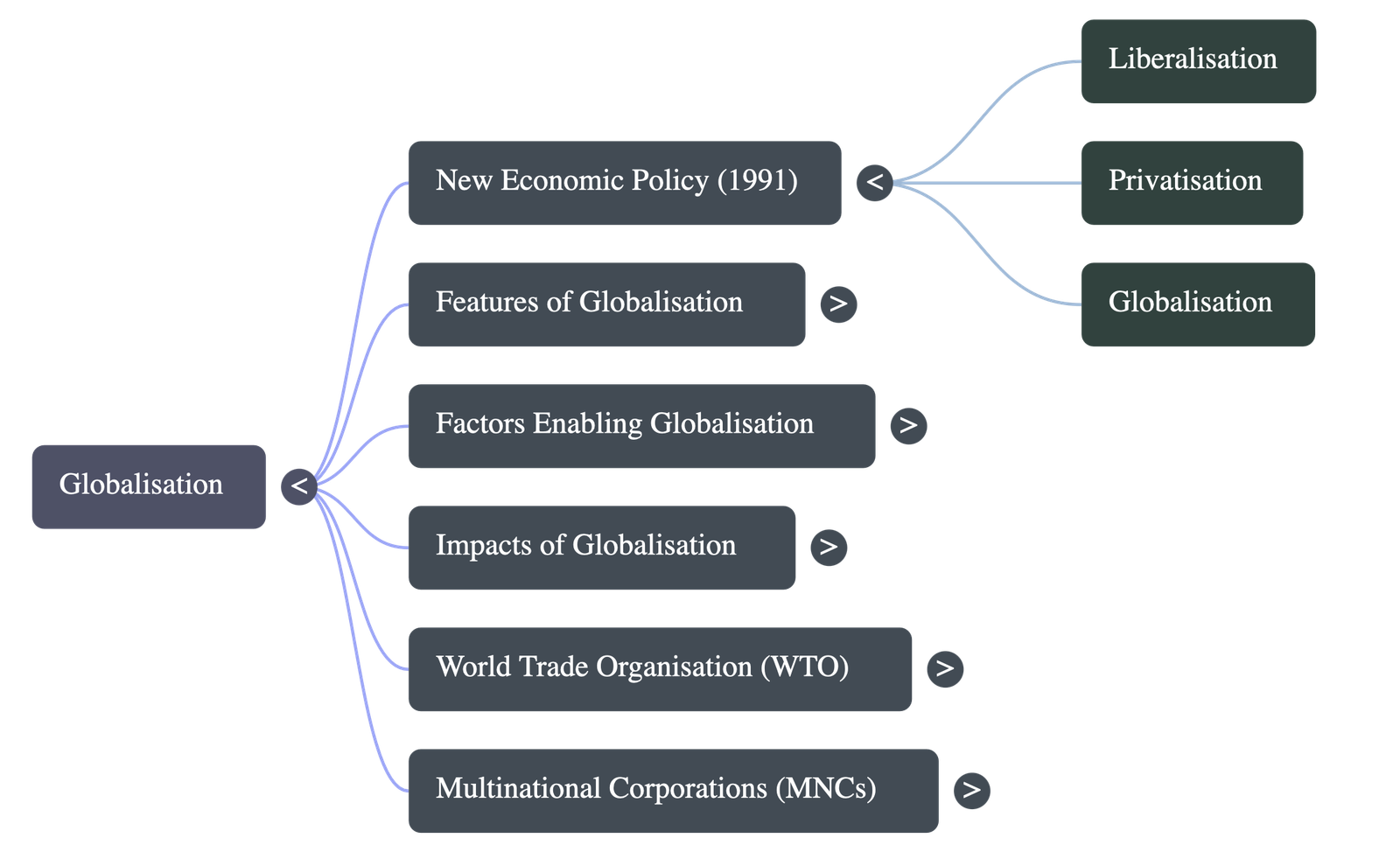
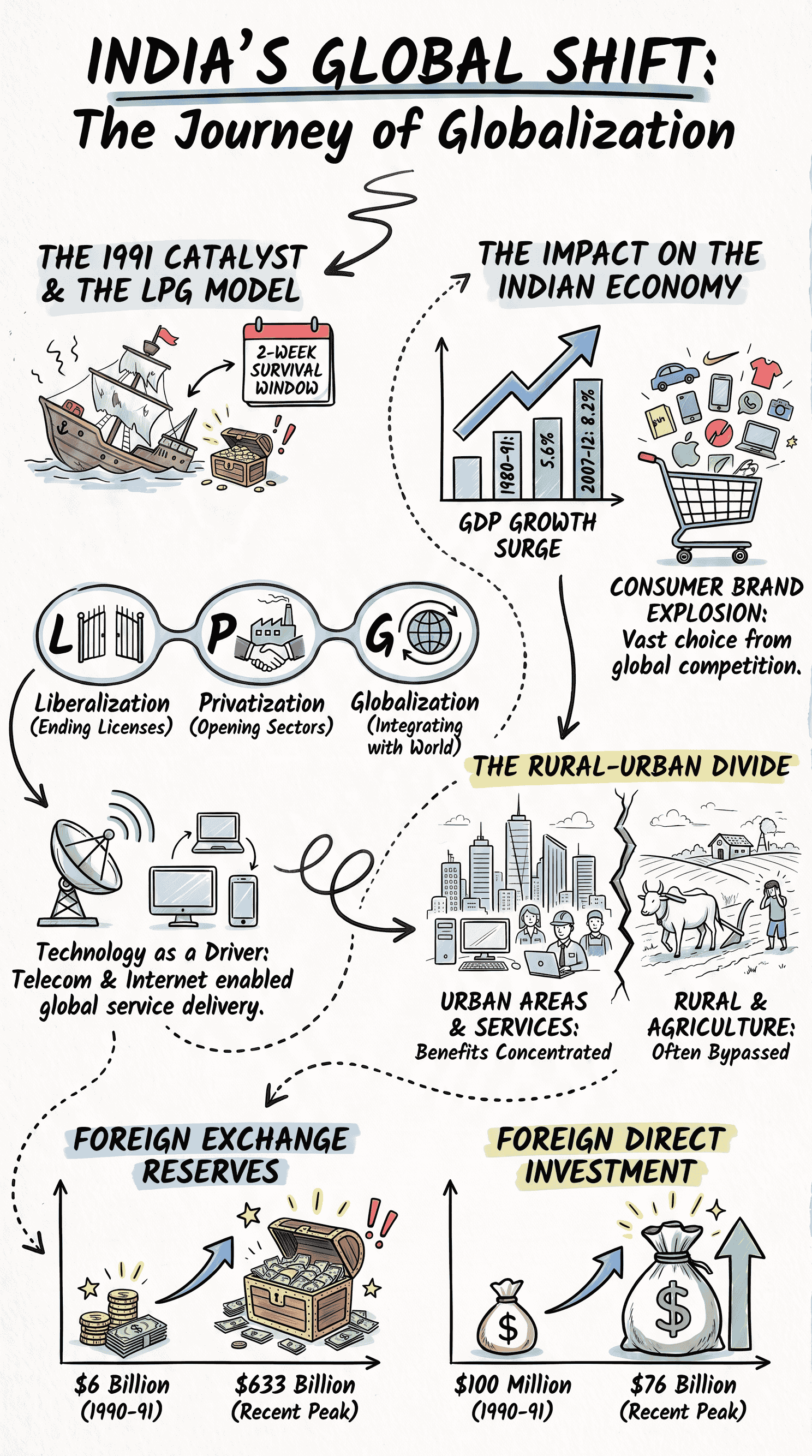
In 1991, India faced a severe foreign exchange crisis and had to borrow from the World Bank and IMF. To get this loan, India had to agree to certain conditions, leading to the announcement of the New Economic Policy (1991). Its three main components are Liberalisation, Privatisation, and Globalisation (LPG).
1. Globalisation
Globalisation means integrating our domestic economy with the world economy. It involves producing, trading, and conducting financial transactions with other countries, making nations economically interdependent.
Objectives and Advantages
- Promotes Business and Employment: Attracts foreign investment and generates jobs.
- Improves Efficiency: Removes domestic inefficiency by exposing local firms to global competition.
- Increases Productivity: Brings in advanced technology and capital, which reduces production costs and increases labor productivity.
- Benefits Consumers: Results in better quality goods at cheaper prices due to market competition.
- Improves Financial Sectors: Opens up banking and finance to foreign banks, boosting efficiency.
Key Features of Globalisation
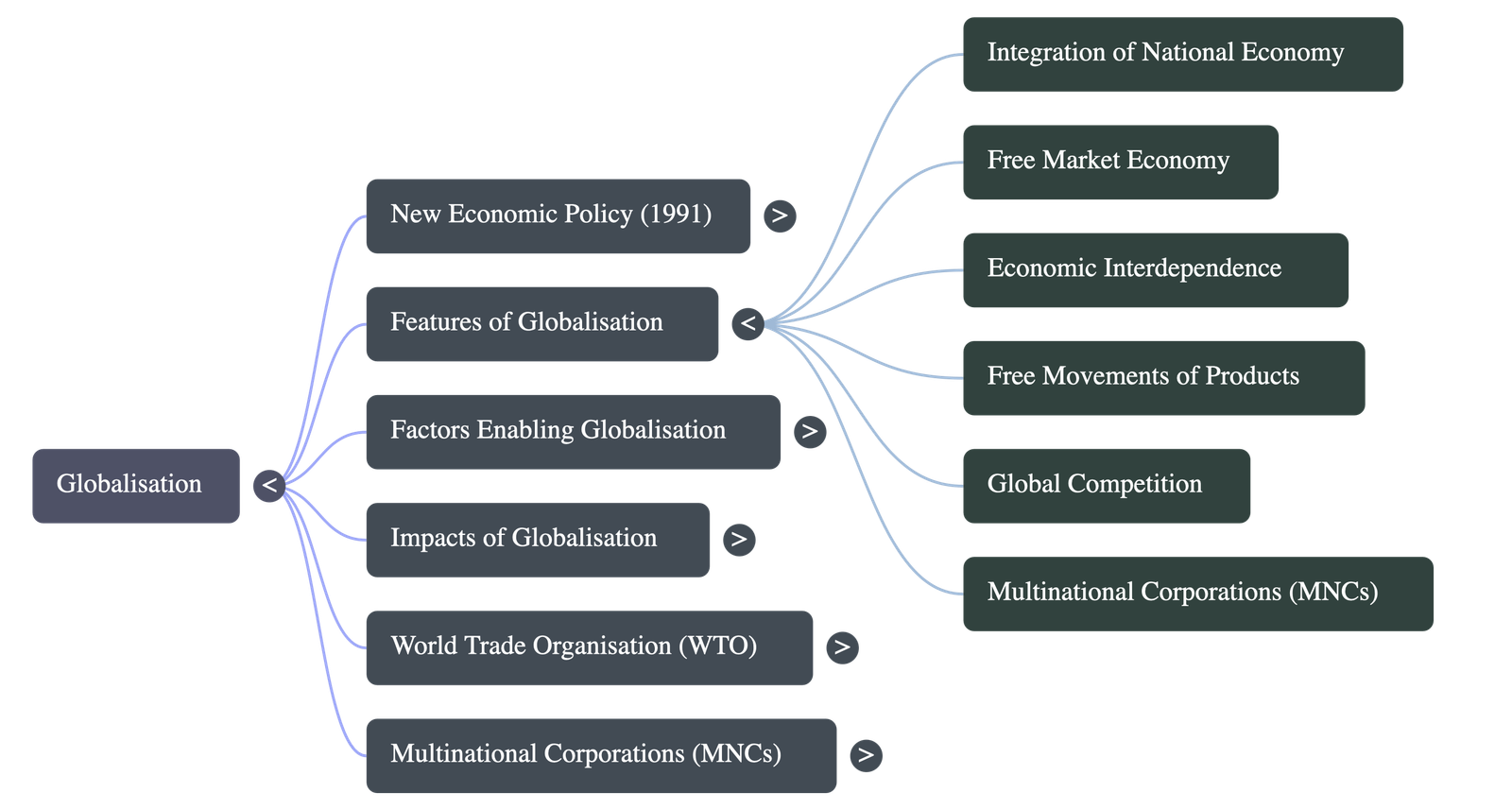
- Integration of national economies into a free market economy.
- Free movement of products, capital, and factors of production globally.
- Growth of Multinational Corporations (MNCs) and increased global competition.
- Expansion in the volume of world trade.
2. Factors Enabling Globalisation
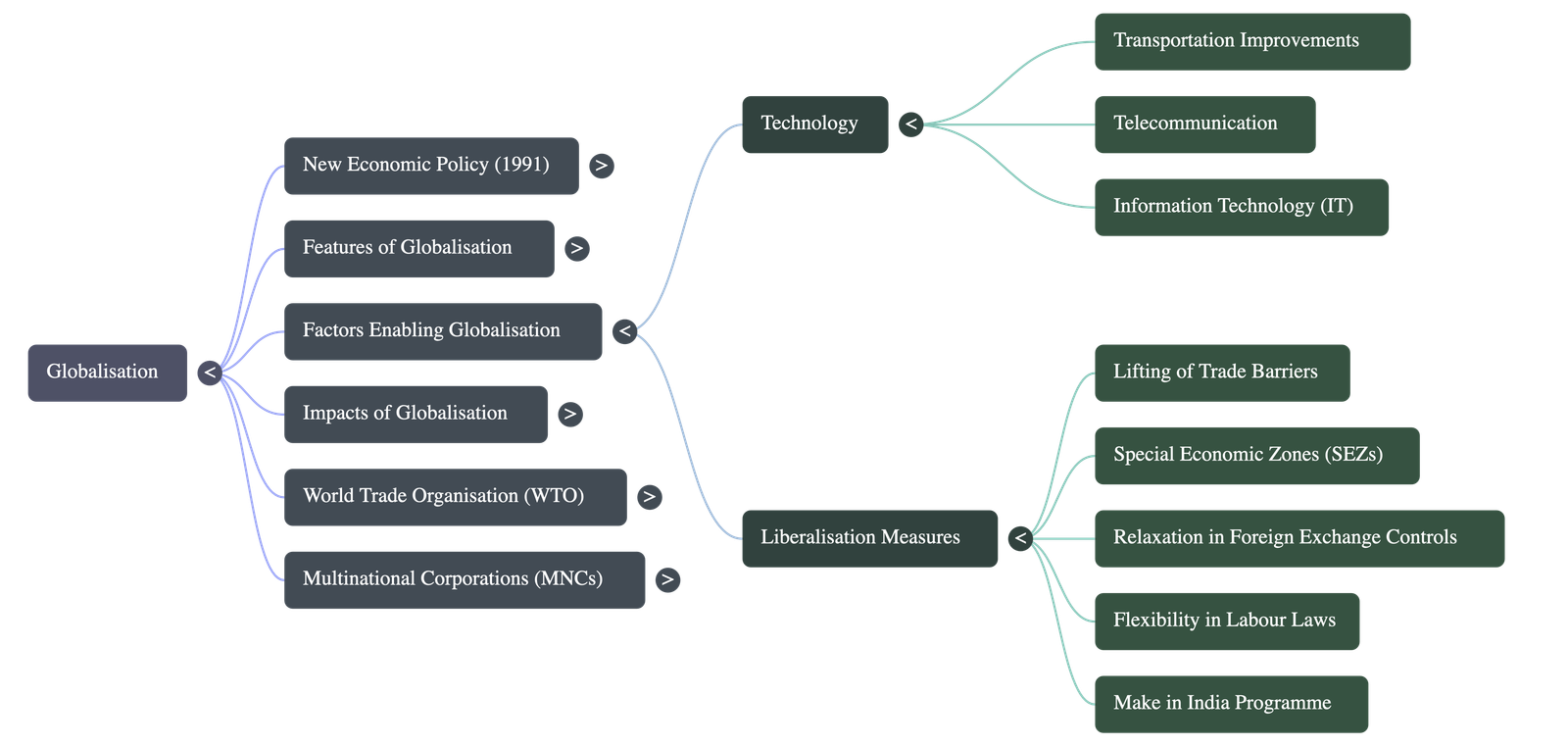
Two main factors have driven the rapid process of globalisation:
A. Technology
- Transportation: Improvements have made faster and cheaper delivery of goods across long distances possible.
- Information and Telecommunication: Computers, the internet, and mobile phones allow instant global contact and help spread production services (like printing magazines globally using internet data).
B. Liberalisation
Liberalisation means freeing trade and industry from unwanted government controls and restrictions. It allows the private sector to enter areas previously reserved for the government and relaxes market rules.
- Lifting of Trade Barriers: Import duties and quotas (restrictions to protect domestic industries) were massively reduced to encourage foreign competition.
- Special Economic Zones (SEZs): Industrial areas with world-class facilities (electricity, roads) and initial 5-year tax holidays to attract foreign companies.
- Relaxation in Foreign Exchange: Easier transactions in foreign currencies.
- Flexibility in Labour Laws: Allowed foreign companies to hire workers on a temporary basis, reducing their cost of production.
- Make in India: A massive government programme inviting foreign investors to utilize India's cheap labor and land.
3. Impacts of Globalisation
Positive Impacts
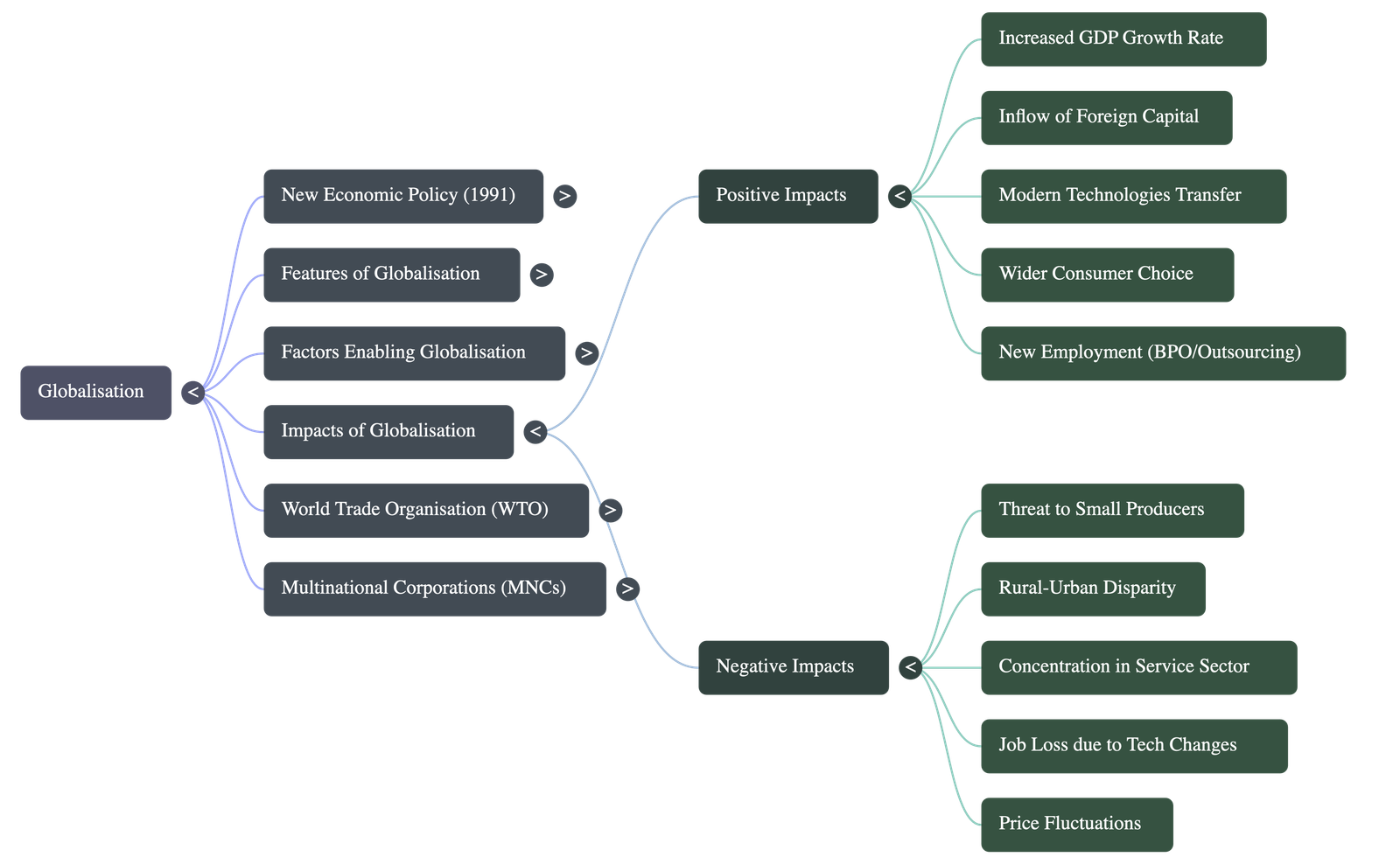
- Higher Growth Rate: GDP growth increased significantly post-1991.
- Technology Transfer: MNCs bring modern technologies and management practices into India.
- Inflow of Foreign Capital: Boosted India's foreign exchange reserves and direct investments enormously.
- Healthy Competition: Indian companies (like Tata Motors, Infosys) improved standards, with some becoming MNCs themselves.
- Benefits to Consumers: Access to a wide variety of global brands, high-quality digital goods, and competitive prices.
- New Employment (Outsourcing): Huge job creation in IT and BPO (Call Centres) because India offers skilled labor at cheaper costs.
Negative Impacts
- Threat to Small Producers: Many local businesses cannot survive the intense competition from giant MNCs.
- Uneven Benefits: Increased wealth mostly for high-income urban groups; widespread poverty remains.
- Neglect of Agriculture: Growth is concentrated in IT, finance, and services, bypassing the agricultural sector which supports millions.
- Job Losses due to Tech: Advanced, machine-heavy production techniques have sometimes destroyed more jobs than they created.
- Price Fluctuations: Local markets become vulnerable to global commodity price changes.
Note on Fair Globalisation: Government policies are needed to ensure the benefits are shared by everyone, not just the educated and wealthy, and to protect workers' rights and small producers.
4. World Trade Organisation (WTO)
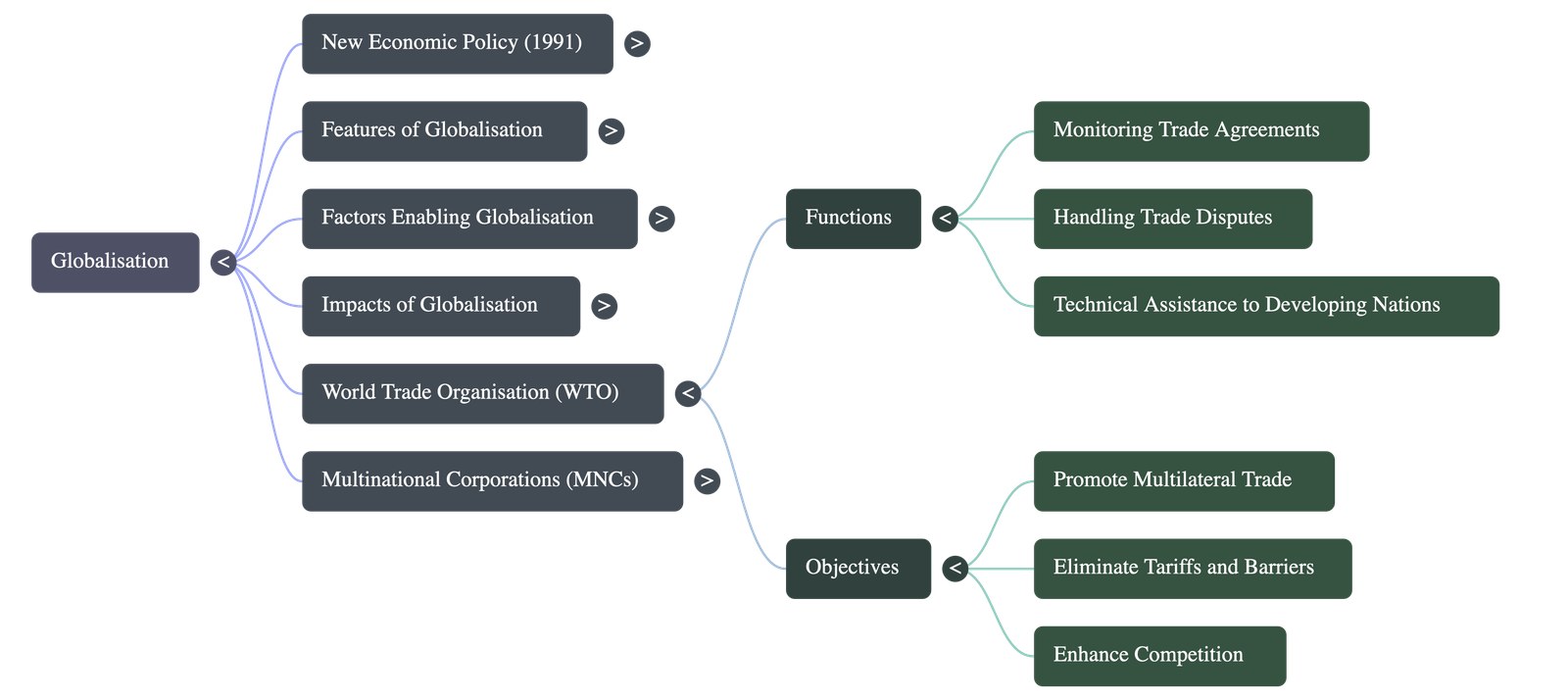
Set up in 1995 (headquartered in Geneva) to promote trade among its 164 member countries. Foreign trade is crucial because it integrates markets globally and expands choices for producers and consumers.
Functions and Objectives
- Monitors international trade agreements and handles trade disputes.
- Provides technical assistance to developing countries.
- Aims to eliminate tariffs and barriers to trade (free trade).
- Works to expand world resources and enhance competition for the benefit of consumers globally.
5. Multinational Corporations (MNCs)
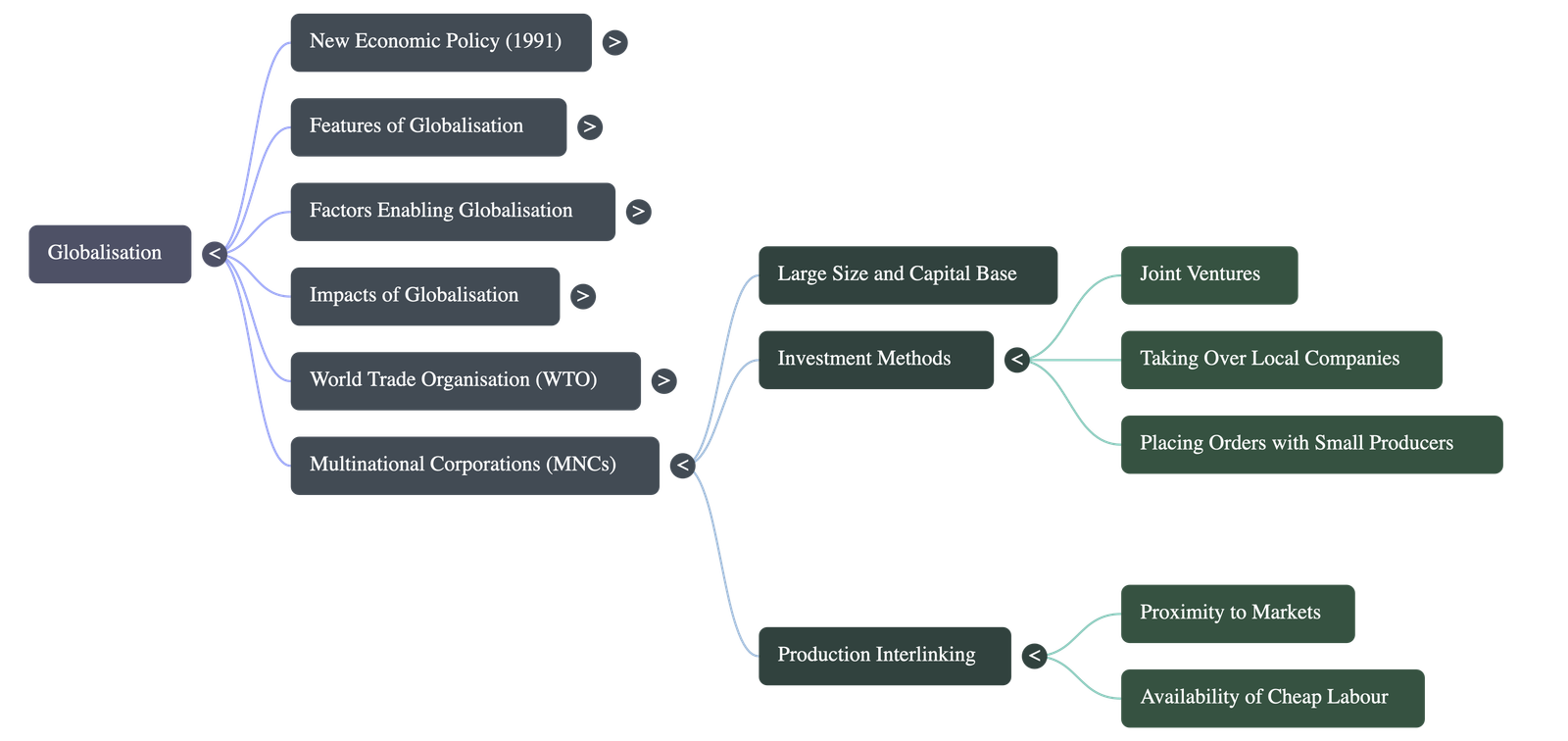
An MNC is a giant company that owns or controls production in two or more countries. They have huge capital, use advanced technology, and operate through a parent company with many global subsidiaries.
Interlinking Production Across Countries
MNCs do not produce everything in one place. They set up factories and offices where:
- They are close to target markets.
- Skilled and unskilled labour is cheap.
- Government policies are favorable (low taxes, easy labor laws).
Three Ways MNCs Invest Globally
- Joint Ventures: MNCs partner with local companies. This benefits the local company because the MNC brings in extra money (for new machines) and the latest technology.
- Taking Over Local Companies: The most common route. MNCs use their huge wealth to simply buy out local competitors and expand rapidly (e.g., Coca-Cola buying Thums Up, Cargill Foods buying Parakh Foods).
- Placing Orders: MNCs place huge production orders with small producers worldwide (for items like garments, sports items, footwear). They then sell these finished products under their own massive brand names, keeping strict quality checks.
Do checkout all questions & answers of this chapter.