Meaning and Definition of Economics
Introduction & Origin
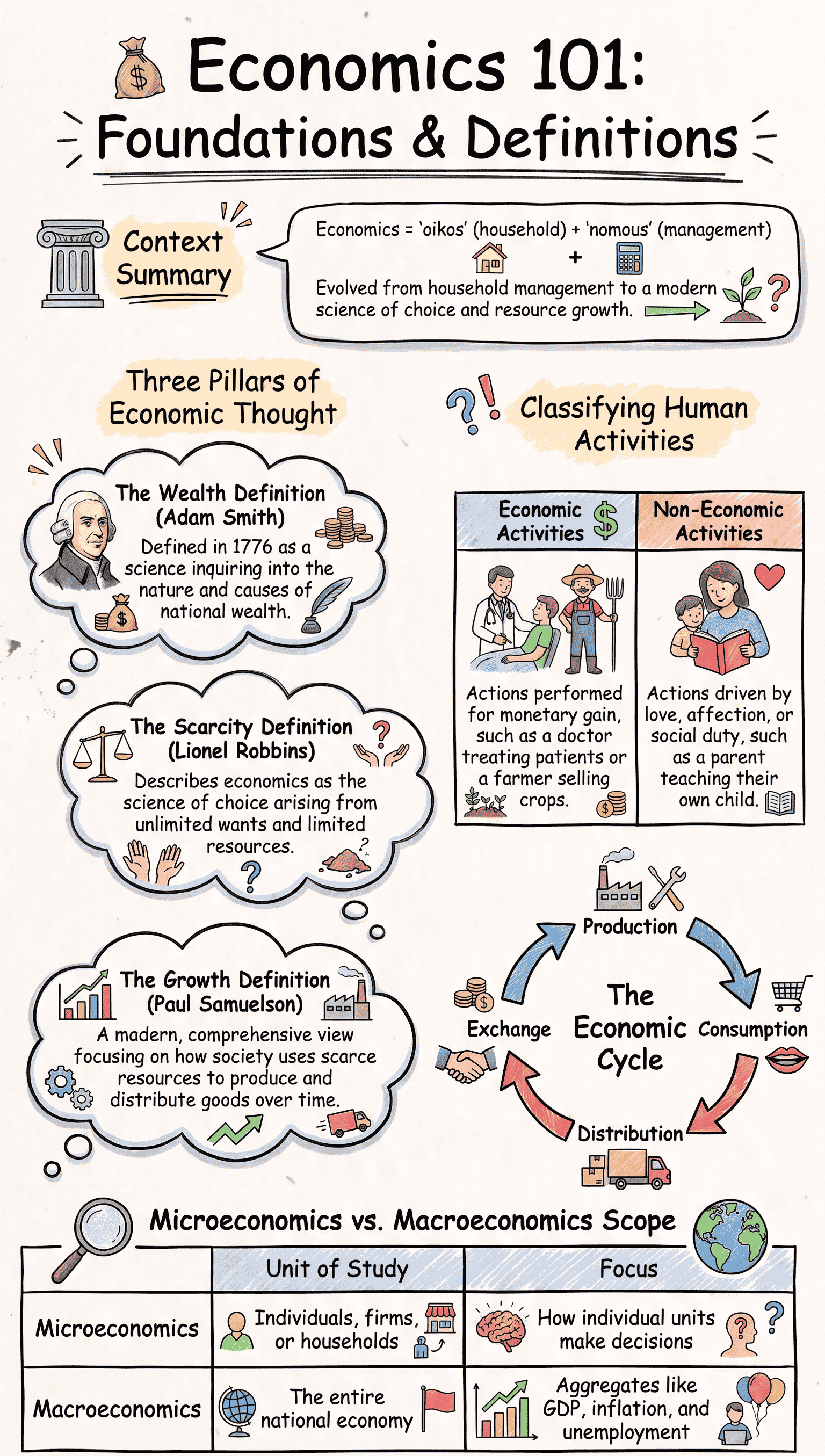
The term "Economics" originated from two Greek words: "oikos" (meaning 'household') and "nomous" (meaning 'management'). Originally, it referred to the management of a household using limited funds. Today, it is a social science that studies how societies manage and organize themselves to satisfy unlimited human wants using limited (scarce) resources.
1. Definitions of Economics
Over time, different economists have focused on different aspects of economic activities. Their definitions are grouped into five major categories:
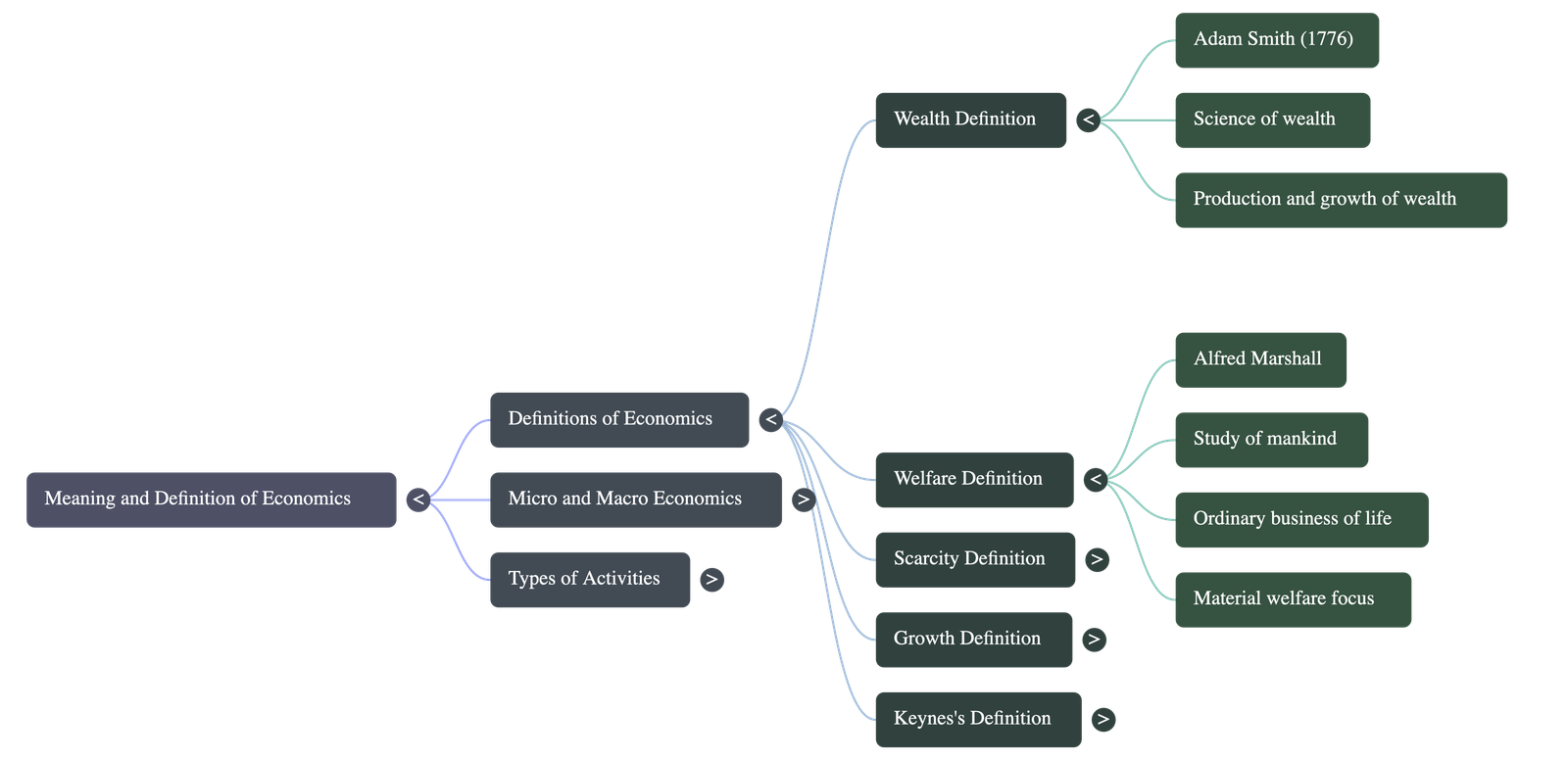
1.1 Wealth Definition (Adam Smith)
- Adam Smith is known as the Father of Economics.
- In his 1776 book, 'An Inquiry into the Nature and Causes of the Wealth of Nations', he defined economics as a "science of wealth".
- He focused entirely on how wealth is produced and grown in a nation.
1.2 Welfare Definition (Alfred Marshall)
- Economists like Marshall and Pigou shifted the focus from merely "wealth" to "human welfare".
- According to this view, economics is the study of mankind in the ordinary business of life. Wealth is just a means to achieve human happiness and welfare, not the ultimate goal.
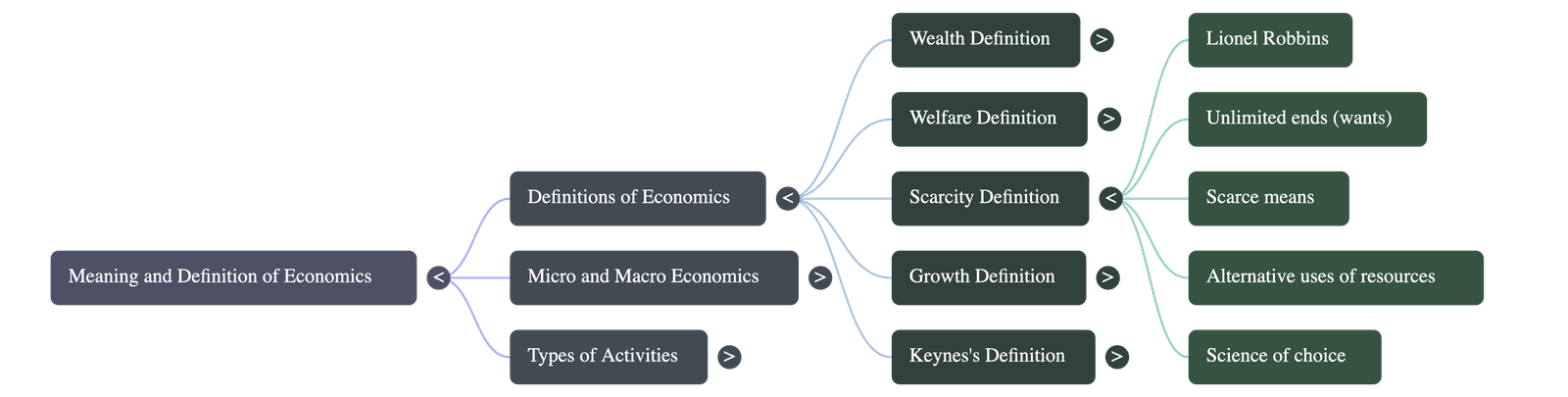
1.3 Scarcity Definition (Lionel Robbins)
- Robbins defined economics as the "science of choice under scarcity".
- Key Features:
- Unlimited Ends: Human wants are endless. When one is satisfied, another arises.
- Scarce Means: Resources (time, money, materials) to satisfy these wants are limited.
- Alternative Uses: Scarce resources can be put to multiple uses (e.g., coal can be used in factories, railways, or homes).
- Science of Choice: Because resources are scarce and wants are unlimited, humans are forced to make choices based on priority.
- Criticism: Scarcity is not the only cause of economic problems. Sometimes abundance (surplus of goods) causes crises, like the Great Depression of the 1930s.
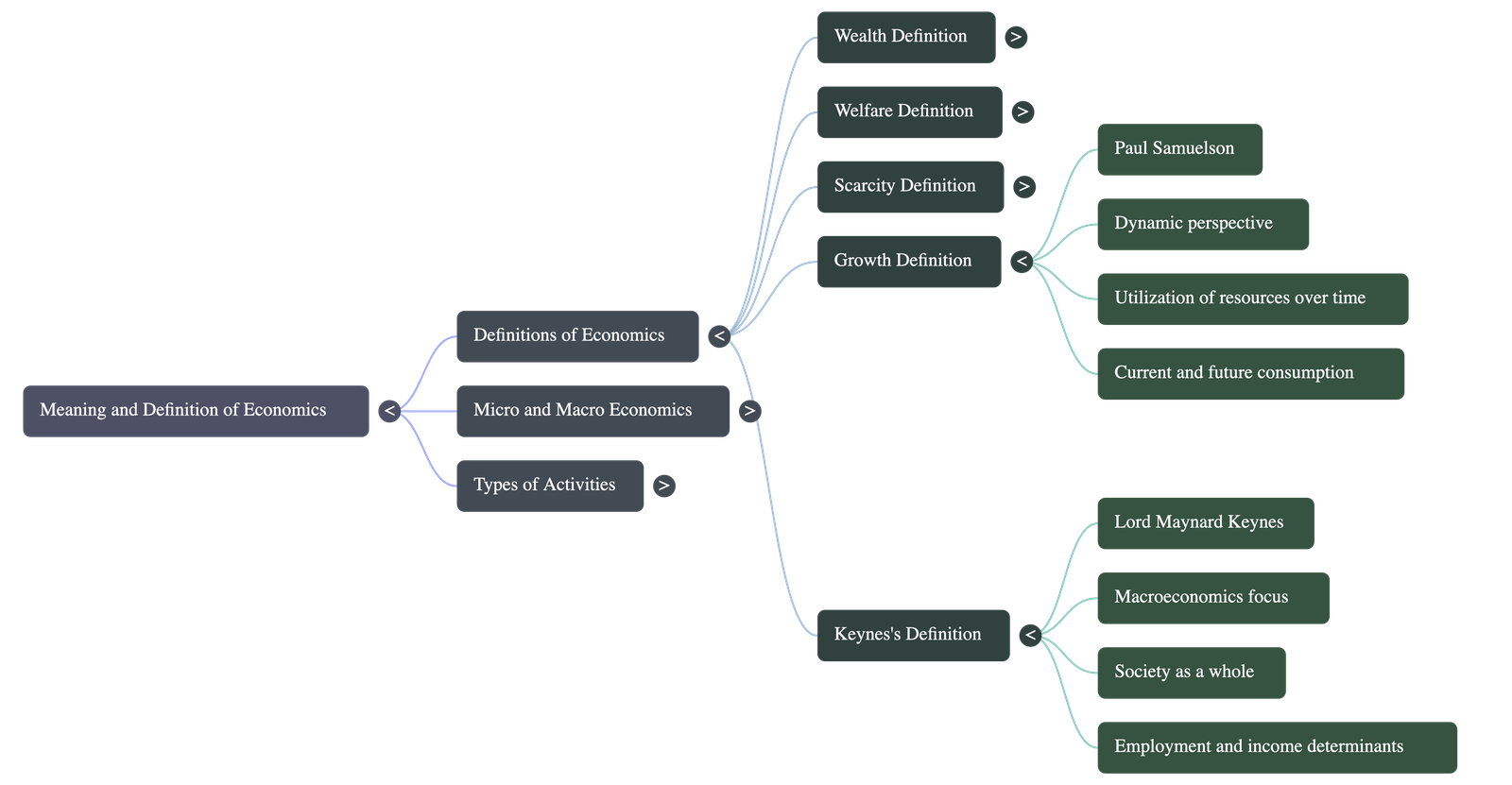
1.4 Growth Definition (Paul Samuelson)
- Samuelson's definition is considered the most comprehensive.
- It focuses on how people and society choose to employ scarce productive resources over time to produce goods and distribute them for present and future consumption.
- It includes the dynamic changes in resources and wants over time (growth-oriented).
1.5 Keynes's Definition (John Maynard Keynes)
- Earlier economists only looked at economics from the view of an individual.
- Keynes viewed economics from the perspective of the economy as a whole (Macroeconomics).
- He focused on national income, aggregate demand, total employment, total savings, and total investment.
2. Micro and Macro Economics
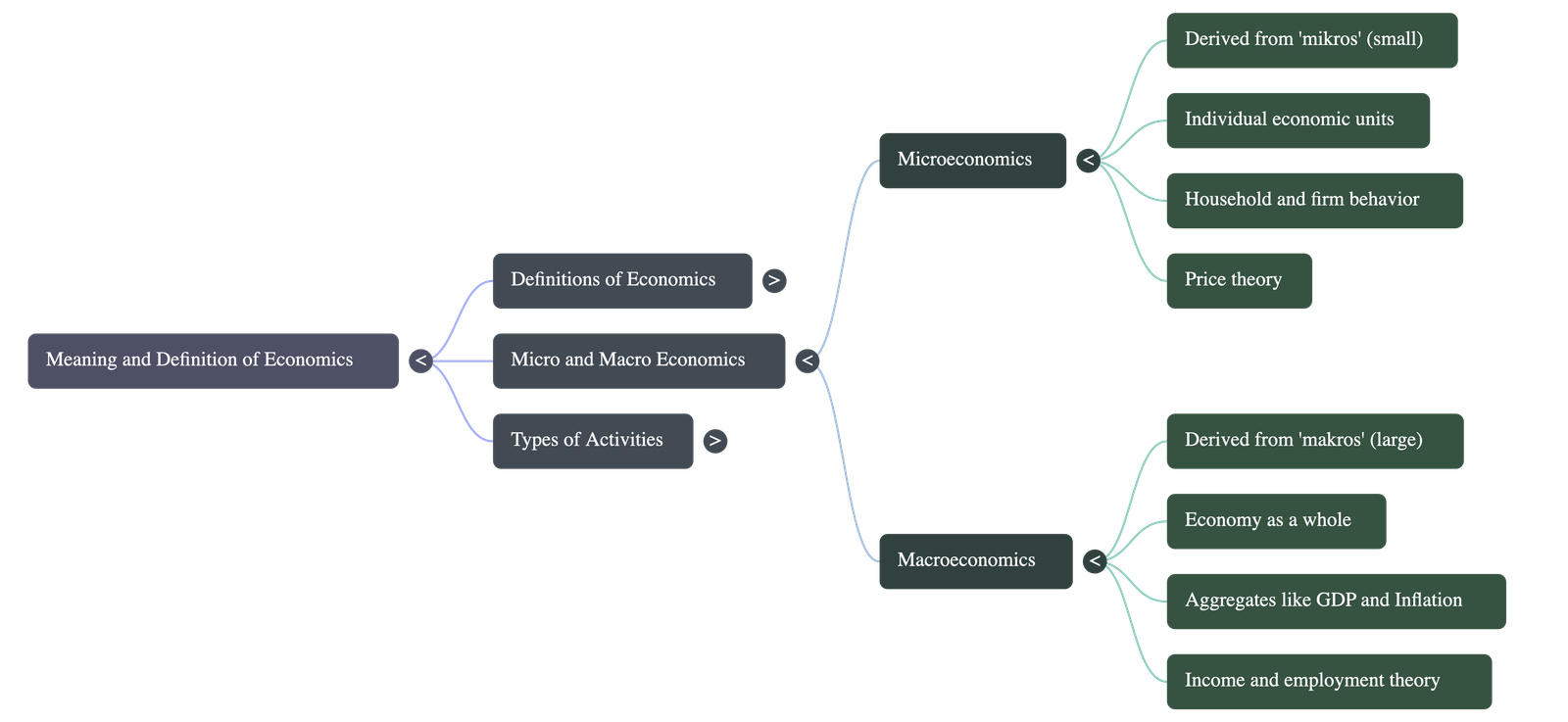
The subject matter of economics is divided into two branches. These terms were coined by Prof. Ragnar Frisch in 1933.
2.1 Microeconomics
- Derived from the Greek word 'mikros' meaning small.
- Studies the economic behavior of small, individual units of an economy (e.g., a single household, a single firm, or an individual consumer).
- Examples: Price of a specific commodity, individual income, demand/supply of a single good.
2.2 Macroeconomics
- The prefix 'macro' means large.
- Studies the overall economy as a whole on a large scale. Also called "aggregative economics".
- Examples: National income, general price level (inflation), total unemployment, GDP, and aggregate demand.
3. Types of Activities
Human activities are broadly classified into two categories: Economic and Non-Economic.
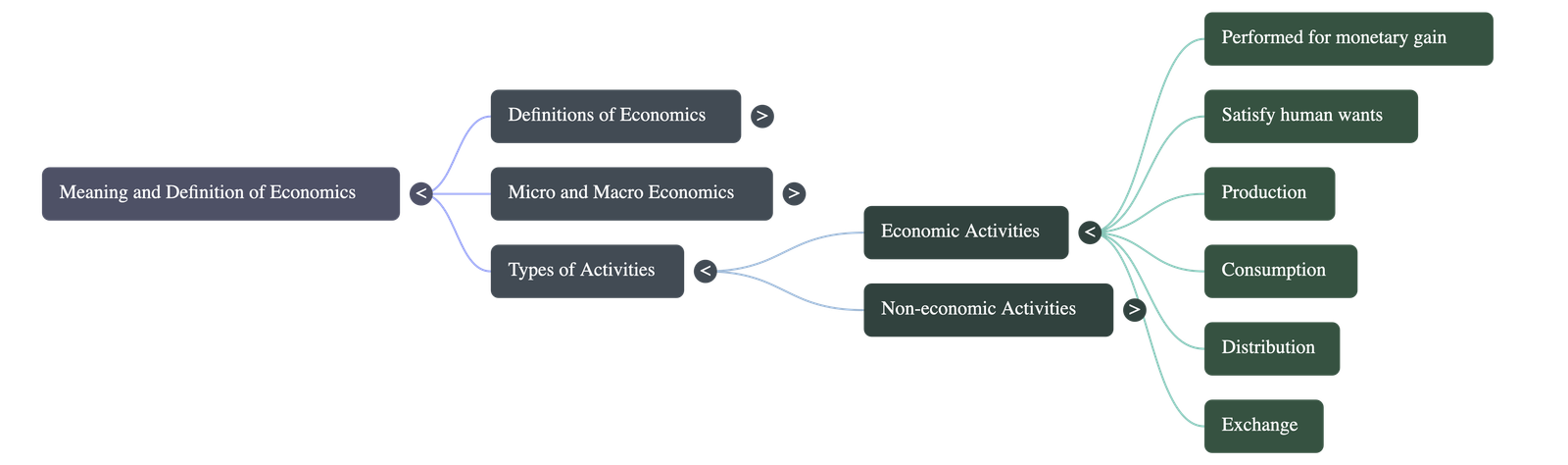
3.1 Economic Activities
Activities performed with the motive of earning money, satisfying human wants, and producing goods or services.
Four Main Types:
- Production: The process of creating or manufacturing goods and services (e.g., a farmer producing food, a lawyer giving legal advice).
- Distribution: Spreading the produced products throughout the marketplace and dividing the generated income among the factors of production (e.g., transporting food from farms to shops).
- Consumption: The direct utilization or use of goods and services to satisfy wants (e.g., households eating food).
- Exchange: Giving or receiving something in return for something else; includes all buying and selling activities.
Key Features: Performed for monetary gain, satisfies wants, aids economic development, and operates within rules and regulations.
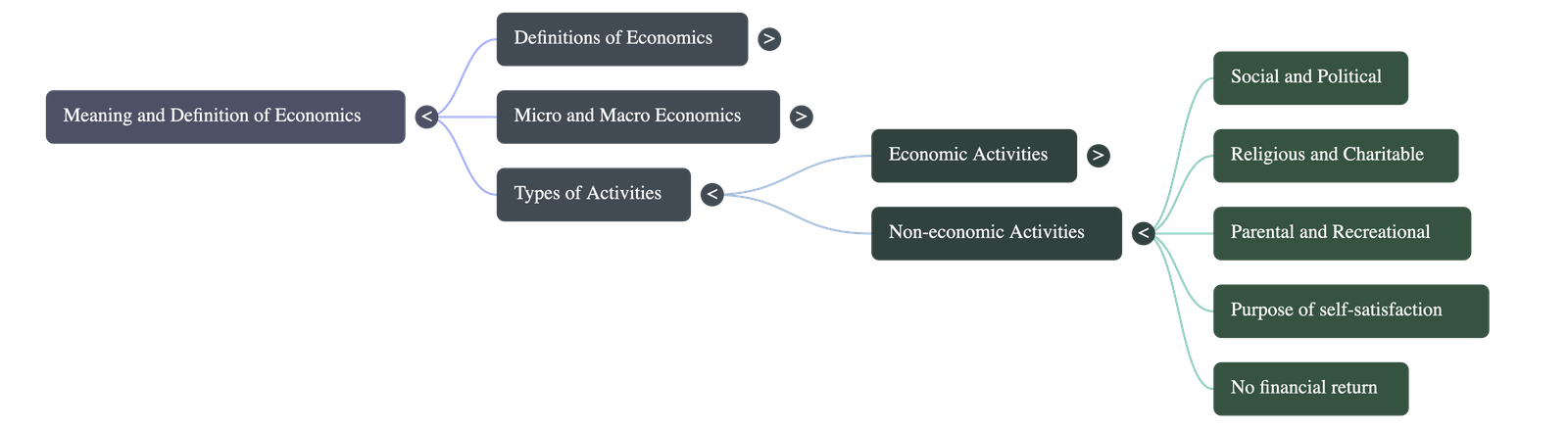
3.2 Non-Economic Activities
Activities performed purely out of love, affection, sympathy, patriotism, or self-satisfaction. They involve no financial or monetary gain.
- Types include: Social (attending parties), Political (rallies), Religious (worship), Charitable (helping the poor), Parental (mother caring for a child), and Recreational (playing games for fun).
- Key Features: Done for self-satisfaction, lack money measurement, no products created for the market, and generate no income.
Important Concept: The Motive Matters
The same activity can be economic or non-economic depending on the motive.
Example: If a teacher teaches his own son at home out of love, it is a non-economic activity. But if the same teacher teaches in a school to earn a salary, it becomes an economic activity.
Do checkout all questions & answers of this chapter.