Social Infrastructure
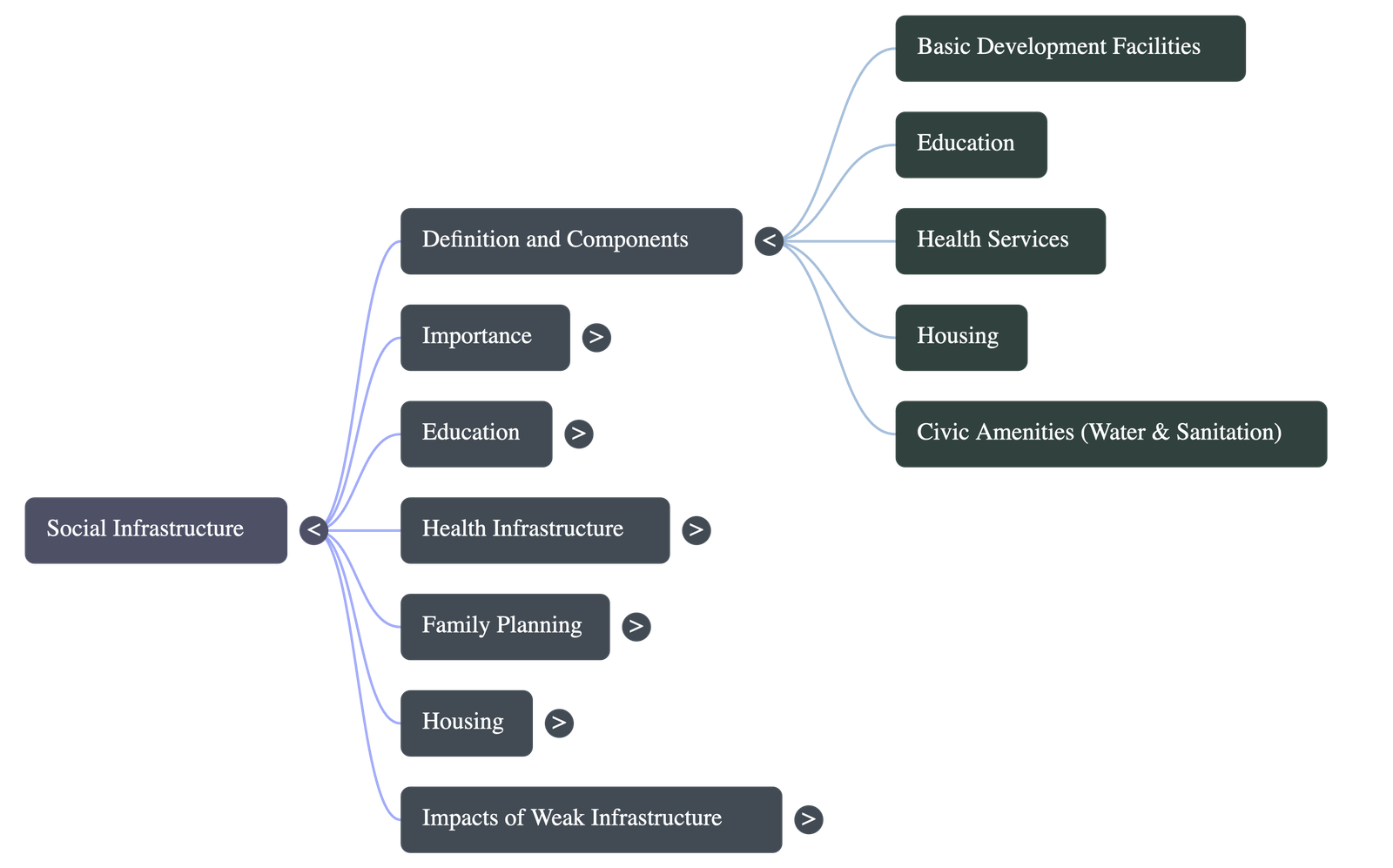
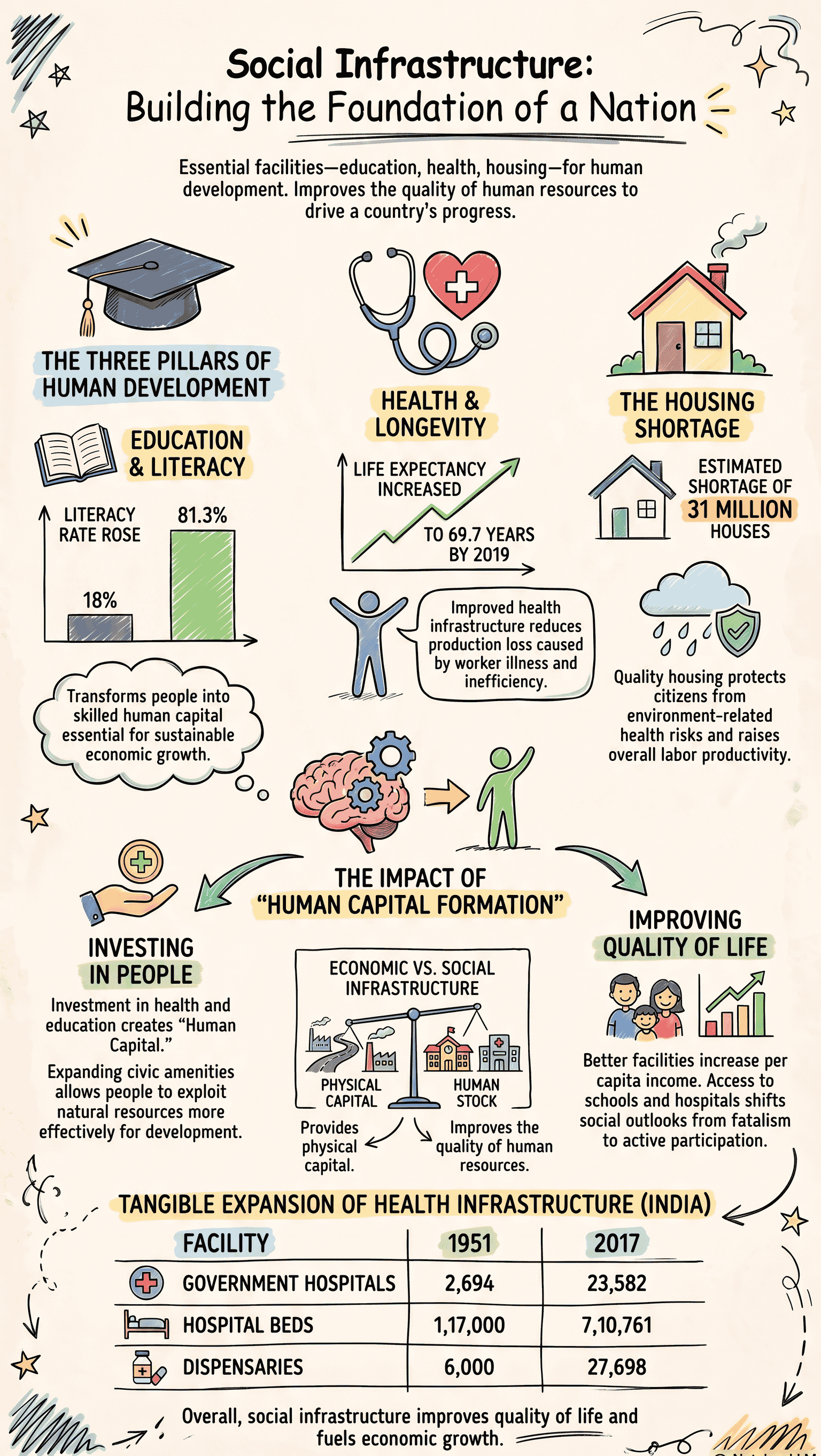
Introduction: Social infrastructure refers to the basic facilities necessary for human development, primarily including education, health services, housing, and civic amenities (like water supply and sanitation). While economic infrastructure (like transport or energy) helps the economy directly from the inside, social infrastructure helps indirectly from the outside by improving the quality of human resources.
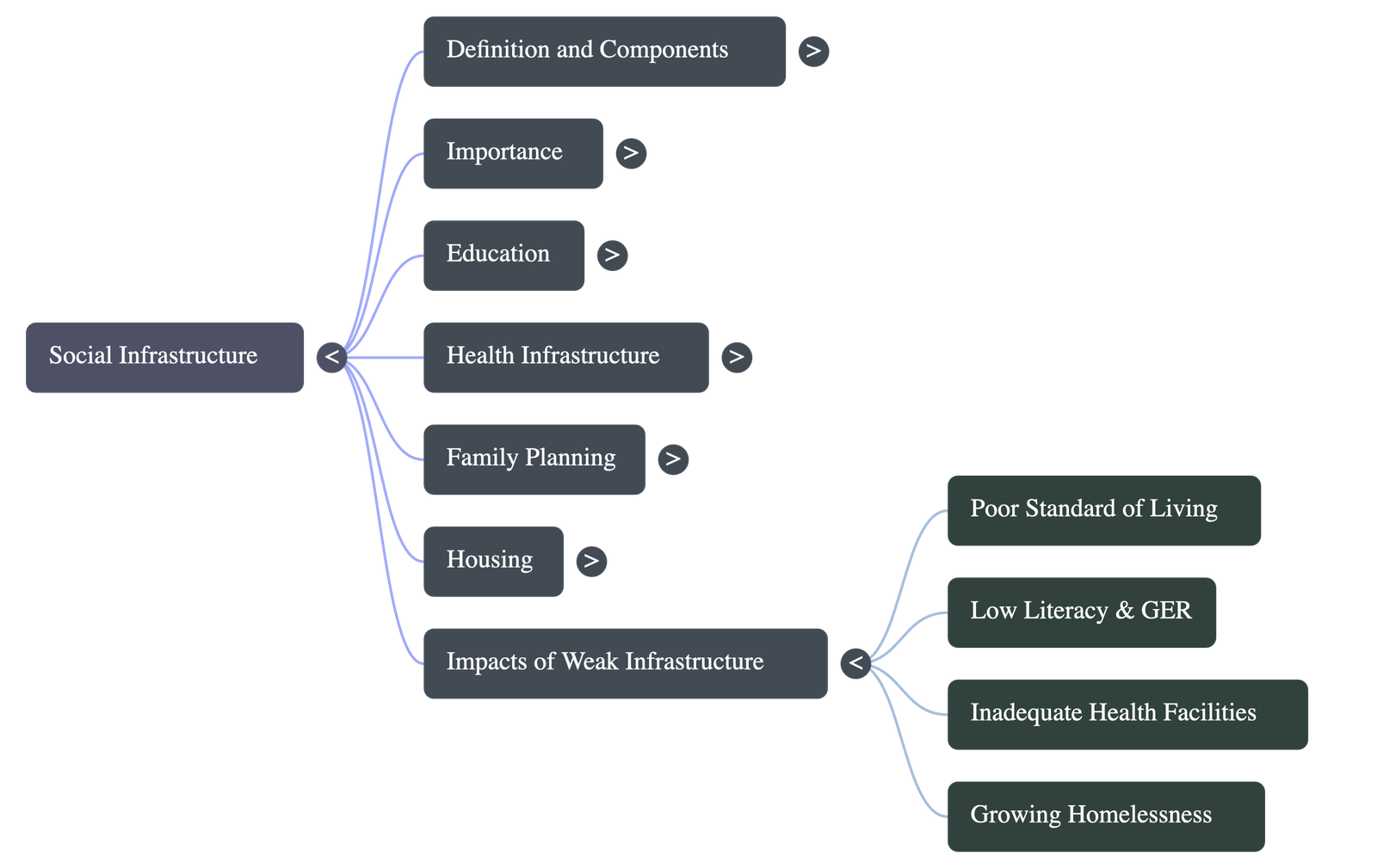
1. Importance of Social Infrastructure
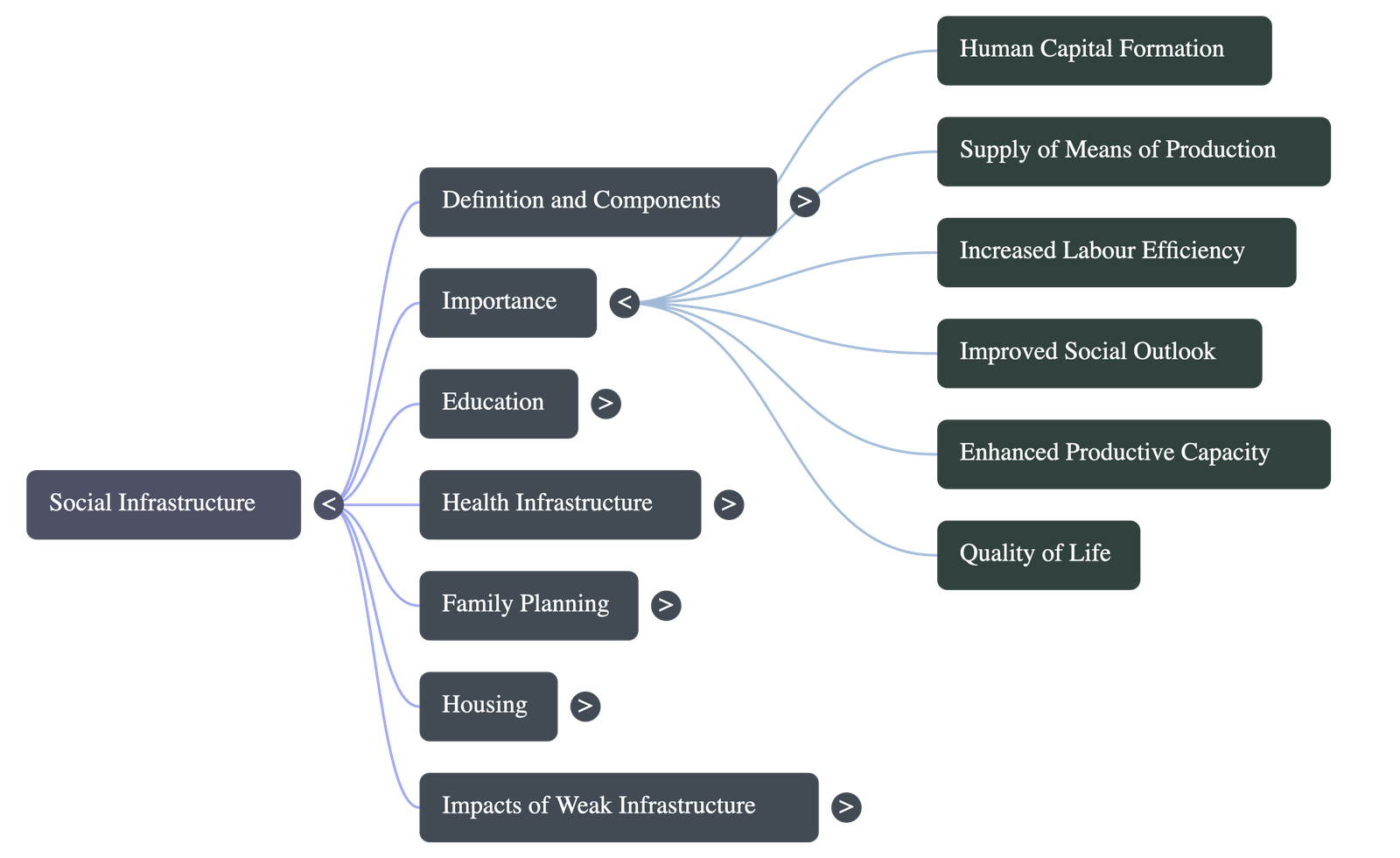
- Supply of Means of Production: It creates a strong labour supply and fosters entrepreneurs, scientists, and engineers.
- Helpful in Absorbing New Techniques: Skilled and educated workers are necessary to operate modern machines, technology, and engineering equipment efficiently.
- Increase in Labour Efficiency: Healthy and trained workers have better physical capacity, can work longer, and are far more productive than unskilled workers.
- Change in Social Outlook: Education helps eradicate backwardness, superstitions, and fatalism, encouraging people to participate in local development.
- Adds to Productive Capacity: Skilled labour can use modern techniques, adapt imported technologies to local needs, and develop entirely new production methods.
- Improves Quality of Life: Better health, housing, and education increase life expectancy, literacy rates, and per capita income.
2. Education
Education is the process of teaching and learning to improve knowledge and develop skills. It is a much wider concept than literacy, which is merely the ability to read and write.
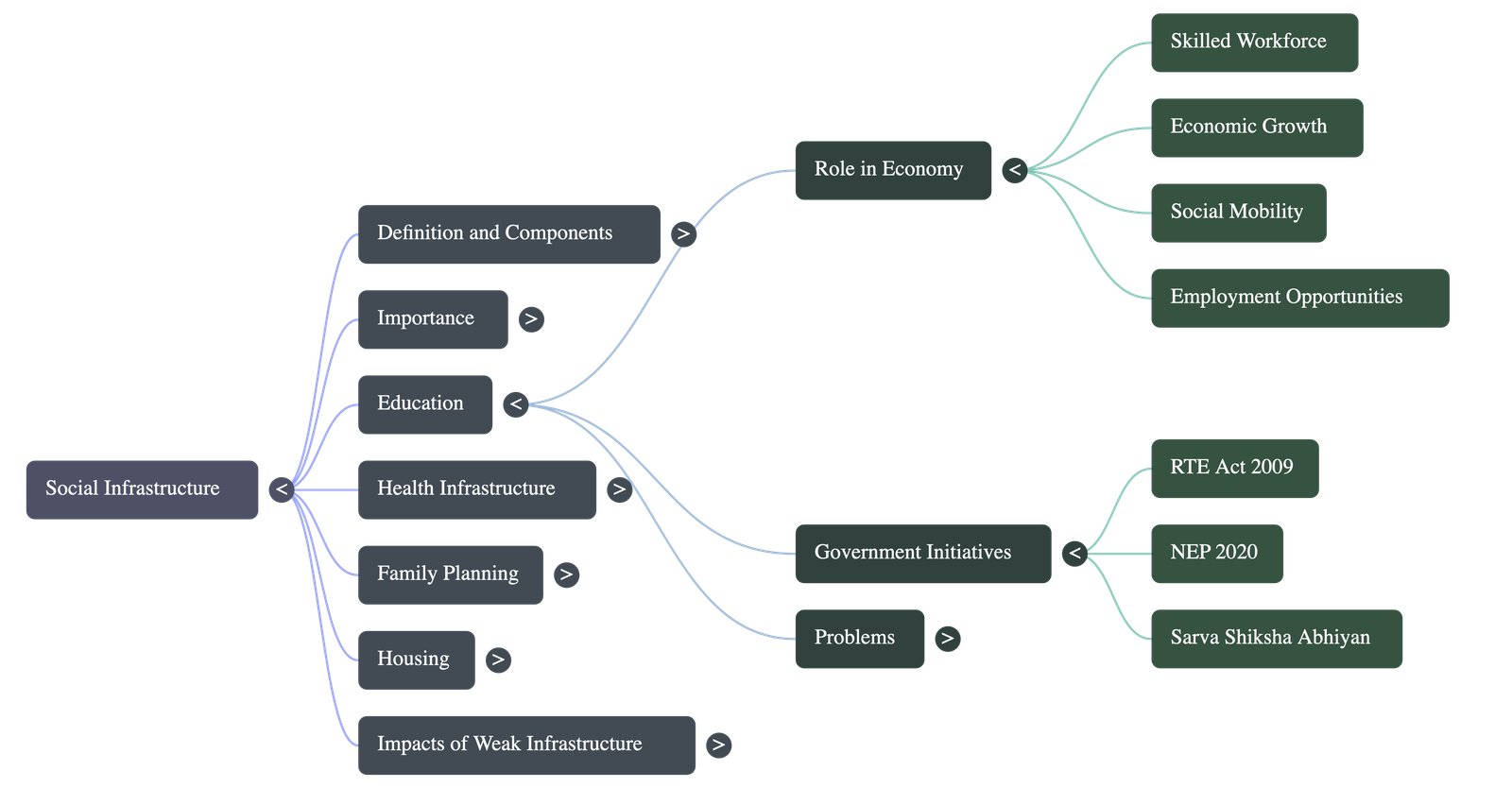
- Role in the Indian Economy: It builds a skilled workforce (Human Capital), contributes to economic growth and innovation, promotes social mobility, and generates employment (like teaching jobs).
- Government Initiatives:
- Right to Education Act (RTE) 2009: Made education free and compulsory for children aged 6-14.
- National Education Policy (NEP) 2020: Focuses on holistic development, vocational training, and research.
- Various Programs: Sarva Shiksha Abhiyan and Rashtriya Ucchatar Shiksha Abhiyan were launched to expand educational reach.
- Progress Over the Years: Literacy rates have jumped significantly since 1951. The Gross Enrollment Ratio (GER) for higher education is steadily increasing, and the number of schools and universities has expanded massively.
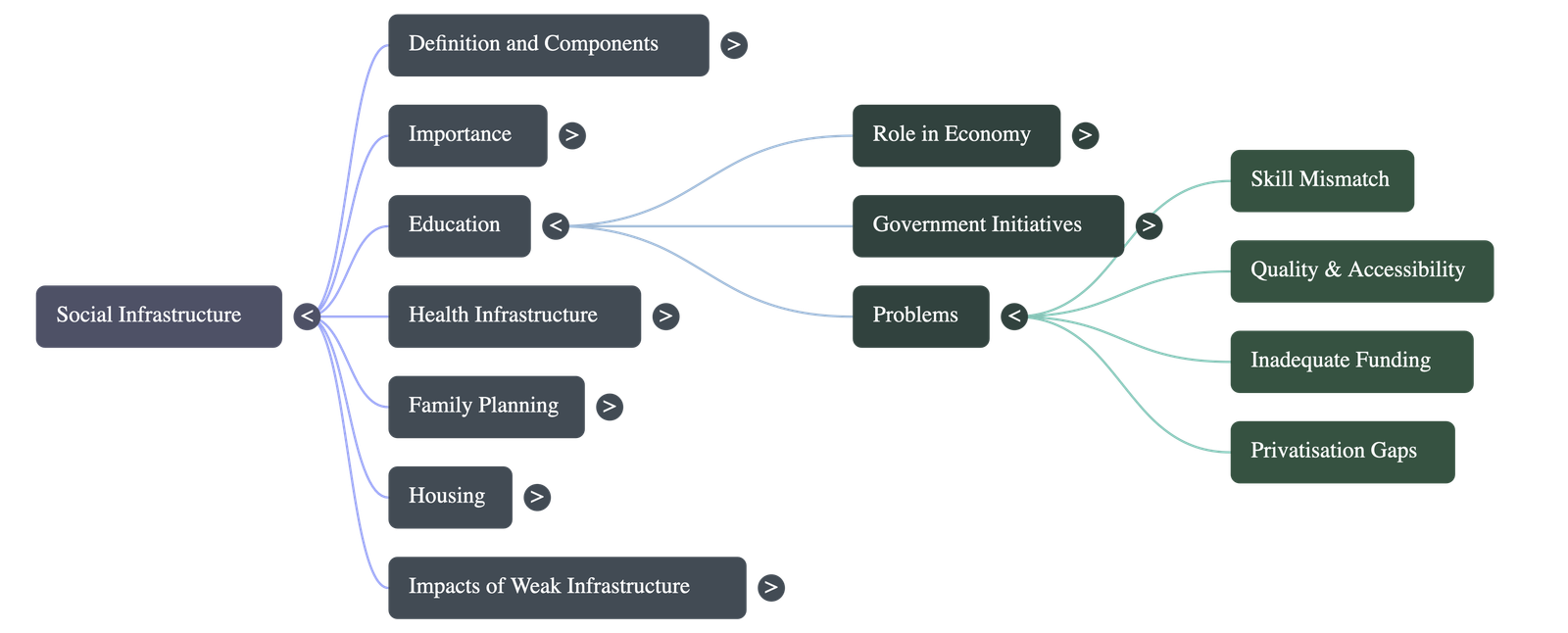
- Problems of Education:
- Poor quality of education, especially in rural areas.
- Skill mismatch leading to unemployment among graduates.
- Lack of equitable accessibility for marginalized communities.
- Inadequate government funding for research and higher-level books.
- Growing privatisation makes quality education too expensive for the poor.
3. Health Infrastructure
Health is a state of complete physical, mental, and social well-being. Health infrastructure includes hospitals, doctors, nurses, beds, and pharmaceuticals.
- Importance: Good health increases worker efficiency, reduces production loss due to sick days, enables the use of natural resources, boosts school enrollment for children, and saves money that would otherwise be spent on treatments.
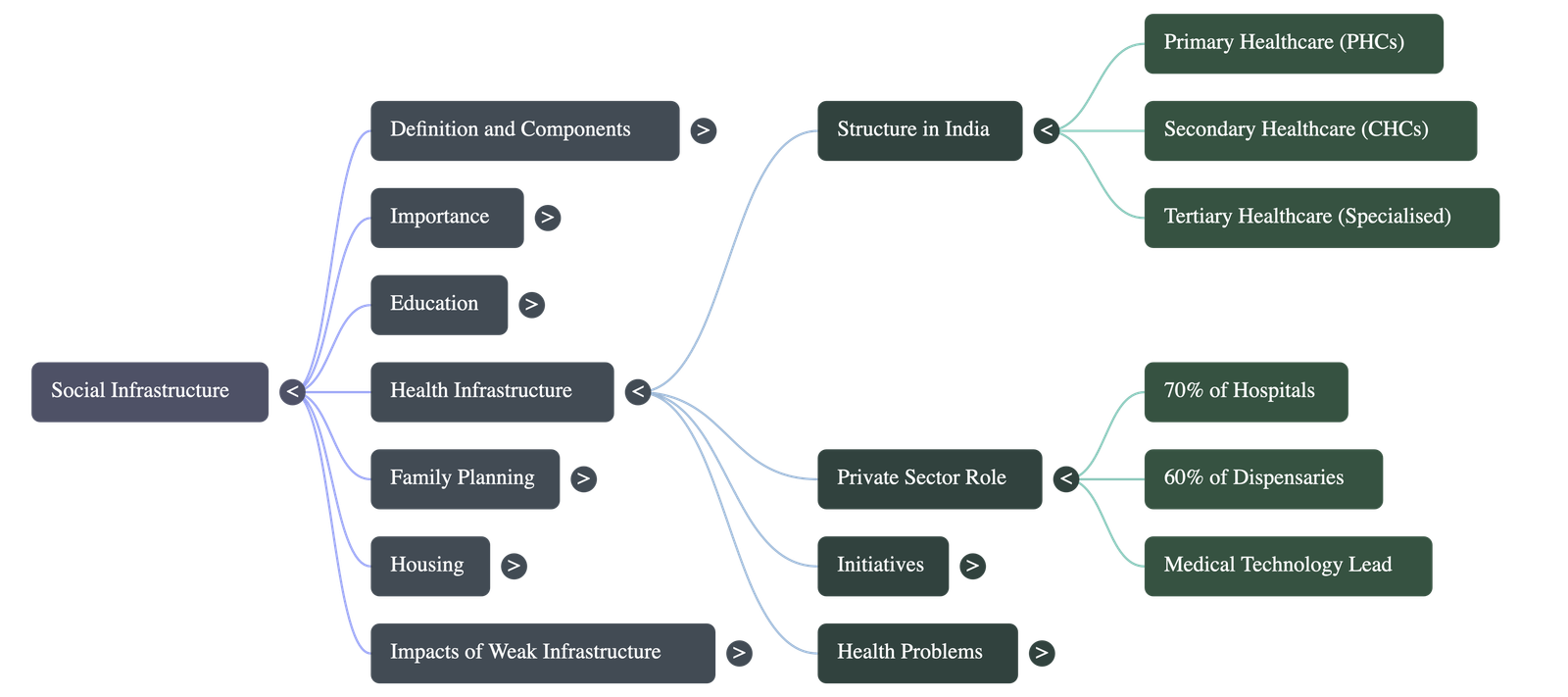
- Three Tiers in India:
- Primary: Provided through Primary Health Centres (PHCs) in rural areas.
- Secondary: District hospitals and Community Health Centres (CHCs).
- Tertiary: Specialized consultative care in advanced medical research colleges and large hospitals.
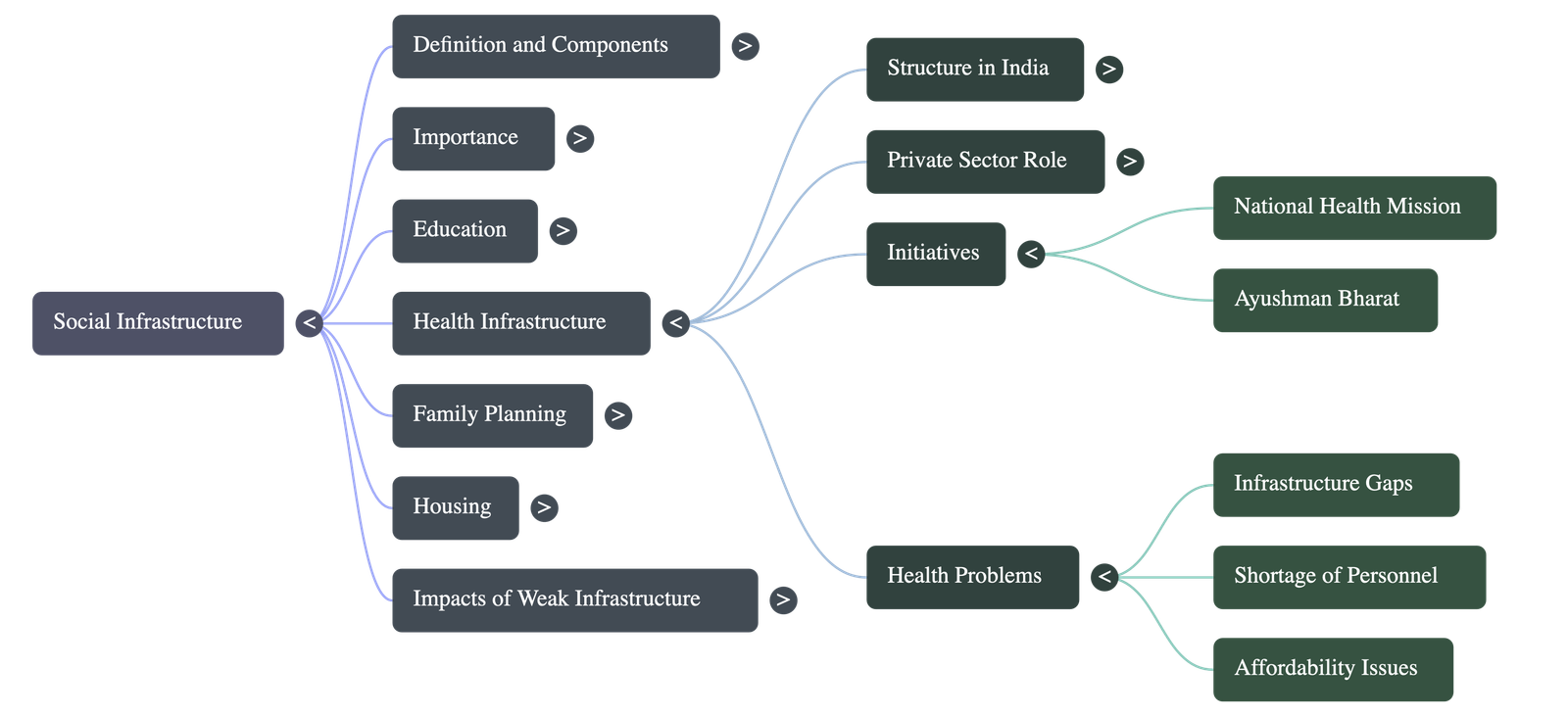
- Role of Private Sector & Government: The private sector runs roughly 70% of hospitals and 60% of dispensaries in India. Major government steps include the National Health Mission (NHM) and Ayushman Bharat (providing health and wellness centers and financial protection for hospitalization).
- Effects of Improvement: Since independence, the death rate and Infant Mortality Rate have drastically declined. Life expectancy has risen considerably, and deadly diseases like smallpox and polio have been controlled.
- Current Problems: Severe infrastructure gaps in rural areas, massive shortages of doctors and nurses, poor quality of care in some sectors, and unaffordable healthcare for the marginalized.
4. Family Planning (or Family Welfare)
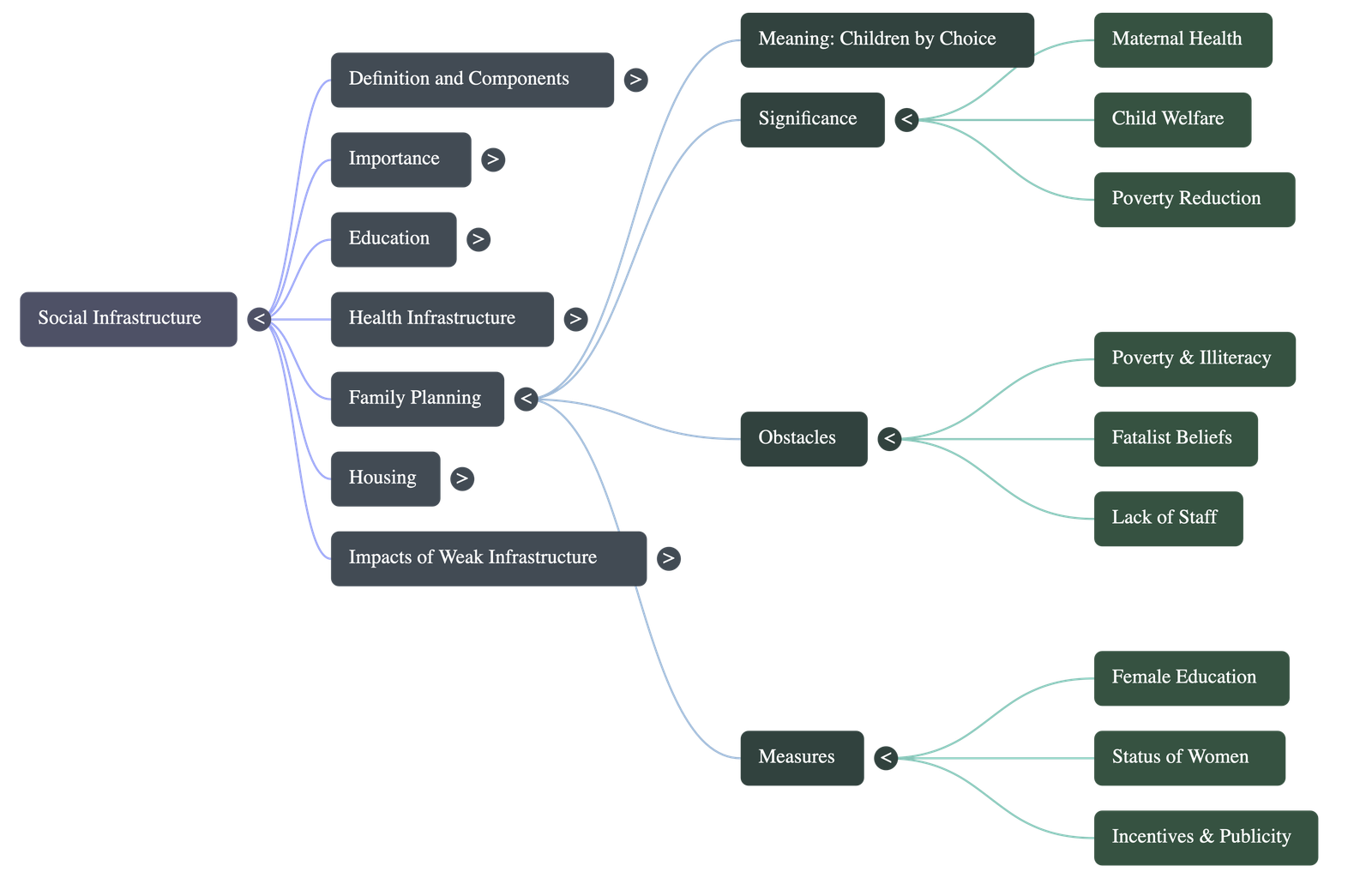
Family planning means having children by choice rather than chance, which involves limiting family size and keeping proper spacing between children to check population explosion.
- Significance: Gives mothers time to regain health; ensures children get adequate attention, security, and love; reduces the financial burden on fathers; and helps society lift millions out of poverty.
- Obstacles: Poverty (poor families view children as extra earning hands), widespread illiteracy, fatalistic beliefs (viewing children as God's will), lack of cheap and effective birth control, and a severe shortage of trained medical staff.
- Measures to Popularise:
- Spreading education, especially for females, which naturally delays marriage and lowers fertility.
- Providing cheap and wide-ranging contraceptive methods.
- Raising the status of women both economically and politically.
- Using mass media (TV, radio) for publicity and awareness.
- Providing incentives (cash rewards) and disincentives (laws limiting family size).
- Changing the social outlook regarding marriage age and the use of contraceptives.
5. Housing
Housing is a fundamental human need that protects us from weather, provides rest, improves physical quality of life, raises labour productivity, and generates employment in construction.
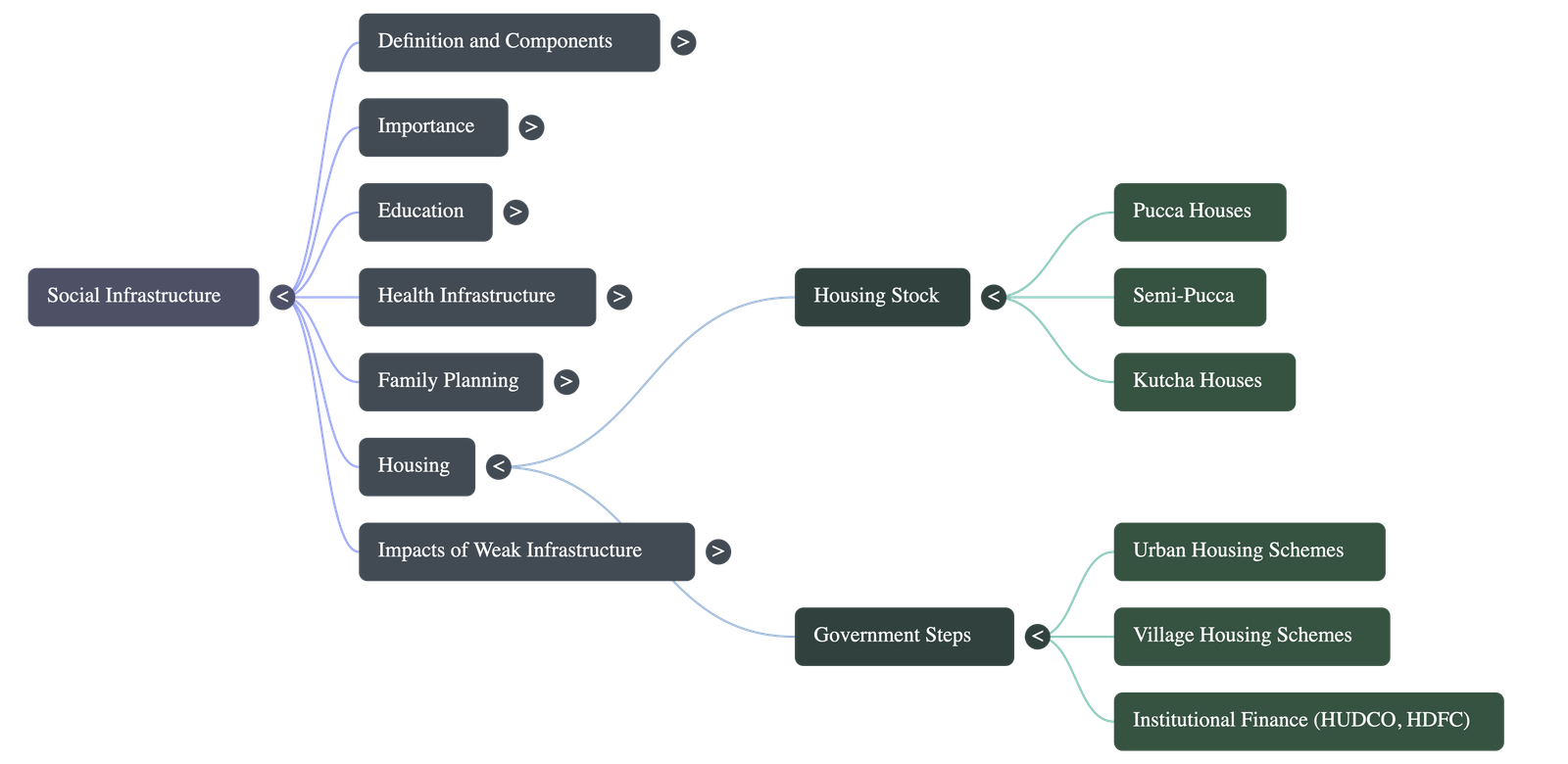
- State of Housing: India faces a severe housing shortage. Qualitatively, a huge portion of the rural population lives without basic amenities (safe water, toilets). In urban areas, rapid migration has caused the massive growth of slums, where people live in unhygienic conditions.
- Government Steps for Urban Areas: Built houses for government employees and refugees, launched schemes for Economically Weaker Sections (like industrial/plantation workers), and took steps to improve urban slums. Set up institutional finance bodies like HUDCO, HDFC, and the National Housing Bank to provide housing loans.
- Government Steps for Rural Areas: Initiated Village Housing Schemes and the Indira Aawas Yojana to construct free houses for the poorest populations, Scheduled Castes/Tribes, and freed bonded labourers.
6. Impacts of Weak Social Infrastructure
The under-development of human resources acts as a major roadblock for the Indian economy. The consequences of a weak social infrastructure include:
- Poor Standard of Living: Lack of health, education, and shelter keeps the overall living standards very low.
- Low Gross Enrolment Ratio (GER): The actual population of youth going to higher education is much lower compared to developed nations.
- Inadequate Public Health Facilities: People are forced to turn to expensive private hospitals, frequently having to sell land or fall into heavy debt to afford life-saving treatments.
- Growing Number of Homeless: Millions of people in the country remain entirely homeless, lacking physical capital to contribute to the economy efficiently.
Do checkout all questions & answers of this chapter.