Quick Navigation:
| | | |
Chapter 8: Heredity
1. Accumulation of Variation During Reproduction
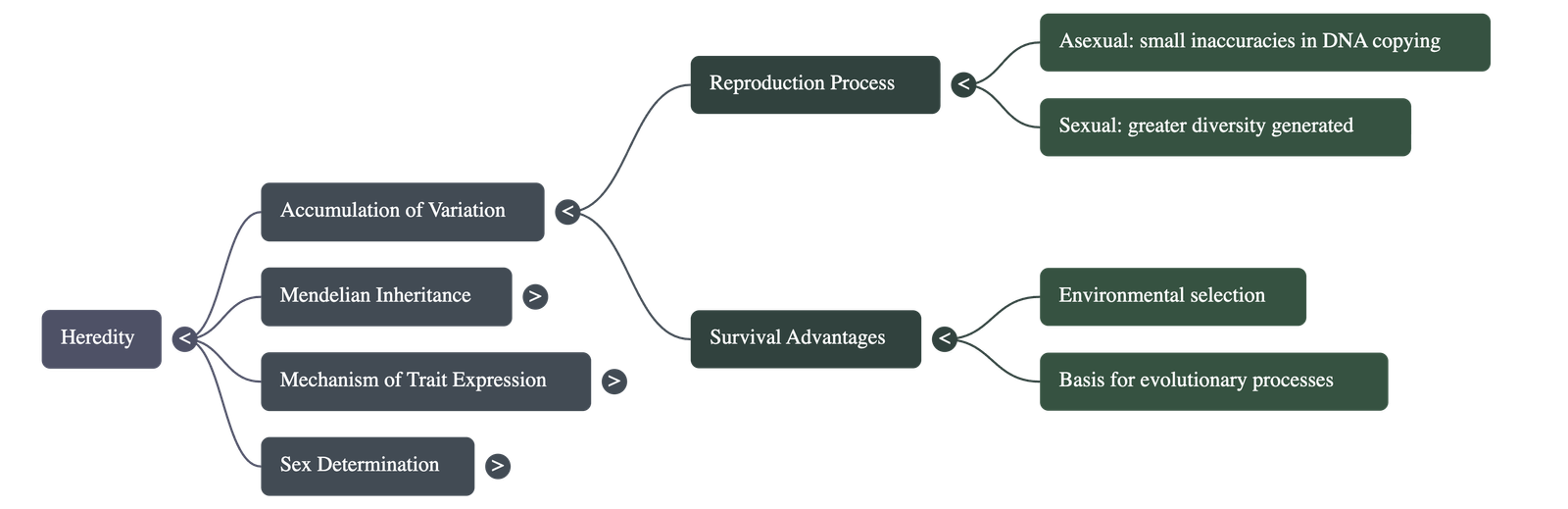
- Creation of Diversity: Reproduction gives rise to offspring that are similar in body design but possess subtle differences.
- Asexual vs. Sexual Reproduction:
- In asexual reproduction (e.g., bacteria), offspring are nearly identical, with only minor differences arising from small inaccuracies in DNA copying.
- Sexual reproduction generates much greater diversity because it involves the mixing of genetic material from two parents.
- Survival Advantage: Not all variations have equal chances of surviving. Beneficial variations (e.g., bacteria that can withstand higher heat) increase the organism's likelihood of survival in changing environments. This selection forms the basis of evolution.
2. Heredity and Inherited Traits
- Definition: Heredity refers to the transmission of traits and characteristics from one generation to the next.
- Genetic Contribution: Both the father and mother contribute practically equal amounts of genetic material to the child. Therefore, each trait in the child is influenced by both paternal and maternal DNA.
3. Mendel’s Rules for Inheritance
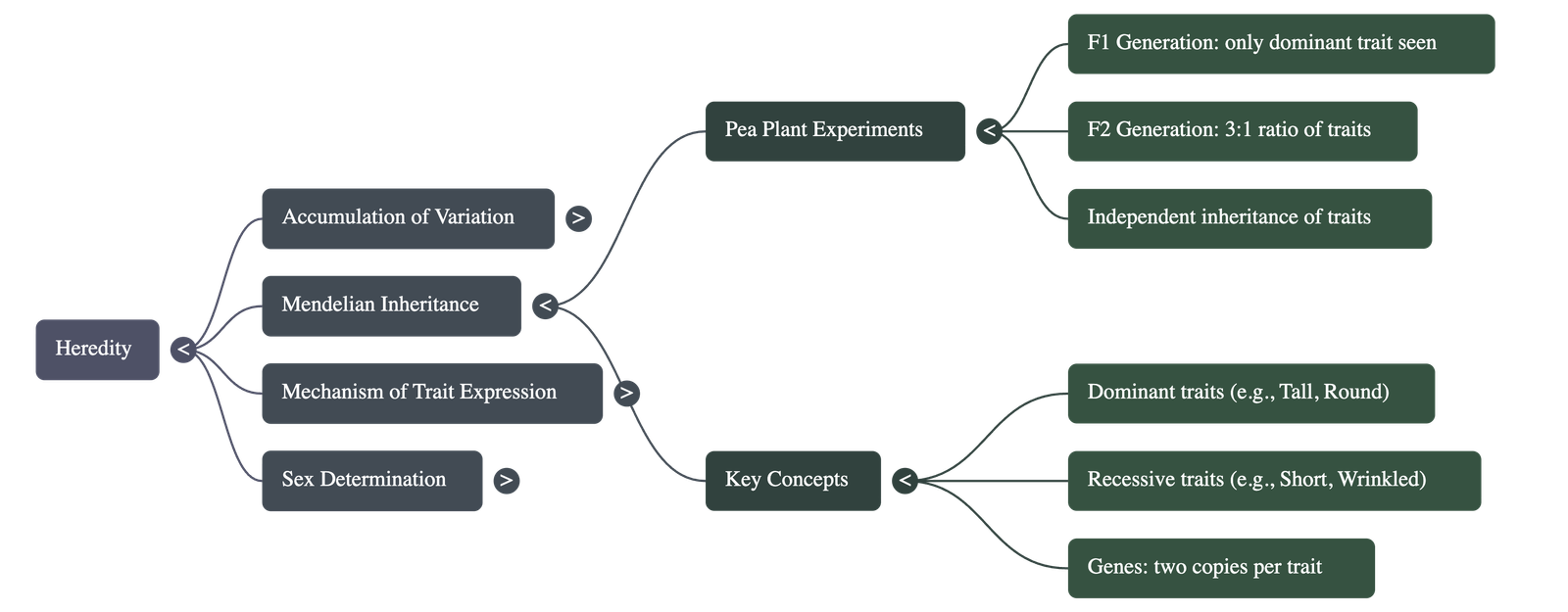
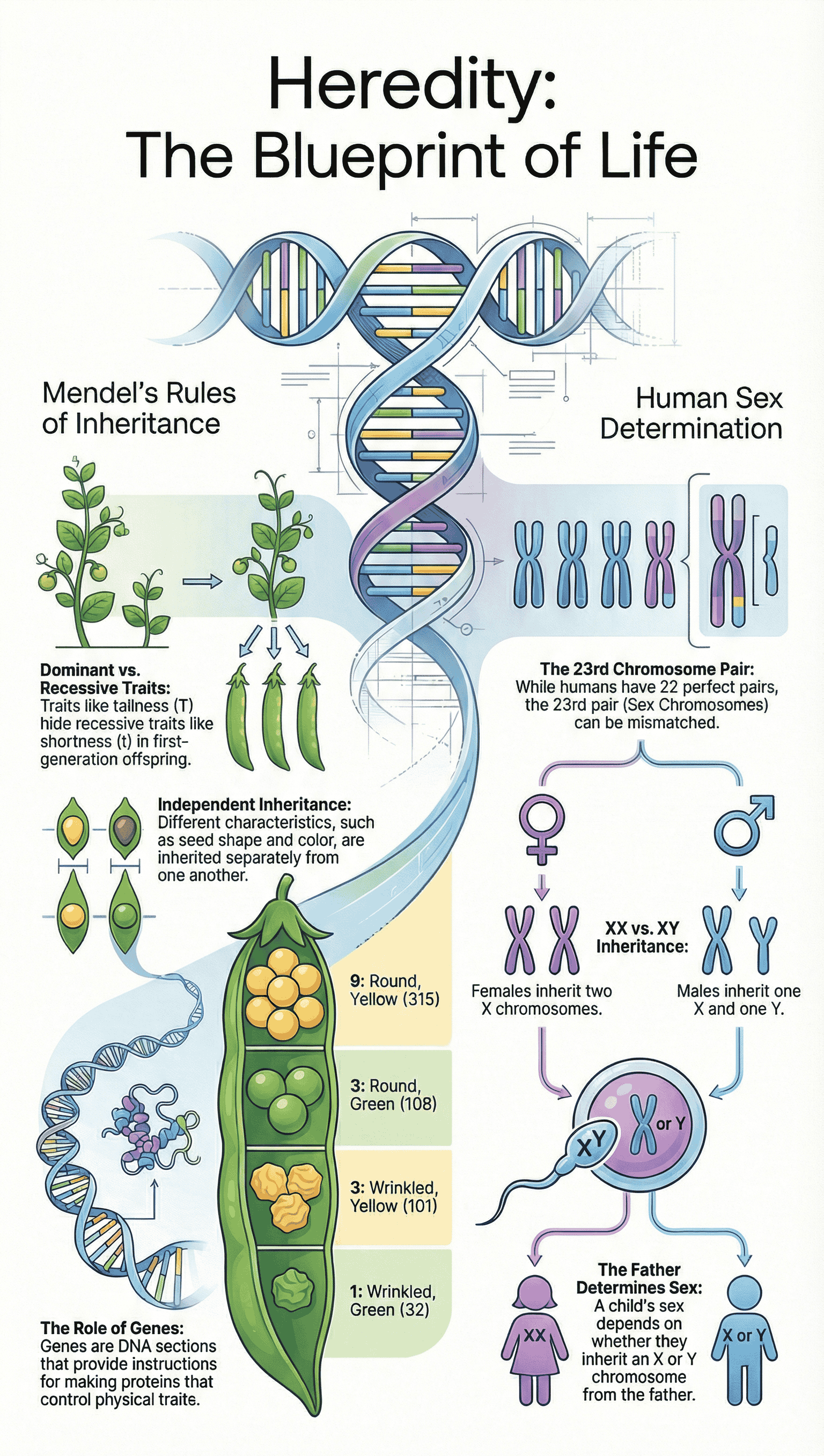
Gregor Mendel worked out the main rules of inheritance using garden peas with contrasting visible characters (e.g., tall/short plants, round/wrinkled seeds).
Experiment 1: Inheritance of One Trait (Monohybrid Cross)
- F1 Generation: When a tall plant was crossed with a short plant, all offspring in the first generation (F1) were tall. There were no "medium" height plants. This proved that traits do not blend.
- F2 Generation: When F1 tall plants were self-pollinated, the second generation (F2) produced a mixture where one-quarter were short and three-quarters were tall.
- Conclusion: The trait for shortness was present in the F1 generation but not expressed. Traits can be Dominant (expressed, like tallness 'T') or Recessive (hidden, like shortness 't'). A plant is short only if it has two recessive copies (tt).
Experiment 2: Independent Inheritance (Dihybrid Cross)
- Mendel crossed plants differing in two traits: tall plants with round seeds vs. short plants with wrinkled seeds.
- The F1 generation showed only dominant traits (tall and round).
- The F2 generation showed new combinations, such as tall plants with wrinkled seeds and short plants with round seeds.
- Conclusion: Different traits (e.g., height and seed shape) are inherited independently of one another.
4. How Traits are Expressed
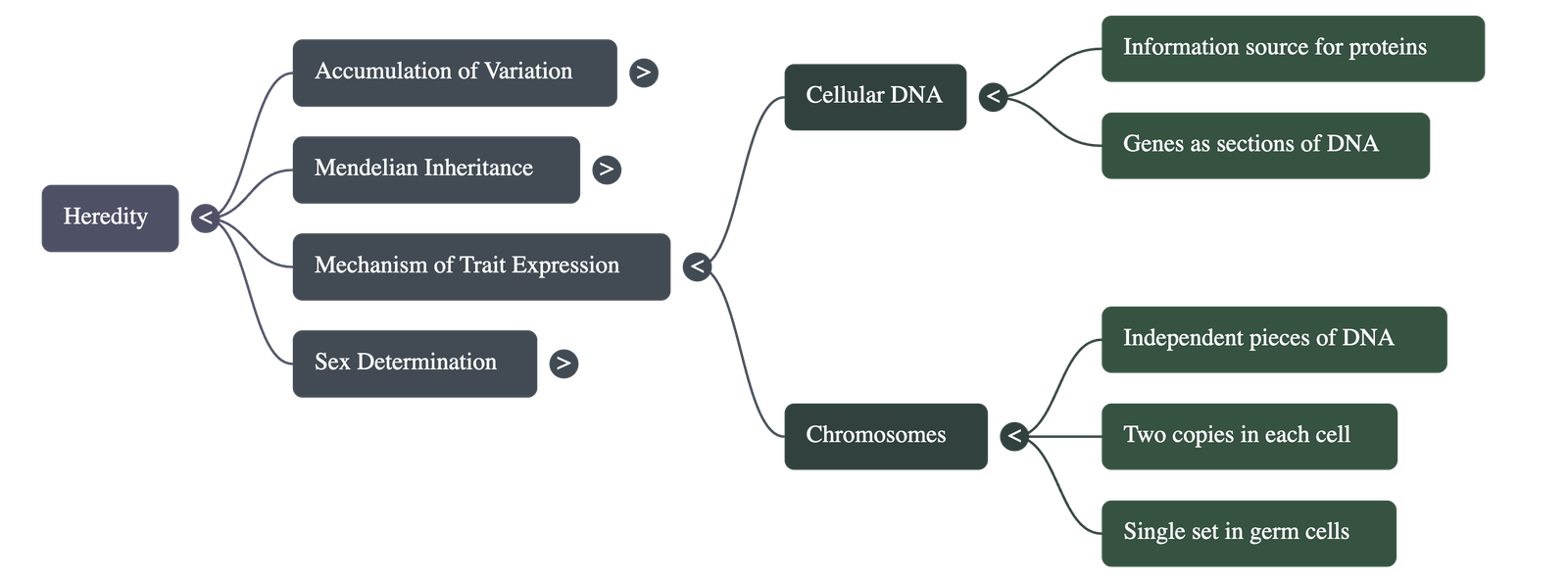
- DNA and Genes: Cellular DNA is the information source for making proteins. A section of DNA providing information for one protein is called a gene.
- Mechanism: Genes control characteristics by producing specific proteins (like enzymes).
- Example: Plant height depends on the amount of growth hormone. The amount of hormone depends on the efficiency of the enzyme producing it. If the gene for that enzyme is efficient, the plant is tall; if altered and less efficient, the plant is short.
- Chromosomes: Genes are located on chromosomes. Each cell has two copies of each chromosome (one from each parent).
- Germ Cells (Gametes): To maintain the correct DNA amount, germ cells contain only one set of chromosomes (half the number of normal cells). When fertilization occurs, the full number of chromosomes is restored.
5. Sex Determination
The mechanism for determining the sex of a newborn varies across species.
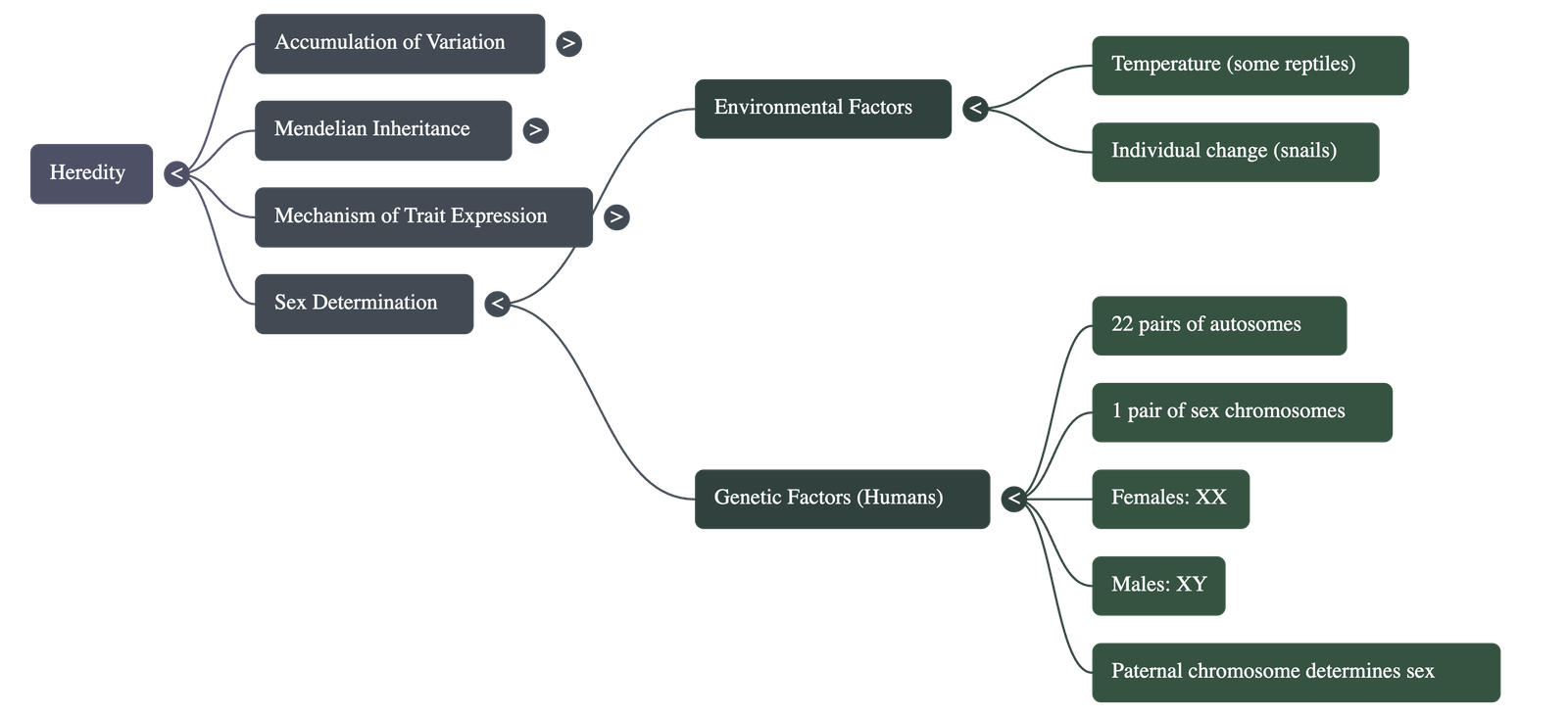
- Non-Genetic Factors: In some reptiles, the temperature at which fertilized eggs are incubated determines the sex. In animals like snails, individuals can change sex.
- Genetic Determination in Humans: Sex is determined by specific chromosomes.
- Humans have 23 pairs of chromosomes. One pair is the sex chromosomes.
- Females: Have a perfect pair of X chromosomes (XX).
- Males: Have a mismatched pair, one normal X and one short Y (XY).
- Inheritance Pattern:
- A child always inherits an X chromosome from the mother.
- The sex is determined by the father's contribution. If the child inherits an X from the father, it will be a girl (XX). If the child inherits a Y from the father, it will be a boy (XY).
Do checkout all questions & answers of this chapter.
Quick Navigation:
| | | |
1 / 1
Quick Navigation:
| | | |