Quick Navigation:
| | | |
Life Processes
Introduction
- Criteria for Life: Visible movement (like running or breathing) is a common indicator of life, but it is not sufficient. Invisible molecular movements are necessary for life to maintain structures against environmental damage.
- Life Processes Defined: These are the maintenance functions of living organisms (nutrition, respiration, transportation, and excretion) that must occur constantly, even during sleep, to prevent damage and breakdown.
1. Nutrition
Nutrition is the process of transferring a source of energy (food) from outside the body to the inside.
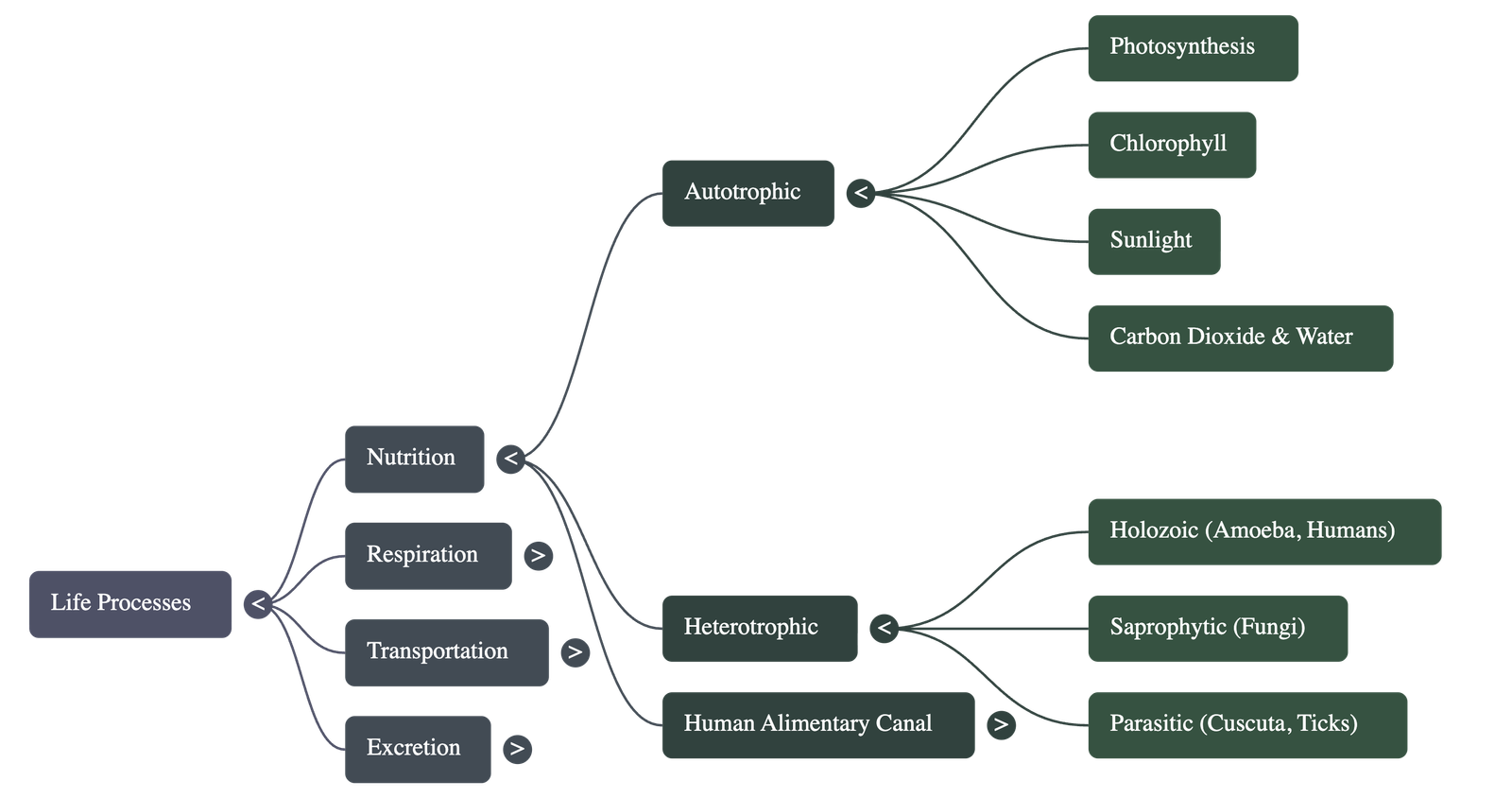
Autotrophic Nutrition
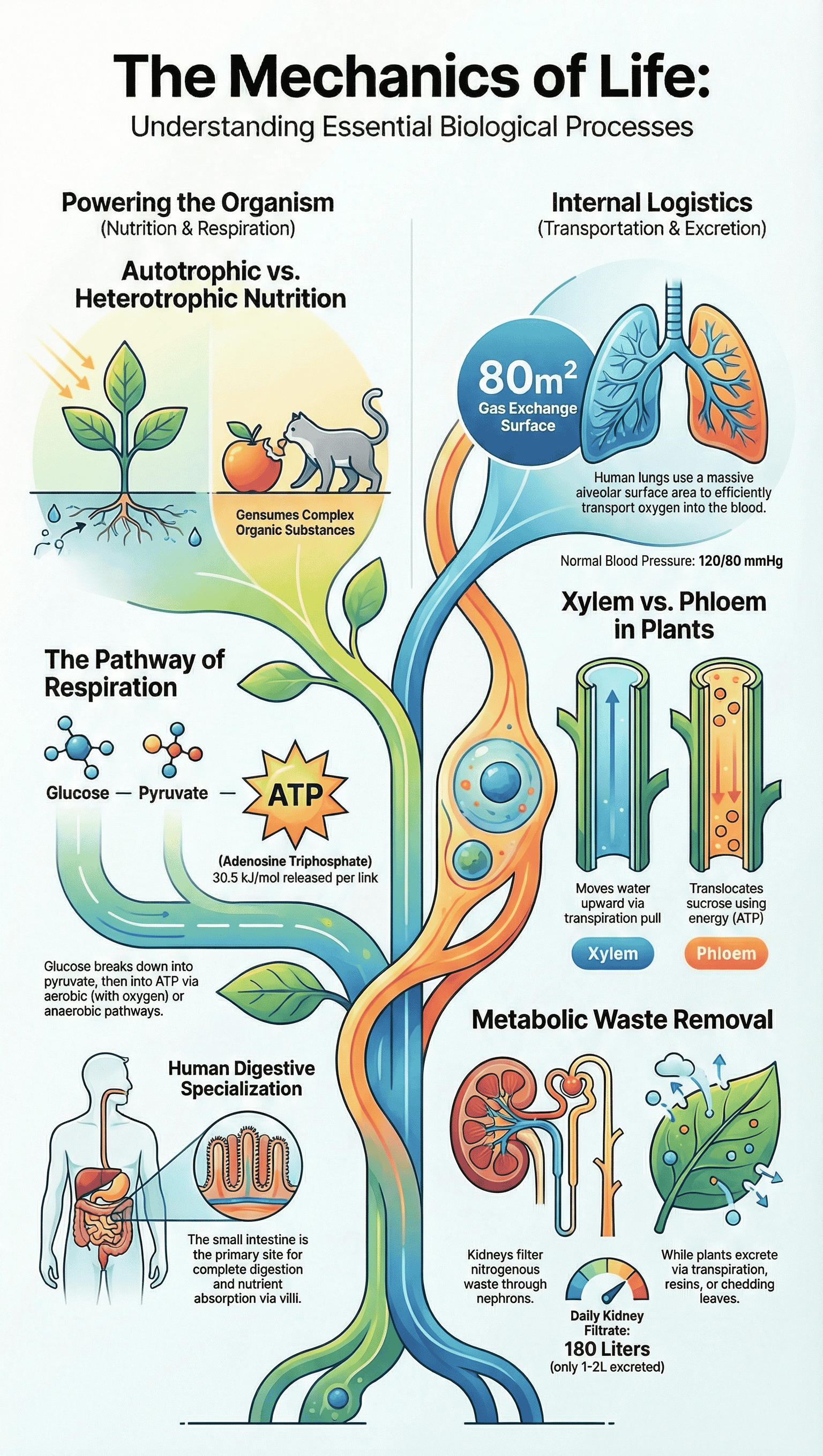
- Definition: Organisms (green plants and some bacteria) synthesise their own food using simple inorganic sources like carbon dioxide and water.
- Photosynthesis: The process by which autotrophs take in substances from the outside and convert them into stored forms of energy (carbohydrates) in the presence of sunlight and chlorophyll.
- Key Events in Photosynthesis:
- Absorption of light energy by chlorophyll.
- Conversion of light energy to chemical energy and splitting of water molecules into hydrogen and oxygen.
- Reduction of carbon dioxide to carbohydrates.
- Stomata: Tiny pores on leaf surfaces responsible for massive gaseous exchange. Guard cells regulate the opening and closing of these pores to prevent water loss.
Heterotrophic Nutrition
- Definition: Organisms utilize complex substances prepared by other organisms.
- Types of Strategies:
- Saprophytic: Breaking down food material outside the body and absorbing it (e.g., fungi like bread moulds, yeast, mushrooms).
- Holozoic: Taking in whole material and breaking it down inside the body.
- Parasitic: Deriving nutrition from plants or animals without killing them (e.g., ticks, lice, leeches, tapeworms, cuscuta).
- Single-celled Organisms: Amoeba uses temporary finger-like extensions to fuse over food particles, forming a food vacuole where digestion occurs.
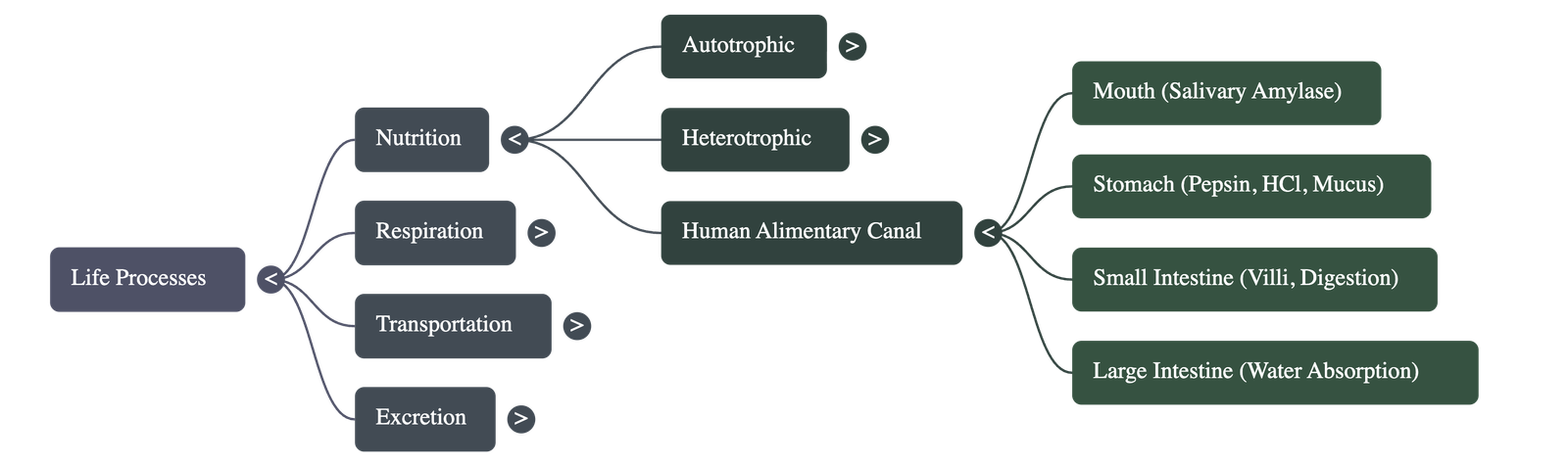
Nutrition in Human Beings
- Mouth: Digestion begins here. Teeth crush food; salivary glands secrete saliva containing salivary amylase, which breaks down starch into simple sugar.
- Oesophagus: Transports food to the stomach via peristaltic movements (rhythmic contraction of muscles).
- Stomach:
- Gastric glands release hydrochloric acid (HCl), pepsin, and mucus.
- HCl: Creates an acidic medium for pepsin to act.
- Pepsin: A protein-digesting enzyme.
- Mucus: Protects the inner lining of the stomach from acid.
- Small Intestine: The site of complete digestion of carbohydrates, proteins, and fats.
- Liver: Secretes bile juice which makes the food alkaline and emulsifies fats (breaks large fat globules into smaller ones).
- Pancreas: Secretes pancreatic juice containing trypsin (for digesting proteins) and lipase (for breaking down emulsified fats).
- Intestinal Juice: Converts proteins to amino acids, carbohydrates to glucose, and fats to fatty acids and glycerol.
- Absorption: The inner lining has finger-like projections called villi, which increase surface area for absorption and are richly supplied with blood vessels.
- Large Intestine: Absorbs excess water from unabsorbed food; the rest is removed via the anus.
2. Respiration
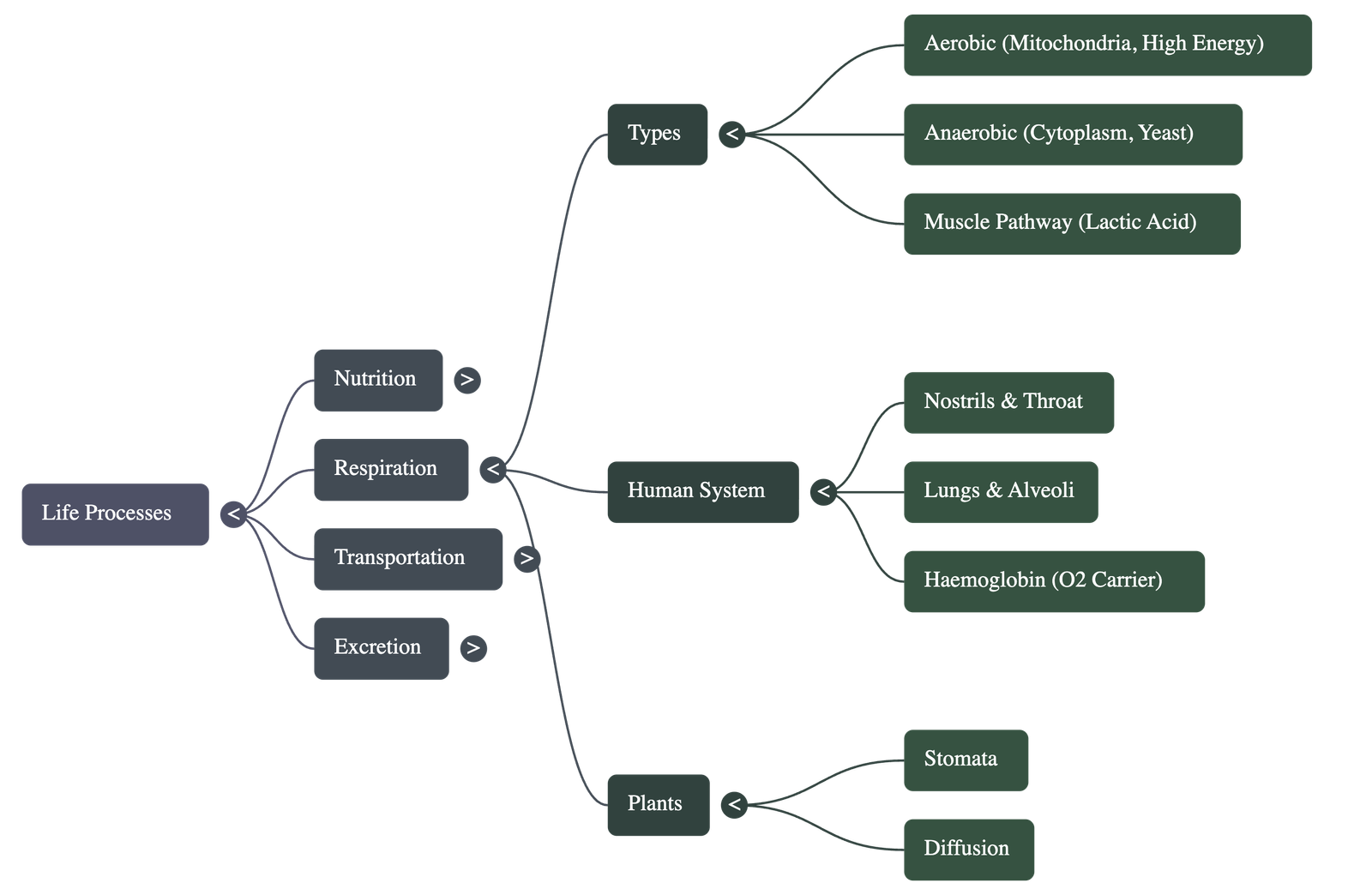
The process of breaking down food sources (glucose) to release energy for cellular needs.
- Glucose Breakdown Pathways:
- First Step: Breakdown of glucose (6-carbon molecule) into pyruvate (3-carbon molecule) in the cytoplasm.
- Aerobic Respiration: Occurs in mitochondria in the presence of oxygen. Pyruvate breaks down into carbon dioxide, water, and a large amount of energy.
- Anaerobic Respiration (Fermentation): Occurs in yeast in the absence of oxygen. Pyruvate converts to ethanol, carbon dioxide, and energy.
- Lack of Oxygen (Muscles): Pyruvate converts to lactic acid (3-carbon molecule) and energy. Accumulation causes cramps.
- ATP (Adenosine Triphosphate): The energy currency of the cell. Energy released during respiration is used to synthesize ATP.
Respiration in Humans
- Pathway: Nostrils → Throat (Pharynx/Larynx) → Trachea (lined with rings of cartilage to prevent collapse) → Bronchi → Bronchioles → Alveoli.
- Alveoli: Balloon-like structures that provide a vast surface area for the exchange of gases. They are covered with a network of blood vessels.
- Mechanism: Lifting ribs and flattening the diaphragm sucks air into the lungs. Oxygen diffuses into blood, and CO2 diffuses out into the alveoli.
- Haemoglobin: A respiratory pigment in red blood cells that has a high affinity for oxygen and carries it to tissues. CO2 is mostly transported in dissolved form in plasma.
3. Transportation
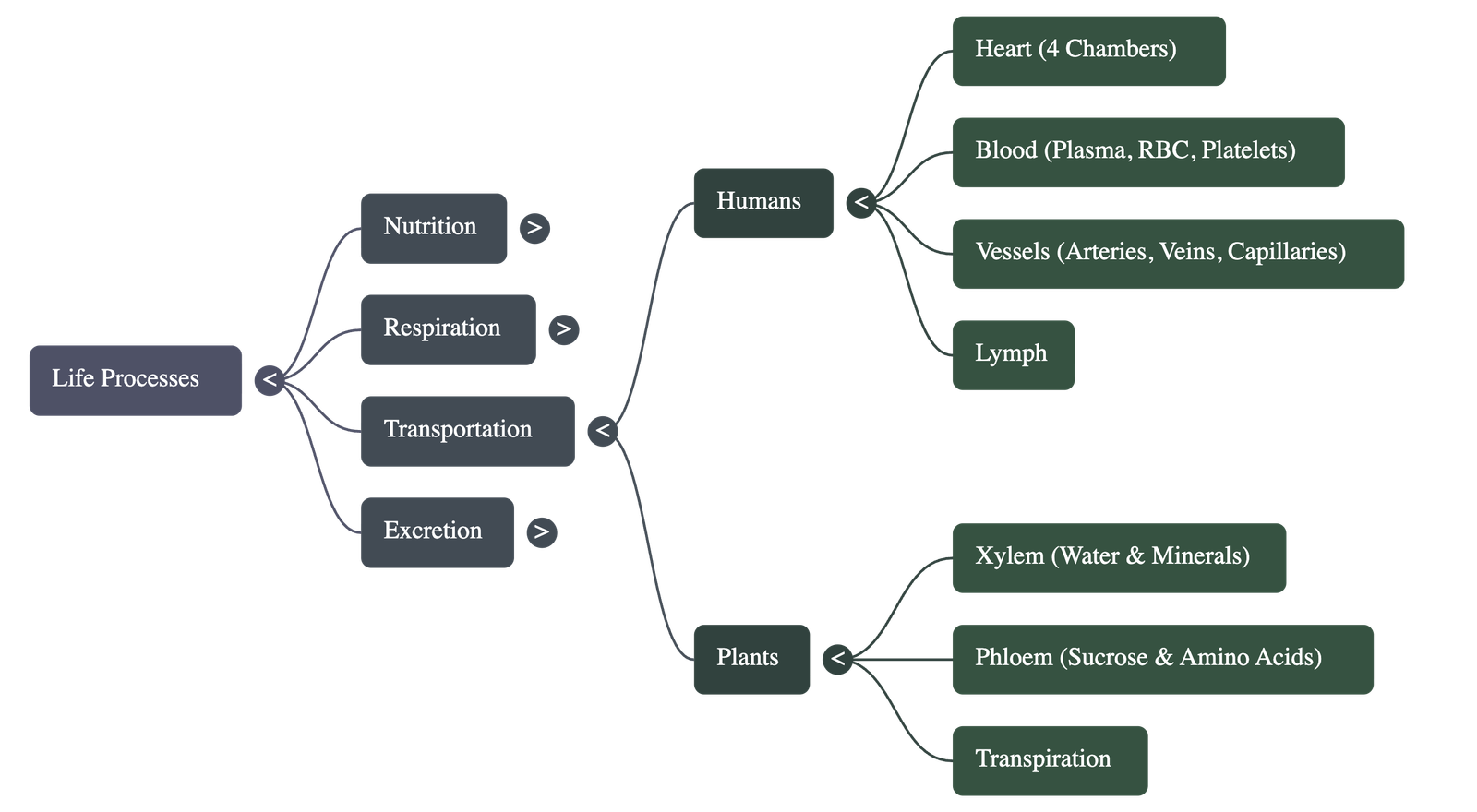
Transportation in Human Beings
- The Heart: A muscular organ with four chambers to prevent mixing of oxygenated and deoxygenated blood.
- Left side: Left atrium receives oxygenated blood from lungs; Left ventricle pumps it to the body.
- Right side: Right atrium receives deoxygenated blood from the body; Right ventricle pumps it to the lungs.
- Double Circulation: Blood goes through the heart twice during each cycle (once to lungs, once to body).
- Blood Vessels:
- Arteries: Thick-walled, elastic vessels carrying blood away from the heart under high pressure.
- Veins: Thin-walled vessels with valves collecting blood towards the heart.
- Capillaries: One-cell thick vessels where exchange of material between blood and cells occurs.
- Platelets: Blood cells that clot blood at points of injury to prevent leakage.
- Lymph: A fluid (tissue fluid) involved in transport, carrying digested fat and draining excess fluid from intercellular spaces.
Transportation in Plants
- Xylem (Water Transport):
- Moves water and minerals from roots to other parts.
- Mechanism: Root pressure helps, but the major driving force is the transpiration pull (suction created by evaporation of water from leaves).
- Phloem (Food Transport):
- Transports products of photosynthesis (sucrose) from leaves to other parts (translocation).
- Mechanism: An active process utilizing energy (ATP) to increase osmotic pressure, moving material to tissues with less pressure.
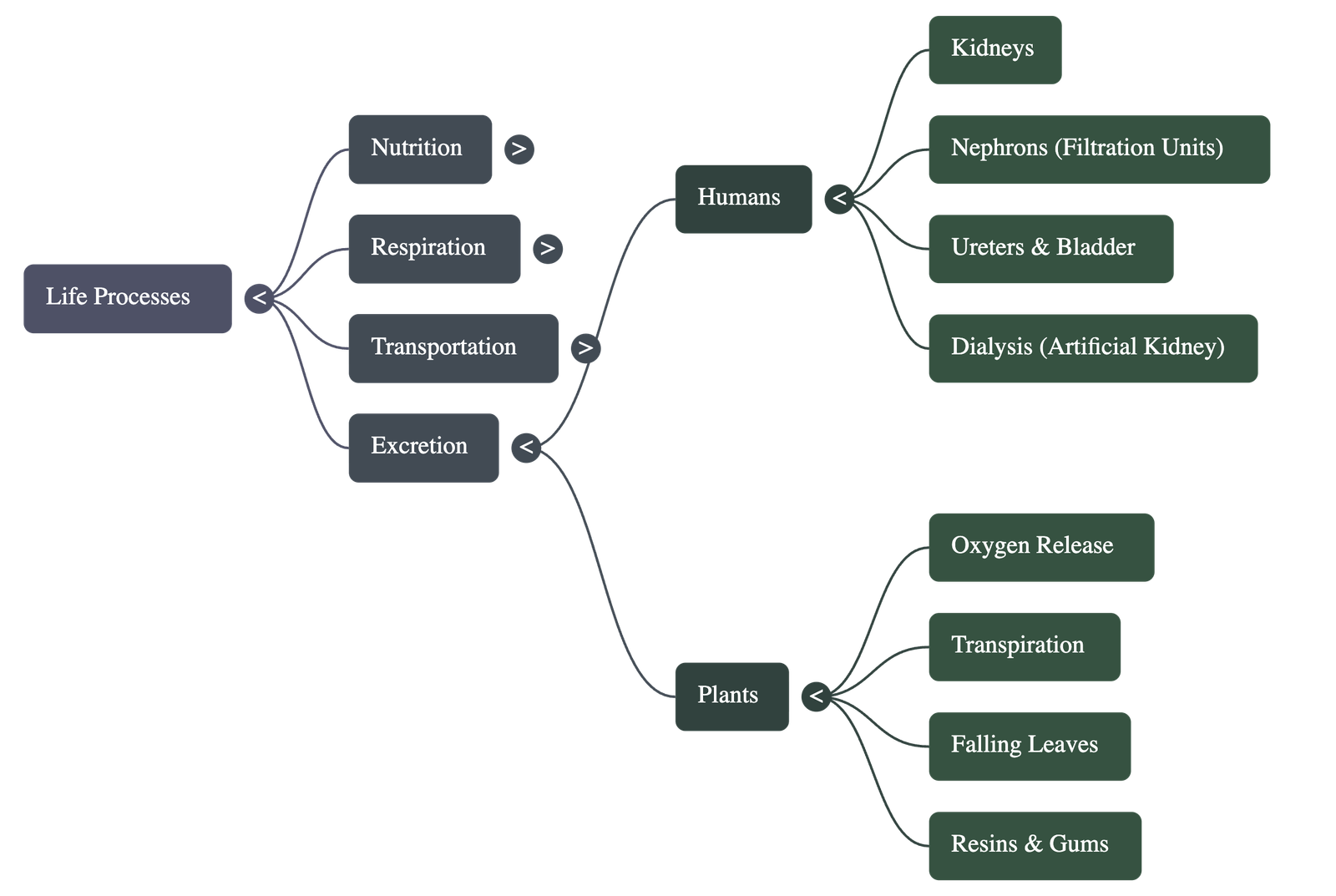
4. Excretion
The biological process of removing harmful metabolic wastes from the body.
Excretion in Human Beings
- System: Consists of a pair of kidneys, ureters, urinary bladder, and urethra.
- Nephrons: The filtration units of the kidney. Each nephron has a cup-shaped Bowman's capsule and a coiled tube.
- Urine Formation:
- Blood is filtered in the nephron to remove nitrogenous wastes (urea/uric acid).
- Useful substances (glucose, amino acids, salts, water) are selectively re-absorbed.
- The remaining fluid (urine) moves to the urinary bladder via ureters.
- Artificial Kidney (Hemodialysis): A device to remove nitrogenous waste from the blood through dialysis in case of kidney failure.
Excretion in Plants
- Oxygen is released as a waste product of photosynthesis.
- Excess water is removed by transpiration.
- Wastes may be stored in cellular vacuoles or in leaves that fall off.
- Waste products like resins and gums are stored in old xylem.
- Some wastes are excreted into the surrounding soil.
Do checkout all questions & answers of this chapter.
Quick Navigation:
| | | |
1 / 1
Quick Navigation:
| | | |