Quick Navigation:
| | |
The Fundamental Unit of Life
1. Discovery and History of the Cell
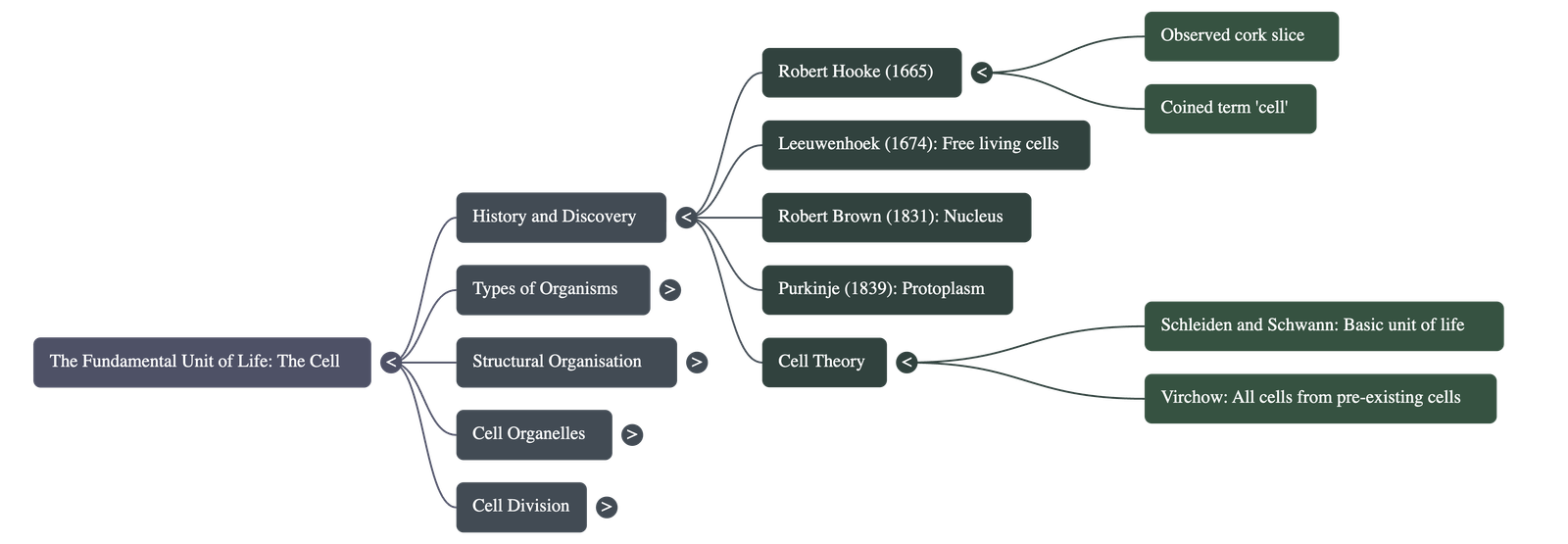
- • Robert Hooke (1665): Discovered cells while examining a thin slice of cork. He coined the term "cell" (Latin for 'a little room') after observing a honeycomb-like structure.
- • Leeuwenhoek (1674): Using an improved microscope, he discovered free-living cells in pond water for the first time.
- • Robert Brown (1831): Discovered the nucleus within the cell.
- • Purkinje (1839): Coined the term 'protoplasm' for the fluid substance of the cell.
- • The Cell Theory: Proposed by Schleiden (1838) and Schwann (1839), stating that all plants and animals are composed of cells and the cell is the basic unit of life. Virchow (1855) expanded this by suggesting all cells arise from pre-existing cells.
2. Types of Organisms
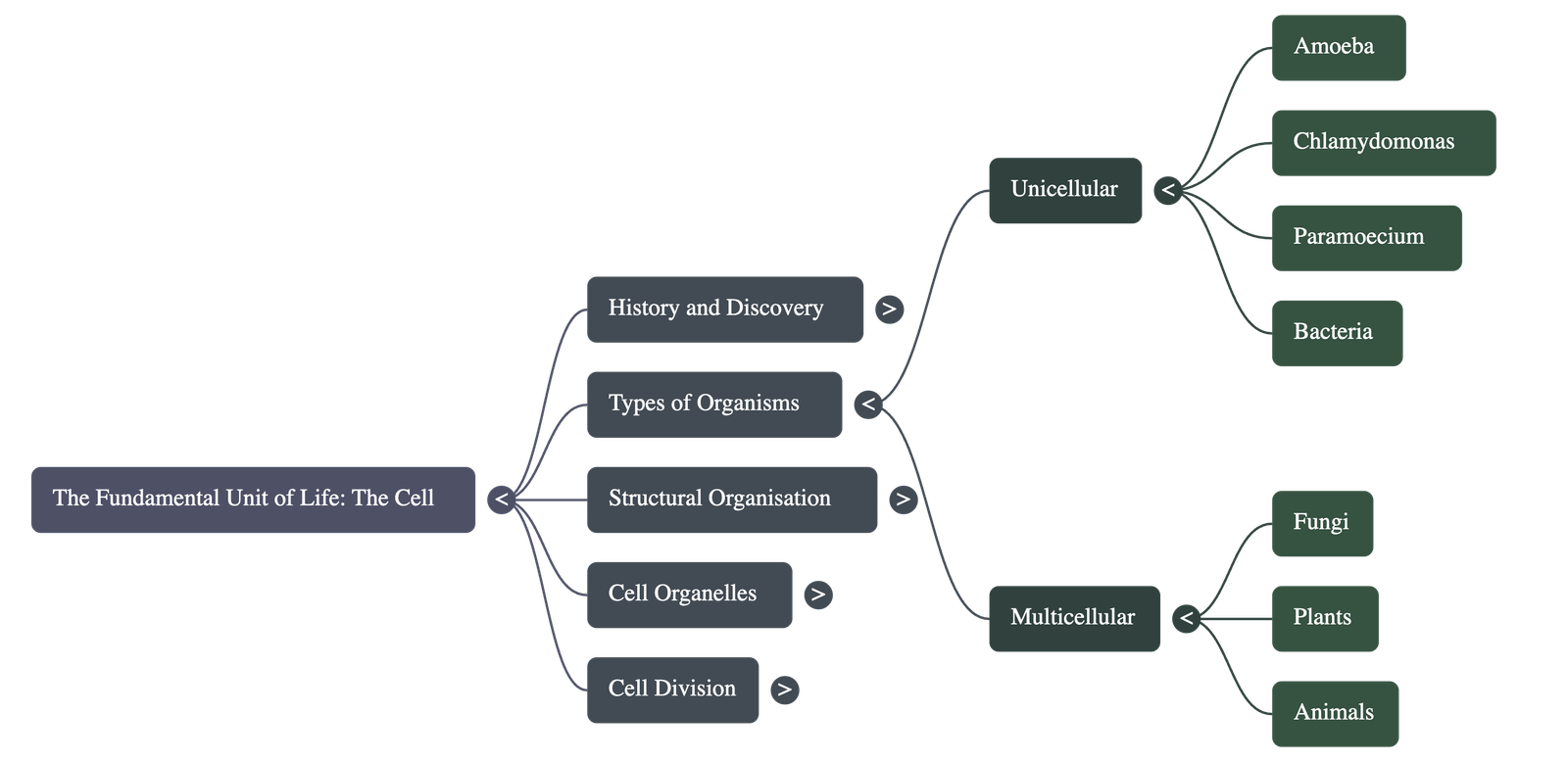
- • Unicellular Organisms: Single cells that constitute a whole organism (e.g., Amoeba, Chlamydomonas, Paramoecium, and bacteria).
- • Multicellular Organisms: Many cells group together to form body parts and assume different functions (e.g., fungi, plants, animals). All multicellular organisms originate from a single cell through cell division.
- • Shape and Function: Cell shapes (like nerve cells or blood cells) differ based on their specific functions. Some, like Amoeba, change shape, while others are fixed.
3. Plasma Membrane (Cell Membrane)
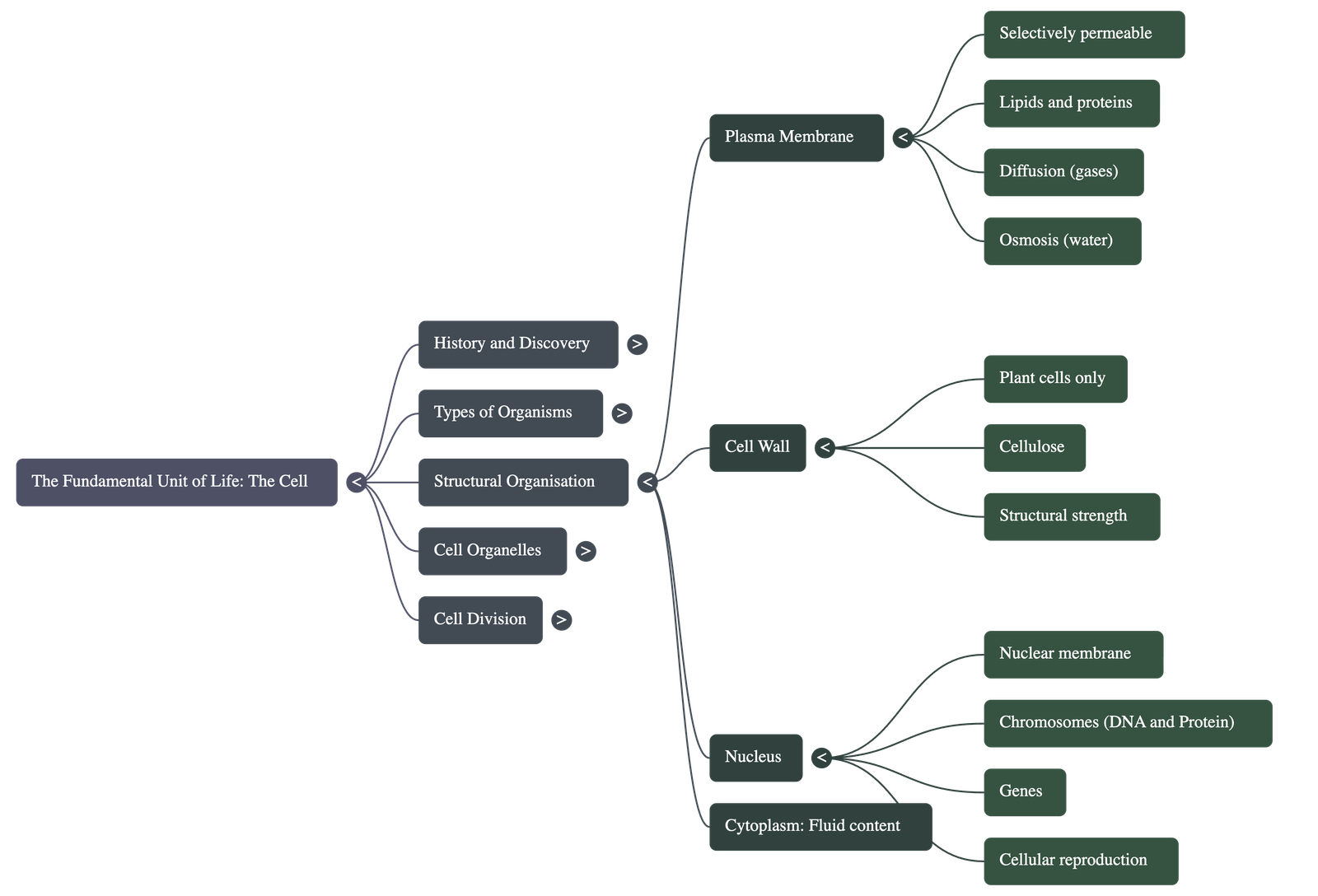
- Definition: The outermost covering separating cell contents from the external environment. It is flexible and made of lipids and proteins.
- Selectively Permeable: It allows the entry and exit of specific materials while preventing others.
- Diffusion: Spontaneous movement of substances (like CO2 and O2) from a region of high concentration to low concentration. This is crucial for gaseous exchange.
- Osmosis: The diffusion of water molecules through a selectively permeable membrane.
- Hypotonic Solution: Medium is more dilute than the cell; the cell gains water and swells.
- Isotonic Solution: Medium has the same water concentration as the cell; no net movement, cell size remains the same.
- Hypertonic Solution: Medium is more concentrated than the cell; the cell loses water and shrinks.
- Endocytosis: Due to the membrane's flexibility, the cell can engulf food and other material from the environment (e.g., how Amoeba feeds).
4. Cell Wall
- Composition: A rigid outer covering found only in plant cells (outside the plasma membrane). It is composed mainly of cellulose, which provides structural strength.
- Plasmolysis: When a living plant cell loses water via osmosis, the contents shrink away from the cell wall.
- Function: Allows plant, fungi, and bacteria cells to withstand hypotonic (dilute) external media without bursting by exerting pressure against the swollen cell.
5. The Nucleus
- Structure: Has a double-layered covering called the nuclear membrane with pores that allow material transfer to the cytoplasm.
- Genetic Material: Contains chromosomes (rod-shaped structures visible during division). Chromosomes are made of DNA (Deoxyribonucleic Acid) and protein.
- Genes: Functional segments of DNA.
- Chromatin: In non-dividing cells, DNA exists as an entangled mass of thread-like chromatin material.
- Function: Plays a central role in cellular reproduction and directs the cell's chemical activities.
- Prokaryotes vs. Eukaryotes:
- Prokaryotes (e.g., bacteria): Lack a nuclear membrane. The undefined nuclear region containing only nucleic acids is called a nucleoid. They also lack membrane-bound organelles.
- Eukaryotes: Have a well-defined nucleus surrounded by a nuclear membrane and possess membrane-bound organelles.
6. Cytoplasm
The cytoplasm is the fluid content inside the plasma membrane containing specialised cell organelles. It is the site for many chemical reactions.
7. Cell Organelles
Endoplasmic Reticulum (ER)
A large network of membrane-bound tubes and sheets.
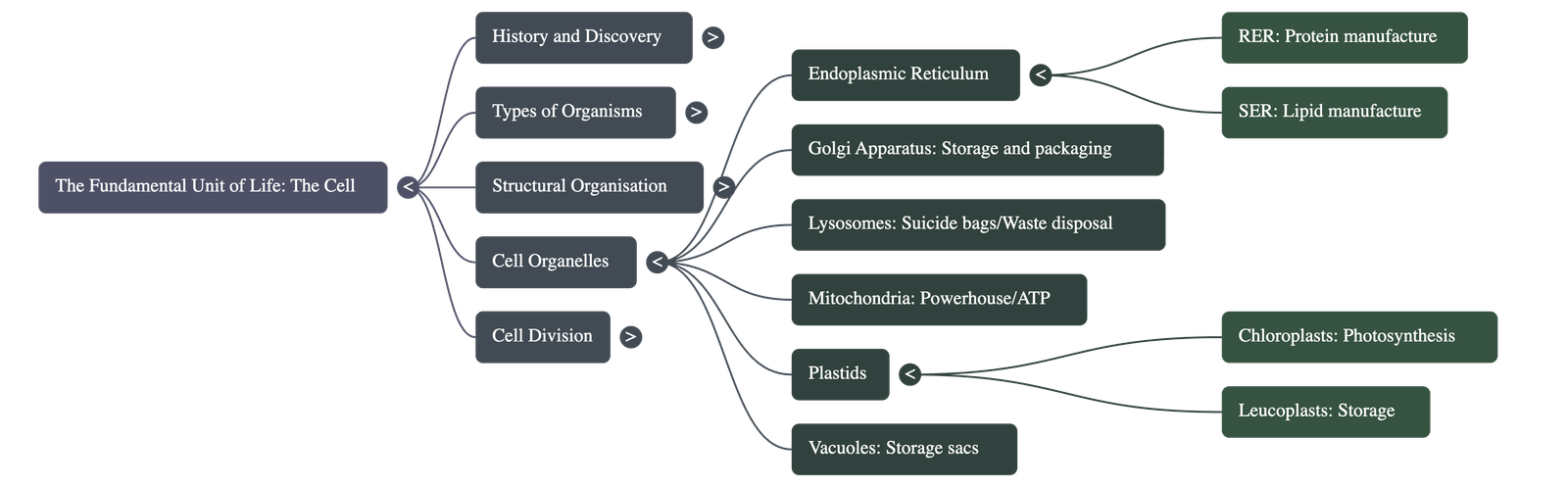
- Rough ER (RER): Looks rough due to ribosomes attached to the surface. Ribosomes manufacture proteins.
- Smooth ER (SER): Helps in manufacturing fat molecules (lipids). In vertebrate liver cells, it plays a role in detoxifying poisons/drugs.
- Functions: Transport of materials (especially proteins) and Membrane Biogenesis (building cell membrane using lipids and proteins).
Golgi Apparatus
Consists of systems of membrane-bound vesicles (cisterns) arranged in stacks.
- Functions: Storage, modification, and packaging of products in vesicles.
- It helps in the formation of lysosomes.
- Synthesises complex sugars from simple sugars.
Lysosomes
Membrane-bound sacs filled with digestive enzymes (made by RER).
- Function: Waste disposal system. They digest foreign material (bacteria, food) and worn-out organelles.
- Suicide Bags: If the cell is damaged, lysosomes may burst, and the enzymes digest their own cell.
Mitochondria
Known as the "powerhouses" of the cell.
- Structure: Have two membrane coverings. The outer is porous; the inner is deeply folded to increase surface area for ATP generation.
- Function: Release energy in the form of ATP (Adenosine Triphosphate) molecules, the energy currency of the cell.
- Unique Feature: They possess their own DNA and ribosomes, allowing them to make some of their own proteins.
Plastids
Present only in plant cells. Like mitochondria, they have their own DNA and ribosomes.
- Chromoplasts: Coloured plastids. Those containing chlorophyll are called Chloroplasts and are essential for photosynthesis.
- Leucoplasts: White or colourless plastids. Primarily used for storing starch, oils, and protein granules.
Vacuoles
Storage sacs for solid or liquid contents.
- Animal Cells: Have small vacuoles.
- Plant Cells: Have very large central vacuoles (50-90% cell volume). They are full of cell sap and provide turgidity and rigidity.
- Function: Store amino acids, sugars, organic acids, and proteins. In unicellular organisms like Amoeba, the food vacuole contains consumed food.
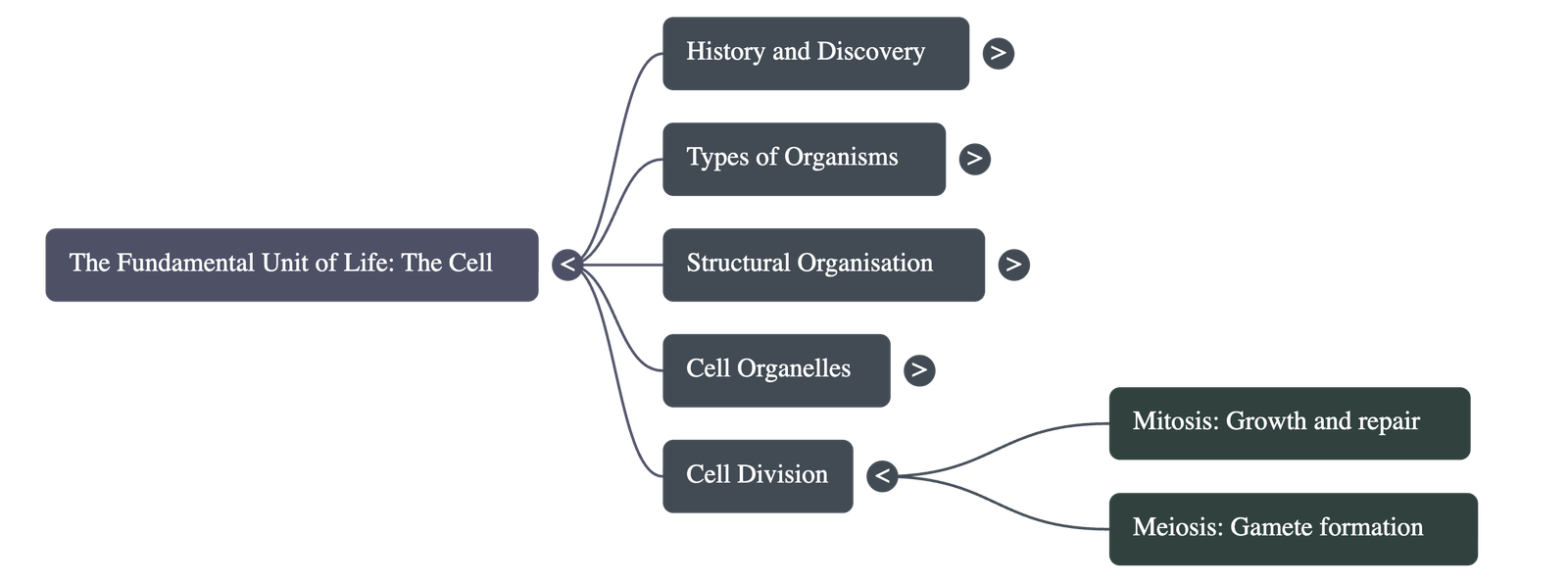
8. Cell Division
New cells are formed for growth, replacement of dead cells, and reproduction. There are two main types:
- Mitosis:
- Used for growth and repair.
- Mother cell divides to form two identical daughter cells.
- Daughter cells have the same number of chromosomes as the mother cell.
- Meiosis:
- Used for forming gametes (for reproduction).
- Involves two consecutive divisions.
- Produces four new cells.
- New cells have half the number of chromosomes compared to the mother cell.
Do checkout all questions & answers of this chapter.
Quick Navigation:
| | |
1 / 1
Quick Navigation:
| | |