Quick Navigation:
| | |
Chapter 12: IMPROVEMENT IN FOOD RESOURCES
1. Introduction to Food Security
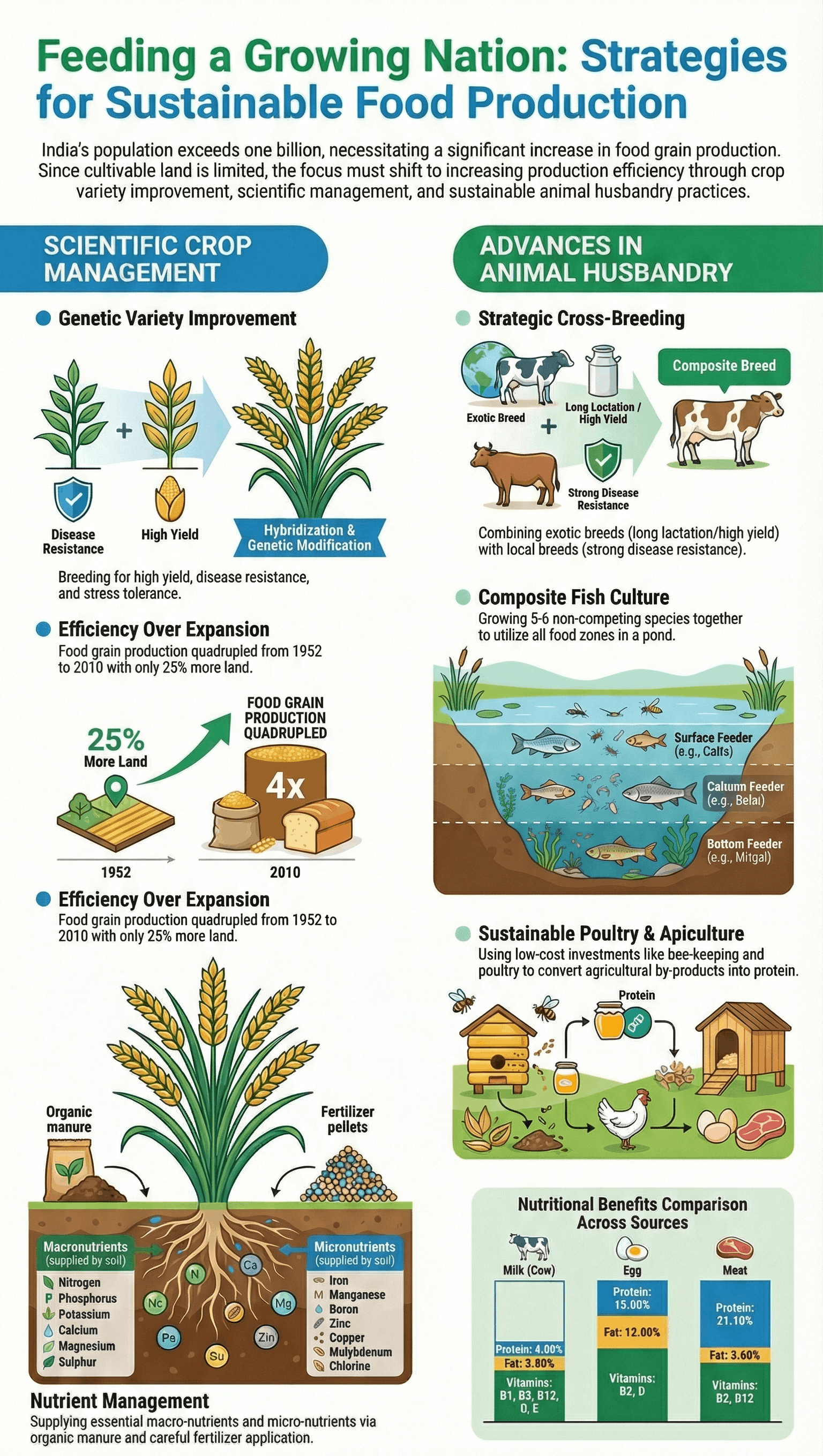
- Need for Improvement: Living organisms require food for proteins, carbohydrates, fats, vitamins, and minerals. Due to the growing population (over one billion in India) and limited land for cultivation, it is necessary to increase production efficiency for both crops and livestock.
- Revolutions in Agriculture:
- Green Revolution: Contributed to increased food-grain production.
- White Revolution: Led to better availability and efficient use of milk.
- Sustainability: Intensive resource use can degrade the environment. Therefore, increasing food production must involve sustainable practices in agriculture and animal husbandry without destroying the natural balance.
2. Improvement in Crop Yields
Types of Crops and Nutrients
- Cereals (wheat, rice, maize): Provide carbohydrates for energy.
- Pulses (gram, pea, lentil): Provide proteins.
- Oilseeds (soyabean, mustard, sunflower): Provide fats.
- Vegetables, spices, and fruits: Provide vitamins and minerals.
- Fodder crops (berseem, oats): Raised as food for livestock.
Crop Seasons
- Kharif Season (Rainy): June to October. Crops include paddy, soyabean, pigeon pea, maize, and cotton.
- Rabi Season (Winter): November to April. Crops include wheat, gram, peas, mustard, and linseed.
Approaches to Crop Improvement
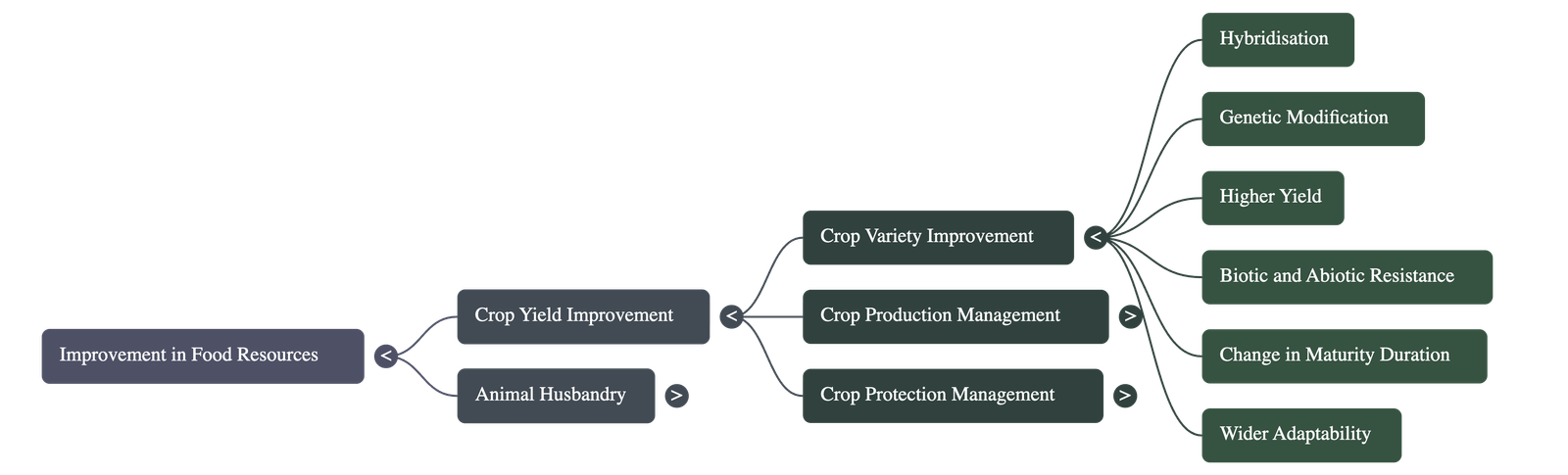
Improvement activities are divided into three major groups:
A. Crop Variety Improvement
- Methods:
- Hybridisation: Crossing between genetically dissimilar plants (intervarietal, interspecific, or intergeneric).
- Genetically Modified Crops (GMOs): Introducing a gene to provide desired characteristics.
- Objectives: Higher yield, improved quality (e.g., baking quality in wheat, protein in pulses), biotic/abiotic resistance (disease/drought), shorter maturity duration (allows multiple rounds of crops), wider adaptability, and desirable agronomic traits (e.g., dwarfness in cereals to consume fewer nutrients).
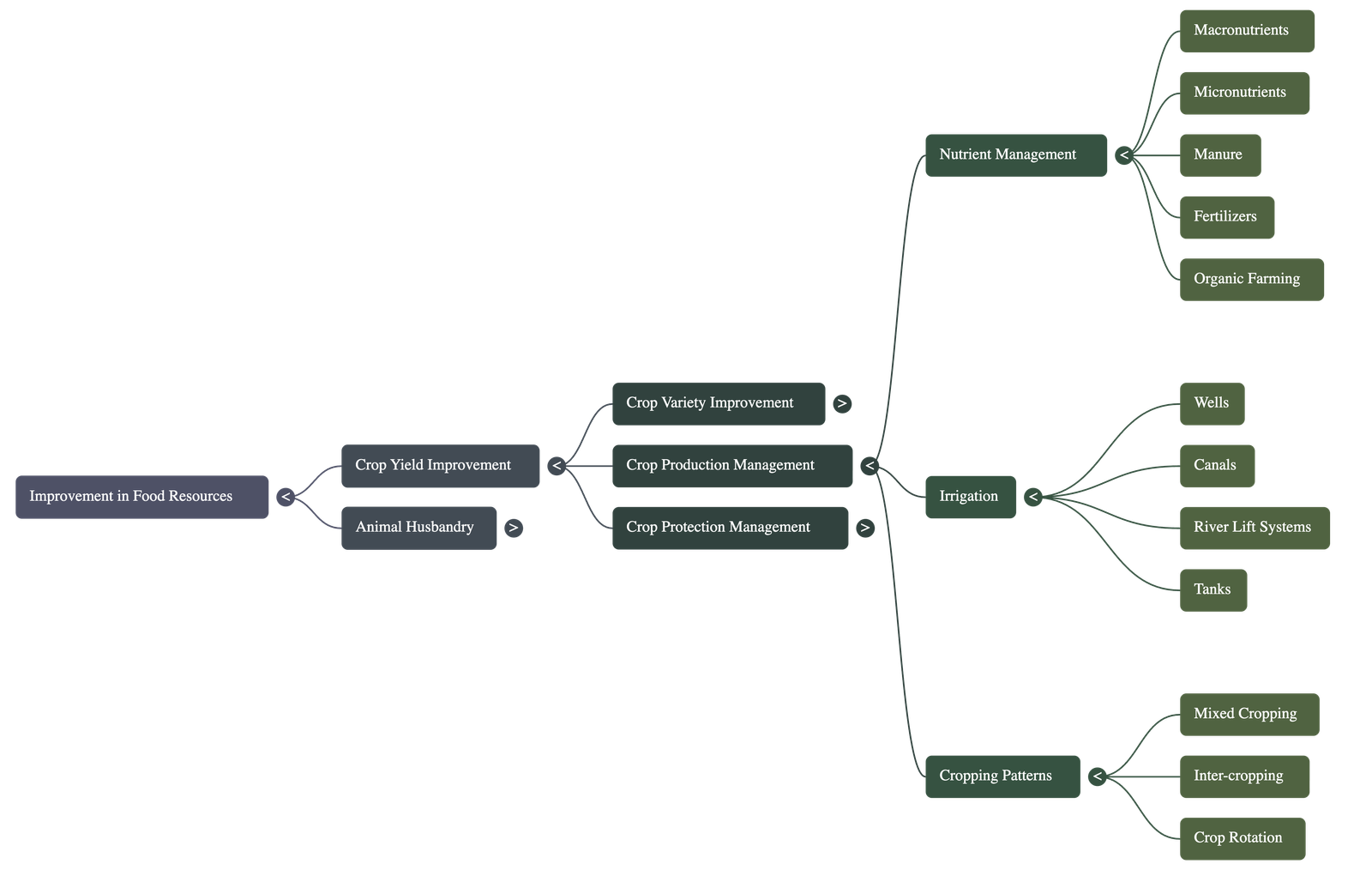
B. Crop Production Management
- Nutrient Management: Plants need 16 essential nutrients.
- Sources: Air (Carbon, Oxygen), Water (Hydrogen), Soil (13 nutrients).
- Macro-nutrients: Required in large quantities (Nitrogen, Phosphorus, Potassium, Calcium, Magnesium, Sulphur).
- Micro-nutrients: Required in small quantities (Iron, Manganese, Boron, Zinc, Copper, Molybdenum, Chlorine).
- Manure: Formed by decomposing animal excreta and plant waste. It enriches soil with organic matter and nutrients, improves soil structure, and increases water-holding capacity. Types include Compost, Vermi-compost (using earthworms), and Green manure (ploughing green plants like sun hemp into soil).
- Fertilisers: Commercially produced plant nutrients (Nitrogen, Phosphorus, Potassium). They ensure healthy vegetative growth and high yields but excessive use can cause water pollution and soil degradation.
- Organic Farming: Farming with minimal or no chemicals, using organic manures, bio-agents (blue-green algae), and bio-pesticides (neem, turmeric).
- Irrigation: Ensuring water at right stages. Systems include dug wells, tube wells, canals, river lift systems, and tanks. Modern initiatives involve rainwater harvesting and watershed management (check-dams).
- Cropping Patterns:
- Mixed Cropping: Growing two or more crops simultaneously (e.g., wheat + gram) to reduce risk of total failure.
- Inter-cropping: Growing crops in definite row patterns (e.g., soyabean + maize) to utilise nutrients efficiently and prevent pest spread.
- Crop Rotation: Growing different crops in pre-planned succession to improve yields.
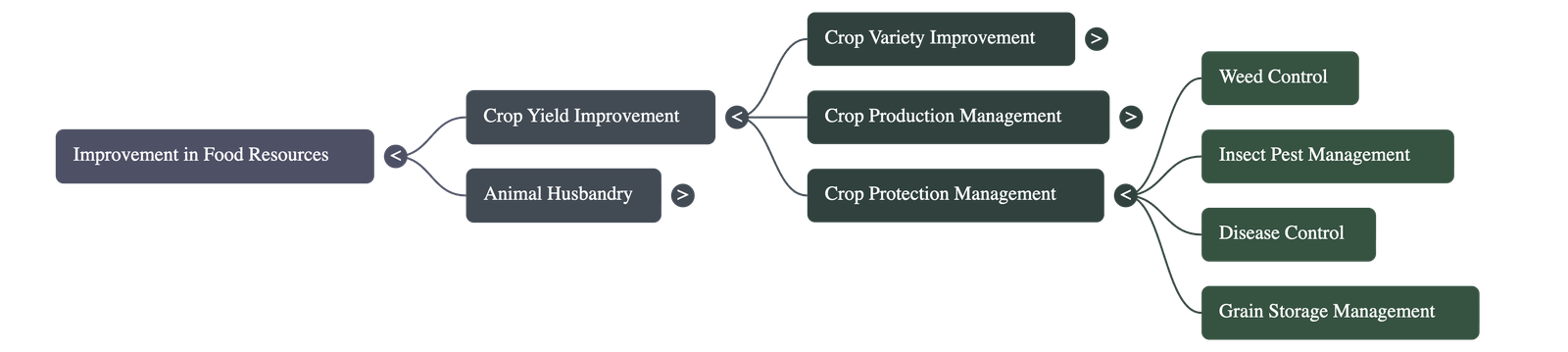
C. Crop Protection Management
- Field Protection:
- Weeds (e.g., Xanthium, Parthenium): Compete for food, space, and light. Removal is essential in early stages.
- Insect Pests: Cut roots/stems, suck cell sap, or bore into stems/fruits.
- Diseases: Caused by bacteria, fungi, and viruses.
- Control Methods: Use of pesticides (herbicides, insecticides, fungicides), mechanical removal, preventive methods (summer ploughing, resistant varieties, crop rotation).
- Storage of Grains: Losses occur due to biotic factors (insects, rodents, fungi) and abiotic factors (moisture, temperature). Control involves strict cleaning, drying (sun and shade), and fumigation.
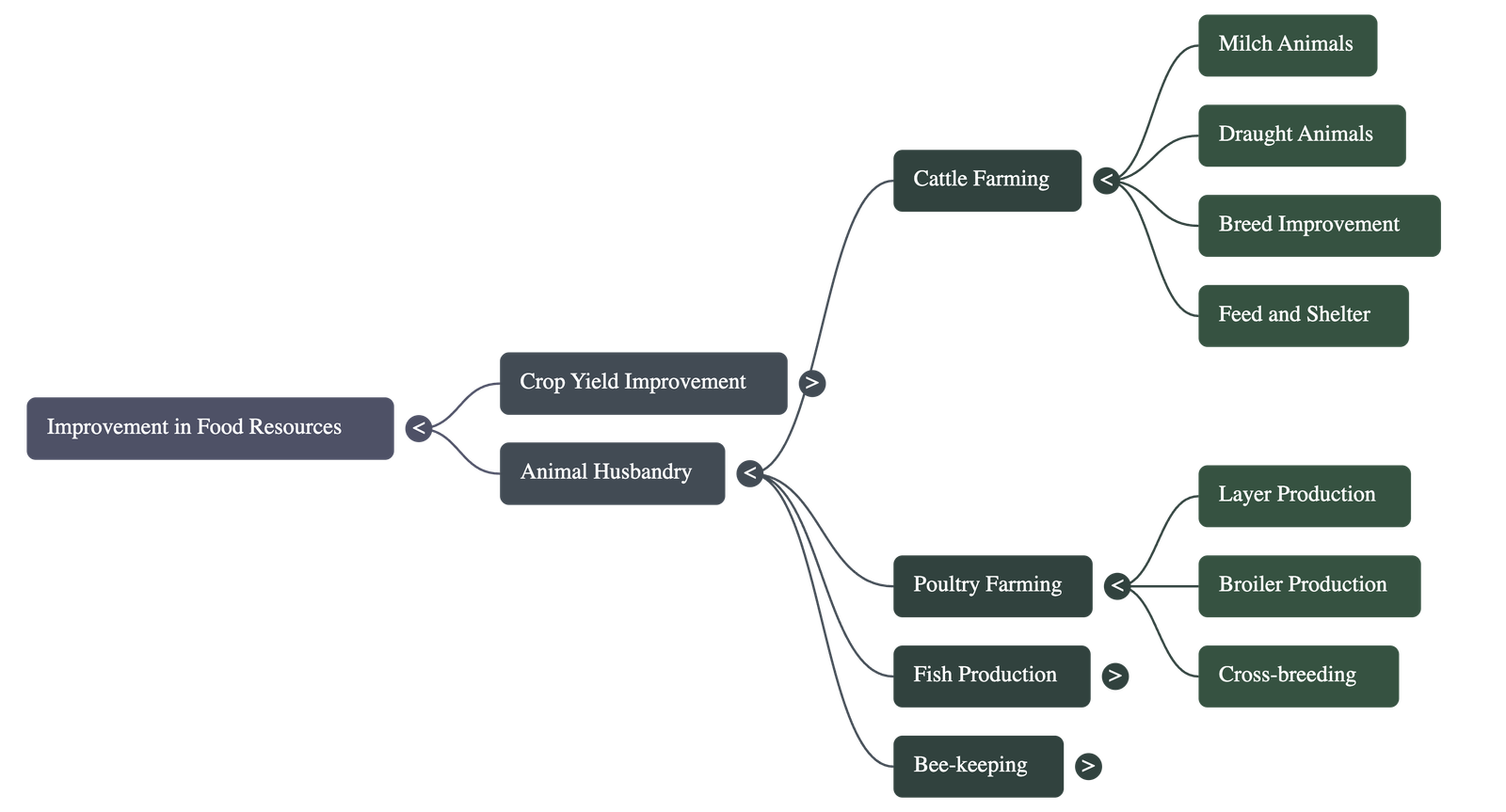
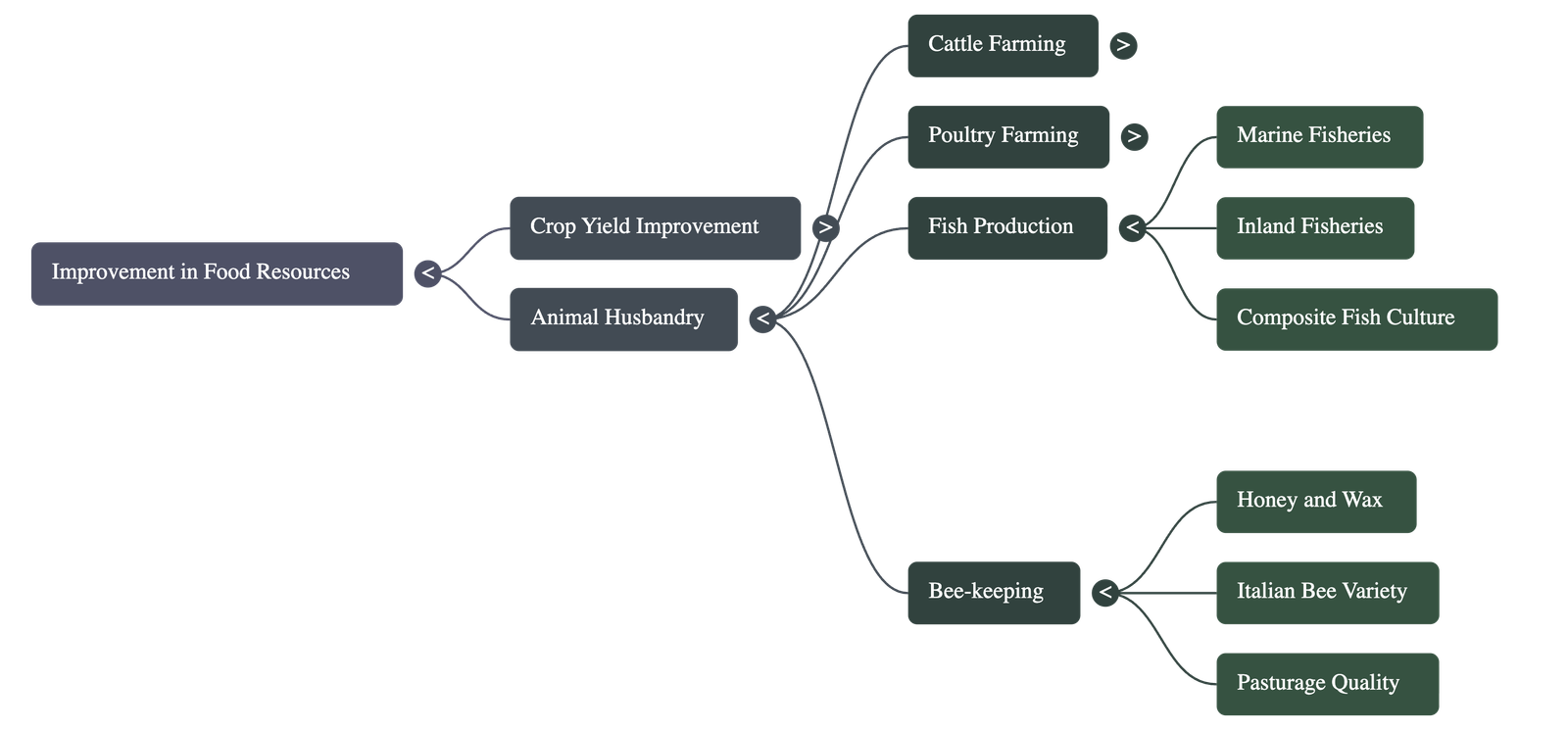
3. Animal Husbandry
Scientific management of animal livestock including feeding, breeding, and disease control.
Cattle Farming
- Purpose: Milk production (Milch animals) and draught labour (Draught animals).
- Breeds:
- Exotic: Long lactation periods (e.g., Jersey, Brown Swiss).
- Local: Disease resistant (e.g., Red Sindhi, Sahiwal).
- Cross-breeding: Combine both desirable qualities.
- Management: Shelter (well-ventilated, sloping floors), Grooming (regular brushing).
- Feeding: Balanced rations containing Roughage (fibre) and Concentrates (protein/nutrient-rich).
- Disease Control: Vaccination against viral/bacterial diseases; control of external and internal parasites.
Poultry Farming
- Purpose: Egg production (Layers) and meat production (Broilers).
- Variety Improvement: Cross-breeding Indian (Aseel) and foreign (Leghorn) breeds for traits like:
- Quality and number of chicks.
- Dwarf broiler parents for commercial production.
- Tolerance to high temperatures (summer adaptation).
- Low maintenance and ability to utilise fibrous agricultural by-products.
- Management: Layers need controlled lighting. Broilers require protein/fat-rich feed for fast growth. strict hygiene and sanitation to prevent diseases.
Fish Production
- Methods:
- Capture Fishing: From natural resources.
- Culture Fishery: Fish farming (Aquaculture).
- Marine Fisheries: Includes deep sea and coastal fishing. Popular varieties: Pomphret, Mackerel, Tuna. Technologies involve satellites and echo-sounders. Mariculture is used for high-value fish (mullets, prawns, oysters).
- Inland Fisheries: Fresh water (canals, ponds) and brackish water (estuaries).
- Composite Fish Culture:
- Growing 5 or 6 species in a single pond that do not compete for food.
- Surface feeders: Catlas.
- Middle-zone feeders: Rohus.
- Bottom feeders: Mrigals and Common Carps.
- Weed feeders: Grass Carps.
- Benefit: Utilises all food in the pond, increasing yield.
- Challenge: Availability of pure seed (solved by hormonal stimulation breeding).
Bee-keeping
- Purpose: Production of honey and wax (used in medicines). Low investment, additional income.
- Bee Varieties:
- Indigenous: Apis cerana indica (Indian bee), Apis dorsata (Rock bee), Apis florae (Little bee).
- Exotic: Apis mellifera (Italian bee). Preferred for high honey collection, less stinging, and good breeding.
- Quality Factors: Depends on Pasturage (flowers available for nectar/pollen), which determines the taste and quality of honey.
Do checkout all questions & answers of this chapter.
Quick Navigation:
| | |
1 / 1
Quick Navigation:
| | |