Quick Navigation:
| | | |
Spectacular Wonders
A detailed summary of India's most mystifying natural and man-made phenomena that spark imagination and challenge our understanding of the world.
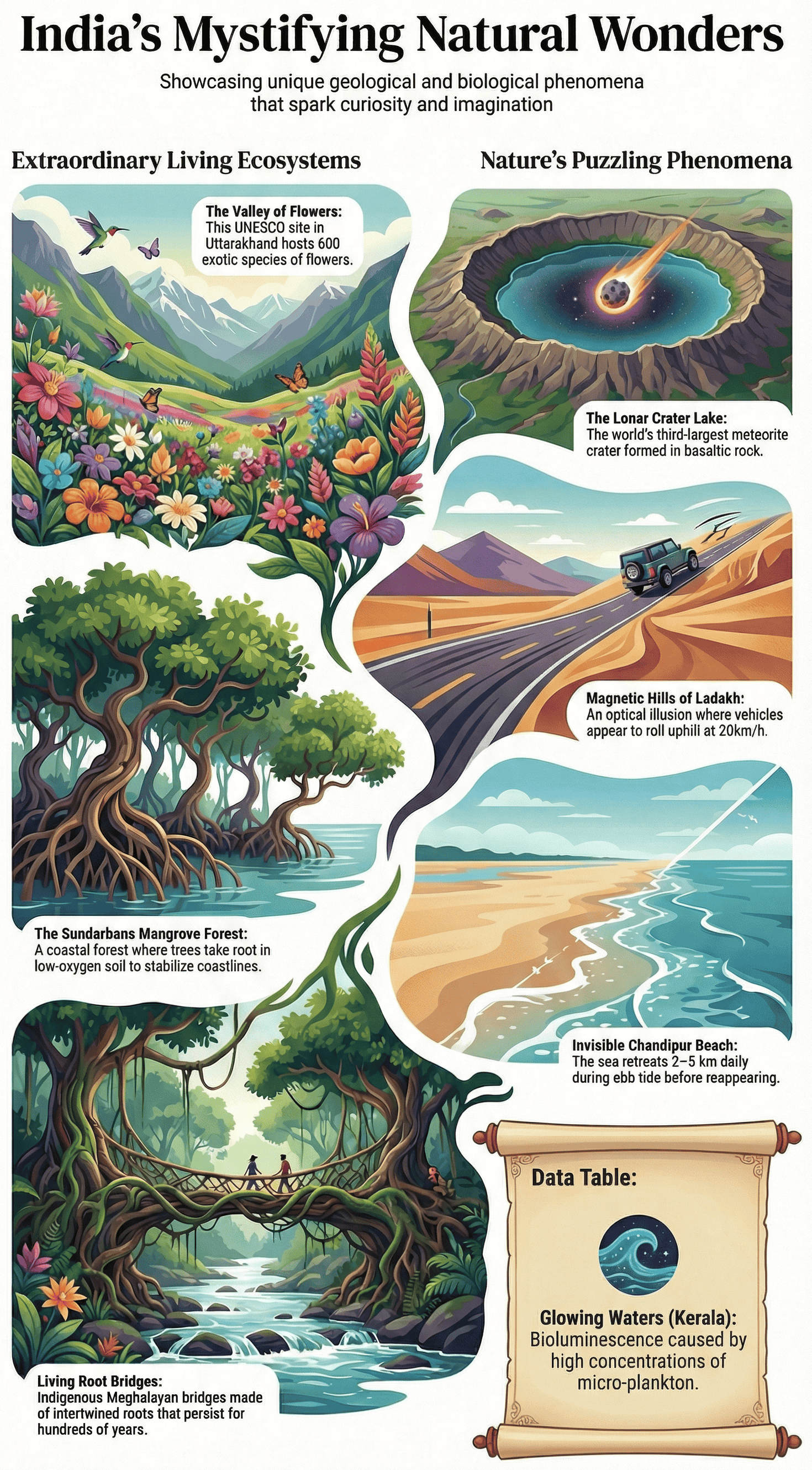
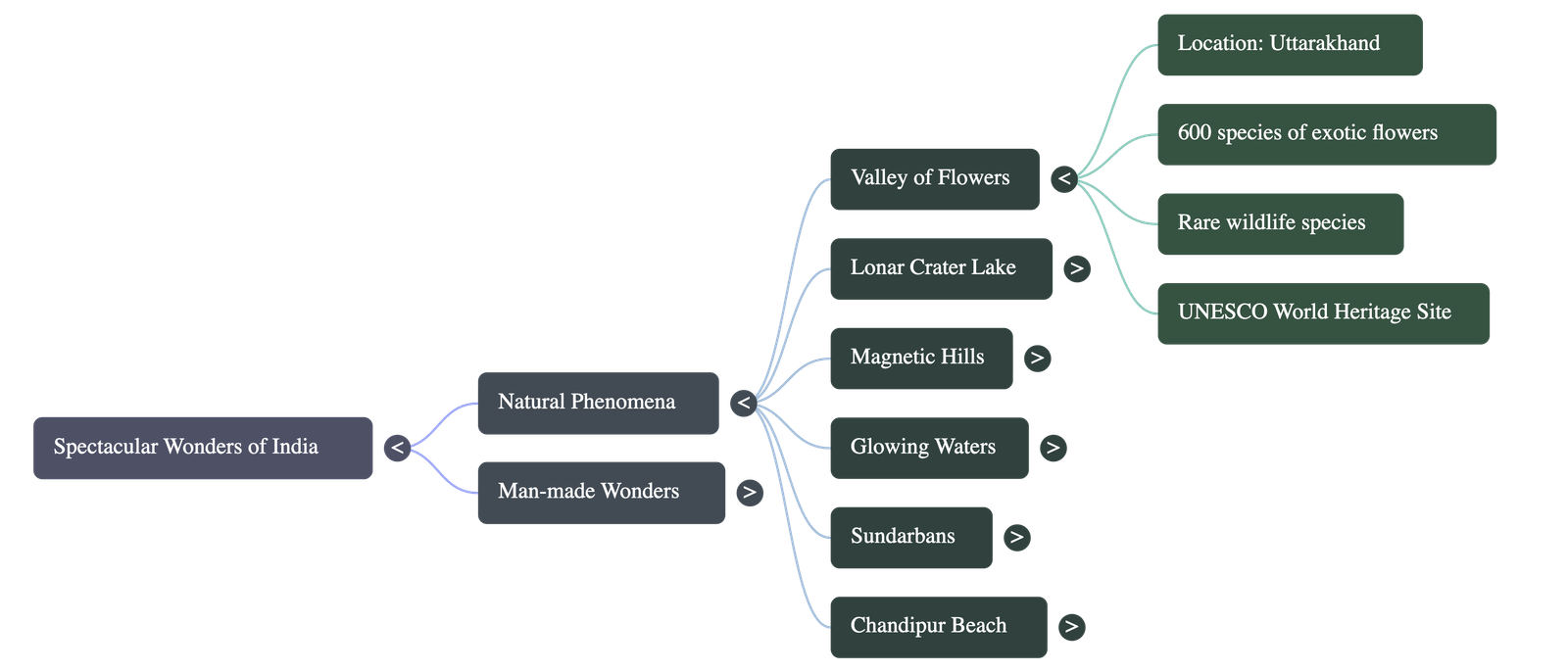
1. The Valley of Flowers (Uttarakhand)
- Located in the Chamoli district, this botanical wonderland is a designated UNESCO World Heritage Site.
- Features an eye-catching spectacle of around 600 species of exotic flowers, including orchids, poppies, marigolds, and daisies.
- Acts as a sanctuary for rare wildlife species such as the snow leopard, flying squirrel, red fox, and lime butterfly.
- Transforms into a vibrant natural paradise against the backdrop of the Himalayas between the months of May and October.
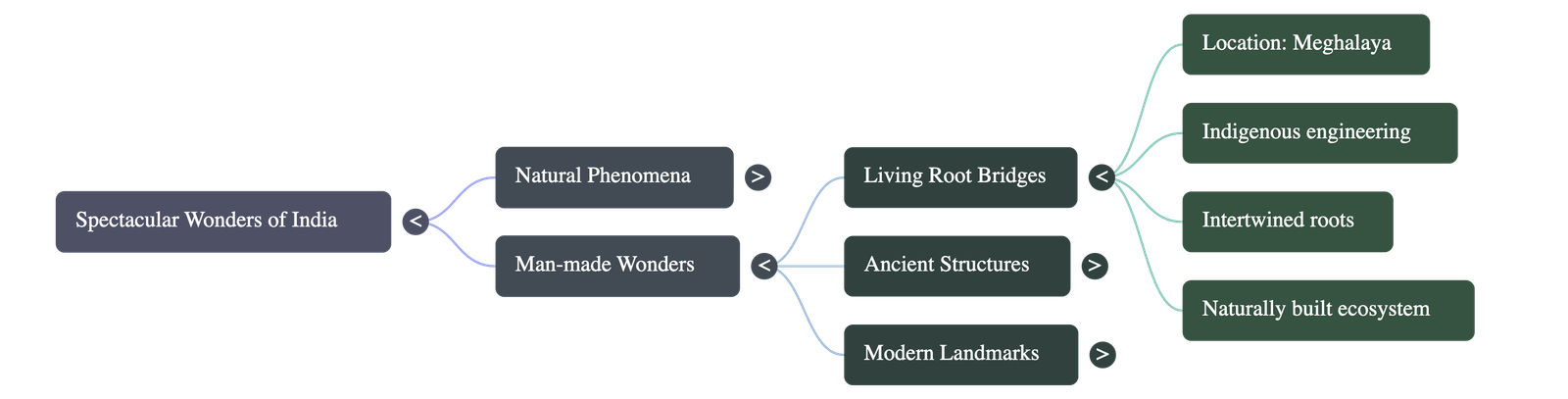
2. The Living Root Bridges (Meghalaya)
- Incredible feats of indigenous engineering built without cement, stones, or concrete to cross waterways during heavy monsoons.
- Constructed using intertwined living tree roots, serving as a naturally built ecosystem of local flora.
- Under ideal conditions, these bridges can persist for hundreds of years, making them a sustainable, long-lasting solution.
- They often rise 50 to 100 feet in the air, with the state's longest living root bridge measuring a massive 175 feet in length.
3. The Lonar Crater Lake (Maharashtra)
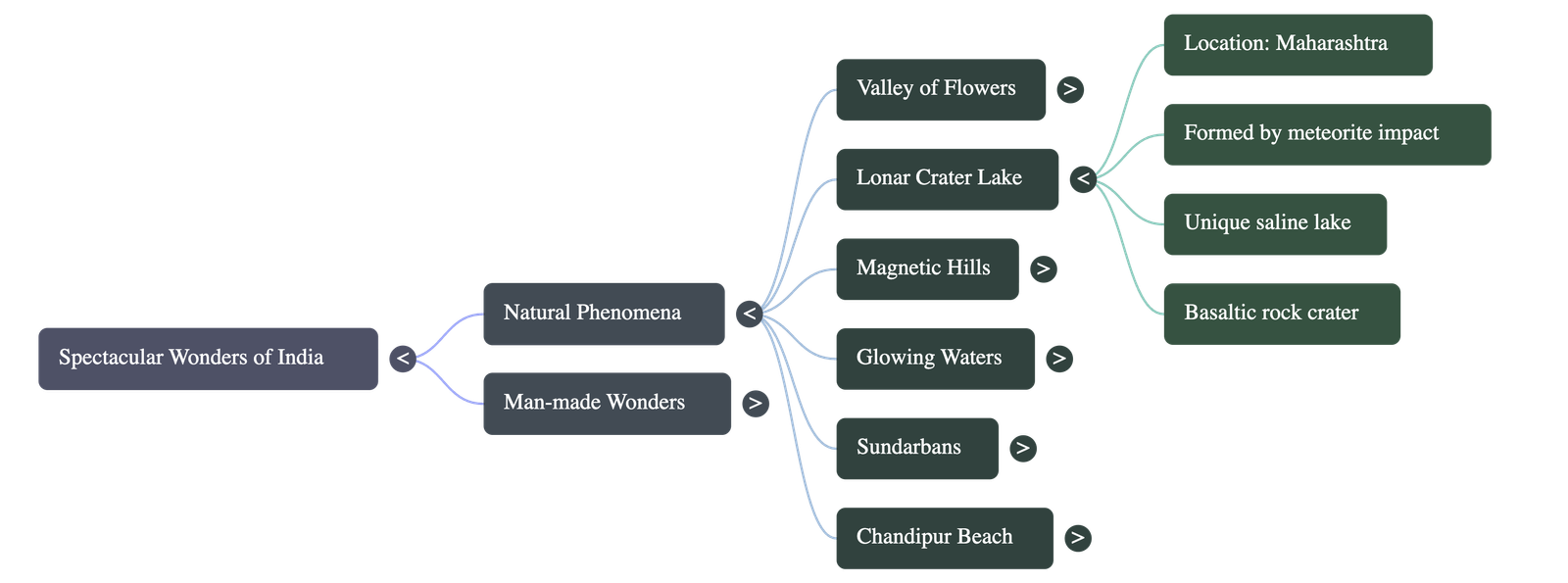
- A geological wonder located in the Buldhana district, formed thousands of years ago.
- Created by a colossal meteorite crashing into the Earth at high speed.
- It holds the unique distinction of being the only crater in India formed in basaltic rock by a meteorite and is the third largest globally.
- Features a perfectly circular depression that cradles a highly saline lake at its core, blending celestial impact with terrestrial beauty.
4. Magnetic Hills (Ladakh)
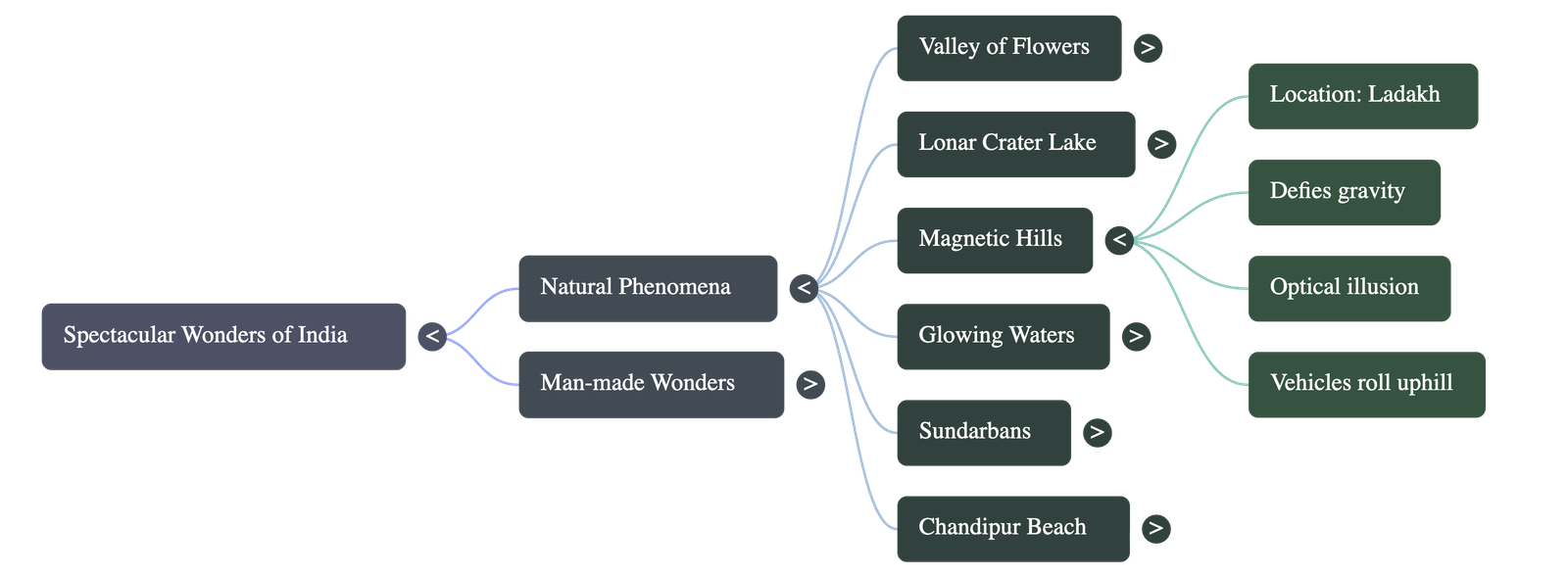
- Located about 30 km from Leh, known as a place where "gravity takes a backseat."
- Features a designated "Magnetic Road" where parked vehicles appear to roll uphill on their own at speeds of almost 20 km/h.
- The phenomenon is actually a fascinating optical illusion caused by the peculiar alignment of the surrounding slopes and the horizon line.
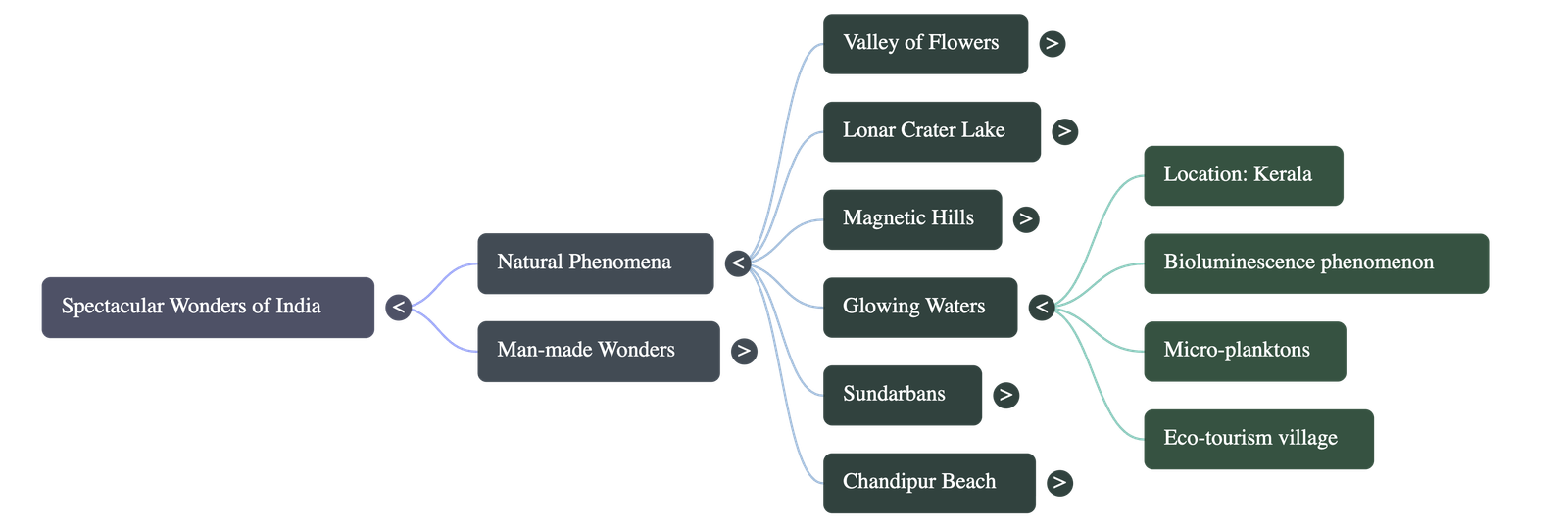
5. Glowing Waters of Kerala
- Found in the serene backwaters of Kumbalangi, an eco-tourism village 15 km from Kochi.
- The waters glow magically at night due to bioluminescence—a chemical reaction producing light inside living organisms.
- Caused by a high concentration of micro-planktons present in the marine and freshwater environment.
- The destination allows visitors to experience simple village life, local cuisine, and eco-friendly tourism.
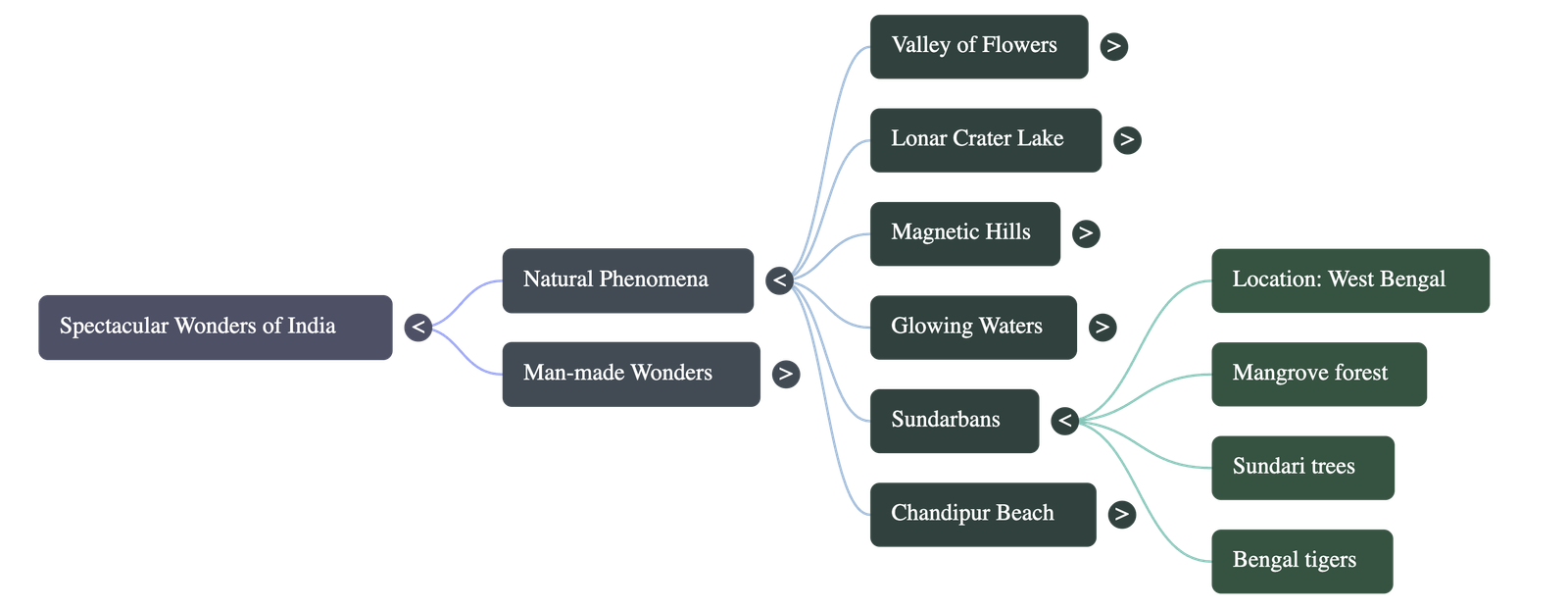
6. The Sundarbans (West Bengal)
- A massive mangrove forest spanning 1,400 km across the delta of the Ganga, Brahmaputra, and Meghna rivers.
- Mangrove trees uniquely take root underwater in low-oxygen soil, which slows tidal waters and reduces coastal erosion.
- Named after the abundant "sundari" trees found in the region.
- Serves as a vital habitat for a massive range of flora and fauna, notably the majestic Bengal tiger, estuarine crocodiles, and the Indian python.
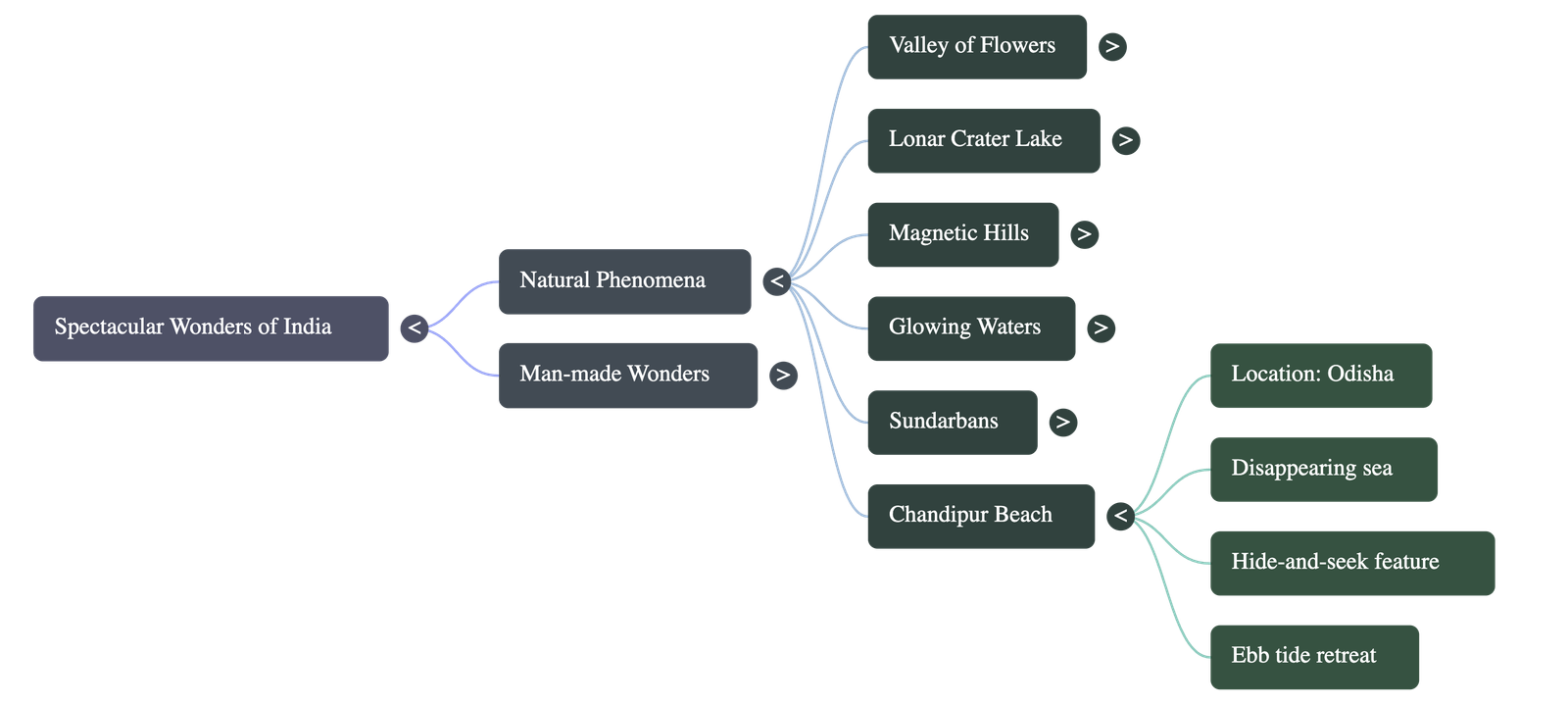
7. The Invisible Chandipur Beach (Odisha)
- Located in the Balasore district, famous for playing "hide-and-seek" with its visitors.
- The sea mysteriously disappears and reappears on a daily basis.
- During ebb tide (the time between high and low tide), the water retreats by 2 to 5 kilometers, returning to the shore at high tide, allowing visitors to physically walk on the exposed sea bed.
Exploring Man-Made Wonders
In addition to natural spectacles, India boasts remarkable man-made heritage and modern engineering marvels:
- Kallanai Dam (Tamil Nadu): Also known as The Grand Anaicut, built by Chola King Karikala around 150 CE. It is one of the world's oldest dams still in active use, representing ancient Indian hydraulic engineering.
- Nalanda University (Bihar): The world’s first residential university, established long before European universities. It educated thousands of students and is now a UNESCO Heritage Site.
- Vittala Temple (Karnataka): Located in Hampi (a UNESCO Site) and built in the 15th century. It features 56 special "SaReGaMa pillars" that astonishingly produce clear musical notes when tapped.
- Modern Architectural Marvels: Contemporary feats include the Bandra–Worli Sea Link in Mumbai, the colossal Statue of Unity in Gujarat, and the Bhupen Hazarika Setu (The Dhola-Sadiya Bridge) in Assam.
Do checkout all questions & answers of this chapter.
Quick Navigation:
| | | |
1 / 1
Quick Navigation:
| | | |


Quick Navigation:
| | | |