Quick Navigation:
| | |
Somebody’s Mother
Overview: This chapter revolves around a touching poem by Mary Dow Brine that highlights the core values of kindness, empathy, and humanity. It includes pre-reading reflections, an in-depth literary analysis, and various language-building exercises.
1. Pre-Reading Activities
- • Emotional Reflection: Students are encouraged to recall a time they helped someone and reflect on the feelings experienced by both themselves and the receiver.
- • Word Association: An exercise categorizing descriptive words (e.g., slow, trembling, merry, hastening) to associate them with either an elderly person or a school student.
- • Vocabulary Context: Exploring the multiple definitions of the word "ragged" to understand its specific meaning in the context of the poem (old and torn clothes).
2. Summary of the Poem ("Somebody's Mother")
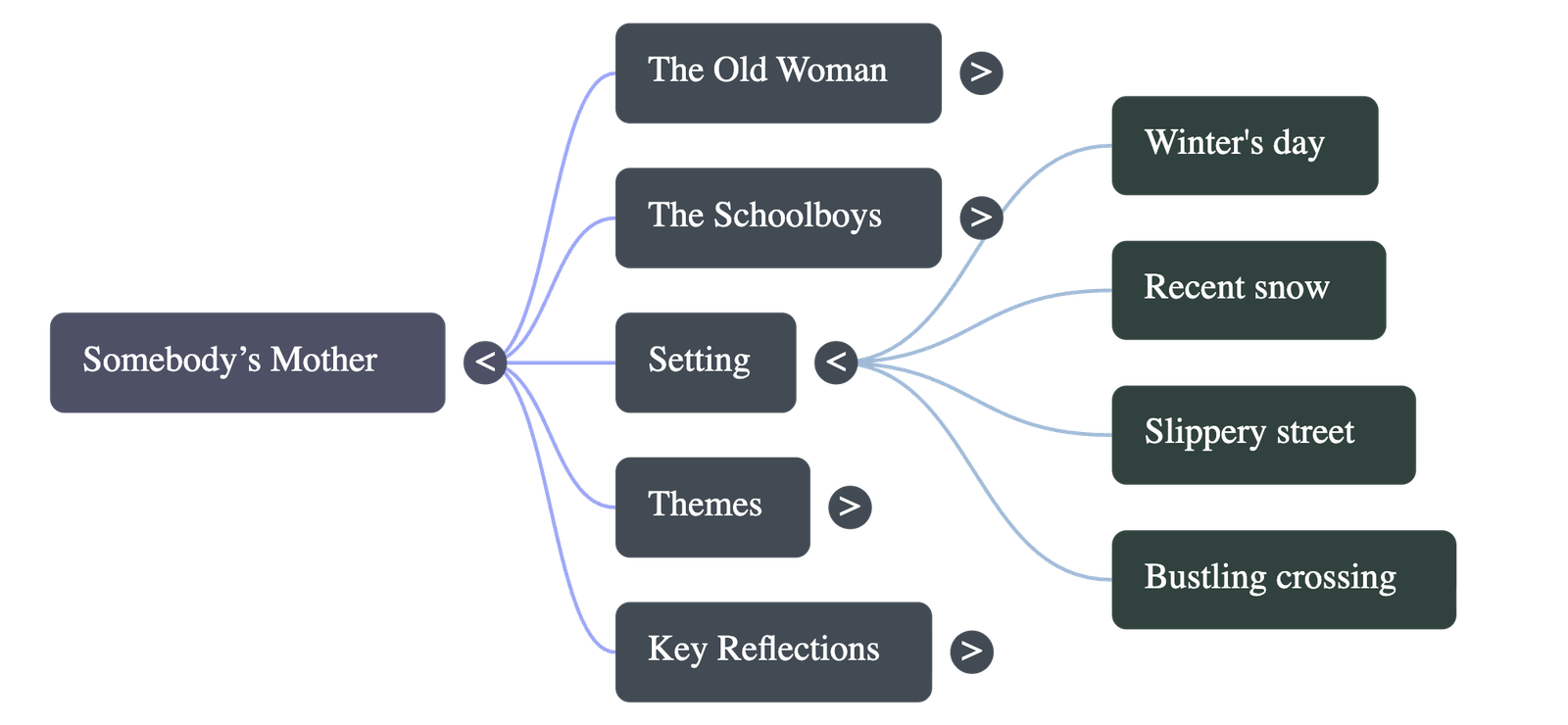
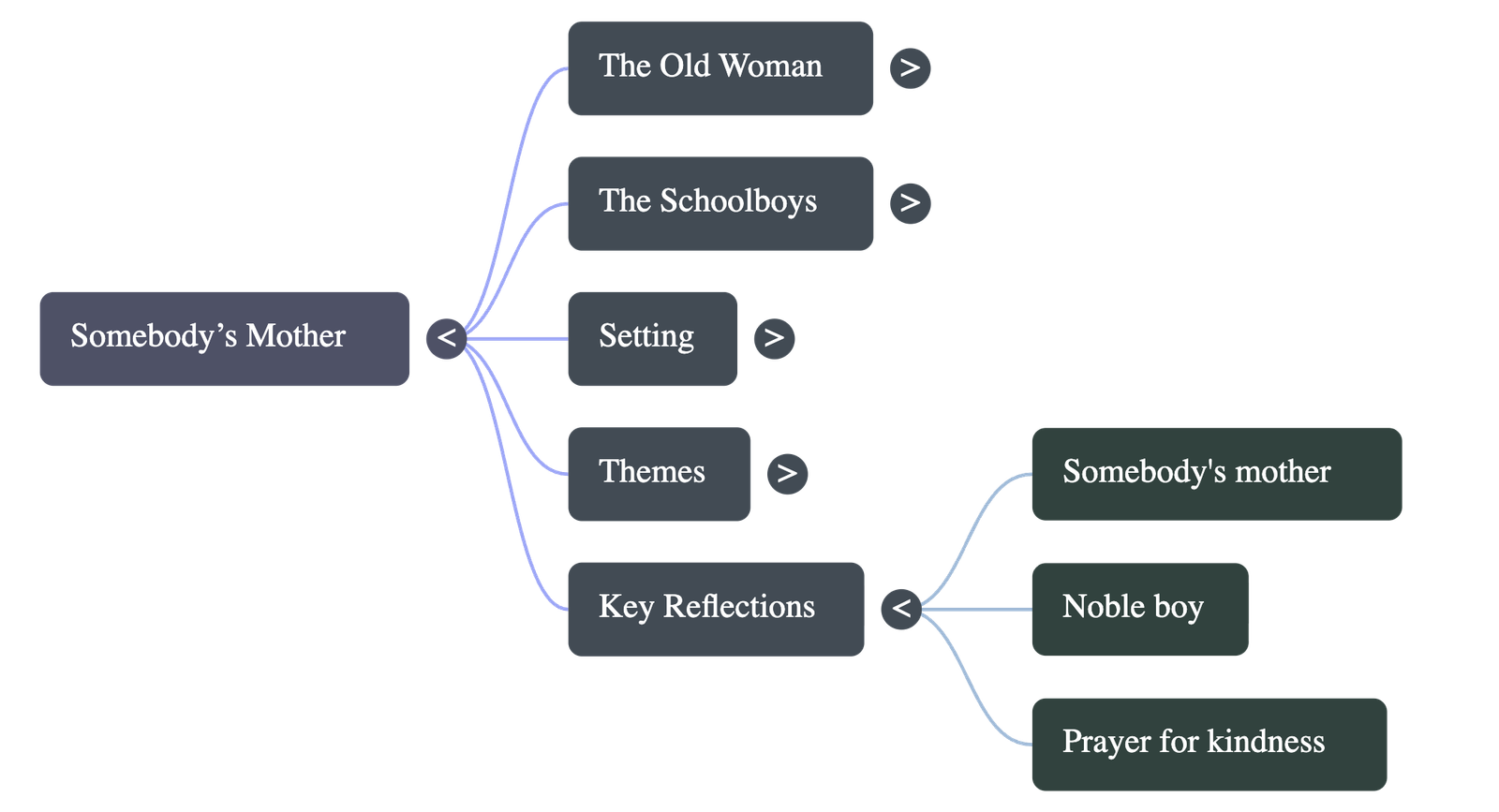
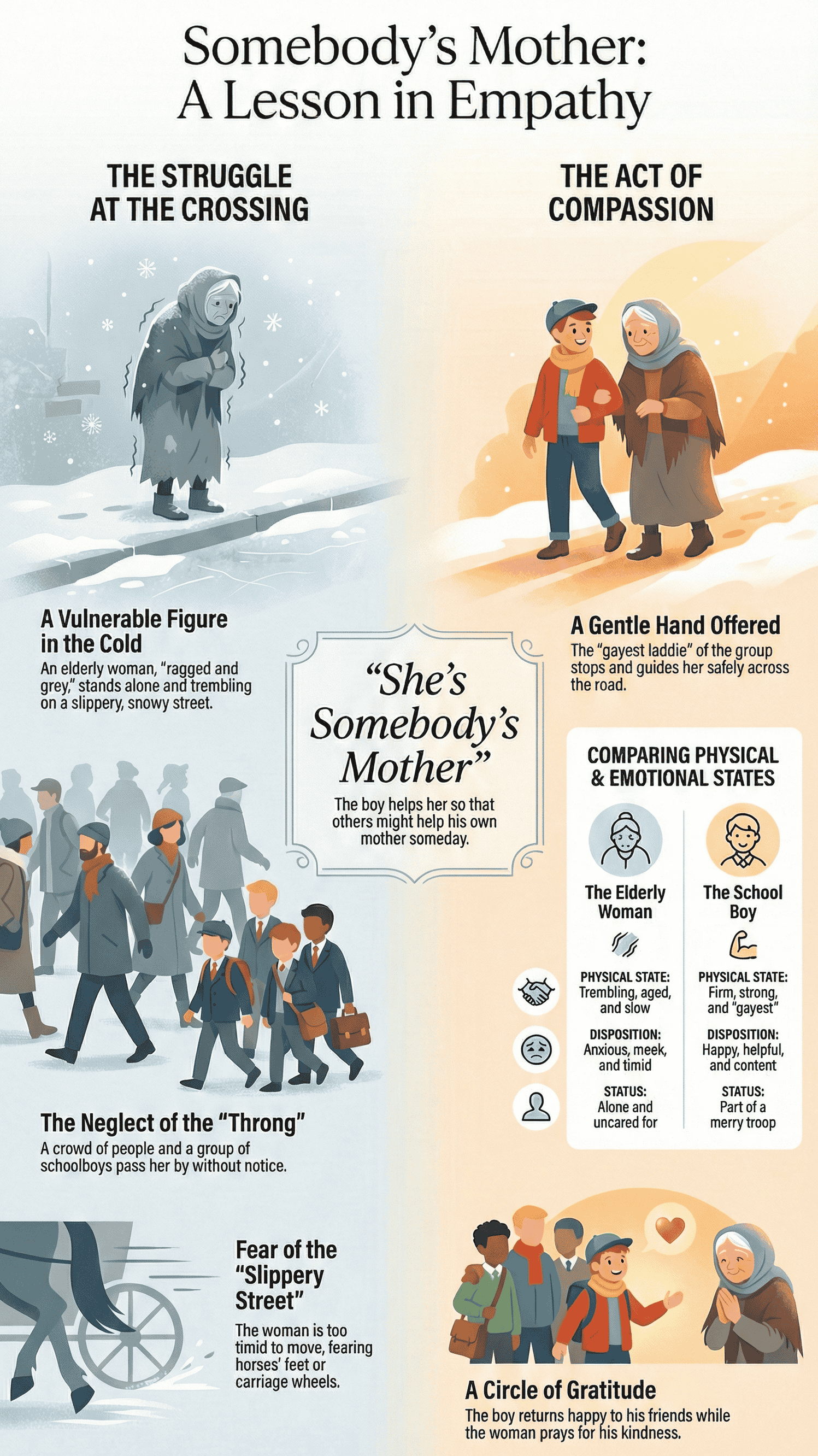
- ✔ The Setting: The scene is set on a freezing, snowy winter day. The streets are wet and dangerously slippery.
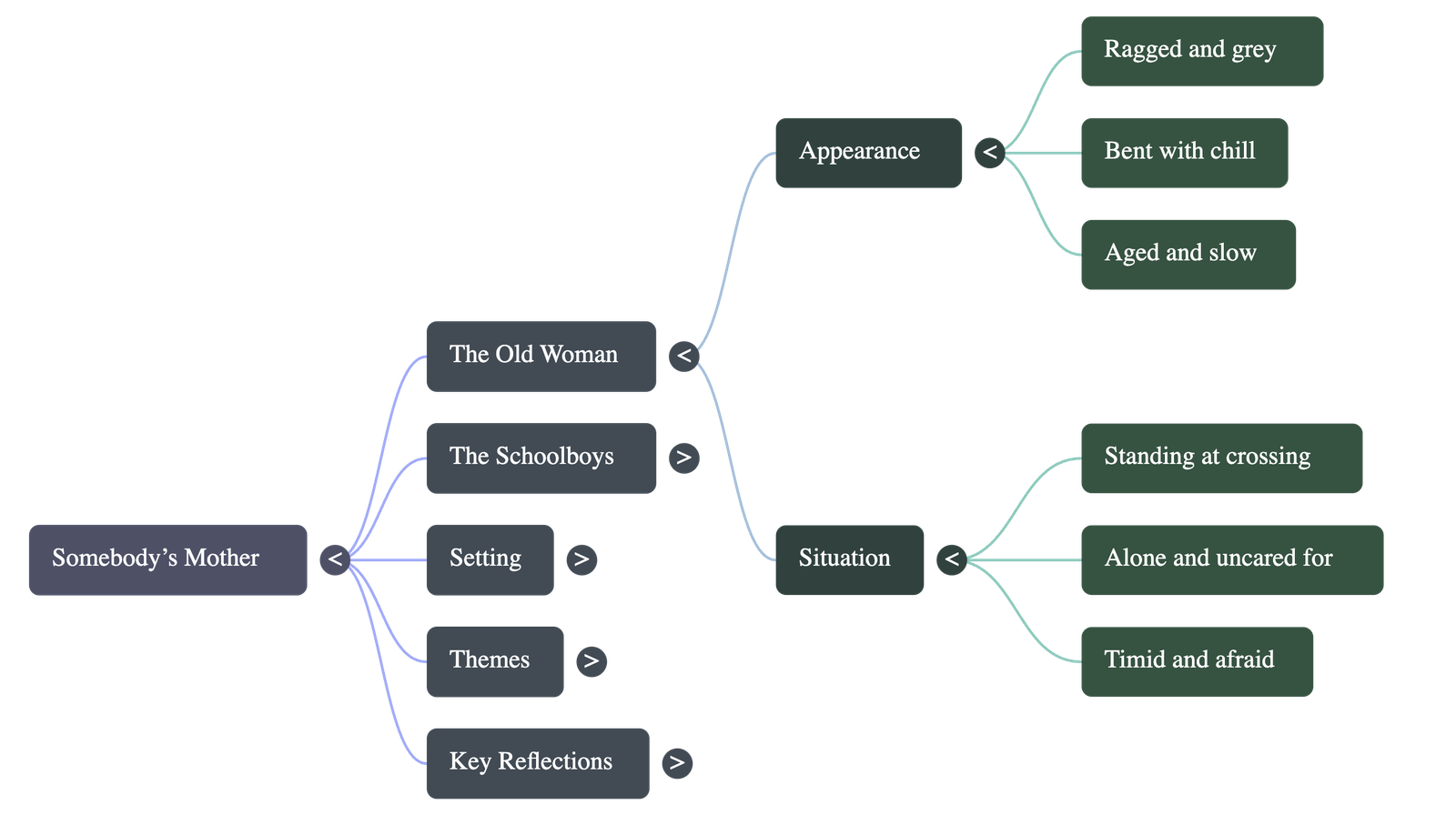
- ✔ The Helpless Woman: An elderly, frail woman in ragged clothes waits anxiously at a crossing. The busy crowd completely ignores her, offering no help.
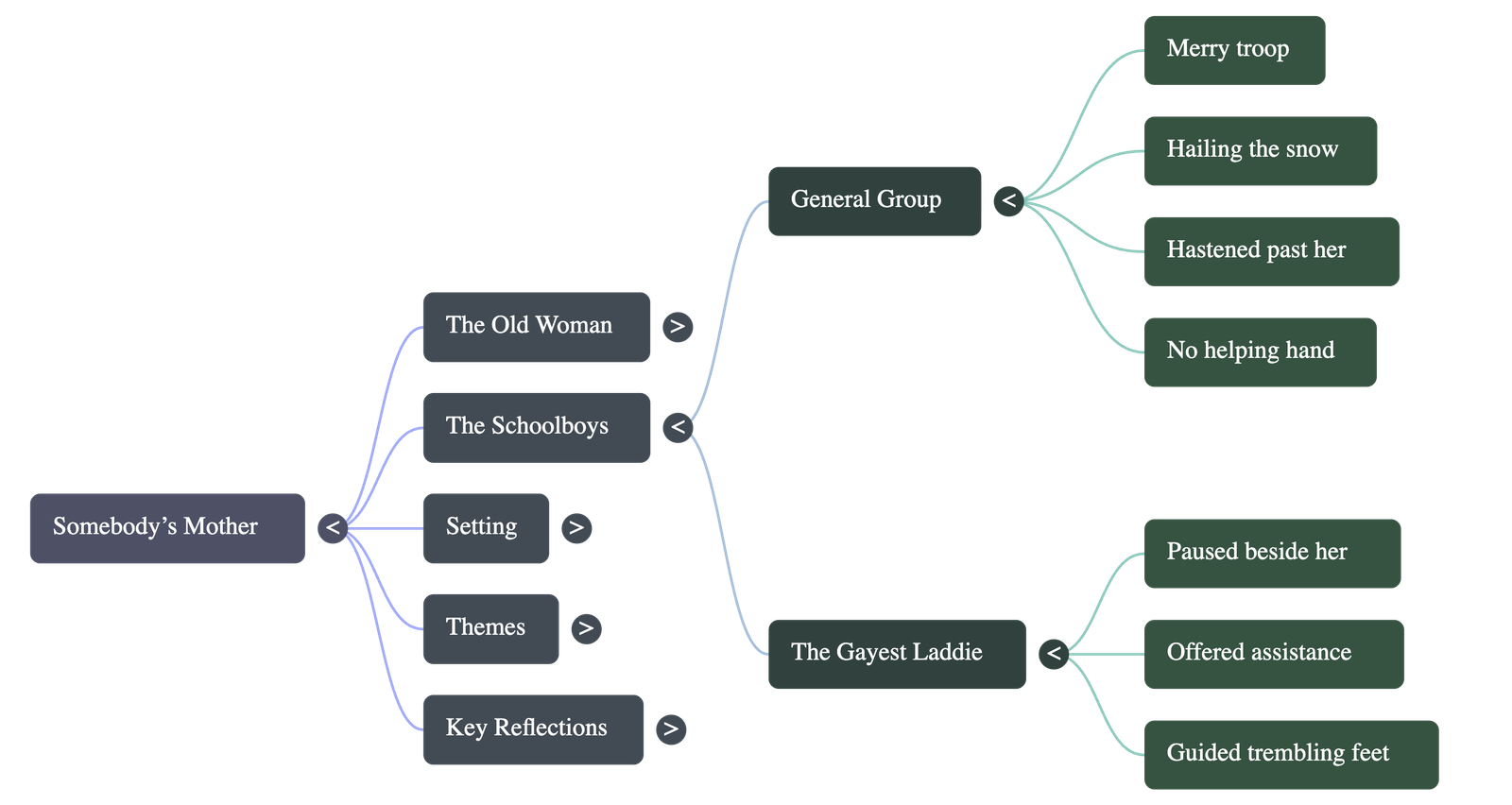
- ✔ The Schoolboys: A noisy, joyful group of schoolboys passes by like a "flock of sheep," enjoying the snow but ignoring the old woman's plight.
- ✔ The Act of Kindness: One cheerful and compassionate boy stops, gently offers his strong arm, and safely guides her across the dangerous street.
- ✔ The Boy's Reasoning: Returning to his friends, he explains his actions by stating she is "somebody's mother." He expresses a heartfelt hope that if his own mother is ever old, poor, and far away from him, a stranger might lend her a helping hand.
- ✔ The Blessing: Touched by his kindness, the old woman prays that night, asking God to be kind to the "noble boy" who brought her pride and joy.
3. Literary Analysis and Comprehension
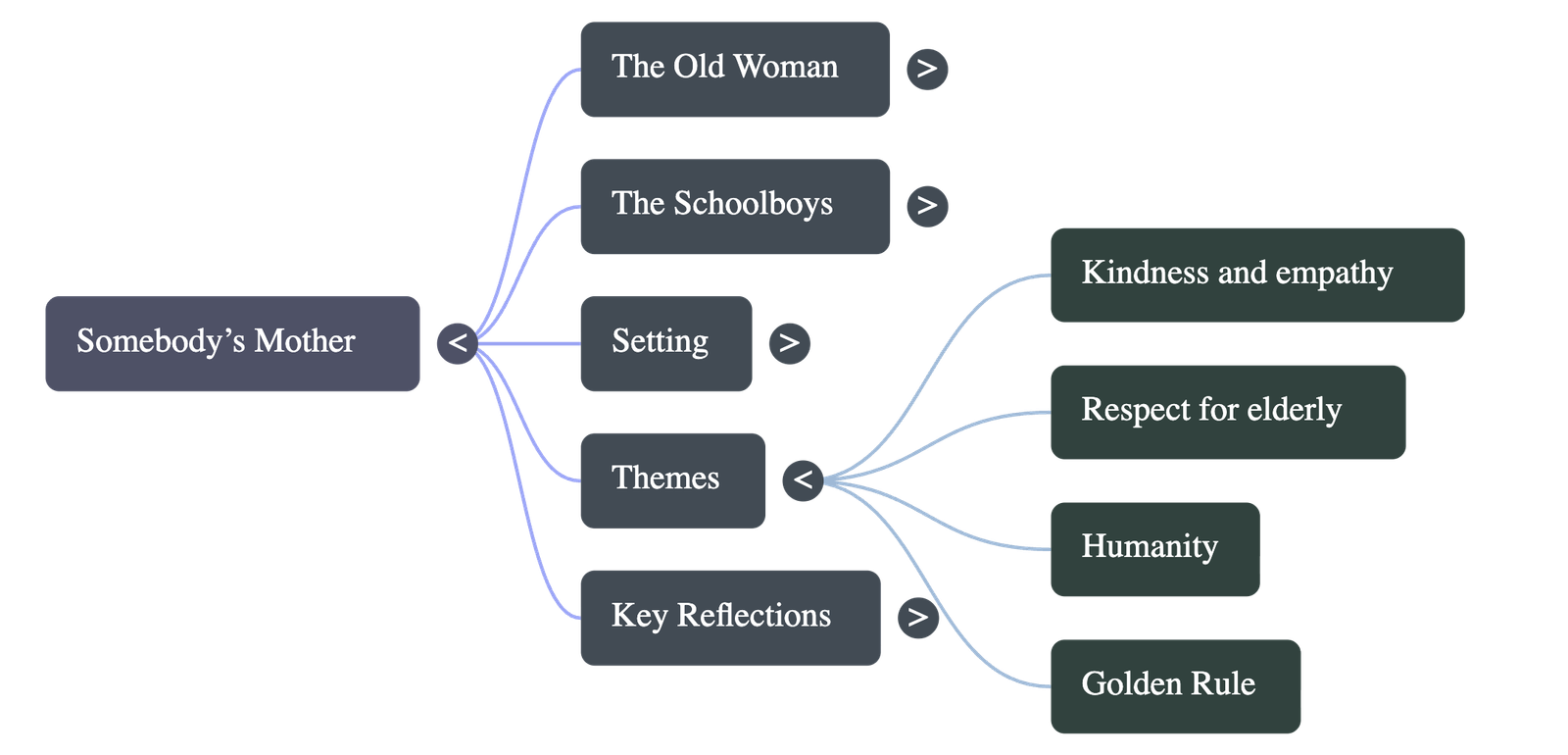
- ✦ Themes and Tone: The central theme is kindness and empathy. The tone of the poem is sympathetic and hopeful.
- ✦ Structure: The poem is structured in couplets, featuring two lines per stanza, with an AABB rhyme scheme.
- ✦ Poetic Devices: Students identify similes (e.g., "like a flock of sheep"), alliteration, and repetition. It heavily relies on visual imagery (e.g., wet streets, recent snow) to contrast youth's strength with age's vulnerability.
4. Vocabulary and Grammar (Let Us Learn)
- ➤ Word Grid & Antonyms: Finding antonyms for words like firm, meek, merry, kind, anxious, and bent.
- ➤ Contextual Vocabulary: Matching terms from the text (hastened, heeded, stir, lend, piled, offered) to their contextual meanings.
- ➤ Idioms: Learning idioms based on the word "hand", such as "get out of hand", "try your hand at", "give a big hand", and "work hand in hand".
- ➤ Grammar Usage: Understanding the conjunction "lest," meaning "to prevent something bad from happening" or "just in case."
5. Listening and Speaking Skills
- 🗣 Listening Exercise: Students listen to a news broadcast about a brave boy named Rohan who saved a drowning woman, proving that age is no barrier to saving lives.
- 🗣 Pronunciation: Categorizing the final sound of words ending in "-ed" into three phonetic groups: /id/ (e.g., ragged, guided), /d/ (e.g., paused), and /t/ (e.g., heeded).
- 🗣 Speaking Practice: Using cue cards and prompt phrases to narrate a personal anecdote about helping someone in need.
6. Writing and Exploration
- ✎ Diary Entry: Writing a reflective diary entry detailing an experience of helping someone, capturing the setting, the action, and the resulting emotions.
- ✎ Cultural Exploration: Discovering that the Atharva Veda (ancient Indian scripture) refers to the Earth as a mother ("Earth is my mother and I am her child"). Investigating which countries use the terms "motherland" versus "fatherland."
- ✎ Supplementary Reading: Reading the short poem "A Nation's Strength" by Ralph Waldo Emerson, which states that a nation's greatness comes from brave, honorable people, not material wealth.
- ✎ Creative Activity: Designing a gratitude card from recycled materials for a mother or grandmother, listing five things to be thankful for and pledging to help them regularly.
Do checkout all questions & answers of this chapter.
Quick Navigation:
| | |