Quick Navigation:
| | | |
Verghese Kurien — I Too Had A Dream
Overview and Context
The chapter primarily features a heartfelt, reflective letter written in 2005 by Dr. Verghese Kurien (often known as the 'Milkman of India') to his grandson, Siddharth. It outlines his life choices, the core values that guided him, and his vision for India. The chapter also includes various educational exercises encompassing grammar, vocabulary, listening, speaking, and general awareness.
Key Highlights of Dr. Kurien's Letter
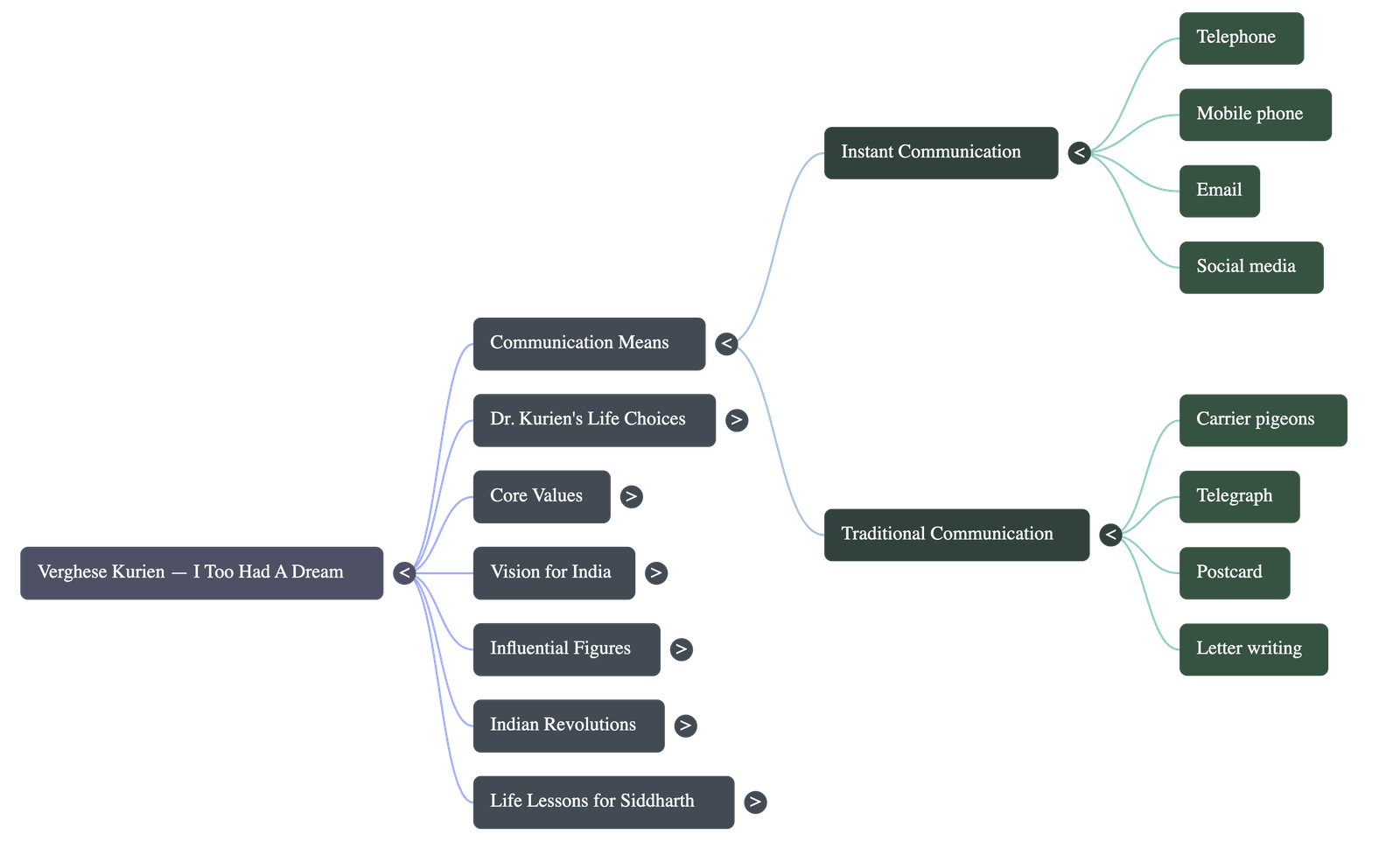
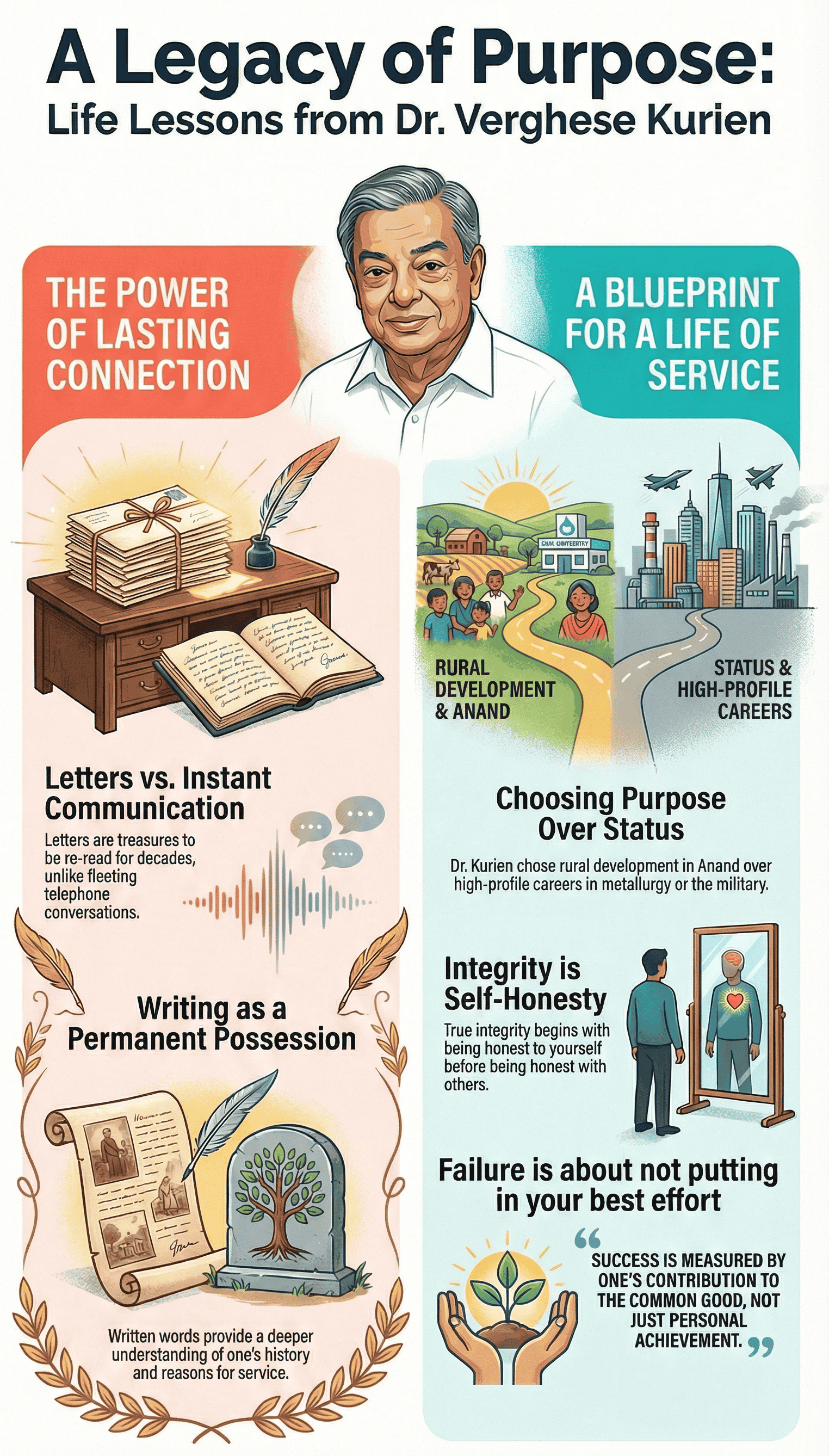
- The Power of the Written Word: Dr. Kurien contrasts modern, fast-paced telephone communication with letter writing. While phone calls offer fleeting joy, letters are tangible possessions that can be treasured and re-read, offering deep, abiding pleasure.
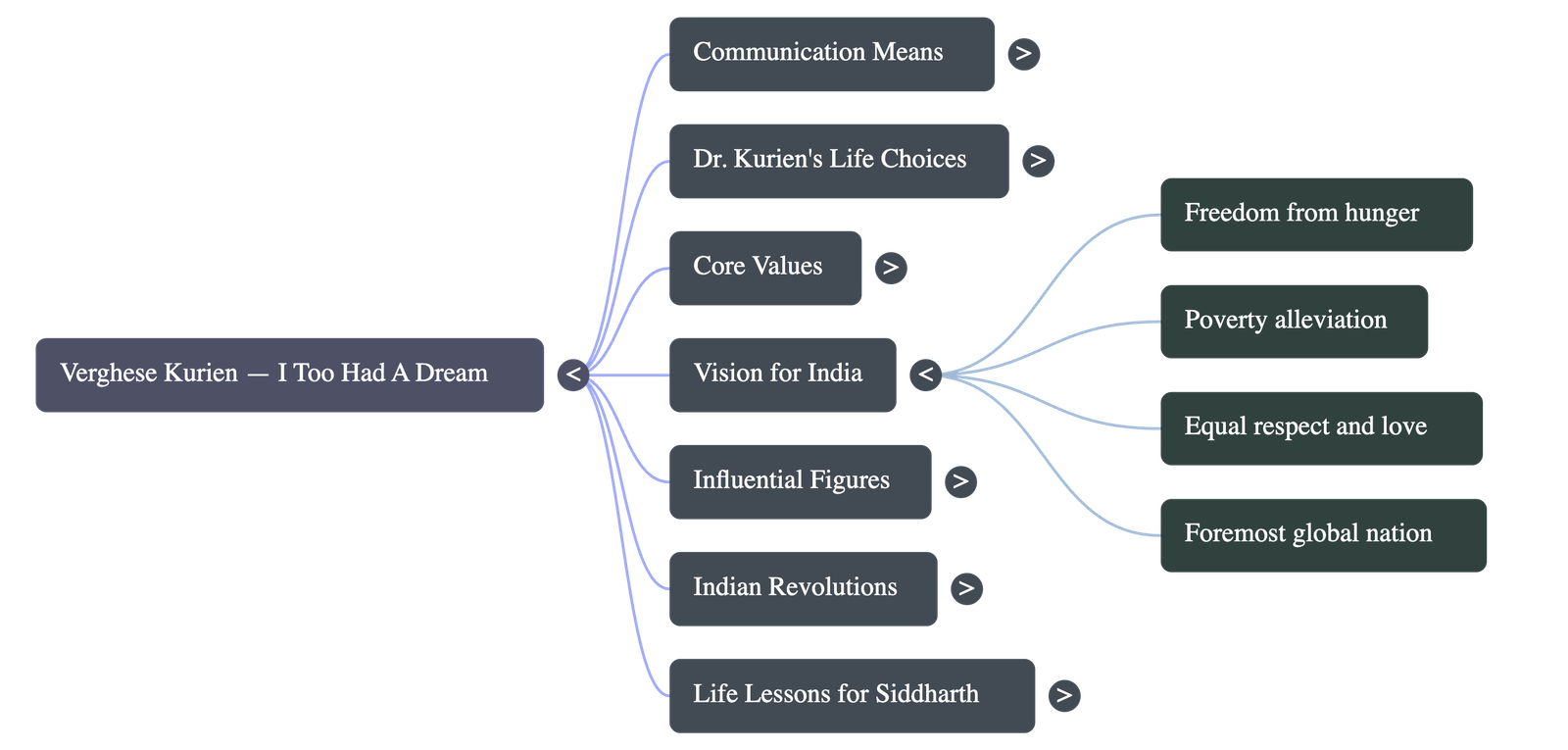
- Vision for an Independent India: Beginning his career just after India's independence, he dreamt of a nation free from hunger and poverty, where citizens lived with dignity, respect, and equality, ultimately standing among the world's foremost nations.
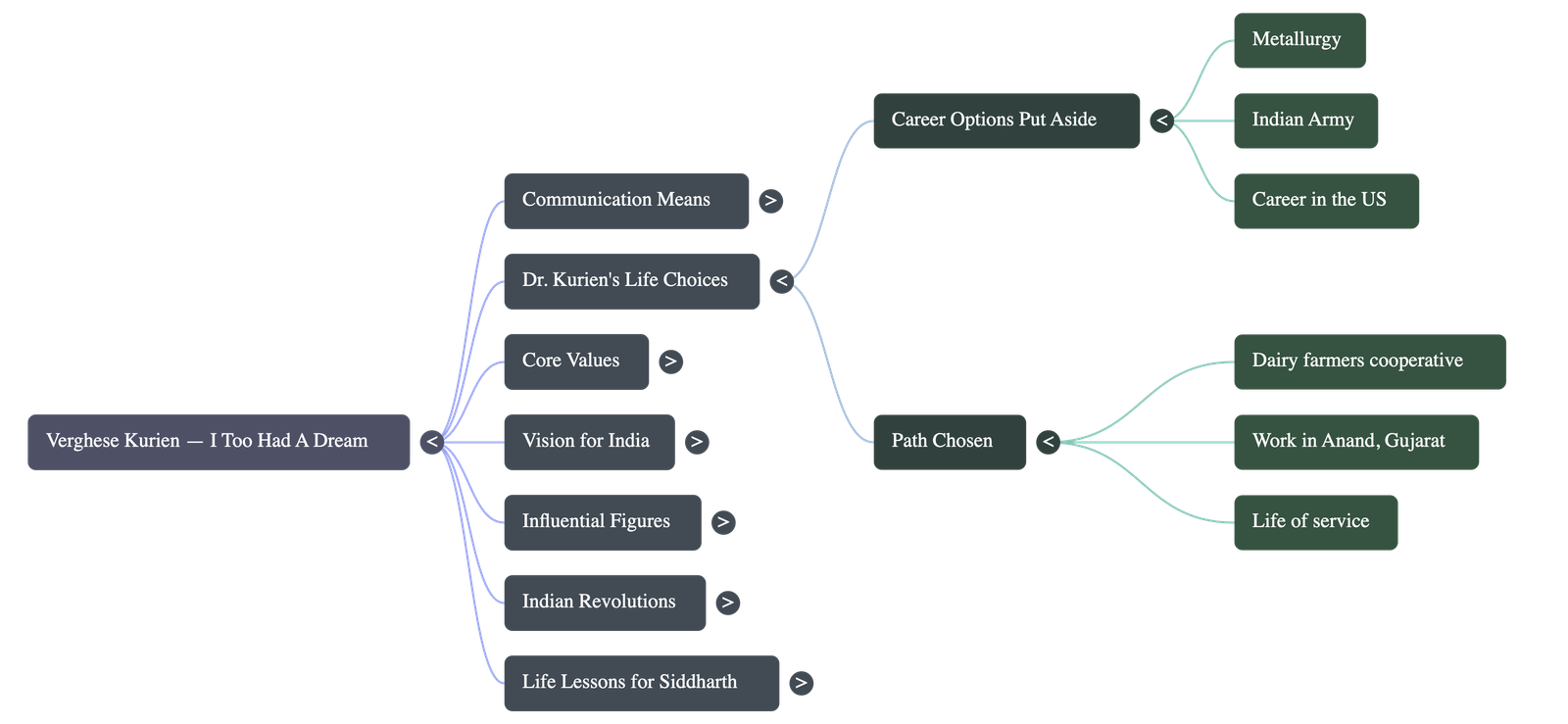
- A Meaningful Career Choice: Rather than pursuing lucrative and prestigious alternatives—like becoming a top corporate executive in metallurgy, an Army General, or a successful NRI in the US—he chose to dedicate his life to a small cooperative of dairy farmers in Anand, Gujarat.
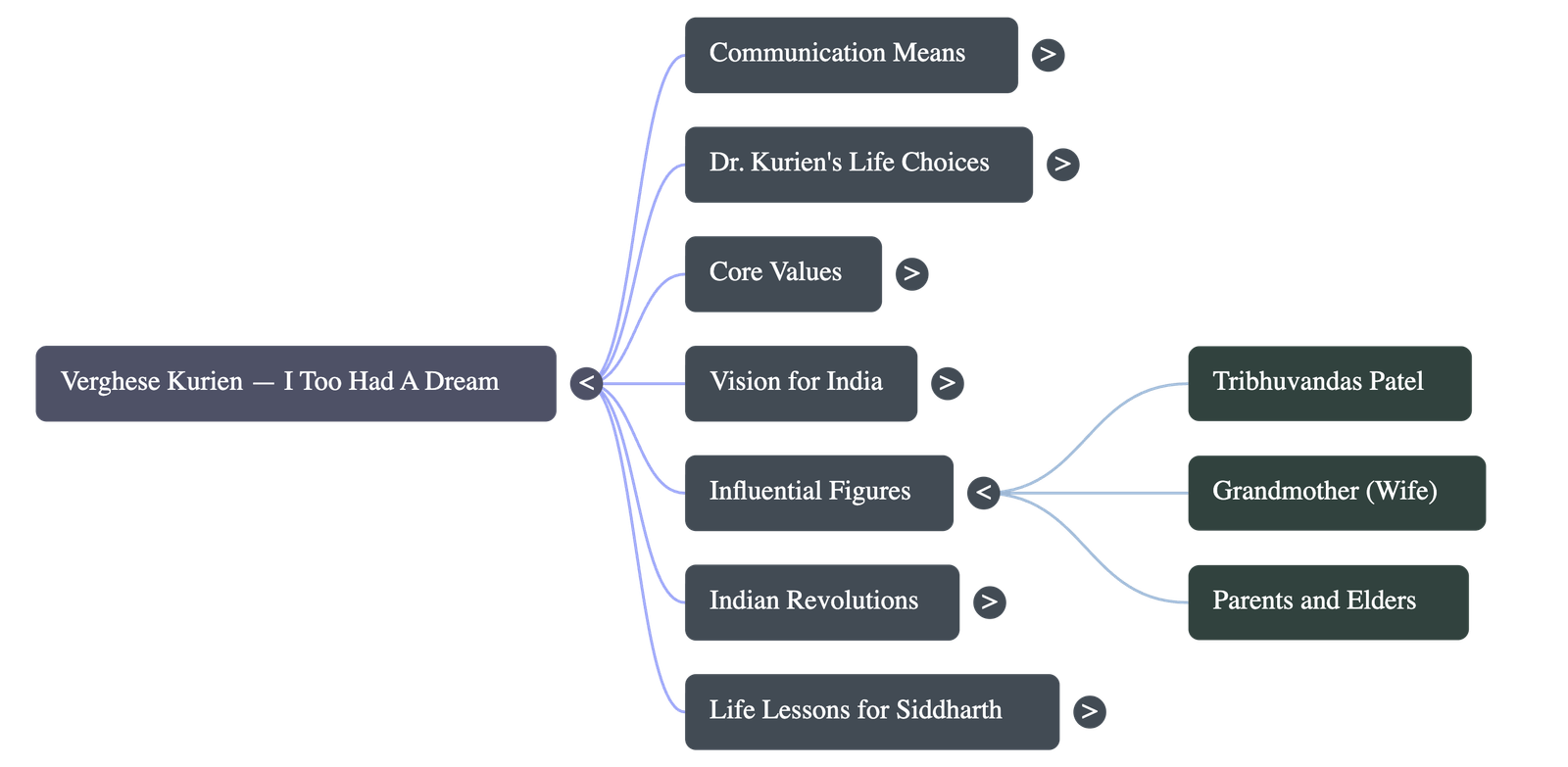
- Family Support: He profoundly acknowledges the role of his wife (Siddharth's grandmother), who gracefully supported his decision to stay in Anand despite the initial lack of basic comforts, providing him with everlasting strength and poise.
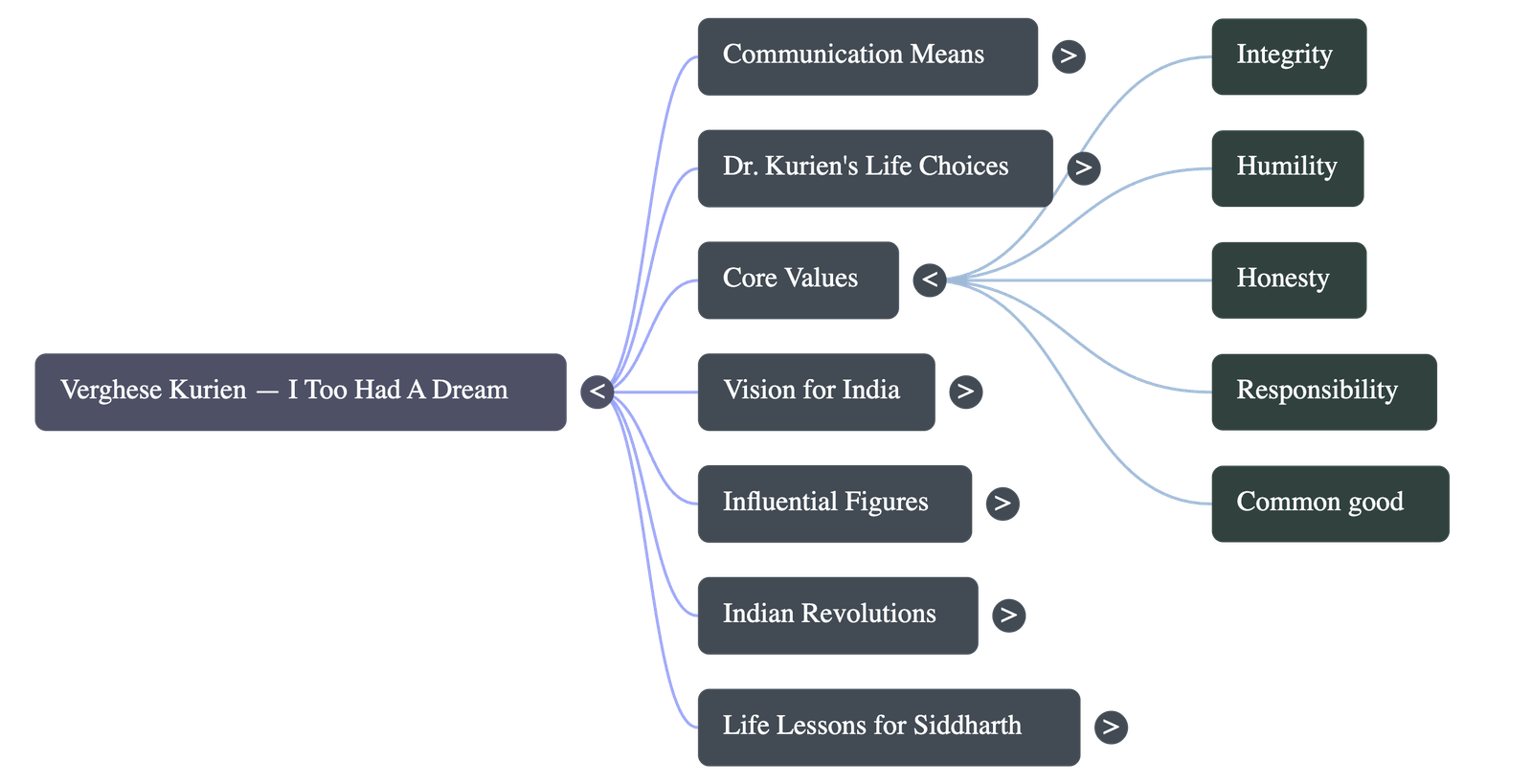
- The Value of Personal Integrity: He attributes his success not just to the people he worked with and his mentor, Tribhuvandas Patel, but fundamentally to personal integrity. He emphasizes that being honest to oneself makes it effortless to be honest with others.
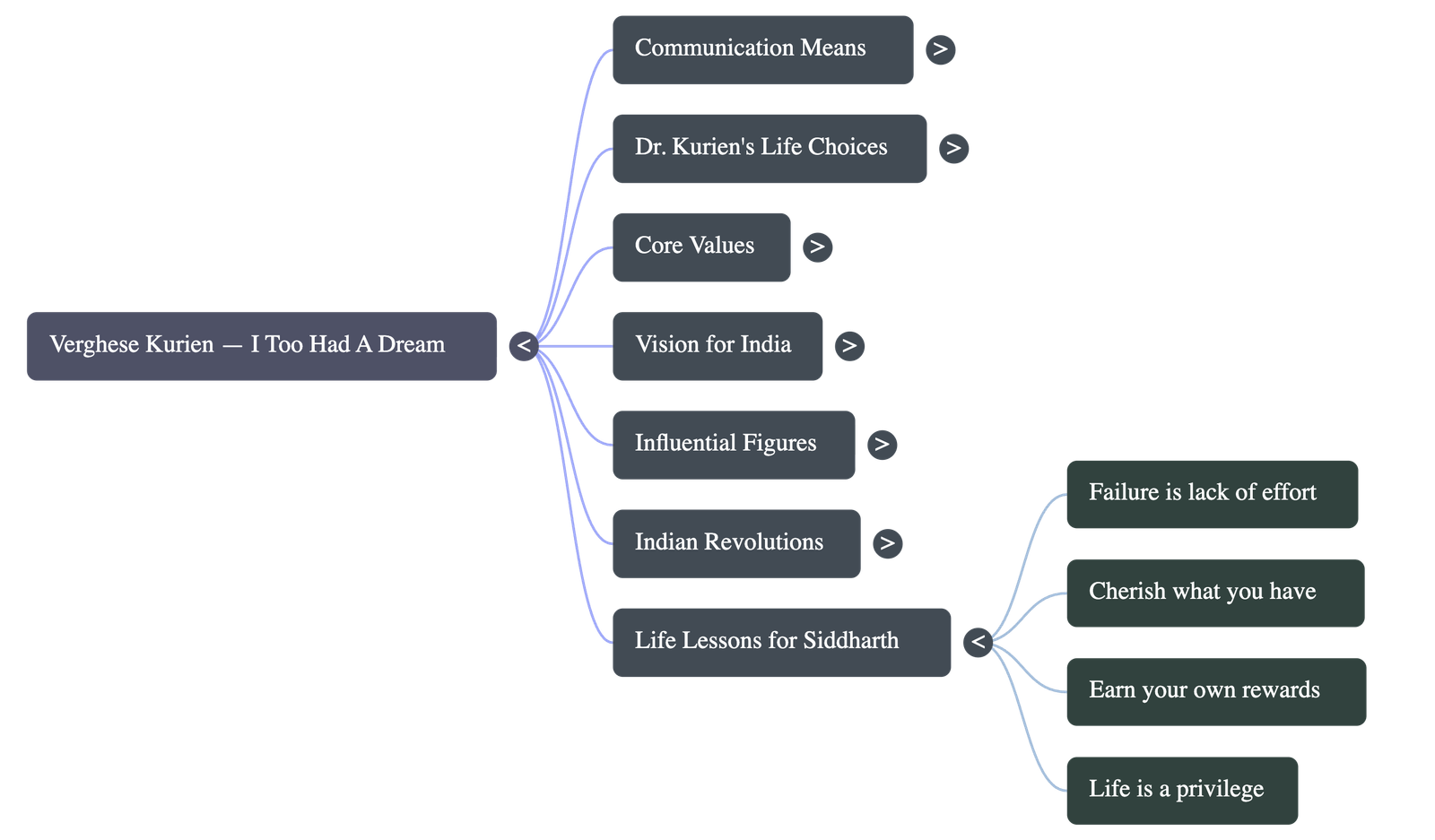
- Redefining Failure: Dr. Kurien teaches that failure is not simply about not succeeding. True failure is the lack of effort and the failure to contribute one's talents toward the common good.
- True Happiness: He warns against comparing oneself to others, noting that people usually only display "images of perfection." Happiness is rarely correlated with outward circumstances; it comes from cherishing what one has.
- Earning Your Own Rewards: Recalling the moment he received the Padma Vibhushan in 1999, he advises his grandson that while he can share in the pride, true satisfaction will only come when Siddharth earns his own rewards through tireless work for humanity.
Textbook Exercises & Educational Explorations
- Reading Comprehension & Critical Thinking: Activities to distinguish between provable facts and subjective opinions, alongside interpreting phrases and making inferences from the text.
- Grammar & Punctuation:
- Understanding the difference between the en dash (–) for ranges/spans and the em dash (—) for added emphasis or breaks in thought.
- Learning to differentiate between contractions and possessives (e.g., it's vs. its, you're vs. your, they're vs. their).
- Identifying and using prepositional phrases to specify time, place, and manner.
- Vocabulary & Speaking: Word-building games (like Antakshari with synonyms and antonyms), identifying syllable stress in words that act as both nouns and verbs (like produce or contract), and practicing the 'shuh' vs. 'zhuh' sound (e.g., pressure vs. treasure).
- Listening Activity: An inspiring segment on Evelyn Glennie, a percussionist who overcame severe hearing impairment by learning to sense music through vibrations in her body.
- General Knowledge & Real-World Skills:
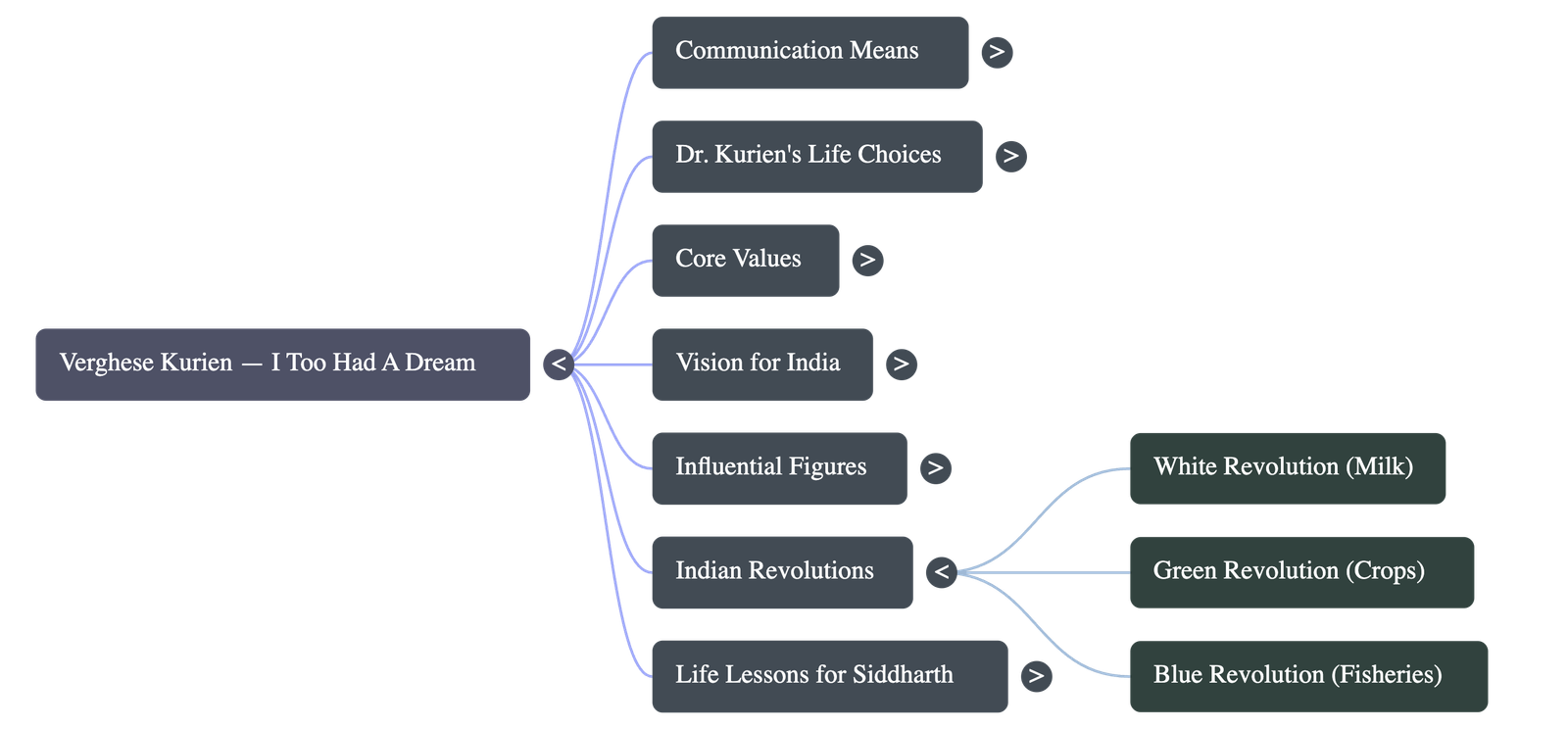
- India's Major Revolutions: Exploration of the White Revolution (Milk - Dr. Verghese Kurien), Green Revolution (Agriculture - Dr. M.S. Swaminathan), and Blue Revolution (Fisheries - Dr. Hiralal Chaudhuri).
- Financial Literacy: A reading passage emphasizing the importance of teaching children about money, budgeting, saving, and investing from an early age to ensure future well-being.
"If we are brave enough to love, strong enough to rejoice in another’s happiness and wise enough to know that there is enough to go around for all, then we would have lived our lives to the fullest."
Do checkout all questions & answers of this chapter.
Quick Navigation:
| | | |
1 / 1
Quick Navigation:
| | | |