Quick Navigation:
| | |
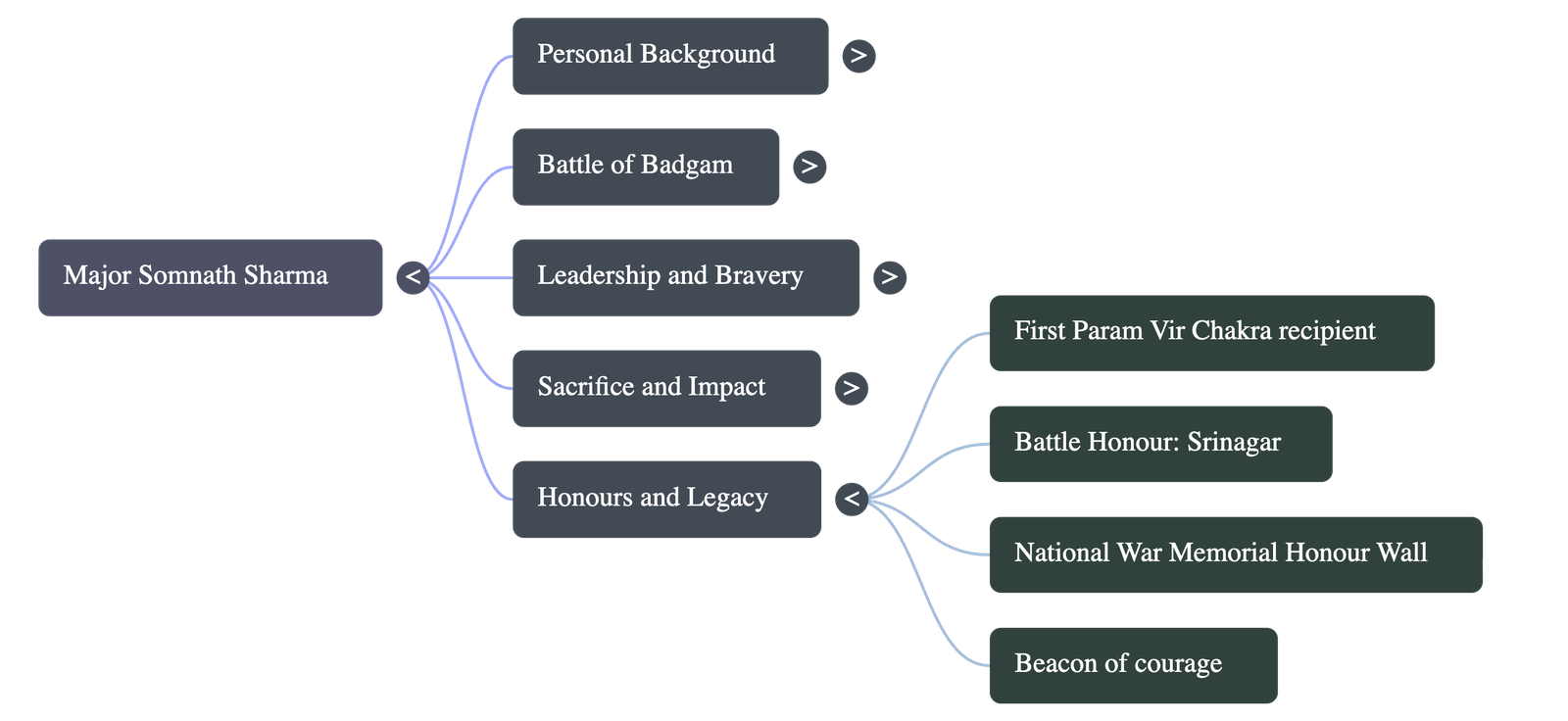
A Tale of Valour: Major Somnath Sharma and the Battle of Badgam
Background and Invasion
- • In August 1947, Pakistan initiated Operation Gulmarg to illegally annex the Kashmir Valley, violating an existing agreement with the Maharaja of Jammu and Kashmir.
- • Around 1,000 well-trained invaders breached the region with the goal of overthrowing the government and capturing strategic locations, including the Srinagar airport.
- • After the Princely State became part of India on October 26, 1947, the Government of India immediately airlifted troops to defend the borders.
Major Somnath Sharma's Deployment
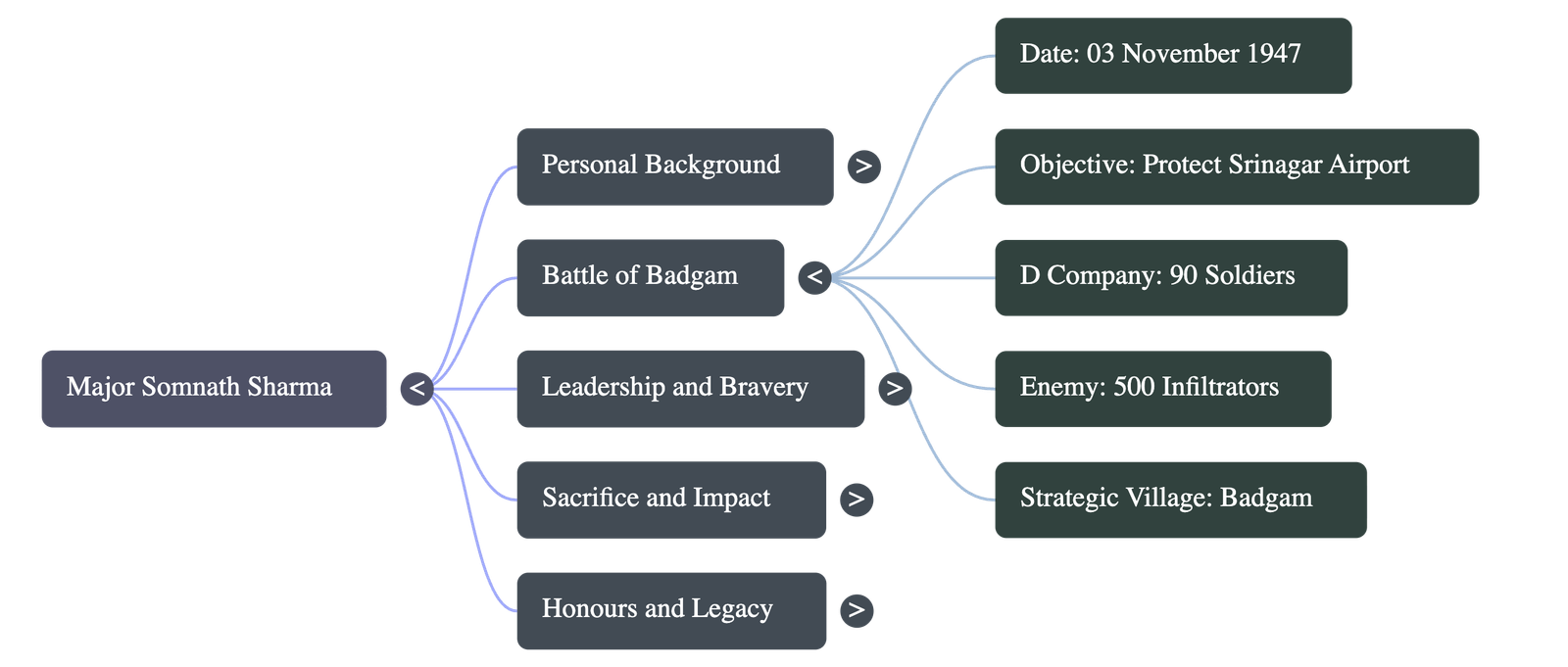
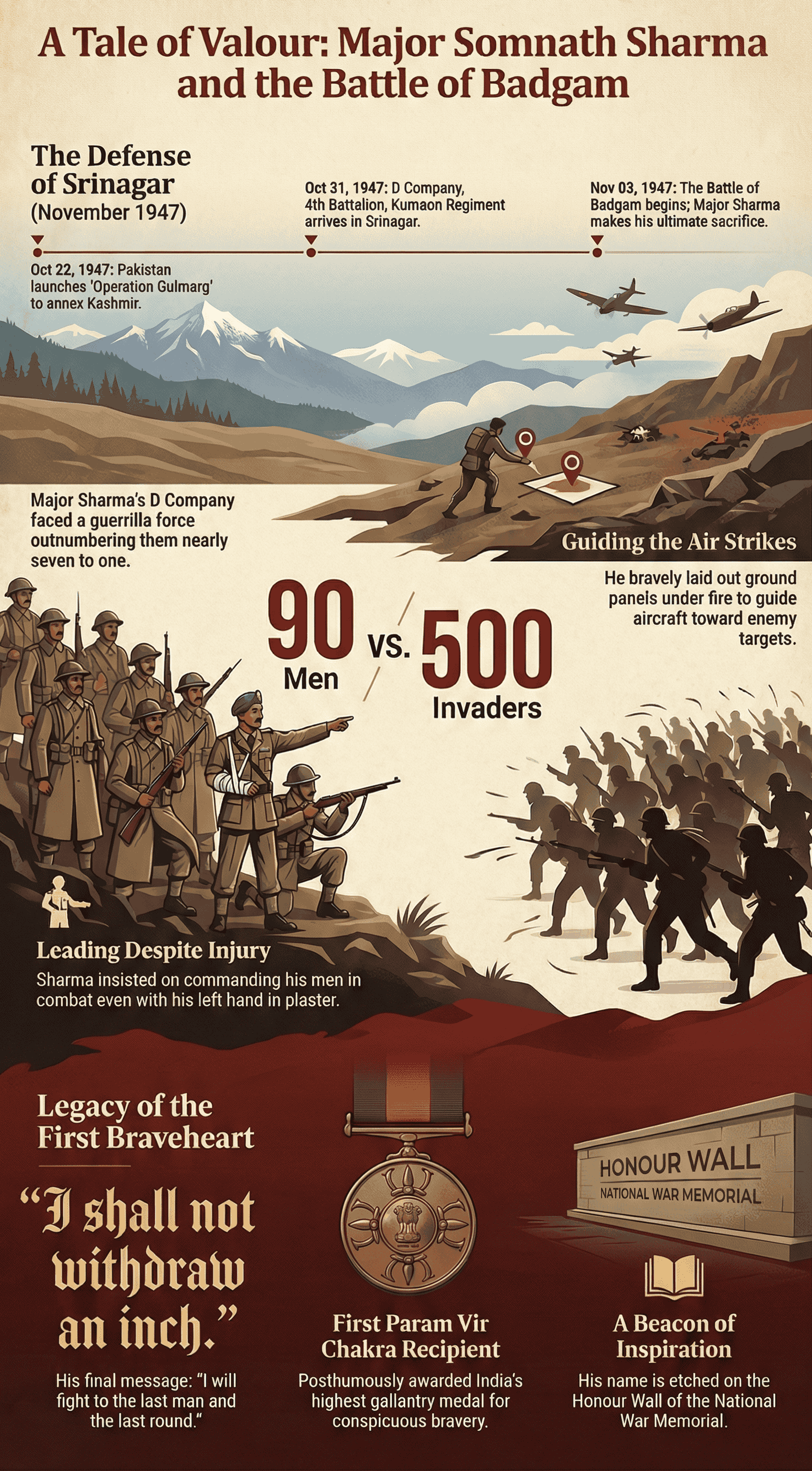
- • On October 31, 1947, the D Company of the 4th Battalion of the Kumaon Regiment, commanded by Major Somnath Sharma, was flown into Srinagar.
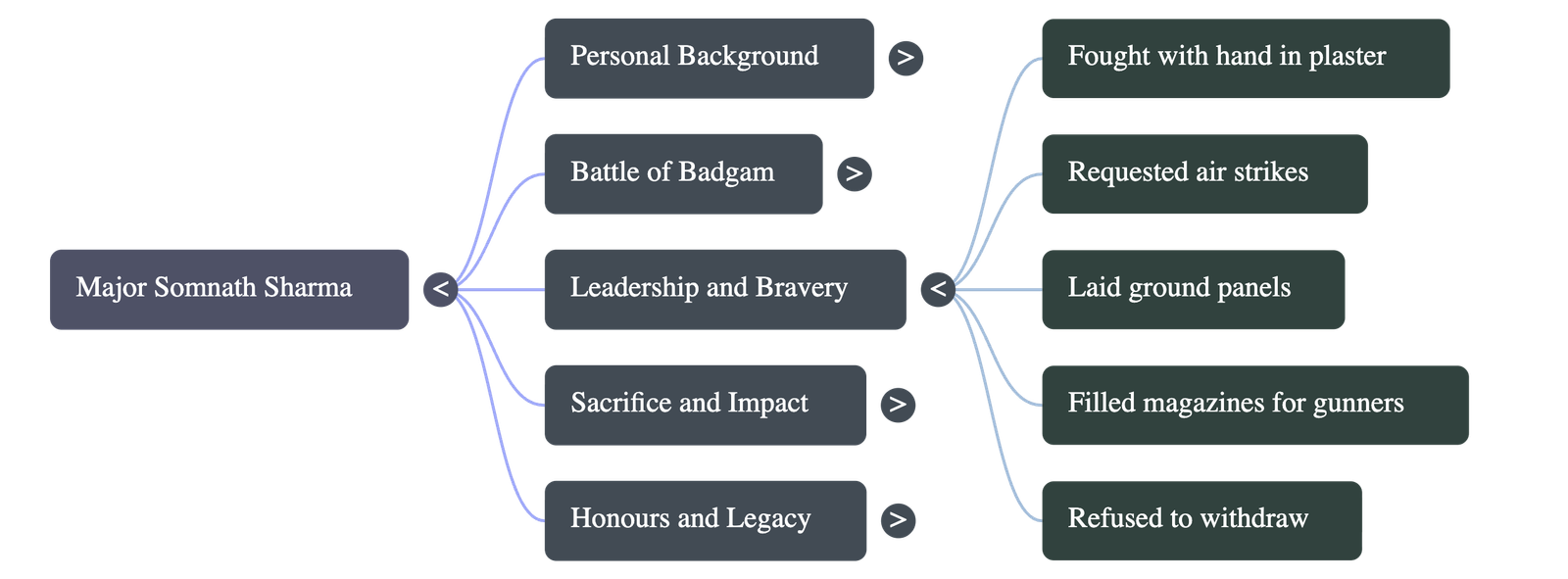
- • Demonstrating immense dedication, Major Sharma insisted on leading his men into combat despite having his left hand in a plaster cast due to a prior injury.
The Battle of Badgam (November 3, 1947)
- • Major Sharma’s unit of 90 soldiers was ordered to patrol Badgam, a critical village located just 5 kilometers from the Srinagar airfield.
- • The small Indian force was suddenly ambushed by approximately 500 tribal guerrilla invaders directed by the Pakistani army.
- • Realizing the enemy's true target was the Srinagar airfield, Major Sharma bravely guided Indian airstrikes by laying out ground panels in full view of the enemy.
- • Vastly outnumbered by a ratio of seven to one, Major Sharma moved fearlessly across the battlefield, directing fire and manually filling magazines for his gunners with his one good hand.
Supreme Sacrifice and Victory
- • Running drastically low on ammunition, Major Sharma was advised by headquarters to pull back. He heroically replied: "The enemy is only 50 yards from us. We are heavily outnumbered. We are under devastating fire. I shall not withdraw an inch but will fight to the last man and the last round."
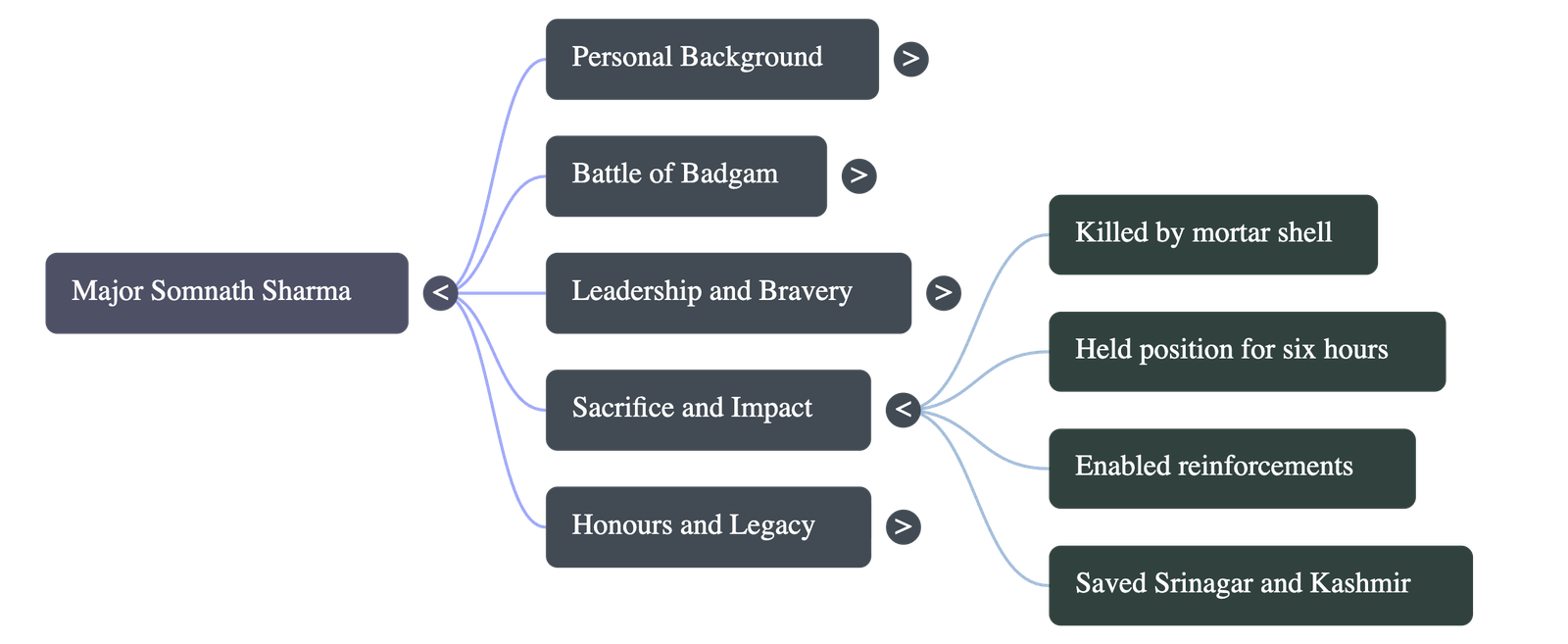
- • Moments later, a mortar shell hit his trench while he was helping load a machine gun, killing him instantly at the age of 24.
- • Inspired by their leader's ultimate sacrifice, the remaining soldiers held their ground for over six more hours, inflicting over 300 casualties on the enemy and successfully delaying them until reinforcements arrived to save Srinagar.
Early Life and Legacy
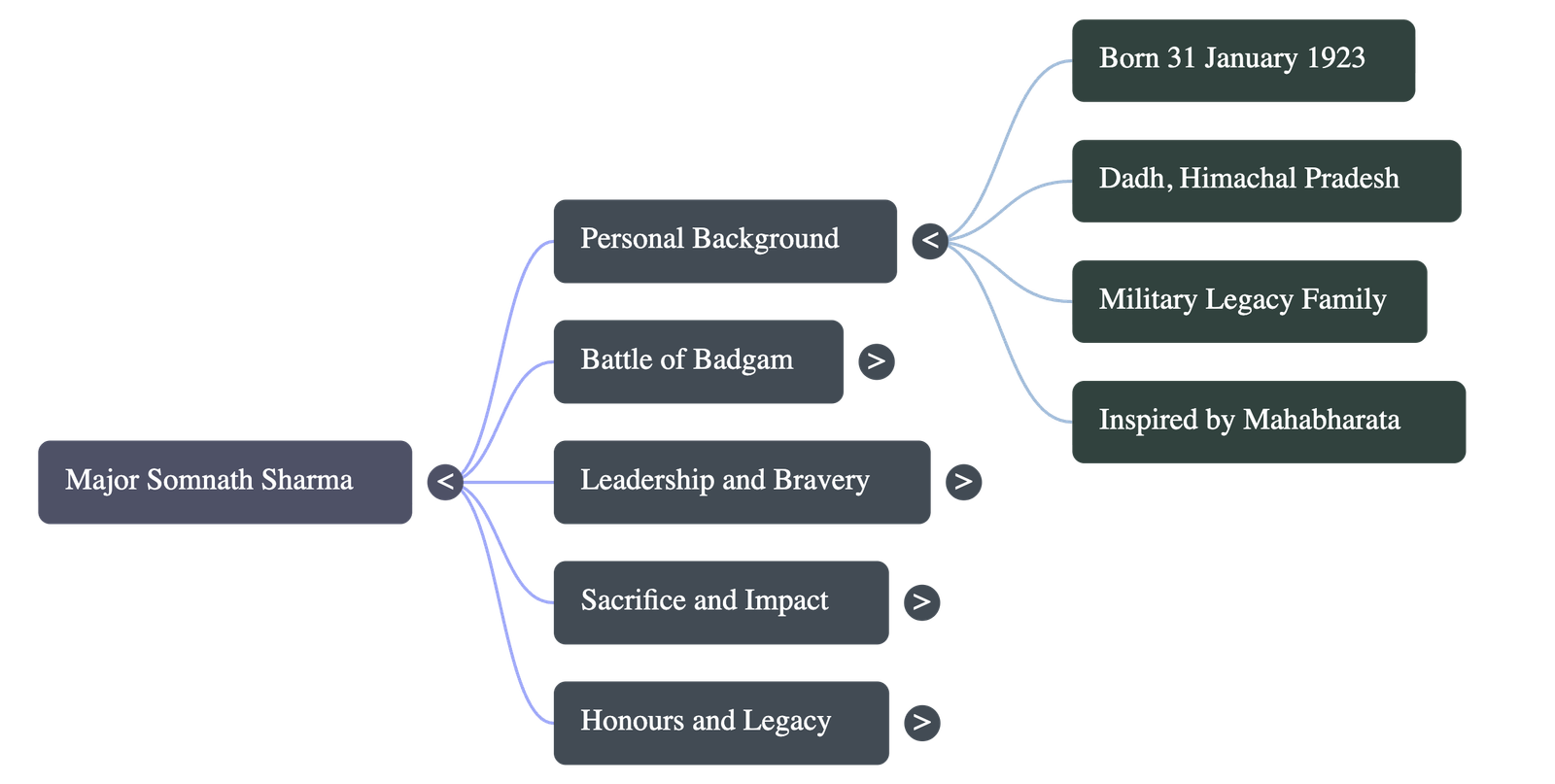
- • Born on January 31, 1923, in Kangra, Himachal Pradesh, into a family with a rich military legacy (his father was Major General Amar Nath Sharma).
- • He drew deep inspiration from the valorous tales of the Mahabharata during his childhood.
- • Before the 1947 war, he had already proven his bravery during World War II in the Arakan Campaign in Burma.
- • For his unmatched courage and leadership, Major Somnath Sharma became the first recipient of the Param Vir Chakra (PVC), awarded posthumously. His name is permanently etched on the Honour Wall at the National War Memorial.
Other Notable Figures and Awards Mentioned
- • Captain Vikram Batra: The chapter also honors Captain Batra, known as the "Shershah of Kargil." He led the successful capture of Point 5140 and Point 4875 during the 1999 Kargil War with his famous battle cry "Yeh Dil Mange More," and was also awarded the PVC posthumously.
- • Birsa Munda: Briefly highlights this revered tribal freedom fighter from Jharkhand, affectionately known as "Dharti Aaba," who bravely fought against British colonial rule.
- • Gallantry Awards: Summarizes India's highest military honors given for extraordinary courage: the Param Vir Chakra, Maha Vir Chakra, and Vir Chakra.
Do checkout all questions & answers of this chapter.
Quick Navigation:
| | |