Quick Navigation:
| | | |
Bibha Chowdhuri: The Beam of Light That Lit the Path for Women in Indian Science
A detailed summary of the life, struggles, and monumental achievements of India's first woman physicist.
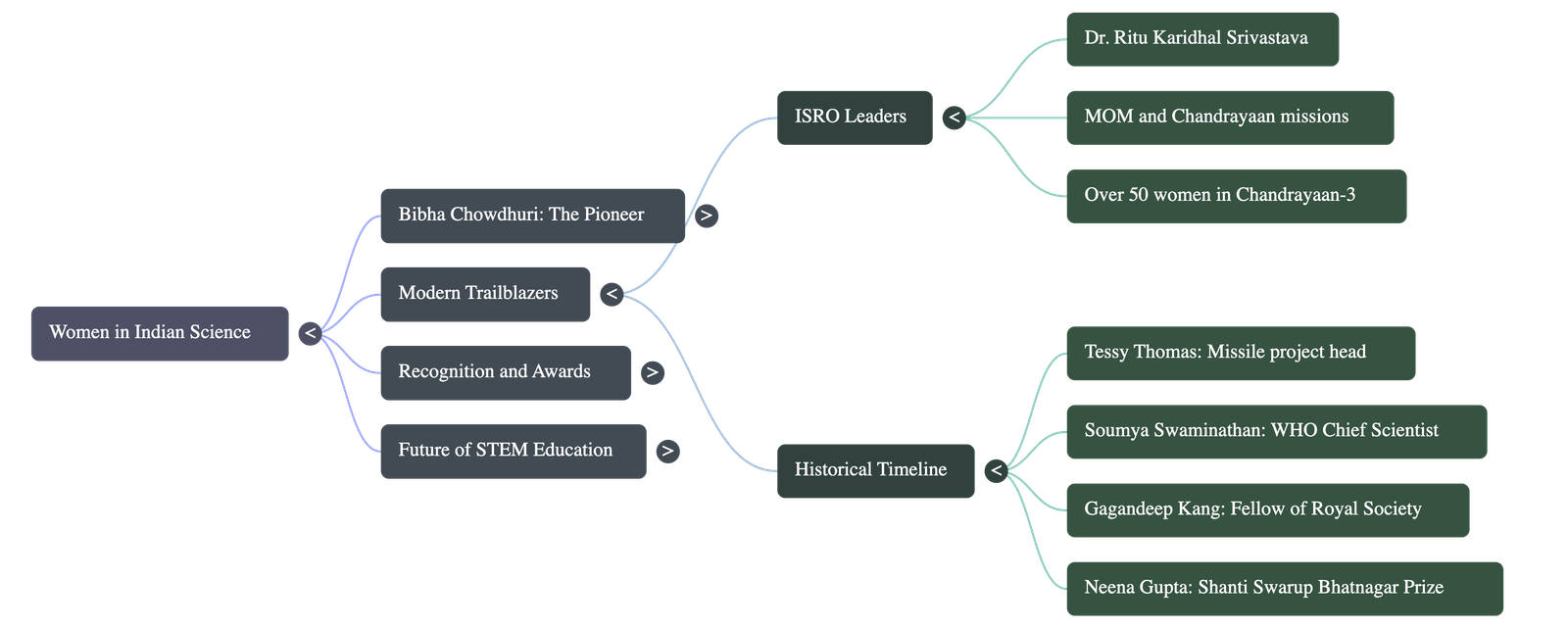
- Setting the Foundation for Women in STEM While modern women scientists are celebrated for leading groundbreaking missions like ISRO's Mars Orbiter and Chandrayaan-3, the foundation for these achievements was laid by early pioneers like Bibha Chowdhuri, who carved out a space for women in the male-dominated field of physics.
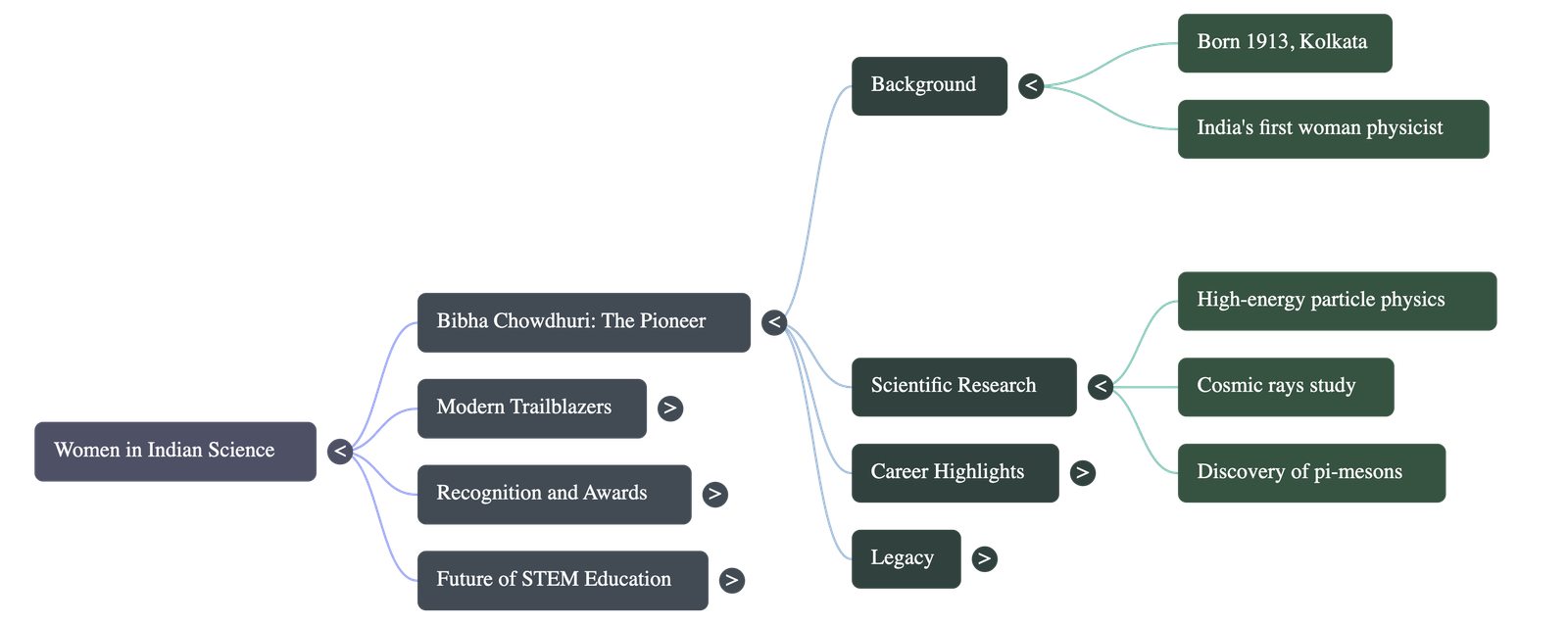
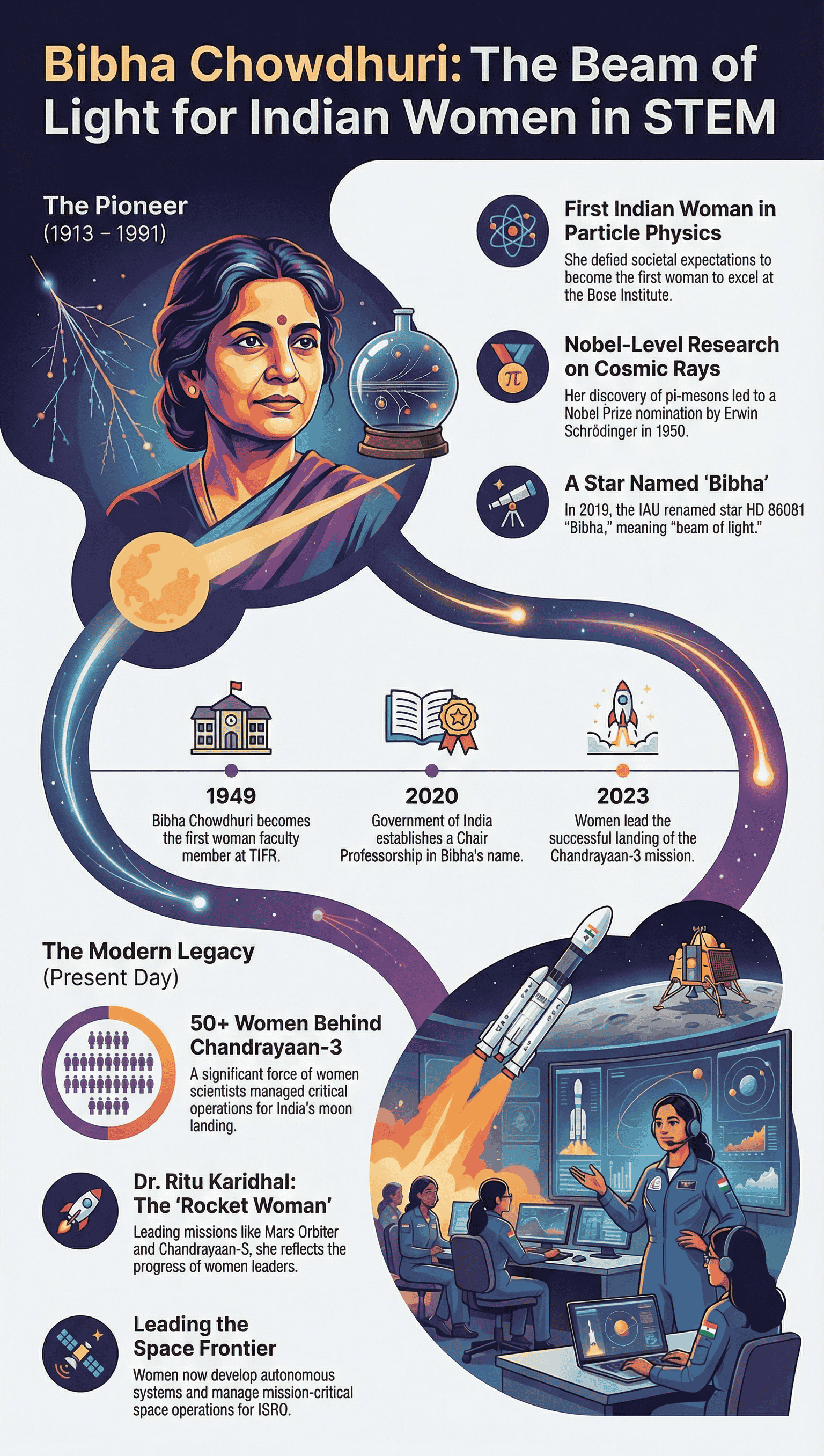
- Early Life and Defying Societal Odds Born in Kolkata in 1913, during an era when Indian women struggled for equitable access to education, Bibha Chowdhuri defied traditional societal expectations to pursue science. She fought against the walls of exclusion to become the first Indian woman to excel in high-energy particle physics at the Bose Institute.
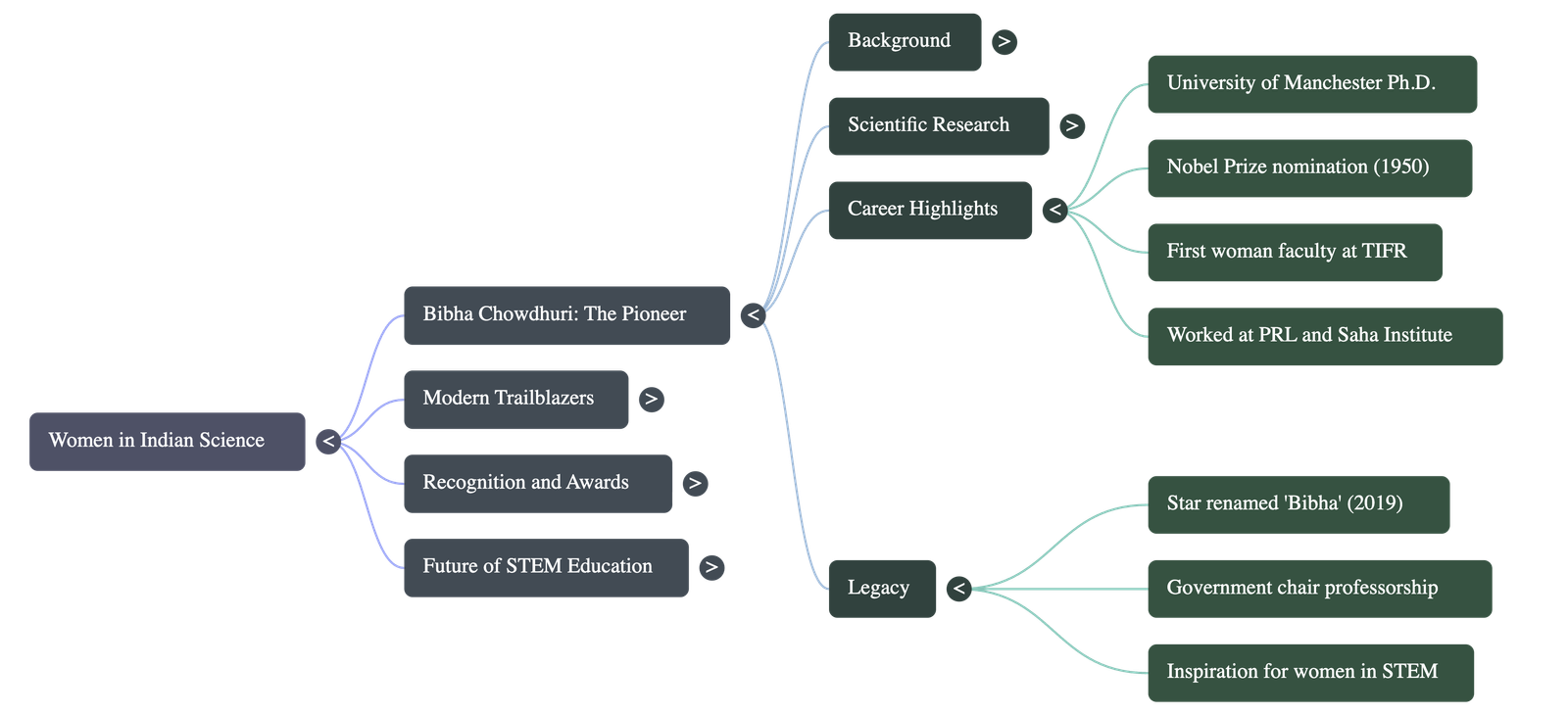
- Groundbreaking Academic Journey in Manchester In 1945, she joined the University of Manchester to research cosmic rays under the mentorship of Nobel Laureate Patrick M.S. Blackett. Her Ph.D. work gained local media recognition, earning her the title of "India’s New Woman Scientist" by newspapers astonished by her capabilities.
- Major Discoveries and Global Recognition Her most notable scientific contribution was the discovery of pi-mesons, a subatomic particle. Her brilliant work even led to a Nobel Prize nomination in 1950 by the famous physicist Erwin Schrödinger, reflecting her extraordinary talent despite remaining in the shadows of male colleagues.
- Pioneering Career in India Returning to India in 1949, she made history as the first woman faculty member at the Tata Institute of Fundamental Research (TIFR), personally selected by Homi J. Bhabha. She spent decades conducting crucial research at the Physical Research Laboratory under Vikram Sarabhai, the Saha Institute of Nuclear Physics, and the Kolar Gold Mines.
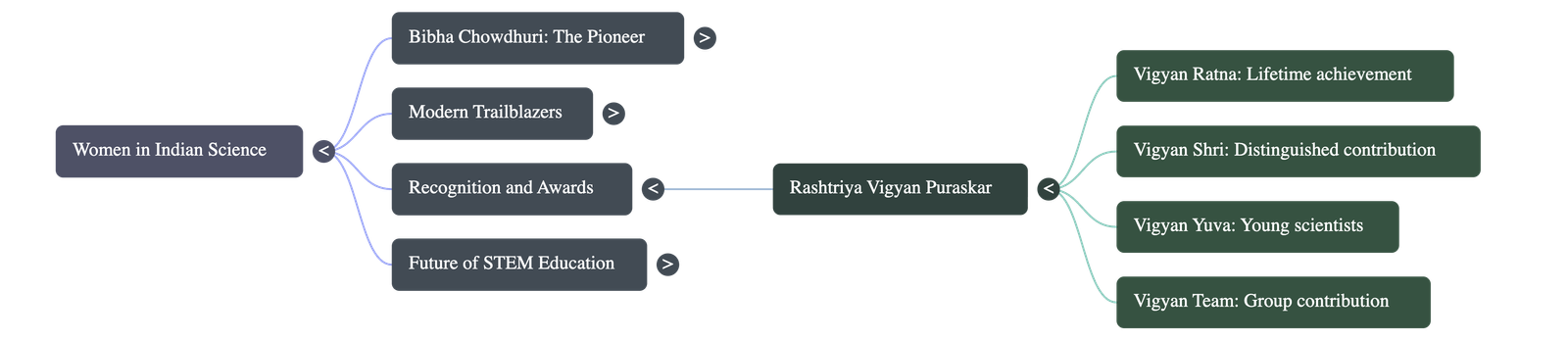
- A Life of Quiet Determination Despite her towering contributions to science, Chowdhuri never received any formal awards during her lifetime and worked tirelessly on the periphery of Indian scientific acclaim. She passed away in 1991, with her name and story largely forgotten by the public.
- Posthumous Honors and Legacy In a fitting tribute to her legacy, the International Astronomical Union (IAU) renamed a star (HD 86081) in the constellation Leo as "Bibha" (meaning "beam of light") in 2019. In 2020, the Government of India declared a chair professorship in her name.
- Inspiring the Future of Indian Science Her pioneering spirit ignited a path for today's female scientists. Leaders like Dr. Ritu Karidhal Srivastava (the "Rocket Woman of India") and the 50+ women who managed critical operations for the Chandrayaan-3 lunar mission stand firmly on the shoulders of Bibha Chowdhuri's early struggles and triumphs.
Do checkout all questions & answers of this chapter.
Quick Navigation:
| | | |
1 / 1
Quick Navigation:
| | | |