Quick Navigation:
| | | |
The Case of the Fifth Word
This chapter presents an engaging mystery story about a boy detective who helps his father crack a complicated case. Following the story, the chapter provides comprehensive exercises covering reading comprehension, vocabulary, grammar, formal writing, and speaking skills.
The Mystery Story Summary
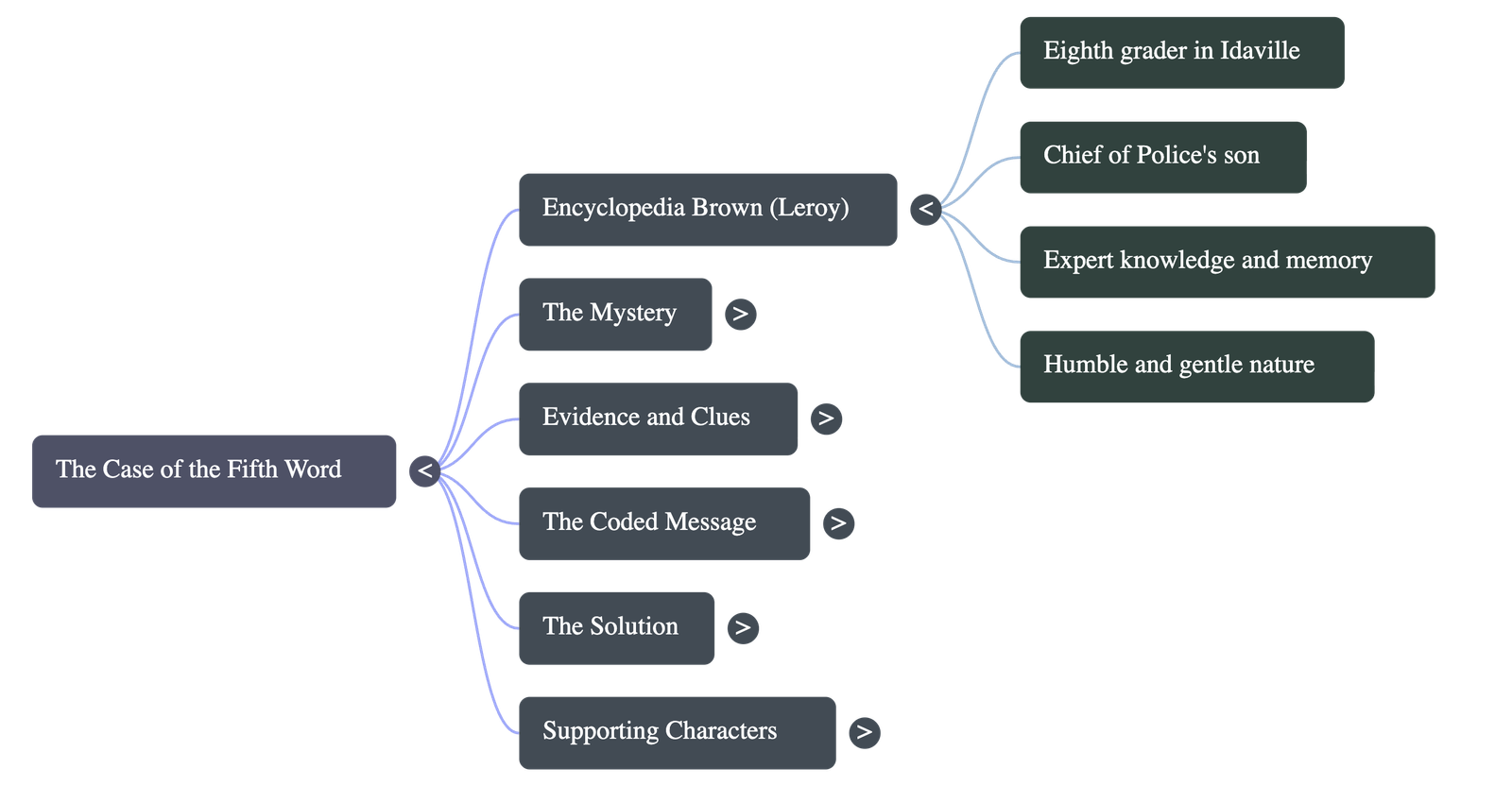
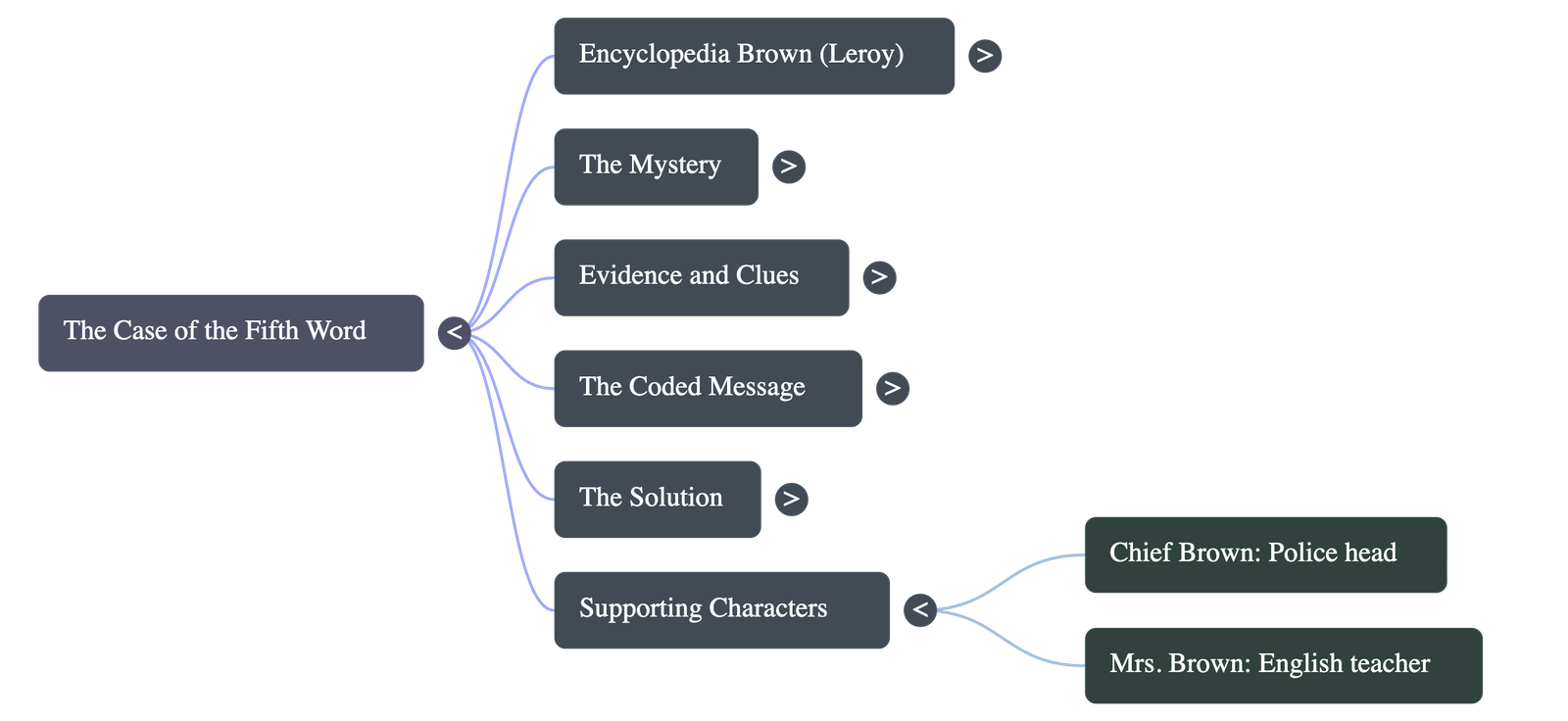
- • The Boy Detective: The protagonist is an eighth-grader named Leroy, widely known by his nickname "Encyclopedia Brown" due to his immense knowledge and photographic memory. He frequently helps his father, the Chief of Police in Idaville, solve difficult cases from their dining table.
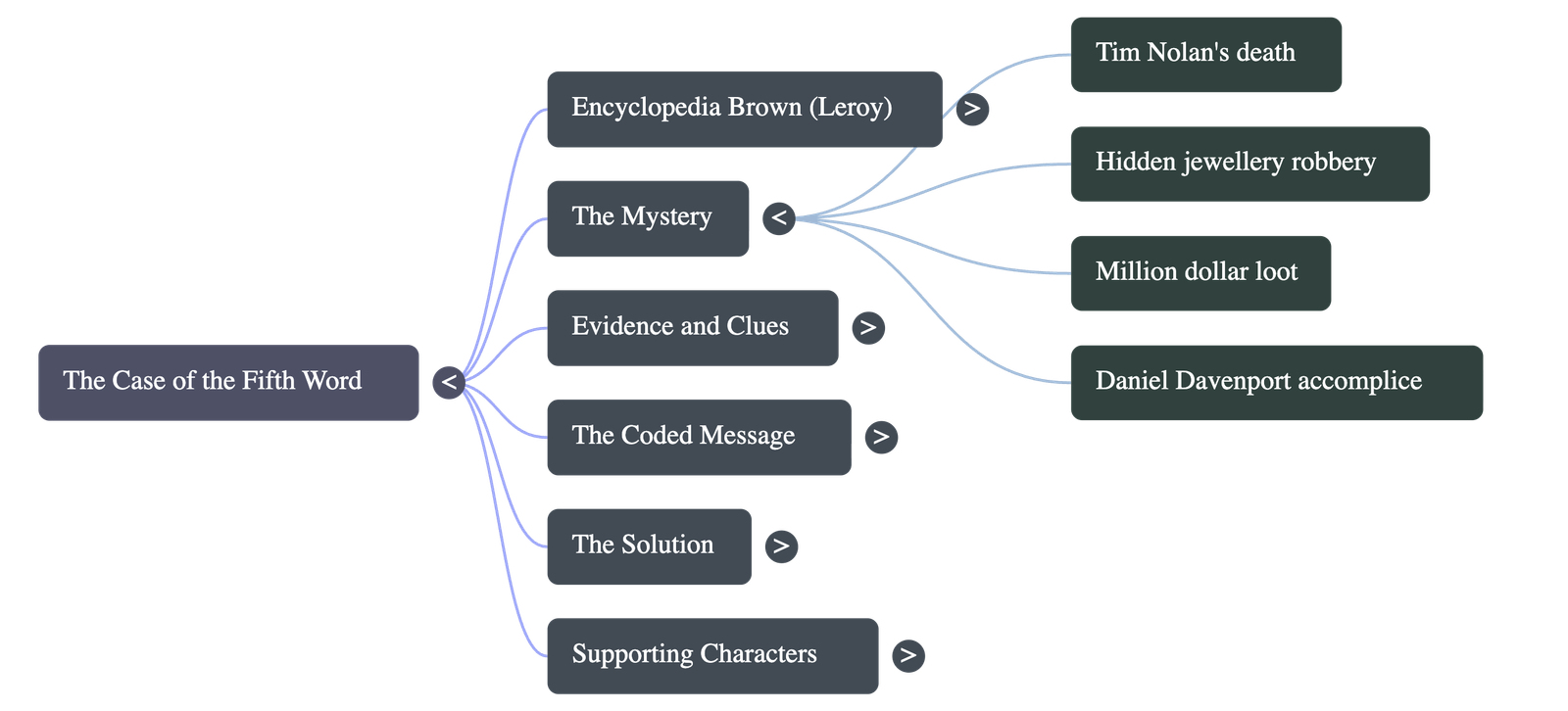
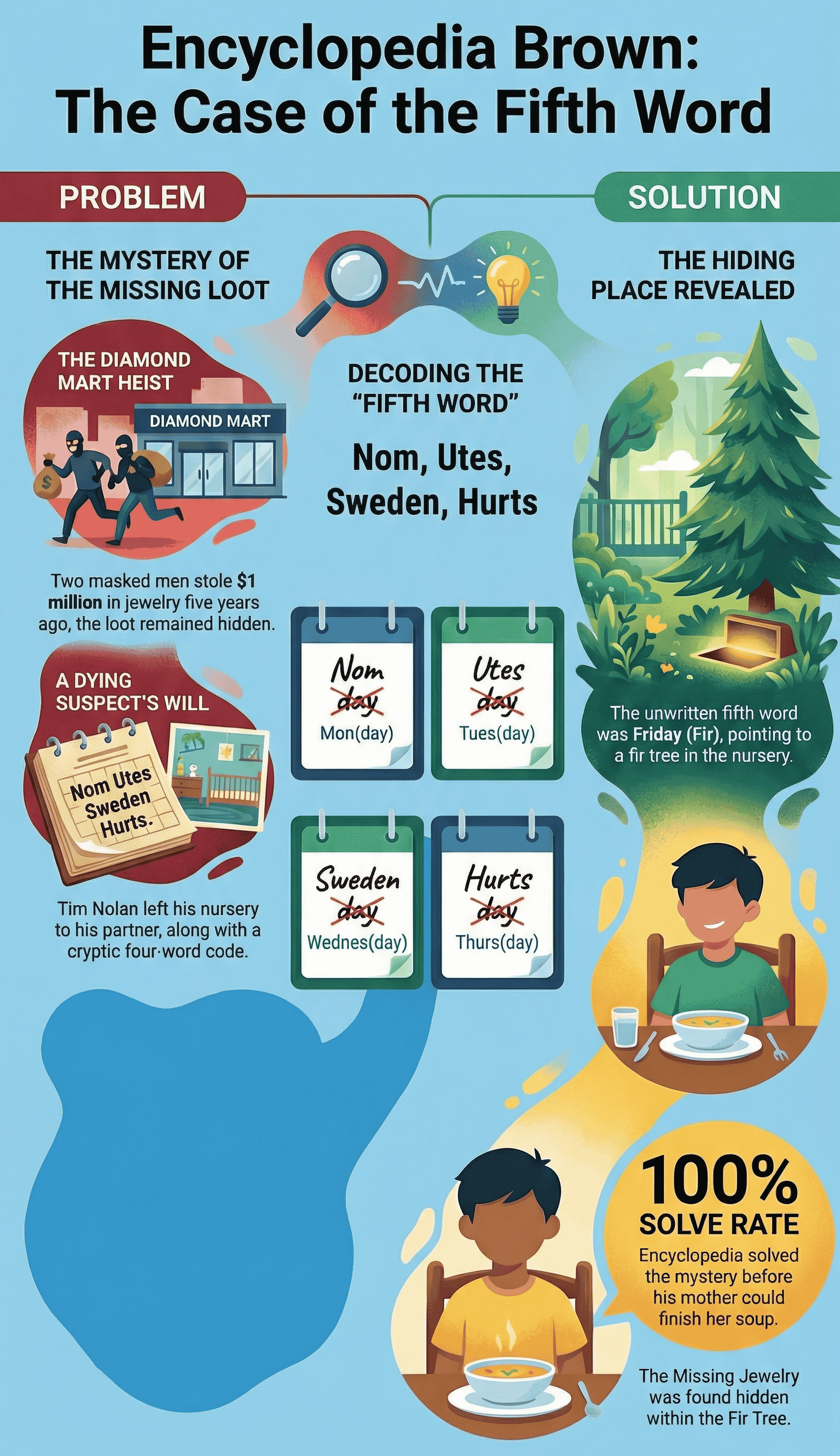
- • The Old Crime: Chief Brown shares the details of an unsolved million-dollar jewellery robbery at the Diamond Mart. The prime suspects were Tim Nolan and Daniel Davenport, two men who became friends in prison.
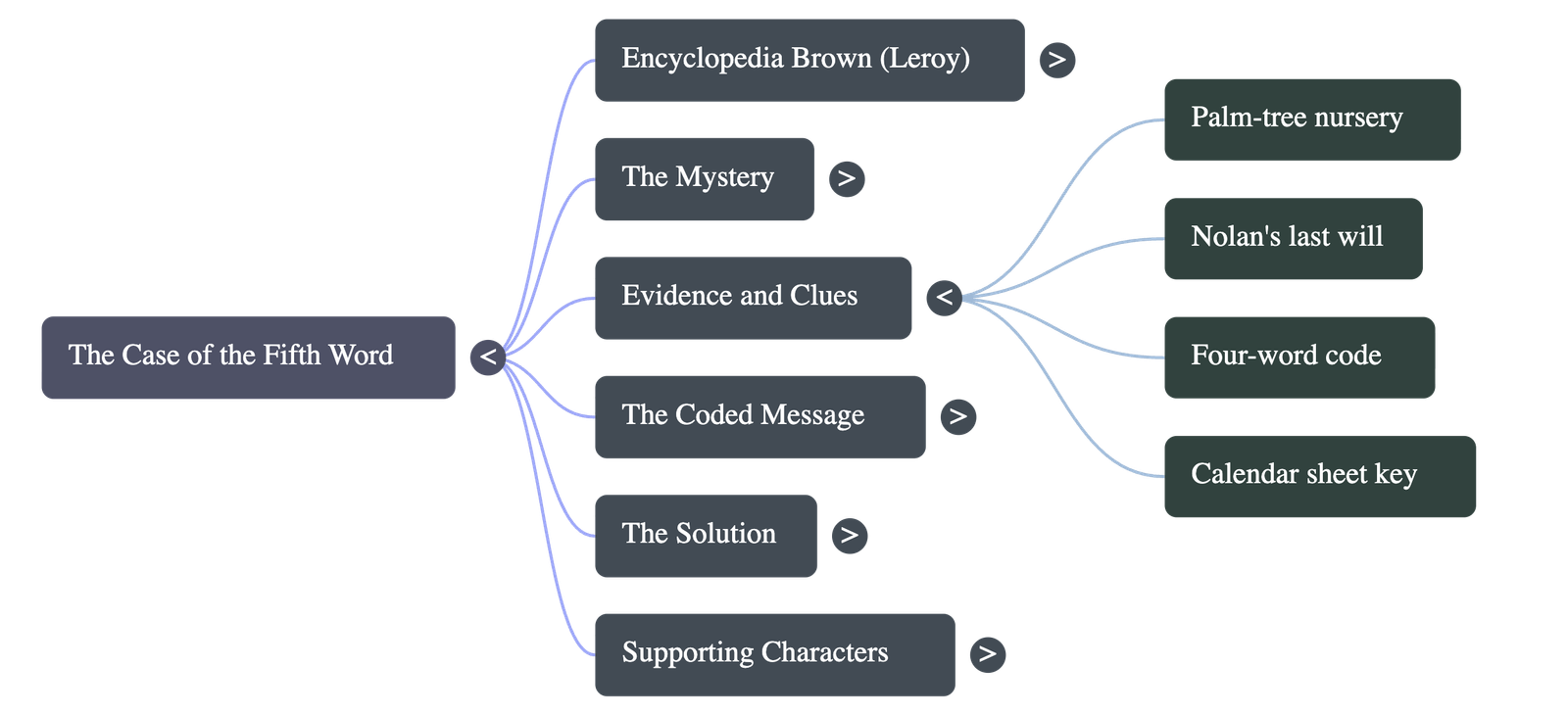
- • A Sudden Death: After prison, Nolan opened a struggling palm-tree nursery. He recently suffered a fatal stroke. With his dying strength, he left a will bequeathing everything to Davenport, who had disappeared right after the robbery.
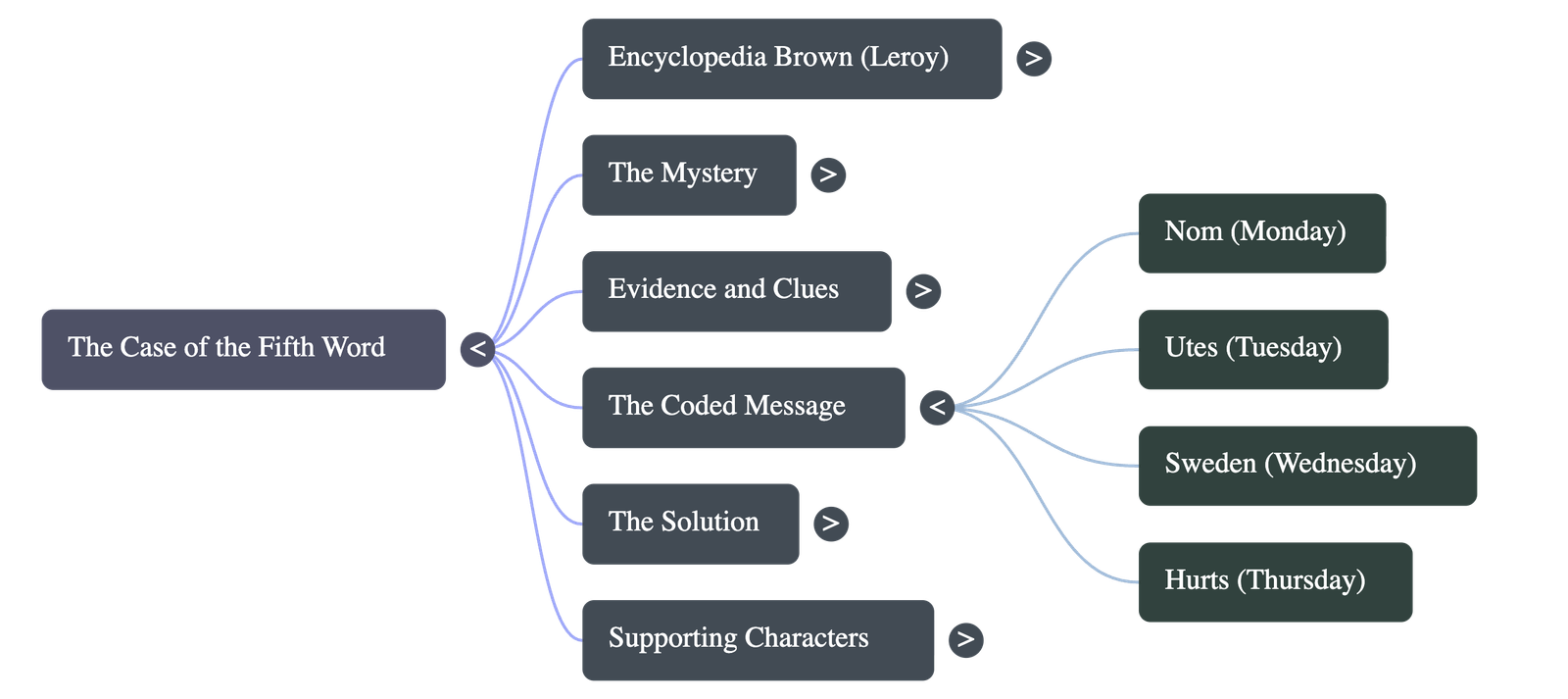
- • The Cryptic Clue: Attached to Nolan's will was a calendar sheet with Davenport's address and a bizarre four-word message: "Nom Utes Sweden Hurts." The police searched Nolan's house but found nothing.
- • Cracking the Code: While Mrs. Brown tries to figure out the literal meanings of the words, Encyclopedia deduces that it is a code meant to tell Davenport where the stolen loot is hidden. The words represent the days of the week, with the letters "d-a-y" removed (Mon = Nom, Tues = Utes, Wednes = Sweden, Thurs = Hurts).
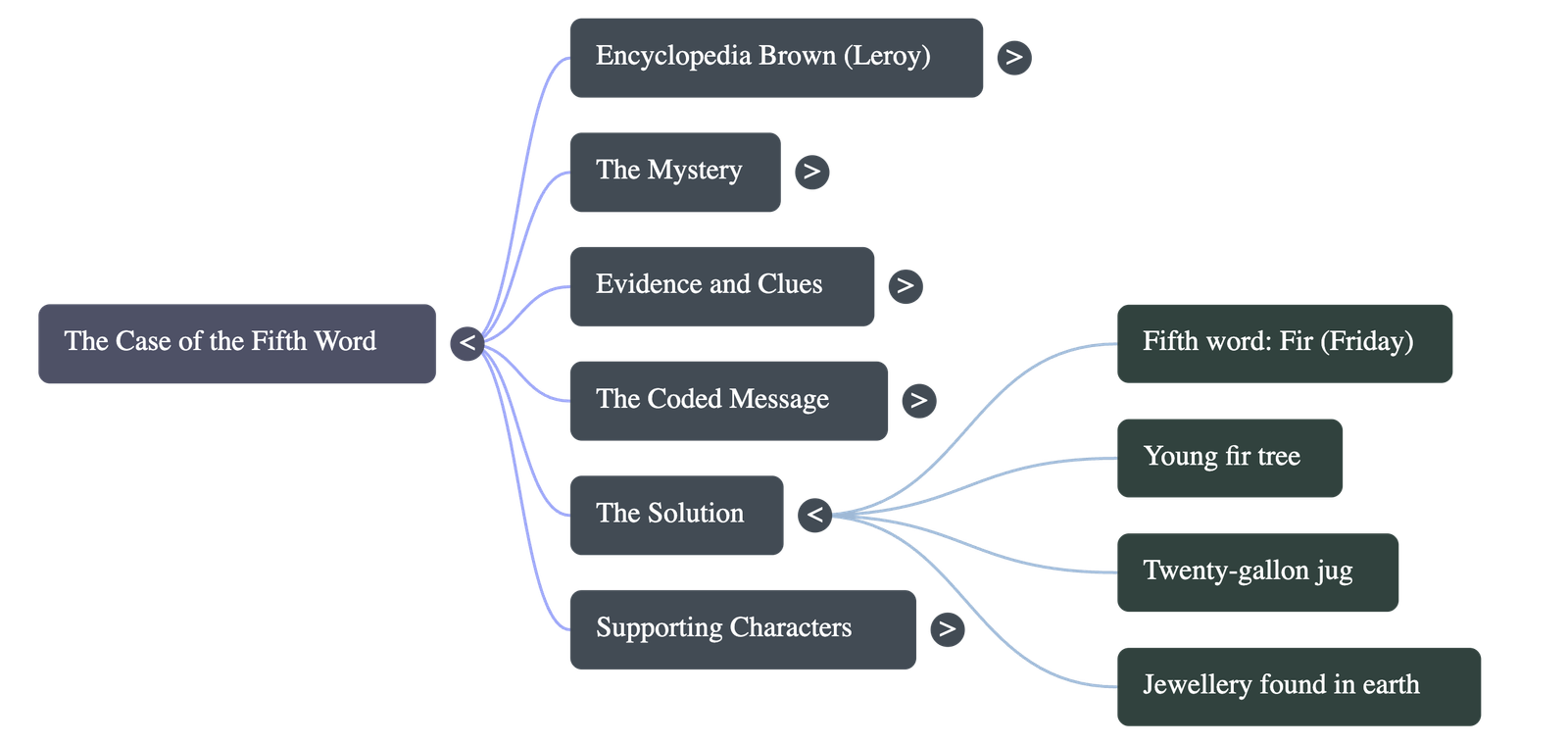
- • The Hidden Loot: Encyclopedia points out that the sequence is missing the fifth word—Friday. By dropping "d-a-y" from Friday, the remaining letters spell "Fir." He correctly concludes that the stolen jewellery is buried beneath a young fir tree in Nolan's nursery.
Comprehension & Text Analysis
- • Fact vs. Opinion: Students learn to differentiate between objective facts (e.g., "Leroy read more books than anyone") and subjective opinions (e.g., "Everyone thought Chief Brown was the smartest").
- • Character Sketch: Identifying traits of Leroy—such as being knowledgeable, a keen listener, humble, and clever—using direct evidence from the text.
- • Extract-Based Questions: Deep-dive activities testing students on the psychological motivations of characters (e.g., why Leroy hides his intelligence to blend in with normal kids) and story progression.
Vocabulary & Word Play
- • Phrasal Verbs: Exercises on matching and utilizing context-appropriate phrasal verbs such as put on, cooled down, turned up, figure out, and got away with.
- • Word Pairs (Homophones): Practice filling in blanks using words that sound alike but have different meanings and spellings (e.g., week/weak, dying/dyeing, peace/piece).
- • Spoonerisms: A fun linguistic exercise where students correct phrases with accidentally swapped beginning sounds (e.g., fixing "knowing sits" to "snowing kits").
Grammar: Reported Speech
- • Direct to Indirect Questions: Step-by-step rules for transforming interrogative sentences (both Wh- questions and Yes/No questions) into reported speech.
- • Structural Shifts: Clear guidelines on altering sentence structures: replacing "said" with "asked" or "inquired," shifting tenses backwards (e.g., Present to Past), changing pronouns, and updating adverbs of time and place (e.g., tomorrow becomes the following day).
- • Practical Exercises: Rewriting standalone sentences and continuous dialogues into proper indirect speech.
Writing Skills: Formal Reports
- • Structure of a Report: Instructs students on writing factual, chronological reports for events that have already occurred. Key elements include the Title, Byline, and answering the core questions: What, Who, When, and Where.
- • Model Example: Provides a well-structured sample report about an "Inter-school Football Tournament," highlighting the use of passive voice and sequence markers (e.g., subsequently, finally).
- • Writing Prompt: Students are tasked with applying these structural rules to draft their own report regarding an "Inter-school Art Exhibition."
Exploration & Communication Activities
- • Group Discussions: Instructions on holding a formal group discussion (Topic: The Interesting Aspects of a Mystery Story), including assigning a moderator and utilizing polite phrases for turn-taking, agreement, and disagreement.
- • Puzzles & Illusions: Engaging activities with optical illusions and a language-based guessing game using clever hints.
- • Reference Tools: Prompts students to research the difference between a dictionary and an encyclopedia, and to practice finding synonyms using a thesaurus.
Do checkout all questions & answers of this chapter.
Quick Navigation:
| | | |
1 / 1
Quick Navigation:
| | | |