Quick Navigation:
| | | |
A Concrete Example
Introduction & Pre-Reading
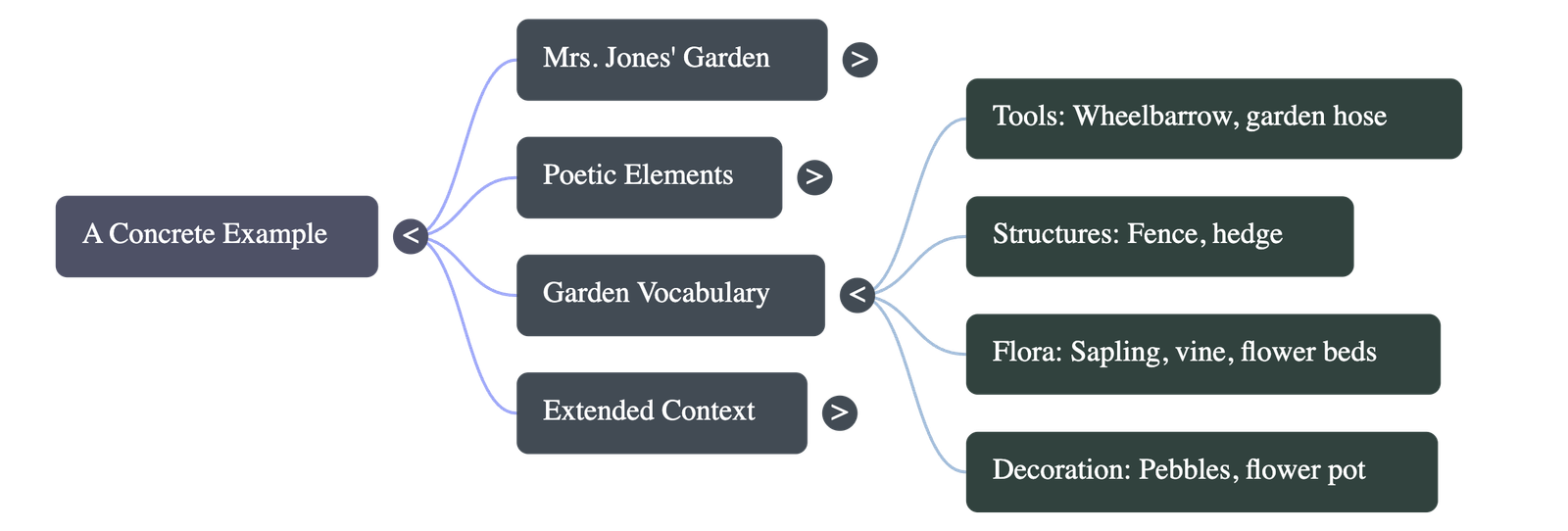
- ✿ The chapter opens with interactive activities focused on identifying common garden vocabulary, such as hoses, saplings, hedges, rockeries, wheelbarrows, and fences.
- ✿ Readers are encouraged to conceptualize their ideal gardens and reflect on the multiple meanings of the word "concrete" before reading the text.
Poem Summary: "A Concrete Example"
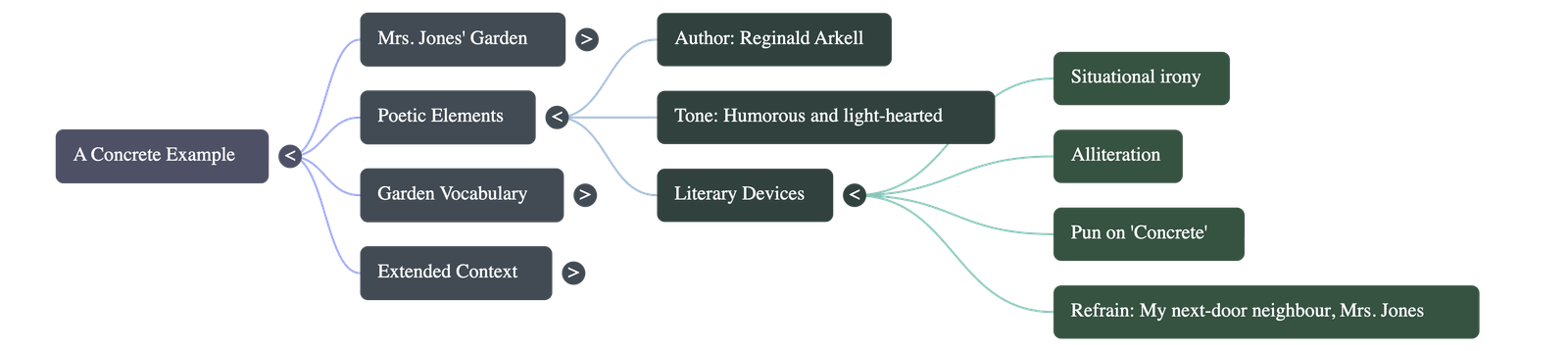
- ✿ The central text is a humorous, light-hearted poem by Reginald Arkell about the speaker's next-door neighbor, Mrs. Jones.
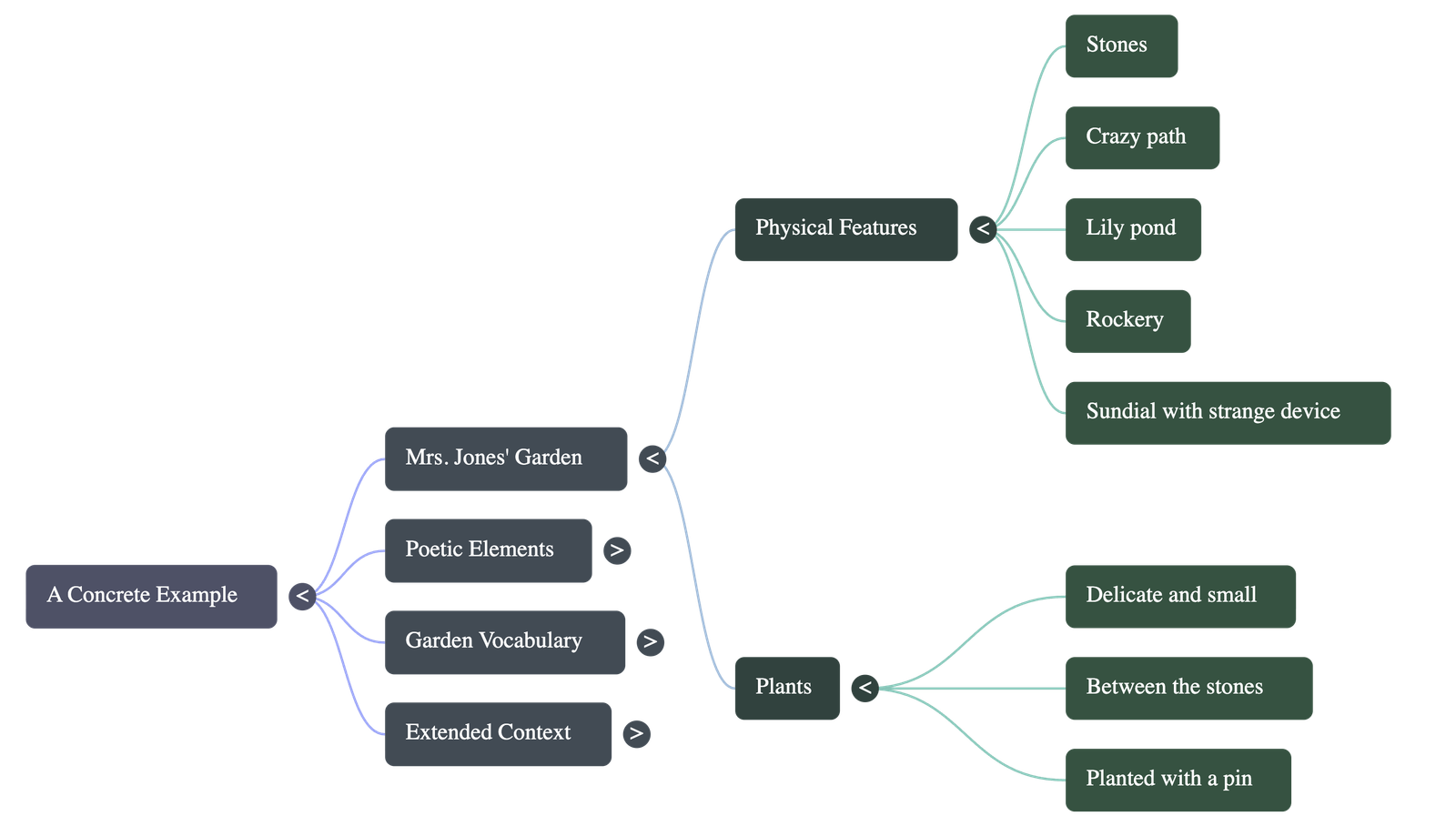
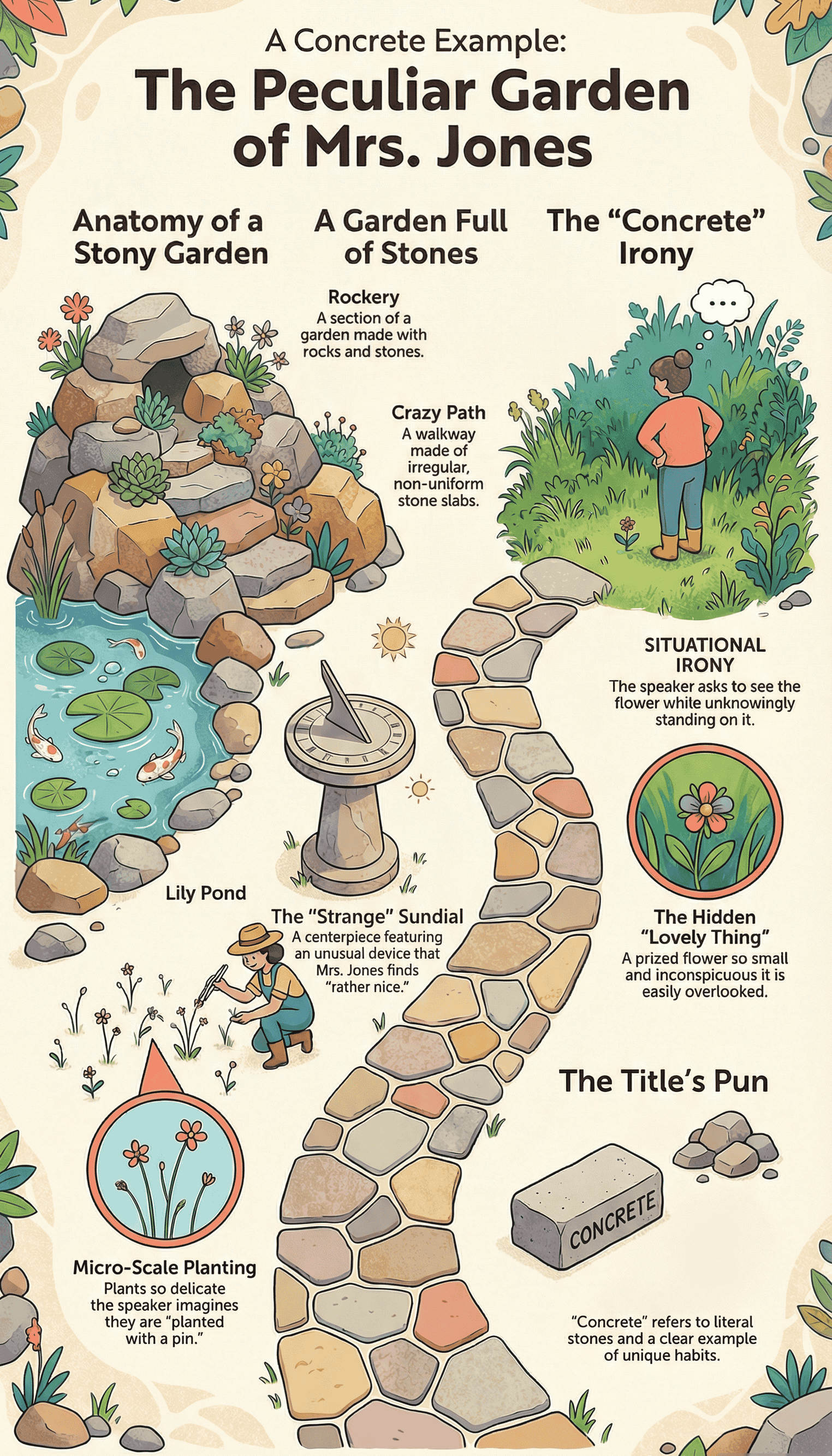
- ✿ Mrs. Jones maintains a peculiar garden filled predominantly with stones, featuring a "crazy path," a lily pond, a rockery, and a strange sundial.
- ✿ She plants extremely delicate, tiny plants between the stones, leaving the speaker bewildered as to how she manages it without using a pin.
- ✿ The poem climaxes when Mrs. Jones invites the speaker over to admire a specific flower. After a fifteen-minute conversation about it, the speaker asks where the lovely flower is, only to be told by Mrs. Jones that they are standing on it.
Literary Analysis & Devices
- ✿ Tone & Structure: The poem features a humorous and amusing tone, utilizing a consistent AABBCC rhyme scheme.
- ✿ Pun / Word Play: The title "A Concrete Example" is a pun. It refers literally to the stony, concrete elements of the garden, while metaphorically meaning a clear, specific example of the neighbor's quirky gardening style.
- ✿ Situational Irony: Irony is heavily featured, specifically when the speaker’s attempt to appreciate the garden results in them accidentally trampling the very plant Mrs. Jones is trying to showcase.
- ✿ Imagery & Repetition: The poet uses strong visual imagery to help readers visualize the peculiar garden and employs refrains to emphasize Mrs. Jones's obsession with her stony landscape.
Vocabulary & Grammar Exercises
- ✿ Synonym Replacement: Exercises guide readers to find contextual synonyms for words like "strange" (peculiar), "nice" (charming), "delicate" (fragile), and "cried" (exclaimed).
- ✿ Categorizing Items: Distinctions are made between different types of objects, requiring learners to classify things correctly into implements, tools, equipment, appliances, and gadgets.
- ✿ Word Puzzles: An activity involves creating new words by replacing the first letter of base words based on provided hints (e.g., nice → dice, mice, vice).
Communication & Writing Skills
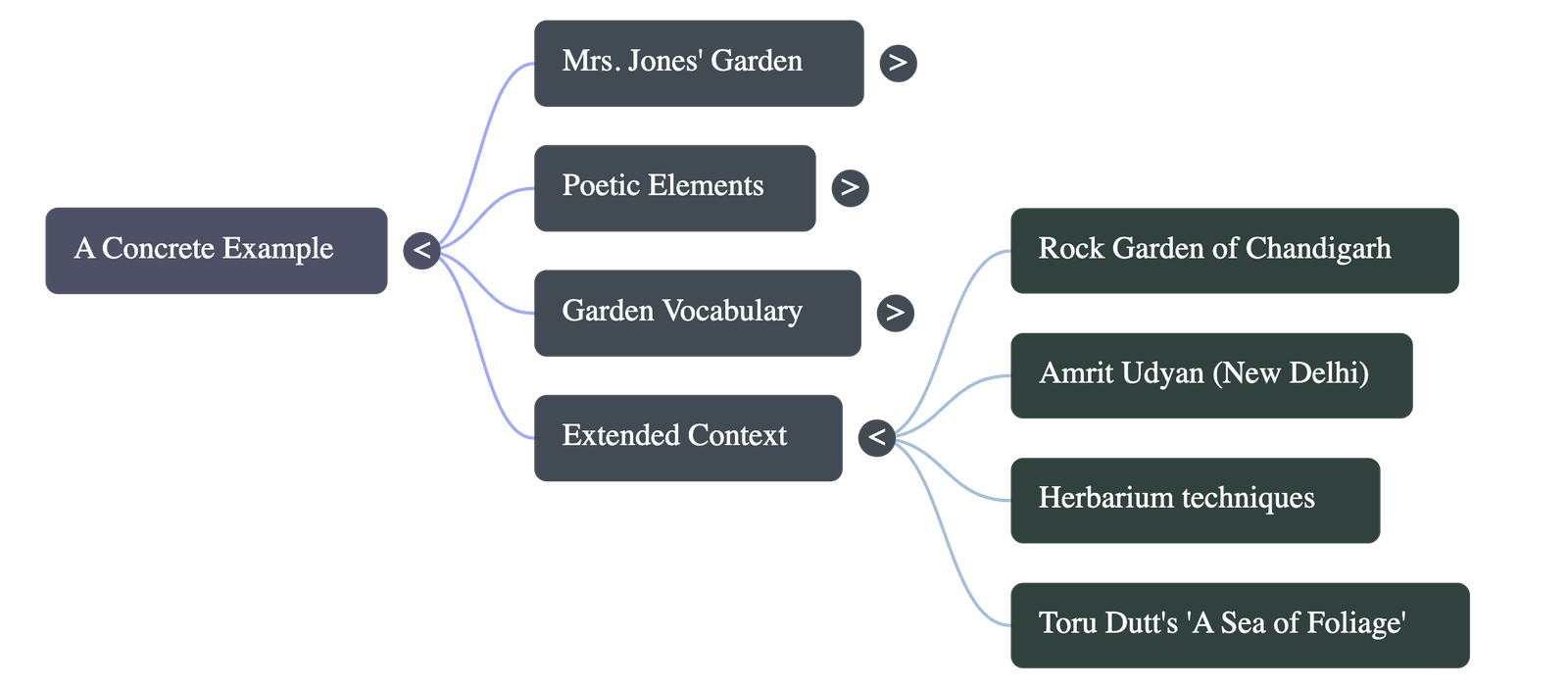
- ✿ Listening Comprehension: Students listen to a presentation about Nek Chand’s famous Rock Garden in Chandigarh, answering questions about its sculptures, layout, and transformed art pieces.
- ✿ Speaking (Apologies): The chapter teaches how to appropriately express regret in both informal settings (with friends/family) and formal settings (with authorities like teachers), providing useful conversational phrases for apologizing and responding to apologies.
- ✿ Notice Writing: A practical writing task requires drafting a formal notice in the third person for a school's Nature Club to announce the inauguration of a Herb Garden, including elements like date, time, and venue.
Further Exploration
- ✿ Amrit Udyan: Information is provided about the beautiful 15-acre gardens at Rashtrapati Bhavan in New Delhi, featuring diverse flora and specialized areas like Bal Vatika and Bonsai gardens.
- ✿ Hands-on Project: Instructions are given on how to create a herbarium or natural artwork by pressing and drying fallen leaves and flowers.
- ✿ Supplementary Reading: The chapter concludes with another nature-themed poem, "A Sea of Foliage" by Toru Dutt, which vividly describes the lush, vibrant contrasts of a heavily wooded garden setting.
Do checkout all questions & answers of this chapter.
Quick Navigation:
| | | |
1 / 1
Quick Navigation:
| | | |