Quick Navigation:
| | | |
The Magic Brush of Dreams
A detailed summary of the narrative poem and chapter, highlighting the story of Gopi and the valuable lessons of kindness, imagination, and resisting greed.
✦ The Magical Encounter
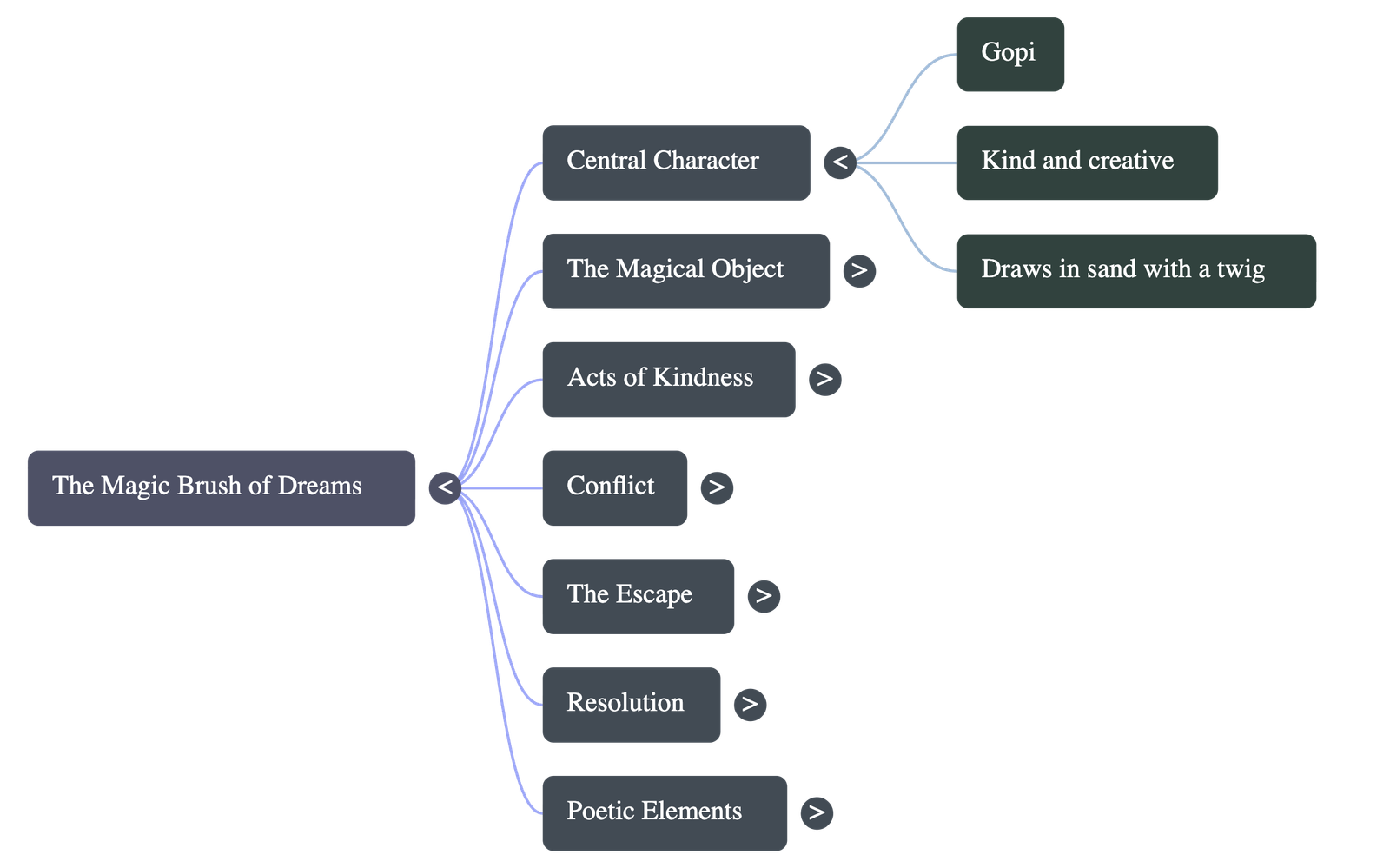
- • Gopi, a young village girl, is instructed to go out and gather food such as wild beans, rice, and mangoes.
- • Instead of working, she gets distracted by her love for art and sits under a banyan tree, drawing pictures in the sand with a twig.
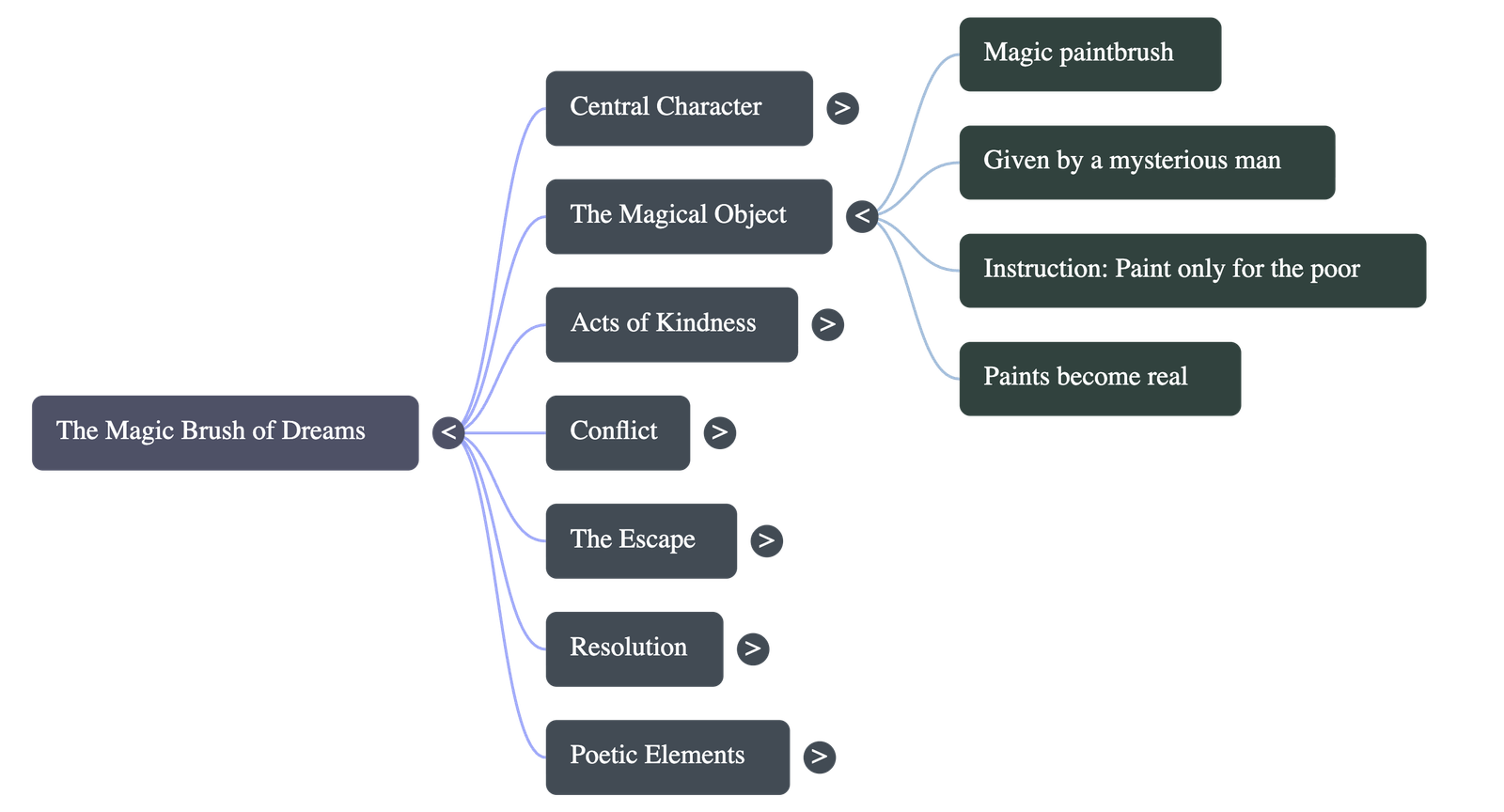
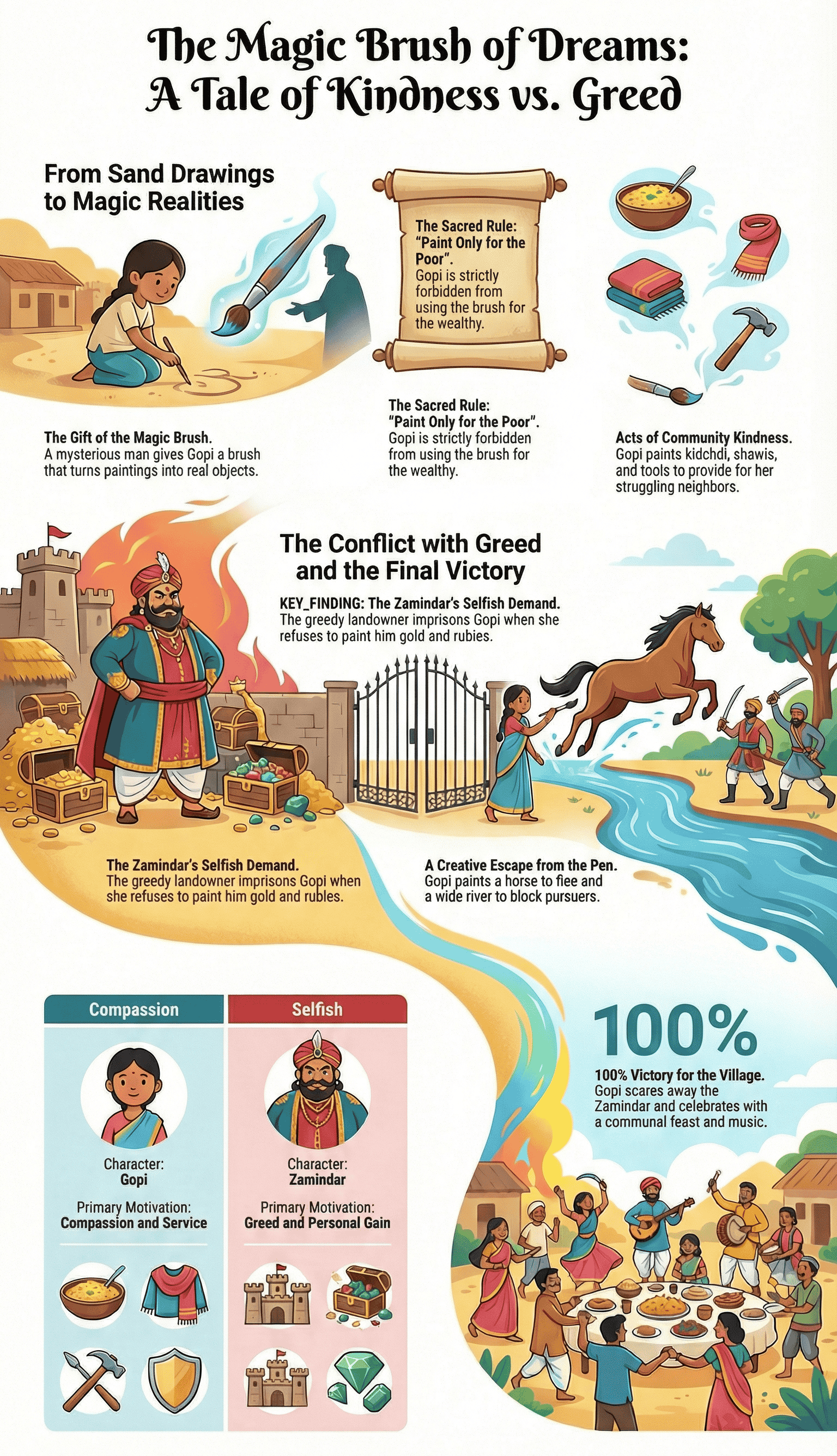
- • A mysterious man sitting nearby calls her over secretly to gift her a magical paintbrush.
- • He gives her a strict rule: the brush must never be used to paint for the wealthy, but only to help the poor and needy.
✦ Helping the Villagers
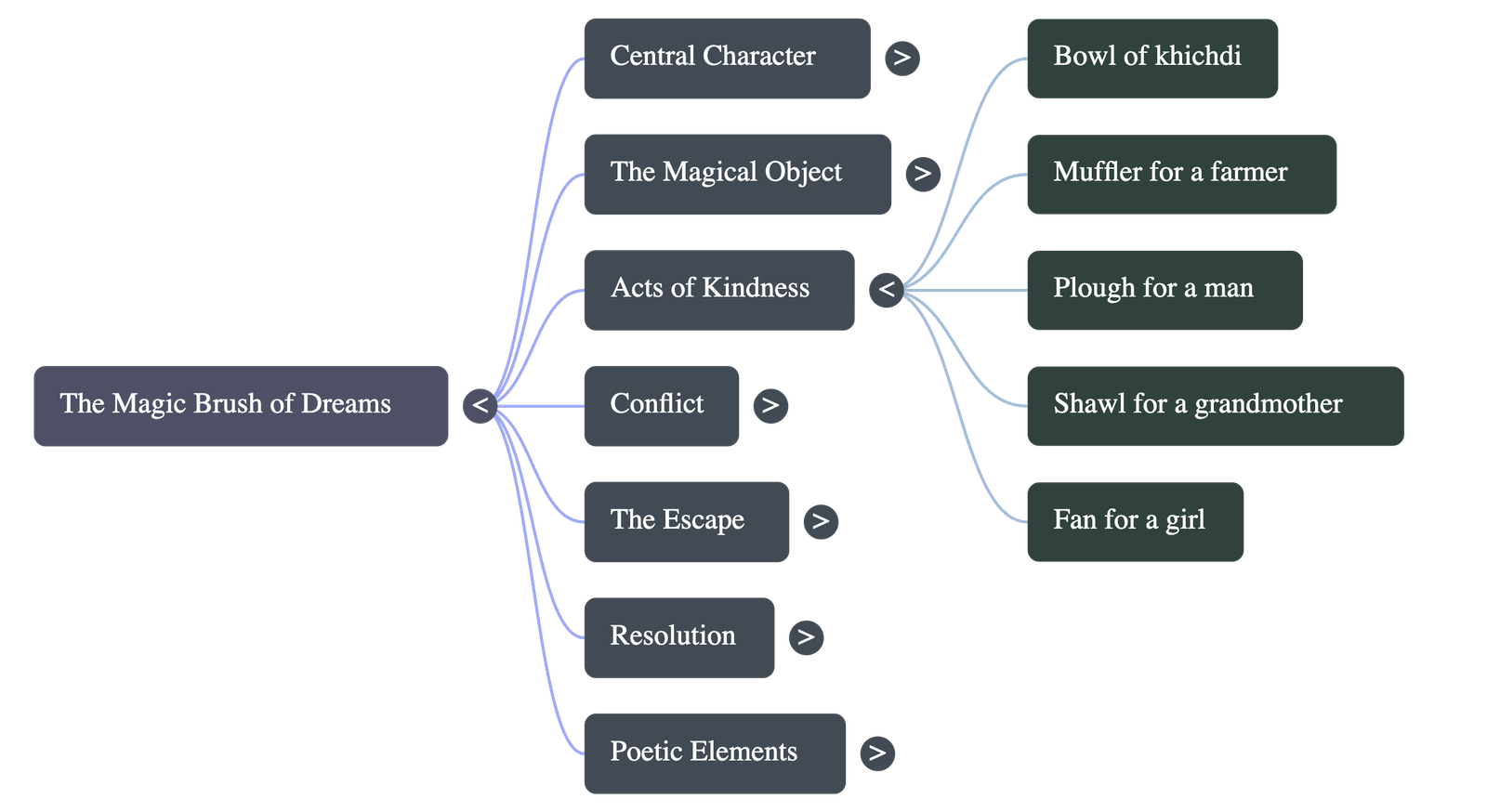
- • Returning home empty-handed, Gopi paints a bowl of khichdi. Once the paint dries, the food magically turns real.
- • The villagers are amazed by this miracle, and word of the magic brush quickly spreads far and wide.
- • Gopi uses her gift selflessly, painting useful, everyday items for the village folk, such as a muffler for a farmer, a plough, a shawl, and a fan.
✦ The Zamindar’s Greed
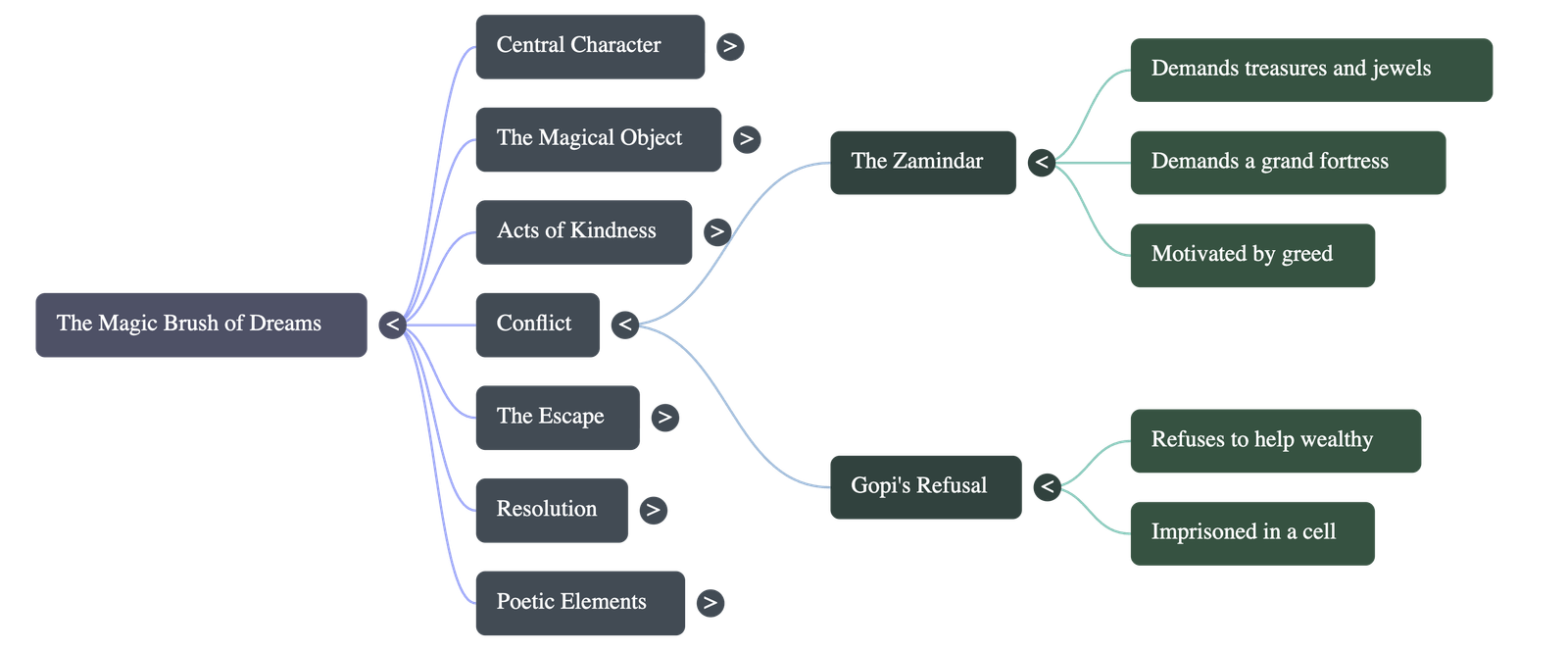
- • The news reaches the local Zamindar (a wealthy, powerful landlord) who immediately desires the brush for his own gain.
- • He orders Gopi to paint a grand, tall fortress, rare jewels, and endless treasures so he can rule the land.
- • Gopi bravely refuses to comply, citing her promise to use the magic brush exclusively for the needy.
- • Furious, the Zamindar orders his men to seize Gopi and throws her into a cold, mud-floor prison cell.
✦ The Great Escape
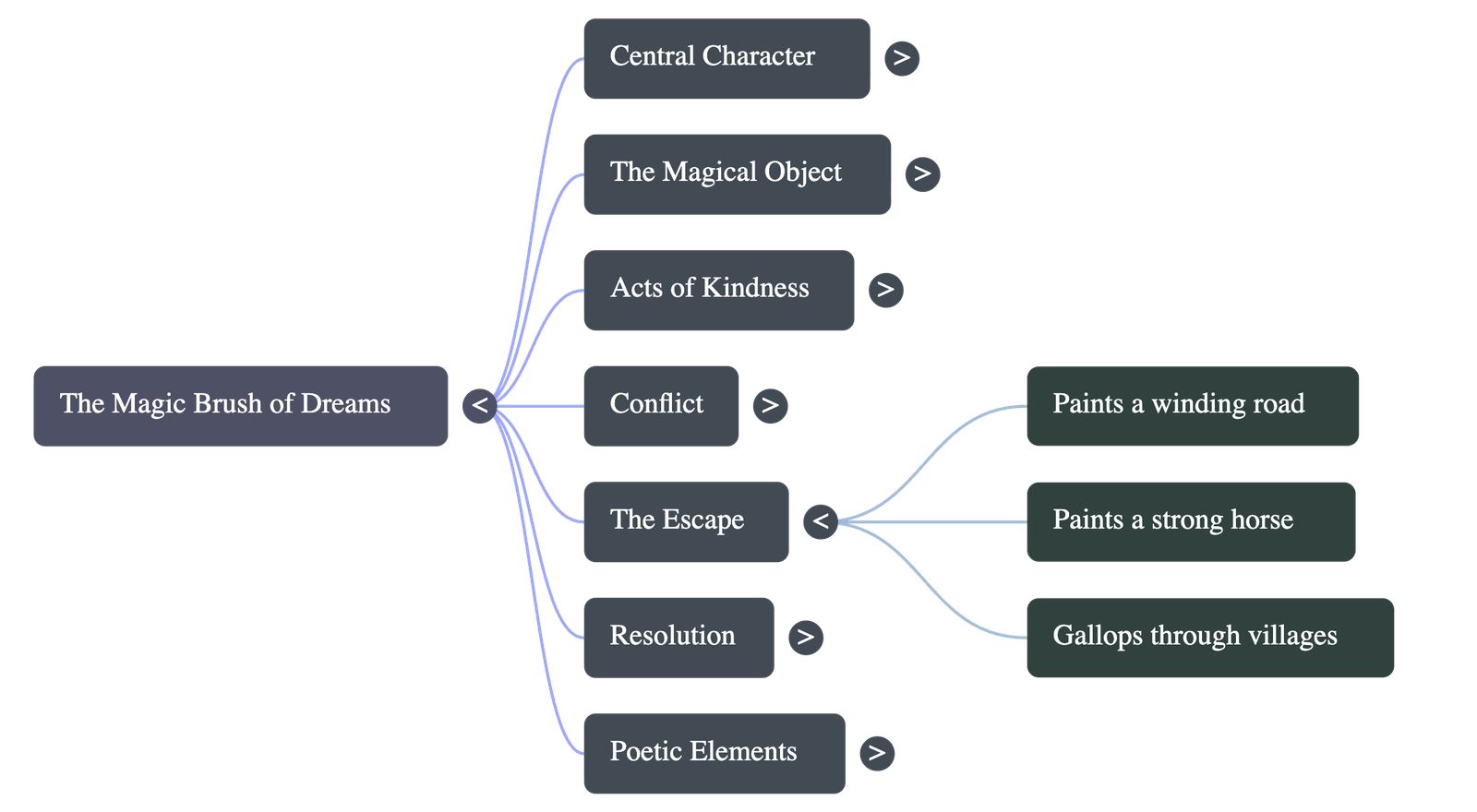
- • While the greedy Zamindar is asleep dreaming of gold, Gopi takes out her brush and paints a winding road leading out of the prison.
- • She paints a strong and bold horse, mounts it, and gallops swiftly out of the gates, heading back toward the villages.
- • The villagers are overjoyed to see her return, but the Zamindar and his men wake up and begin a relentless pursuit.
✦ Defeating the Enemy and Final Celebration
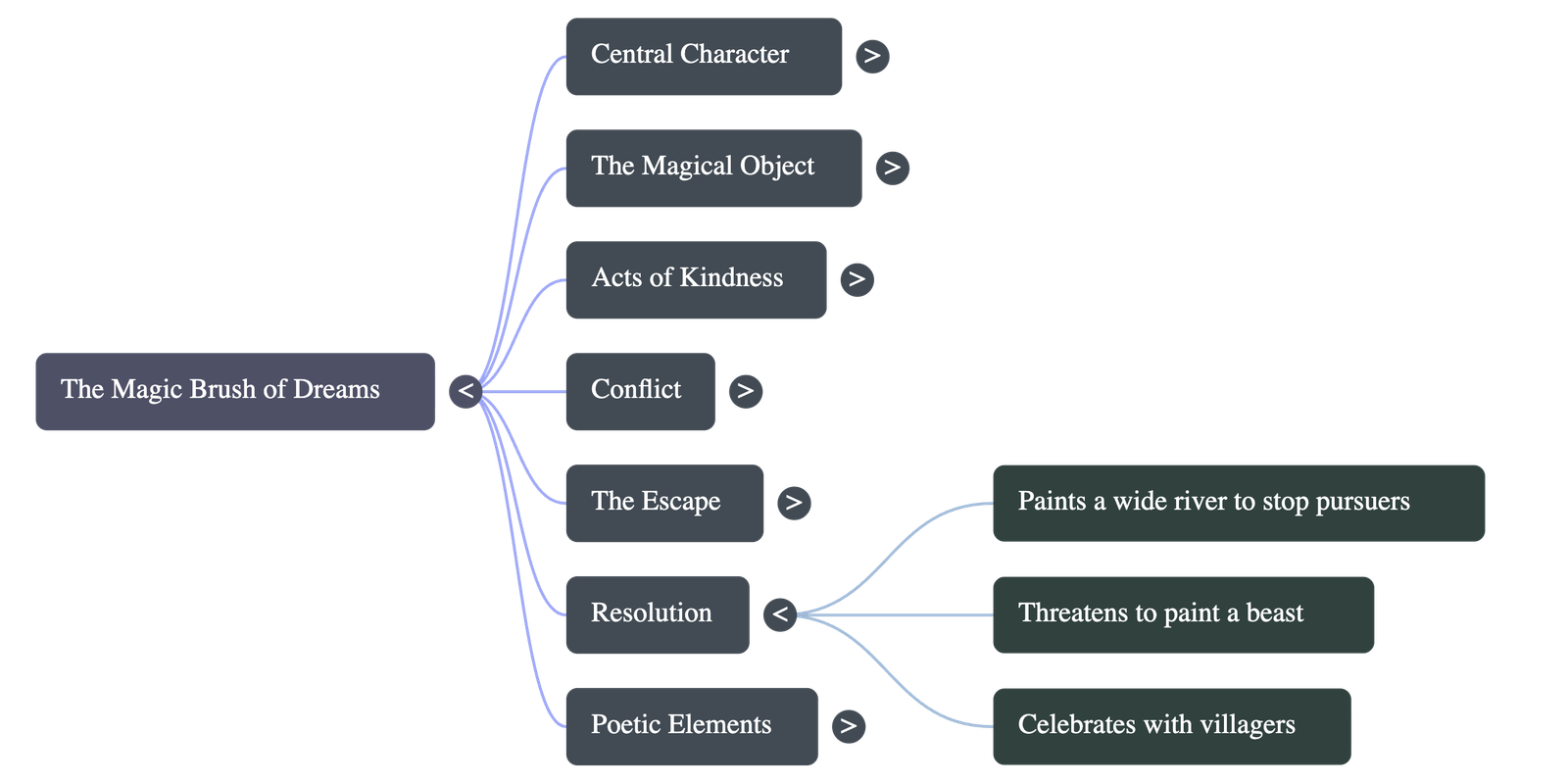
- • To halt the pursuers, Gopi paints a wide, deep river with fast currents, cutting off the Zamindar's path.
- • When the men still attempt to cross, Gopi threatens to paint a ferocious beast that will chase and feast on them.
- • Terrified, the Zamindar abandons his pursuit and flees with his men, never to bother her again.
- • Safe at last, Gopi paints a grand feast of sweets and tea, a bright courtyard, and a playing band so the village can celebrate their victory together.
✦ Chapter Themes and Educational Activities
- • Core Themes: The story highlights the contrast between selflessness (Gopi helping the poor) and greed (the Zamindar seeking personal wealth), as well as the power of art and imagination to overcome obstacles.
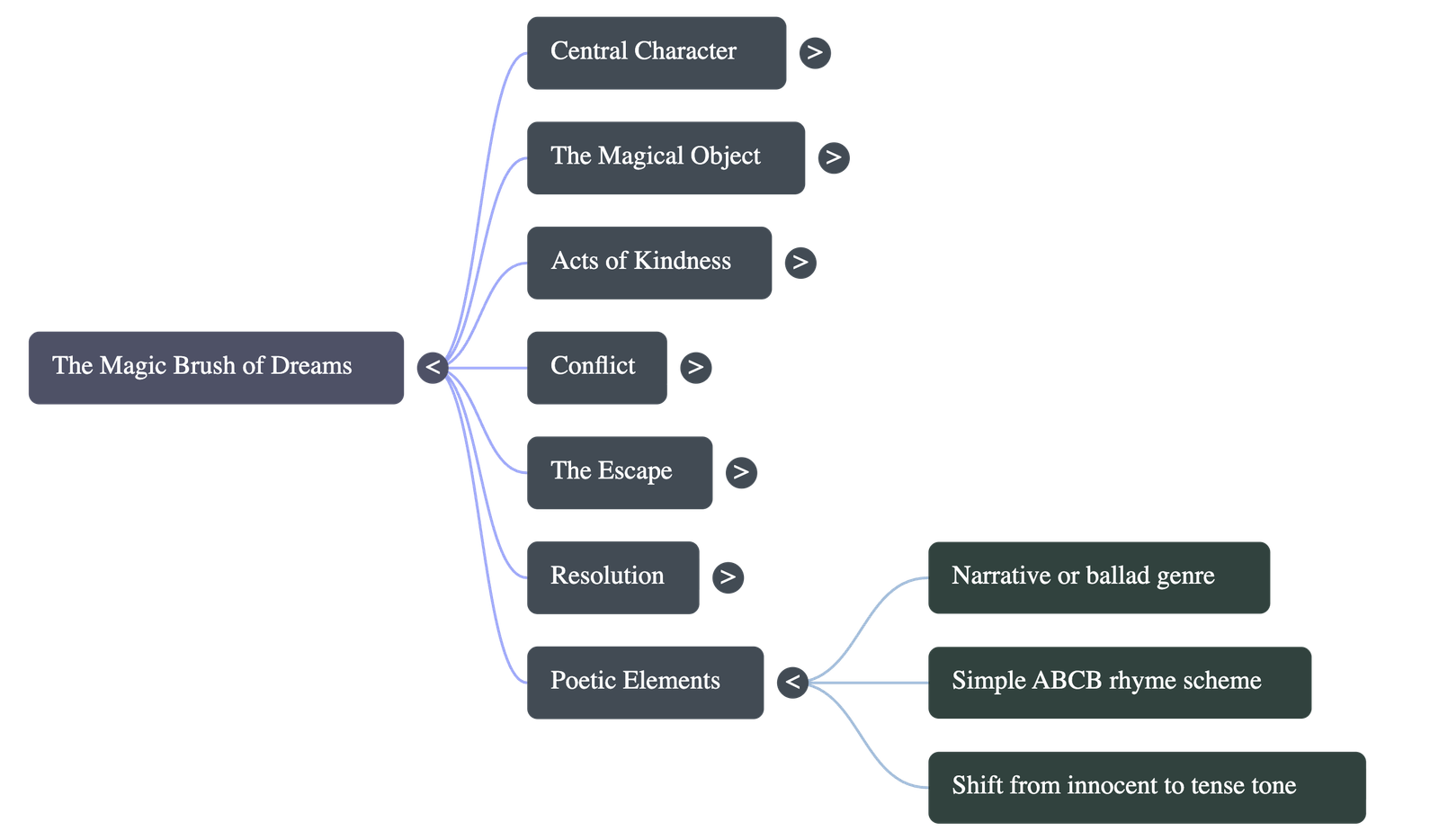
- • Reading & Comprehension: The chapter prompts readers to sequence events logically, identify shifts in poetic tone (from innocent to tense, to triumphant), and extract deeper meaning from character actions.
- • Language & Grammar: Activities include exploring different contextual meanings of verbs (like "draw"), learning how to make formal and informal requests, and matching expressions to emotions.
- • Creative Writing: The chapter culminates in creative exercises where students are encouraged to write an imaginative essay, such as reflecting on having a magical power or designing their own magical object.
Do checkout all questions & answers of this chapter.
Quick Navigation:
| | | |
1 / 1
Quick Navigation:
| | | |