Quick Navigation:
| | | |
Feathered Friend
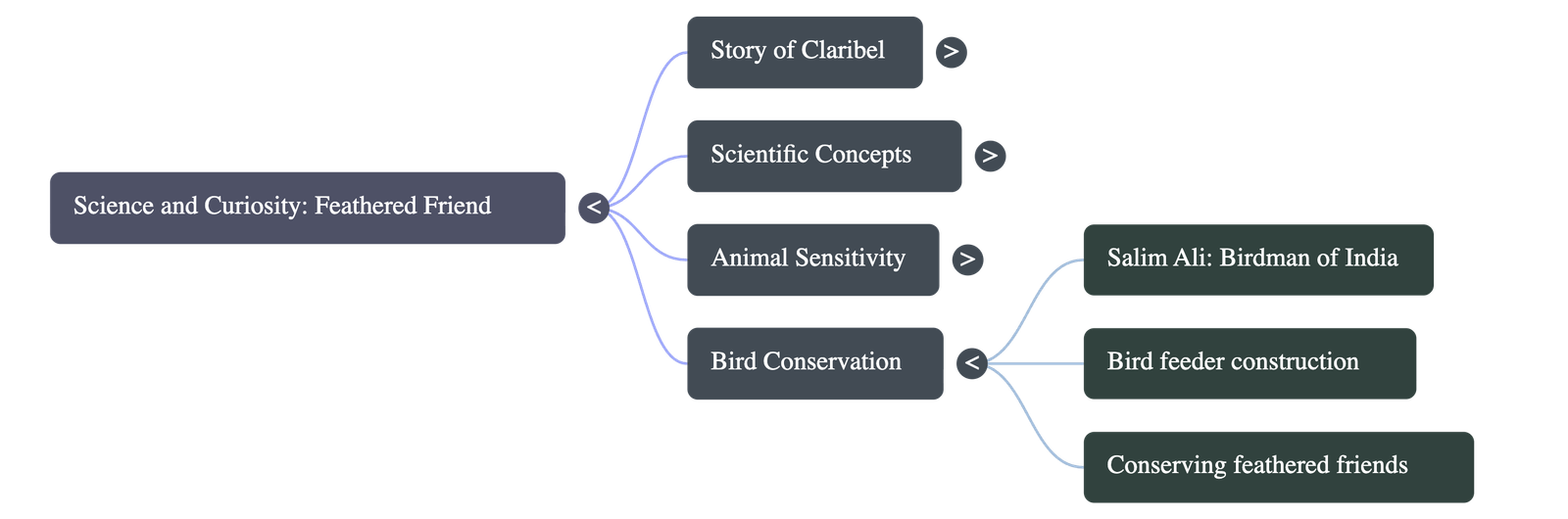
The Story: "Feathered Friend" by Arthur C. Clarke
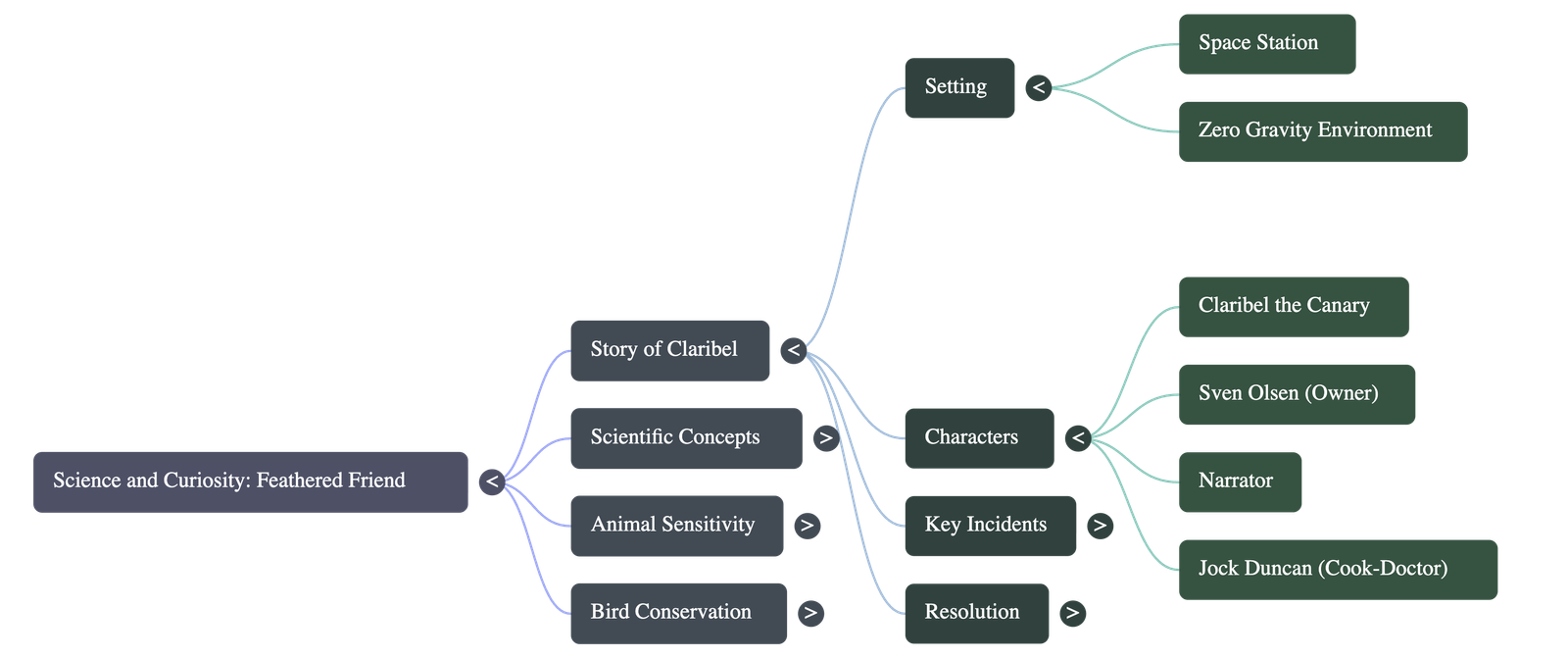
- Introduction of Claribel: Sven Olsen, a skilled and wiry construction worker on a space station, smuggles a tiny yellow canary named Claribel onboard during his return from Earth.
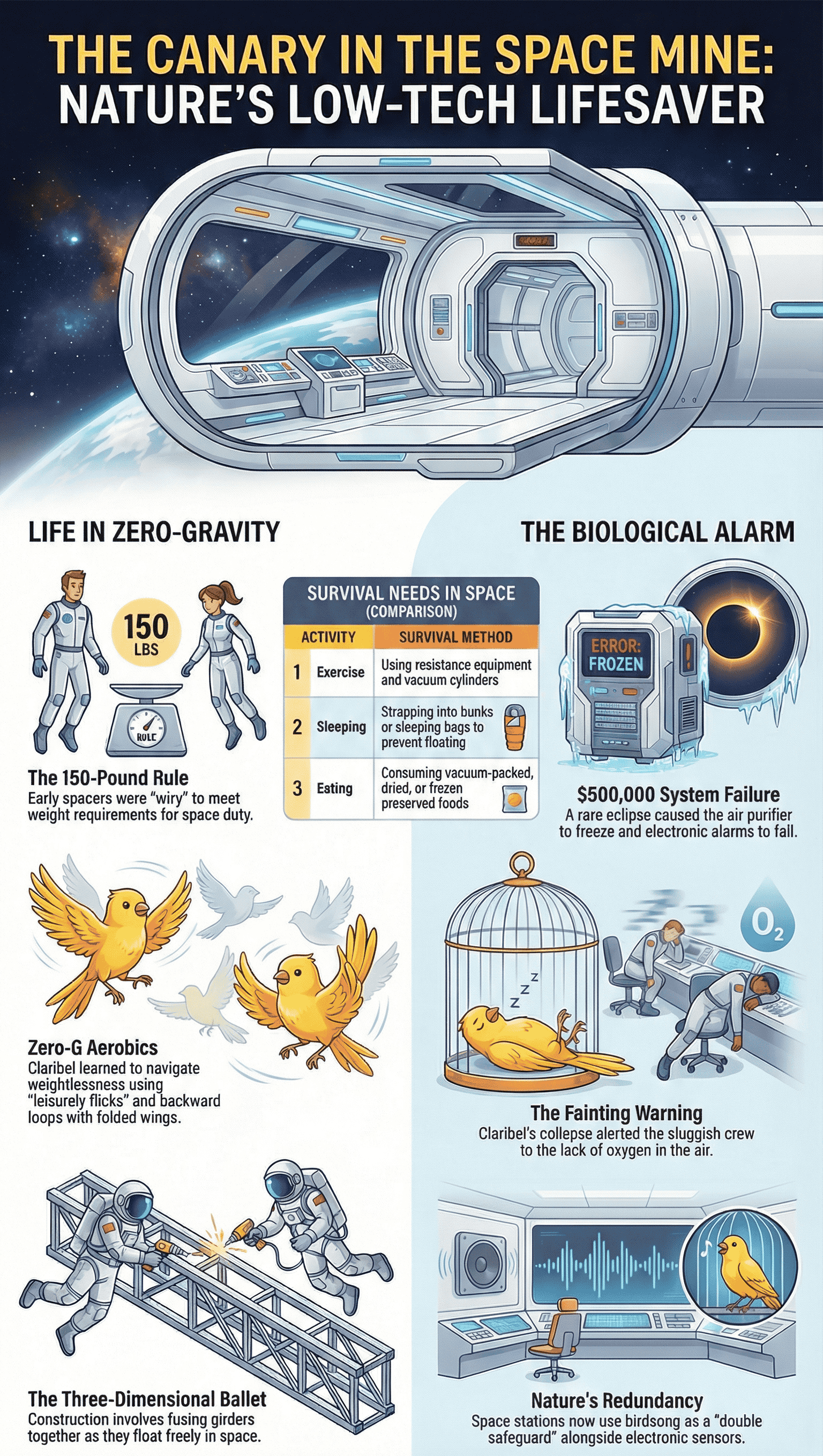
- Adapting to Zero Gravity: Claribel thrives in the absence of gravity. She quickly learns to hover and fly with minimal effort, performing graceful loops and doing no unnecessary work in her weightless environment.
- A Hidden Pet: The space station crew collectively adopts Claribel as a mascot. They successfully keep her hidden from visiting VIPs, quickly masking her occasional chirps and whistles as mechanical noises coming from the station's ventilating shafts.
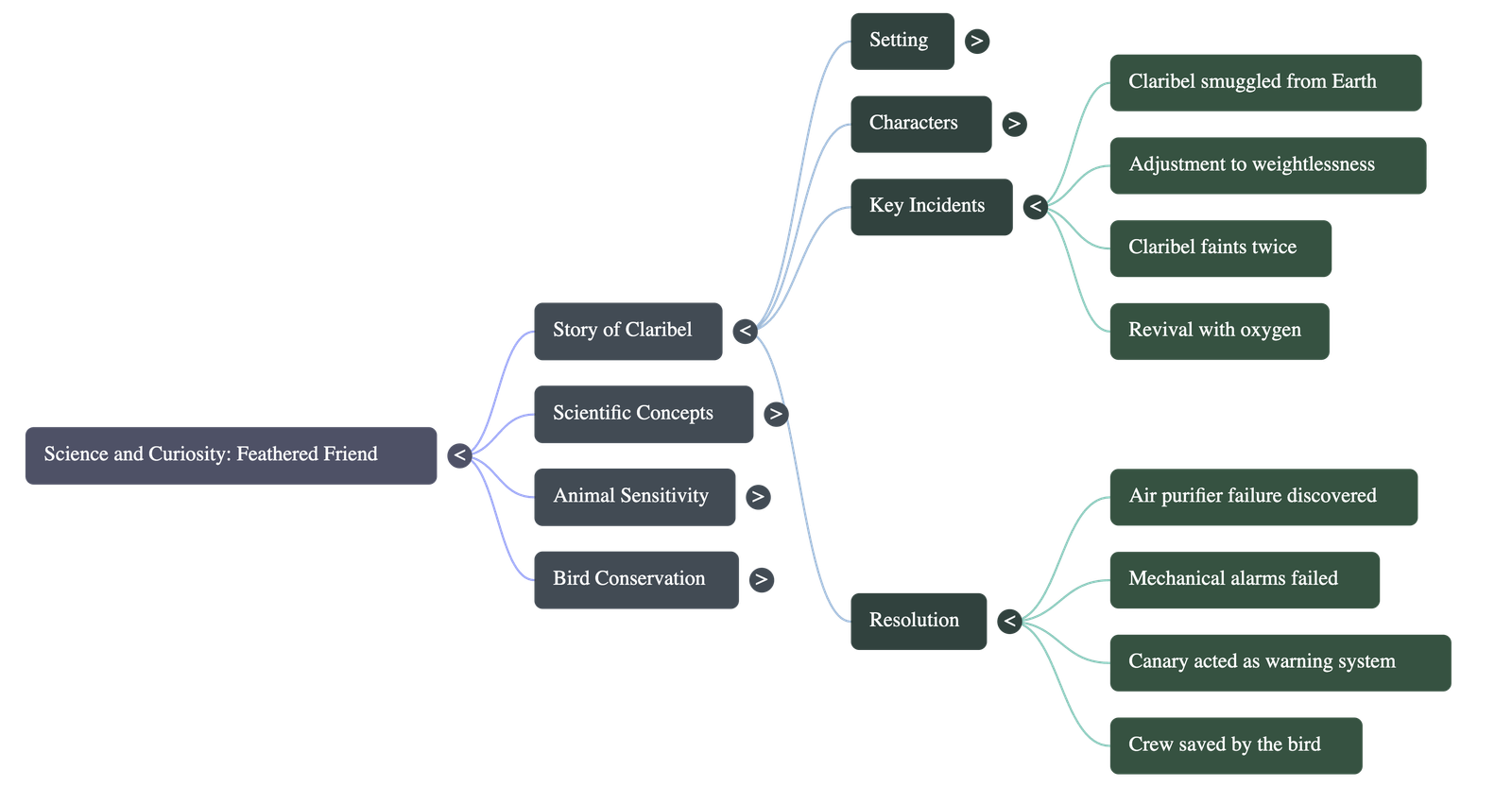
- A Mysterious Illness: One "morning," the narrator wakes up with a sluggish, nagging headache. Shortly after, Sven walks in deeply distressed, holding a collapsed and unresponsive Claribel in his hands.
- Revival Attempts: The crew's cook and doctor checks her but cannot hear a heartbeat. They decide to use a face mask connected to an emergency oxygen cylinder as a makeshift oxygen tent. Claribel instantly revives and chirps, but the moment the oxygen is removed, she faints again.
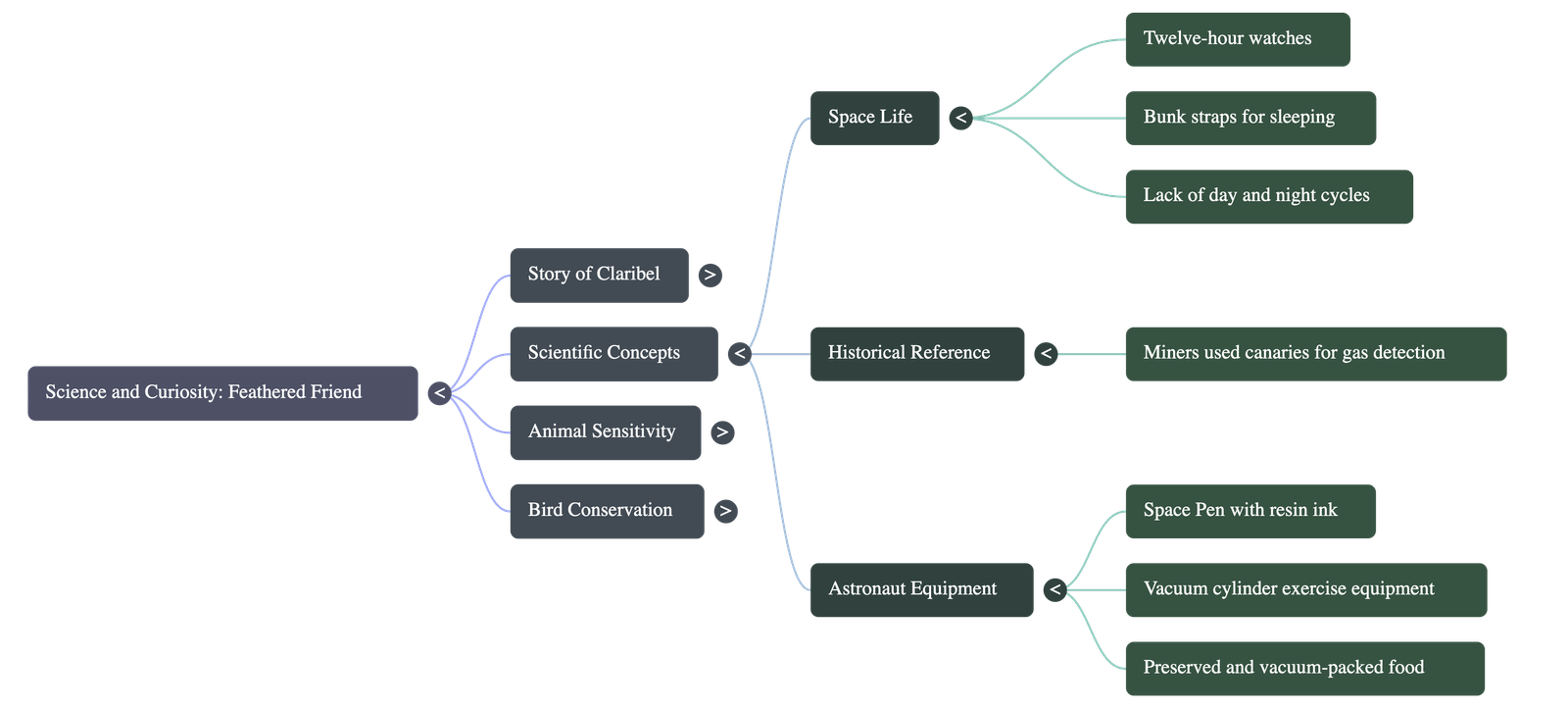
- The Realization: The narrator's sluggish mind finally connects the dots: he remembers that coal miners used to carry canaries underground to warn them of toxic, odorless gases. He deduces that something is terribly wrong with the space station's air supply.
- A Narrow Escape: An urgent inspection reveals that a rare eclipse caused part of the air purifier to freeze. Furthermore, the backup alarm circuits had not been fully connected, meaning the technical alarms failed to go off.
- The Heroic Bird: Claribel's high sensitivity to the failing air quality acted as an organic early warning system, ultimately saving the entire crew from silent suffocation.
Grammar and Vocabulary
- Merged Words (Portmanteaus): The chapter explains how to combine two words to form a new one. For example, combining "internal" and "communication" gives "intercom", or "breakfast" and "lunch" makes "brunch."
- Adjectives: Activities focus on identifying and matching descriptive words (like sluggish, sheepish, inexplicable, and nagging) to their appropriate nouns.
- Future Tense Forms: Students learn the various rules and contexts for expressing future time, utilizing "will," simple present, present progressive, and "going to."
- Silent Letters: Pronunciation exercises highlight English words with silent letters, encouraging students to correctly pronounce words like ballet, whistle, receipt, and autumn.
Science, Real-World Connections, and Activities
- Life in Space: The chapter explores how astronauts adapt to zero gravity for daily tasks. They use special pressurized pens to write in a vacuum, strap themselves down on treadmills to exercise, eat vacuum-packed and preserved foods, and tie themselves into sleeping bags to prevent floating away while they sleep.
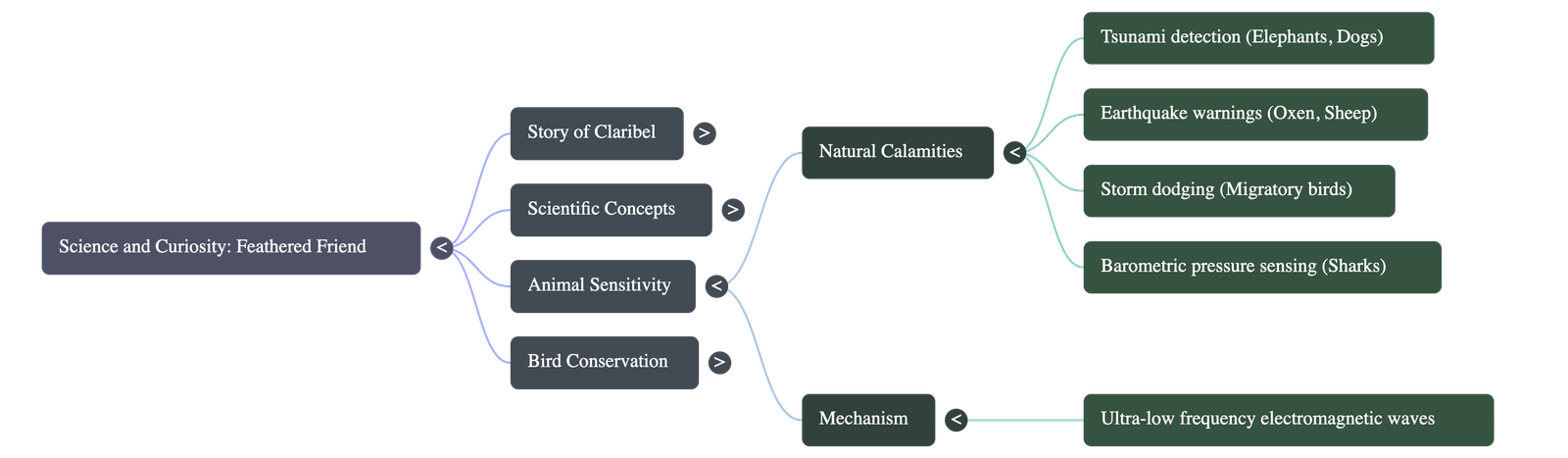
- Animal Instincts: A dedicated section discusses how animals can sense natural disasters before humans do. Examples include elephants running to higher ground before a tsunami, dogs sensing earthquakes, and sharks detecting barometric pressure drops before hurricanes hit.
- The Birdman of India: Brief historical information is provided about Salim Ali, the renowned Indian ornithologist who conducted systematic bird surveys and received the Padma Vibhushan.
- Creative Tasks: The chapter concludes with engaging prompts, such as having students write an article about the importance of the internet, practicing spoken dialogue through a listening exercise about a stranded Martian named Toby, and hands-on instructions for building a DIY bird feeder out of cardboard to help conserve local birds.
Do checkout all questions & answers of this chapter.
Quick Navigation:
| | | |
1 / 1
Quick Navigation:
| | | |