Quick Navigation:
| | | |
Harvest Hymn
1. Introduction & Pre-Reading Concepts
- The chapter revolves around the poem "Harvest Hymn" by Sarojini Naidu, which celebrates the harvest season through songs of praise (hymns) offered to the divine.
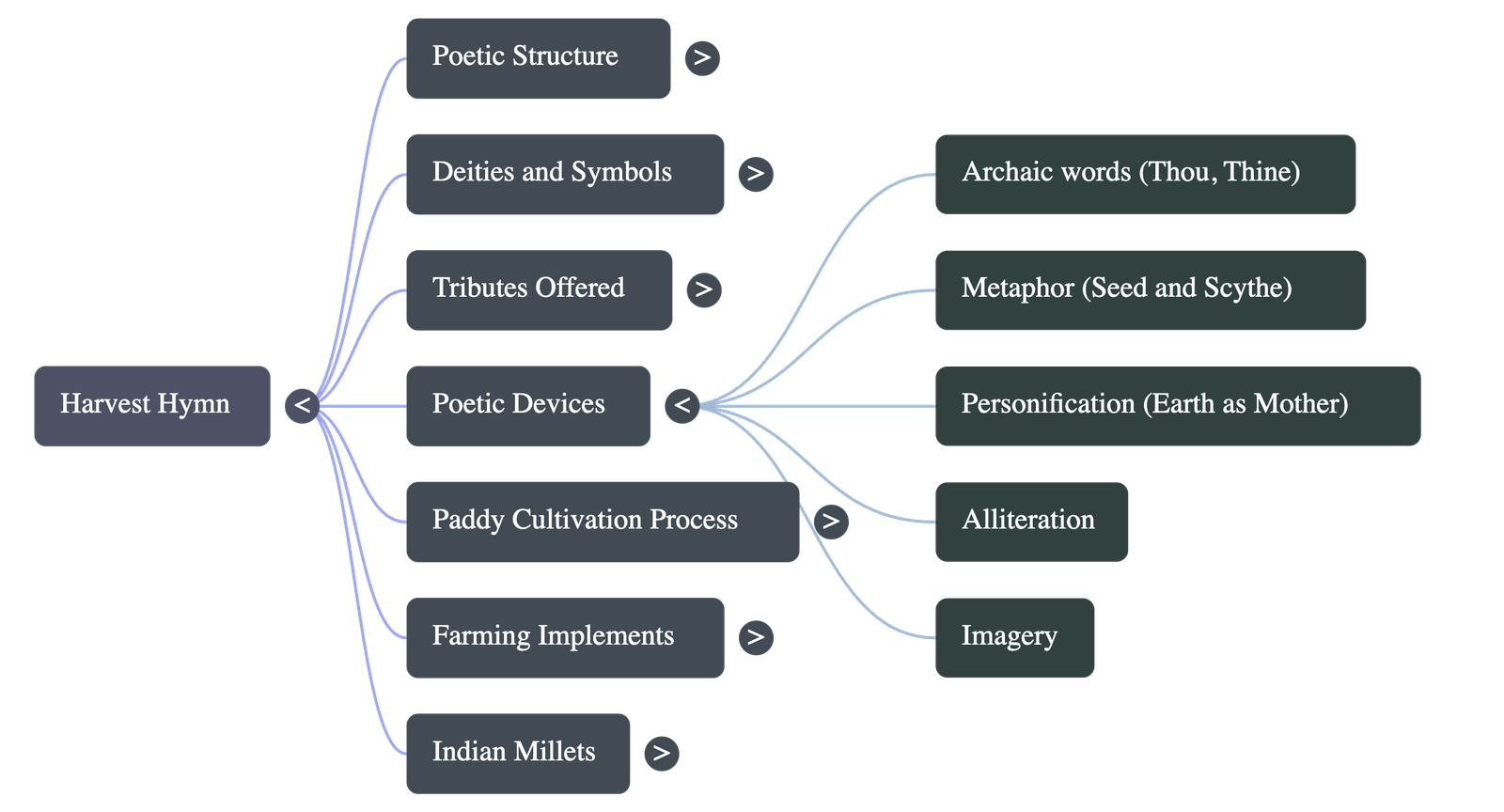
- It introduces the concept of archaic words—older English words no longer in common usage, such as thou (you - subject), thee (you - object), thy (your), thine (yours), and art (are).
- Students are encouraged to reflect on their local harvest festivals, the purpose of hymns, and agricultural vocabulary.
2. Poem Overview & Stanza Summaries
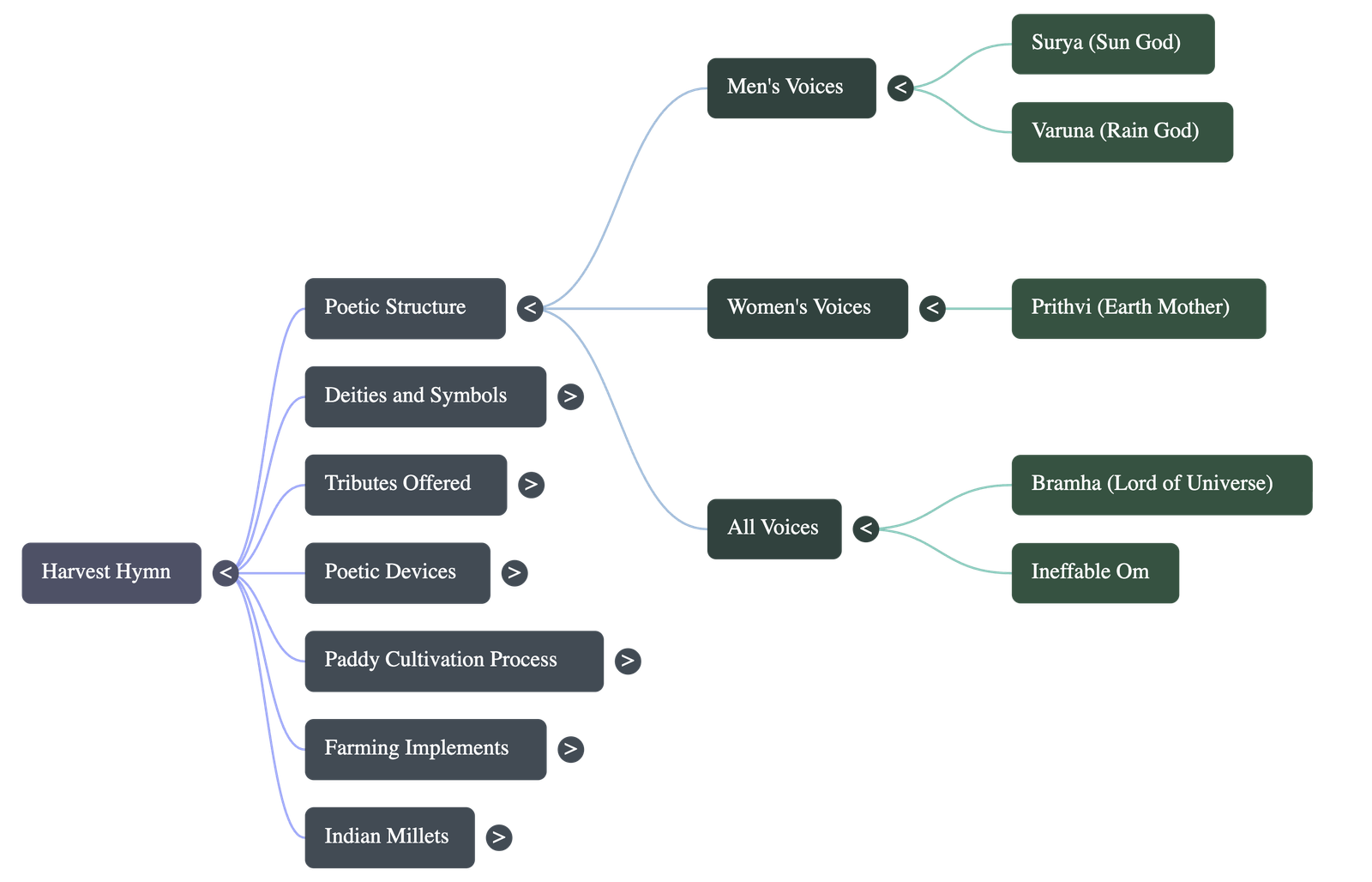
The poem is structured as a choral hymn divided into voices of men, women, and all voices combined, expressing deep reverence and gratitude towards nature and the Lord.
-
Men's Voices (Praise to Surya and Varuna):
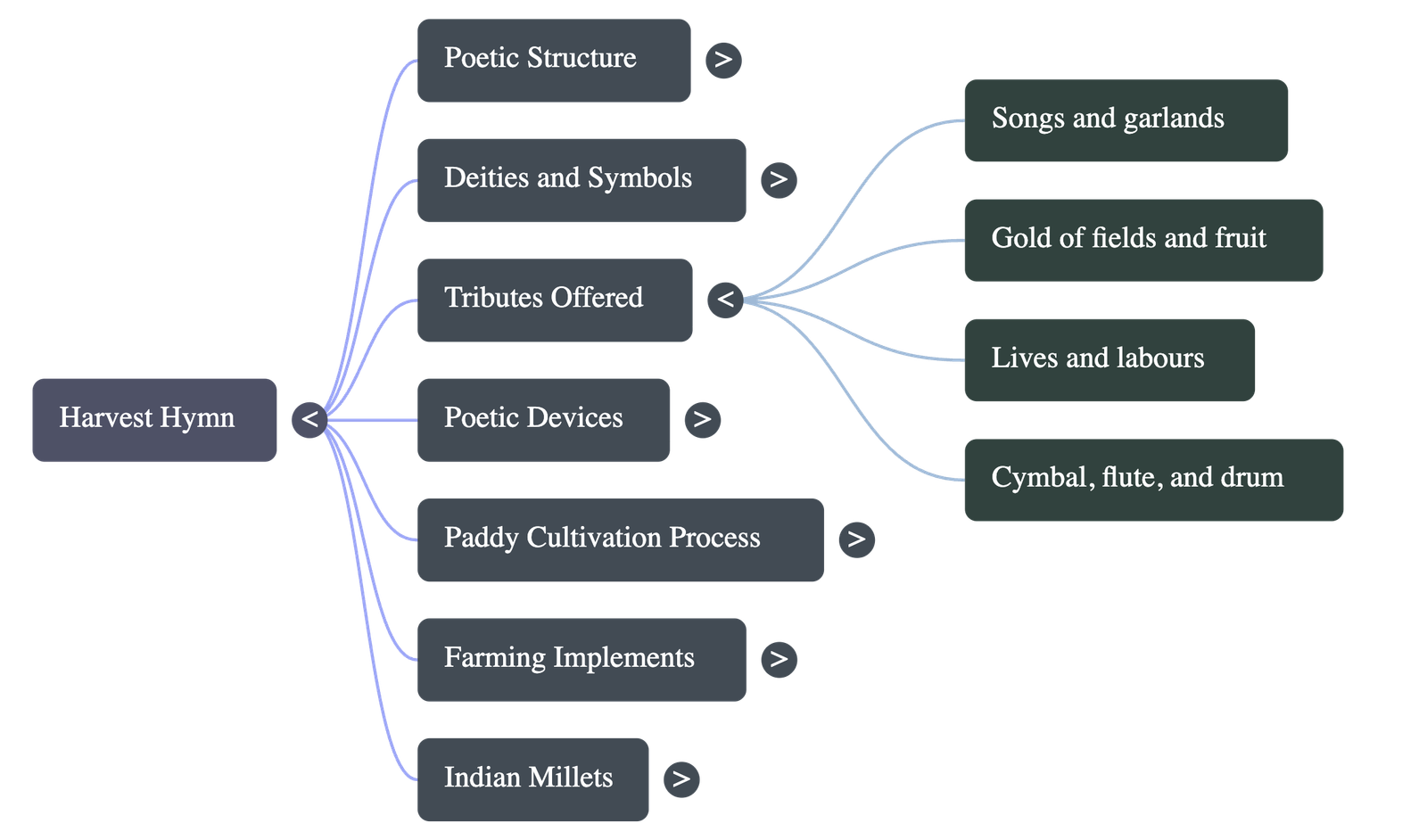
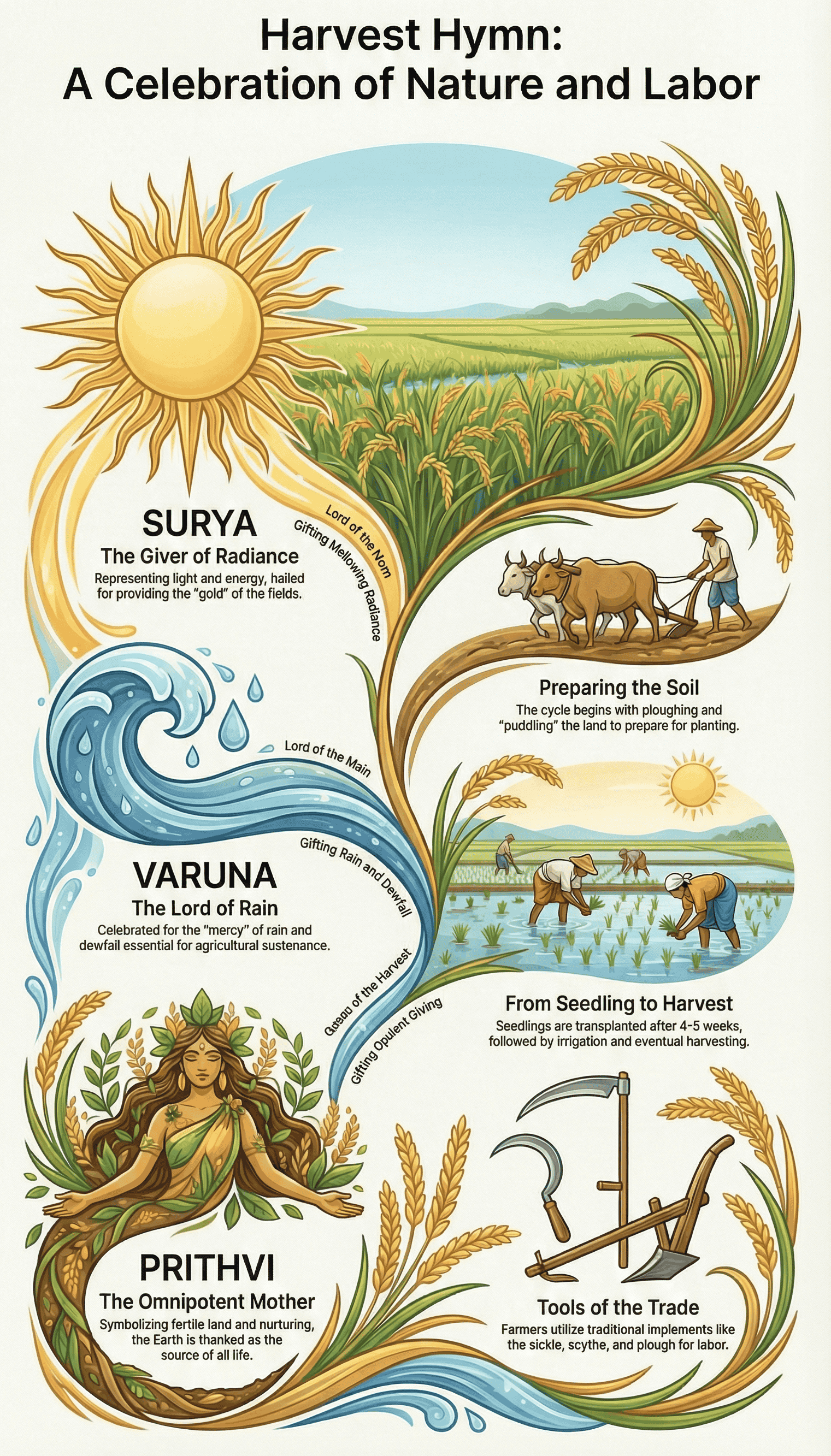
The men praise Surya (the Sun) as the bright, munificent lord who provides warming radiance to prosper their sowing and nurture the corn. They offer songs, garlands, and the golden crops of their fields alongside cymbals and flutes.
They then praise Varuna (God of Rain) as the beneficent lord who sends rain and dewfall to cherish their furrows and foster the grain. They offer thanks and the wealth of their ripe valleys alongside cymbals and pipes. -
Women's Voices (Praise to Prithvi):
The women praise Prithvi (Mother Earth), viewing her as the sweet and omnipotent mother whose plentiful bosom feeds them and gives birth to their riches. They offer their love, garlands, and the gifts she provided, accompanied by cymbals and drums. -
All Voices (Praise to Brahma):
Together, they praise Brahma (Lord of the Universe) as the eternal father. They acknowledge Him as the beginning and end of their harvests ("the Seed and the Scythe") and the core of their being ("our Hands and our Heart and our Home"). They dedicate their lives and labors to Him, seeking his care, counsel, and succour with cymbals and prayer.
3. Literary Devices & Symbolism
- Symbolism:
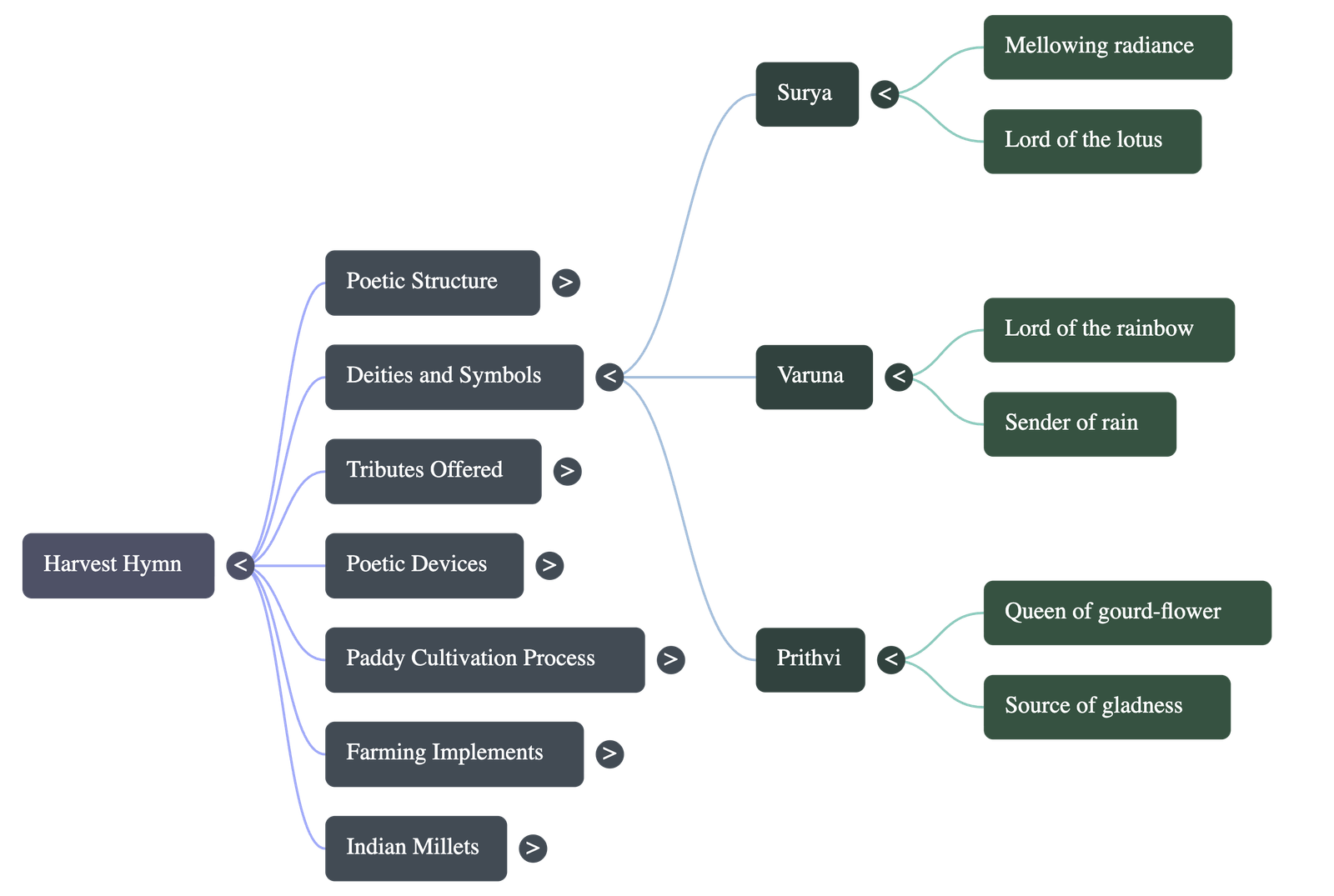
- Surya represents light, energy, and the giver of warmth.
- Varuna symbolizes mercy and nourishment essential for agriculture.
- Prithvi stands for fertile land, motherhood, and the nurturing source of life.
- Metaphor: The phrase "Thou art the Seed and the Scythe" implicitly compares the Divine to the creator (seed) and the harvester/end (scythe) of all life.
- Personification: Giving human qualities to the Earth, describing her as a "sweet and omnipotent mother".
- Alliteration: Using repeated consonant sounds for rhythm, as seen in "our lives and our labours".
- Repetition: Used to emphasize abundance and devotion (e.g., "The gold of our fields and the gold of our fruit").
4. Language, Vocabulary & Grammar
- Key Vocabulary & Synonyms:
- Munificent: Generous
- Beneficent: Kind
- Succour: Help
- Radiance: Brightness
- Ineffable: Indescribable
- More Archaic Words: The chapter introduces extra traditional words for dictionary work, including morrow, hither, quoth, betwixt, and yonder.
- Pronunciation Focus (Silent Letters): Words where 'n' is silent after 'm' (hymn, column, autumn, solemn) and where 'b' is silent after 'm' (womb, tomb, bomb, climb, comb).
5. Agricultural Knowledge & Farming Tools
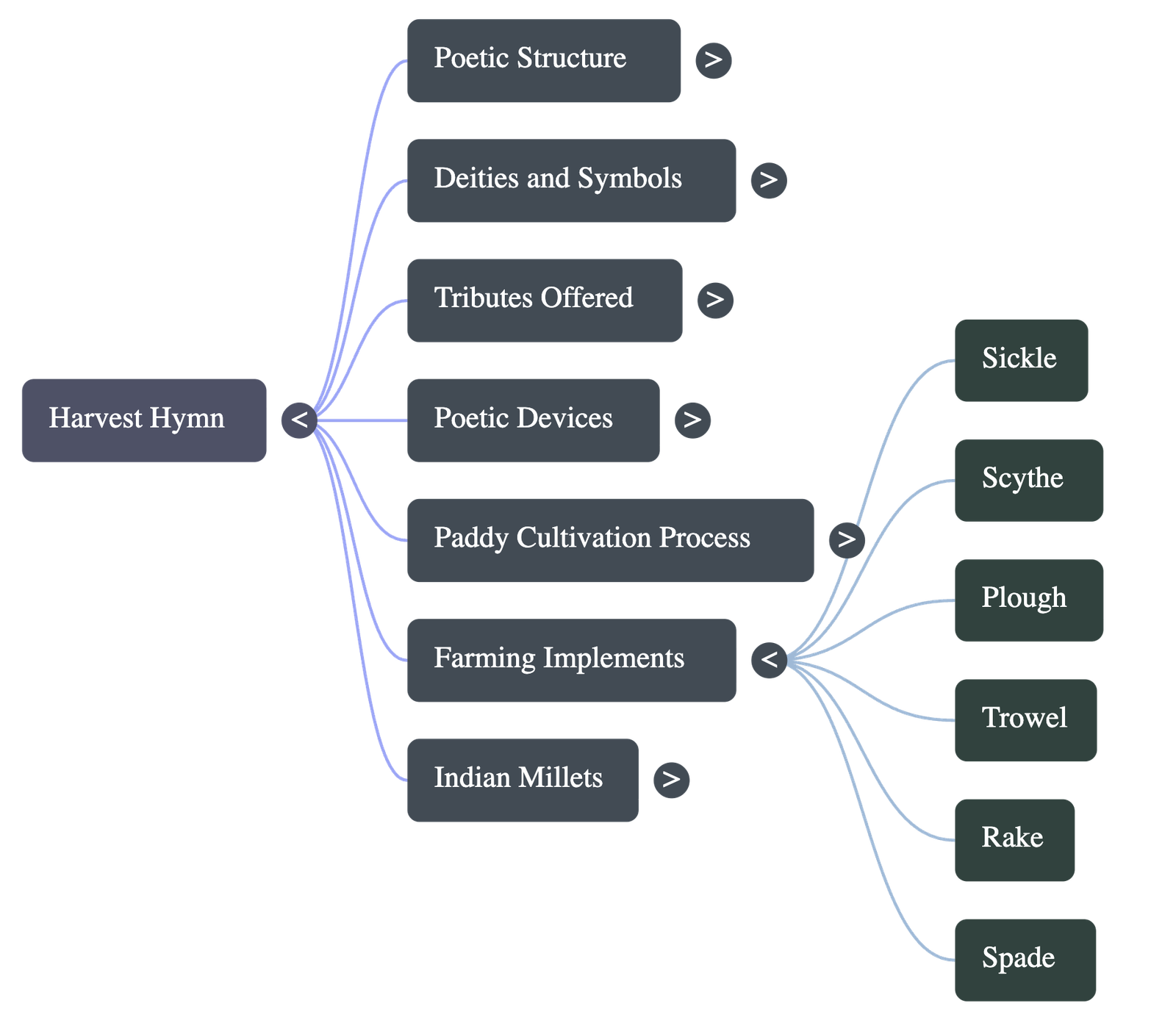
- Farming Implements Identified:
- Sickle: Hand-held with a curved blade for harvesting.
- Scythe: Hand-held with a long-curved blade and long handle for cutting tall grass.
- Plough: Pulled by oxen to turn over soil.
- Trowel: Small hand tool for digging/shallow furrows.
- Spade/Hoe: Flat rectangular blade attached to a wooden handle for digging.
- Rake: Long handle with metal teeth for collecting hay/leaves.
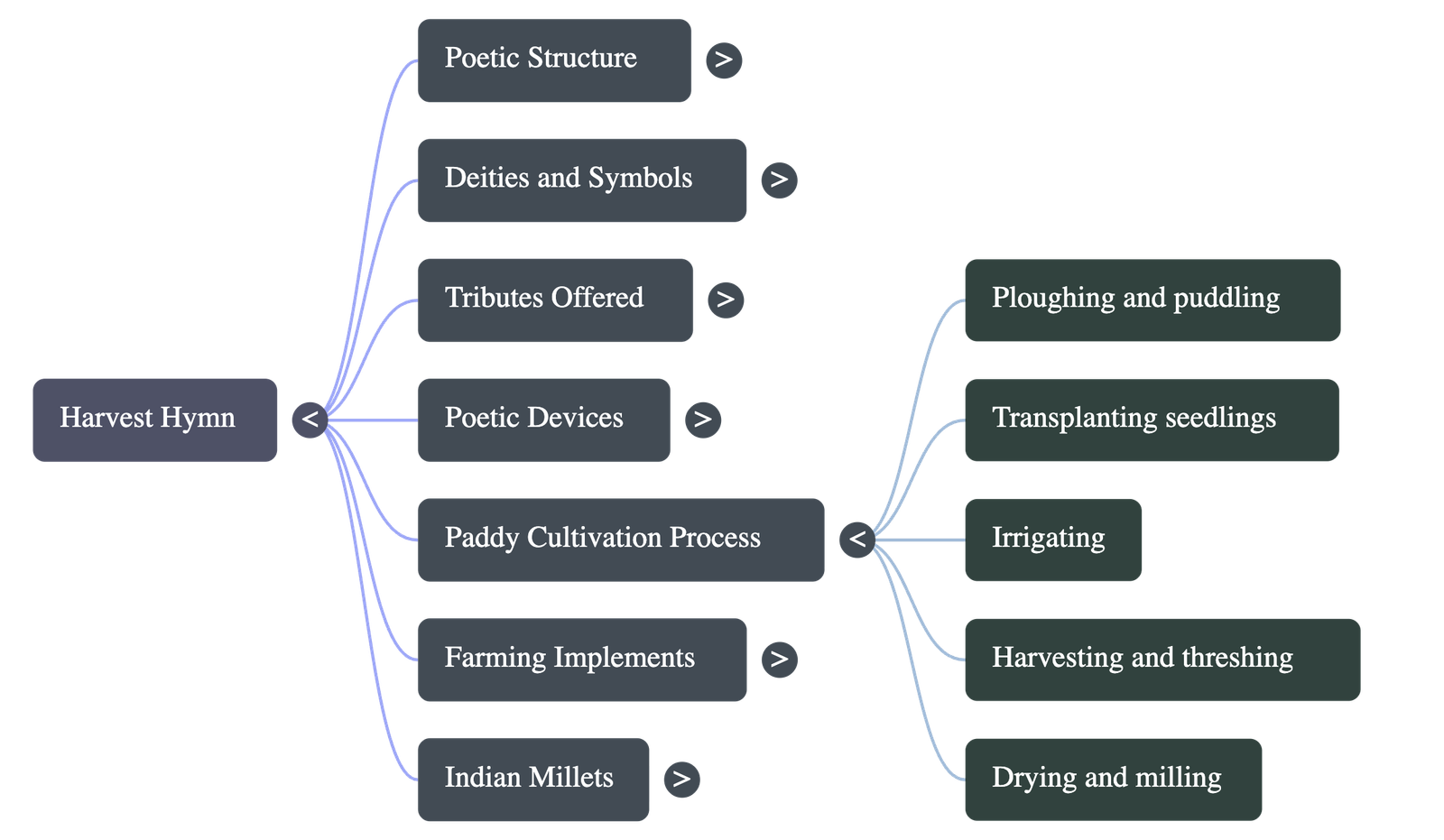
- Paddy Cultivation Process: Recognizes sequential steps such as ploughing, puddling, transplanting seedlings (after 4-5 weeks), irrigating, harvesting, threshing, and milling. Drying grains is highlighted as important for long-term storage and separation.
6. Project Work & Exploration
- Creative Writing (Slogans): Students are tasked with drafting creative slogans to express gratitude to farmers who provide food, using concise language and strong main ideas.
- Group Presentation: Discussing and presenting traditional harvest festival dishes, including ingredients, preparation, taste, and special rituals.
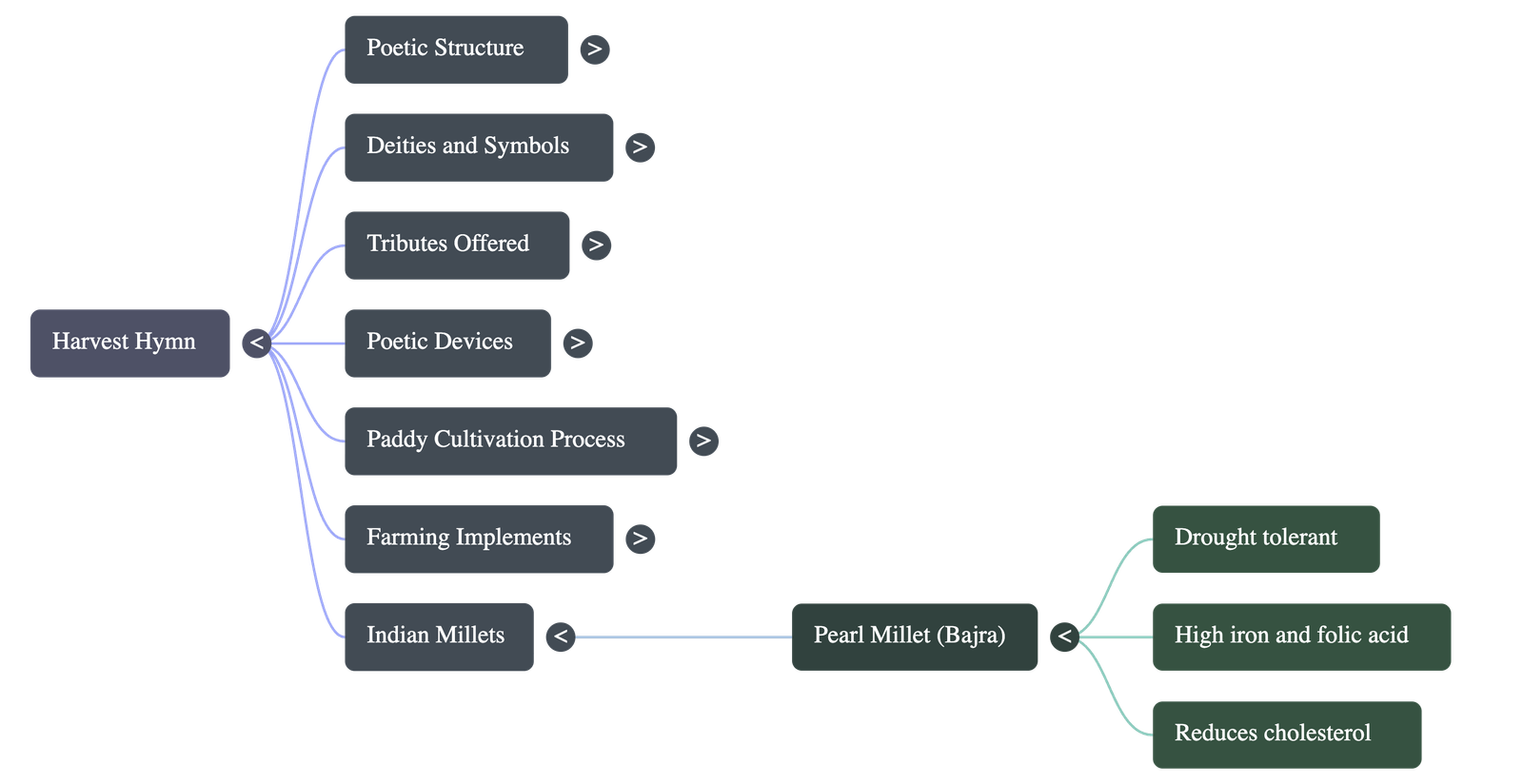
- Millets as Superfoods: Explores the nutritional value of millets, specifically Pearl Millet (Bajra).
- It has the highest drought tolerance and is the most widely cultivated cereal in India after rice and wheat.
- Nutrition: Rich in protein, dietary fiber, iron, calcium, folic acid, and has the highest niacin content among cereals.
- Health Benefits: Reduces cholesterol, promotes bone and heart health, treats stomach ulcers, and aids in weight loss.
- Culinary Uses: Khichdi, Roti, Upma, Idli, Khakhra, Parathas.
- Cultural Heritage: Collecting and sharing traditional songs sung during the harvest season.
Do checkout all questions & answers of this chapter.
Quick Navigation:
| | | |
1 / 1
Quick Navigation:
| | | |