Quick Navigation:
| | | |
Forward Bloc and the Indian National Army (INA)
Hello students! As your history teacher, I have prepared this comprehensive, point-wise summary of our chapter on Subhas Chandra Bose and the INA. Please study these detailed notes carefully to prepare for your Class 10 board exams.
1. Subhas Chandra Bose and the Congress
- Early Background: Subhas Chandra Bose was born on January 23, 1897, at Cuttack in Odisha. He went to England and successfully passed the prestigious Indian Civil Service Examination.
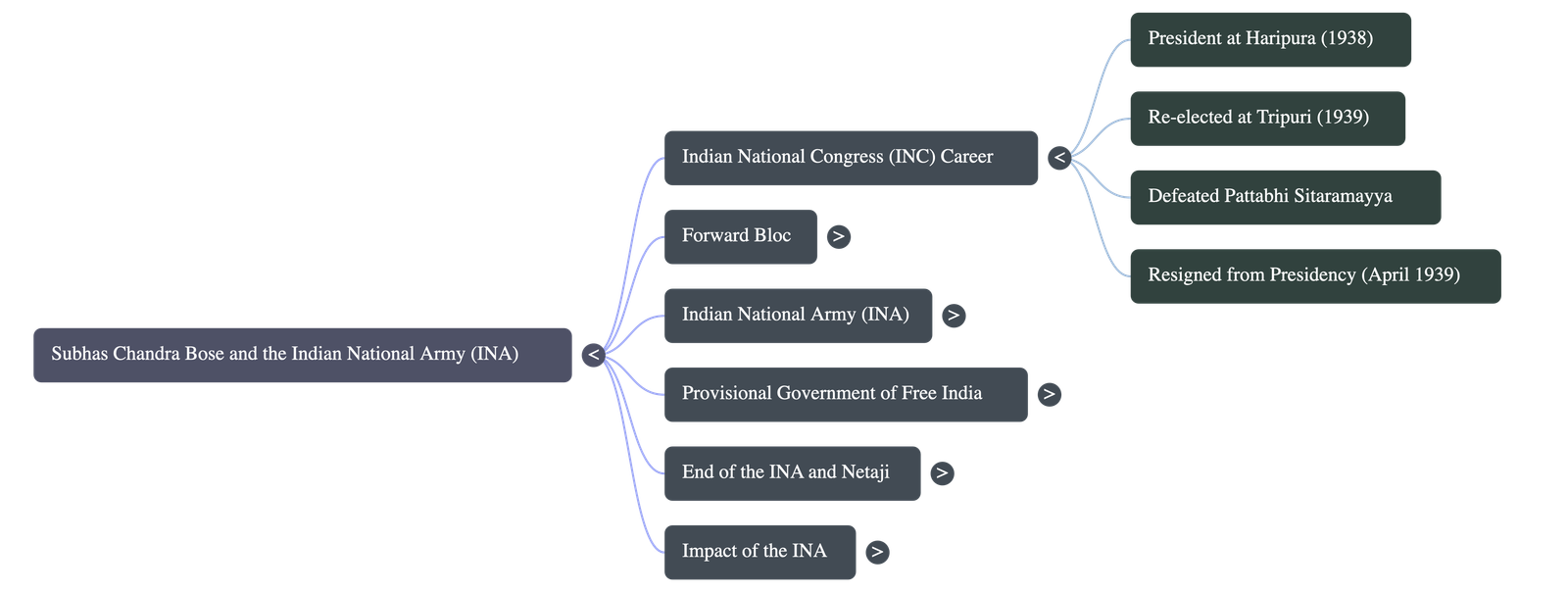
- Haripura Session (1938): He was unanimously elected as the President of the Indian National Congress.
- Tripuri Session (1939): He was re-elected for a second term as President, defeating Pattabhi Sitaramayya, a candidate who had the direct backing of Mahatma Gandhi.
2. Formation of the Forward Bloc
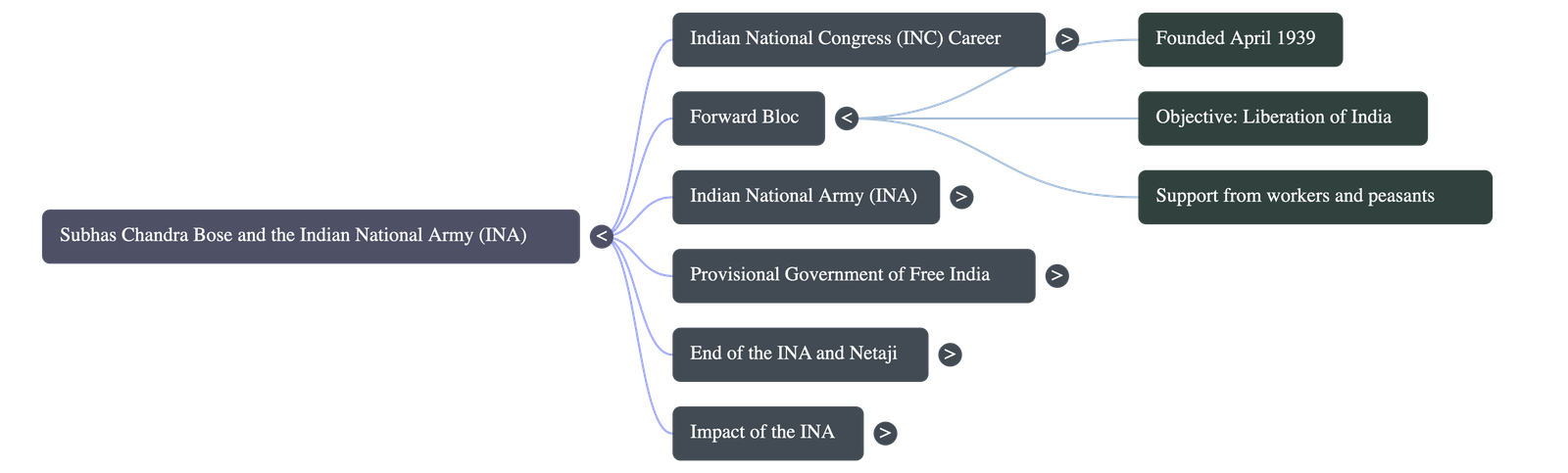
- Resignation from Congress: Due to ideological differences with Mahatma Gandhi and the Congress Working Committee, Subhas Chandra Bose resigned from the Presidentship of the Congress in April 1939.
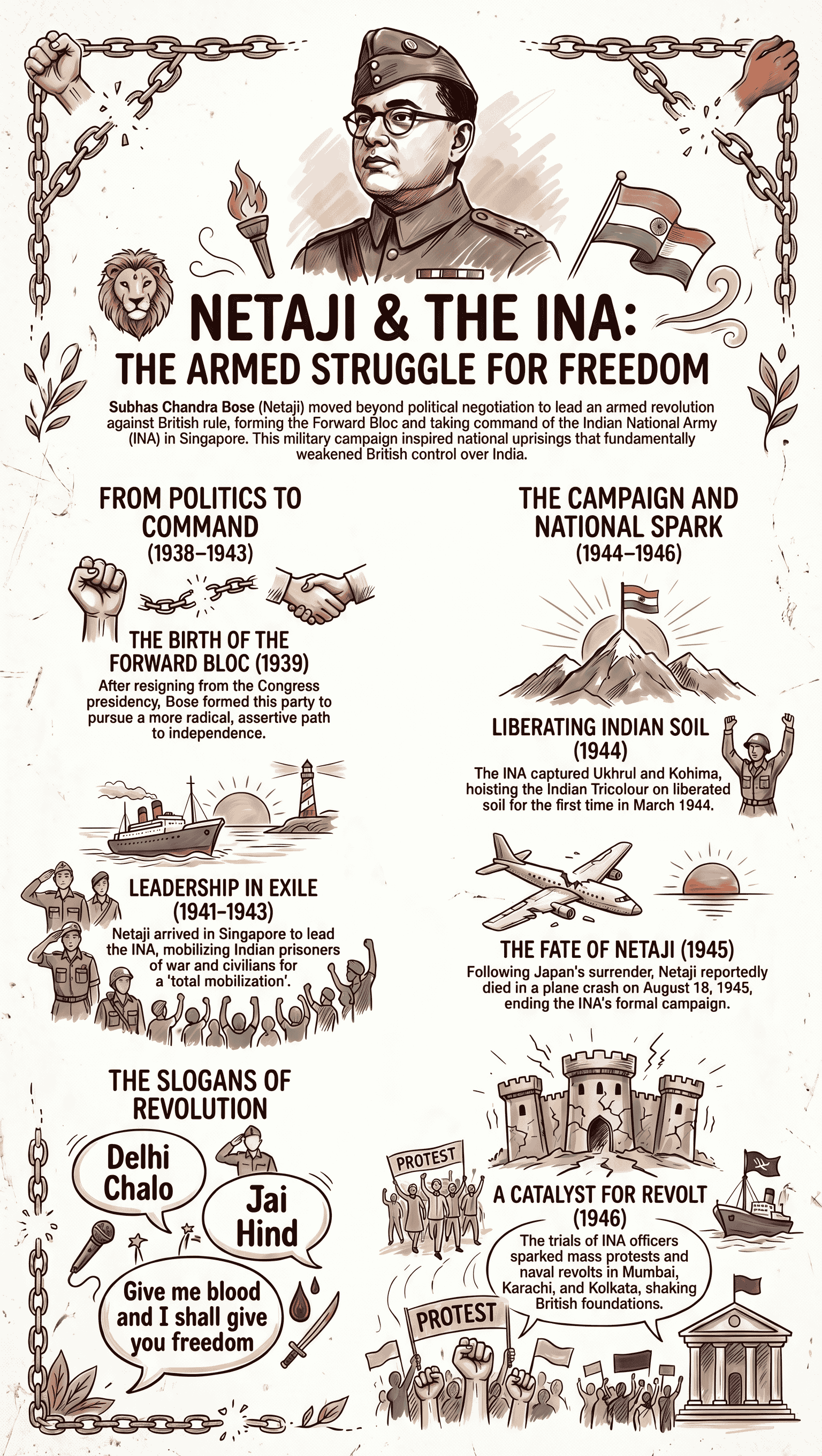
- Foundation: Following his resignation, he laid the foundation of a new party called the Forward Bloc to bring the entire left-wing under one banner.
- Main Objectives: The primary objective was the liberation of India with the active support of workers, peasants, youth, and other organizations. The party ultimately worked toward the establishment of a Socialist state.
3. The Indian National Army (INA) and Independence League
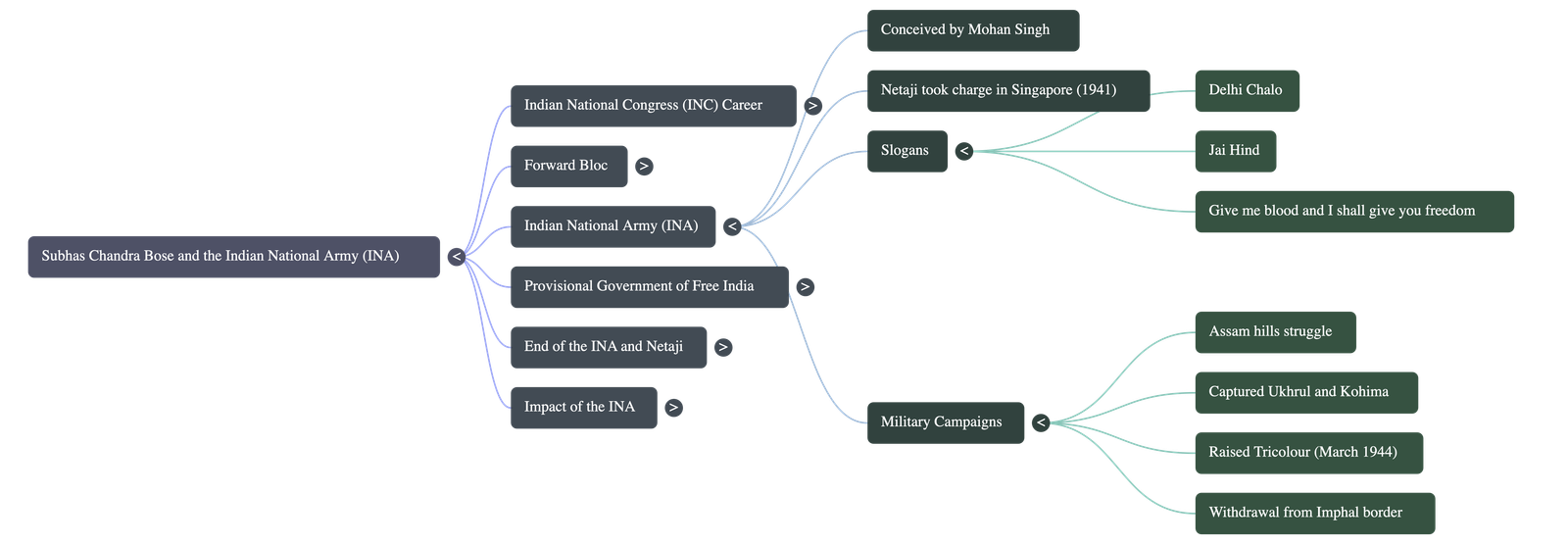
- Conception: The idea of the Indian National Army (INA) was conceived and formed in Malaya by Mohan Singh, who also became its first Commander-in-Chief.
- Troop Formation: The Japanese handed over Indian Prisoners of War (POWs) to Mohan Singh, who inducted them into the INA.
- Indian Independence League: Rashbehari Bose played a crucial role in organising the Indian Independence League.
4. Contributions and Leadership of Netaji
- Taking Charge: Netaji Subhas Chandra Bose arrived in Singapore in 1941 and took charge of the INA, leading India's freedom struggle from outside the country as its Supreme Commander.
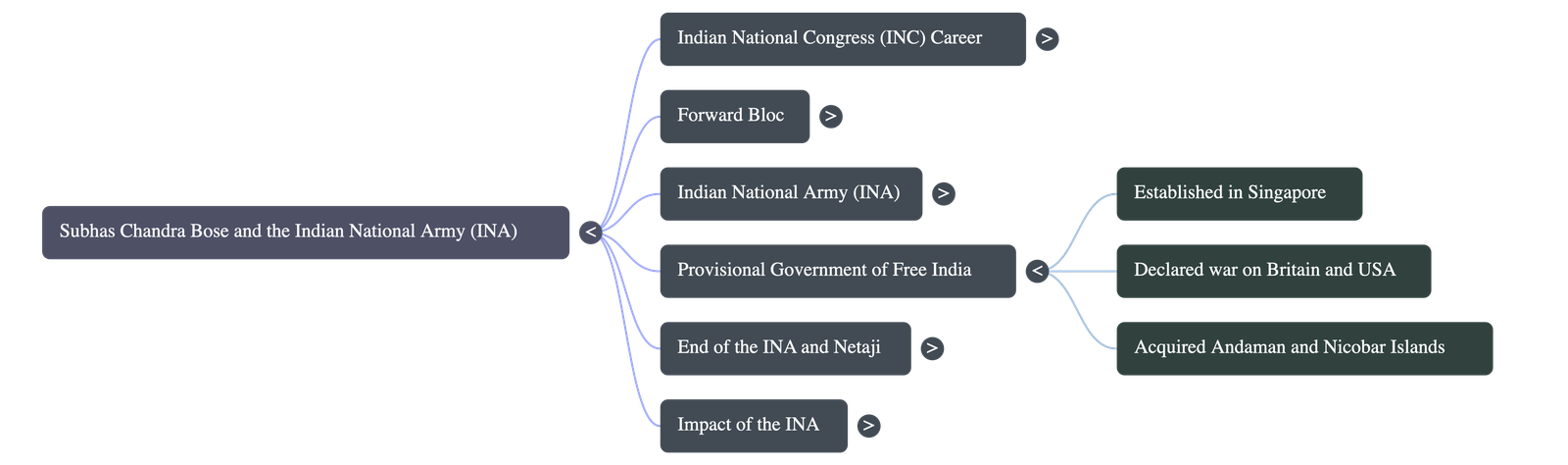
- Provisional Government: In 1943, he set up the Provisional Government of Free India in Singapore and boldly declared war on Britain and the USA.
- Territorial Gains: The Provisional Government acquired its first stretch of territory when Japan handed over the Andaman and Nicobar Islands. Netaji renamed them Shaheed and Swaraj islands.
- Inspiring Slogans: He gave the famous war cries "Delhi Chalo" and "Jai Hind". To mobilise the masses, he passionately declared, "Give me blood and I shall give you freedom".
5. Military Campaigns of the INA
- Advance to India: The INA advanced up to the frontier of India, successfully capturing the strong military post of Klang Klang in Malaysia.
- Battles in Assam: They gave a tough fight to the British forces in the Assam hills and successfully captured Ukhrul and Kohima.
- Hoisting the Flag: In a historic moment of pride, the INA raised the Tricolour Flag for the first time on liberated Indian soil on March 19, 1944.
6. Fate of the INA and Netaji
- Setbacks: The INA's victories were unfortunately short-lived. They had to withdraw from the Indo-Burma border because the Japanese forces got entangled with the Americans in the Pacific Ocean and the heavy rainy season set in.
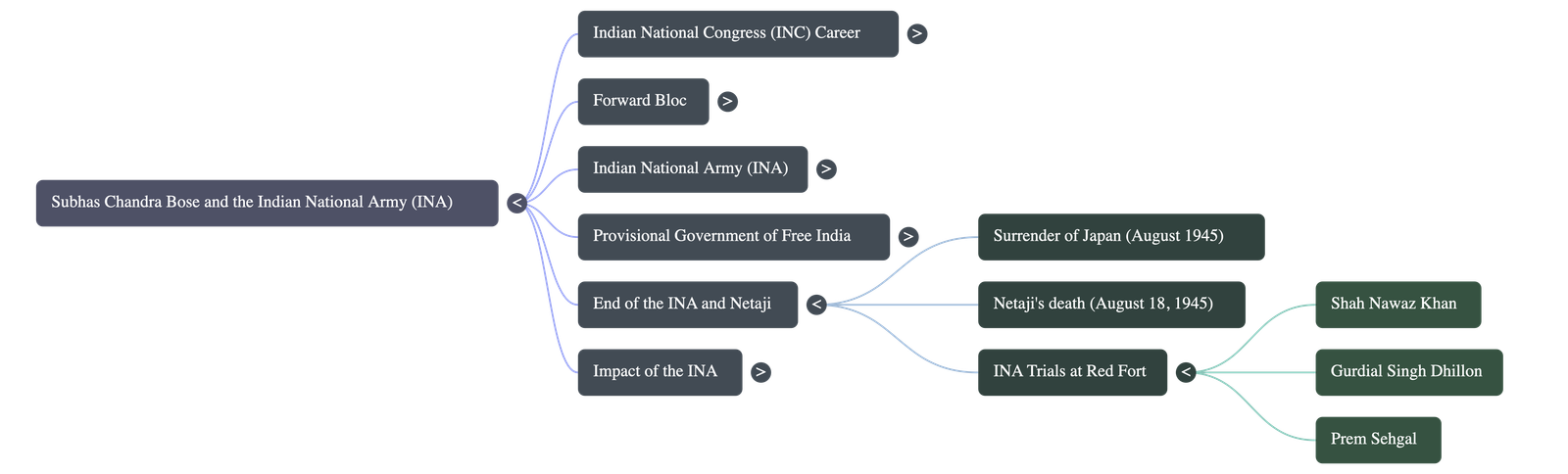
- Defeat: Rangoon was eventually recaptured by the British. INA soldiers were disarmed and made prisoners of war. The formal surrender of Japan on August 15, 1945, ultimately sealed the fate of the INA.
- Tragic End: Netaji left Rangoon for Bangkok and thereafter flew to Tokyo. The official Japanese version stated that Netaji received fatal injuries in a plane crash and died on August 18, 1945.
7. Impact and Legacy of the INA
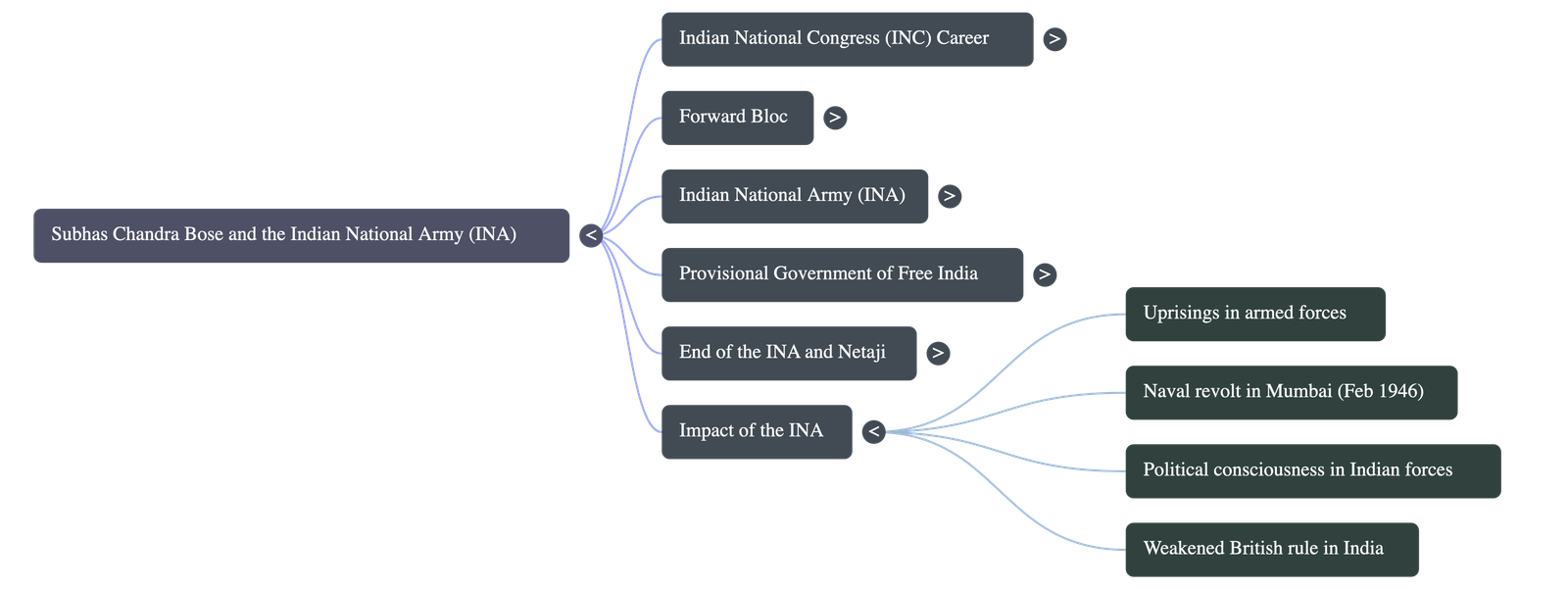
- Inspiring Heroism: The INA set an inspiring example of patriotism and revealed the sheer heroism of Indians. Their sacrifices led to a massive political consciousness among Indian forces.
- Armed Forces Uprisings: The INA's spirit inspired revolts within the British Indian armed forces. The Indian Naval ratings in Mumbai rose in revolt in February 1946, followed by similar uprisings in Kolkata, Chennai, and Karachi. These naval revolts shook the very foundation of the British Empire.
- The Red Fort Trials: The British Government put INA officers—Shah Nawaz Khan, Gurdial Singh Dhillon, and Prem Sehgal—on trial at the Red Fort in Delhi. The people welcomed them as national heroes, and demonstrations demanding their release were held across the country.
- British Realization: Public opinion was so overwhelmingly strong that the British Government was forced to set the convicted officers free. Crucially, the British realized they could no longer rely on the Indian forces to continue their rule in India.
Jai Hind! Keep studying hard!
Do checkout all questions & answers of this chapter.
Quick Navigation:
| | | |
1 / 1
Quick Navigation:
| | | |