Quick Navigation:
| | | |
United Nations
Introduction & Reasons for the Establishment of the United Nations
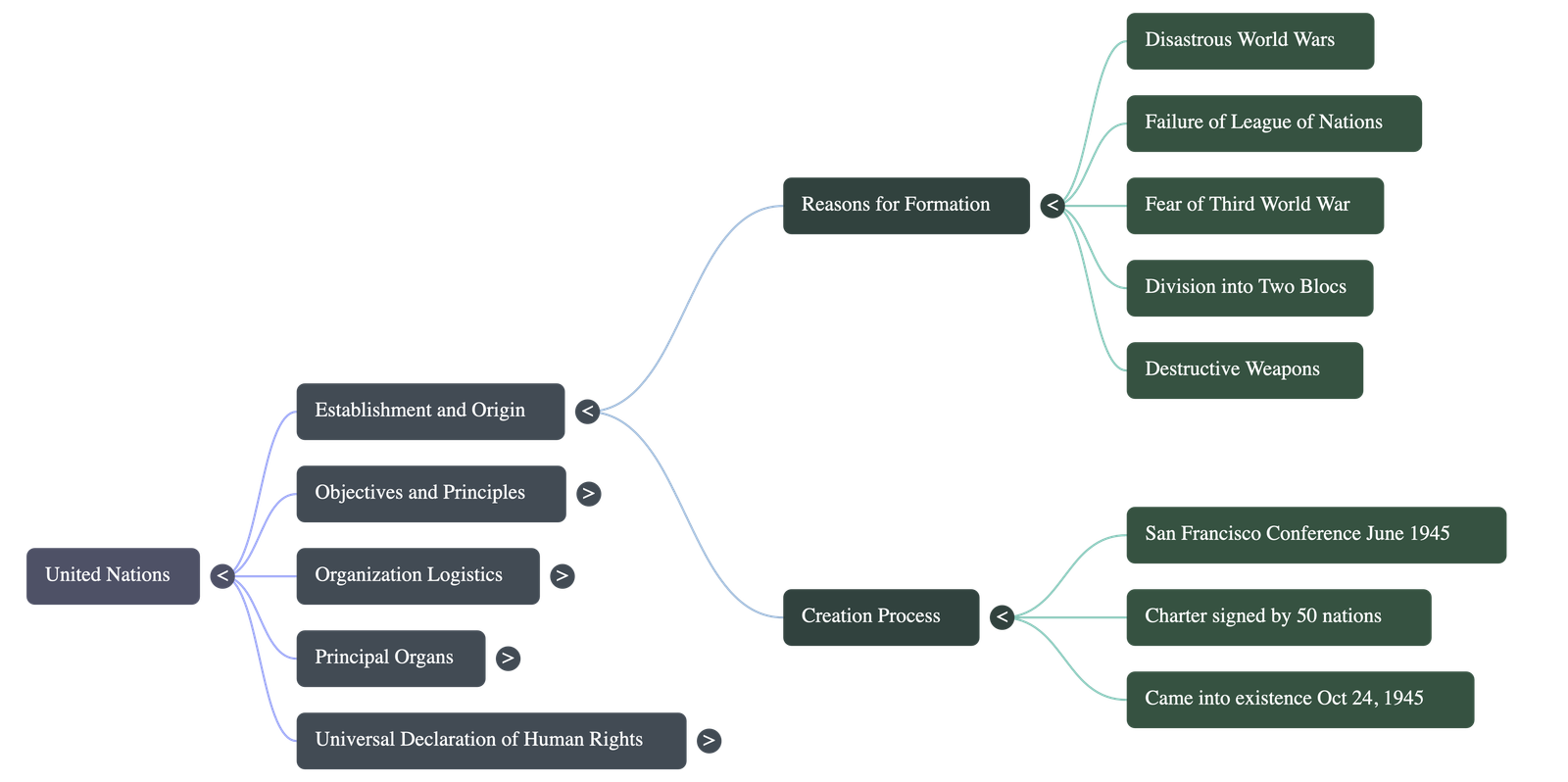
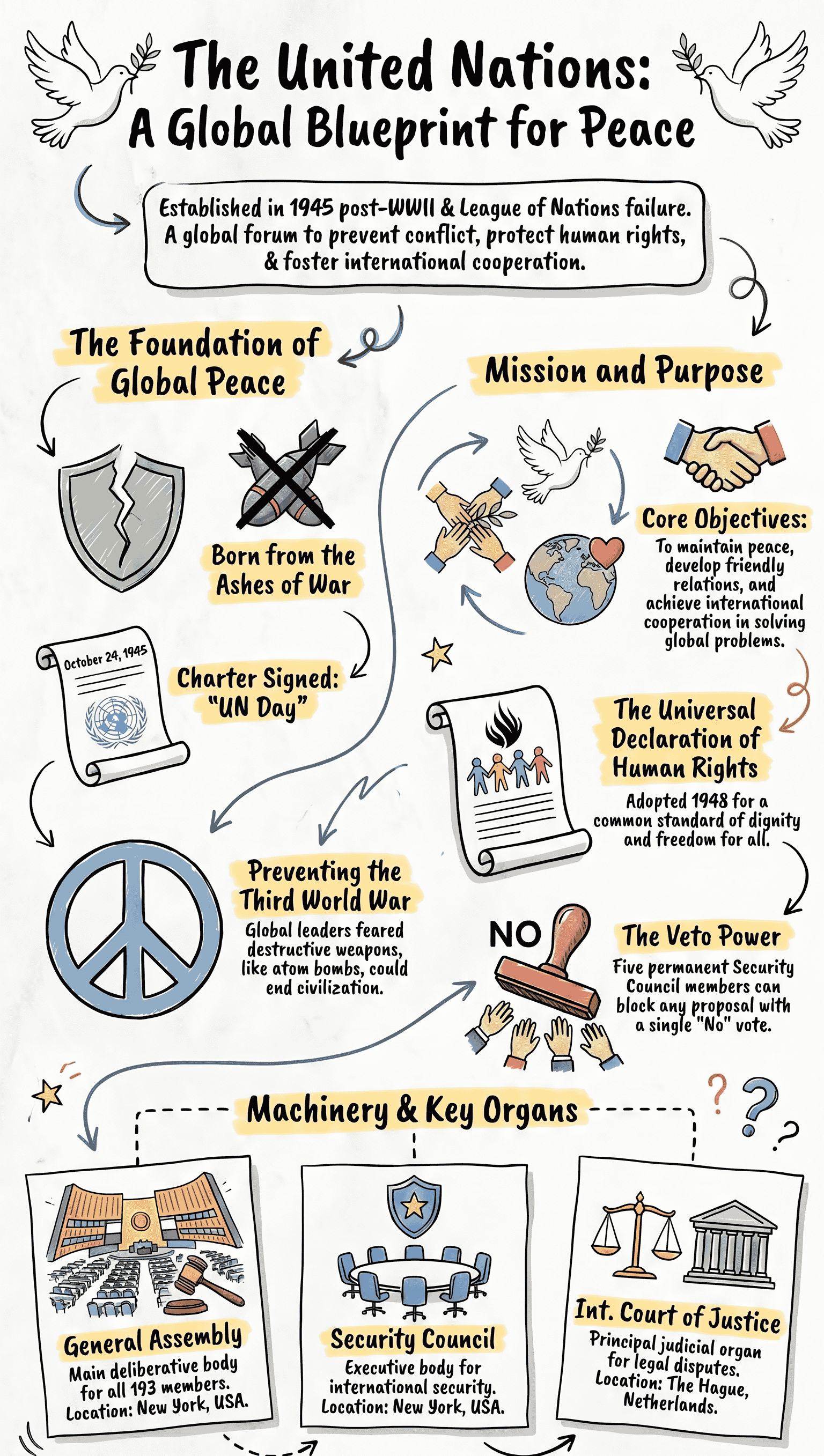
After the bitter experiences of two World Wars within 25 years, global leaders realised the urgent need for a powerful international organisation to maintain world peace. This led to the formation of the United Nations.
- Disastrous World Wars: The 20th century witnessed two catastrophic wars that caused billions of dollars in damage, mass casualties, and widespread misery, prompting the need to save humanity from total destruction.
- Failure of the League of Nations: Established after World War I to ensure peace, the League of Nations ultimately failed to prevent the outbreak of World War II.
- Fear of a Third World War: The bitterness following WWII created a profound fear that a third global conflict could bring about the end of the world.
- Division of the World into Two Blocs: Post-WWII, the world split into two rival power blocs led by the USA and the USSR, necessitating an impartial platform to resolve disputes amicably.
- Destructive Weapons: The invention of atom bombs and the resulting arms race made global leaders realise the urgent need to discuss disarmament and prevent mutual destruction.
Origin and Basics of the UN
- Formation: Conceived during discussions between Allied leaders like US President Roosevelt and British PM Churchill. The UN Charter was drafted at the San Francisco Conference in June 1945.
- Official Existence: The UN formally came into existence on October 24, 1945, celebrated globally as UN Day.
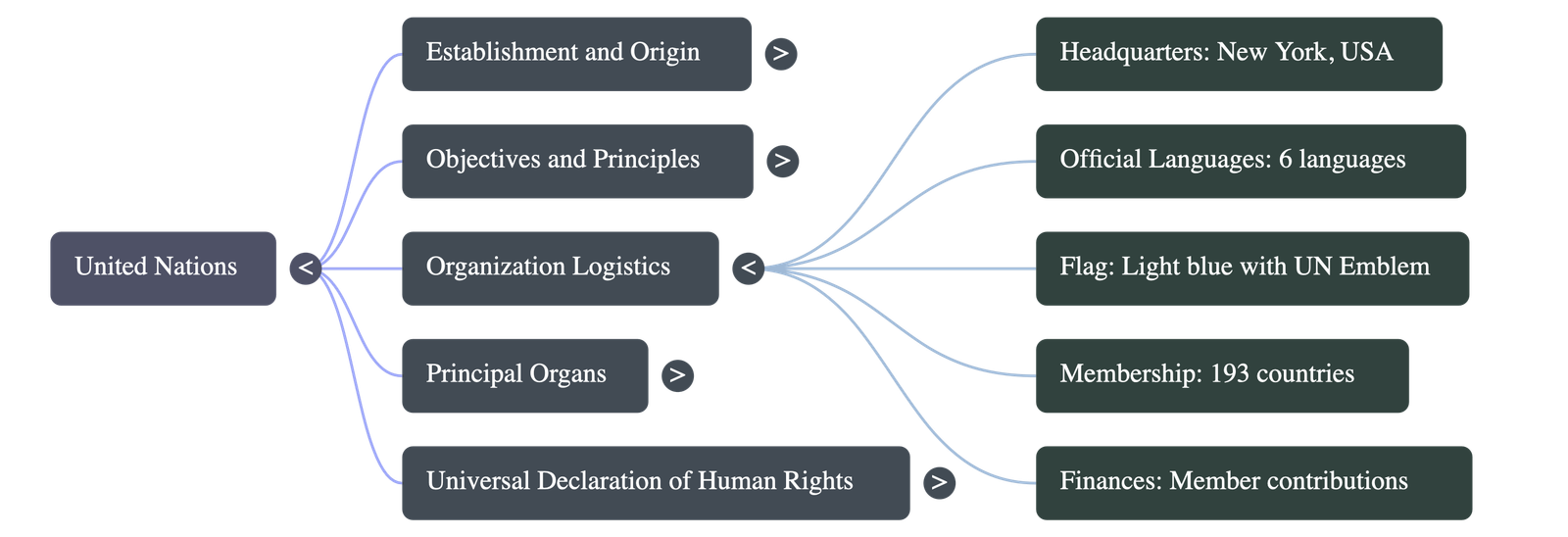
- Headquarters & Languages: Based in New York, USA (except the International Court of Justice, which is in The Hague). The official languages are Arabic, Chinese, English, French, Russian, and Spanish, with English and French as the working languages.
- Flag: Light blue flag featuring the white UN Emblem (a polar map of the world embraced by twin olive branches), adopted in 1947.
- Membership: Open to peace-loving nations. Starting with 50 original members (including India), it now has 193 members, with South Sudan being the latest addition.
- India's Role: Represented by Jawaharlal Nehru at the San Francisco Conference, India has been a core participant in UN peace-keeping missions globally.
Objectives and Principles of the UN
Main Objectives:
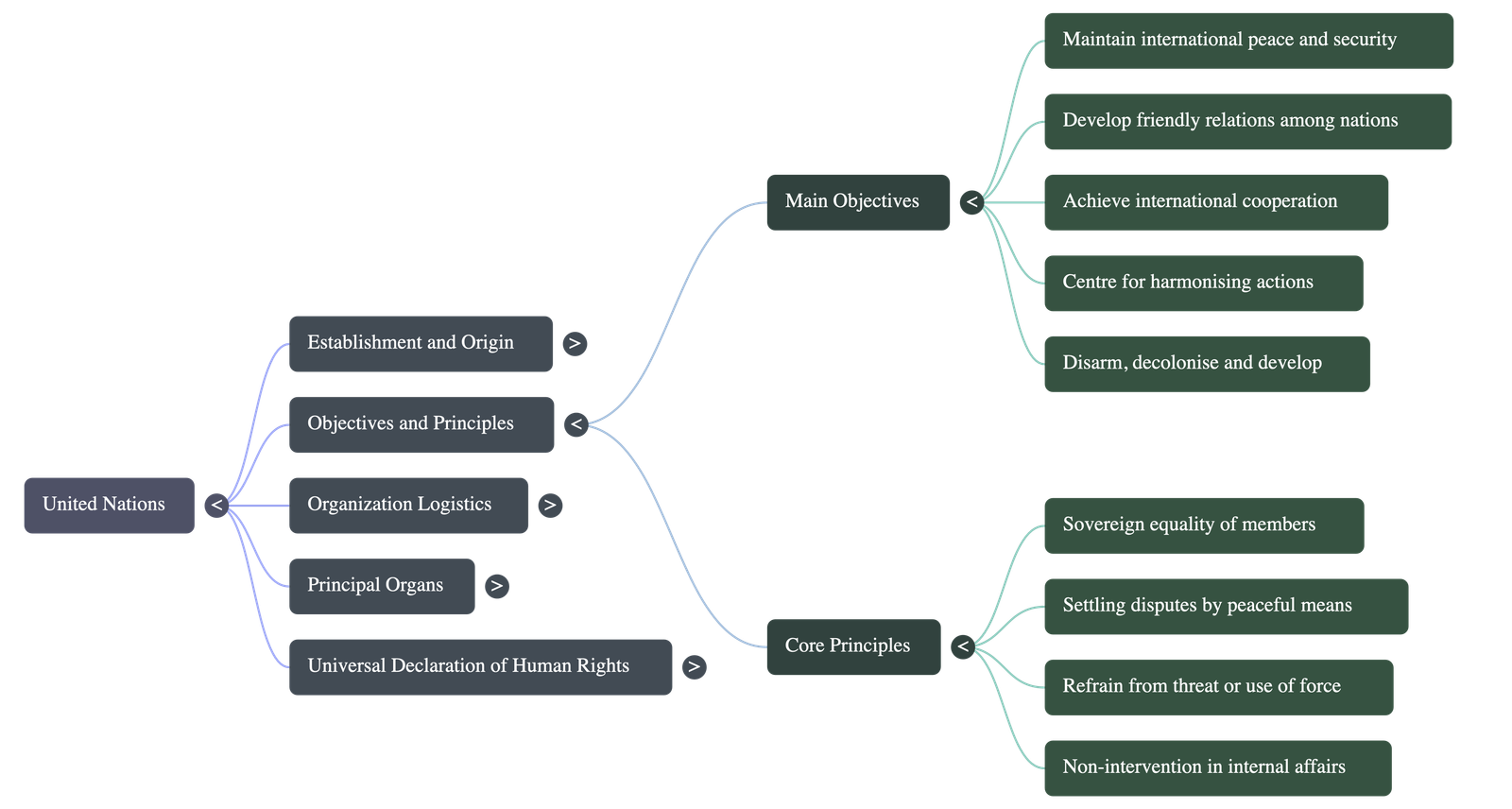
- To maintain international peace and security and suppress acts of aggression.
- To develop friendly relations among nations based on equal rights and self-determination.
- To achieve international cooperation in solving economic, social, cultural, or humanitarian problems.
- To serve as a central hub for harmonising the actions of nations.
- New Objectives: Disarm, decolonise, and develop.
Guiding Principles:
- Respect for the sovereign equality of all member states.
- Members must fulfill their assumed obligations in good faith.
- Settle international disputes via peaceful means.
- Refrain from the threat or use of military force against any state.
- No UN intervention in the domestic/internal affairs of any state.
Organs of the United Nations
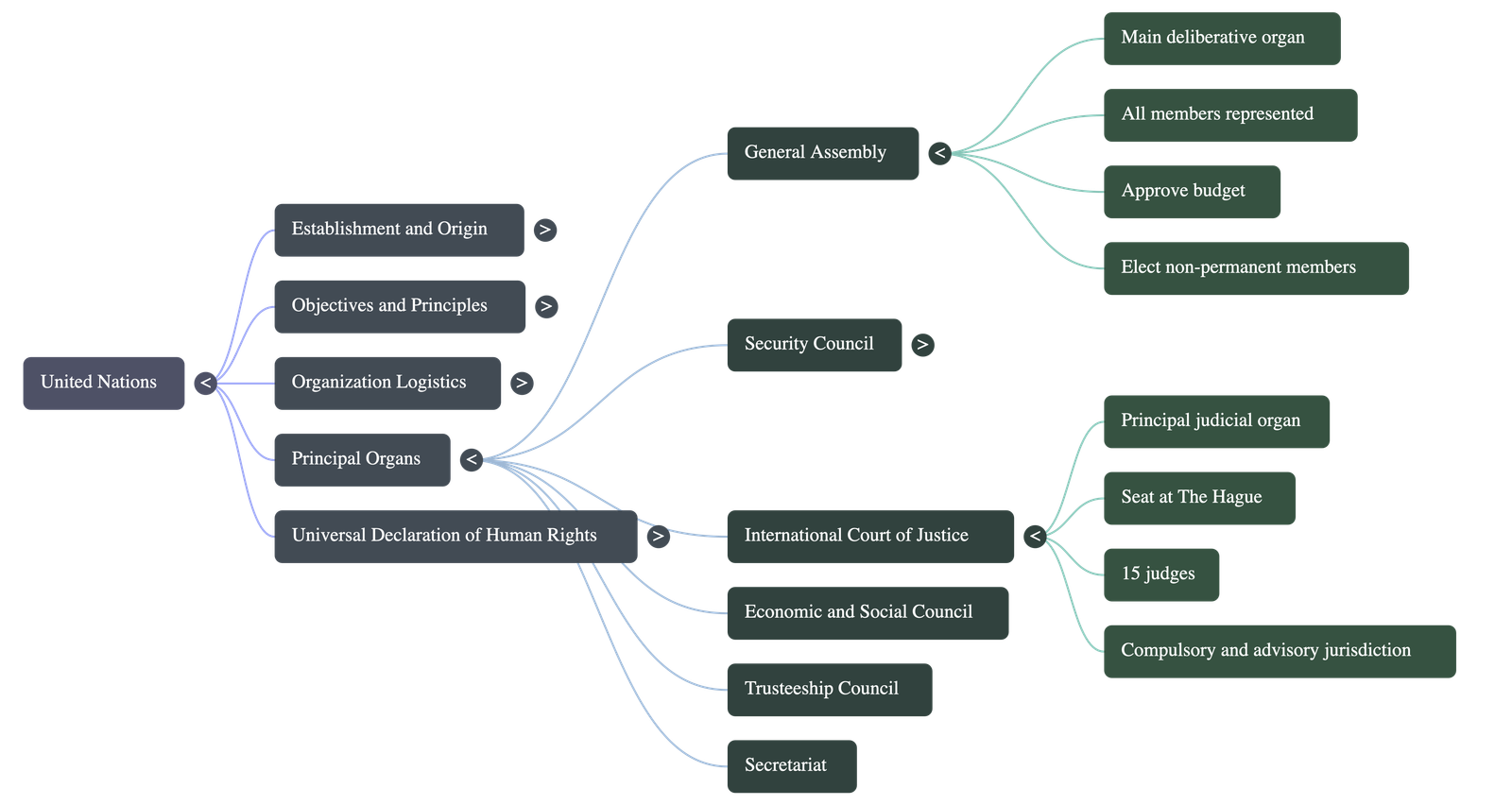
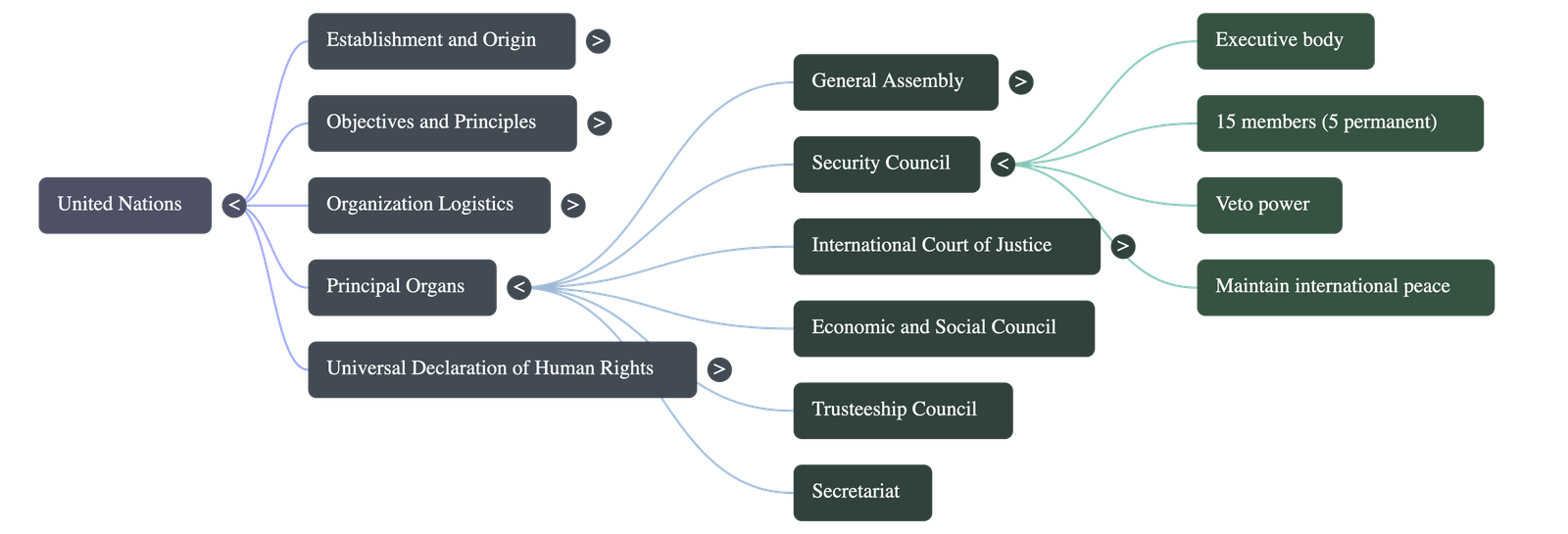
The UN operates through six principal organs: The General Assembly, The Security Council, The International Court of Justice, The Economic and Social Council, The Trusteeship Council, and The Secretariat.
1. The General Assembly
- Nature: The main deliberative organ, acting as a global parliament. Its resolutions carry heavy moral authority, though not legally binding.
- Composition: Includes all UN members. Each state can send up to five representatives but holds only one vote.
- Sessions: Meets annually from September to December.
- Powers & Functions: Discusses peace and security, initiates studies for international cooperation, approves the UN budget, elects non-permanent Security Council members, and appoints the Secretary-General.
- "Uniting for Peace": A resolution allowing the Assembly to step in and recommend armed force if the Security Council is deadlocked by a veto during a threat to peace.
2. The Security Council
- Nature: The executive body primarily responsible for global peace and security. It functions continuously.
- Composition: 15 members in total. 5 Permanent Members (China, France, Russia, Britain, USA) and 10 Non-permanent Members elected by the General Assembly for two-year terms.
- Veto Power: To pass significant decisions, 9 votes are needed, including the concurring votes of all 5 permanent members. A negative vote by any permanent member is a "veto", which blocks the decision.
- Powers & Functions: Investigates disputes, applies economic sanctions, takes military action against aggressors, formulates disarmament plans, and recommends the admission of new members.
3. International Court of Justice (ICJ)
- Nature: The principal judicial organ, located at The Hague, Netherlands.
- Composition: Consists of 15 independent judges elected for nine-year terms by the General Assembly and Security Council.
- Jurisdiction:
- Voluntary: Entertains disputes if member states agree to submit them.
- Compulsory: Interprets international law and decides on reparations for breaches of obligations.
- Advisory: Offers legal opinions solely to authorised international organisations.
Universal Declaration of Human Rights
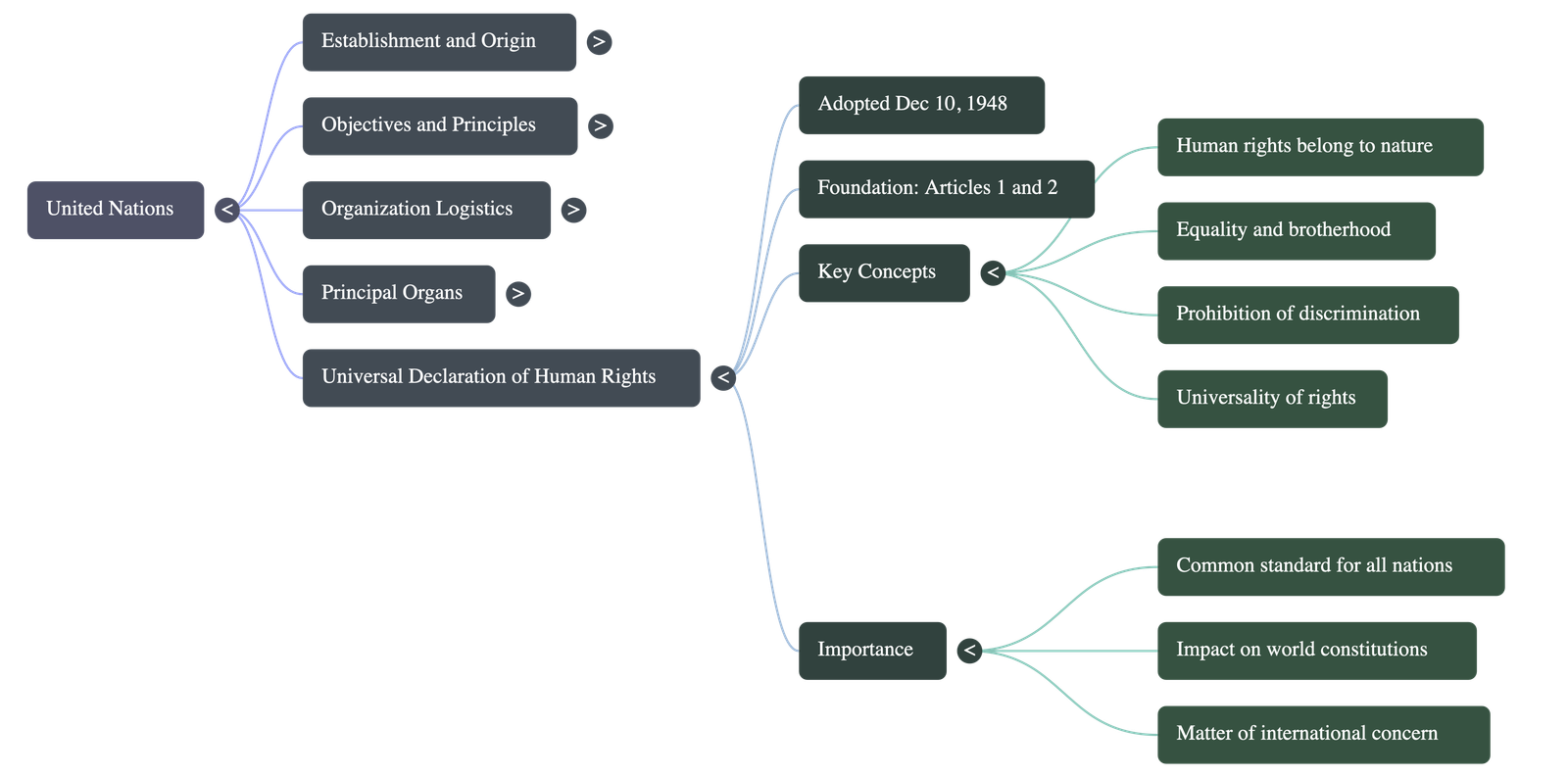
Adopted by the General Assembly, this declaration guarantees every individual the right to live a decent life, free from discrimination.
Basis of All Rights (Articles 1 & 2):
- Article 1: All human beings are born free and equal in dignity and rights, endowed with reason and conscience.
- Article 2: Everyone is entitled to all rights without distinction of race, colour, sex, language, religion, political opinion, or origin.
Importance of the Declaration:
- Common Standard: It serves as a benchmark of achievement for all nations, holding them responsible for removing social and political inequalities.
- Universal Nature: Member nations must enforce these rights irrespective of their political or social systems.
- International Concern: Human rights violations are treated as threats to international peace, actively tracked by the Human Rights Committee.
- Constitutional Impact: It heavily influenced the Constitutions of various countries worldwide, guaranteeing rights like asylum and adequate living standards.
Note on Children's Rights: The UN also adopted the Declaration of the Rights of the Child (1959), ensuring every child's right to protection, opportunity, and healthy development, which became legally binding in 1989.
Do checkout all questions & answers of this chapter.
Quick Navigation:
| | | |
1 / 1
Quick Navigation:
| | | |