Quick Navigation:
| | | |
Non-Aligned Movement
Comprehensive Study Notes for Class 10 History
1. Introduction and Meaning
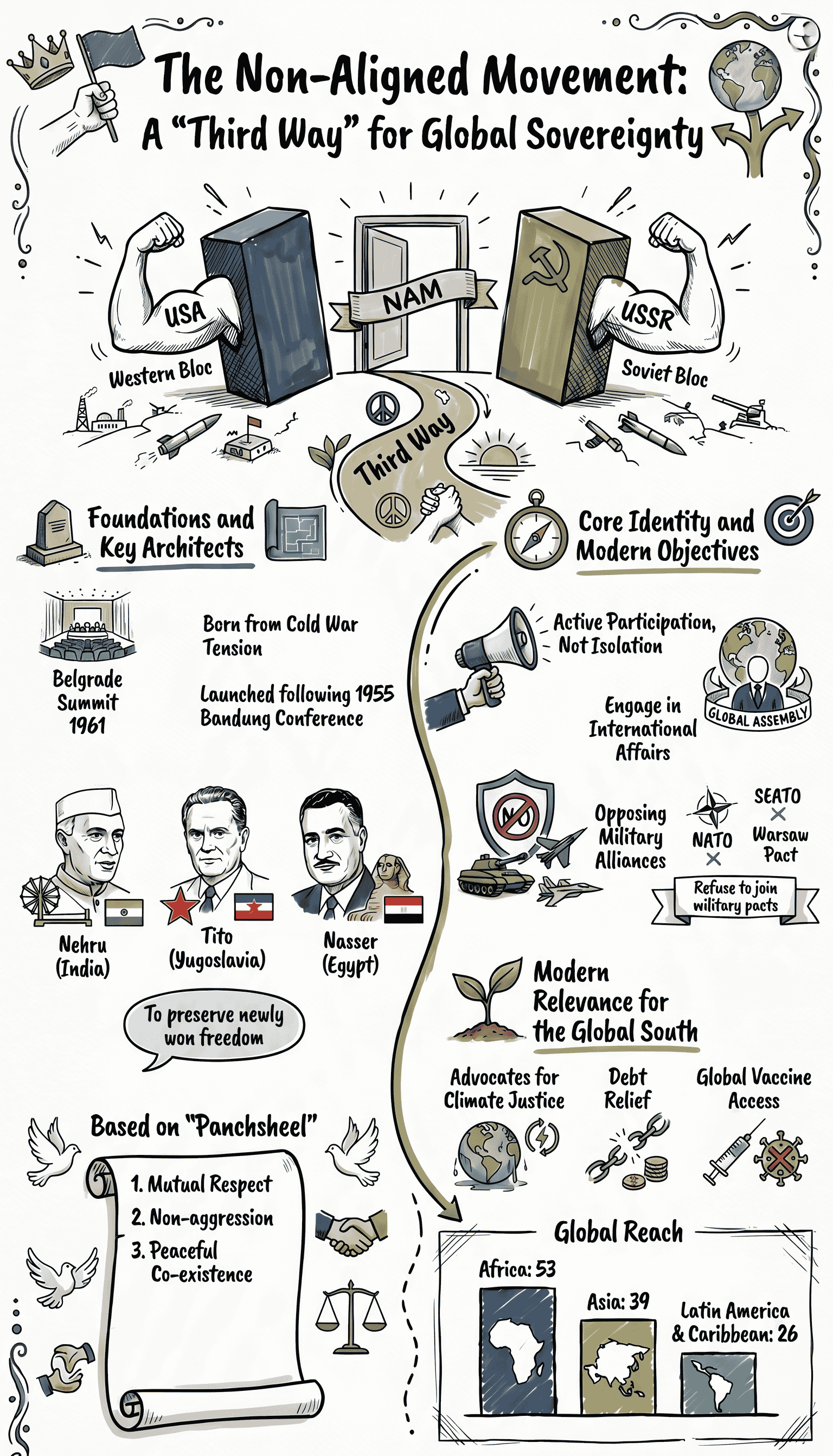
- The Cold War Context: After the Second World War, the world became divided into two rival power blocs—one led by the USA and the other by the Soviet Union.
- Emergence: Newly independent countries in Asia and Africa decided not to join either of these two blocs to maintain their independence.
- Meaning of Non-Alignment: It is the international policy of a sovereign state to avoid aligning itself with any power blocs, while actively participating in world affairs to promote international peace, harmony, and cooperation.
2. Main Features of NAM
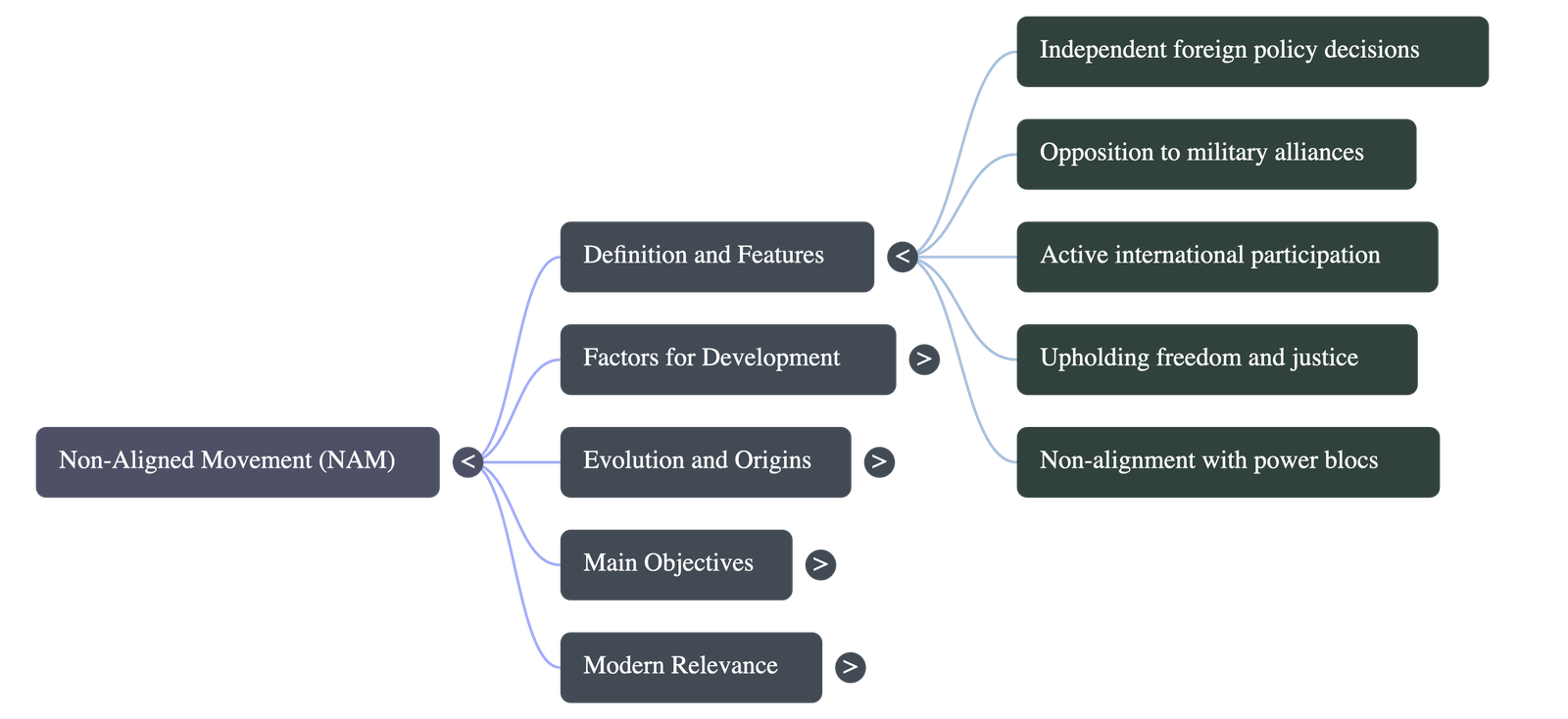
- No Power Blocs: It strictly avoids alignment with any of the global power blocs.
- Opposition to Military Alliances: It opposes any kind of military alliances or pacts like NATO, SEATO, and the Warsaw Pact.
- Independent Foreign Policy: It allows member nations the freedom to make their own independent foreign policy decisions.
- Active Participation: It does not mean remaining aloof or isolated from international problems; it stands for 'action' rather than passivity in global affairs.
- Merit-Based Judgment: It judges every international issue on its own merit and firmly upholds the rights of all people to freedom and justice.
3. Factors Responsible for Non-Alignment
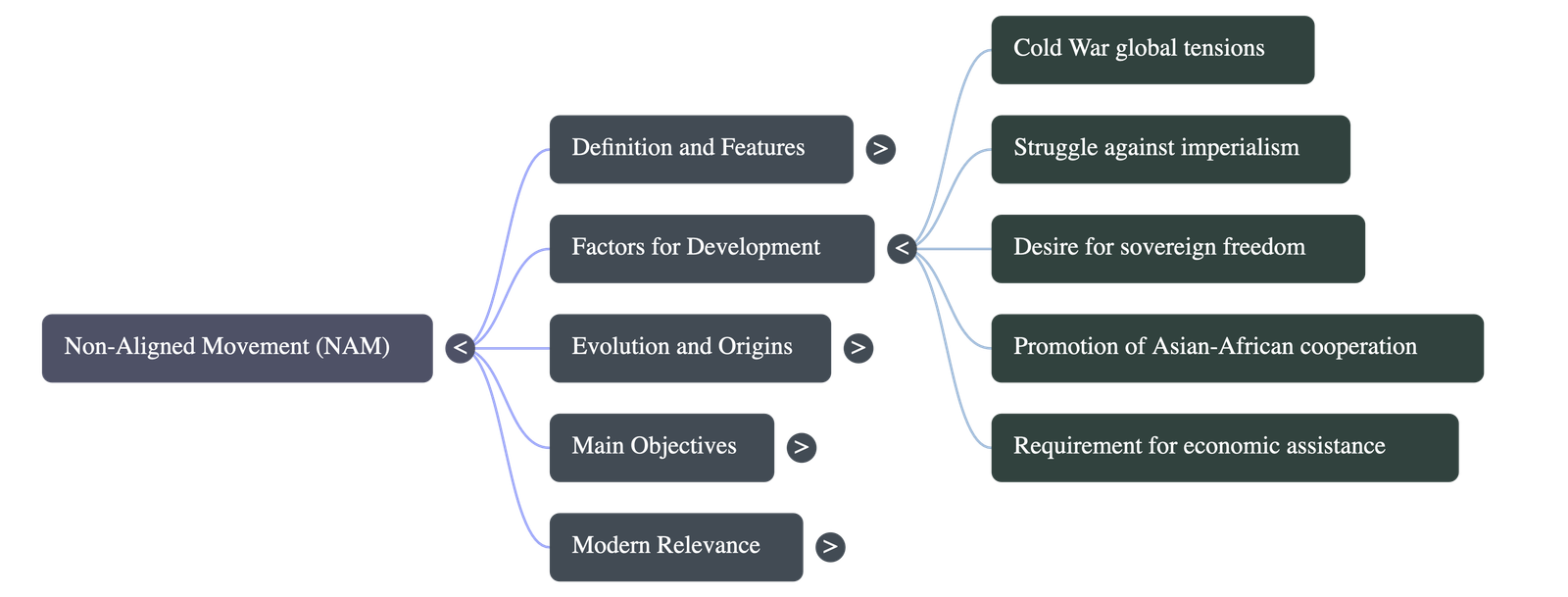
- Global Tension Caused by the Cold War: Newly independent nations realized that the world's division into two blocs endangered world peace. Staying away helped avoid the threat of another world war or a nuclear holocaust.
- Enjoying Newly Acquired Freedom: These nations had recently escaped imperialism and neo-colonization. They wanted to fully protect and enjoy their new freedom.
- Solving Internal Problems: Developing nations wished to solve their domestic challenges without unwanted outside interference.
- Promoting Regional Cooperation: They aimed to foster goodwill and cooperation among the newly independent nations of Asia and Africa.
- Economic Development: To boost their struggling economies, they found it worthwhile not to align with any specific bloc so they could receive economic assistance from both sides.
4. Evolution and Founding of NAM
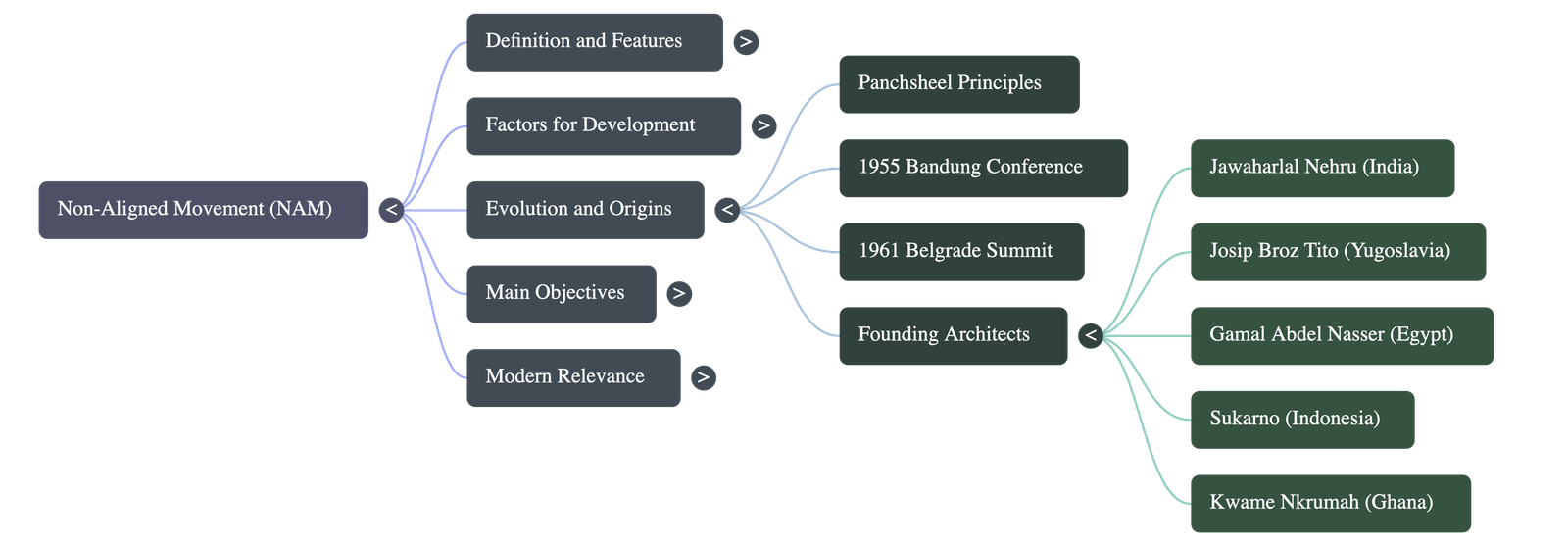
- Ideological Base: The movement was built on the principles of Panchsheel, enunciated by India's first Prime Minister, Jawaharlal Nehru.
- Bandung Conference (1955): The concept was given practical shape at a conference held in Bandung, Indonesia.
- Official Birth (1961): The Non-Aligned Movement was formally born in September 1961 with its first summit meeting held at Belgrade in Yugoslavia.
- Founding Fathers: The primary architects of the movement were Jawaharlal Nehru (Prime Minister of India), Josip Broz Tito (President of Yugoslavia), and Gamal Abdel Nasser (President of Egypt). Other prominent advocates included Kwame Nkrumah (Ghana), Chou En Lai (China), and Ho Chi Minh (Vietnam).
5. Objectives of NAM
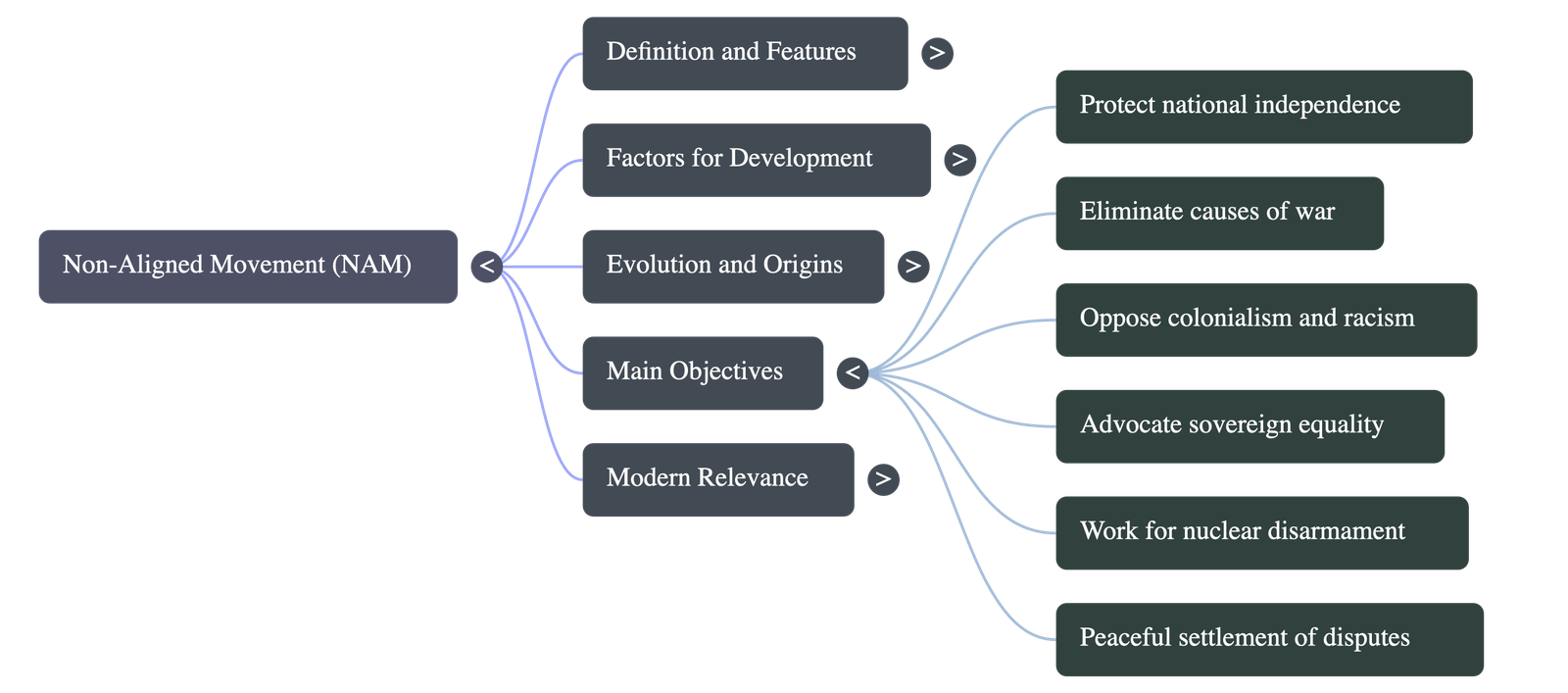
- To keep away from superpower rivalry and to protect and preserve their independence.
- To eliminate all root causes which could lead to a global war.
- To fiercely protect the freedom of the newly independent nations of Asia and Africa.
- To oppose colonialism, imperialism, and racial discrimination across the globe.
- To intensely advocate for the sovereign equality of all states, big or small.
- To encourage friendly relations and goodwill among countries.
- To advocate for the peaceful settlement of international disputes rather than armed conflict.
- To oppose the use of force and actively work for the complete abolition of nuclear weapons.
6. Role of Jawaharlal Nehru
- Key Architect: As the first Prime Minister of India, he played a highly significant role in the founding and evolution of NAM alongside leaders like Tito and Nasser.
- Strong Opposition to Blocs: He was strictly against alignment with any power blocs and vehemently opposed military pacts, armaments, and racial discrimination.
- Guiding Philosophy: Through the principles of Panchsheel, he made non-alignment the fundamental bedrock and basic framework of India's foreign policy.
7. Relevance of NAM in the Present World
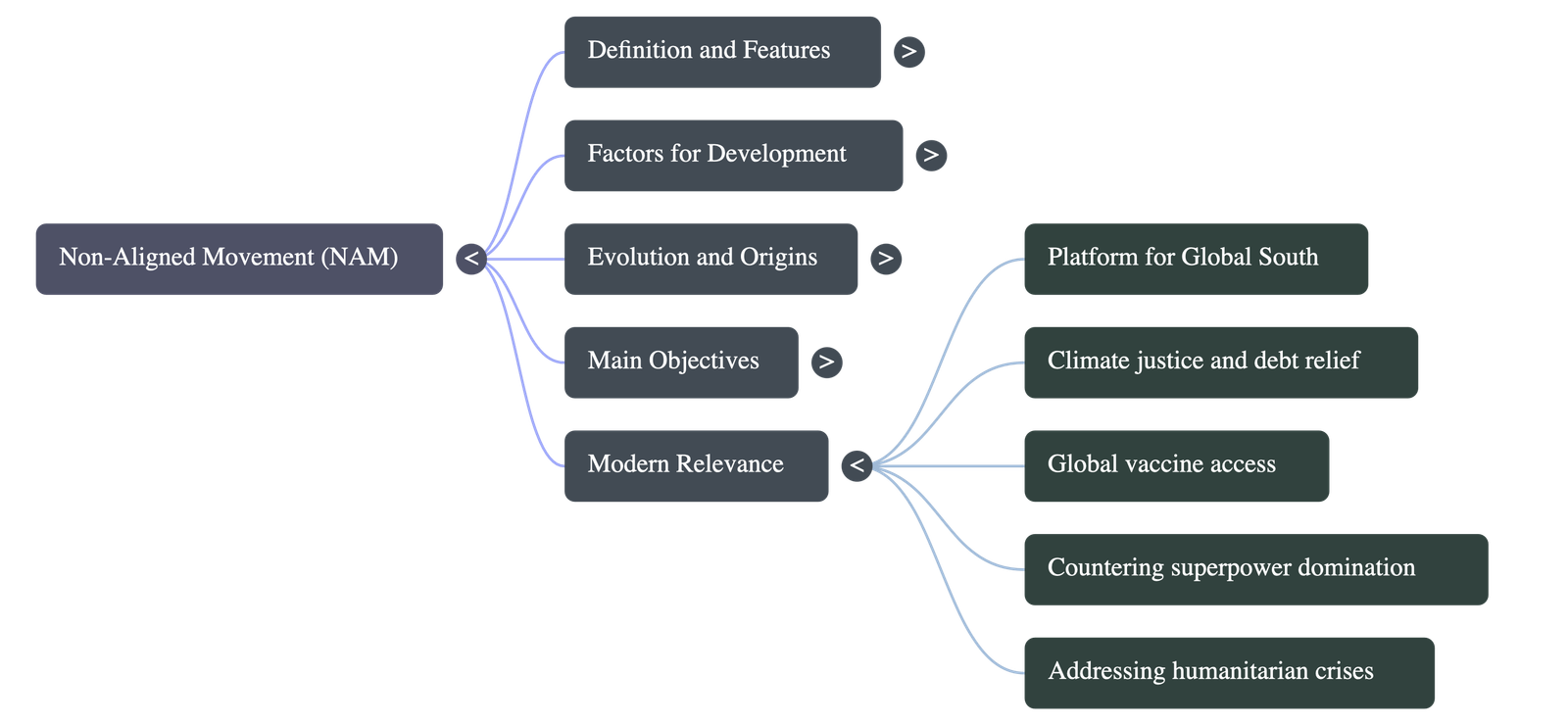
- Countering Neo-Colonialism: Many small and weak countries struggle to preserve economic sovereignty against interference from powerful international financial institutions (like the World Bank, IMF, and WTO). NAM acts as a collective shield to counteract these pressures.
- Preventing Unilateral Domination: With the USA emerging as a primary superpower dictating terms through unilateral decisions, NAM uses its vast diplomatic experience to prevent global domination by a single nation.
- Voice for the Global South: It gives moral and diplomatic weight to developing nations, acting as a powerful platform for demanding equity on crucial issues like global vaccine access, climate justice, and debt relief.
- Pursuit of Universal Goals: Despite the end of the Cold War, NAM remains a positive, dynamic, and constructive movement constantly aiming to achieve universal peace, disarmament, and sustainable development.
Do checkout all questions & answers of this chapter.
Quick Navigation:
| | | |
1 / 1
Quick Navigation:
| | | |