Quick Navigation:
| | | |
Photosynthesis
6.1 Plants — Self Food Producers
- All living organisms require food to survive.
- While animals must obtain their food from plants or other animals, green plants are unique because they prepare their own food through the process of photosynthesis.
6.2 What is Photosynthesis?
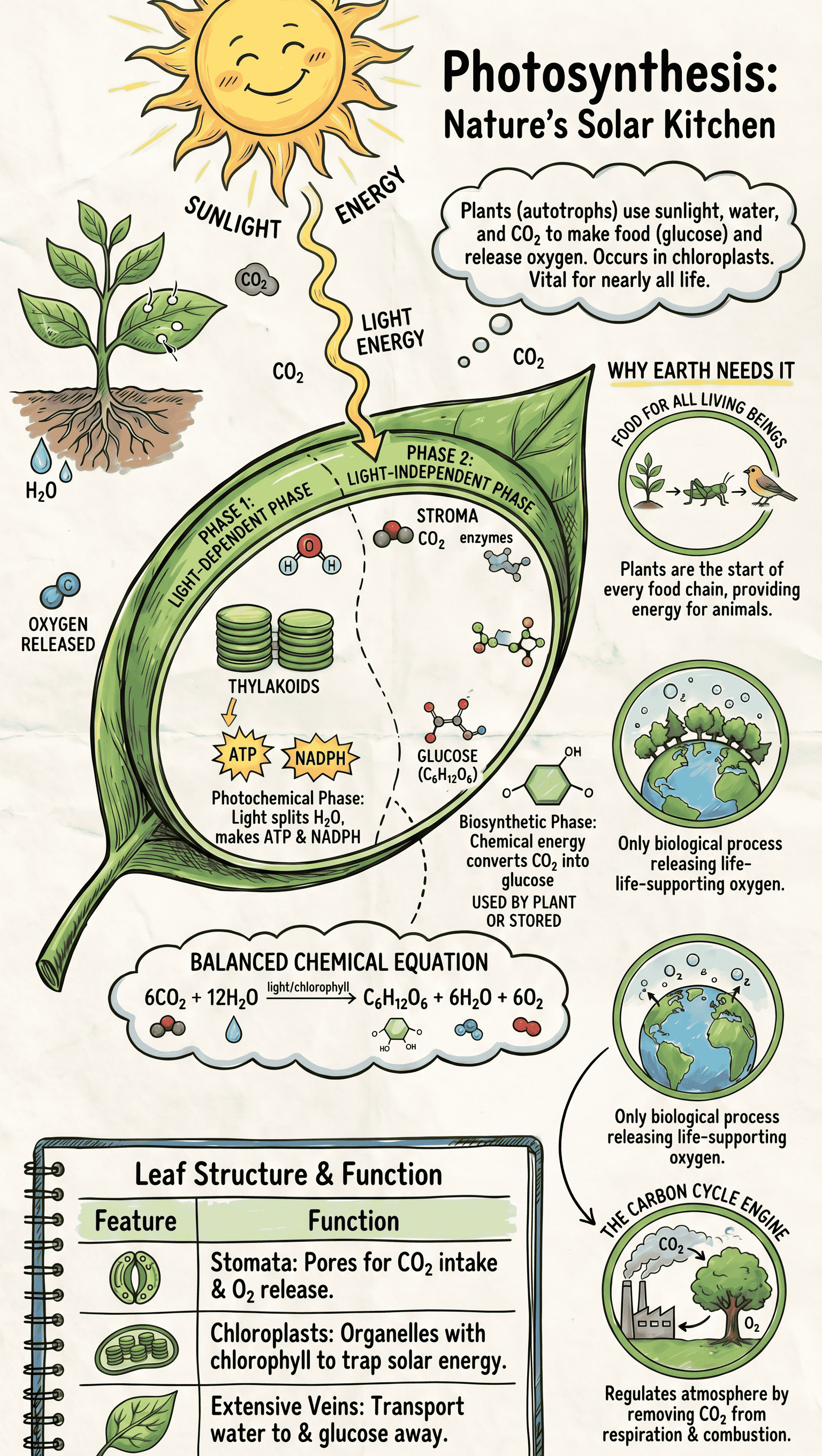
- Definition: It is the process by which living plant cells containing chlorophyll produce food substances (glucose and starch) from carbon dioxide and water, using light energy. Oxygen is released as a by-product.
- The essential chemical steps of this process are identical across all green plants.
- Importance of Photosynthesis:
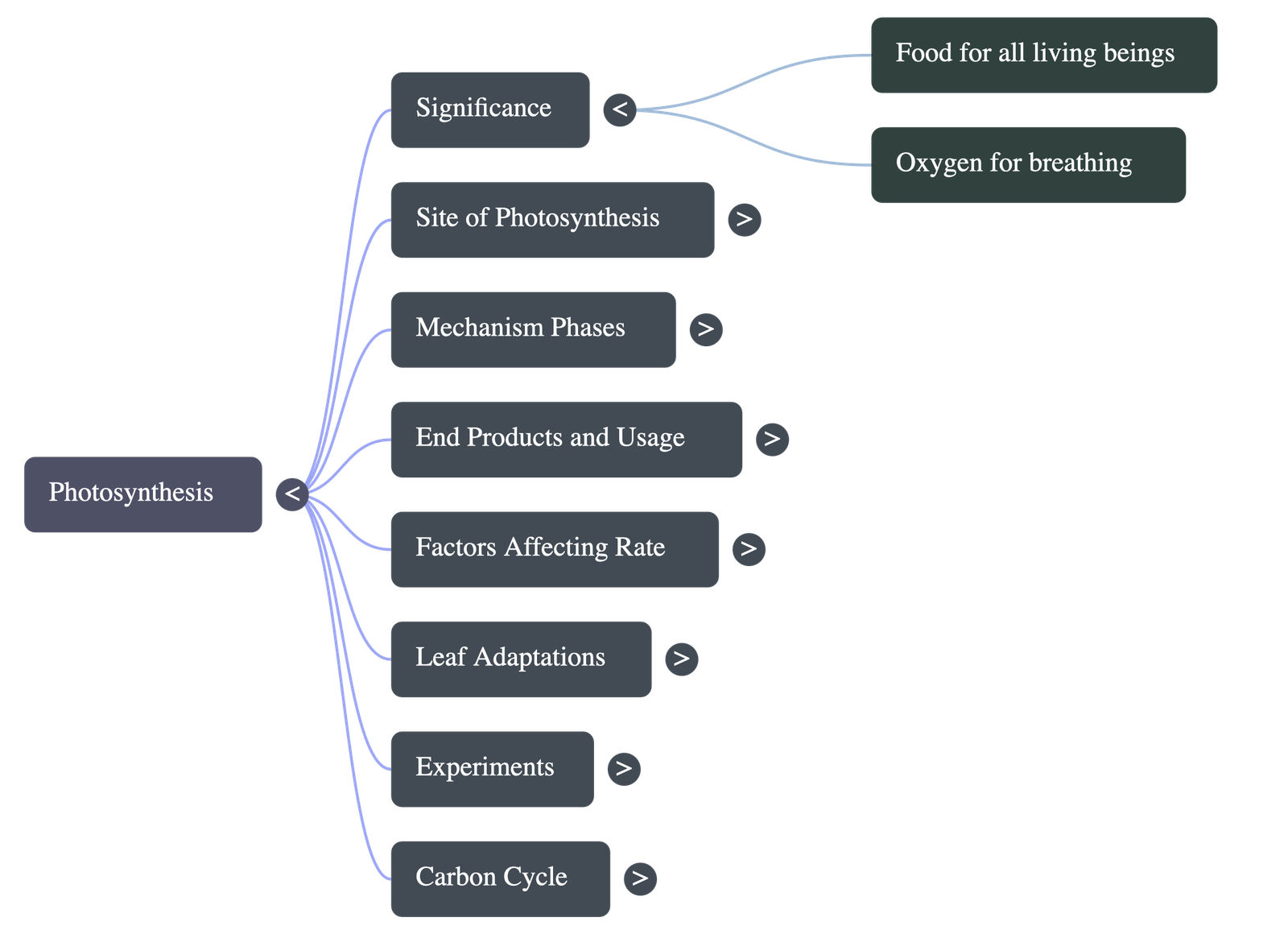
- Food for all: It is the ultimate source of energy and food for all living beings (directly for herbivores, indirectly for carnivores).
- Oxygen to breathe: It is the only biological process that releases life-supporting oxygen into the atmosphere.
6.3 Chlorophyll — The Vital Plant Pigment
- Chlorophyll: The green pigment contained in microscopic organelles called chloroplasts.
- Location: Mainly found in mesophyll cells (palisade and spongy cells) of leaves. Also present in guard cells of stomata and outer layers of young stems.
- Structure of Chloroplast:
- Bounded by a double membrane.
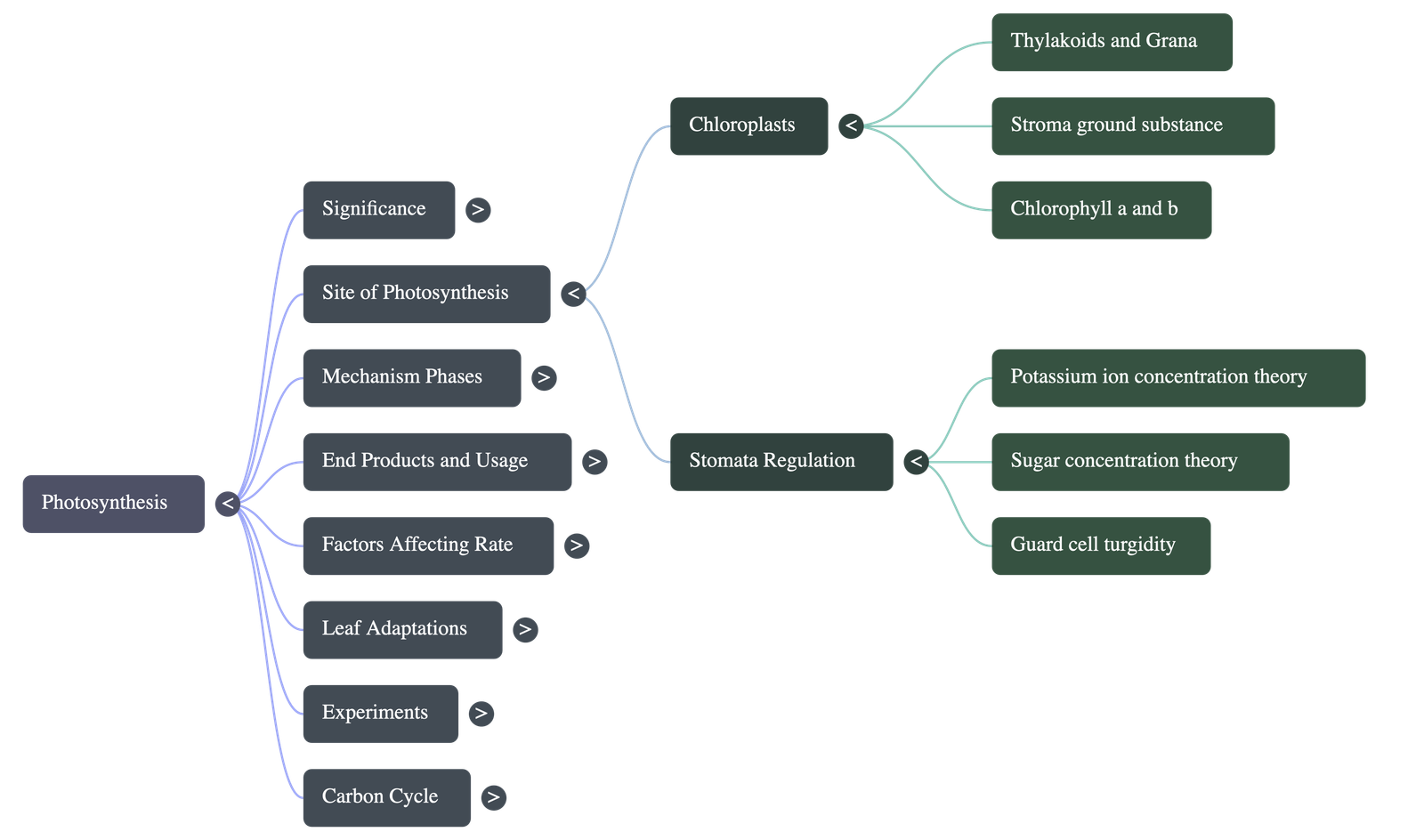
- Stroma: The colourless ground fluid inside the chloroplast.
- Thylakoids: Flattened sacs that contain the pigment chlorophyll.
- Grana: Piles (stacks) of thylakoids.
- There are nine types of chlorophyll, with chlorophyll-a and chlorophyll-b being the best known and most abundant.
- Chlorophyll absorbs blue and red light most effectively for photosynthesis, reflecting green light (which is why leaves appear green).
- Caution: Too much light can destroy chlorophyll, though new chlorophyll is formed based on light exposure.
6.4 Regulation of Stomatal Opening for Letting in Carbon Dioxide
- Stomata are minute openings mainly on the lower surface of leaves. Their primary function is to let atmospheric CO₂ diffuse in.
- When stomata are open, water loss occurs. Therefore, transpiration is the price the plant pays for photosynthesis.
- Stomata close in the dark to minimize water loss and open in the light.
- Theories of Opening and Closing:
- K⁺ Ion Concentration Theory (Recent): During the day, guard cell chloroplasts produce ATP. This ATP actively pumps Potassium (K⁺) ions from adjacent epidermal cells into the guard cells, making them hypertonic. Water enters by endosmosis, the guard cells become turgid, bulge outwards (due to their thin outer walls and thick inner walls), and the stomatal pore opens. At night, the reverse happens, K⁺ leaks out, and the pore closes.
- Sugar Concentration Theory (Old): During daytime photosynthesis, sugar (glucose) is produced in guard cells. This increases osmotic pressure, drawing water in via endosmosis. The cells become turgid, opening the stomata.
6.5 Process of Photosynthesis
- Mesophyll cells (especially palisade cells in the upper layer) are the principal centers for photosynthesis.
- Raw Materials:
- Carbon dioxide: Enters from the atmosphere via diffusion through stomata.
- Water: Absorbed by roots from the soil, transported up the stem, and distributed in mesophyll tissues.
- Overall Balanced Chemical Equation:
6CO₂ + 12H₂O ──(light energy & chlorophyll)──> C₆H₁₂O₆ + 6H₂O + 6O₂ ↑ - Note: The 6 molecules of water liberated at the end are re-formed during the chain of reactions; they are not the original ones.
6.6 Two Main Phases of Photosynthesis
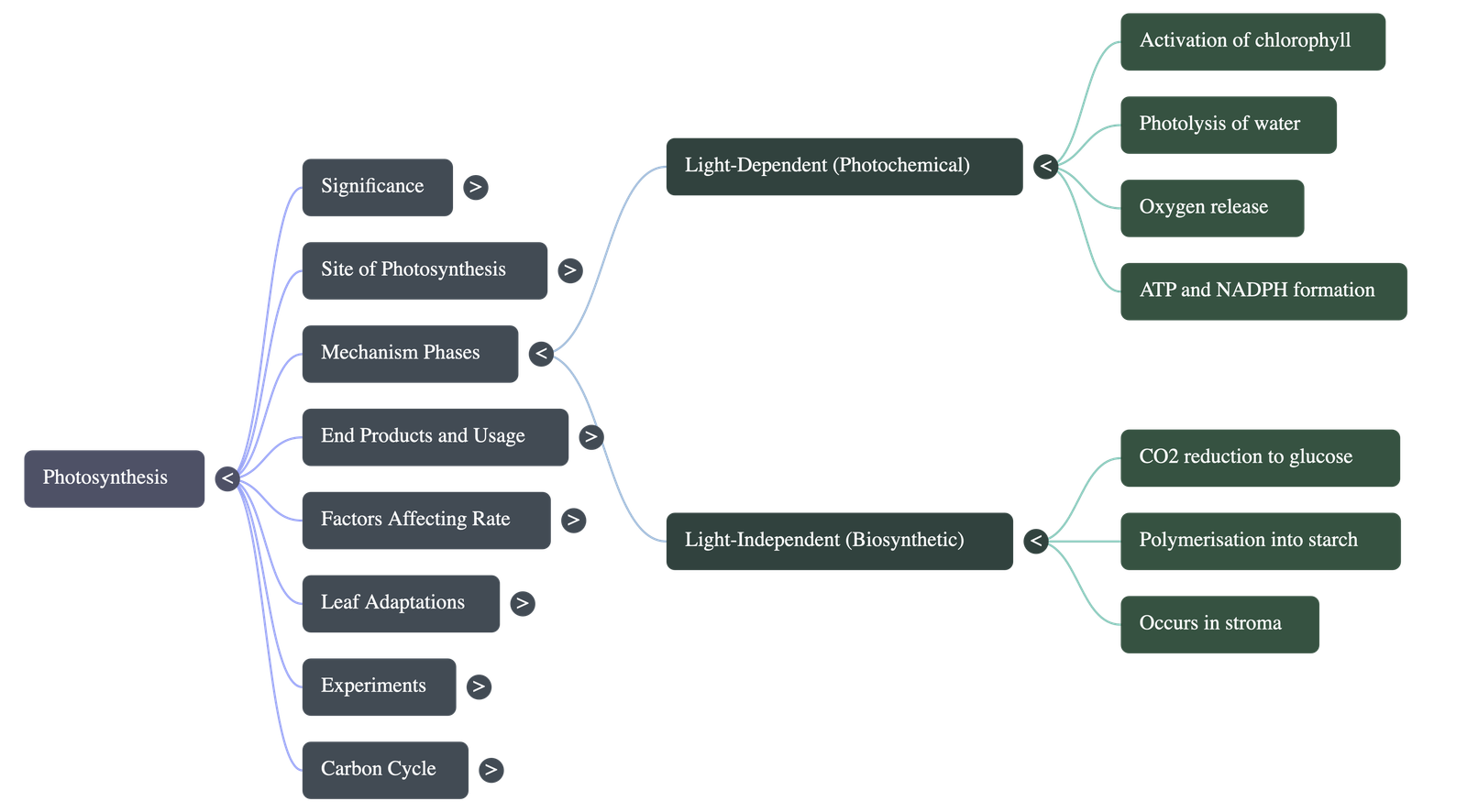
- (A) Light-Dependent Phase (Photochemical Phase):
- Takes place in the thylakoids (containing chlorophyll). Light plays the key role.
- Step I (Activation of chlorophyll): Chlorophyll absorbs photons (units of light energy) and becomes activated.
- Step II (Photolysis of water): The absorbed energy splits water (2H₂O) into hydrogen ions (4H⁺), electrons (4e⁻), and oxygen (O₂).
- End Results of Photolysis:
- Hydrogen ions (H⁺) are picked up by NADP to form NADPH.
- Oxygen (O) is given out as molecular oxygen (O₂).
- Electrons are used to convert ADP into energy-rich ATP by adding a phosphate group. This process is called Photophosphorylation.
- (B) Light-Independent Phase (Dark Phase / Biosynthetic Phase):
- Takes place in the stroma of chloroplasts.
- It does not mean it happens at night; it only means it doesn't require light directly. It occurs simultaneously with the light reaction.
- Uses hydrogen from NADPH and energy from ATP to convert CO₂ into glucose.
- Polymerisation: Several glucose molecules are rapidly transformed into a complex, insoluble molecule called starch for storage.
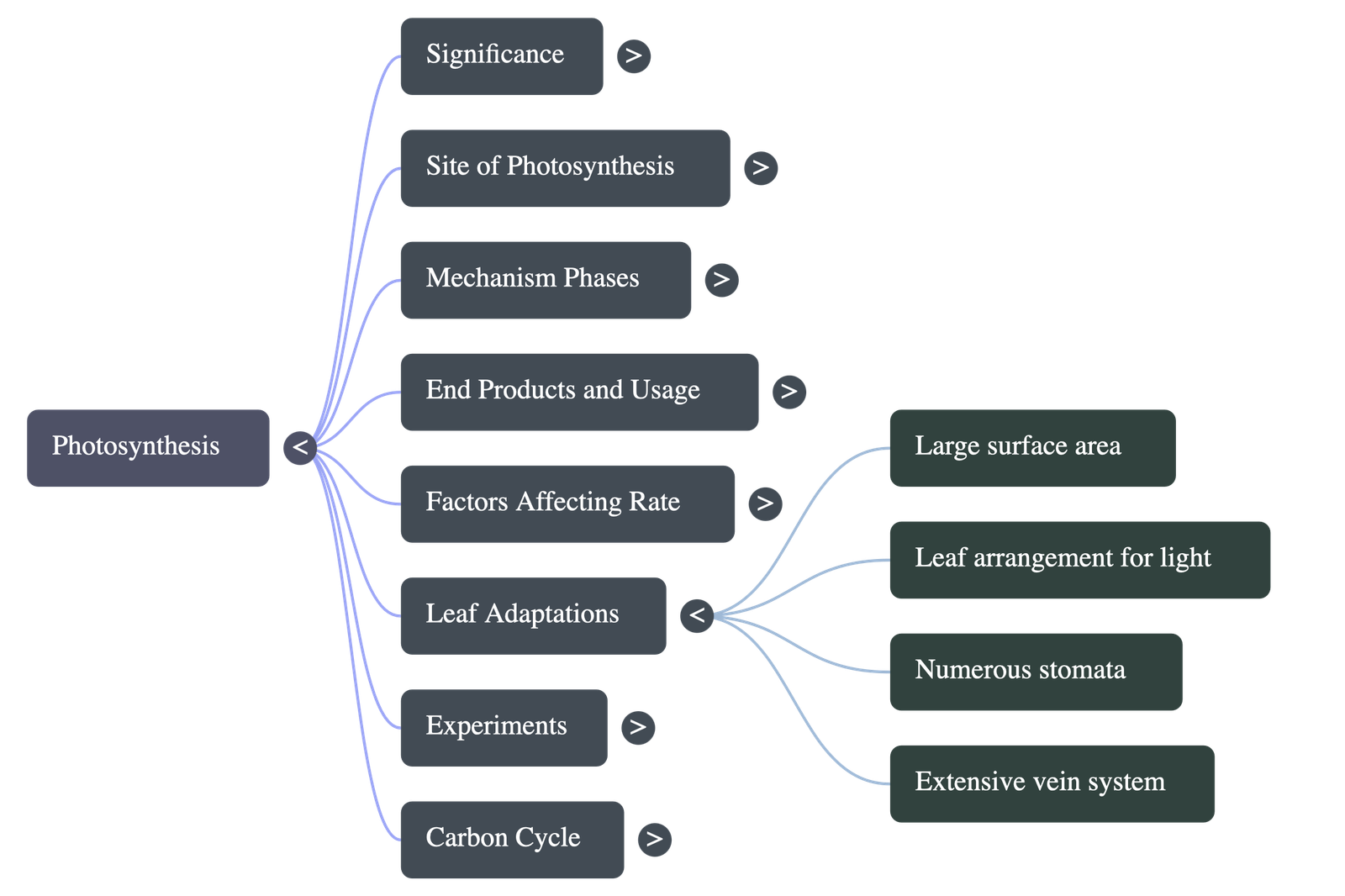
6.7 Adaptations in Leaves to Perform Photosynthesis
- Large surface area: Maximizes light absorption.
- Leaf arrangement: Positioned at a right angle to the light source.
- Cuticle and upper epidermis: Transparent and waterproof to allow light to enter freely.
- Numerous stomata: Allow rapid exchange of gases (CO₂ and O₂).
- Thinness of leaves: Reduces the distance between cells, facilitating rapid transport.
- Chloroplast concentration: More concentrated in the upper layers (palisade) to trap light quickly.
- Extensive vein system: Enables rapid transport of water to mesophyll and manufactured food away from it.
6.8 End Result of the Products of Photosynthesis
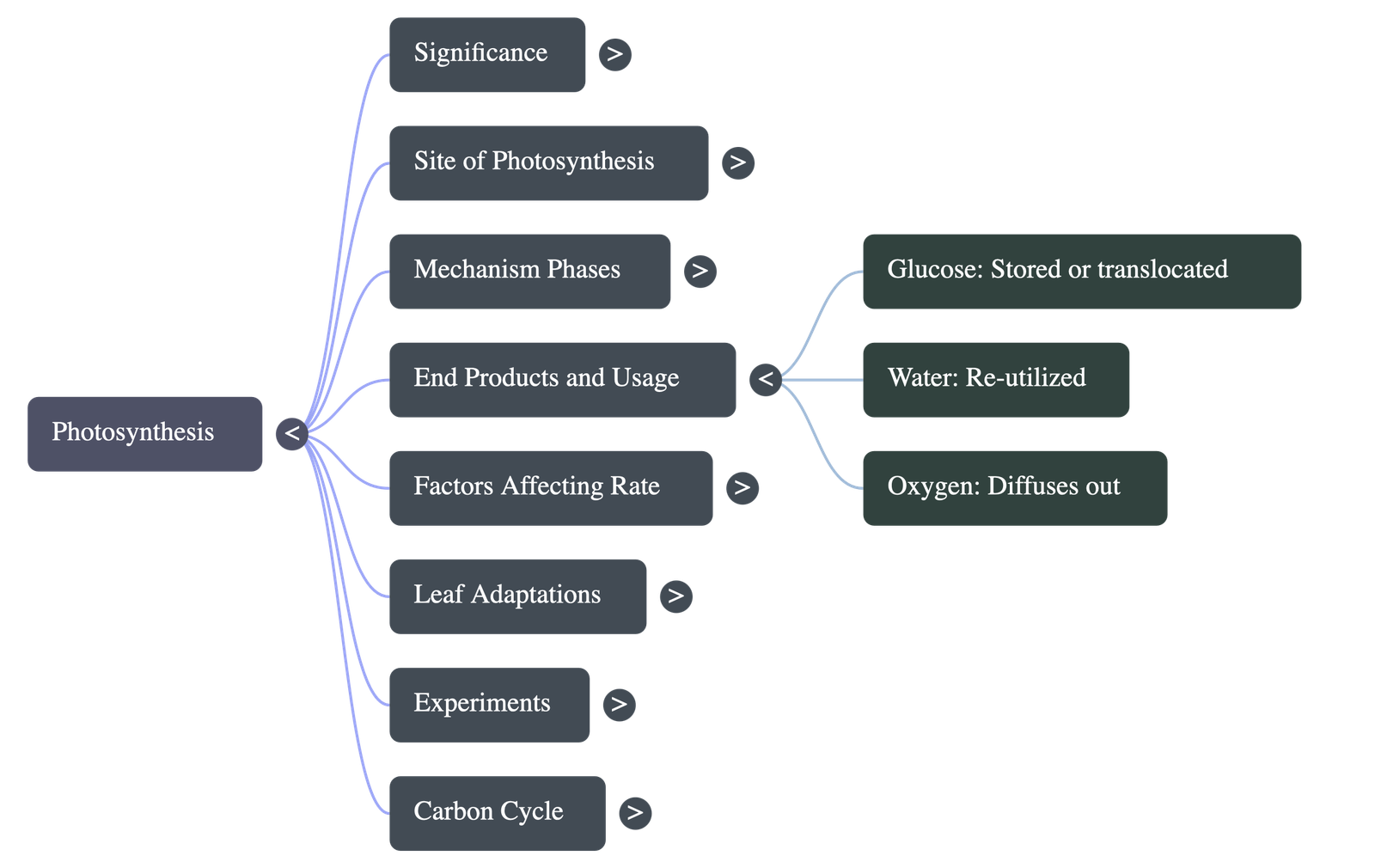
- Glucose: Immediately consumed for plant cell functions, stored as insoluble starch, converted into sucrose for transport (translocation via phloem), or used to synthesize fats and proteins.
- Water: Re-utilized for the continuation of photosynthesis.
- Oxygen: Some is used for the leaf's own respiration (photorespiration), but the major portion diffuses out into the atmosphere. It is not a waste since all organisms need it!
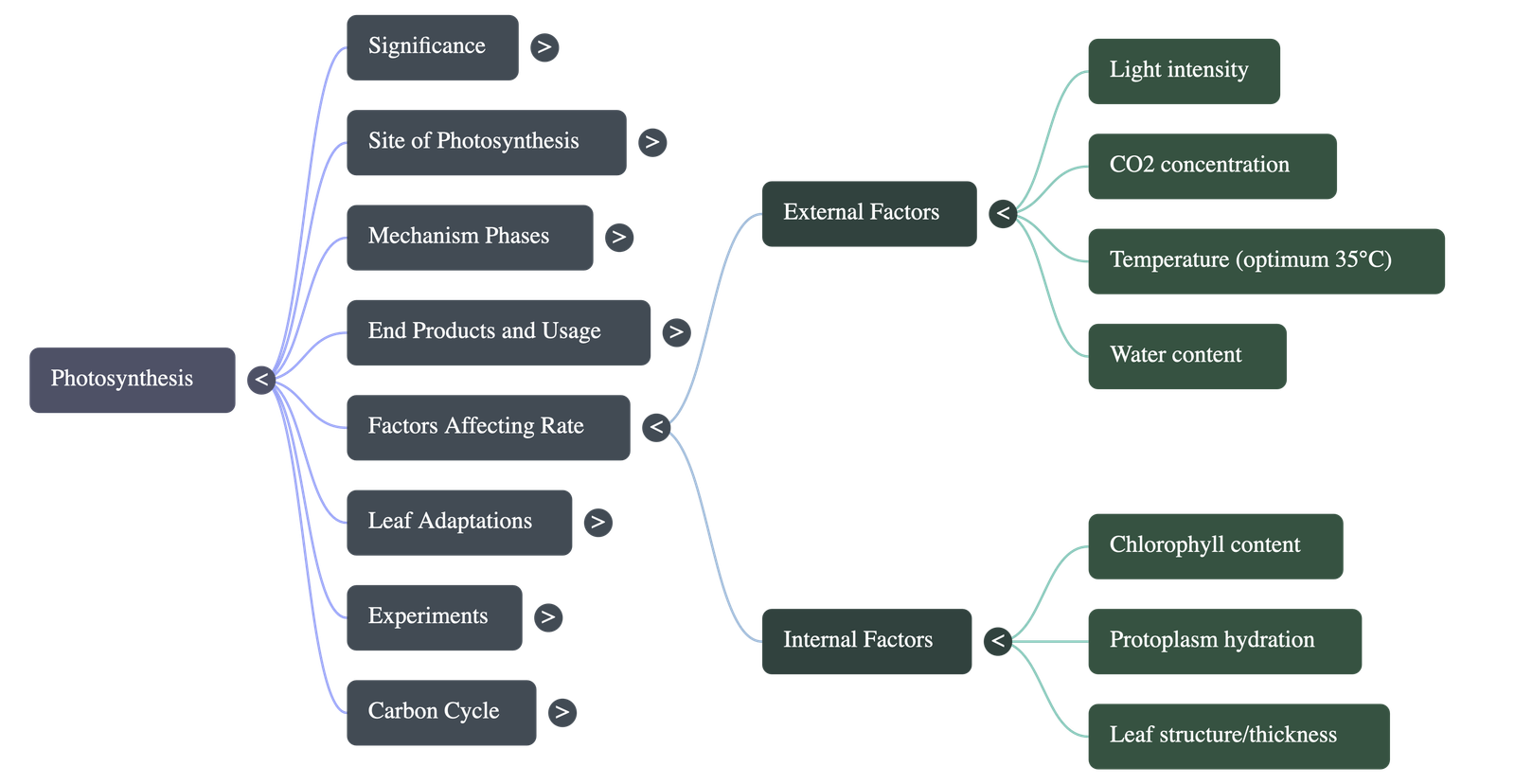
6.9 Factors Affecting Photosynthesis
- A. External Factors:
- Light intensity & CO₂ concentration: Rate increases with light intensity up to a limit, then stabilizes. If CO₂ concentration is then increased, the rate rises again until it hits a new stabilizing point.
- Temperature: Rate doubles for every 10°C rise up to the optimum temperature of 35°C. Beyond 40°C, the enzymes are destroyed, and the rate falls sharply.
- Water content: Scarcity of water decreases the rate. This is largely because guard cells become flaccid, closing stomata, which cuts off CO₂ intake.
- B. Internal Factors:
- Chlorophyll: Nutritional deficiencies cause loss of chlorophyll, lowering the rate.
- Protoplasm: Dehydration or accumulation of carbohydrates reduces the rate.
- Structure of leaf: Cuticle thickness, stomata distribution, and leaf size influence light and CO₂ intake.
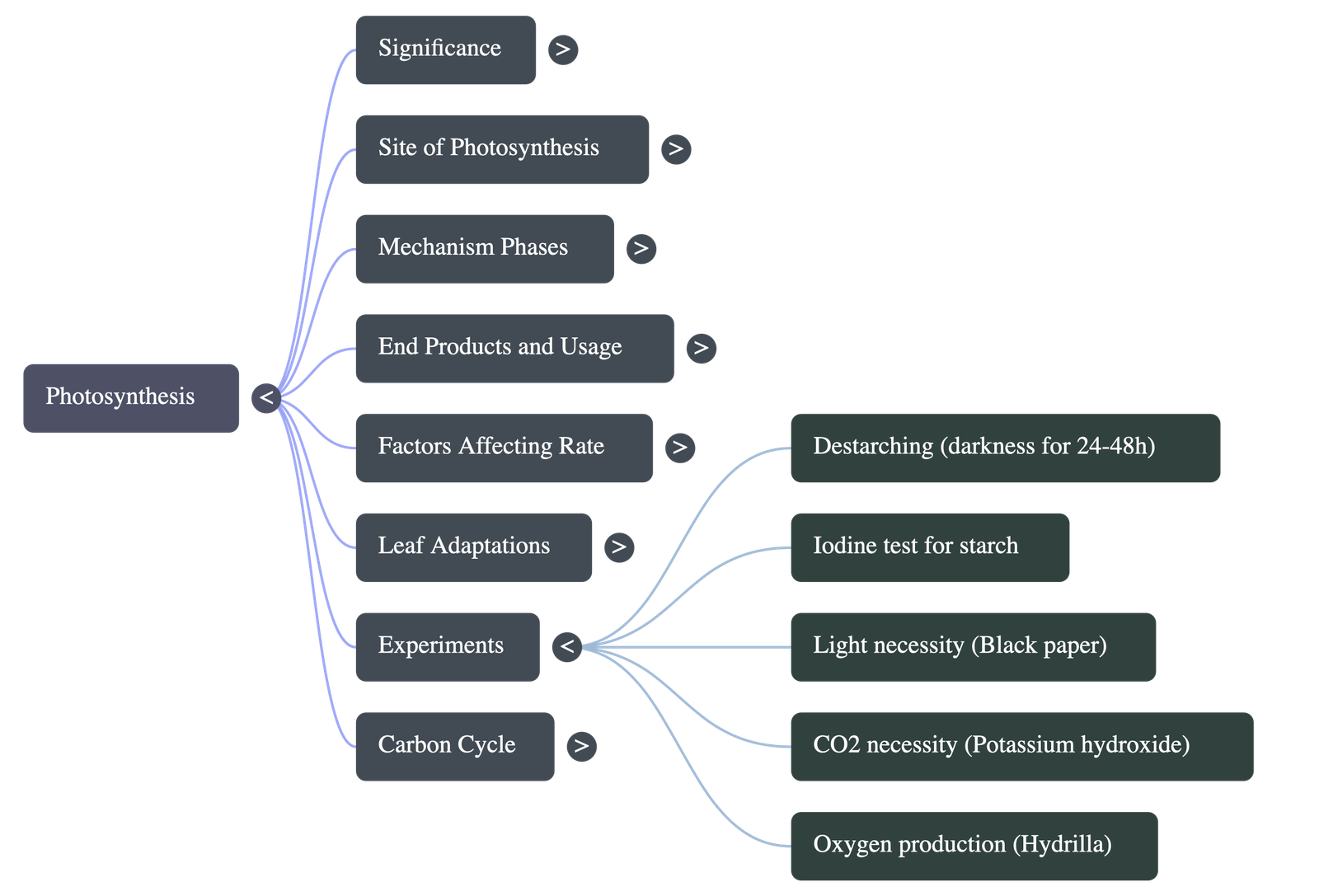
6.10 Experiments on Photosynthesis
- Destarching: Before an experiment, keep the plant in darkness for 24-48 hours. The stored starch is used up, ensuring the leaves are free from starch.
- Iodine Test for Starch (Steps):
- Dip leaf in boiling water (kills cells).
- Boil in methylated spirit over a water bath (removes chlorophyll, turning leaf pale and brittle).
- Place in hot water (softens the leaf).
- Add iodine solution. A blue-black color indicates starch; a brown color means no starch.
- Key Experiments:
- Exp 1 (Chlorophyll is necessary): Use a variegated leaf (e.g., Coleus). Only the previously green parts turn blue-black with iodine.
- Exp 2 (Sunlight is necessary): Cover part of a leaf with black paper. After sunlight exposure, only the uncovered parts turn blue-black with iodine.
- Exp 3 (CO₂ is necessary): Insert half a leaf into a flask containing Potassium Hydroxide (KOH, which absorbs CO₂). Only the part outside the flask turns blue-black.
- Exp 4 (Oxygen is produced): Place an aquatic plant (Hydrilla) under a funnel in a beaker of pond water. Invert a test tube of water over the funnel stem. Bubbles of oxygen collect in sunlight, which can reignite a glowing splinter.
6.11 Importance of Photosynthesis
- Provides food: It starts all food chains (Producers → Primary Consumers/Herbivores → Secondary Consumers/Carnivores). Even non-green plants like fungi and bacteria rely on decaying organic matter initially produced by plants.
- Provides oxygen: It is the source of life-supporting, free oxygen in the atmosphere, enabling the respiration of all animals and changing Earth's early atmosphere to support animal life.
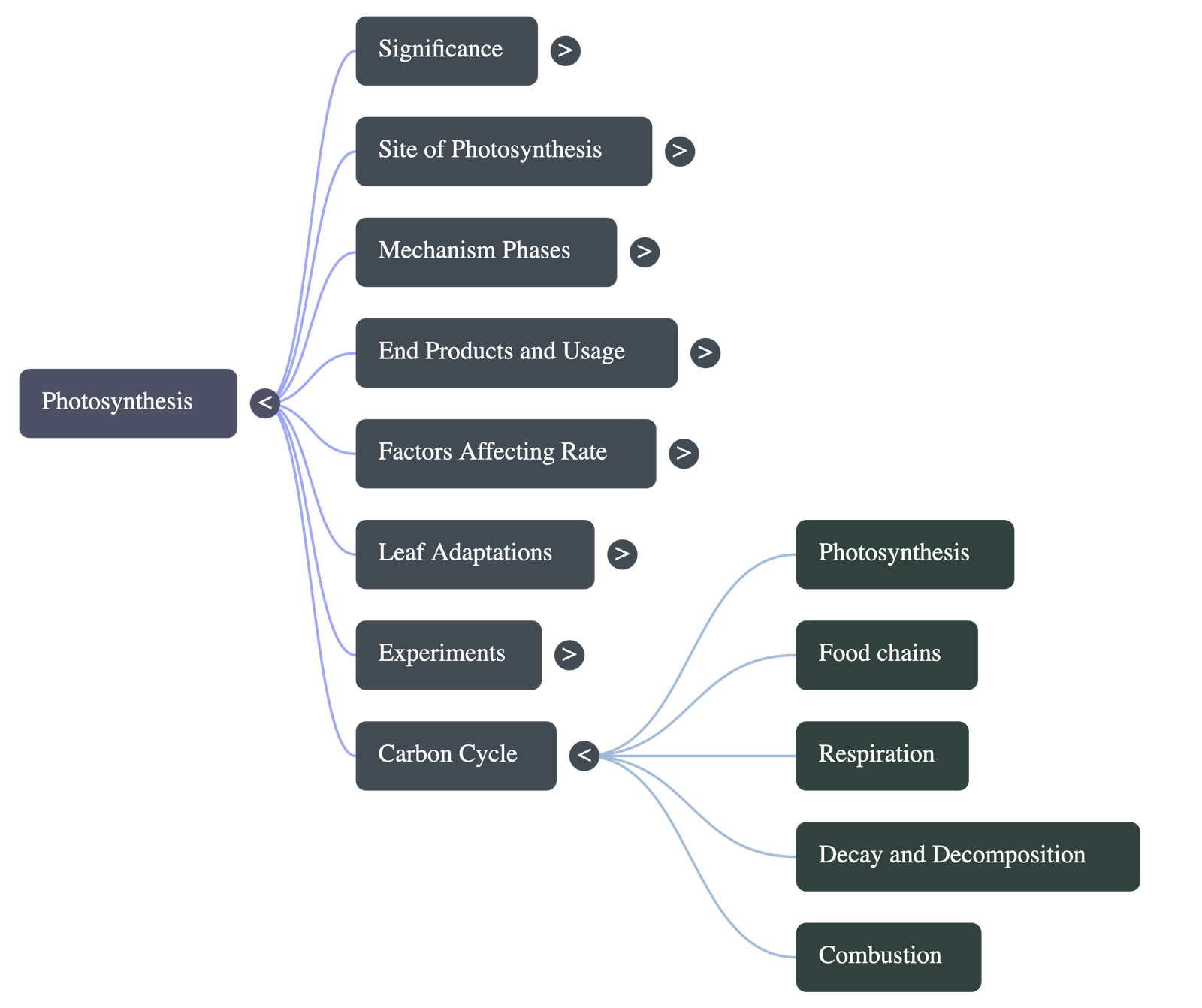
6.12 Carbon Cycle
- The carbon cycle ensures carbon is continuously cycled between living organisms and the air.
- Essential steps:
- Photosynthesis: Plants (producers) remove CO₂ from the air to make carbohydrates.
- Food chains: Carbon passes from plants to animals.
- Respiration: Plants and animals oxidize carbohydrates, returning CO₂ to the atmosphere.
- Decay: Bacteria and fungi decompose dead matter, releasing CO₂.
- Combustion: Burning wood and fossil fuels releases stored carbon as CO₂.
- Heating limestone: Releases CO₂ in lime kilns.
Teacher's Note: Review these points thoroughly. Understanding the experiments and the chemical equations is particularly important for your exams. Good luck!
Do checkout all questions & answers of this chapter.
Quick Navigation:
| | | |
1 / 1
Quick Navigation:
| | | |