Quick Navigation:
| | | |
Transpiration
5.1 Transpiration
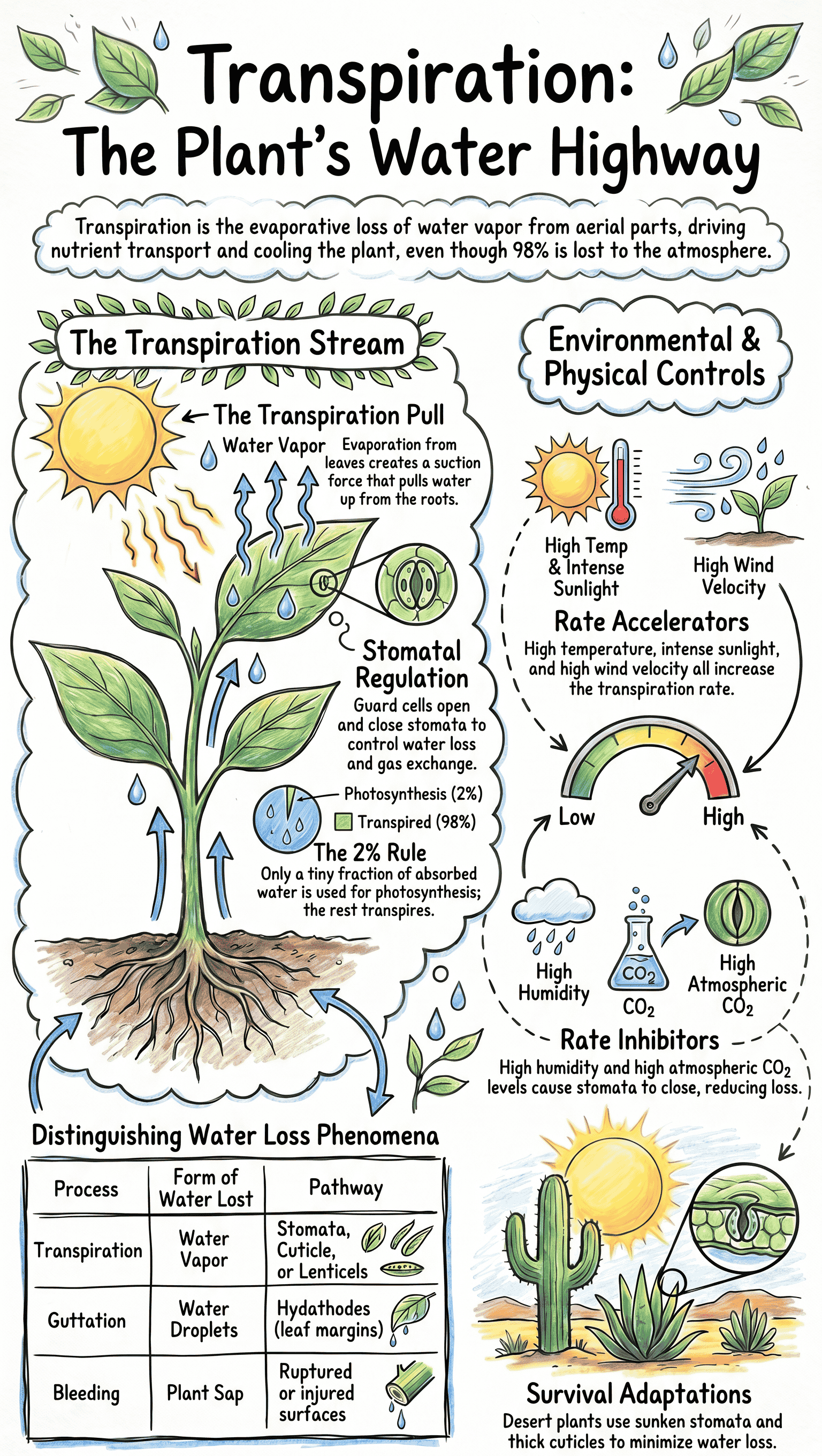
- Plants continuously absorb water through their roots, but only a small quantity (about 2%) is used for photosynthesis and other activities.
- The vast majority of the absorbed water is lost to the atmosphere as water vapour.
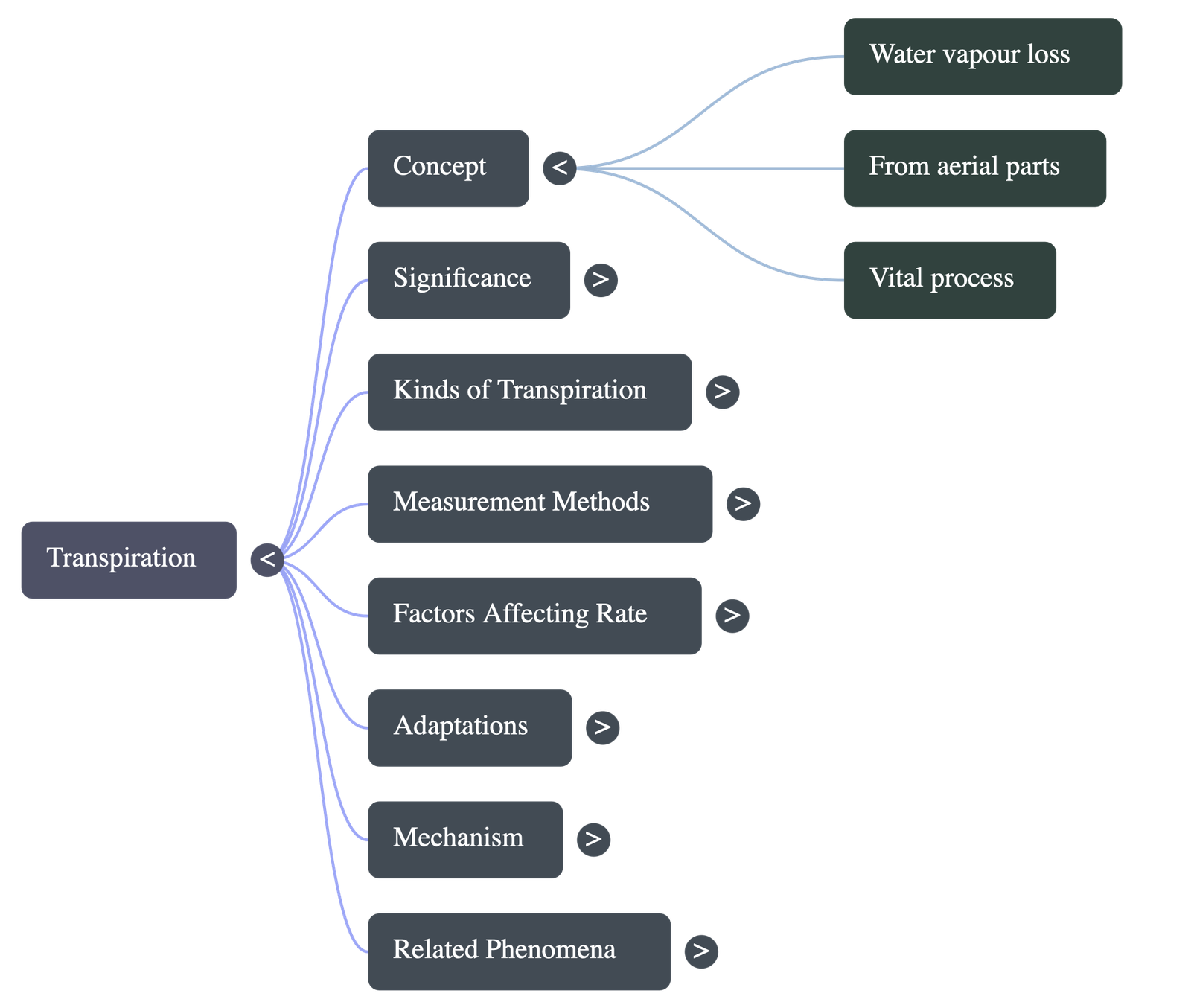
- Definition: Transpiration is the process of loss of water in the form of water vapour from the leaves and other aerial parts of the plant.
5.2 Demonstration of Transpiration
- Polythene Bag Experiment: Enclosing a well-watered potted plant in a transparent polythene bag and leaving it in sunlight results in the appearance of water drops inside the bag. A control setup (empty bag) shows no drops, proving plants release water vapour.
- Cobalt Chloride Paper Test: Dry cobalt chloride paper is Blue and turns Pink when exposed to moisture. It is used as a chemical indicator for transpiration.
- Bell Jar Experiment:
- Setup A (Plant only): Shows water condensation on the glass.
- Setup B (Plant + dry cobalt chloride paper): Shows condensation, and the blue paper turns pink, confirming the moisture is water.
- Setup C (Control: No plant, only paper): Paper remains blue, proving the moisture in B came from the plant.
5.3 Measurement of Transpiration
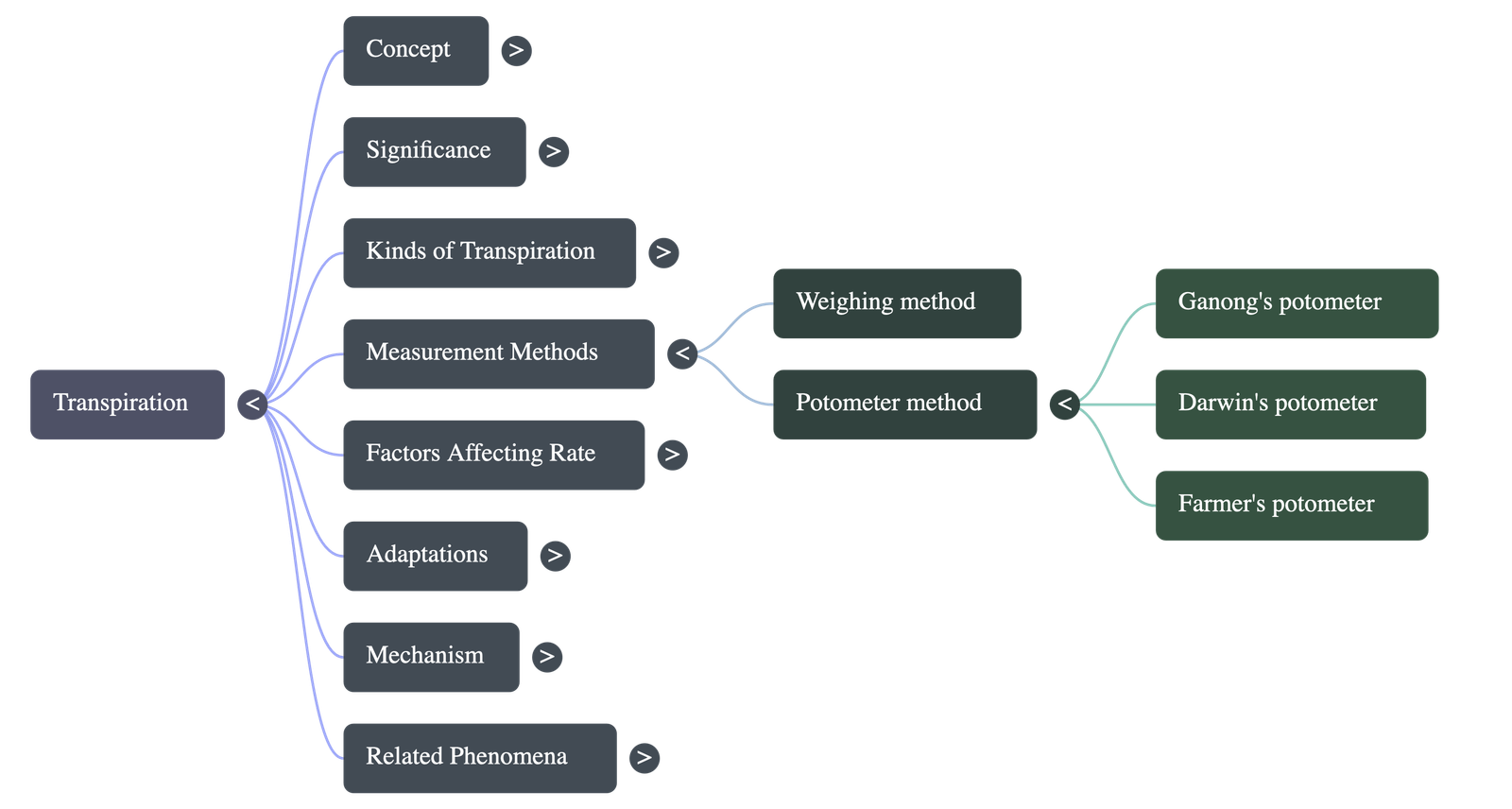
- Weighing Method: A potted plant is weighed before and after a specific time. The soil is covered to prevent direct evaporation. The weight loss equals the water lost via transpiration.
- Test-tube Method: A leafy shoot is placed in a test tube of water with oil on the surface (to prevent direct evaporation). The setup is weighed before and after; the difference indicates water lost through the shoot.
- Potometer Method: Devices like Ganong's potometer measure the rate of water intake by a cut shoot, which is almost equal to the water lost through transpiration.
- Precautions for Potometer: The apparatus must be completely water-tight, and the twig must be cut obliquely under water to prevent air bubbles from blocking the xylem.
- Limitations of Potometer: Introducing the air bubble accurately is difficult, twigs may not remain fully alive for a long time, and external temperature changes can affect the air bubble's position.
5.4 Kinds of Transpiration
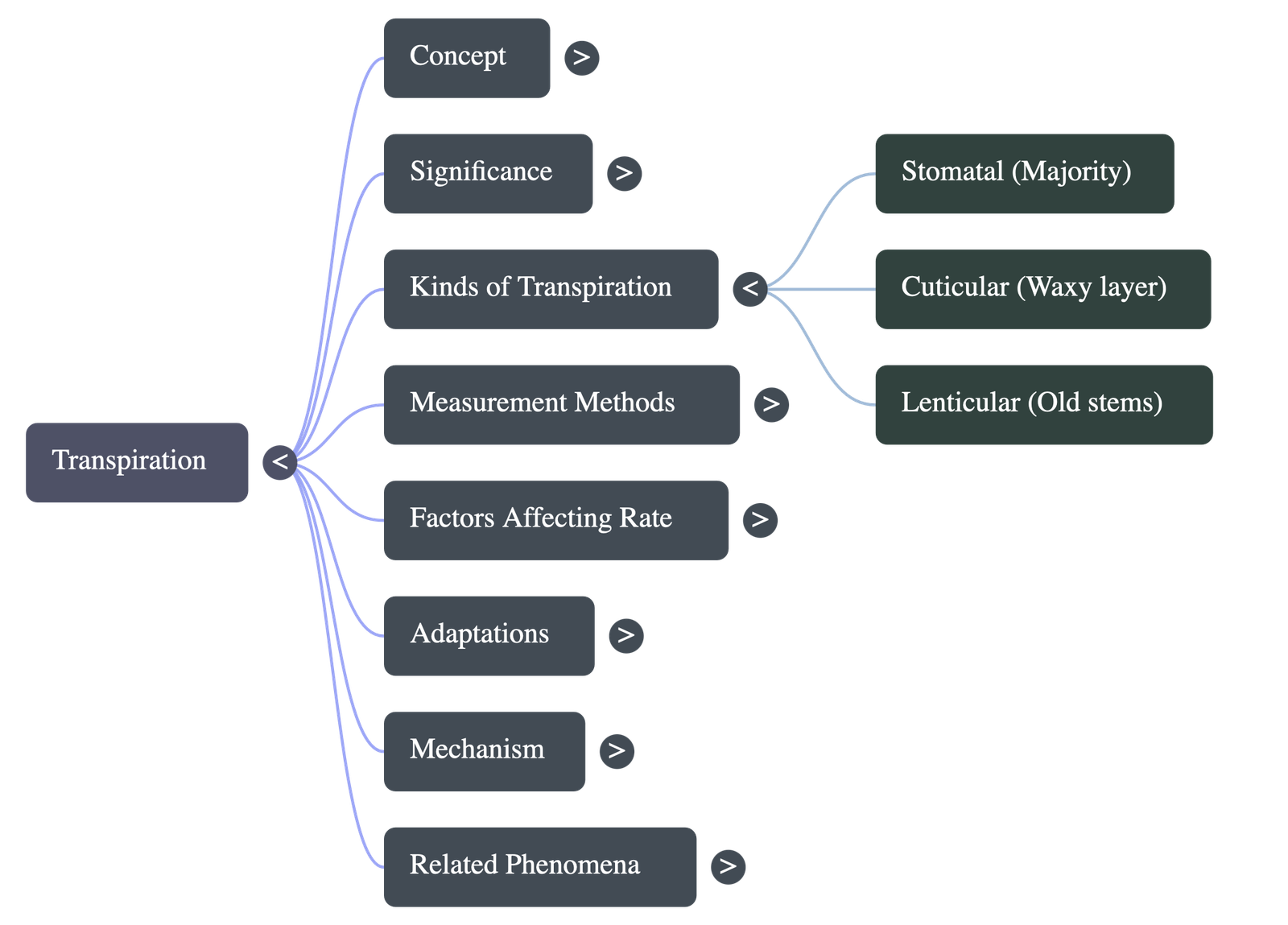
- Transpiration occurs from three primary regions:
- Stomatal Transpiration: Occurs through stomata (minute openings) on leaves. This constitutes the vast majority of water loss.
- Cuticular Transpiration: Directly from the waxy surface (cuticle) of leaves and stems. Contributes a very small amount.
- Lenticular Transpiration: From lenticels (minute, permanently open pores on older woody stems).
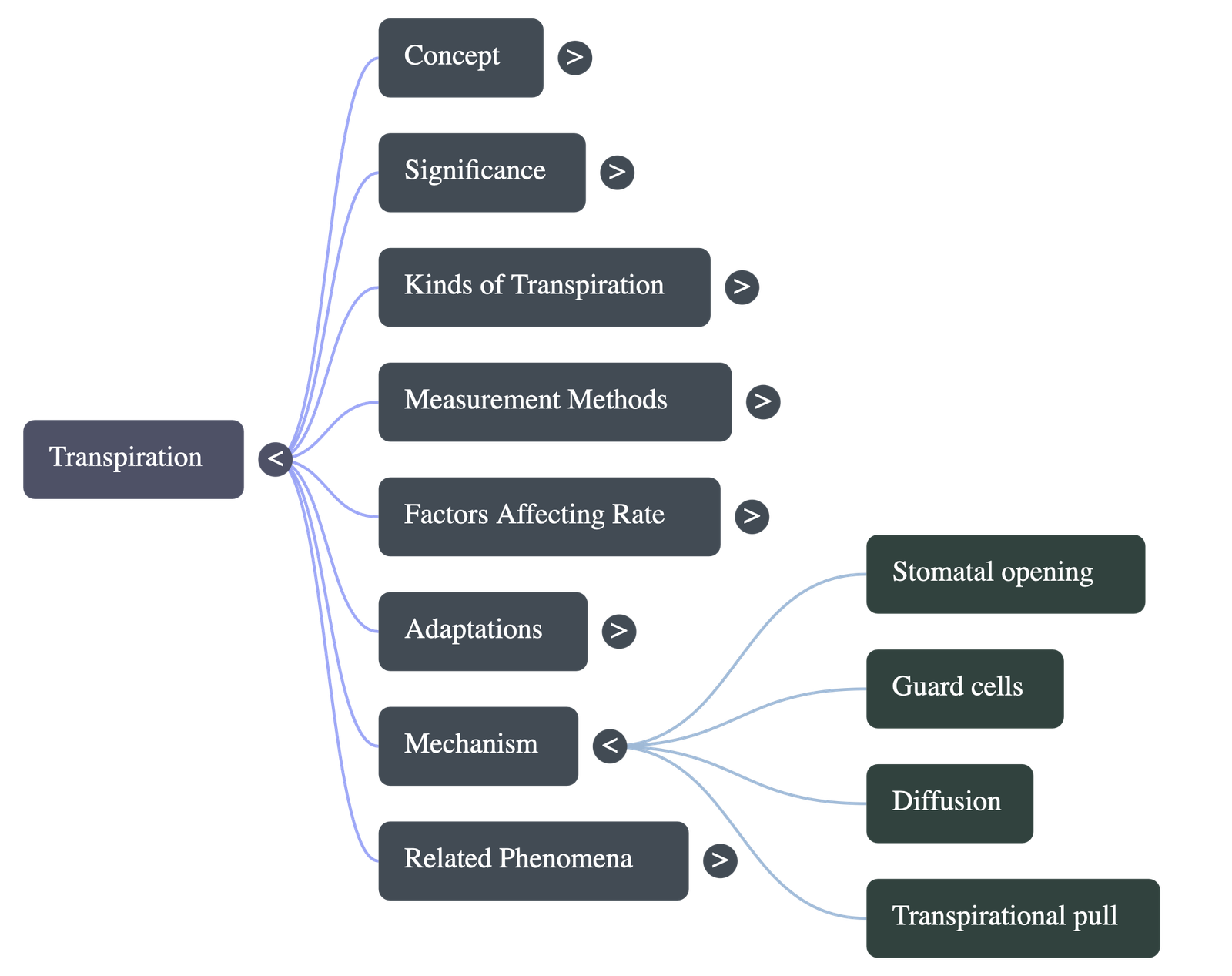
- Mechanism of Stomatal Transpiration: Water is drawn from xylem vessels into spongy mesophyll cells. It evaporates into the intercellular air spaces and diffuses out through the open stomata into the atmosphere (moving from a higher to a lower concentration).
- Dicot vs. Monocot Leaves: Dicot leaves have more stomata on their lower surface (undersurface); thus, more transpiration occurs from the lower surface. This can be proven by placing cobalt chloride paper on both sides of a dicot leaf—the lower paper turns pink much faster.
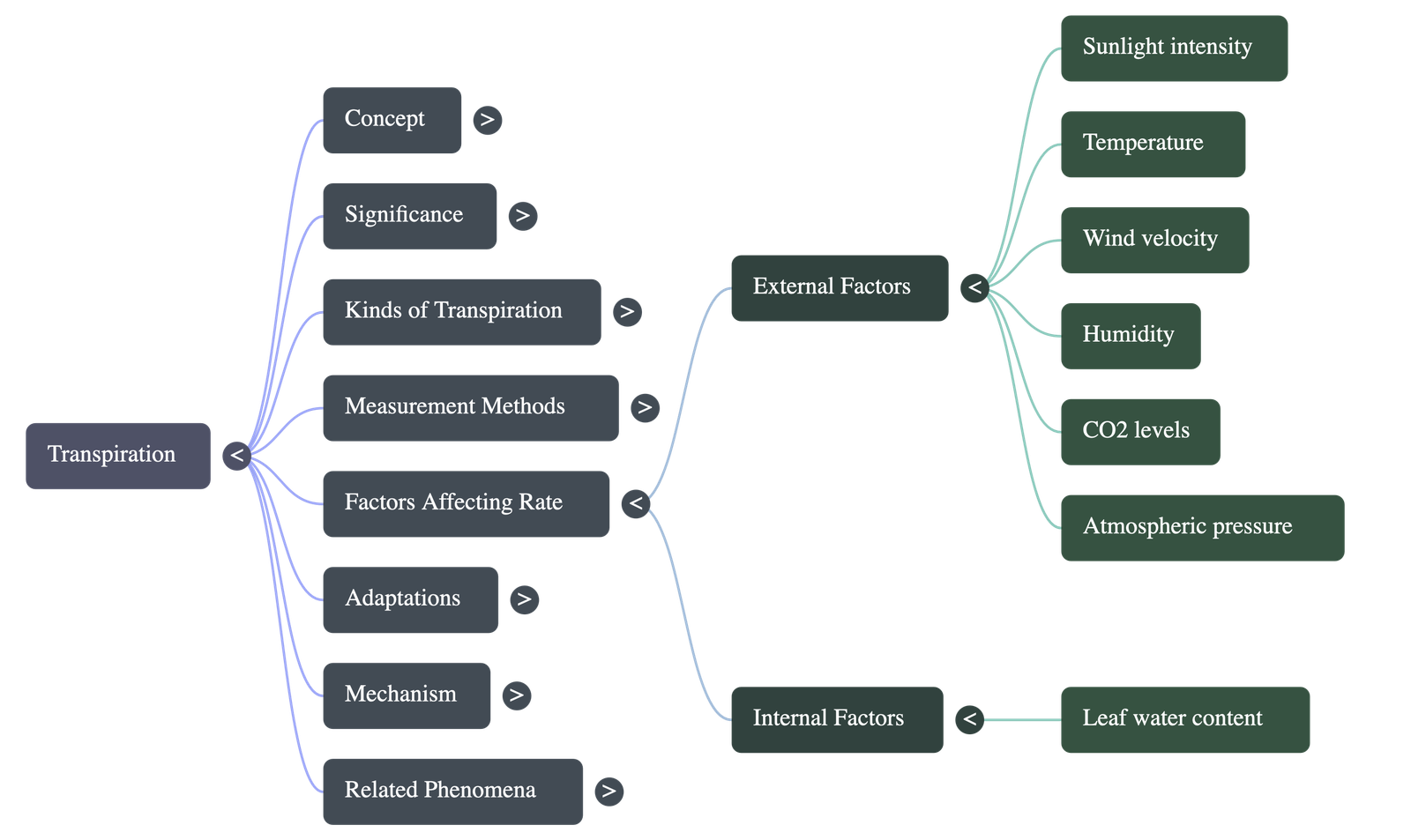
5.5 Factors that Affect Transpiration
- External Factors:
- Intensity of Sunlight: Increases the rate (stomata open during the day for photosynthesis).
- Temperature: Higher temperature increases evaporation, allowing air to hold more water, thus increasing the rate.
- Velocity of Wind: Faster wind removes saturated air around the leaf quickly, increasing the rate.
- Humidity: High atmospheric humidity reduces the outward diffusion of water vapour, decreasing the rate.
- Carbon Dioxide: High CO2 levels (over 0.03%) cause stomata to close, reducing the rate.
- Atmospheric Pressure: Low pressure enhances the diffusion of water vapour, increasing the rate.
- Internal Factors:
- Water Content of Leaves: If roots cannot absorb enough water, leaves lose turgidity (wilt), leading to stomatal closure, which indirectly reduces transpiration to conserve water.
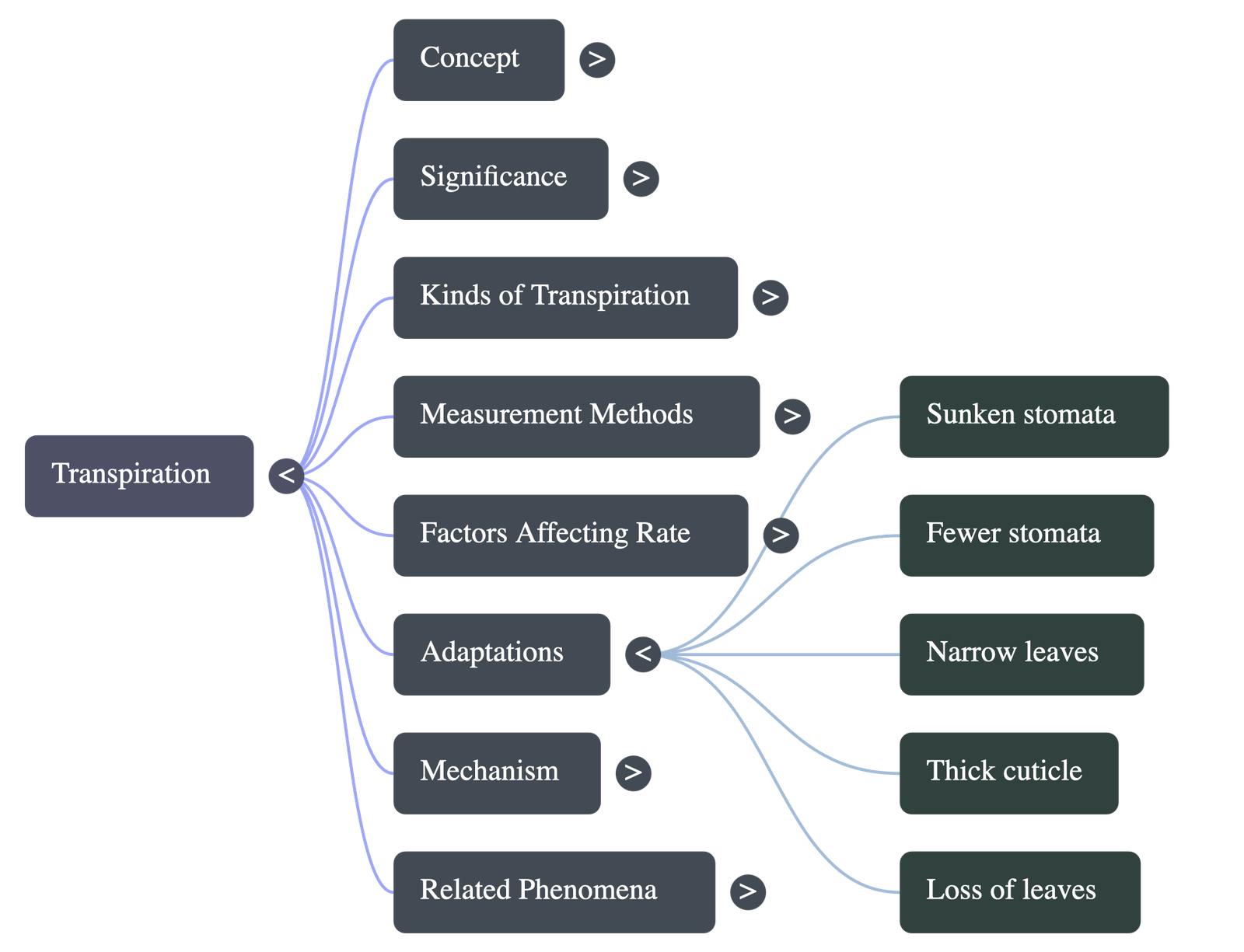
5.6 Adaptations in Plants to Reduce Excessive Transpiration
- Sunken Stomata: Stomata are hidden in pits or covered by hairs (e.g., Nerium / Oleander).
- Fewer Stomata: Overall reduction in the number of stomata limits escape routes for water.
- Narrow Leaves: Reduced leaf surface area decreases evaporation (e.g., Nerium).
- Reduced Exposed Surfaces: Leaves may get wavy, rolled, or folded.
- Loss of Leaves: Leaves may be completely absent, dropped, or modified into spines (e.g., Cacti) to prevent water loss.
- Thick Cuticle: Leaves covered by a thick waxy layer (e.g., Banyan and evergreen trees) block surface evaporation.
5.7 Significance of Transpiration
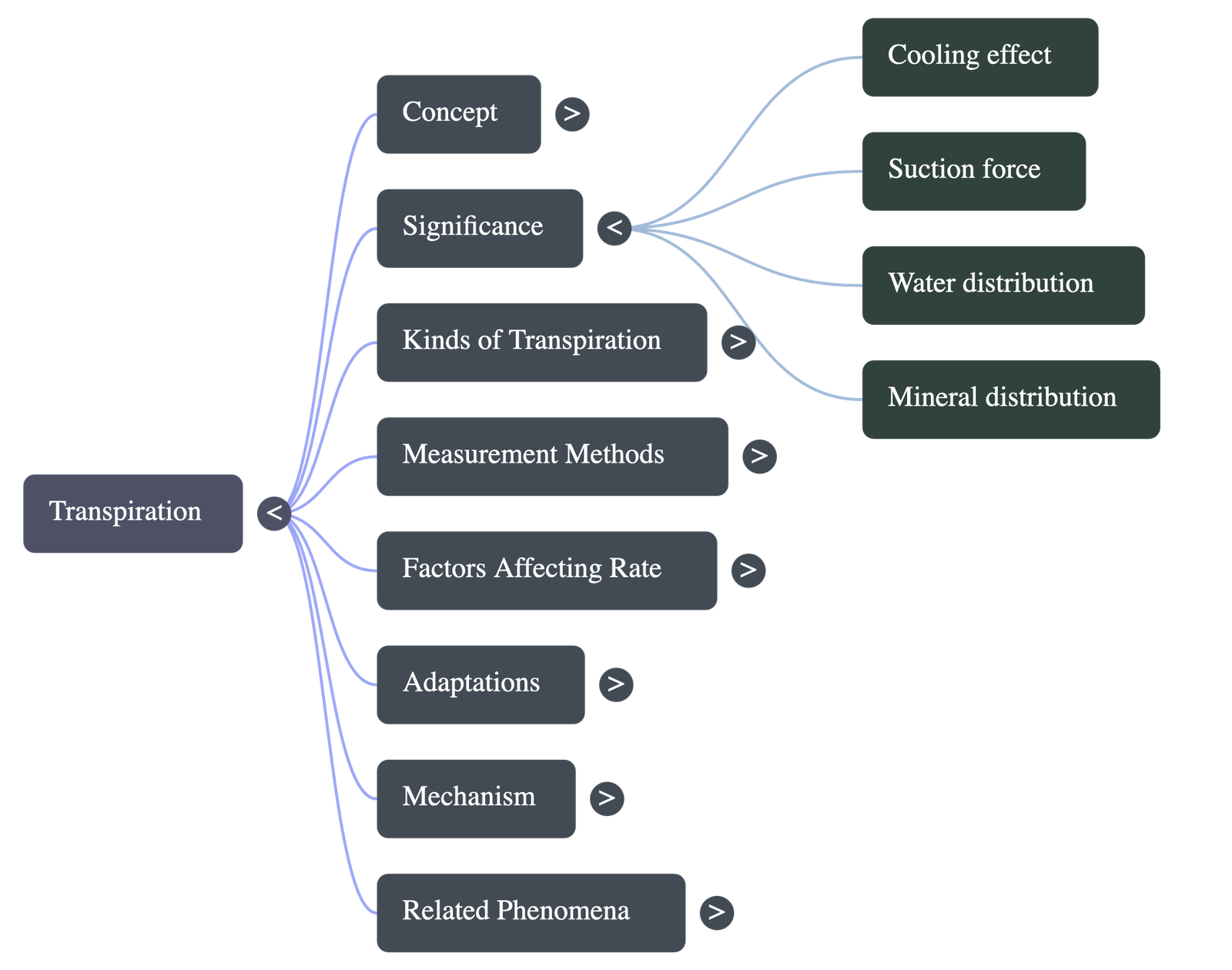
- Cooling Effect: Evaporation absorbs heat, cooling the plant structure on hot sunny days and preventing the destruction of vital plant enzymes.
- Suction Force (Ascent of Sap): Water loss creates a transpirational pull (suction force) at the top of the plant. This draws a continuous column of water and dissolved minerals from the roots up through the stem to the leaves.
- Distribution of Water and Minerals: Ensures that water and minerals absorbed by the roots are thoroughly distributed to the tips of all branches and leaves.
- Affects Climate: Forests release immense quantities of water into the atmosphere (e.g., an apple tree can lose up to 30 litres per day). This increases atmospheric moisture and actively contributes to bringing rain.
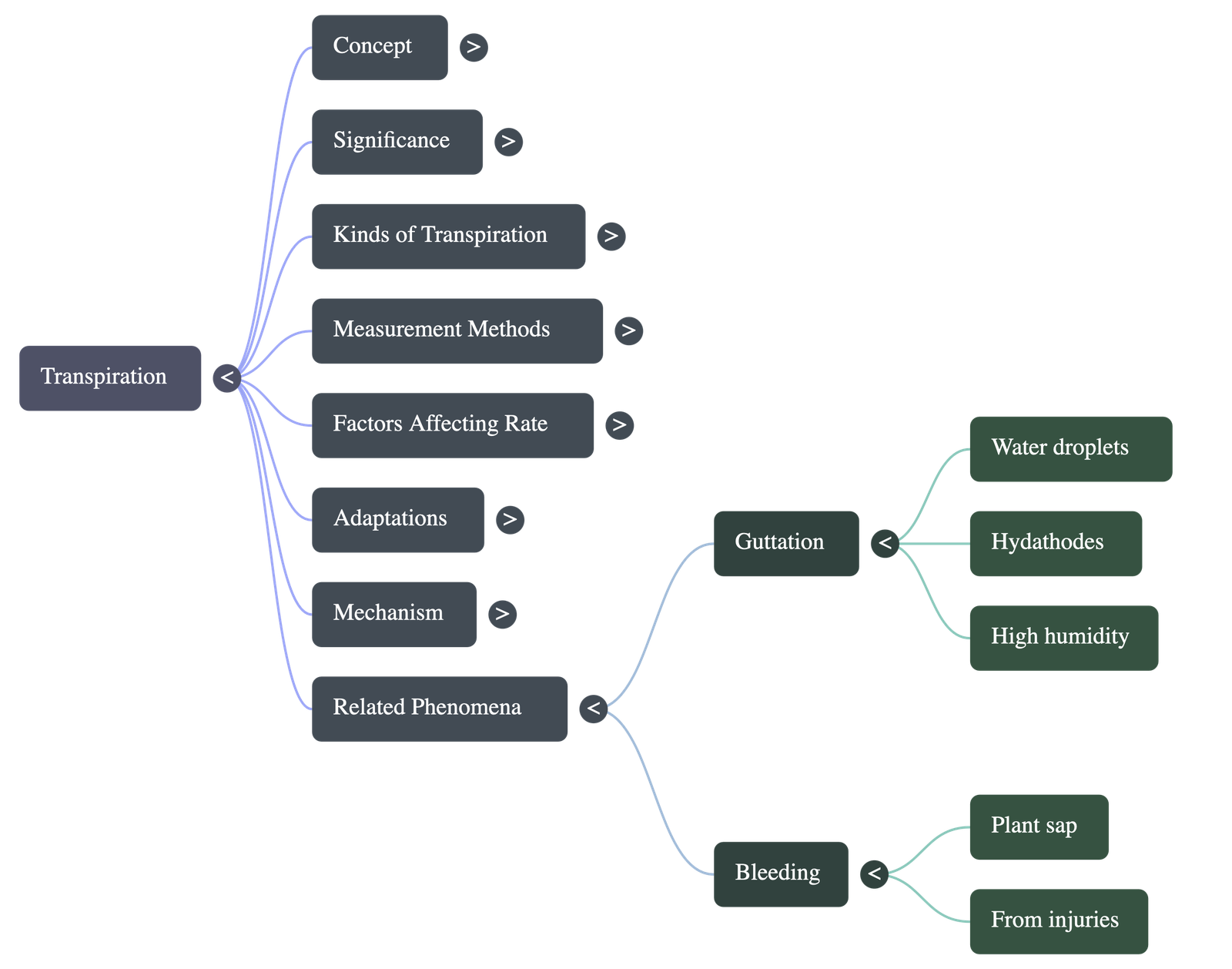
5.8 Guttation and Bleeding
- Guttation: The loss of water in the form of liquid droplets along the margins of leaves in uninjured plants.
- Occurs in warm, very humid conditions where transpiration is low but root pressure remains high.
- Excess water is forced out through special pore-bearing structures called hydathodes located at the vein endings.
- Common in plants like banana, nasturtium, and strawberry, usually observed in the early morning or late night.
- The water contains dissolved mineral salts, unlike pure water vapour lost in transpiration.
- Bleeding: The direct oozing out of plant sap from any cut or injured part of a plant.
- Happens purely due to mechanical injury.
- The escaping fluid is mainly plant sap and sugars.
Do checkout all questions & answers of this chapter.
Quick Navigation:
| | | |
1 / 1
Quick Navigation:
| | | |