Quick Navigation:
| | | |
Genetics - Some Basic Fundamentals
3.1 What is Genetics?
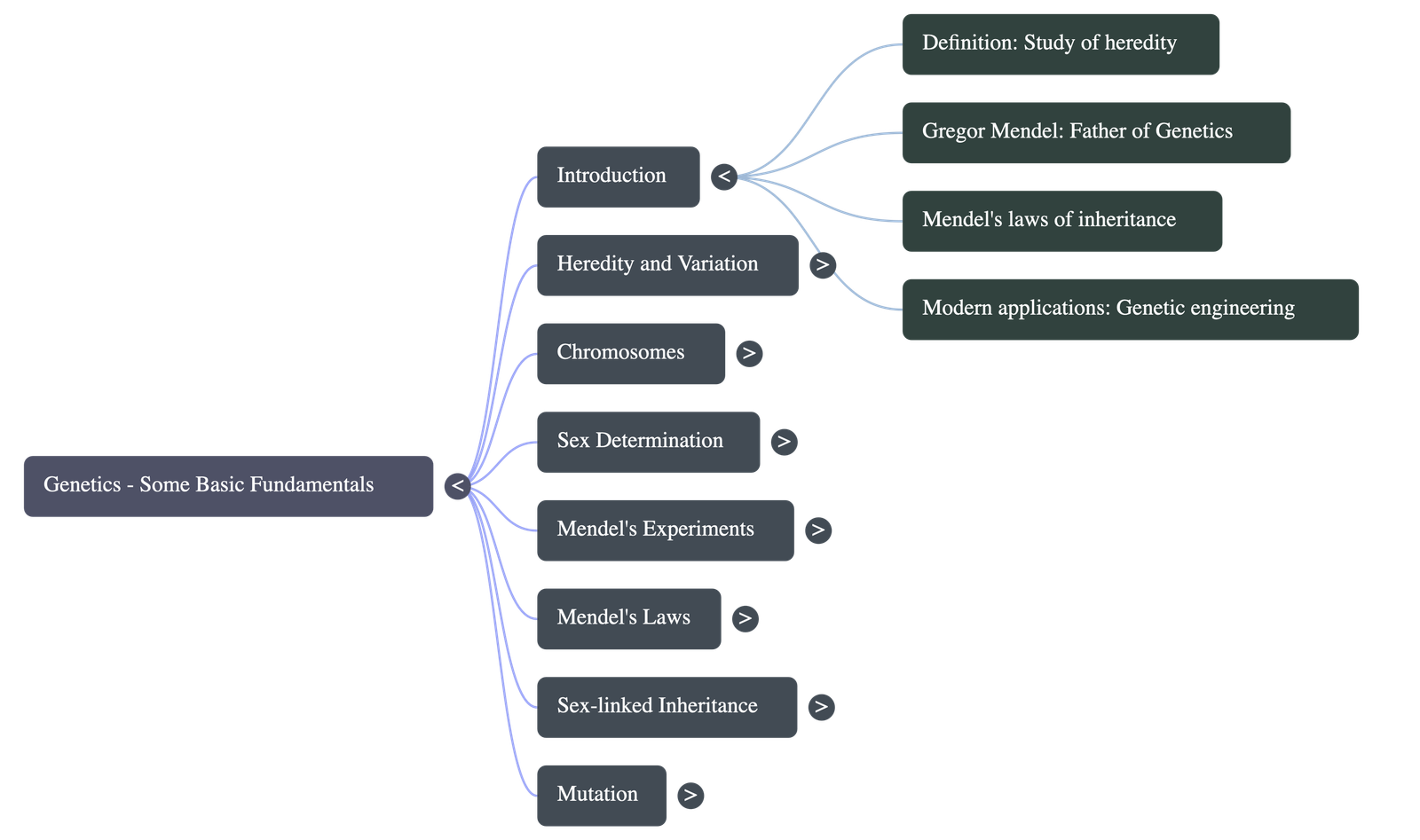
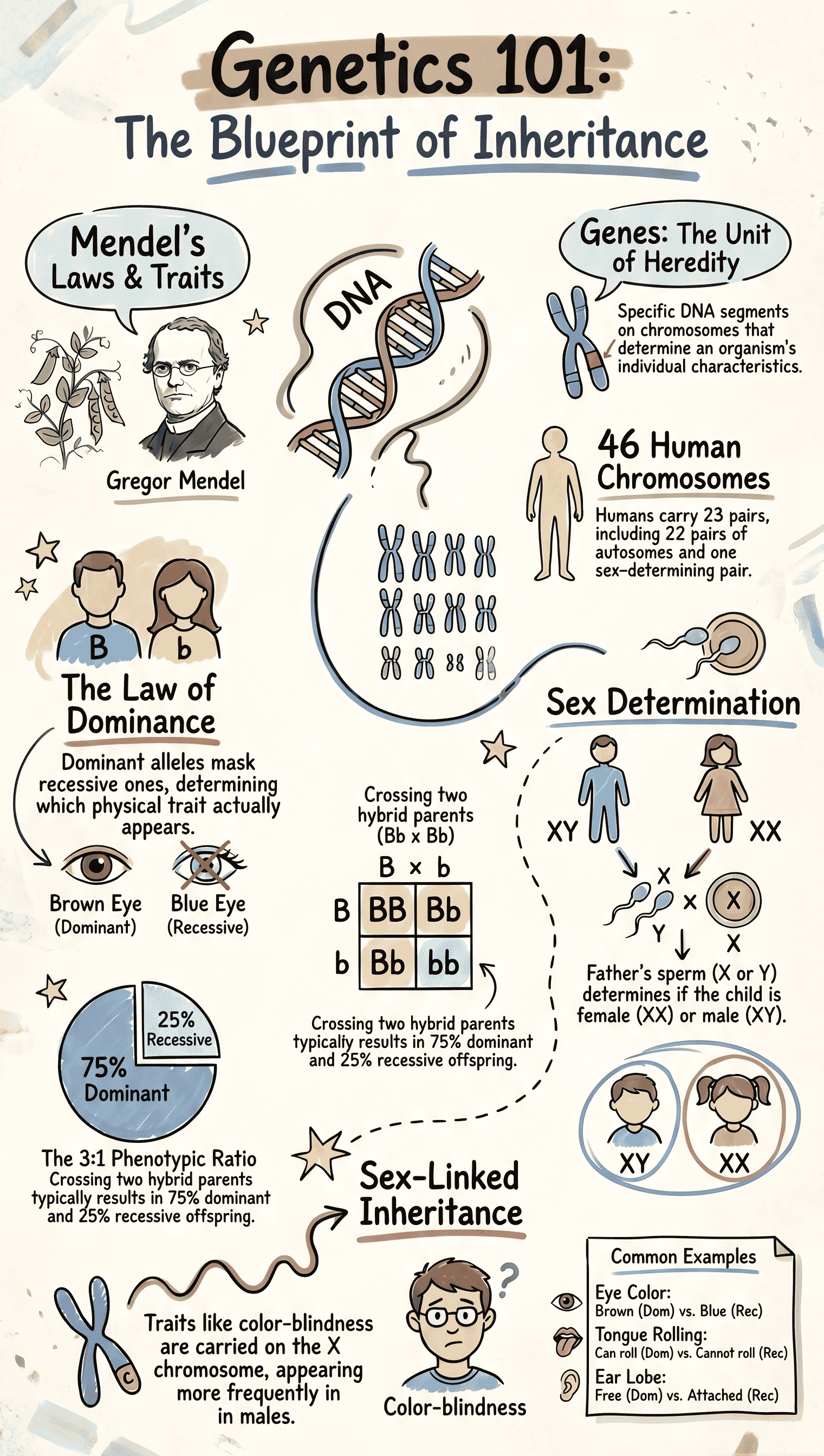
- Definition: Genetics is the study of heredity, which involves the transmission of body features (both similarities and differences) from parents to offspring, and the laws relating to this transmission.
- Father of Genetics: Gregor J. Mendel, an Austrian monk, is known as the "Father of Genetics" because his experiments with garden peas unlocked the secrets of inheritance, now known as Mendel's laws of inheritance.
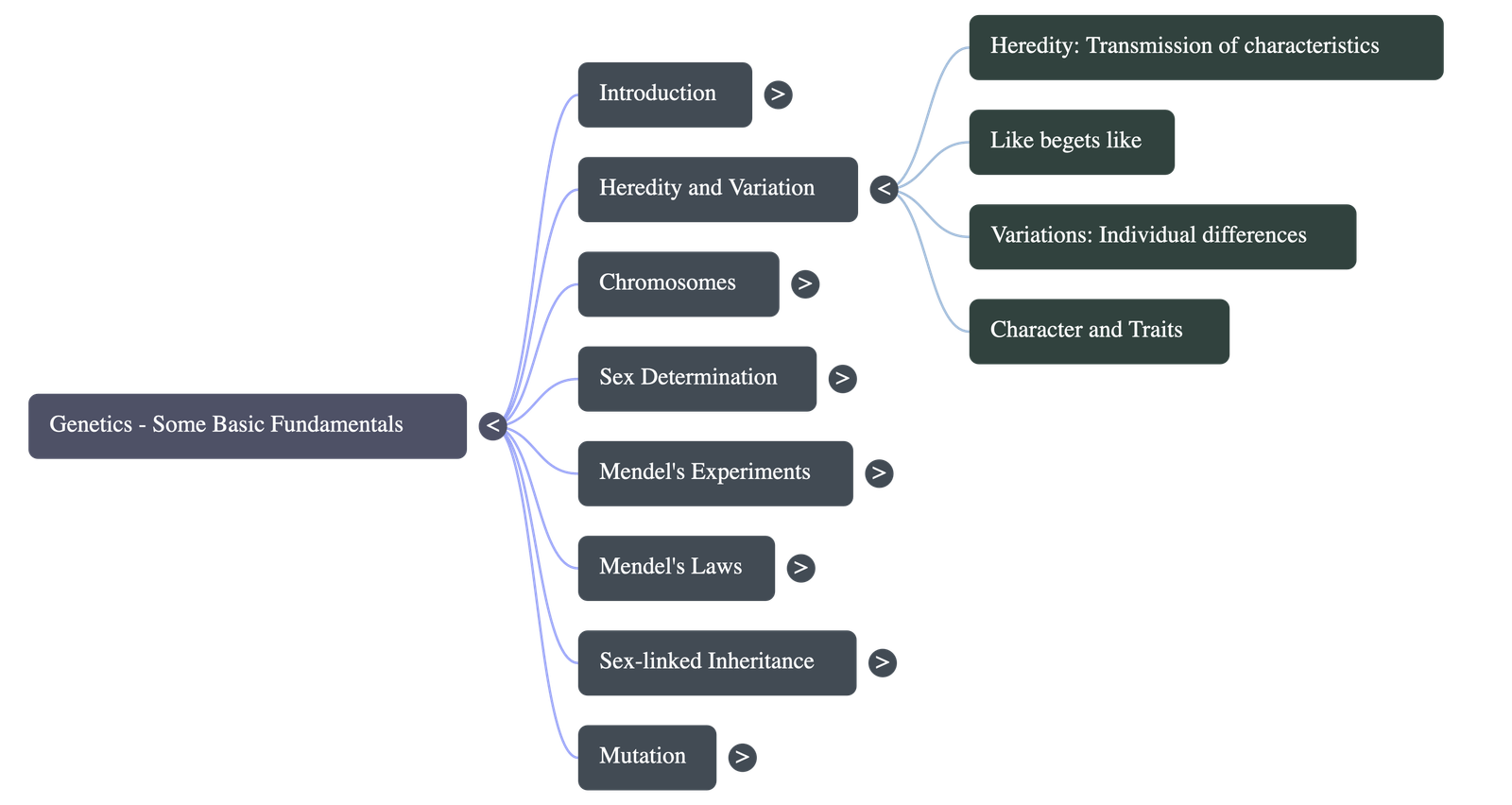
- Heredity: Defined as the transmission of genetically based characteristics from parents to offspring, often summarized by the phrase "Like begets like" (e.g., cats produce cats).
- Genetic Engineering: A modern application where the genetic constitution of an organism is altered by introducing new genes. For example, the human insulin-producing gene has been introduced into bacteria to produce large quantities of insulin.
- Genetic Counselling: Advising newly married couples regarding the possibility of undesirable traits or genetic diseases (like haemophilia, thalassaemia, or sickle cell anaemia) that their children might inherit.
3.2 Variations in Population
- Variations: Even though "like begets like," offspring are never completely identical to their parents. The small differences among individuals of the same species are called variations.
- Character vs. Trait: Any inheritable feature of an organism is a character (e.g., eye colour). The alternative forms of a character are called traits (e.g., brown or blue eyes).
- Humans inherit thousands of characters from their parents, such as hair shape, ear lobe type, and blood group.
3.3 Chromosomes — The Carriers of Heredity
- Karyotype: A chart created by arranging photographs of dividing cell chromosomes according to their size and shape.
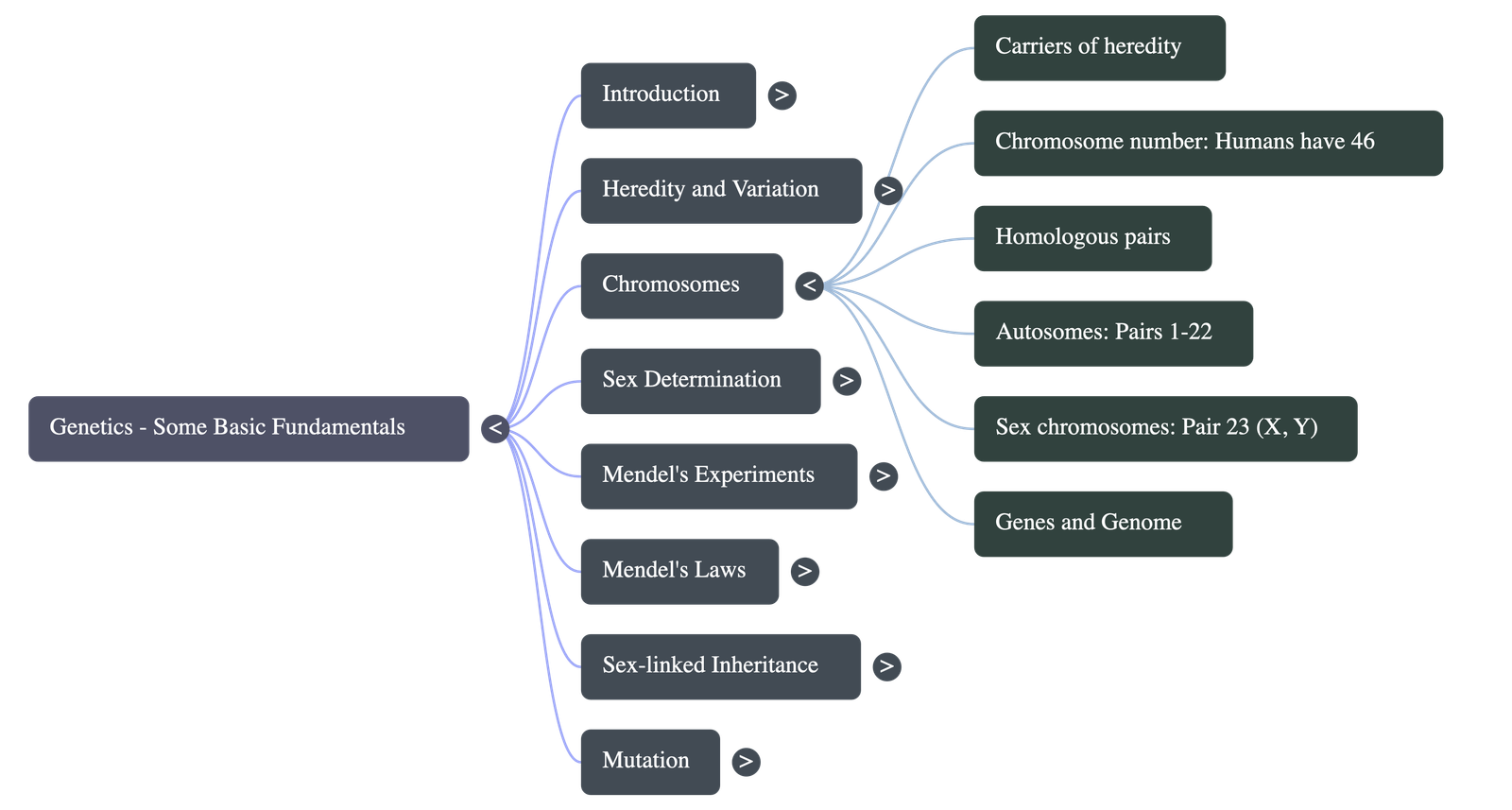
- Chromosome Number: Every species has a constant and fixed number of chromosomes. Humans have 46 chromosomes in every body cell.
- Homologous Chromosomes: Chromosomes always occur in pairs (23 pairs in humans). A pair of corresponding chromosomes of the same shape and size, one derived from each parent, is called a homologous pair.
3.4 The Two Main Categories of Chromosomes
- Autosomes: The 22 identical chromosome pairs in humans that determine general body features like complexion, height, and seed colour in plants.
- Sex Chromosomes: The 23rd pair of chromosomes that determines the sex of an organism. They are designated as X and Y. Females have a similar pair (XX), while males have a dissimilar pair (XY). The Y chromosome is much smaller than the X chromosome.
3.5 Sex Determination — Son or Daughter
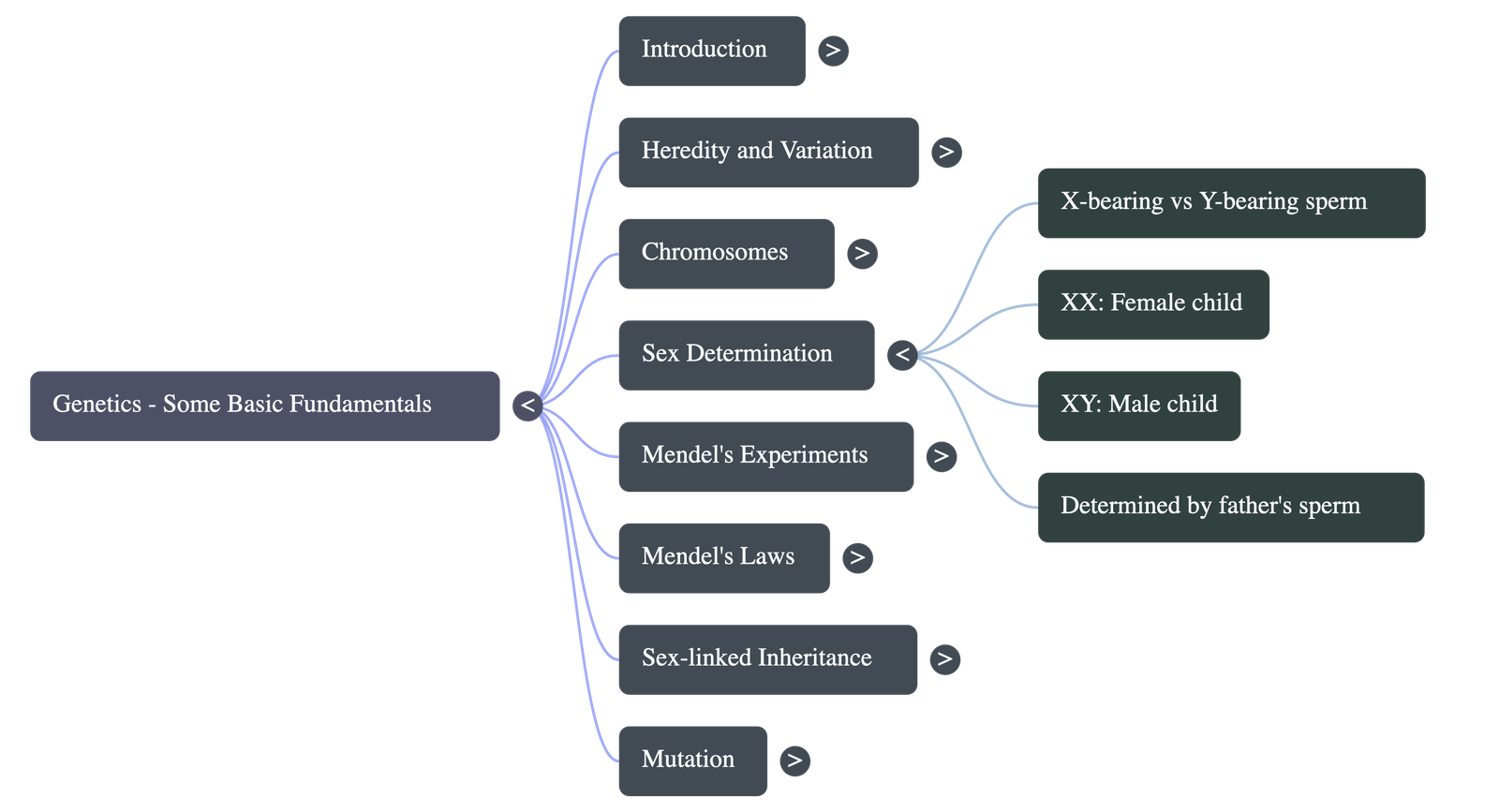
- The sex of a child depends solely on the type of sperm that fertilizes the egg.
- All human eggs contain one X chromosome. Sperms, however, are either X-bearing or Y-bearing.
- If an X-bearing sperm fuses with the egg (X), the result is XX, producing a female (Daughter).
- If a Y-bearing sperm fuses with the egg (X), the result is XY, producing a male (Son).
3.6 Chromosomes — Carriers of Genes
- Genes: Specific segments of DNA on a chromosome that determine hereditary characteristics. The physical appearance and body functions of a species are the direct result of genes.
- Genome: The full complement of DNA (including all genes and intergenic regions) of an organism.
- Humans have nearly 19,000 genes. Chromosome No. 1 has the largest number of genes, while the Y chromosome has the fewest.
3.9 From Parents to Children — Key Terminology and Concepts
- Pedigree Chart: A family chart illustrating the inheritance of a trait. Males are represented by squares, females by circles. Solid symbols show the presence of the trait, while hollow symbols indicate its absence.
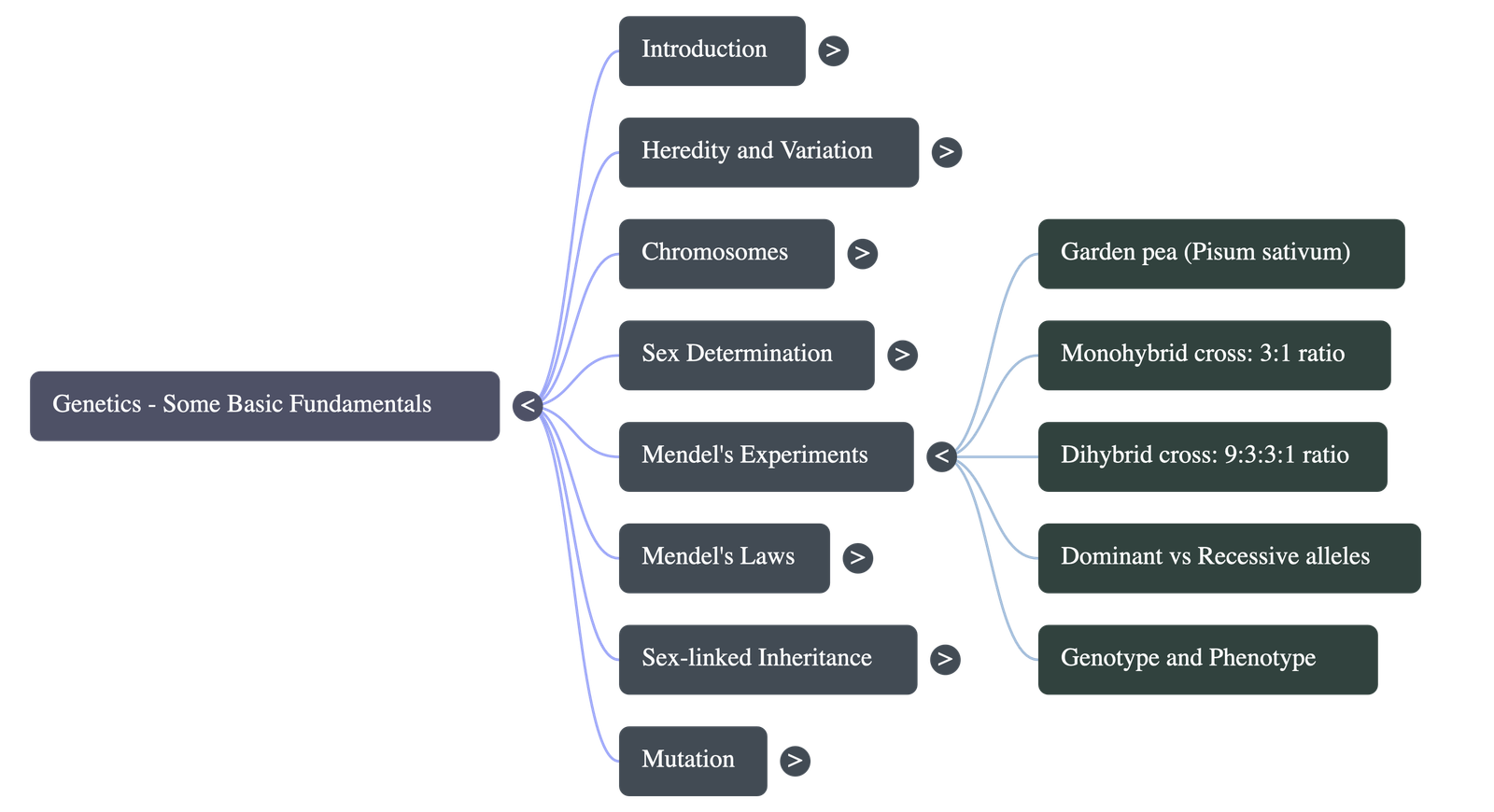
- Dominant vs. Recessive: The super-ruling allele that expresses itself is called dominant, while the submissive one that remains hidden is called recessive.
- Homozygous: Having a similar pair of genes for a specific trait (e.g., RR or rr).
- Heterozygous: Having a dissimilar pair of genes (e.g., Rr), where the dominant trait is expressed.
- Punnett Square: A simple diagram used to place gametes of parents on axes to predict all possible combinations (genotypes) and resulting physical features (phenotypes) of offspring.
- Genotype vs. Phenotype: Genotype is the internal genetic makeup (combination of genes), whereas phenotype is the observable expressed character.
3.10 Sex-Linked Inheritance
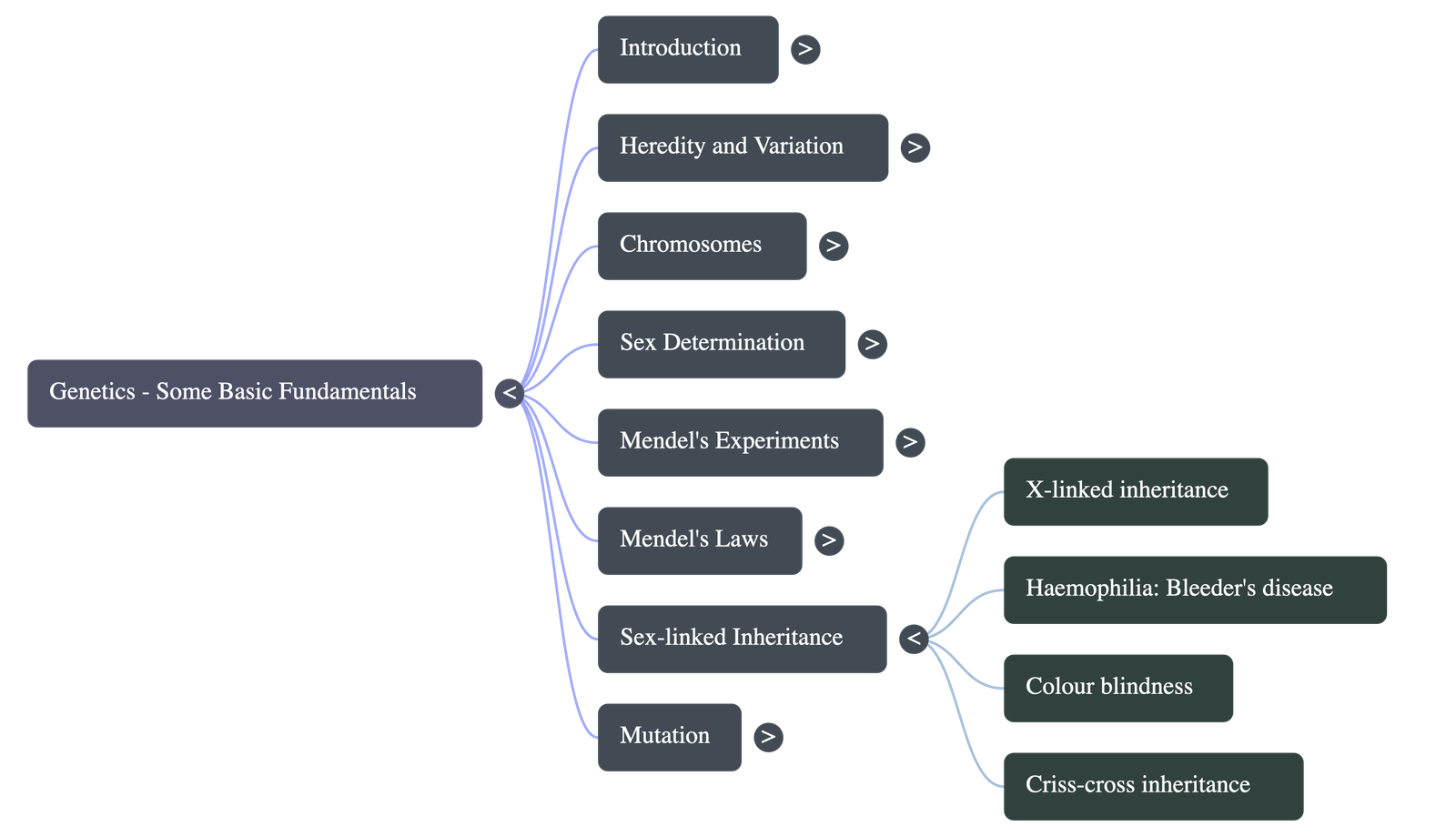
- Definition: The appearance of a trait due to an allele located exclusively on either the X or the Y chromosome.
- X-Linked Disorders: Haemophilia (bleeder's disease where blood fails to clot) and colour-blindness are caused by recessive genes on the X chromosome.
- These disorders are predominantly seen in males because males have only one X chromosome. Females rarely suffer from them, usually acting only as carriers.
- Criss-Cross Inheritance: The pattern where a trait passes from a mother to her son, or a father to his daughter. For instance, a colour-blind father passes the defective gene to his daughter (making her a carrier), who may then pass it to her son.
3.11 Mendel's Experiments on Inheritance
- Mendel selected the garden pea (Pisum sativum) for his experiments because:
- It has many pure-breeding varieties with alternative forms.
- It is naturally self-pollinated but can easily be cross-pollinated artificially.
- It has a short life span, allowing many generations to be studied quickly.
- Mendel studied 7 contrasting pairs of features, such as plant height (tall/dwarf), seed shape (round/wrinkled), and flower position (axillary/terminal).
- Monohybrid Cross: Crossing taking only one feature at a time. Mendel found that the F2 generation results in a phenotypic ratio of 3:1 and a genotypic ratio of 1:2:1.
- Dihybrid Cross: Crossing taking two features together (e.g., seed shape and seed colour). This results in an F2 phenotypic ratio of 9:3:3:1.
3.12 Mendel's Laws of Inheritance
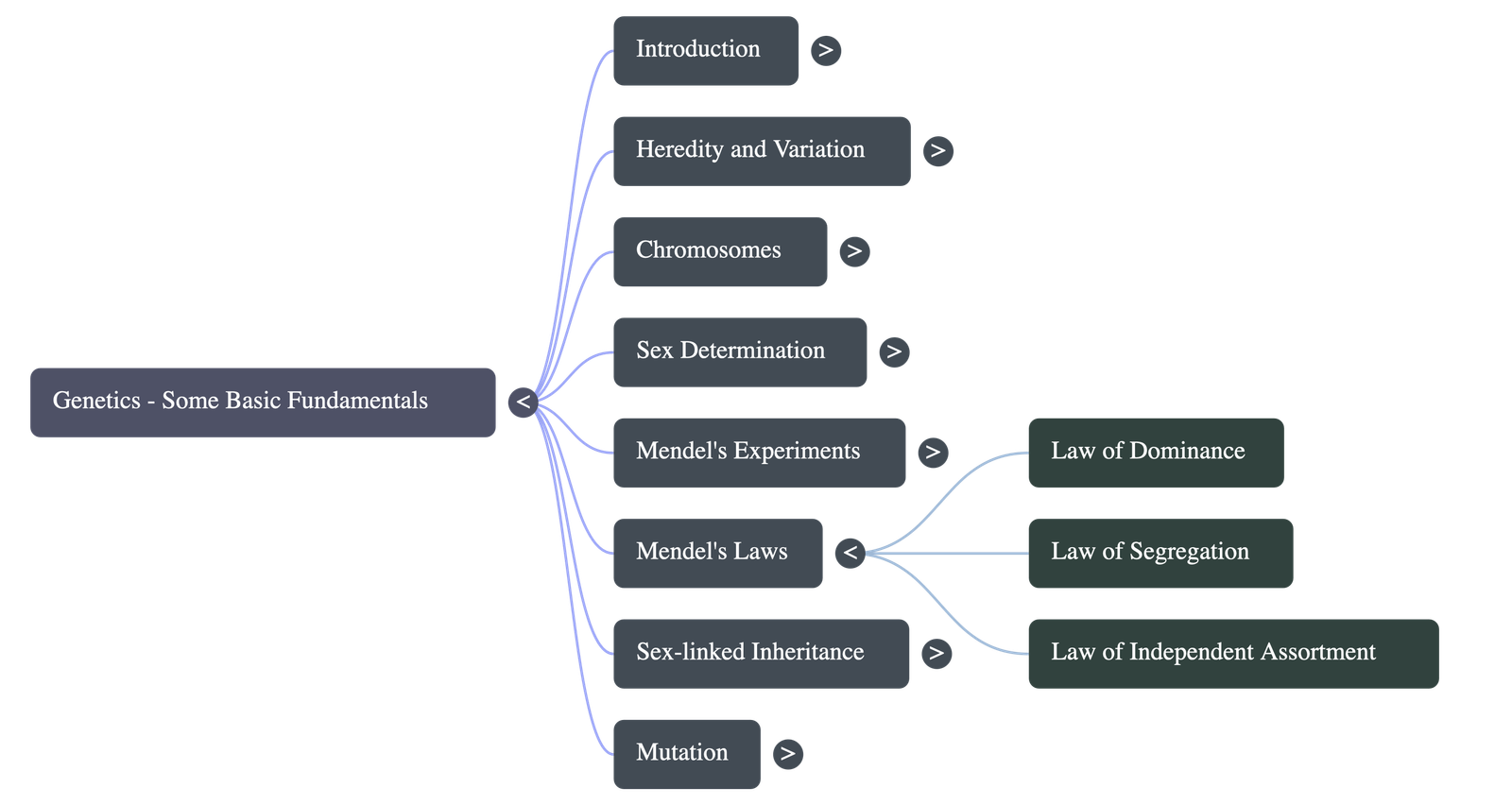
- 1. Law of Dominance: Out of a pair of contrasting characters present together, only one is able to express itself (dominant), while the other remains suppressed (recessive).
- 2. Law of Segregation (Law of Purity of Gametes): The two members of a pair of factors separate during the formation of gametes. They do not blend; instead, they segregate purely into different gametes.
- 3. Law of Independent Assortment: When there are two pairs of characters, the distribution of the alleles of one character into the gametes is completely independent of the distribution of alleles for the other character.
- Applications: Knowledge of these laws allows breeders to predict frequencies of new combinations and produce better breeds of plants and animals.
3.13 Mutation
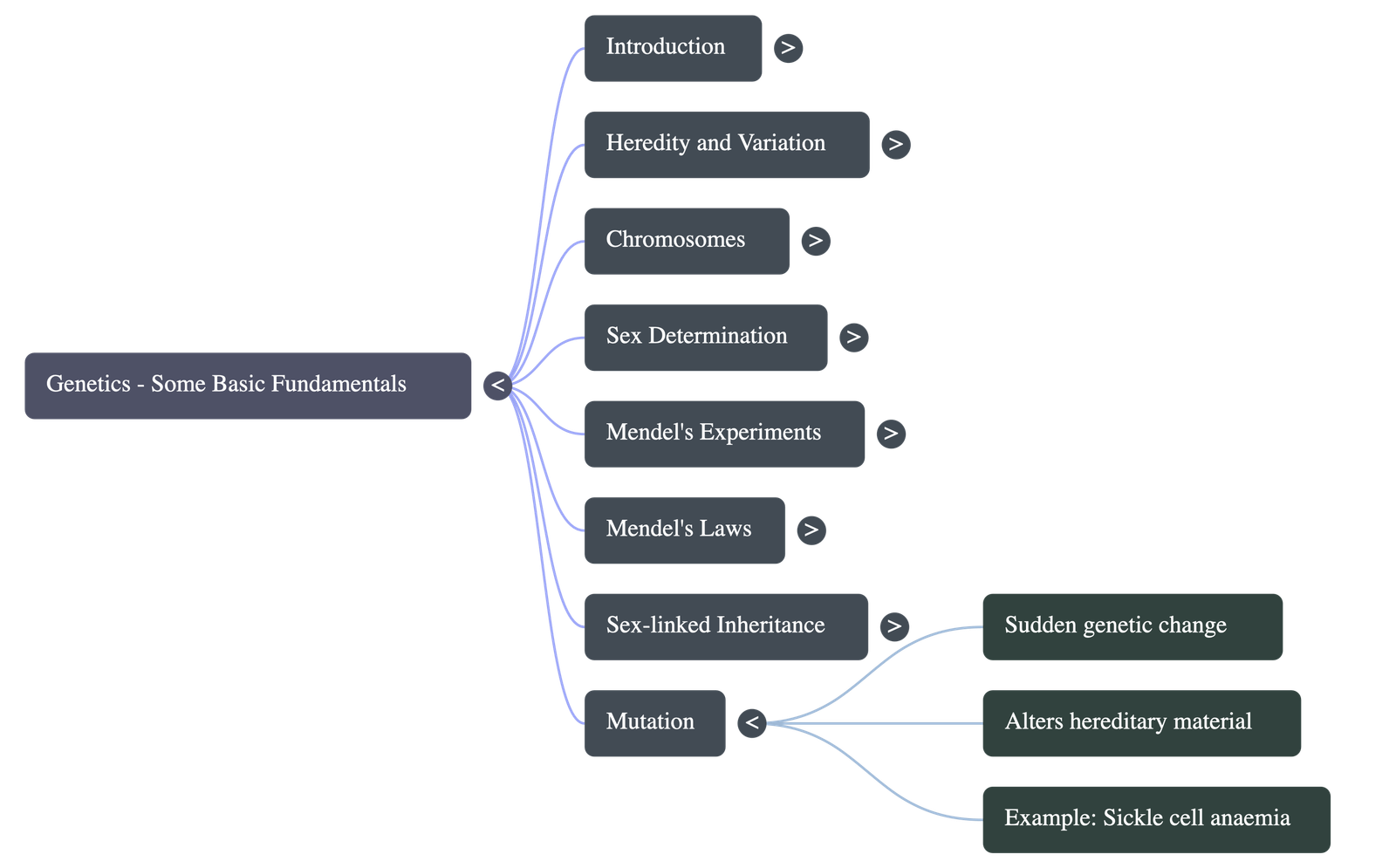
- Definition: Mutation is a sudden change in one or more genes, or in the number or structure of chromosomes.
- These sudden genetic changes alter the hereditary material and result in modifications of specific characters or traits, and such changes can persist for years.
- Examples:
- Sickle cell anaemia: A blood disease caused by a gene mutation that results in the production of sickle-shaped red blood cells.
- Radioactive radiations: Atomic explosions (like those in Hiroshima and Nagasaki during WWII) caused mutations that led to deformities in plants and animals which still persist today.
Do checkout all questions & answers of this chapter.
Quick Navigation:
| | | |
1 / 1
Quick Navigation:
| | | |