Cell - The Structural and Functional Unit of Life
Detailed Revision Summary for Class 10 Biology
1.1 Cells – A Basic Study in Biology
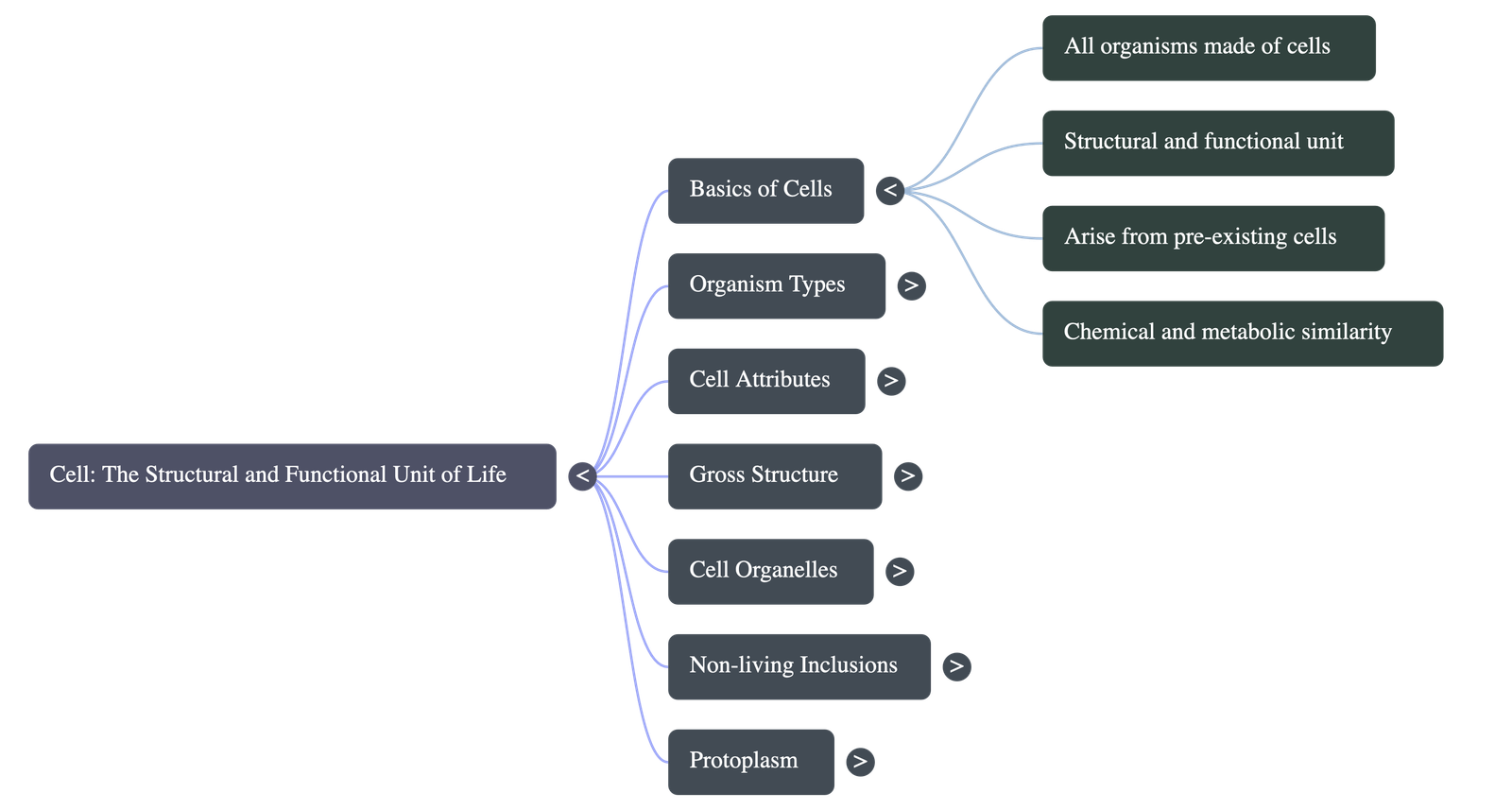
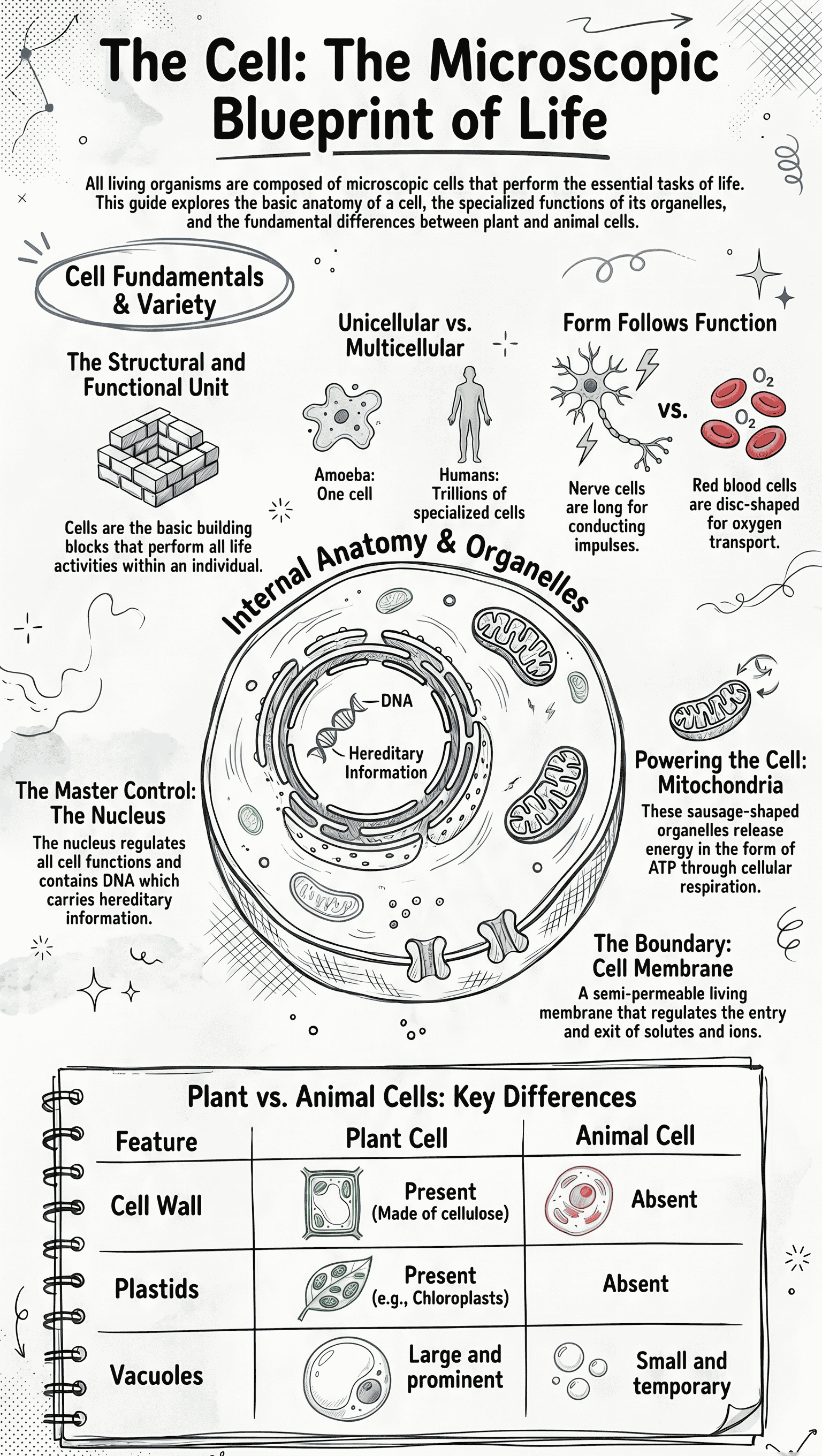
- Universal Building Blocks: All living beings, including microscopic organisms, plants, animals, and humans, are made up of microscopic cells.
- Core Definition: The cell is the fundamental structural and functional unit of the body.
- Uniformity: All cells are basically alike in their chemical composition and metabolic processes.
- Origin: All living beings start their life as a single cell, and all new cells arise from pre-existing cells through division.
1.2 Cells – How Many?
The larger an organism is, the greater the number of cells in its body.
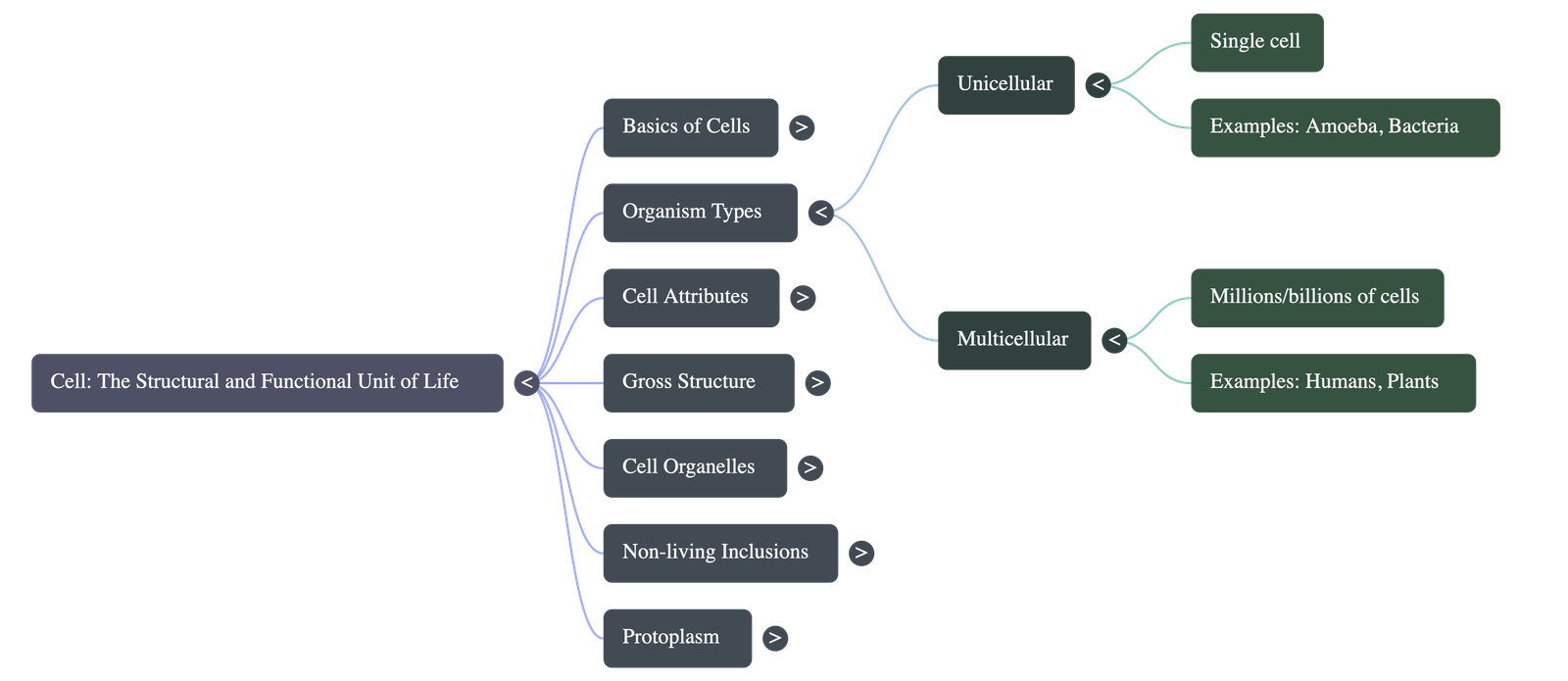
- Unicellular Organisms: Composed of only a single cell. Examples: Amoeba, Paramecium, Bacteria, Chlamydomonas.
- Multicellular Organisms: Composed of millions or billions of cells. Examples: Volvox, rose, mosquito, mango, humans.
- Human Cell Statistics: An average-sized adult human is composed of approximately:
- 200 different types of cells.
- 37.2 trillion cells in the whole body.
- 100 billion nerve cells in the brain cortex.
- 25 trillion red blood cells.
1.3 Cells – How Small?
Cells are generally microscopic and require a microscope to be seen.
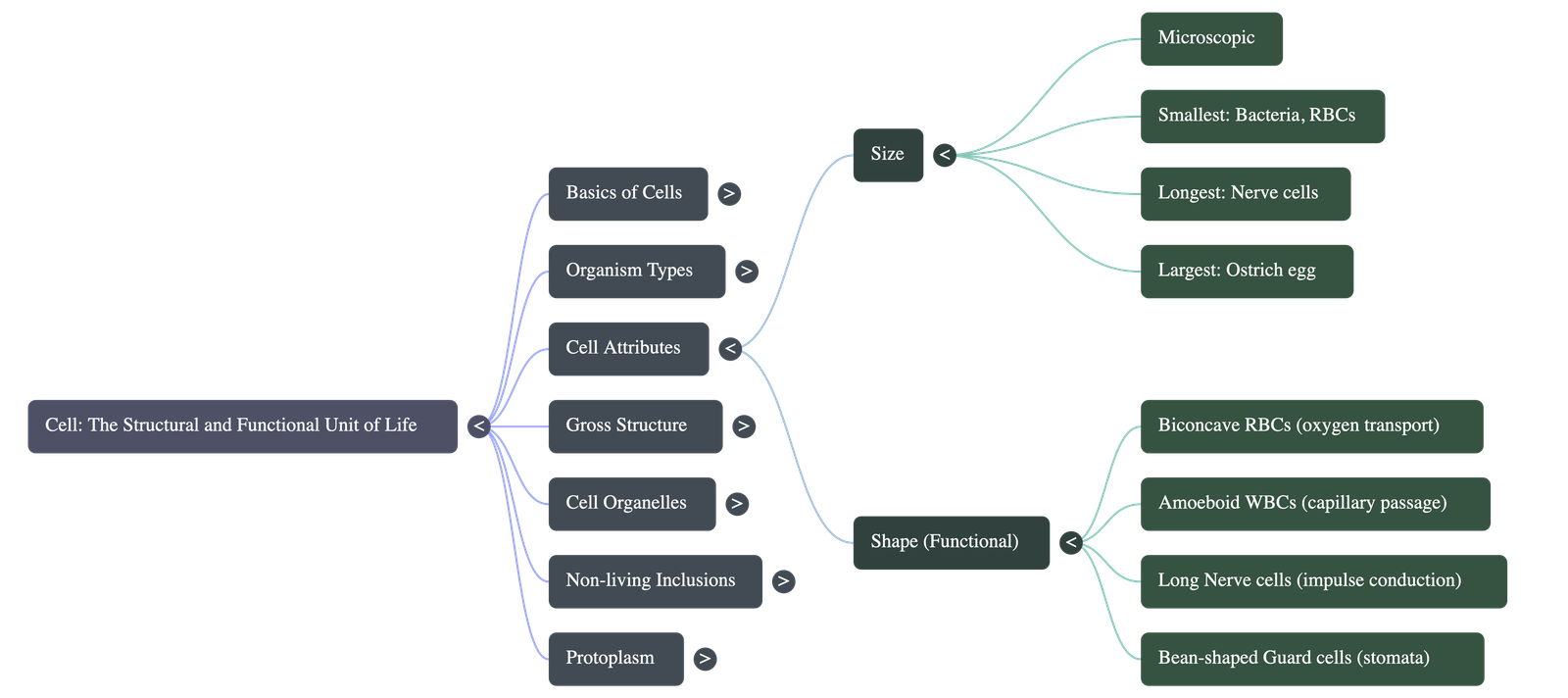
- Smallest Cells: Certain bacteria and human red blood cells.
- Longest Cells: Nerve cells (neurons).
- Largest Cells: Birds' eggs. The Ostrich egg (before development begins) is the largest single cell in the living world today. Note: The white (albumen) and egg-shell are extra protective parts, not part of the cell itself.
1.4 Cell Shapes
The different shapes of cells are closely related to the specific functions they perform.
- Human Red Blood Cells: Circular, biconcave, and disc-shaped to easily pass through narrow blood capillaries and transport oxygen.
- White Blood Cells (WBCs): Have an amoeboid shape (amoeba-like movement with pseudopodia) allowing them to squeeze out through capillary walls to fight infections.
- Nerve Cells: Long and wire-like to conduct electrical "impulses" from distant parts of the body to the brain and vice-versa.
- Guard Cells (in plant leaves): Bean-shaped to facilitate the opening and closing of stomatal pores.
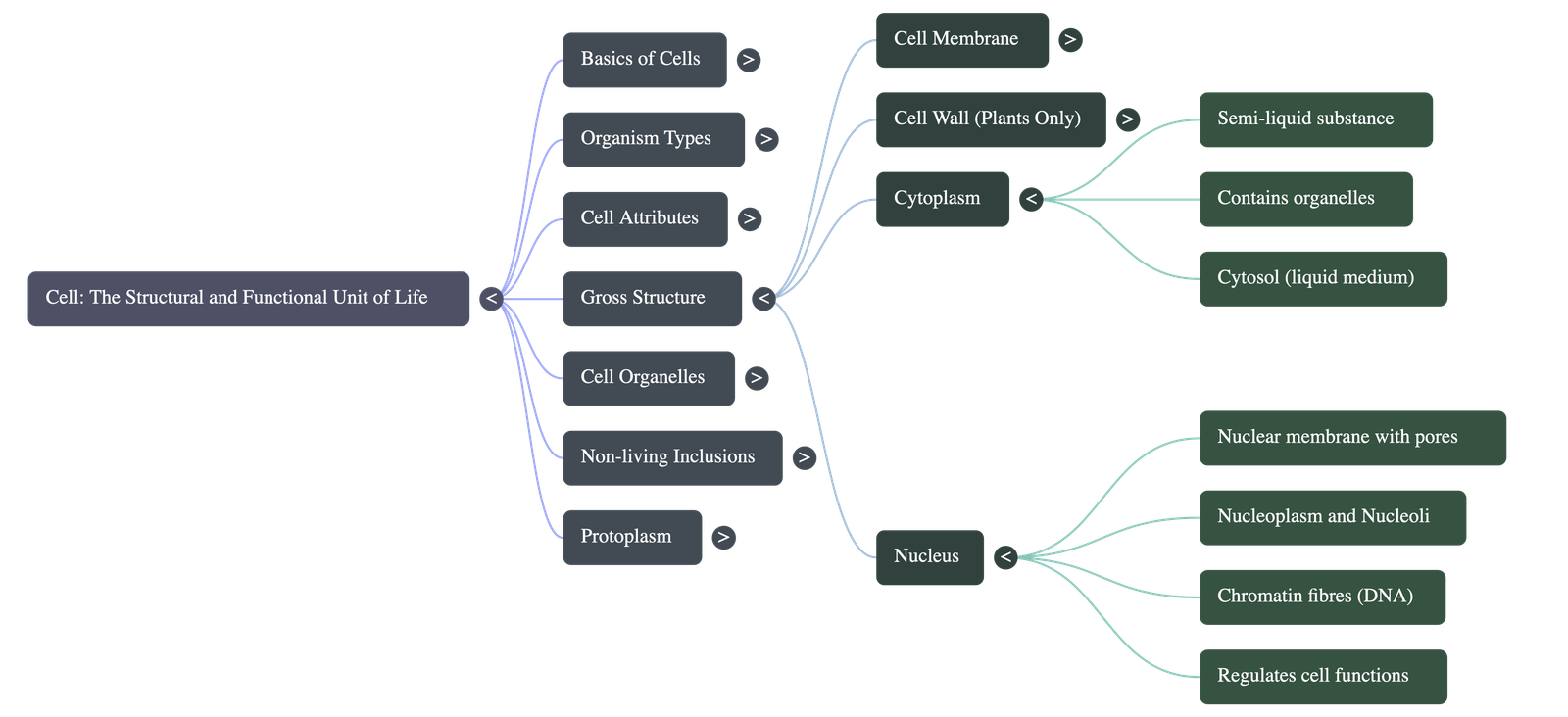
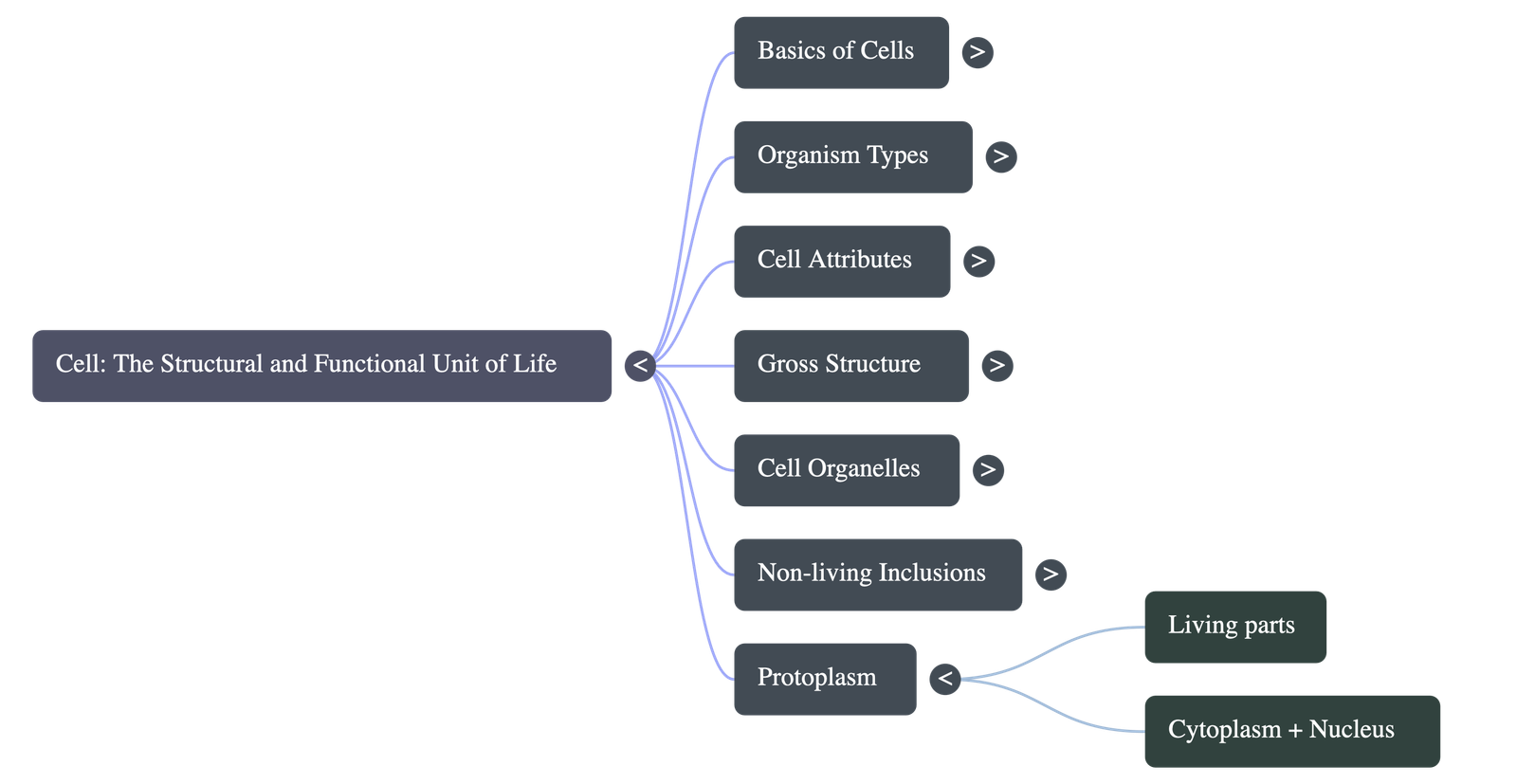
1.5 Gross Structure of Cell – The Three Essential Parts
1. Cell Membrane (Plasma Membrane)
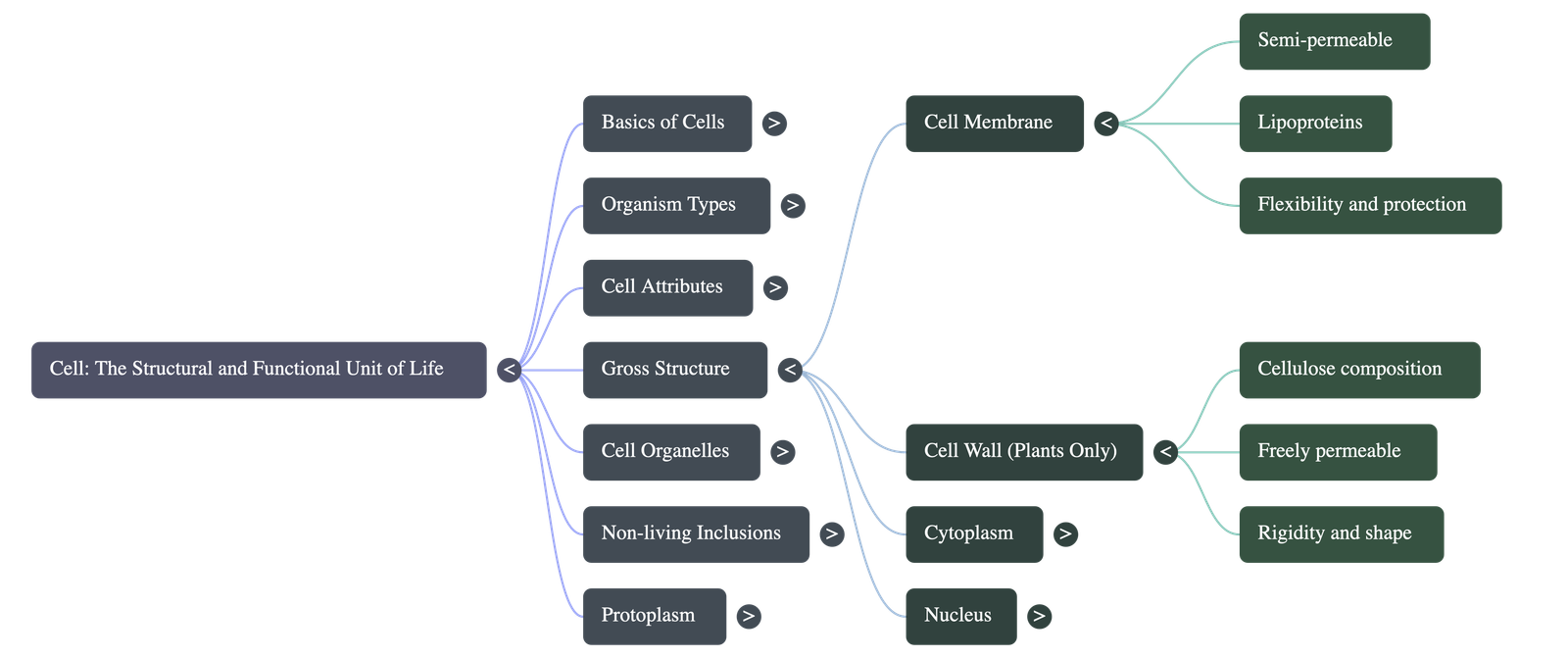
- Encircles the entire cell. It is a living membrane with fine pores, made up of lipoproteins.
- Provides flexibility and separates the cell contents from the surroundings.
- It is semi-permeable (selectively permeable), meaning it allows only certain beneficial substances to pass while preventing others.
- In Plant Cells Only: There is an additional outermost non-living layer called the Cell Wall. It is primarily made of cellulose, gives a definite shape and rigidity, provides protection, and is freely permeable (allows all solutions to pass without hindrance).
2. Cytoplasm
- The semi-liquid substance inside the cell membrane but outside the nucleus.
- Acts as the site for many chemical reactions catalyzed by enzymes (e.g., initial steps of respiration).
- Contains several organelles (living parts with specific functions).
- The liquid medium of the cytoplasm, excluding the organelles, is called the cytosol.
3. Nucleus
- A large spherical body usually located near the center of the cytoplasm.
- Surrounded by a double-layered nuclear membrane with nuclear pores.
- Contains a semi-solid ground substance called nucleoplasm.
- Houses round-shaped nucleoli (singular: nucleolus) and a network of dark-coloured fibres called chromatin fibres.
Important Concepts:
Organelle vs. Organ: Just as body organs perform special functions, organelles perform special functions inside a cell.
Protoplasm: The living parts of a cell collectively (cytoplasm + nucleus + other living bodies). In plants, the cell without the cell wall is called the protoplast.
Cell Inclusions: The non-living parts of a cell (e.g., vacuoles, granules).
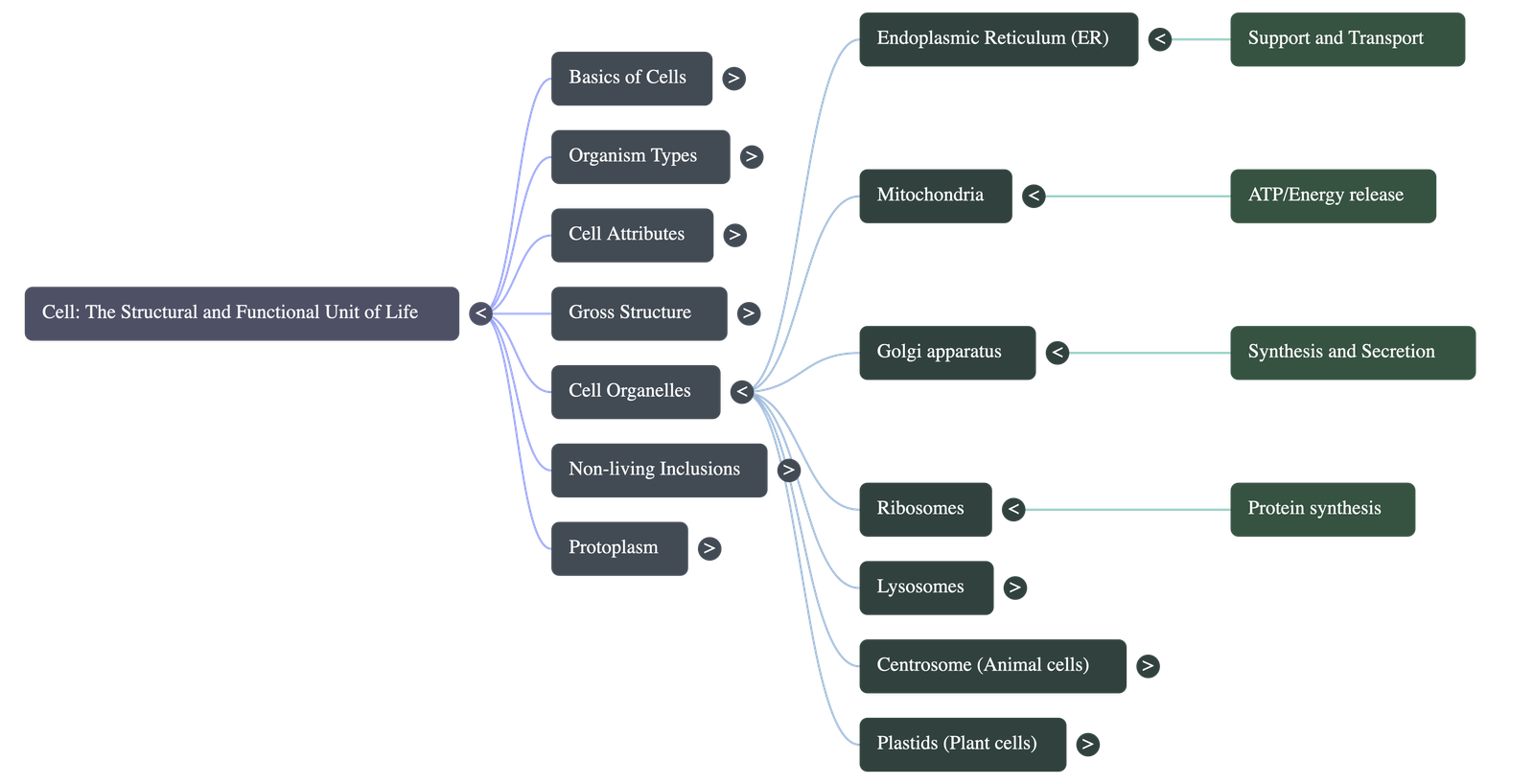
1.6 Finer Structure of Cell – The Organelles
Organelles are specialised, membrane-bound, living structures concerned with definite functions.
- Endoplasmic Reticulum (ER): An irregular network of tubular membranes. It acts as a supportive framework and helps in the synthesis and transport of proteins and fats. Can be Rough (with ribosomes) or Smooth (without ribosomes).
- Mitochondria: Double-walled, sausage-shaped structures. The inner wall is folded into cristae. They have their own DNA and ribosomes. Known as the seat of cellular aerobic respiration, they release energy in the form of ATP.
- Golgi Apparatus: Stacks of flattened membrane sacs (called dictyosomes in plant cells). Responsible for the synthesis and secretion of enzymes, hormones, etc. In animals, it forms the acrosome of the sperm.
- Ribosomes: Small dense spherical bodies mainly composed of RNA. Not bound by a membrane. They are the primary sites of protein synthesis.
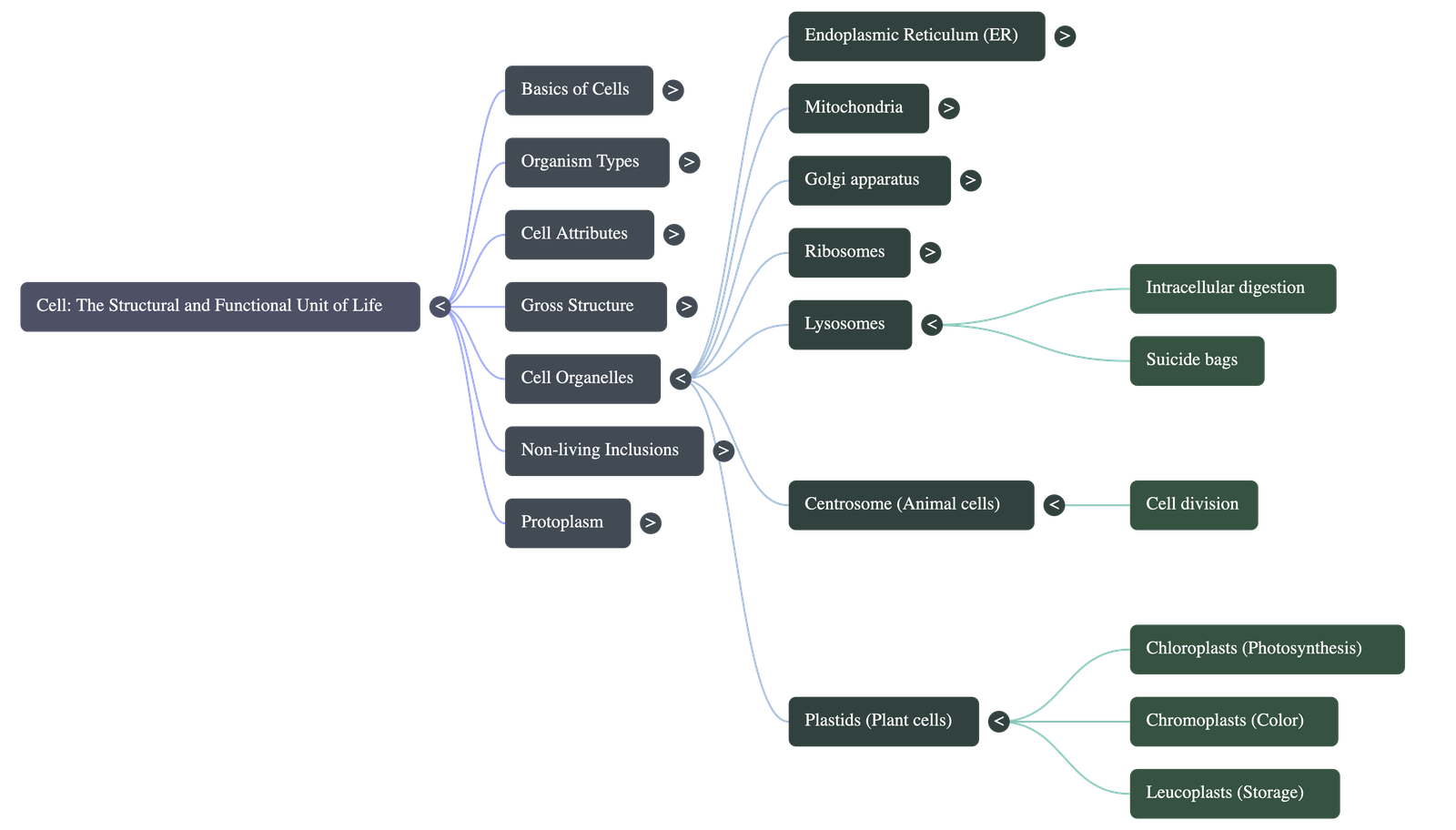
- Lysosomes: Membranous sacs containing 40 different types of enzymes. They perform intracellular digestion, destroy foreign substances, and digest cartilages during bone formation. Also known as "suicide bags" because they destroy the cell's own old/injured organelles.
- Centrosome (Animal cells only): Located near the nucleus, contains two centrioles surrounded by microtubules. Initiates and regulates cell division and forms spindle fibres.
- Plastids (Plant cells only): Double-membraned structures containing DNA.
- Chloroplasts: Green, contain chlorophyll, trap solar energy for photosynthesis.
- Leucoplasts: Colourless, store starch.
- Chromoplasts: Variously coloured (contain carotene, xanthophyll), impart colour to flowers and fruits to attract pollinators and help in seed dispersal.
- Nucleus & its parts: The largest cell organelle.
- Function: Regulates all cell functions; if removed, the cell dies. Contains genes controlling hereditary traits.
- Nucleolus: Produces ribosomes and dictates them to synthesize proteins.
- Chromatin fibres: DNA threads that condense into thick chromosomes during cell division. Carriers of hereditary information.
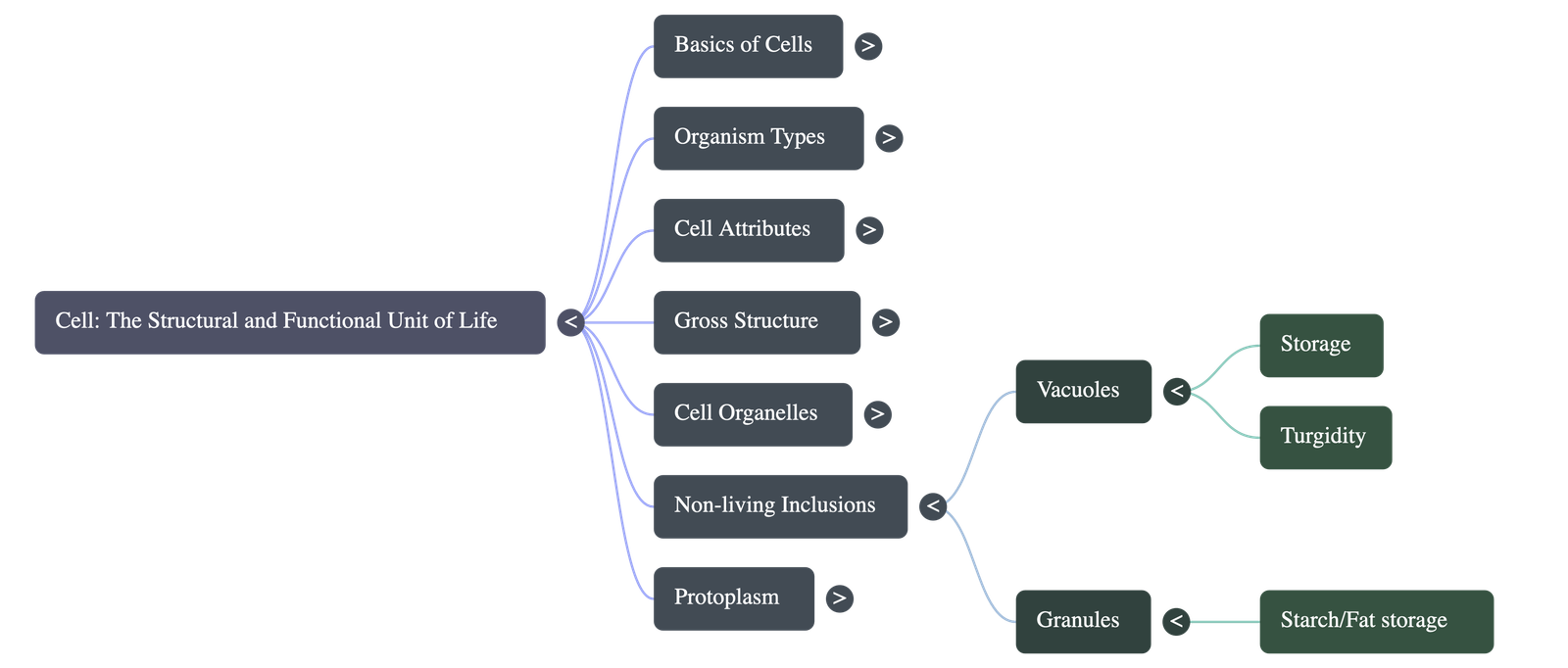
- Non-living Inclusions:
- Vacuoles: Clear spaces covered by a tonoplast. Store water, food, and pigments (like anthocyanins). They give turgidity to plant cells. Plant cells have large, prominent vacuoles, while animal cells have small, temporary ones (or none).
- Granules: Small particles storing food (starch in plants, glycogen in animals, and fat droplets).
Key Differences: Plant Cells vs. Animal Cells
- Plant Cells: Usually larger, possess a definite cellulose cell wall, contain plastids, lack a centrosome, have a thin peripheral layer of less dense cytoplasm, and contain large/prominent vacuoles.
- Animal Cells: Usually smaller, no cell wall (only cell membrane), no plastids, possess a centrosome, have denser/granular cytoplasm filling the cell, and vacuoles (if any) are small and temporary.
1.7 Microscopic Examination of Onion Peel
The epidermal peel of an onion is ideal for studying basic plant cell structure.
- Preparation: Tear a transparent strip from the inner (concave) side of a fleshy onion leaf. Mount a small piece in water on a glass slide.
- Staining: Add a drop of iodine or eosin solution before covering with a coverslip. This stains the material and makes the nucleus more distinct.
- Observation: Under the microscope, the cells appear somewhat rectangular and firmly bound together. Each cell shows a highly visible, thick cell wall, cytoplasm, one or two large vacuoles, and a distinct nucleus pushed towards one side (a classic feature of plant cells).
1.8 The Nucleus – Key to the Life of a Cell
While every organelle contributes, the key performer or the "master of the cell" is the nucleus.
- The Amoeba Experiment: An experiment performed on Amoeba (a single-celled organism) proves the critical role of the nucleus.
- Normal Function: A normal Amoeba grows, divides into two, and the race continues.
- Nucleus Removal: If the nucleus is completely removed from an Amoeba, the cell dies.
- Transplantation: If a nucleus from a donor amoeba is transplanted into an enucleated (nucleus-free) recipient amoeba, the recipient survives, divides, and lives normally, whereas the donor (now without a nucleus) dies.
Conclusion: Every activity of the body is carried out by cells, and each kind of cell is specialized for a particular function, centrally controlled by its nucleus.
Do checkout all questions & answers of this chapter.