The Nervous System
10.1 Need of Nervous System
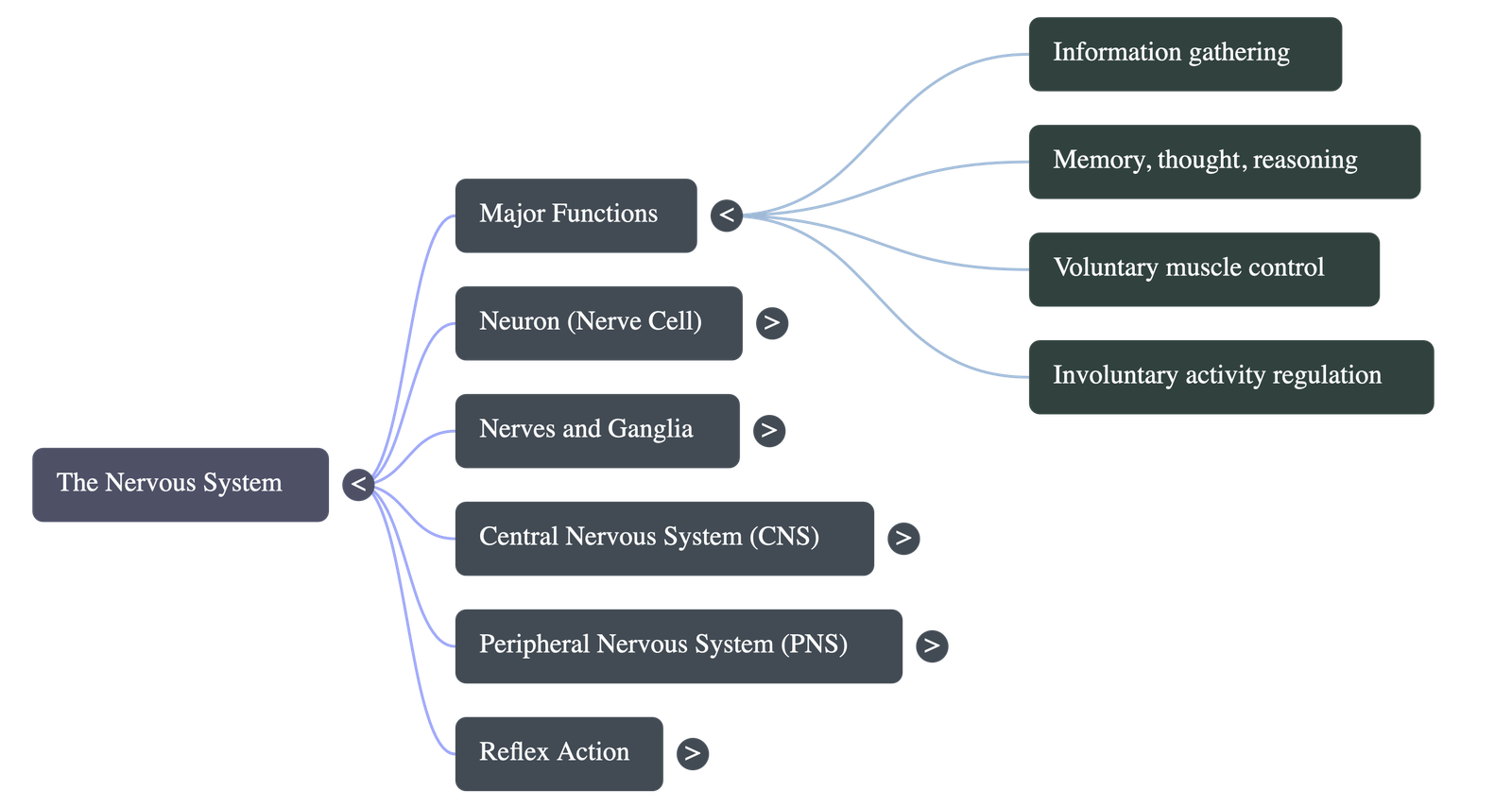
The nervous system and the hormonal system act as two coordinating agencies in our body. The nervous system performs several vital functions:
- Information: Keeps us informed about the outside world through our sense organs.
- Cognition: Enables us to remember, think, and reason.
- Voluntary Control: Controls and harmonizes all voluntary muscular activities (e.g., running, holding a book).
- Involuntary Regulation: Regulates involuntary activities such as breathing and heartbeat without conscious thought.
10.2 Neuron (Or Nerve Cell): The Unit of the Nervous System
The nervous system consists of the brain, spinal cord, sense receptors, and nerves, all constructed from structural units called neurons.
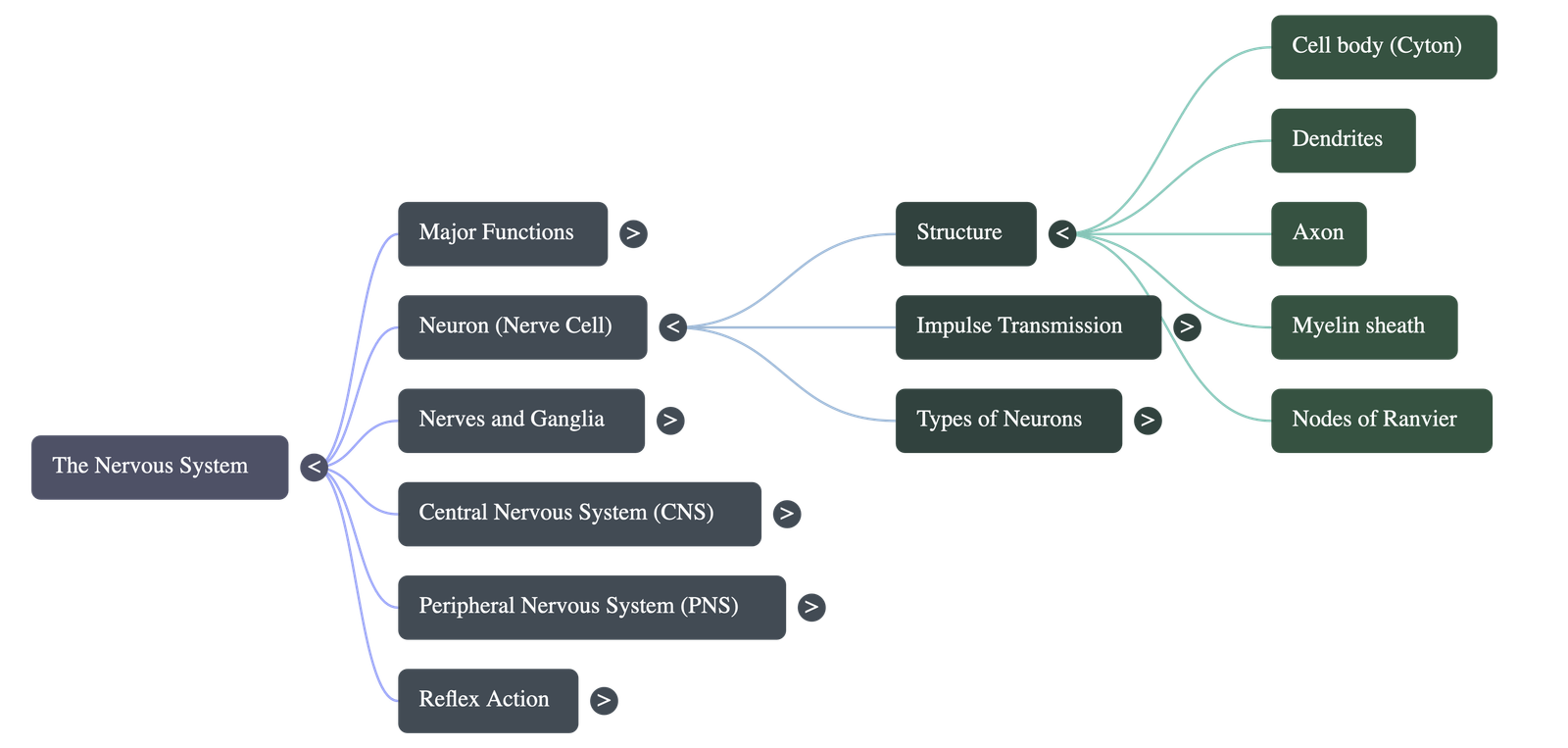
10.2.1 Structure of the Neuron
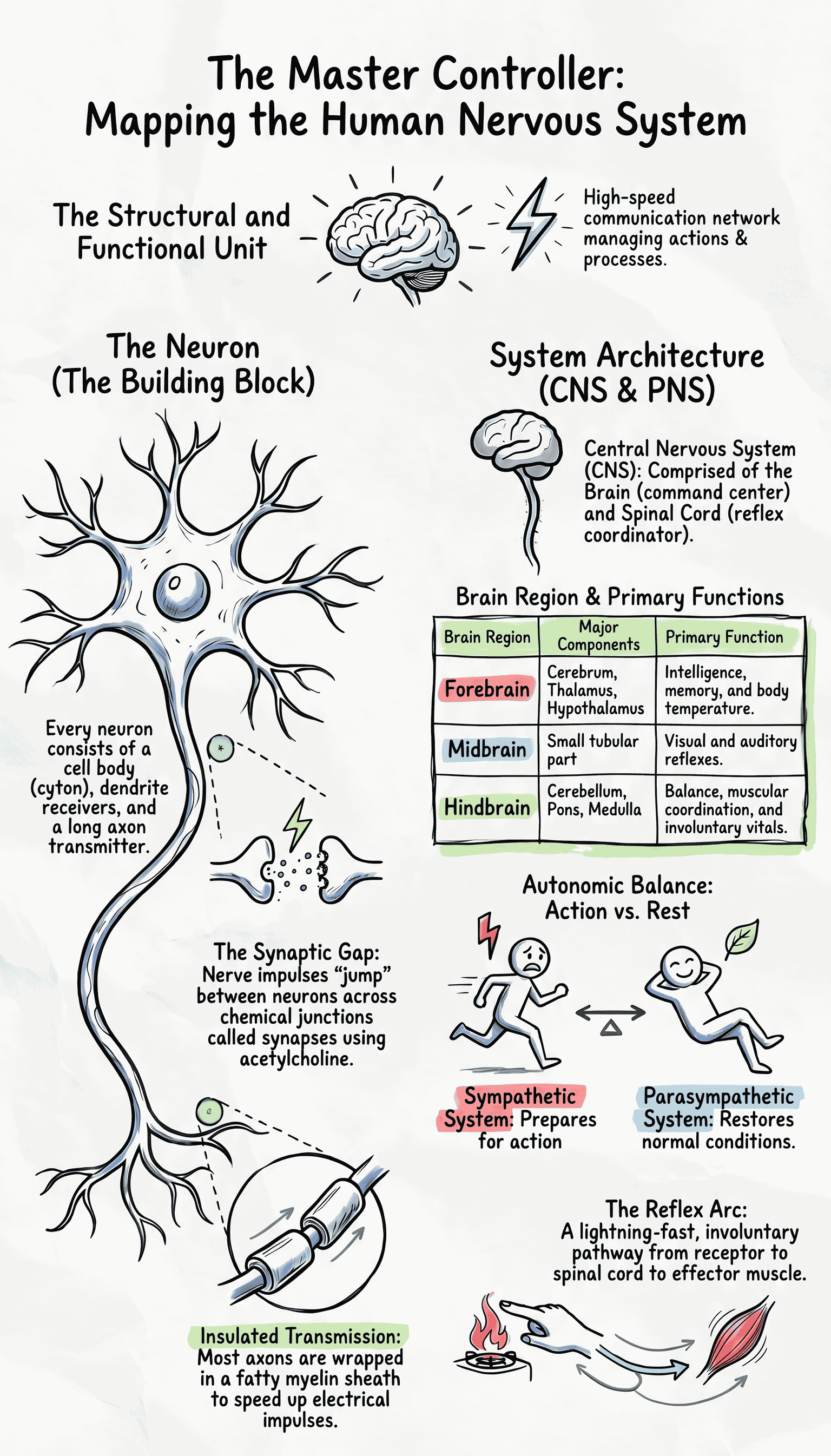
- Cell Body (Perikaryon or Cyton): Contains a well-defined nucleus and granular cytoplasm. It lacks a centrosome, which means nerve cells cannot divide or reproduce.
- Dendrites: Branched, tree-like cytoplasmic projections that conduct nerve impulses toward the cell body.
- Axon: A long process extending from the cell body (sometimes over a meter long). In most neurons, it is covered by an insulating white myelin sheath, which is further encased by a thin neurolemma. Gaps in the myelin sheath are called Nodes of Ranvier. Axon terminals end in swollen bulbs that store neurotransmitters.
Basic Terms in Nervous Activity
- Stimulus: An external or internal environmental change that causes a reaction in an organism.
- Response: The change in an organism resulting from a stimulus.
- Impulse: A wave of electrical disturbance (irritability) sweeping over the nerve cell.
- Receptors: Specialized cells in sense organs that receive stimuli and generate impulses.
- Effectors: Muscles or glands that contract or secrete upon receiving impulses.
Transmission of Nerve Impulse
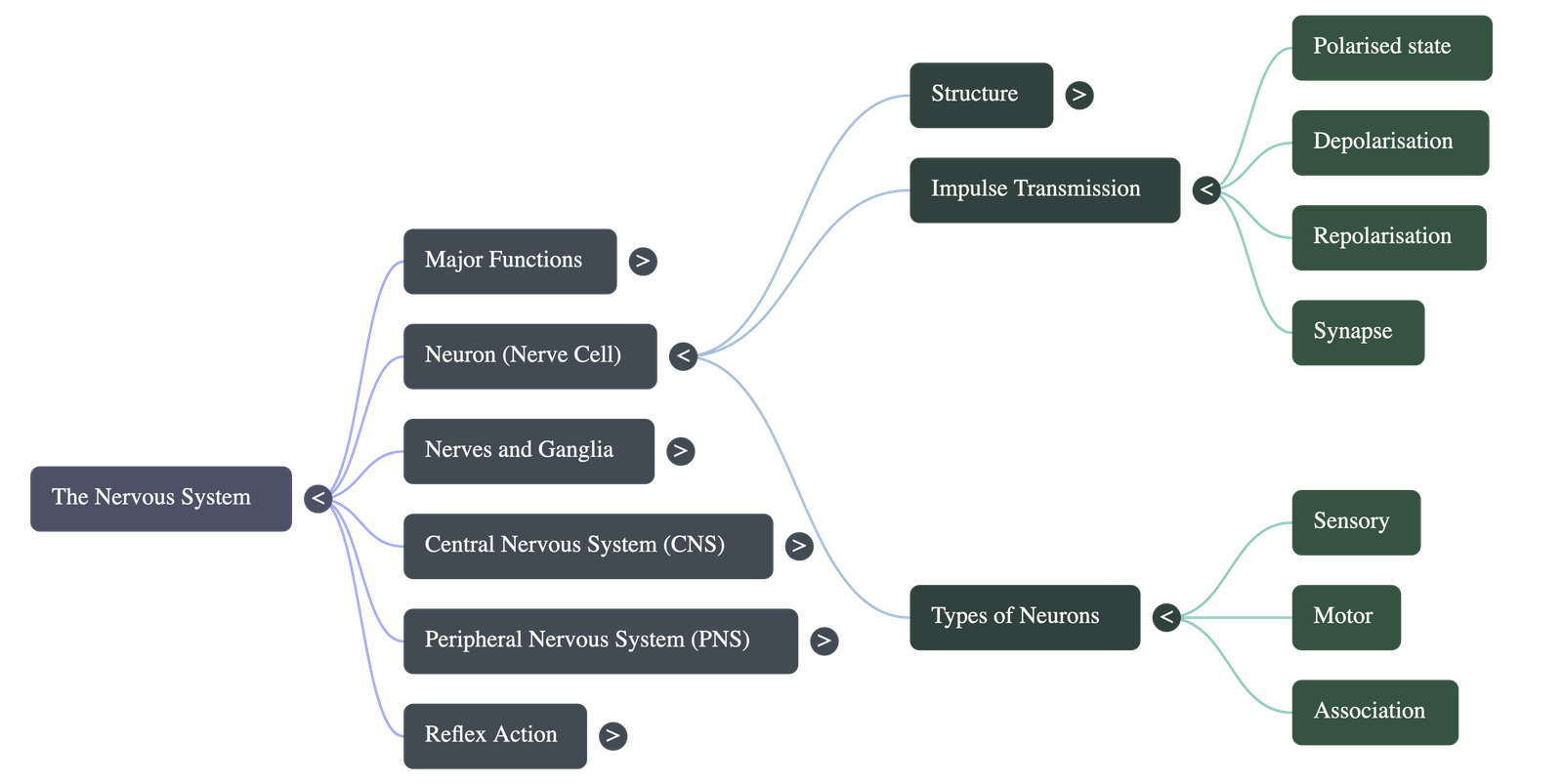
- Resting State (Polarised): The outer side of the nerve fibre is positively charged due to excess Sodium (Na+) ions.
- Excited State (Depolarised): A stimulus causes the membrane to become permeable to Na+ ions, which rush inward, causing a loss of polarisation. This point becomes a stimulus for the next region.
- Recovery State (Repolarised): The previous area restores its original state using a "sodium pump," which actively transports Na+ ions back out using ATP.
10.2.2 Synapse
The synapse is the point of contact where terminal branches of one neuron's axon meet the dendrites of an adjacent neuron, separated by a fine gap (synaptic cleft). Nerve impulses "jump" this gap via a chemical process. The arrival of an impulse releases a chemical called acetylcholine, initiating an impulse in the next neuron, before being quickly broken down by an enzyme.
10.2.3 Types of Neurons
- Sensory Neurons: Convey impulses from receptors (sense organs) to the central nervous system.
- Motor Neurons: Carry impulses from the central nervous system to effectors (muscles or glands).
- Association Neurons: Located in the brain and spinal cord; they interconnect sensory and motor neurons.
10.3 Nerves
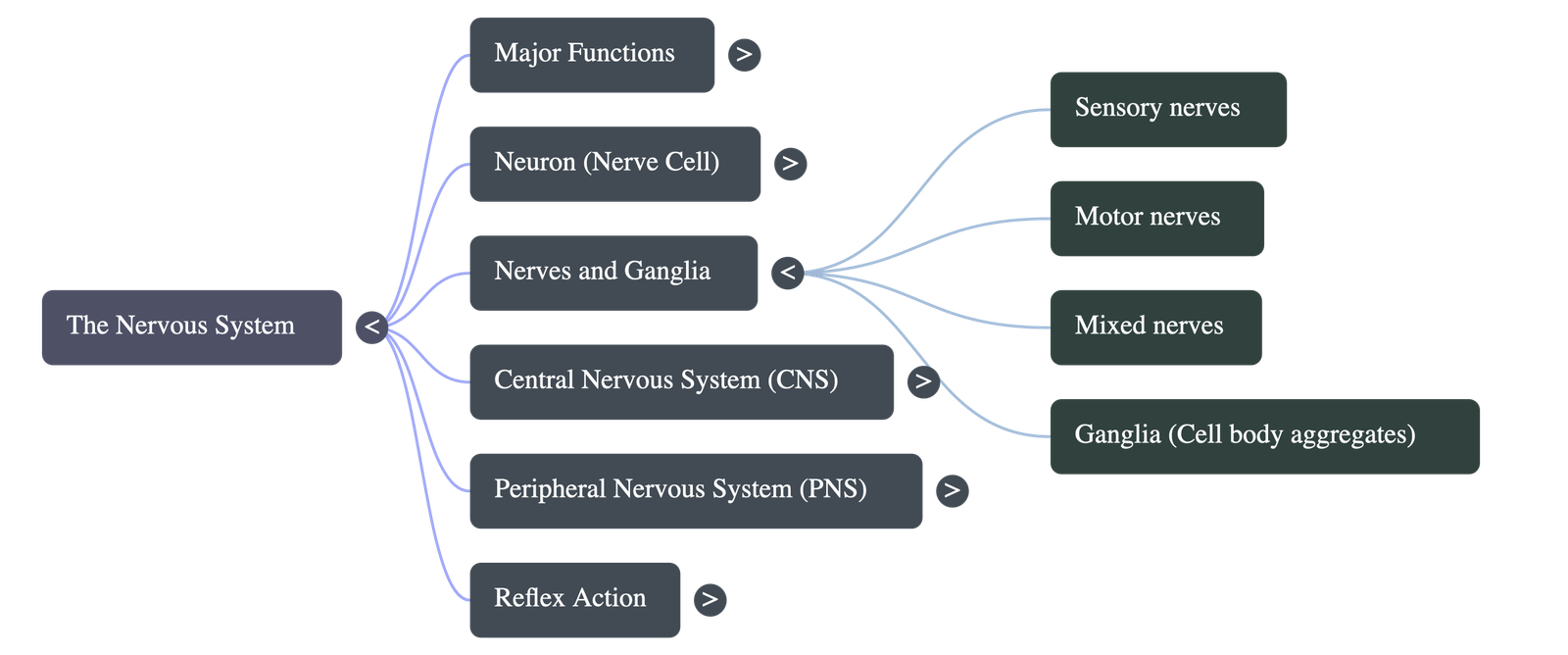
A nerve is a bundle of nerve fibres (axons) enclosed in a tubular sheath, acting like an underground electric cable with insulated wires.
- Sensory Nerves: Contain only sensory fibres (e.g., Optic nerve).
- Motor Nerves: Contain only motor fibres (e.g., Nerves supplying eye muscles).
- Mixed Nerves: Contain both sensory and motor fibres (e.g., Spinal nerves).
- Ganglia: Aggregates of nerve cell bodies outside the central nervous system.
10.4 Two Major Divisions of the Nervous System
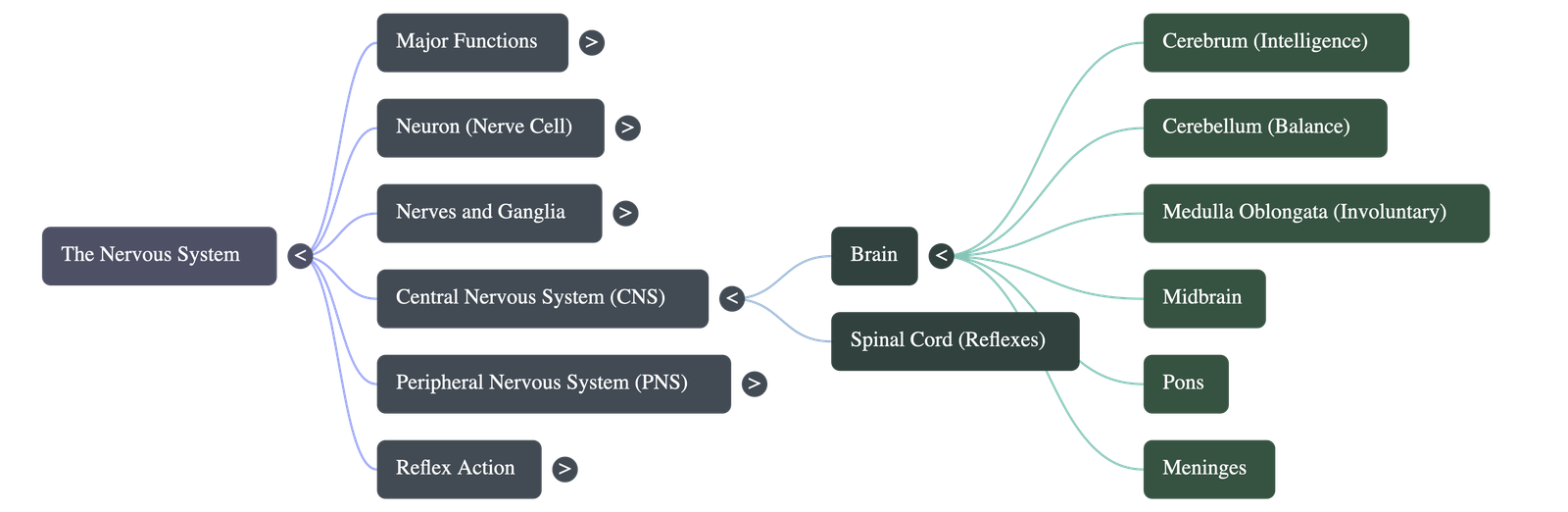
- Central Nervous System (CNS): Consists of the brain and spinal cord.
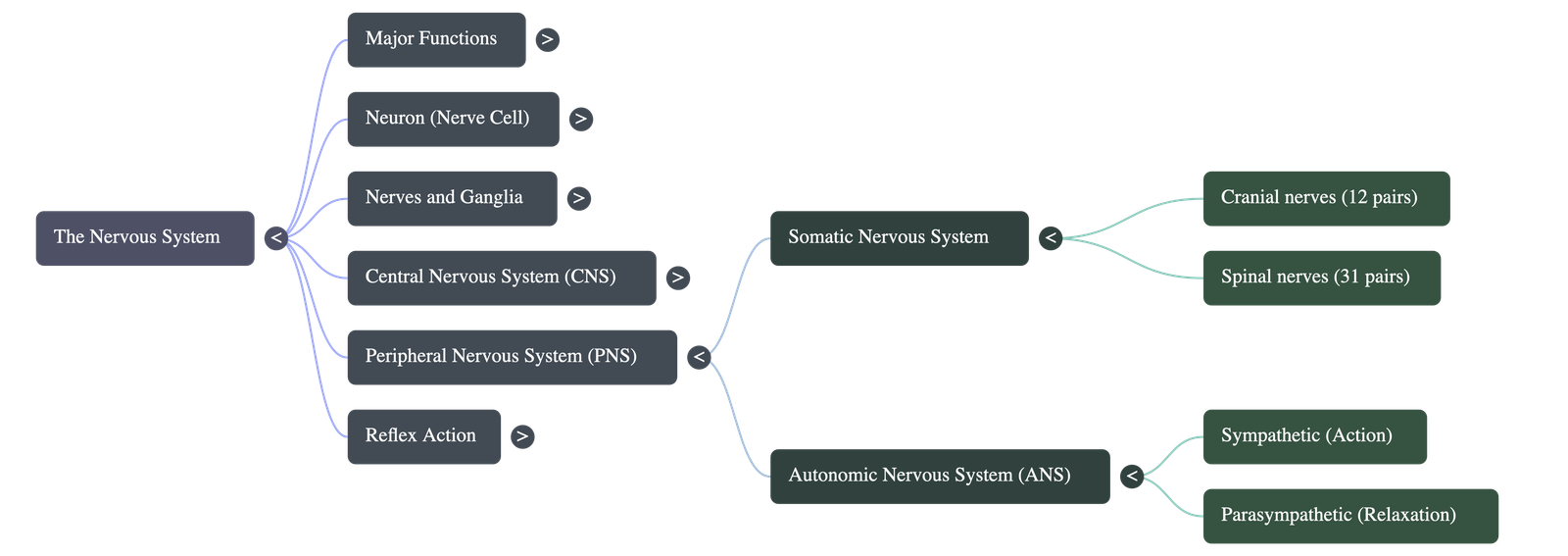
- Peripheral Nervous System (PNS): Consists of nerves emerging from the CNS. It is further divided into the Somatic Nervous System (voluntary) and the Autonomic Nervous System (involuntary).
10.4.1 The Brain
Weighing about 1.35 kg, the human brain is the largest among animals relative to body size. It is protected by the skull (cranium) and three membranes called meninges (Dura mater, Arachnoid, and Pia mater). The space between the membranes is filled with Cerebrospinal Fluid (CSF), which acts as a shock absorber. The brain consists of three primary regions: Forebrain, Midbrain, and Hindbrain.
- Cerebrum (Forebrain): The largest part, divided into left and right cerebral hemispheres connected by the corpus callosum. The outer highly convoluted layer (cortex) contains gray matter (cell bodies), and the inner portion contains white matter (axons). The cerebrum is the seat of intelligence, consciousness, memory, and willpower. It controls all voluntary actions.
- Cerebellum (Hindbrain): A smaller area located at the base of the cerebrum. It maintains body balance and coordinates complex muscular activities (like walking).
- Medulla Oblongata (Hindbrain): The lowest portion that continues into the spinal cord. It controls internal involuntary actions such as breathing, heartbeat, and peristalsis. Injury here usually results in death.
- Other Parts: Diencephalon (Thalamus and Hypothalamus for pain relay and temperature control) and Midbrain (reflexes involving eyes and ears).
10.4.2 The Spinal Cord
The spinal cord extends from the medulla oblongata down the back, protected by the vertebral column and the same three meninges. Inside, the arrangement of matter is reversed compared to the brain: Gray matter is on the inside (H-shaped) and white matter is on the outside. A central canal filled with CSF runs through it.
Functions:
- Controls reflexes below the neck.
- Conducts sensory impulses from the skin/muscles up to the brain.
- Conducts motor responses from the brain down to the muscles.
10.5 Peripheral Nervous System
10.5.1 Somatic Nervous System
- Cranial Nerves: 12 pairs emerging from the brain (e.g., olfactory for smell, optic for sight).
- Spinal Nerves: 31 pairs emerging from the spinal cord (8 cervical, 12 thoracic, 5 lumbar, 5 sacral, 1 coccygeal). All spinal nerves are mixed nerves, containing both a dorsal sensory root and a ventral motor root.
10.5.2 Autonomic Nervous System
Controls the involuntary actions of internal organs and consists of two mutually opposing parts:
- Sympathetic System: Prepares the body for violent action during abnormal conditions (fight or flight). Stimulated by the hormone adrenaline. Effects include accelerated heartbeat, dilated pupils, and inhibited digestion.
- Parasympathetic System: Operates under normal, restful conditions to re-establish calm after violent acts. Effects include retarded heartbeat, constricted pupils, and stimulated digestion.
10.6 Reflexes (Involuntary Actions)
Actions in the body are broadly categorized as voluntary (performed consciously, commanded by the brain) or involuntary (performed unknowingly).
Reflex Action: An automatic, quick, immediate involuntary action in the body brought about by a stimulus (e.g., instant withdrawal of a hand touching a hot iron).
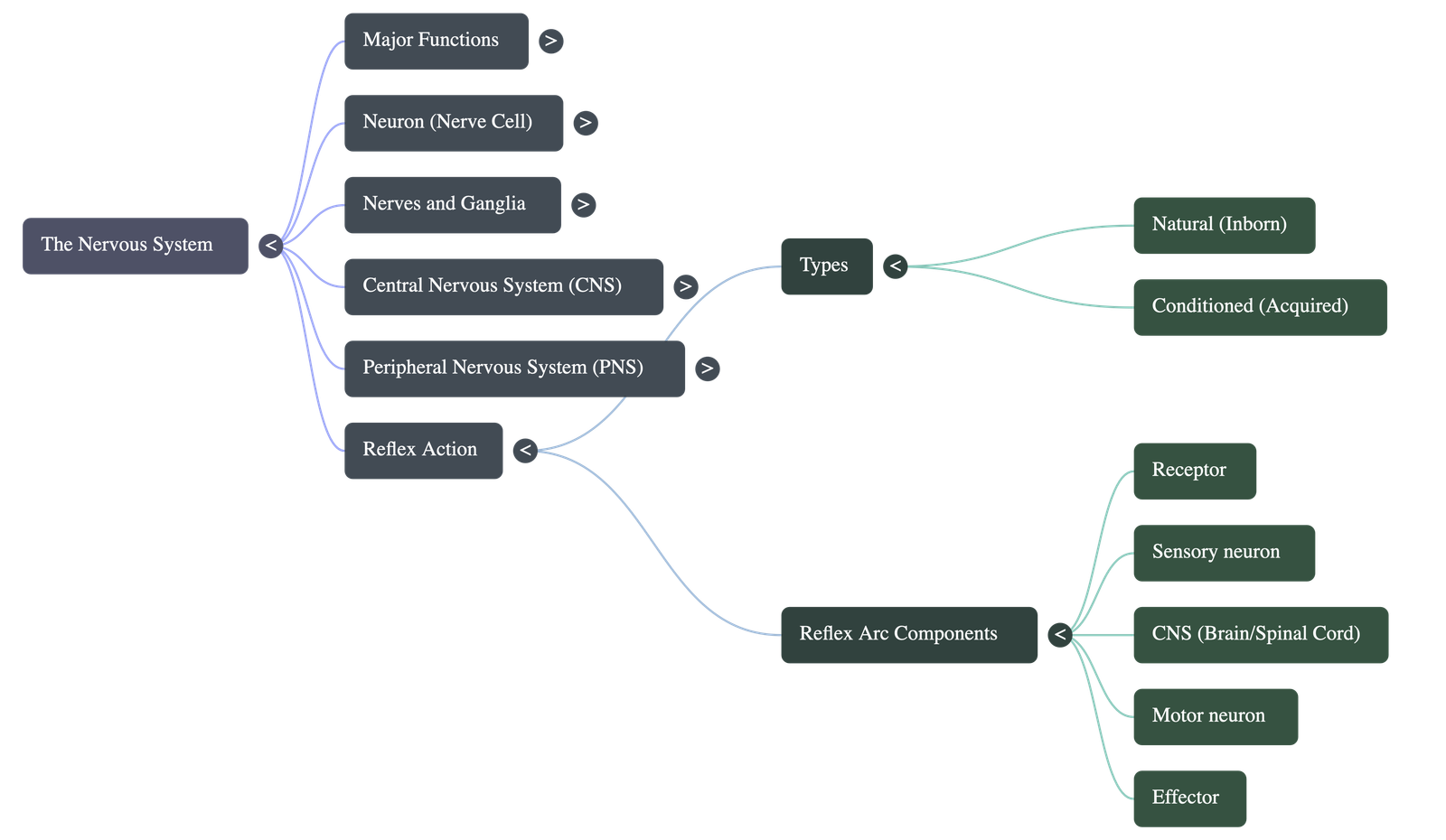
Types of Reflexes
- Natural (Inborn) Reflexes: Inherited from parents; no previous experience or learning is required. They are largely protective and functional. Examples: Blinking, coughing, sneezing, and salivation during swallowing.
- Conditioned (Acquired) Reflexes: Developed during an individual's lifetime due to experience and learning. Example: Salivation simply at the sight or smell of familiar food. Pavlov demonstrated this with dogs, where a bell ring (previously unrelated stimulus) was associated with food to eventually cause salivation independently. Other human examples include typing without looking at the keyboard or playing a musical instrument.
Nervous Pathways in Reflexes (Reflex Arc)
The reflex arc is the shortest route taken by an electrical impulse to execute a reflex action. The general pathway is:
- Receptor: Epithelial cells responding to the stimulus.
- Sensory Neuron: Carries the impulse to the spinal cord.
- CNS Processing: Sensory fibres enter via the dorsal root. Sometimes an association (relay) neuron bridges the gap within the gray matter.
- Motor Neuron: Carries the impulse out through the ventral root.
- Effector: Organ that executes the response action.
Complex reflex actions can involve neurons at multiple levels of the spinal cord and engage numerous skeletal muscles (e.g., jumping away from a suspected snake).
Do checkout all questions & answers of this chapter.