Quick Navigation:
| | | |
The Endocrine System
1. Need for the Regulation of Body Activities
- The complex activities in our body must be regulated so they occur at the proper time and in a correct sequence.
- This regulation is achieved by two systems: the Nervous System and chemical regulators called Hormones.
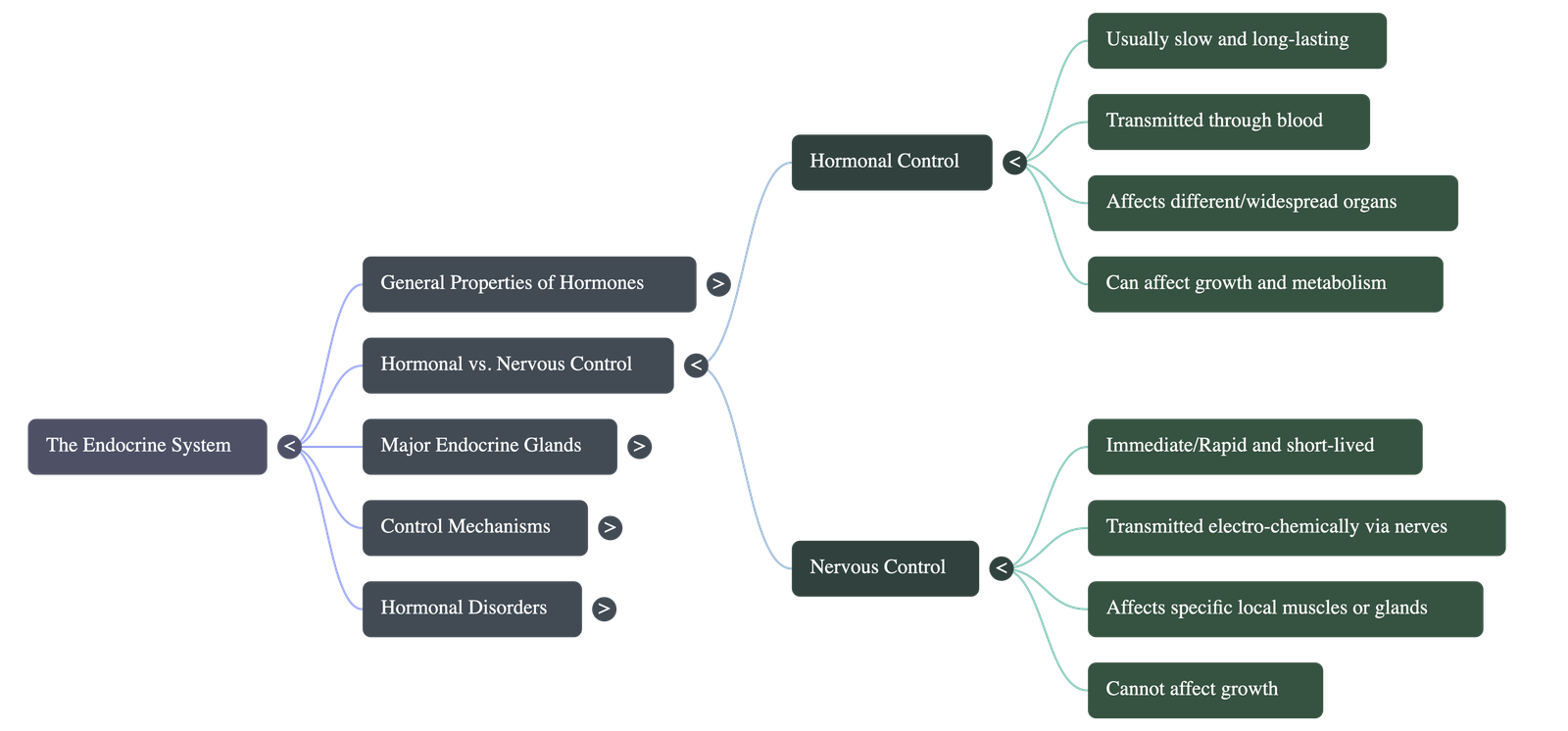
- Hormonal Control vs. Nervous Control:
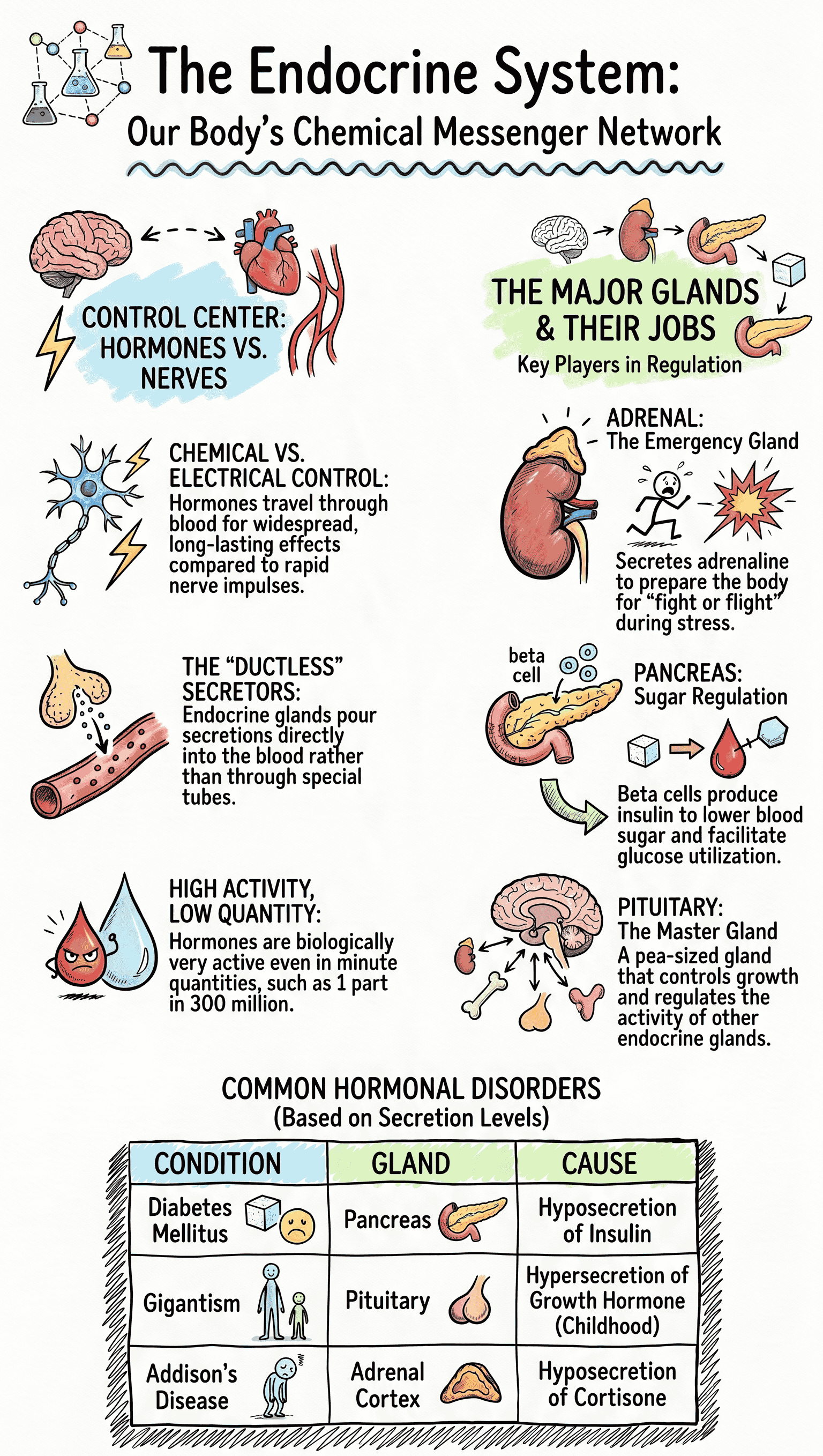
- Speed: Hormonal action is usually slow, whereas nervous action is immediate and rapid.
- Transmission: Hormones are transmitted through the blood; nervous signals are transmitted electro-chemically through nerve fibres.
- Effect Area: Hormones affect different organs (widespread), while nervous control affects only particular muscles or glands (local).
- Duration: Hormonal effects are short-term or long-lasting; nervous effects are strictly short-lived.
- Metabolism & Growth: Hormones can affect growth and bring about specific chemical/metabolic changes. The nervous system cannot.
- Learning: Hormonal control cannot be modified by learning from previous experience, unlike nervous control.
2. General Properties of Hormones
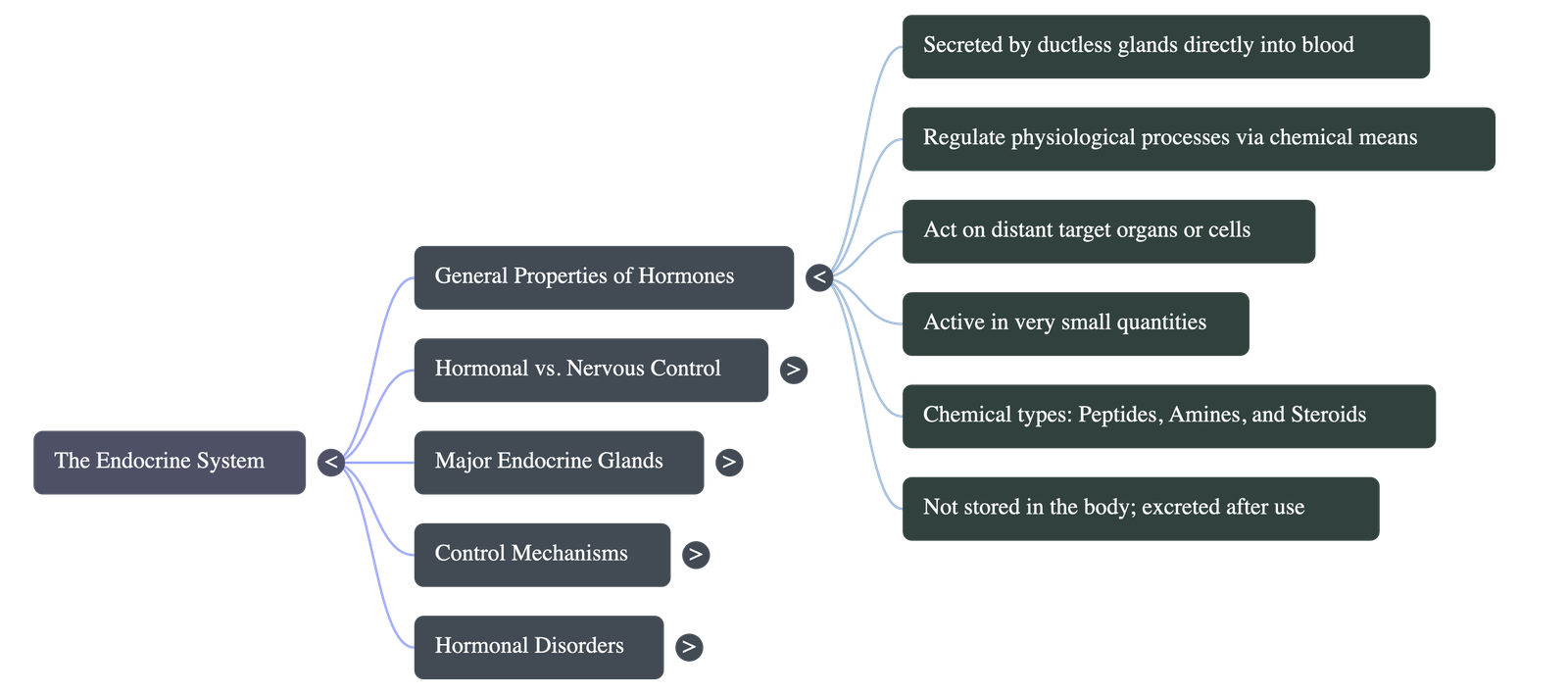
- Definition: Hormones are secretions from specific cells or endocrine (ductless) glands poured directly into the blood.
- They act on specific target organs or cells usually located away from the source gland.
- They regulate physiological processes by affecting the enzyme systems of the body.
- They are produced in very small quantities but are biologically highly active.
- Chemical Nature: They can be peptides (e.g., insulin, which is water-soluble), amines (e.g., adrenaline, derived from amino acids), or steroids (e.g., testosterone, derived from cholesterol and lipid-soluble).
- Disorders: Both over-secretion (hypersecretion) and under-secretion (hyposecretion) lead to serious health consequences.
- Hormones are not stored in the body; they are excreted from the system after their function is complete.
3. Major Endocrine Glands
The endocrine system consists of glands that work together in a coordinated manner. The principal glands include the Adrenal, Pancreas, Thyroid, and Pituitary glands.
A. Adrenal Glands
- Location: Situated like caps on the top of each kidney.
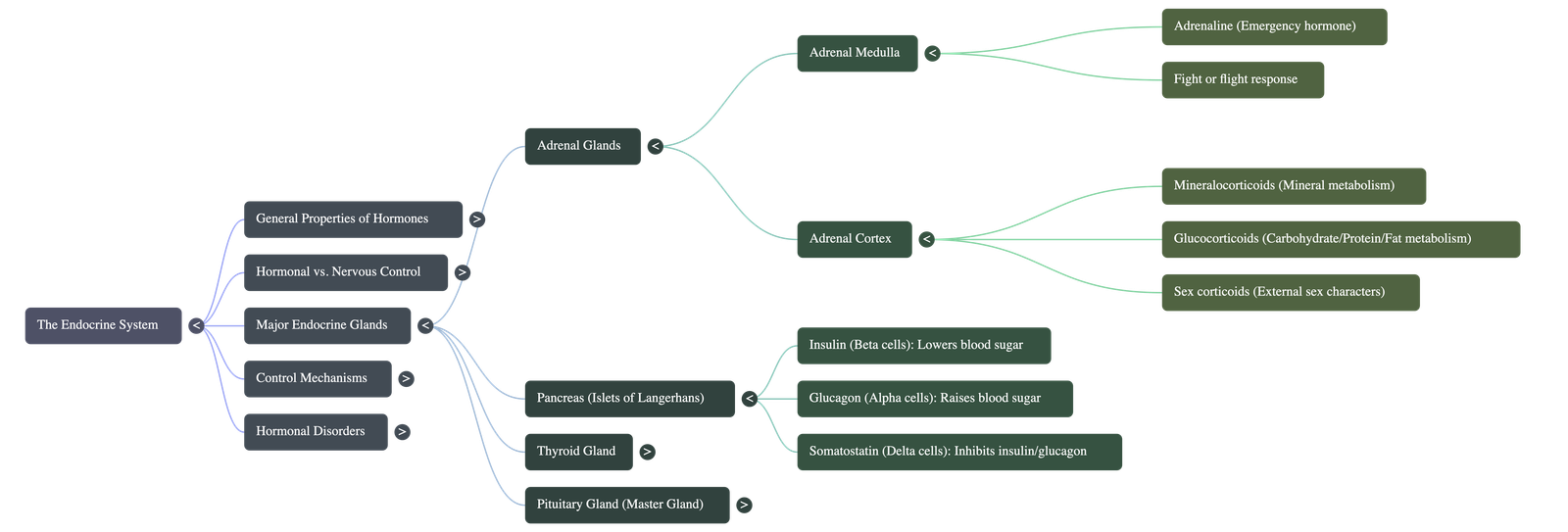
- Structure: Consists of two parts: the central medulla and the peripheral cortex.
- Adrenal Medulla (The Emergency Gland):
- Secretes Adrenaline (epinephrine).
- Prepares the body for "fight or flight" during emergencies, danger, or emotional stress.
- Effects: Increases heartbeat and blood pressure, causes faster and deeper breathing, constricts blood vessels to the skin and digestive system (diverting blood to muscles), and stimulates the liver to convert glycogen into glucose for instant energy.
- Adrenal Cortex:
- Secretes cortical hormones collectively known as Cortisone.
- Divided into Mineralocorticoids (regulate mineral metabolism), Glucocorticoids (regulate carbohydrate/protein/fat metabolism), and Sex corticoids.
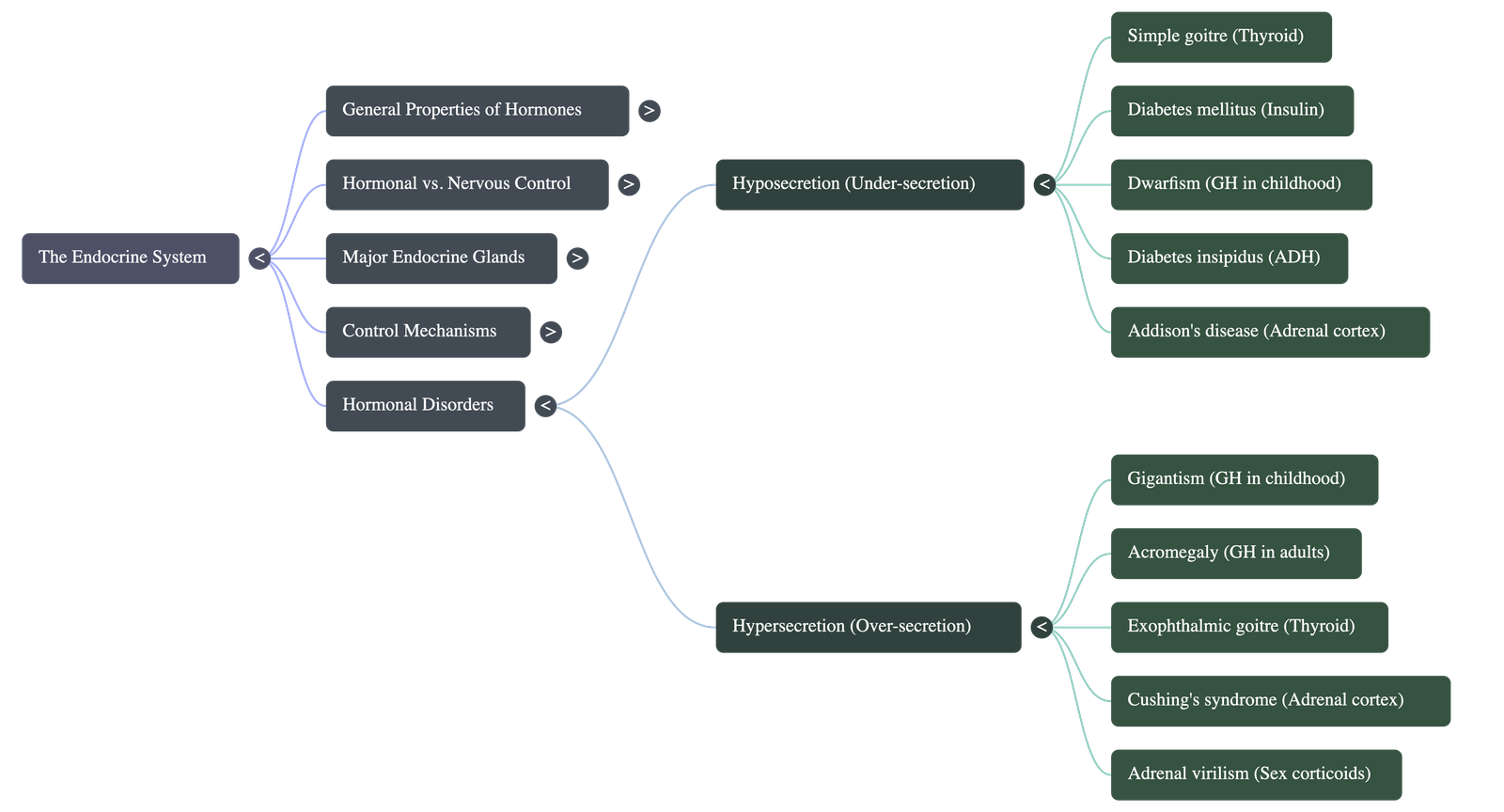
- Hyposecretion: Causes Addison's disease (symptoms include loss of energy, skin pigmentation, low blood sugar, weight loss).
- Hypersecretion: Causes Cushing's syndrome (symptoms include obesity, high blood sugar, osteoporosis, salt/water retention).
- Adrenal Virilism: Overgrowth of the cortex can cause male characteristics in mature females (beards, deep voice) and feminine characteristics in males.
B. Pancreas
- A unique gland that functions as both an exocrine (duct) gland pouring digestive juice into the duodenum, and an endocrine (ductless) gland.
- The endocrine portion consists of scattered groups of cells called the Islets of Langerhans.
- Insulin (Secreted by Beta cells):
- Lowers blood sugar levels by promoting glucose uptake by body cells and stimulating the deposition of extra glucose as glycogen in the liver and muscles.
- Hyposecretion: Causes Diabetes mellitus. Symptoms include high blood sugar, excretion of sugar in urine, frequent urination, excessive thirst, and loss of weight.
- Hypersecretion: Lowers blood sugar dangerously (Hypoglycemia), leading to brain coma or insulin shock.
- Glucagon (Secreted by Alpha cells):
- Raises blood sugar levels by stimulating the breakdown of glycogen back into glucose in the liver.
C. Thyroid Gland
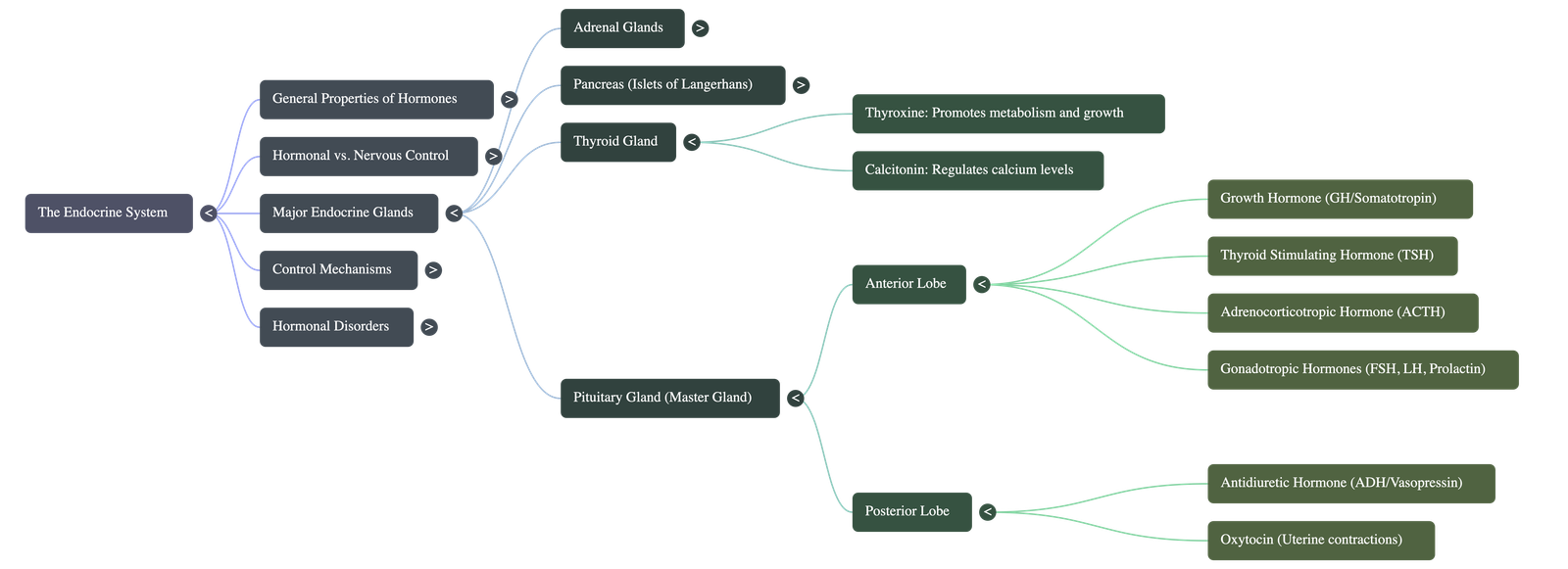
- Hormone Secreted: Thyroxine.
- Function: Promotes tissue metabolism, regulates basal metabolism, and controls physical growth and differentiation.
- Hyposecretion (Under-secretion):
- Simple Goitre: Swelling in the neck due to enlargement of the thyroid.
- Cretinism: Occurs in children, causing dwarfism and severe mental retardation.
- Myxoedema: Occurs in adults, characterized by swelling of the face/hands and sluggishness.
- Hypersecretion (Over-secretion):
- Causes Exophthalmic goitre, characterized by protruding eye balls, increased metabolism, elevated heart rate, and restlessness.
D. Pituitary Gland
- Location & Size: A pea-sized projection hanging from the base of the mid-brain below the hypothalamus.
- Popularly called the "Master Gland" because it controls almost all other endocrine glands.
- Hormones of the Anterior Pituitary:
- Growth Hormone (GH/Somatotropin): Essential for normal body growth.
Deficiency in childhood causes Dwarfism.
Over-secretion in childhood causes Gigantism.
Over-secretion in adults causes Acromegaly (extra growth of facial bones and extremities). - Tropic Hormones: Hormones that stimulate other glands. Includes TSH (Thyroid Stimulating Hormone), ACTH (Adrenocorticotropic hormone for adrenal cortex), and Gonadotropic hormones (FSH and LH to regulate testes and ovaries).
- Prolactin: Promotes milk formation and secretion.
- Growth Hormone (GH/Somatotropin): Essential for normal body growth.
- Hormones of the Posterior Pituitary:
- Antidiuretic Hormone (ADH) / Vasopressin: Increases water reabsorption from kidney tubules and constricts blood vessels. Deficiency causes Diabetes insipidus (copious, frequent urination leading to extreme thirst, but urine contains no sugar).
- Oxytocin: Stimulates vigorous uterine contractions during childbirth and aids in milk ejection.
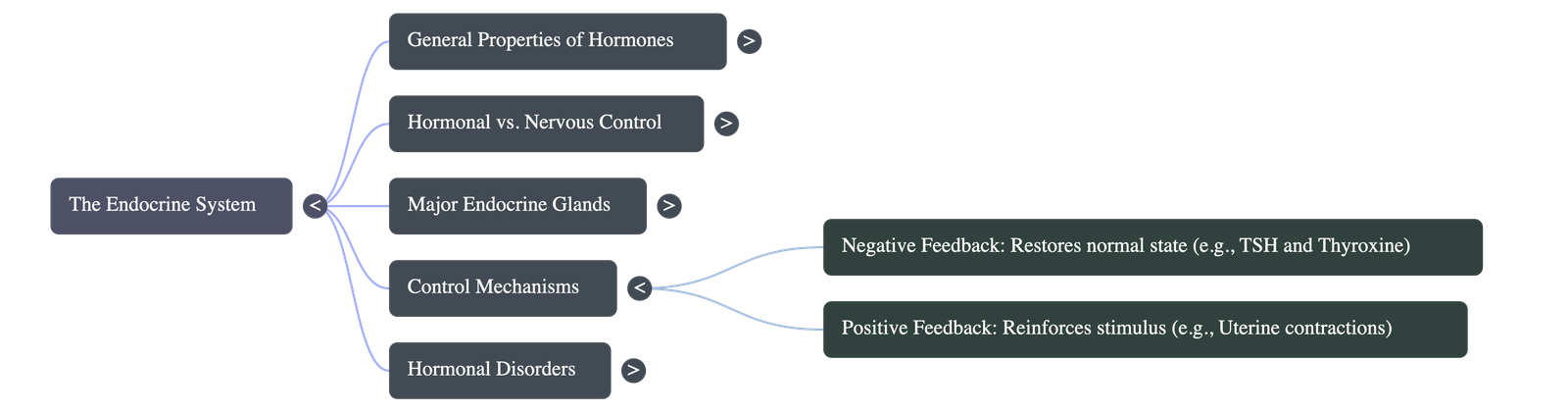
4. Control of Hormonal Secretions [Feedback Mechanism]
- The human body relies on a mechanism to maintain a balanced, normal state through "messages" sent through body systems.
- Negative Feedback: This is the most common mechanism. It functions on the principle of "Too much, slow down" or "Too little, speed up".
- Example (Thyroid regulation): When the level of thyroxine in the blood exceeds the normal range, it sends a negative feedback signal to the hypothalamus and anterior pituitary. This inhibits the release of TSH, which in turn reduces thyroxine production back to normal levels.
- Positive Feedback: A rare mechanism where a biological action promotes further progression of that same action (e.g., uterine contractions during childbirth command the body to contract even more vigorously until delivery is complete).
Do checkout all questions & answers of this chapter.
Quick Navigation:
| | | |
1 / 1
Quick Navigation:
| | | |