Quick Navigation:
| | | |
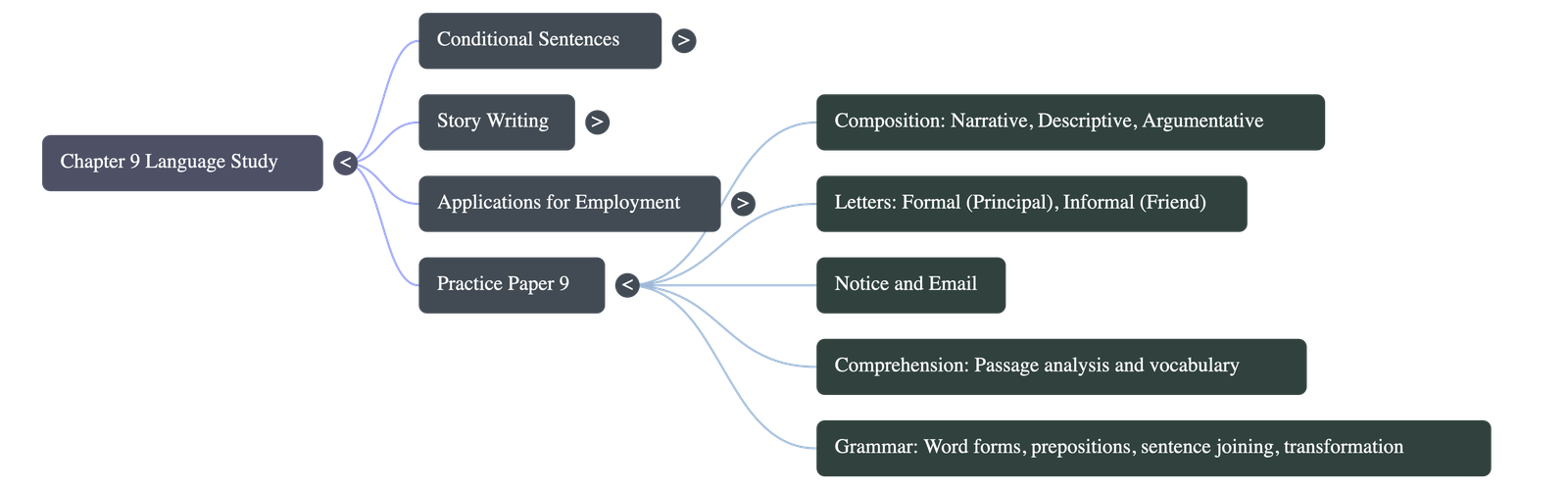
Section A: Conditional Sentences
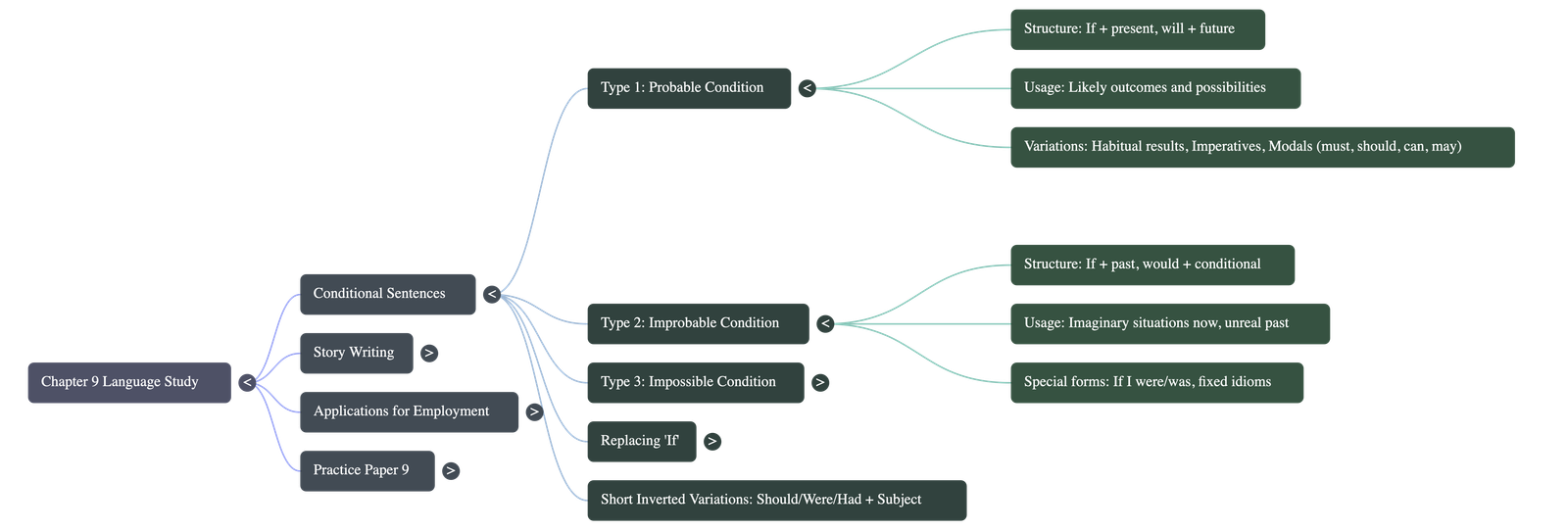
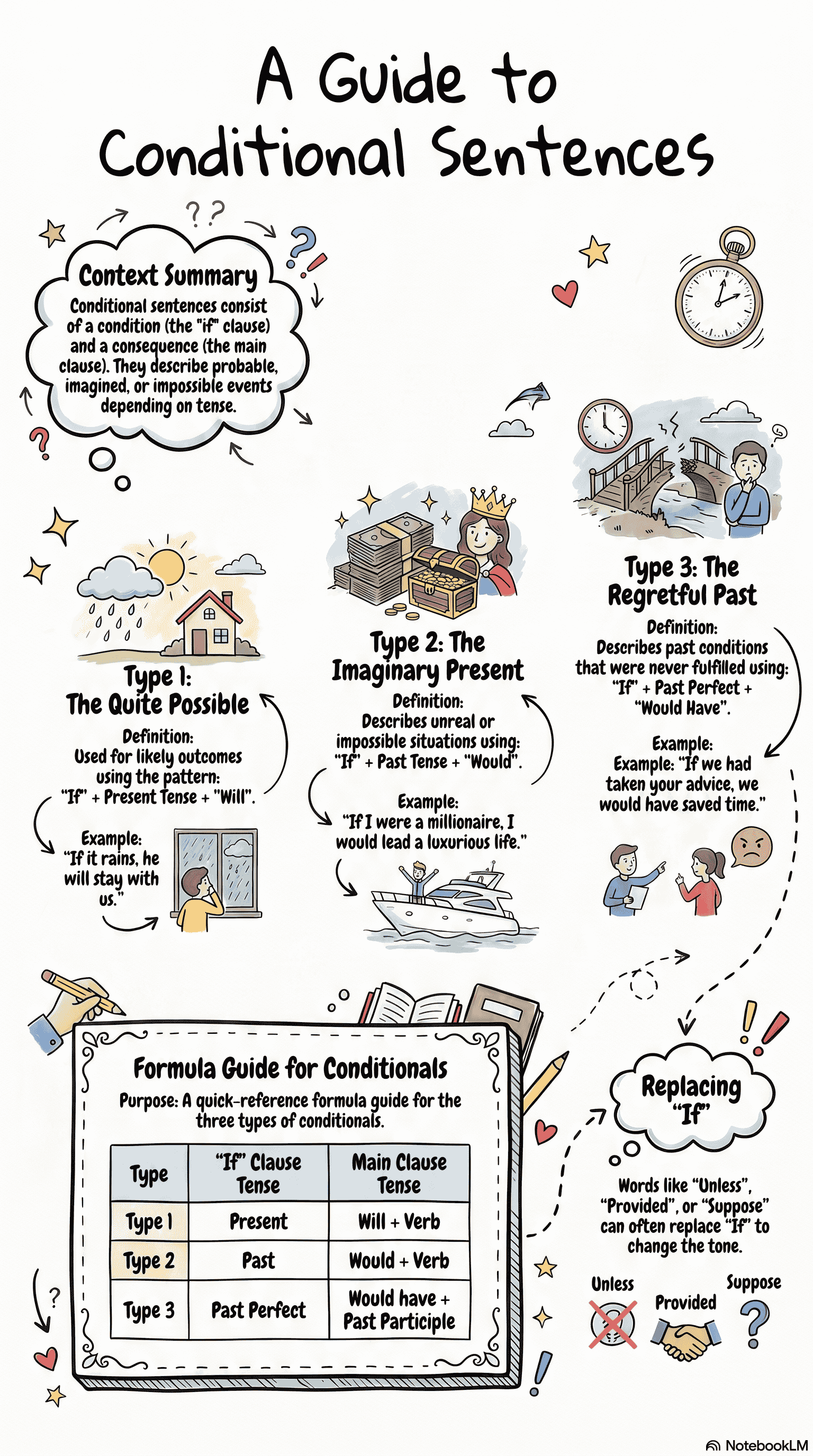
A conditional sentence describes a condition that must be fulfilled before something else can happen. These are divided into three basic types:
1. Type 1: Possible Situations
- Usage: Used for conditions that are quite possible or highly probable to be fulfilled.
- Structure: 'If' + Present Tense → 'will/shall' Future Tense (e.g., If I get a scholarship, I will go abroad).
- Variations: Can use other present tenses like Present Continuous or Present Perfect in the 'if' clause.
- Special Rules:
- For habitual results, the simple present is used in both clauses (e.g., If you heat ice, it turns to water).
- For orders/instructions, the imperative is used in the main clause instead of the future tense.
- Modals like must, should, could, may, can, might can also be used depending on context (permission, ability, duty).
2. Type 2: Imaginary/Unreal Situations (Present)
- Usage: Expresses imaginary situations and their consequences in the present, or things that are impossible.
- Structure: 'If' + Simple Past → 'would/should' + Base Verb (e.g., If I got a scholarship, I would go abroad).
- Formal Usage: "Were" is often preferred over "was" in purely imaginary statements (e.g., If I were a millionaire...).
- Idioms: Phrases like "If I were you" act as fixed idioms for giving advice.
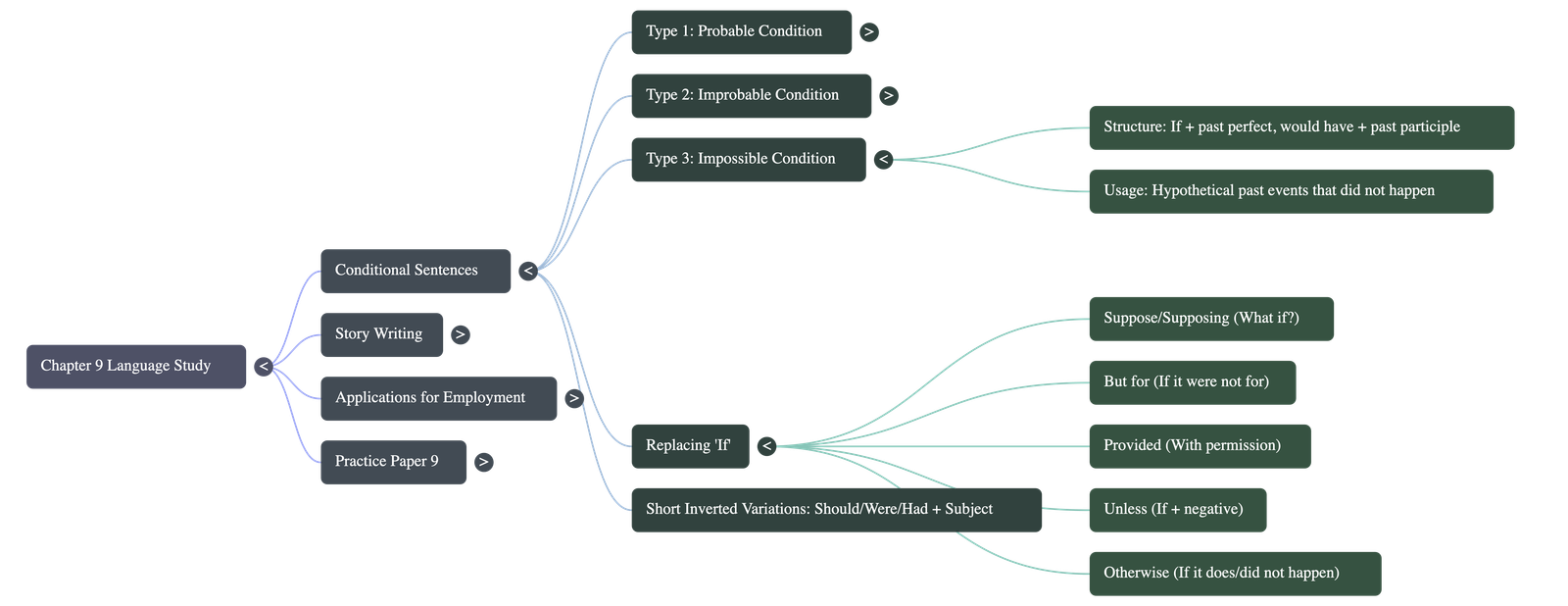
3. Type 3: Unfulfilled Situations (Past)
- Usage: Refers to hypothetical conditions that did not and could not happen because the time is already past.
- Structure: 'If' + Past Perfect → 'would/should/could/might have' + Past Participle (e.g., If I had got a scholarship, I would have gone abroad).
4. Replacing "If" and Short Variations
- Alternatives to If: You can use words like suppose/supposing, but for (meaning if it hadn't been for), provided (that), unless (meaning if + negative), and otherwise (meaning if it does not happen).
- Short Inverted Variations: "If" can be omitted completely by placing Should, Were, or Had before their subjects (e.g., Had he recovered, he could have taken the exam).
Section B: Stories
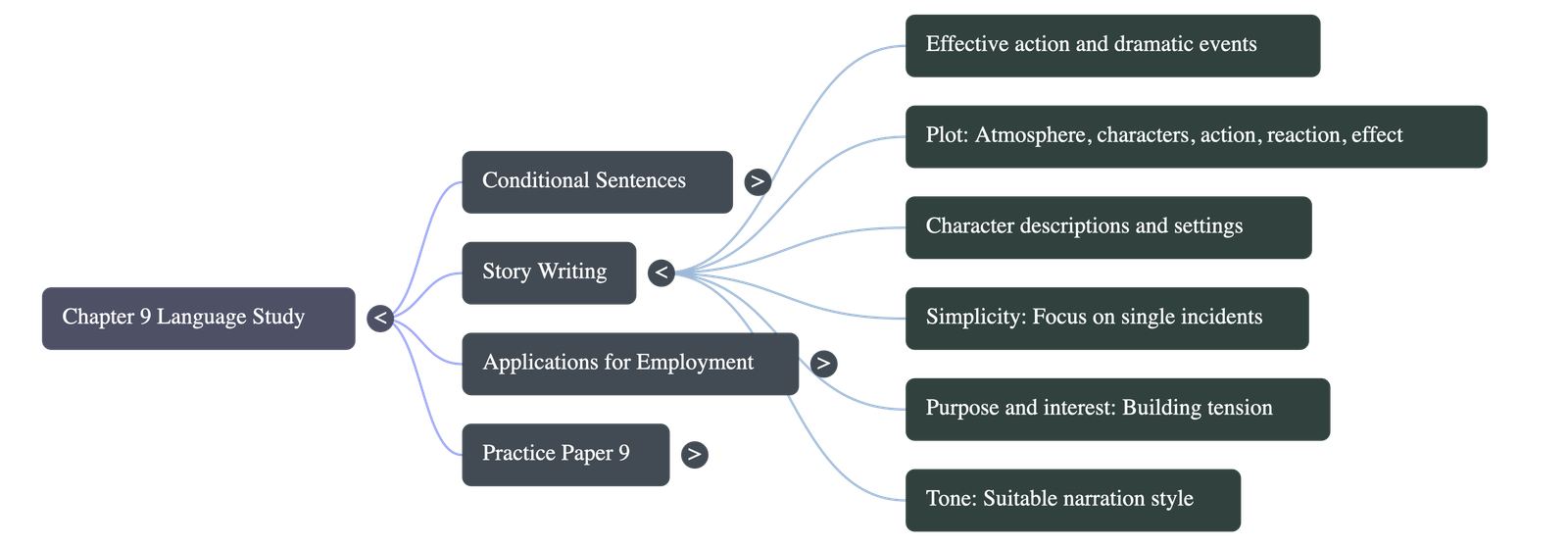
Guidelines for developing a critical attitude towards writing effective short stories:
- Action is Optional: A story does not need violent action or dramatic events (like murders or escapes) to be interesting. The best stories often revolve around ordinary, everyday events that affect our lives.
- Develop a Good Plot: A standard plot should follow a basic plan: establish an atmosphere and characters → introduce an action → show a reaction → reveal the effect of the action on the main characters.
- Convincing Characters & Descriptions: Bring characters alive with descriptive details and effective expressions. Make the readers feel they know the people and places.
- Keep it Simple: Write a short story, not a novel. Focus on one simple incident with plenty of details rather than a complicated series of events.
- Have a Clear Purpose: Convey something definite without being preachy. The reader should understand the underlying theme.
- Make it Interesting: Build tension, provide specific details, and make characters speak through well-written dialogue to avoid a monotonous tone.
- Maintain a Consistent Tone: Choose an appropriate tone (e.g., first-person narrative, dialogue, cynical approach) and stick with it throughout the story.
Section C: Applications
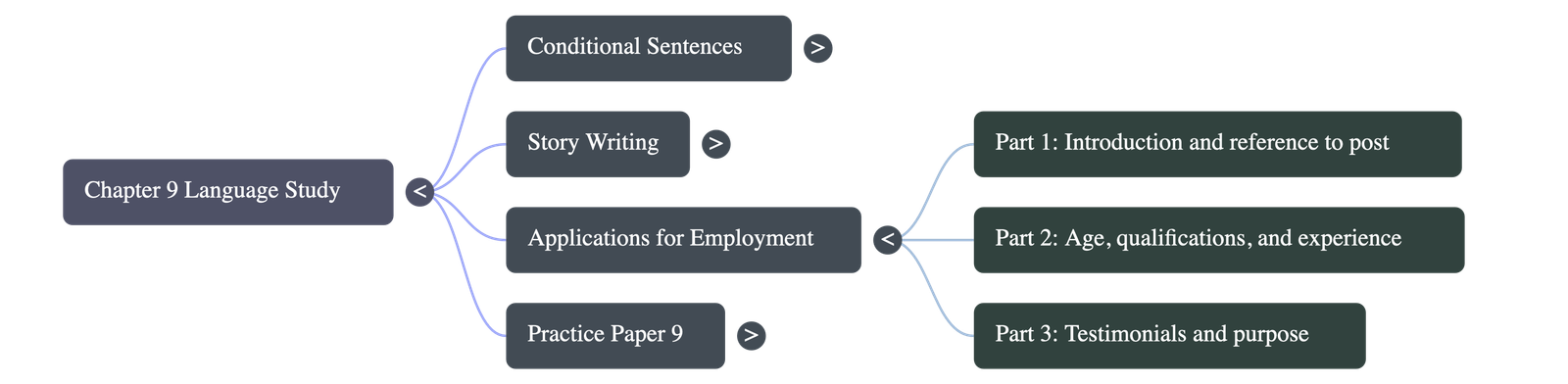
A formal application for employment typically falls into three main parts:
- Part 1: Introduction. State clearly whether the application is in response to an advertisement or sent on your own initiative. Include a brief reference to the exact post you are applying for.
- Part 2: Statement of Qualifications. Provide details regarding your age, educational qualifications, practical training, and past work experience. (e.g., typing speed, previous companies).
- Part 3: Testimonials & Assurance. Provide a reference to any enclosed testimonials (letters of recommendation) and end with a strong assurance of your earnestness of purpose and dedication to satisfying the employer with your work.
Section D: Practice Paper - 9
A complete practice exam covering writing, reading, and grammar skills:
- Question 1 (Composition): A 300-350 word essay choosing from options like writing a structured story, narrating an attempted robbery, writing an argumentative piece on co-educational vs. single-sex schools, sharing a personal experience of resolving a difficulty, or writing a picture composition based on a provided image of a busy street scene.
- Question 2 (Letter Writing): Writing either a formal letter to the school Principal suggesting ways to increase community involvement in a cleanliness drive, or an informal letter to a friend asking them to look after a herb garden.
- Question 3 (Notice & Email): Drafting a school notice board announcement for an Inter-School Storytelling Competition, followed by an email inviting an eminent author to judge the event.
- Question 4 (Reading Comprehension): A passage about a narrator whose friend, Todd, borrowed a dollar for a taxi to Bermuda and completely forgot to return it. It tests vocabulary (meaning of words like "grudge" and "demeanour"), short-answer comprehension questions, and requires a 50-word summary of the humorous narrative.
- Question 5 (Grammar & Structure):
- Filling in blanks with the correct verb forms (context: a missing flamingo named Frankie).
- Filling in blanks with appropriate prepositions or missing words.
- Joining pairs of sentences into a single complete sentence without using the conjunctions and, but, or so.
- Rewriting sentences strictly according to specific grammatical instructions (e.g., transforming sentences to begin with "Unless", "People", "He intends", or "If").
Do checkout all questions & answers of this chapter.
Quick Navigation:
| | | |
1 / 1
Quick Navigation:
| | | |