Quick Navigation:
| | | |
Section A: Word Order
To speak and write good English, words must be placed in the correct grammatical order. This section explains the placement rules for Adverbs and Adjectives.
1. Rules for Adverbs
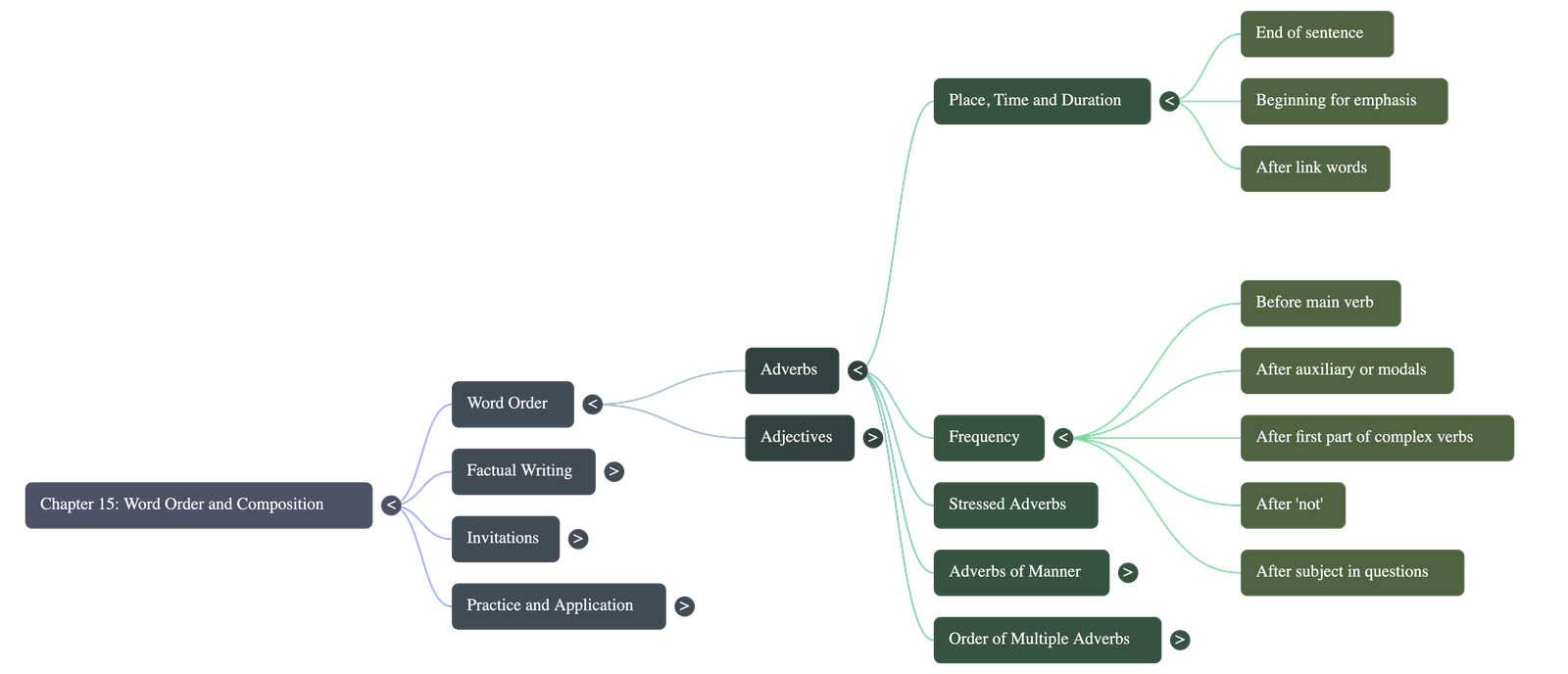
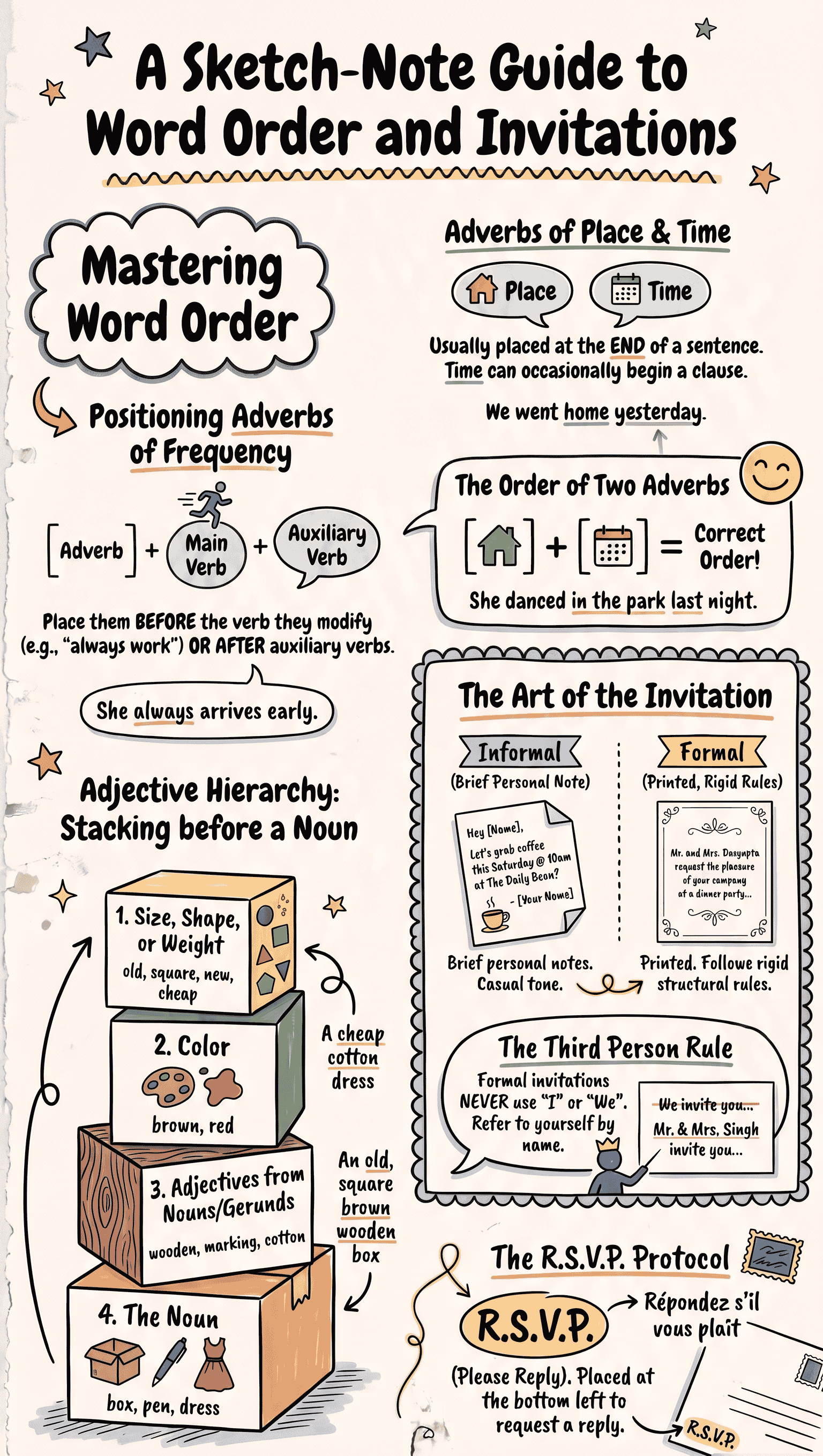
- Adverbs of Place, Time, and Duration: These usually come at the end of a sentence (e.g., He waited for an hour). However, adverbs of time can sometimes be placed at the very beginning of a sentence.
- Adverbs of Frequency: Words that show how often something happens (like often, usually, always, never) are generally placed before the main verb. If there is a helping verb (like can, must, is, have), the adverb comes after the helping verb. In questions, it comes after the subject.
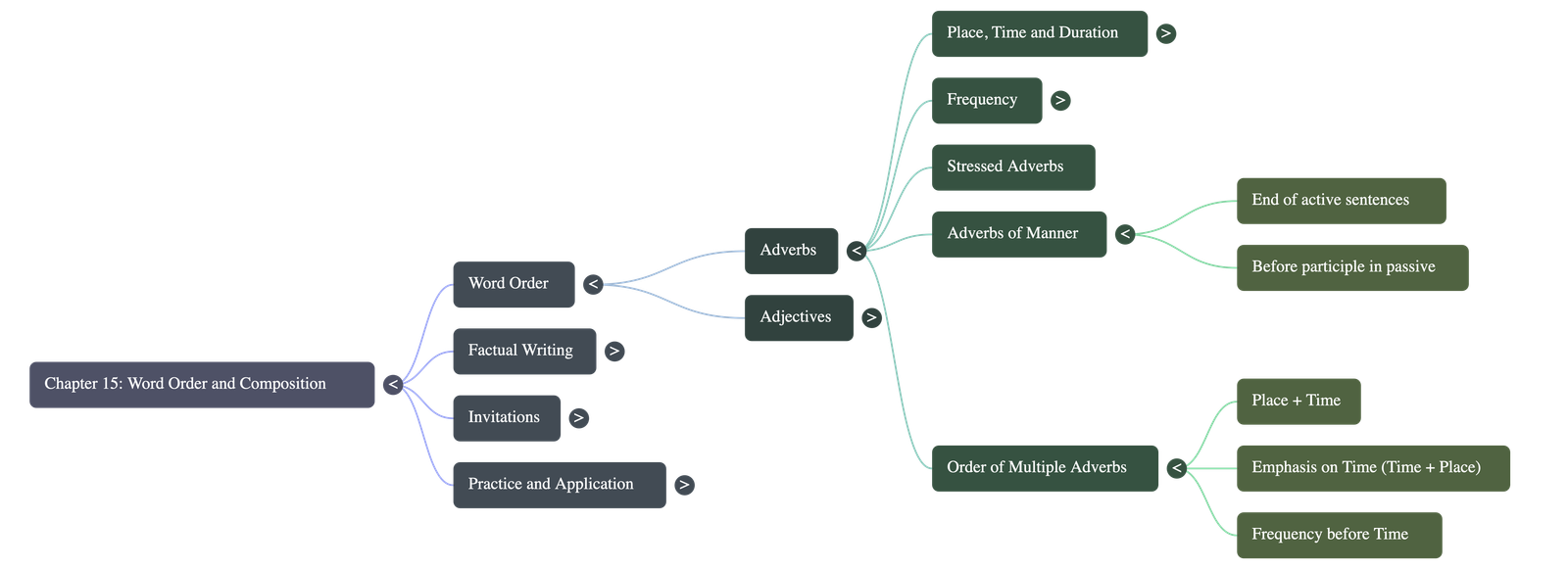
- Adverbs of Manner: In active sentences, these come at the end (e.g., He painted badly). In passive sentences, they are placed before the action word (e.g., The picture was badly painted).
- Order of Two Adverbs: If a sentence has both time and place adverbs, the standard rule is to put the Adverb of Place first, followed by the Adverb of Time (e.g., He went out yesterday).
2. Rules for Adjectives
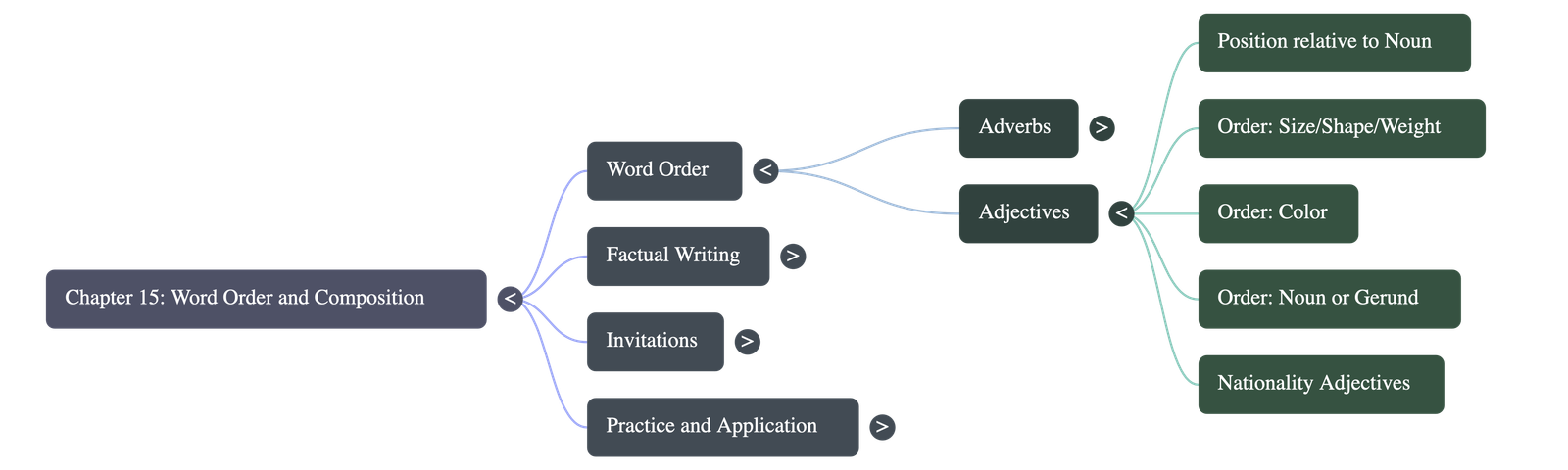
- When you use more than one adjective to describe a noun, they must follow a specific order so the sentence sounds natural.
- The standard sequence is: General Adjectives ➔ Size/Shape/Weight ➔ Colour ➔ Adjectives made from Nouns/Gerunds (like materials or nationality) ➔ The Noun.
- Example: A large (size), brown (colour), wooden (material) box (noun).
Section B: Factual Writing
Factual writing focuses on real-world facts, explaining processes, or giving instructions. It requires zero imagination and must be strictly down-to-earth.
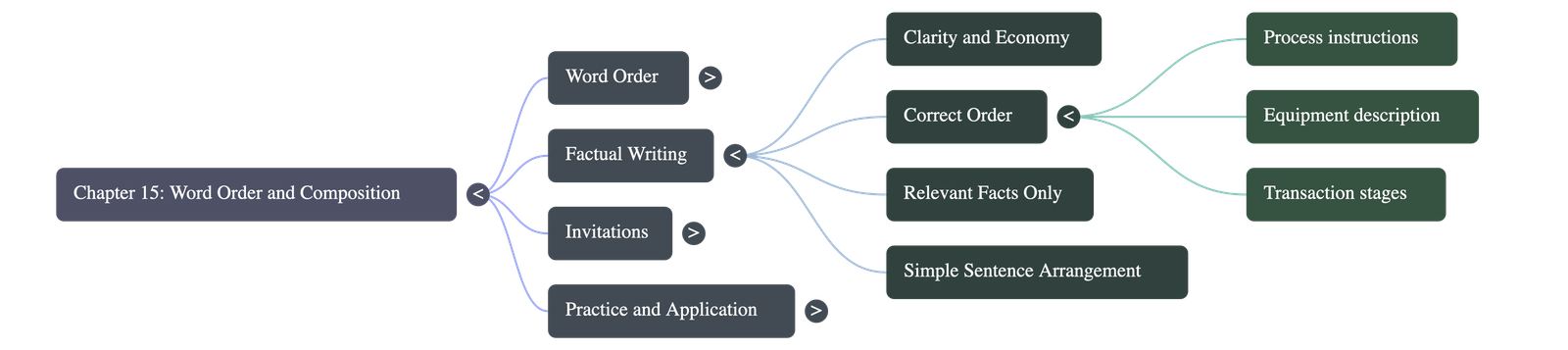
- Clarity and Economy: Write clearly and to the point. Include only the most essential details that the reader needs to know.
- Correct Order: Information must be logical. If describing a process (like cooking or flying a kite), break it down into clear, step-by-step stages. If describing an object (like a bicycle), describe the basic shape first, then accessories, then working parts.
- Relevant Facts: Stick to the truth and facts. Do not add creative, original, or emotional ideas.
- Arrangement of Facts: Use short, simple sentences. The writing should flow smoothly from one point to the next without sounding disjointed.
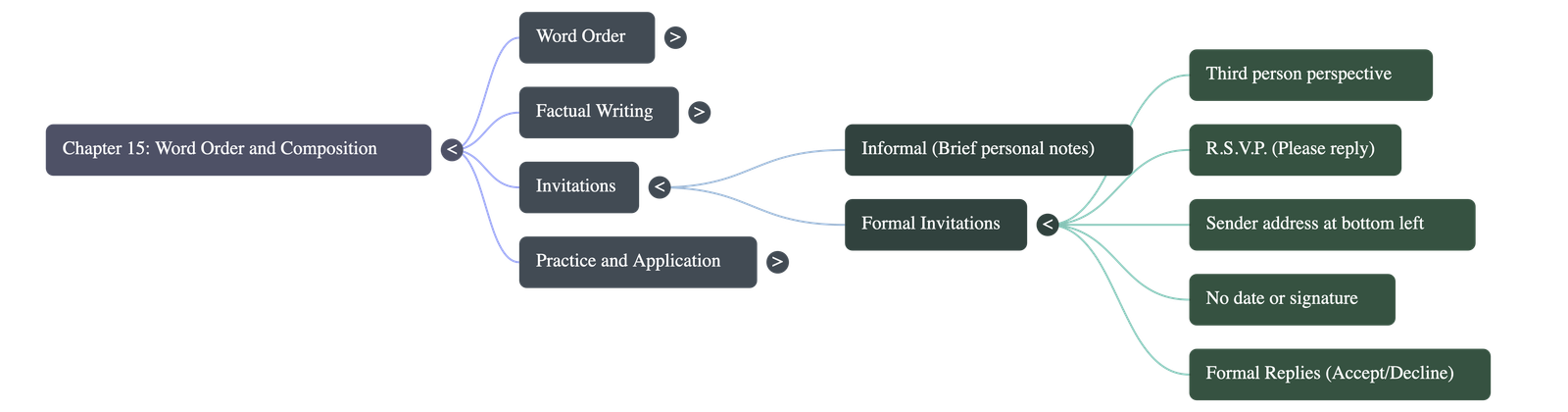
Section C: Invitations
Invitations are sent to invite people to special occasions like birthdays, weddings, or anniversaries. They can be divided into two types:
- Informal Invitations: These are simple, brief, and friendly personal notes sent to close friends and relatives.
- Formal Invitations: These are carefully structured and usually printed for grand events like weddings and public festivals.
- They are always written in the third person (Never use words like 'I', 'we', or 'you').
- They do not include the date the invitation was written.
- They skip greetings (No "Dear...") and sign-offs (No "Yours sincerely").
- They feature the letters R.S.V.P. at the bottom left, which stands for a French phrase meaning "Please reply."
- Replying to a Formal Invitation: A formal reply should consist of two clear parts: First, formally thanking the host for the invitation, and second, politely stating whether you accept it or have to decline due to a prior engagement.
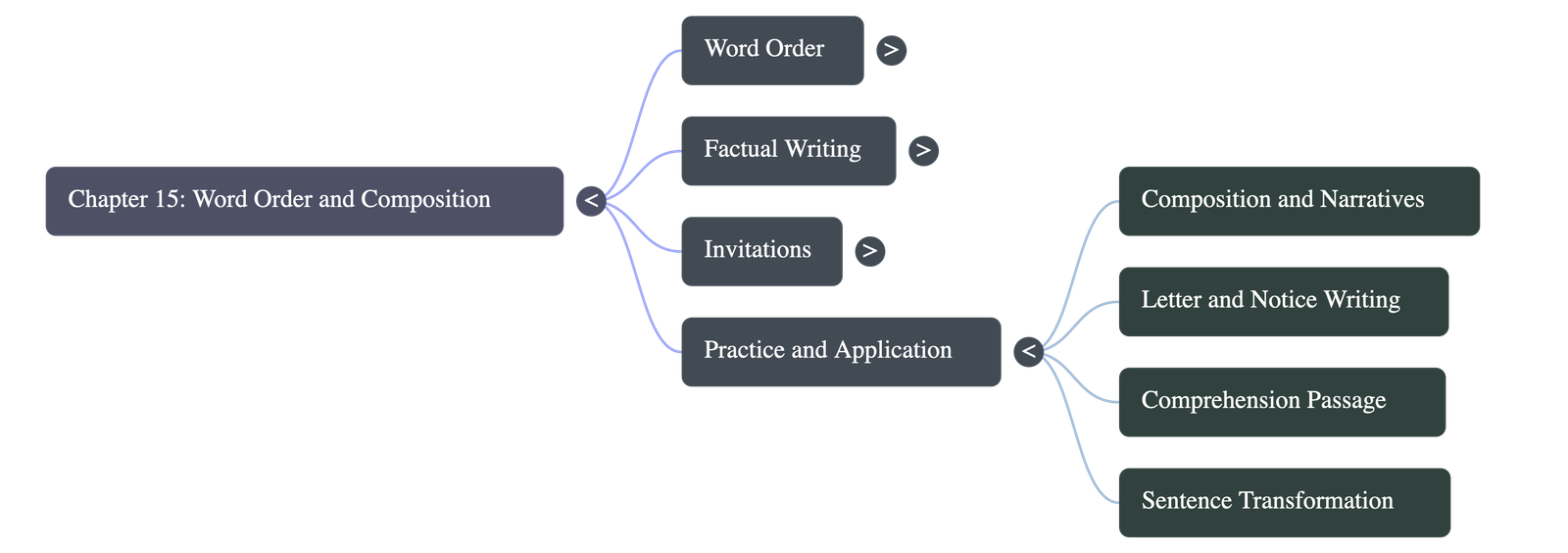
Section D: Practice Paper - 15
This is a complete exam-style practice paper designed for students to test their English language skills. It contains 5 main questions:
- Question 1 (Composition Writing): A 300-350 word essay. Options include writing an original story, narrating a life-changing incident, expressing a debate view (for/against), descriptive writing, or doing a picture study based on an image of a craftsman.
- Question 2 (Letter Writing): Options to write a formal complaint letter to an MLA regarding poor water supply, or an informal letter to a cousin about visiting an animal shelter.
- Question 3 (Notice & Email): Drafting a formal school notice asking students to submit names for Founders Day events, and writing an email to the State Education Minister inviting them to be the Guest of Honour.
- Question 4 (Comprehension Passage): Reading a mythological story about King Minos, Daedalus, and Icarus. Tasks include multiple-choice vocabulary questions, finding opposites, answering short factual questions, and writing a short 50-word imaginative summary from the perspective of Icarus.
- Question 5 (Applied Grammar): Practical exercises testing the student's grip on grammar, which include:
- Filling in blanks with the correct verb forms in a given paragraph.
- Filling in missing prepositions or appropriate words in single sentences.
- Joining two sentences together into one without using the words 'and', 'but', or 'so'.
- Rewriting sentences according to strict specific instructions while keeping the exact same original meaning.
Do checkout all questions & answers of this chapter.
Quick Navigation:
| | | |
1 / 1
Quick Navigation:
| | | |