Quick Navigation:
| | | |
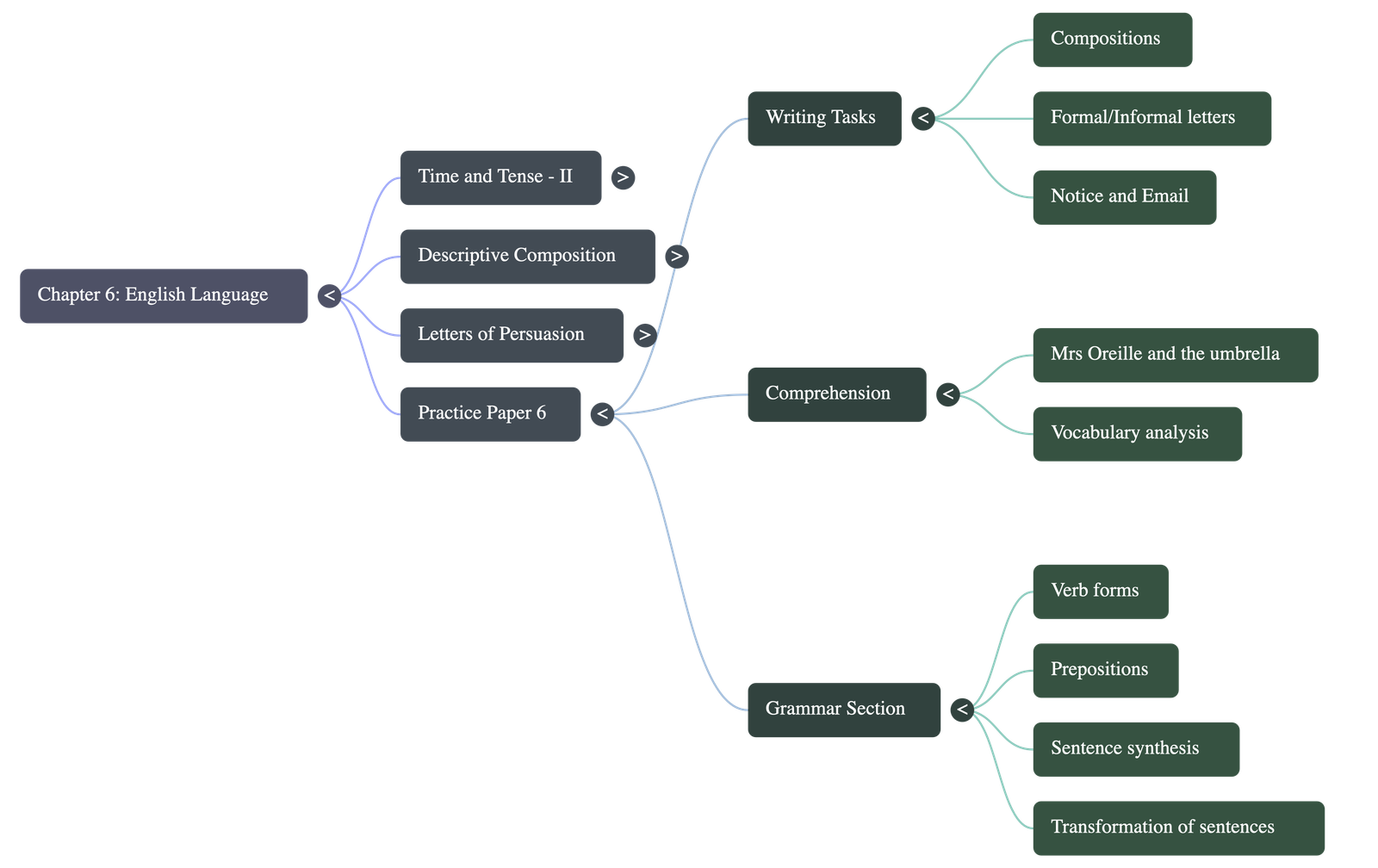
A. Time and Tense - II
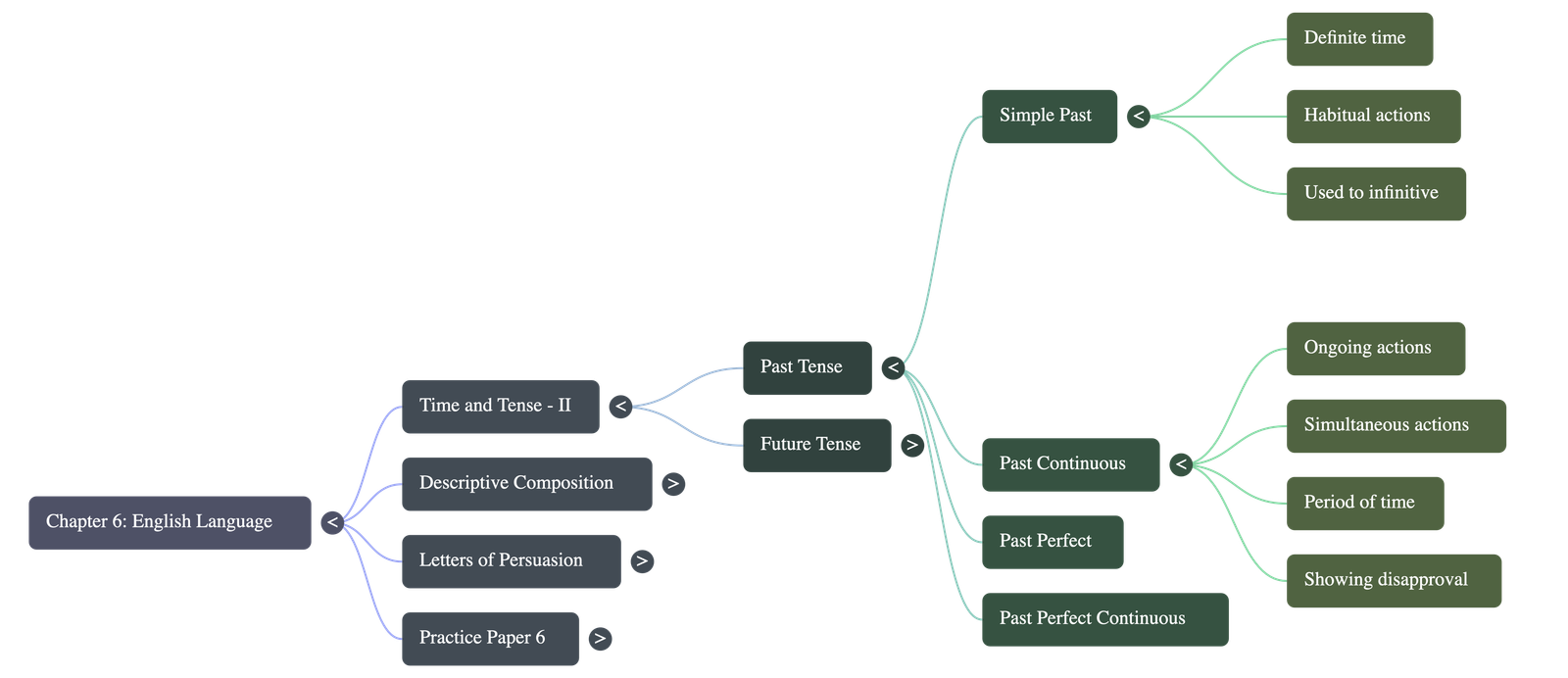
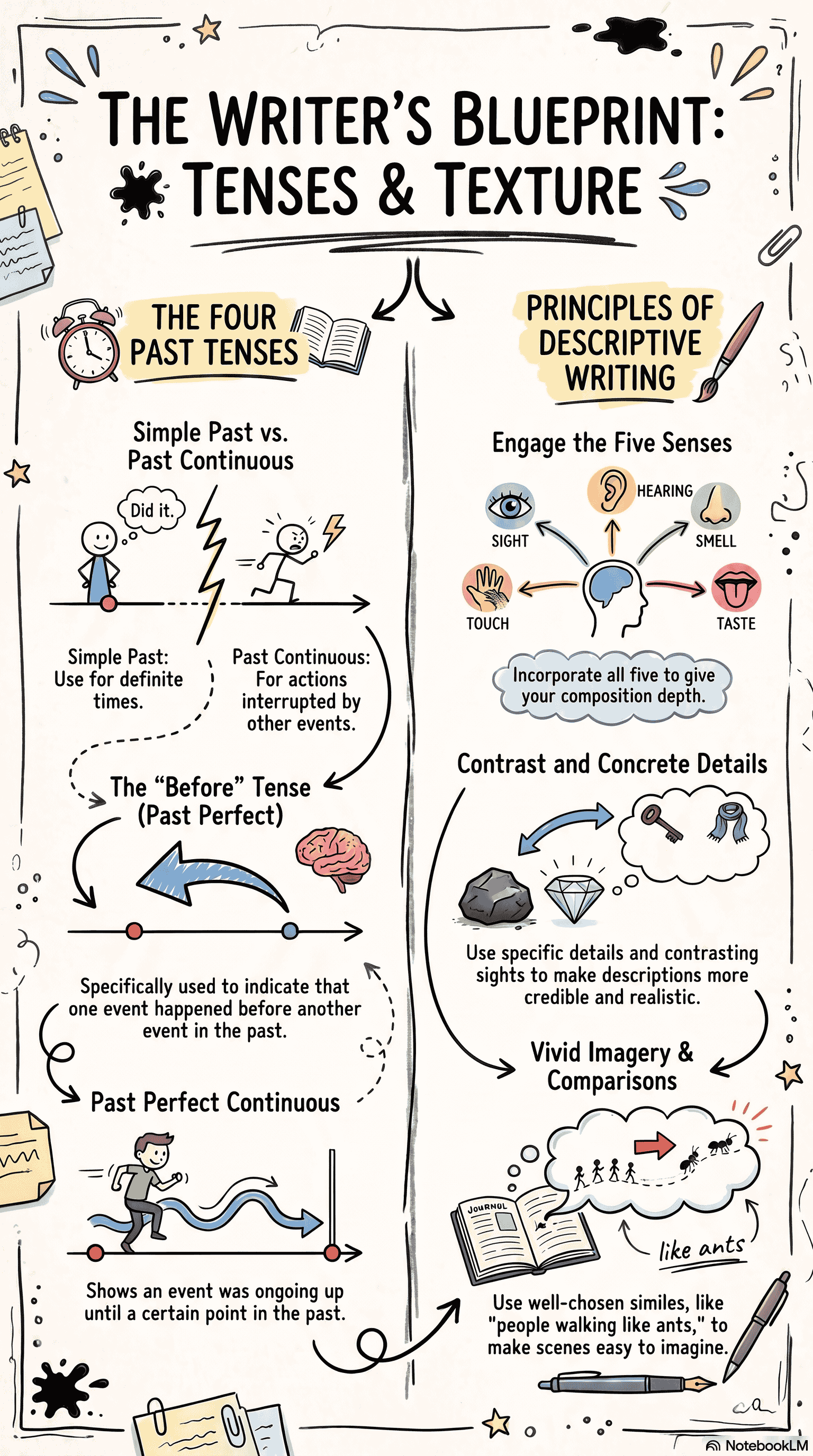
1. The Past Tense
- Simple Past: Used for actions that happened at a definite time in the past or for habitual past actions (often expressed using "used to").
- Past Continuous: Used when an action was ongoing while another took place, when two activities happened simultaneously, or to describe a continuous activity over a past period. It is also used with words like "always" to express disapproval.
- Past Perfect: Known as the "before" tense. It indicates that one event happened before another event in the past, or before a specific point in time.
- Past Perfect Continuous: Shows that an event happened before another past event and was still continuing up to that point.
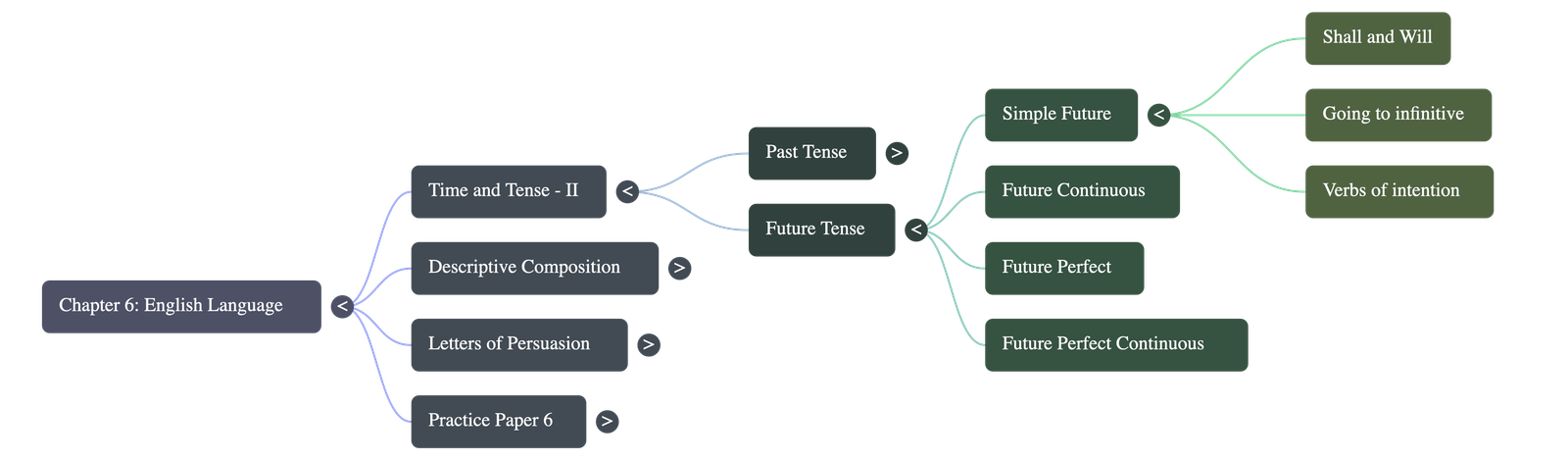
2. The Future Tense
- Simple Future: Uses "shall" and "will" to denote time, intention, determination, or a promise. Future ideas can also be expressed with "going to" for certainty, or verbs like "intend," "want," and "promise."
- Future Continuous: Used for an activity that will begin before and continue after a point in the future, or to indicate a definitely planned future event.
- Future Perfect: Indicates that an action will be completed by a specific time in the future.
- Future Perfect Continuous: Shows that an action will be in progress at or around a specific time in the future.
B. Descriptive Composition
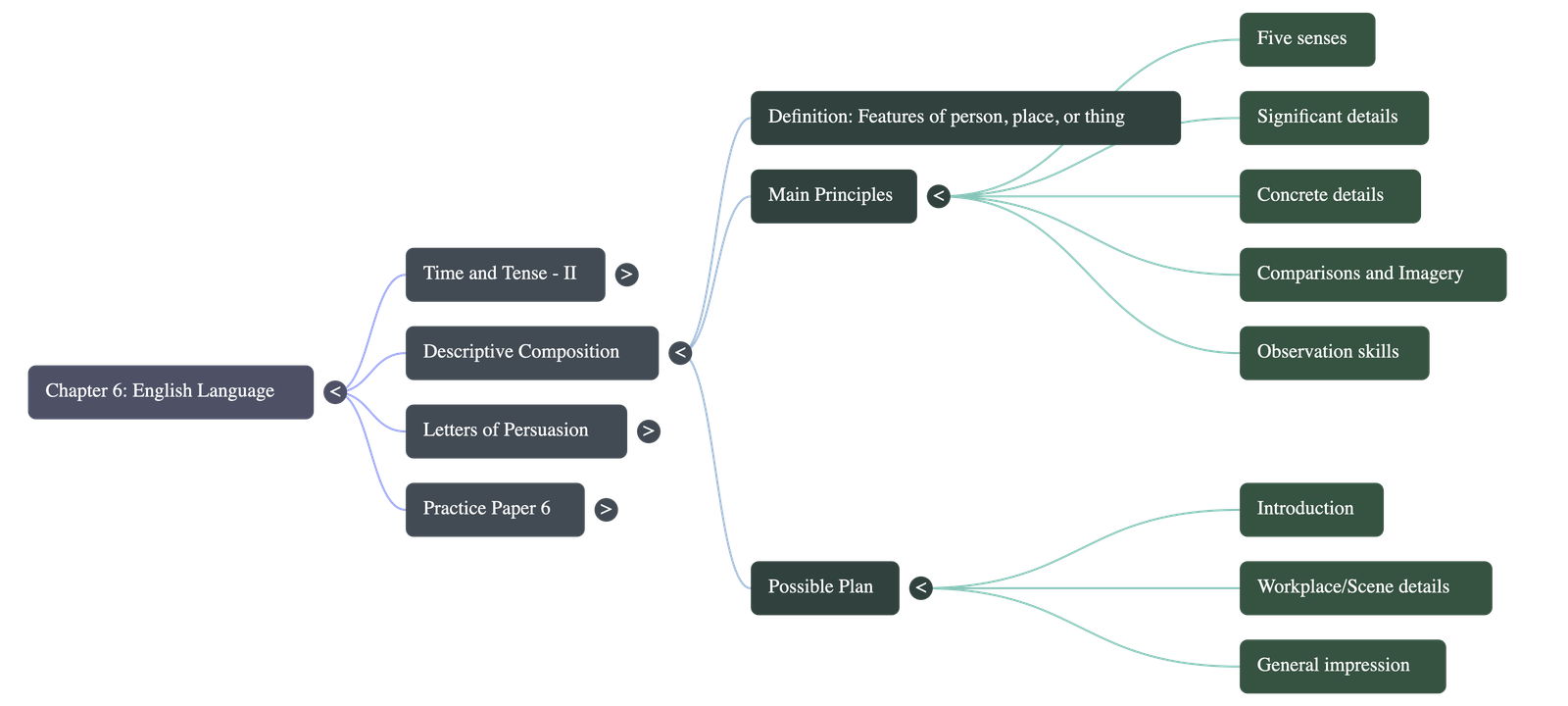
A descriptive composition tells the features of a person, place, or thing. A good description relies on careful observation and can be either realistic or imaginative.
Main Principles to Follow:
- Be Sensitive and Thoughtful: Use all your senses (sight, hearing, smell, touch, and taste) to add depth and power to your writing.
- Look for Significant Details: Observe unique habits, facial expressions, and features of people. For places, look at the atmosphere, special features, cleanliness, and functional aspects.
- Select Concrete Details: Avoid broad generalizations. Use specific, small details to build a sense of reality for the reader.
- Use Comparisons and Imagery: Utilize similes and metaphors to make details vivid, original, and easy to imagine.
- Maintain Consistency: Keep a consistent point of view from the angle you choose to describe a scene or object.
- Structuring the Composition: A standard plan (e.g., describing a factory) includes an introduction (location/work done), workplace details (sounds, smells, machines), and a general concluding impression.
C. Letters of Persuasion
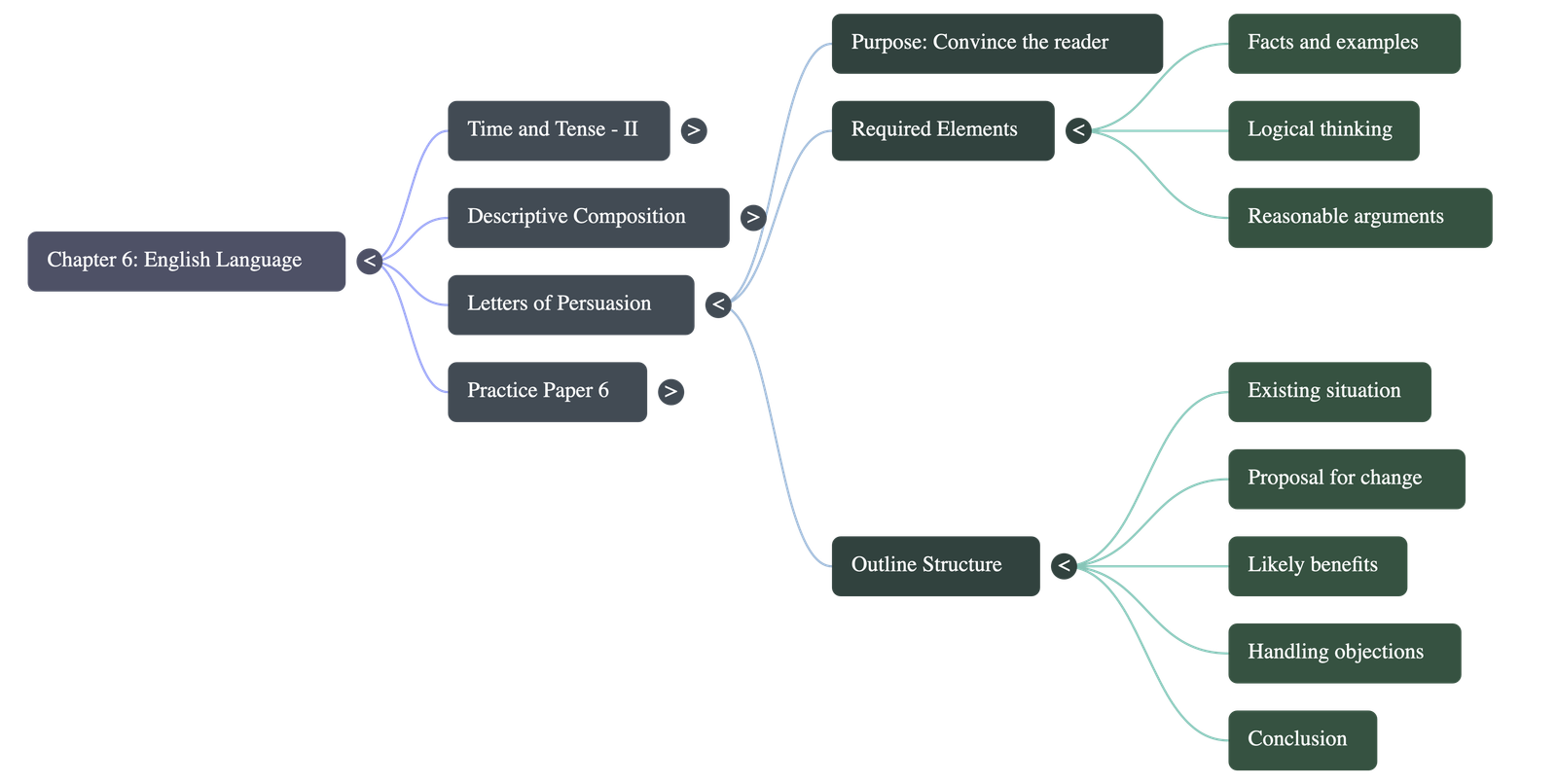
The purpose of a persuasive letter is to convince the reader of the writer's viewpoint and to push for a particular course of action. It demands logical thinking, facts, and reasonable arguments.
Key Elements of a Persuasive Letter:
- Start with a clear statement explaining the existing situation or problem.
- Compare the current issue with a similar situation elsewhere, if applicable.
- Make a solid and clear proposal for change.
- List the likely benefits that the proposed change will bring.
- Anticipate potential objections and provide sensible answers to them.
- End with a polite and reasonable conclusion that briefly repeats your proposal and its benefits.
D. Practice Paper - 6
This section provides practical exercises to test a student's reading, writing, and grammar skills based on the chapter's learnings.
- Question 1 (Composition): A 300-350 word essay choosing from options like story writing, narrating an experience with a cousin, argumentative writing on unemployment allowances, describing one's town, or picture composition (a crowded street scene).
- Question 2 (Letter Writing): Options include writing a formal letter to invite an author to a school literary fest or an informal letter to a cousin describing a dermatologist visit.
- Question 3 (Notice & Email): Drafting a notice and an email to organize a donation drive for quilts and woollen clothes for the underprivileged during a cold wave.
- Question 4 (Comprehension): Features a passage about a highly economical woman, Mrs. Oreille, and the humorous situation involving her husband's damaged umbrella and an insurance claim. Includes vocabulary matching, finding antonyms, and short-answer questions.
- Question 5 (Grammar): Practical grammar exercises covering correct verb forms, filling blanks with appropriate words/prepositions, joining sentences without using "and, but, or so", and rewriting sentences according to specific instructions.
Do checkout all questions & answers of this chapter.
Quick Navigation:
| | | |
1 / 1
Quick Navigation:
| | | |