Quick Navigation:
| | | |
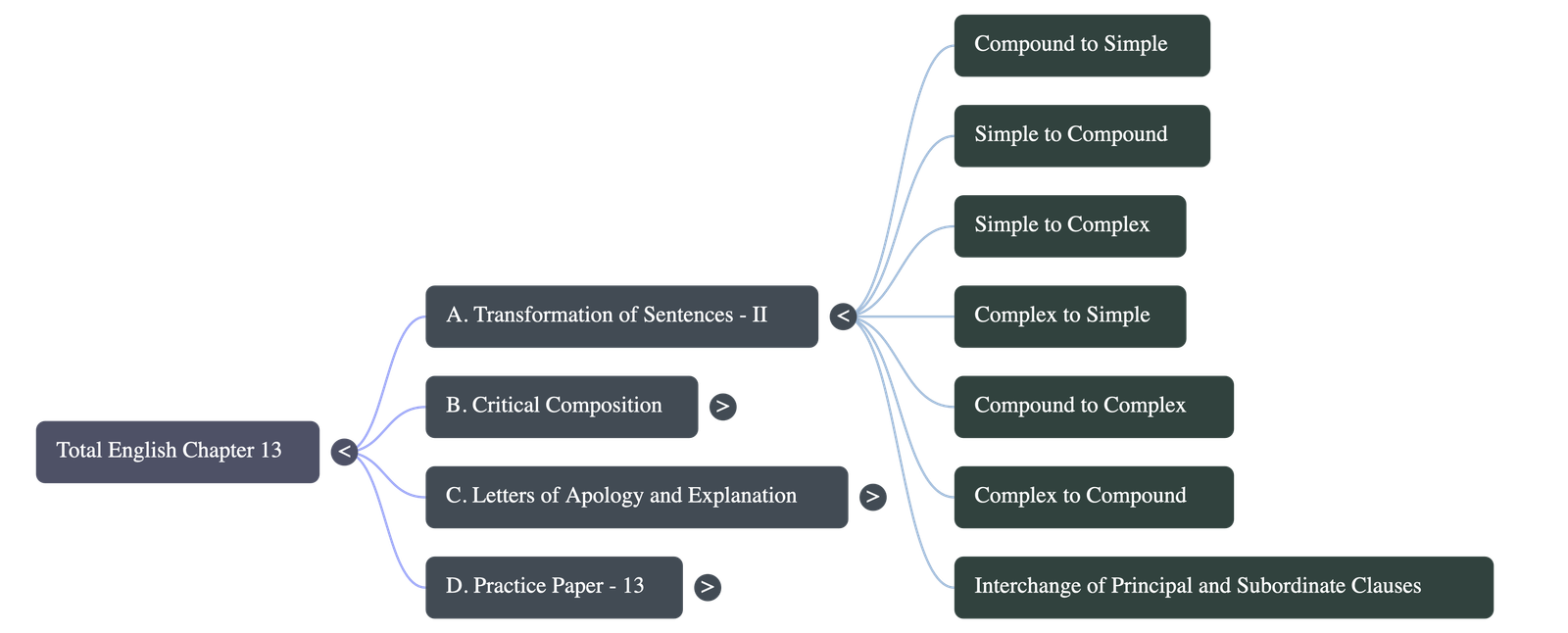
Section A: Transformation of Sentences - II
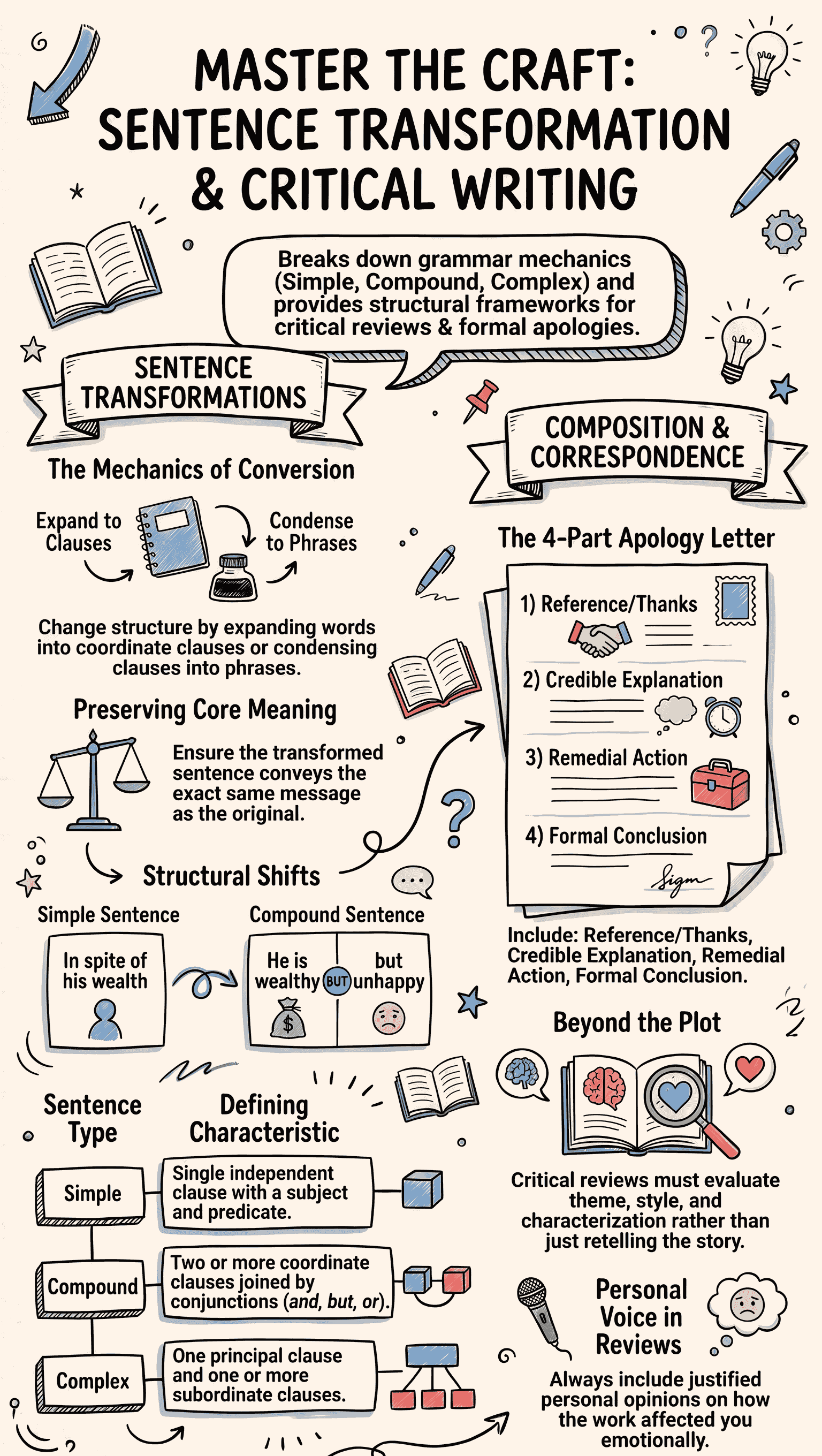
This section teaches you how to change the grammatical structure of sentences without altering their core meaning. It is a vital skill for making your writing more varied and advanced.
- • Compound to Simple: Learn to combine independent clauses into a single clause using phrases like "In spite of" or participles like "Having finished".
- • Simple to Compound: Expand simple words or phrases into coordinate clauses using conjunctions like "so" or "not only... but also".
- • Complex and Simple Interchanges: Convert sentences by replacing subordinate clauses with phrases (e.g., changing "How long I shall stay..." to "The duration of my stay...").
- • Compound and Complex Interchanges: Switch between coordinate and subordinate conjunctions (e.g., using "Although" instead of "but", or "Unless" instead of "or").
- • Interchange of Principal and Subordinate Clauses: Shifting the main focus of the sentence by swapping which part acts as the main clause and which acts as the dependent clause.
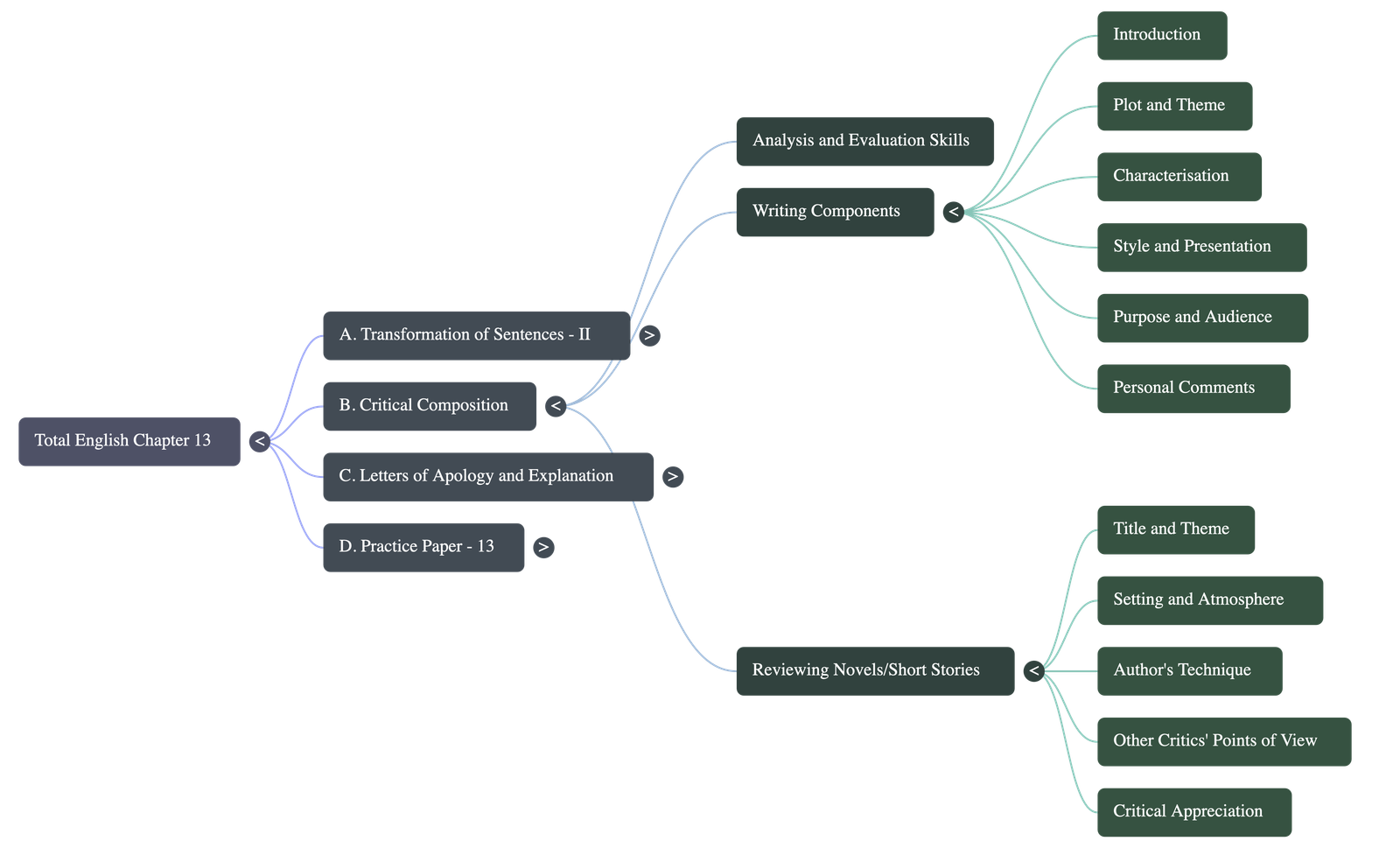
Section B: Critical Composition
This section focuses on analytical writing. It guides you on how to write reviews or express personal opinions about plays, books, films, or TV programs confidently.
- • Introduction: Start by describing the general background, atmosphere, or genre of the work.
- • Plot and Theme: Don't just retell the story. Explain why the author wrote it and the main points they are trying to make. Keep the plot summary to just one paragraph.
- • Characterisation: Discuss if the characters feel real, sympathetic, or cynical. Focus heavily on the main character.
- • Style and Presentation: Analyze the pacing (fast-moving or contemplative?) and the unique touch the creator brings to the work.
- • Purpose and Audience: Identify who would enjoy the work (e.g., is it pure entertainment or philosophical?).
- • Personal Comments: Conclude with your justified personal opinion. State clearly how the work impacted you.
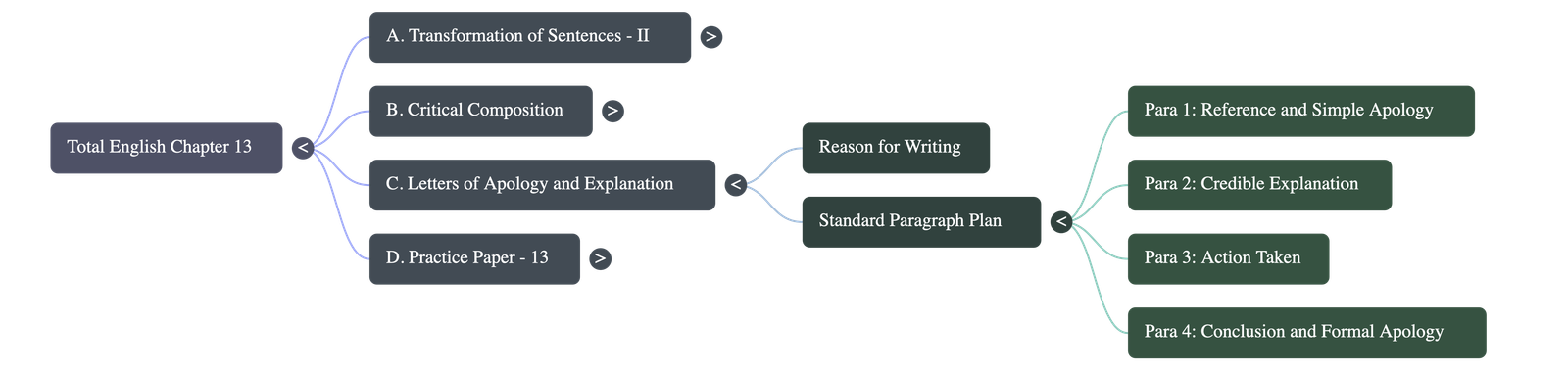
Section C: Letters of Apology and Explanation
A good apology letter must do more than just say "sorry." It needs to explain the situation clearly and assure the reader that the mistake is being corrected.
The Standard 4-Paragraph Plan:
- Paragraph 1: Reference the source of the complaint, thank them for bringing it to your notice, and offer a simple apology.
- Paragraph 2: Provide a credible and honest explanation of why the problem occurred (showing it was an exceptional circumstance, not a normal habit).
- Paragraph 3: State exactly what actions you are taking to fix the issue and regain their goodwill (e.g., waiving delivery charges).
- Paragraph 4: End with a formal conclusion and a repeated apology.
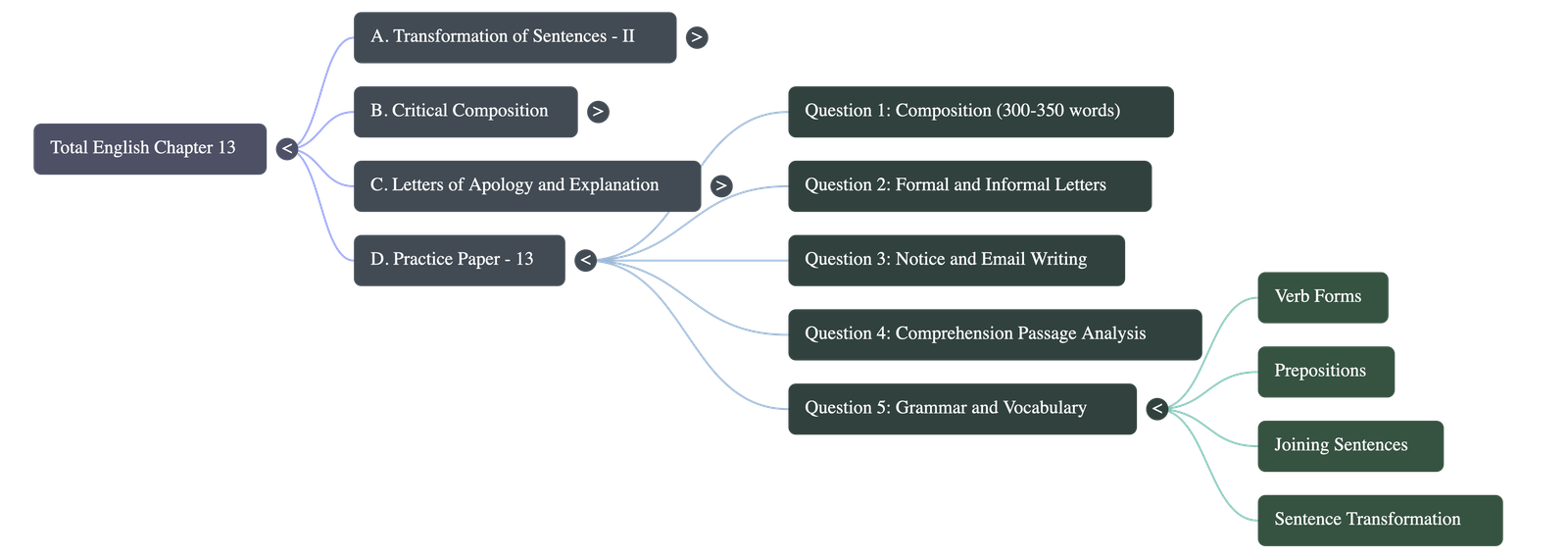
Section D: Practice Paper - 13
This section is designed to test your overall English skills through a comprehensive exam format.
-
•
Question 1: Essay Composition (20 Marks)
Write a 300-350 word essay within 30 minutes. Options include writing a story (e.g., about a strike), a memorable personal narrative, an argumentative piece on smartphone apps, an imaginative story about a fictional character coming to life, or a picture study composition. -
•
Question 2: Letter Writing (10 Marks)
Spend no more than 20 minutes here. You can choose between a formal letter (requesting a landlord to repair a roof) or an informal letter (describing an NCC camp experience to your mother). -
•
Question 3: Notice & Email (10 Marks)
Drafting a school notice board announcement and an email regarding a friendly hockey match with a neighboring school. -
•
Question 4: Comprehension Passage
A reading passage about two poor peasant families (the Tuvaches and the Vallins). A wealthy woman (Madame Henrid) offers to adopt a child for a large sum of money. The Tuvaches refuse furiously, while the Vallins accept. The passage explores the dramatic financial and emotional differences between the two families twenty years later. Includes vocabulary questions, short Q&A, and a 50-word summary task comparing the families' attitudes. -
•
Question 5: Applied Grammar
Tests your grammatical accuracy through:- Filling in blanks with correct verb forms based on a passage about the Andaman and Nicobar Islands.
- Filling in blanks with appropriate prepositions.
- Joining sentences without using "and", "but", or "so".
- Rewriting sentences strictly according to given instructions (e.g., using "Neither... nor", "However", "enough to").
Do checkout all questions & answers of this chapter.
Quick Navigation:
| | | |
1 / 1
Quick Navigation:
| | | |