Quick Navigation:
| | | |
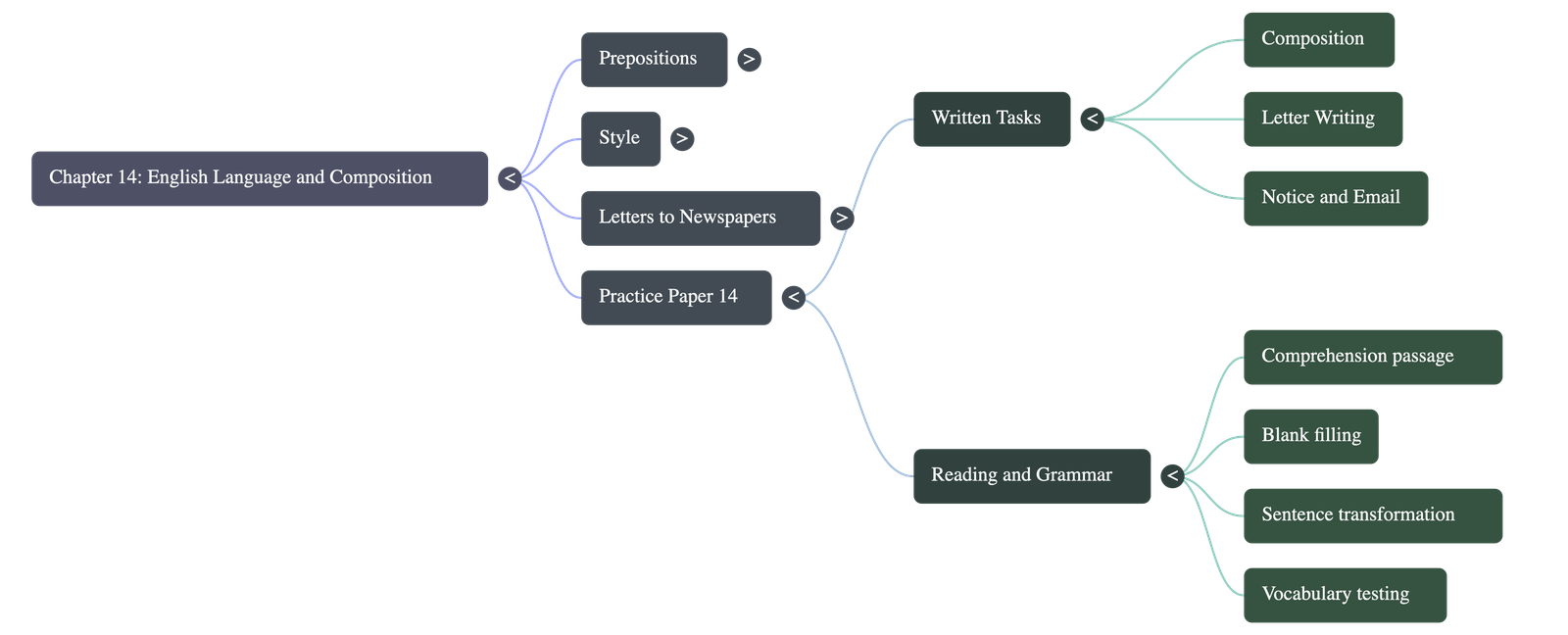
A. Prepositions
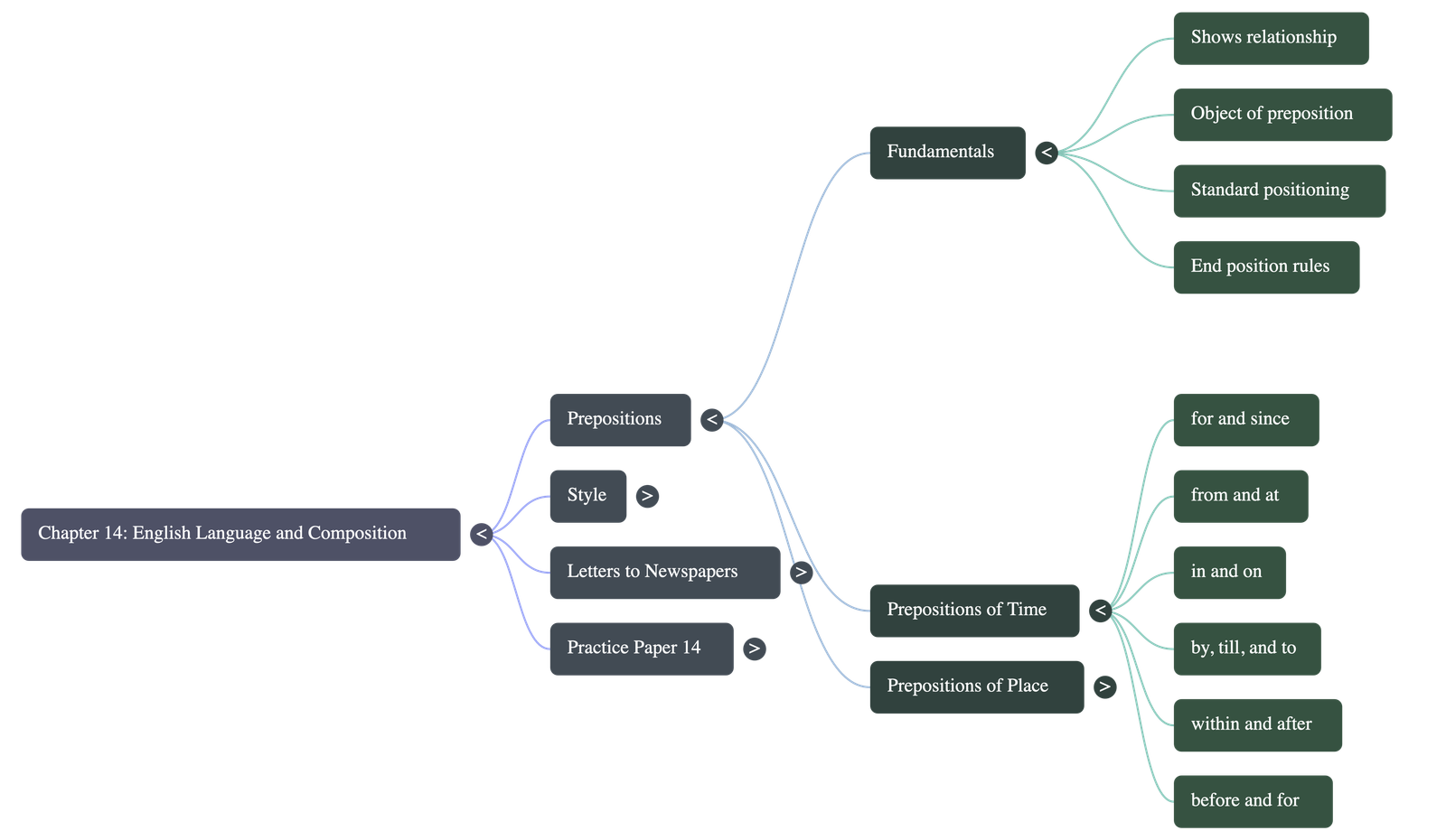
A preposition is a word placed before a noun or pronoun (its object) to show its relationship with another person or thing in the sentence. It can join a noun to another noun, an adjective, or a verb.
Placement of Prepositions
- Usually placed before its object.
- Placed at the end of a sentence when the object is a relative pronoun ('that'), an interrogative pronoun, or when a relative pronoun is understood.
- Sometimes placed first purely for emphasis.
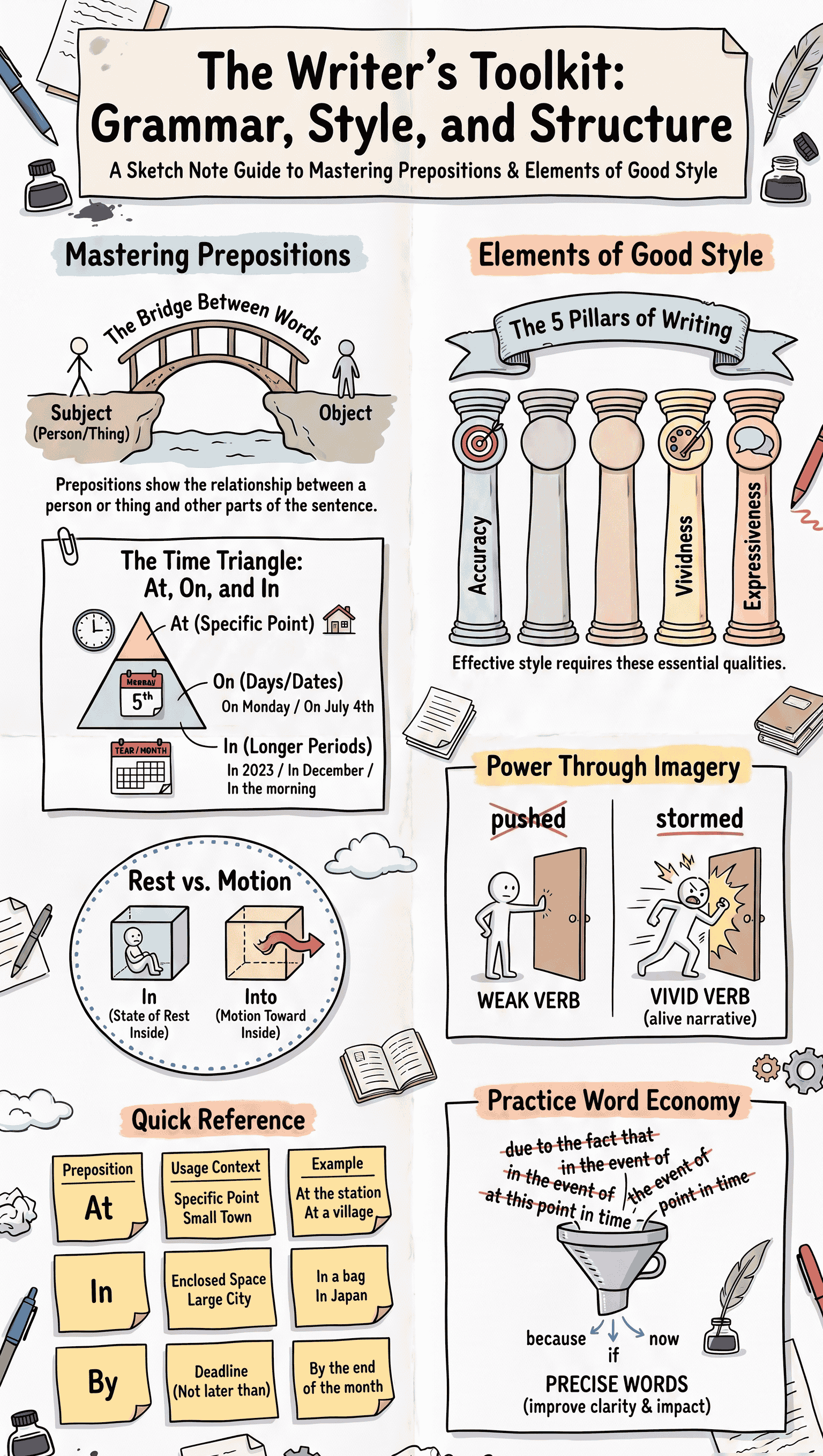
1. Prepositions of Time
- For vs. Since: For is used for a period of time across all tenses. Since is used for a specific point in time, specifically with perfect tenses.
- From: Used for a point of time, but can be used with all tenses (unlike 'since').
- At, In, On:
- At: Exact points of time and festivals.
- In: Periods of time (months, mornings).
- On: Specific days and dates.
- Note: Do not use 'in' or 'on' before words like today, tomorrow, yesterday, or next/last.
- On time vs. In time: On time means punctually. In time means before the appointed time.
- In vs. Within: In means at the end of a time period. Within means before that period ends.
- In vs. After: In denotes the end of a period in the future. After denotes the end of a period in the past.
- Before vs. For: Before points to a future time. For shows a future time period.
- By: Means "not later than" a certain time.
2. Prepositions of Place
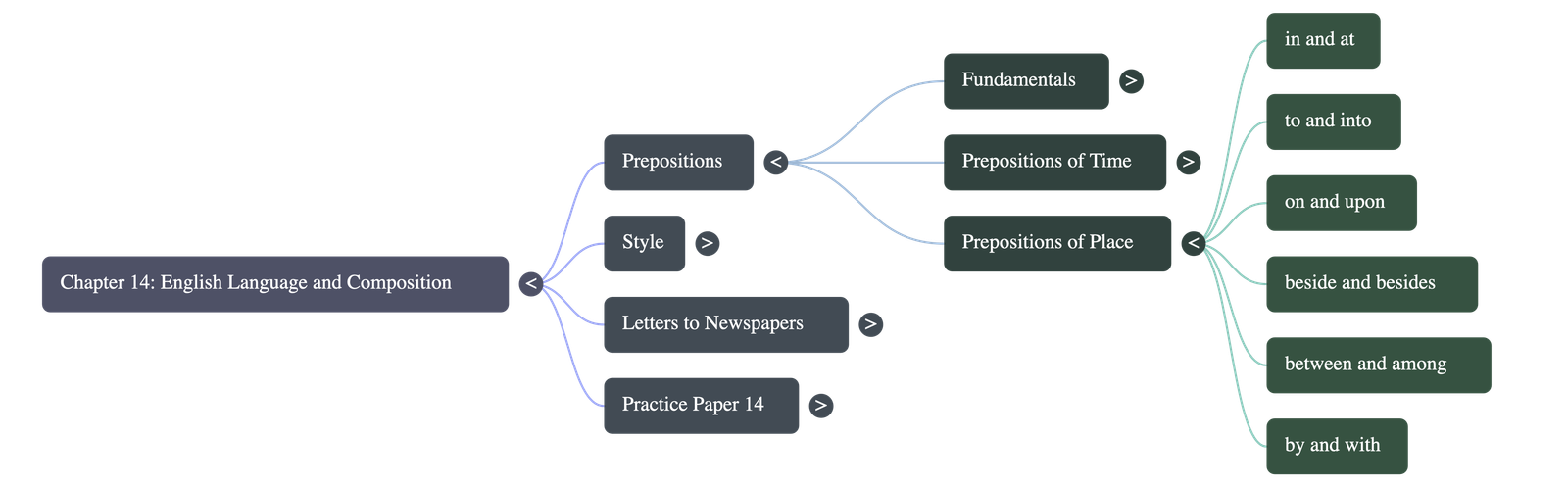
- In vs. At: In suggests an enclosed area, countries, and large towns. At suggests unenclosed spaces, specific activities, and small towns/villages.
- Rest vs. Motion: In and at are used for things at rest. To and into are used for things in motion. On is for things at rest, while upon is for things in motion.
- Beside vs. Besides: Beside means by the side of. Besides means in addition to.
- Between vs. Among: Between is for two persons/things (or exact positions). Among is for more than two.
- By vs. With: By introduces the agent or doer of an action. With introduces the instrument used to do the action.
B. Style
Style is an established, deliberate manner of writing characterized by clarity, coherence, and simplicity.
Qualities of Good Style
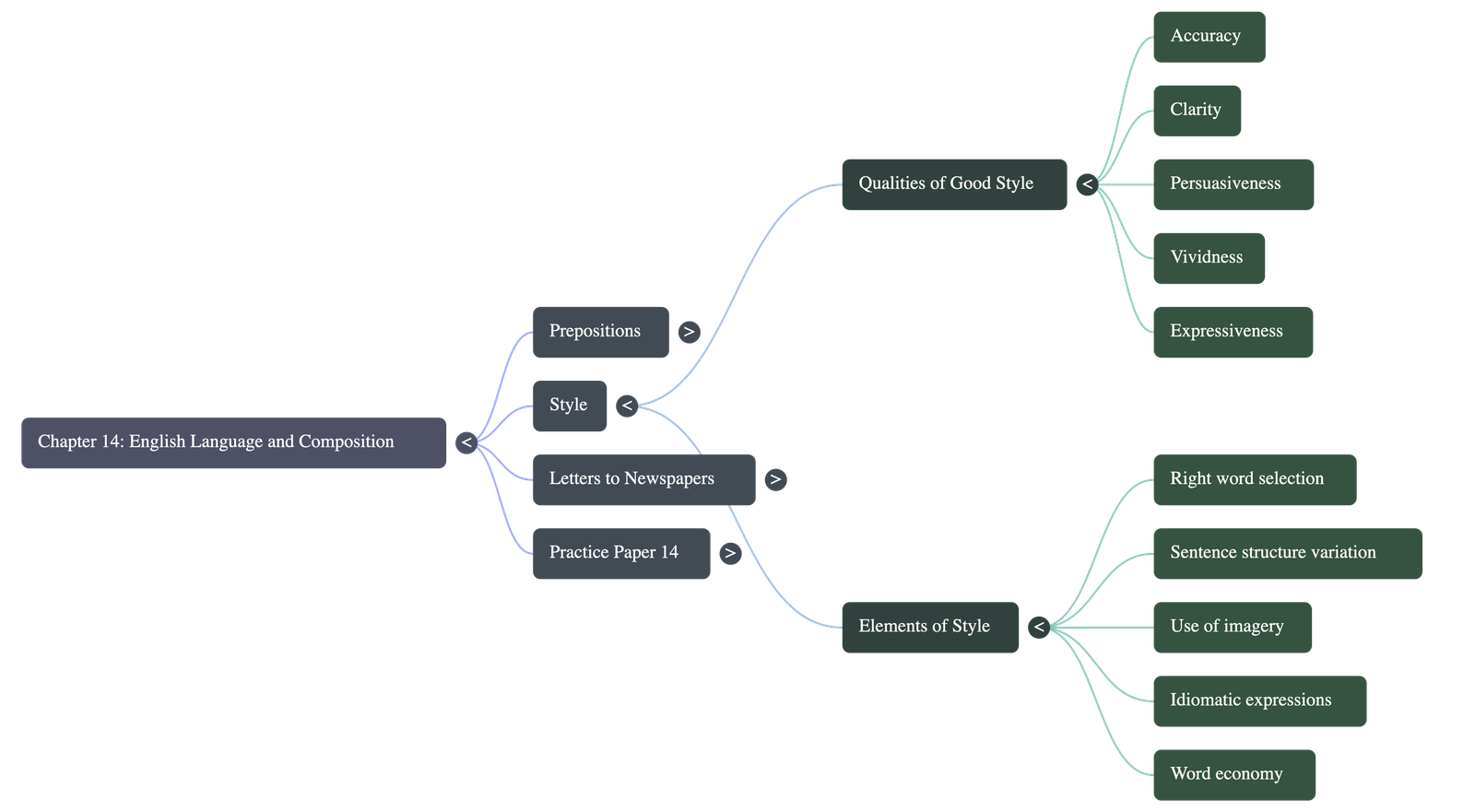
- Accuracy: Using exact words to convey the idea.
- Clarity: Clear description of the subject.
- Persuasiveness: The ability to compel and convince the reader.
- Vividness: Creating clear, visual impressions in the reader's mind.
- Expressiveness: Communicating the writer's state of mind forcefully.
Elements of Good Style
- Using the Right Word: Understanding nuances (e.g., shouting vs. screaming).
- Sentence Structure: Long/complex sentences are best for slow-moving actions; short/abrupt sentences build excitement and suspense.
- Imagery: Using language that paints a picture, enlivening the narrative and making it dramatic.
- Idiomatic Expressions: Using language-specific expressions judiciously to add flavor (e.g., "to turn a deaf ear to").
- Word Economy: Substituting lengthy phrases with single, precise words to be more concise.
C. Letters to Newspapers
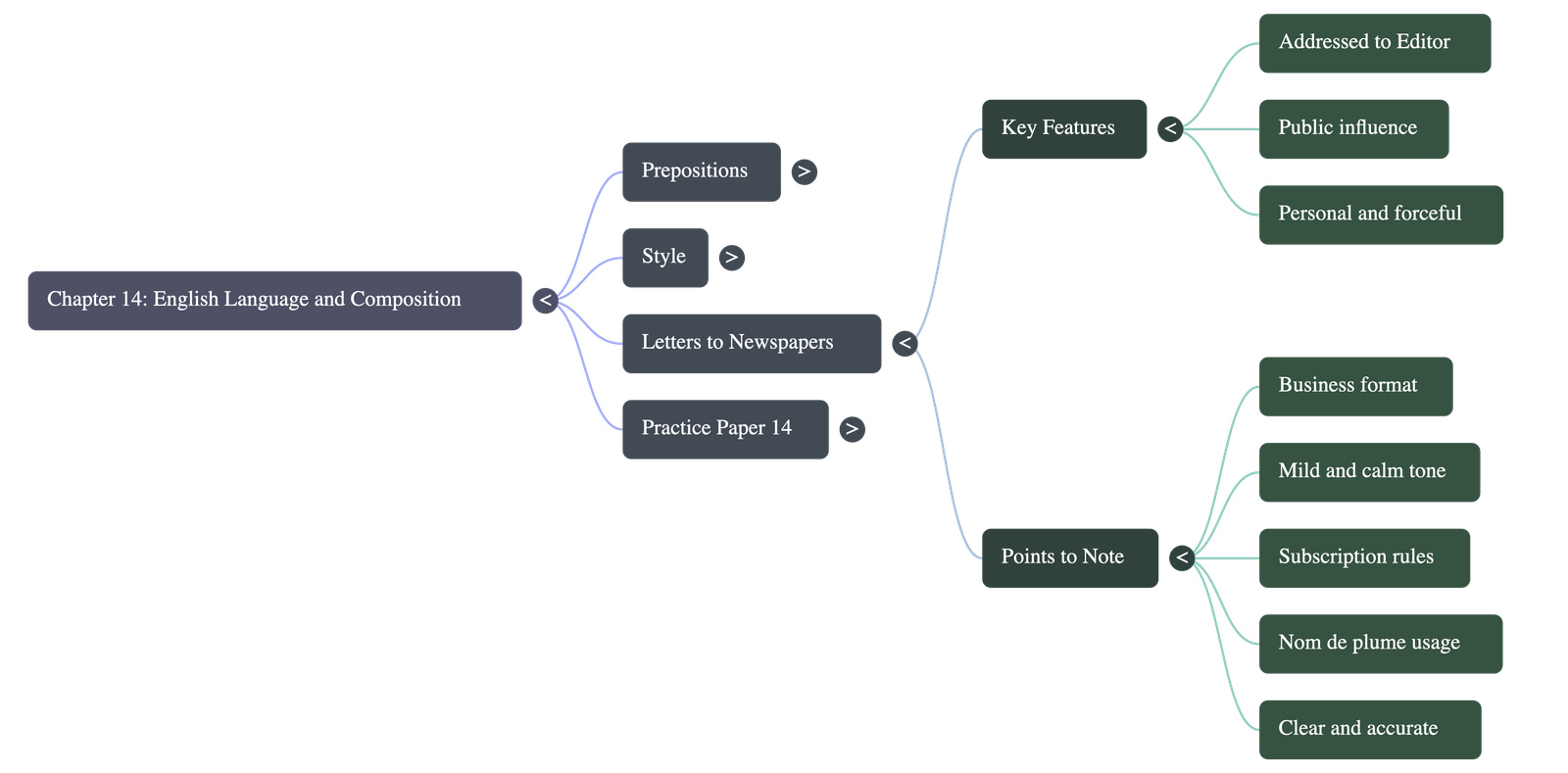
These are formal letters addressed to the Editor that are read by thousands and can influence local or national decisions, legislation, and public opinion.
Important Points to Note
- Audience: The writer must satisfy the Editor (so it gets published) and appeal to the general reader (it must be clear, accurate, and concise).
- Formatting: Dates and addresses follow business letter formats.
- Salutation & Sign-off: Begin with 'Sir/Madam' (not 'Dear Sir'). End with 'Yours faithfully' followed by the signature with no full stop.
- Tone: Must be mild, calm, and formal, even when expressing strong emotions like annoyance, pleasure, or indignation.
- Anonymity: If a writer wants to remain anonymous in print, they can sign off with a pen-name (nom de plume like 'Observer'). However, they must provide their real name and address to the Editor in a covering letter for credibility.
D. Practice Paper - 14
The chapter concludes with a comprehensive practice paper styled for a Class 9 exam setting, covering various writing and grammar skills.
- Question 1 (Composition): A 300-350 word essay choice (Story writing, Personal narrative, Argumentative essay, Descriptive essay, or Picture composition based on an image of fishermen).
- Question 2 (Letter Writing): Choices between formal (complaining to an app manager about cold food) and informal (writing to a cousin about boarding school life).
- Question 3 (Notice & Email): Drafting a notice for a Grandparents' Day event and writing an accompanying email to a famous sports person inviting them as Chief Guest.
- Question 4 (Comprehension): An unseen passage about Genghis Khan and his loyal pet hawk, followed by vocabulary and short-answer questions.
- Question 5 (Grammar): Exercises focusing on filling in correct verb forms, applying appropriate prepositions, joining sentences without using "and, but, so", and rewriting sentences according to specific instructions.
Do checkout all questions & answers of this chapter.
Quick Navigation:
| | | |
1 / 1
Quick Navigation:
| | | |