Quick Navigation:
| | | |
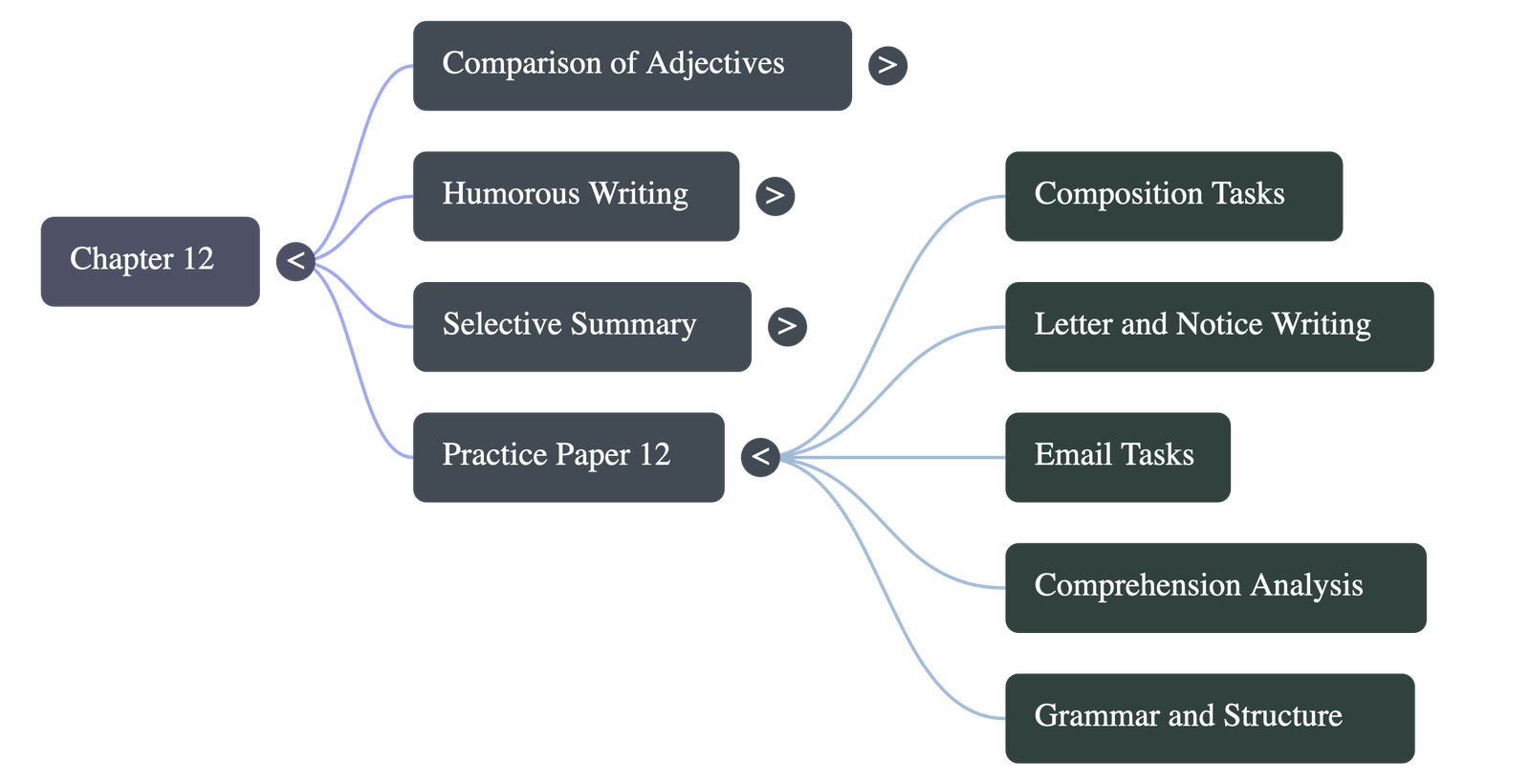
A. Comparison of Adjectives
This section focuses on the rules and usage of the three degrees of comparison for adjectives.
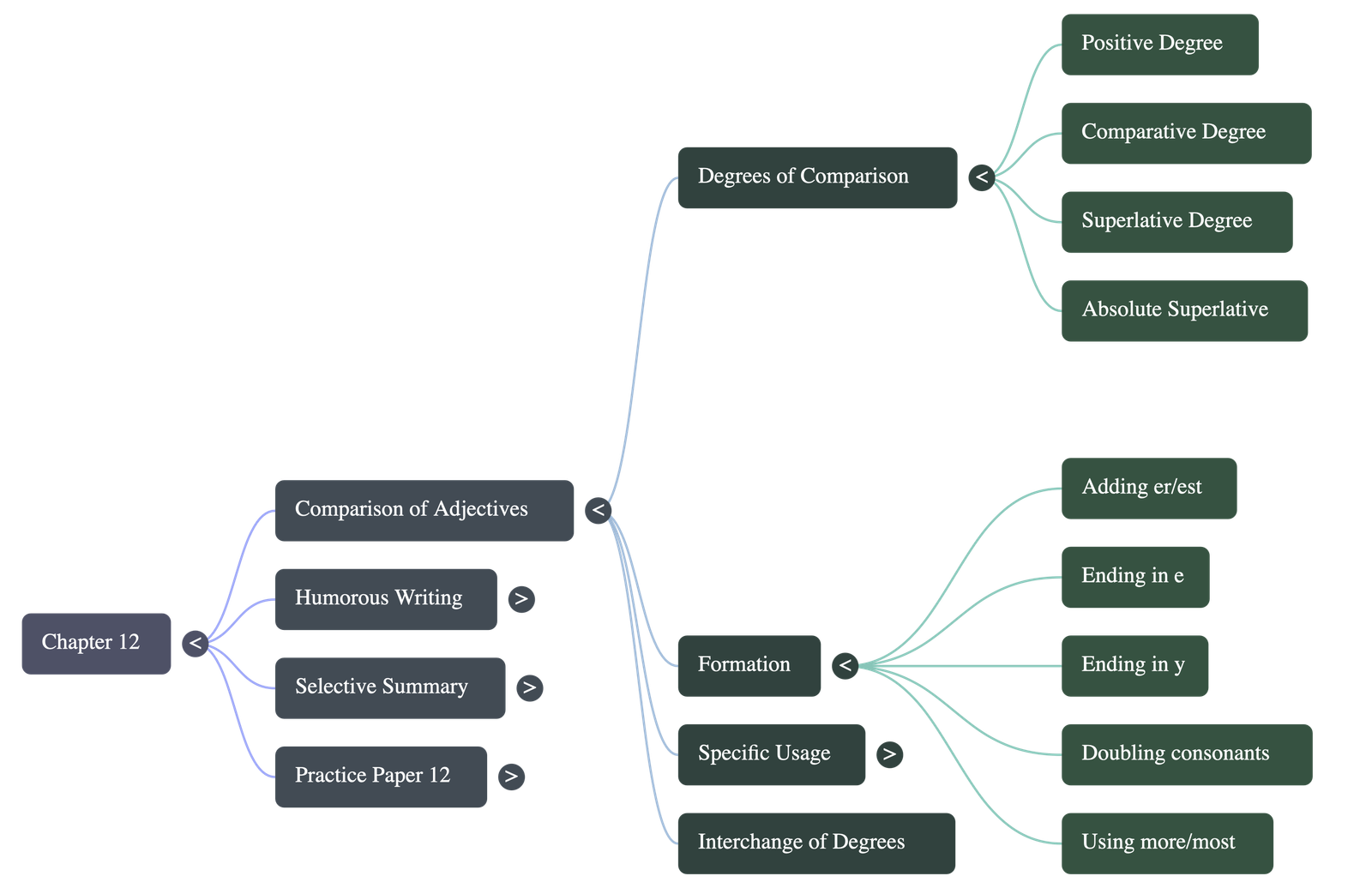
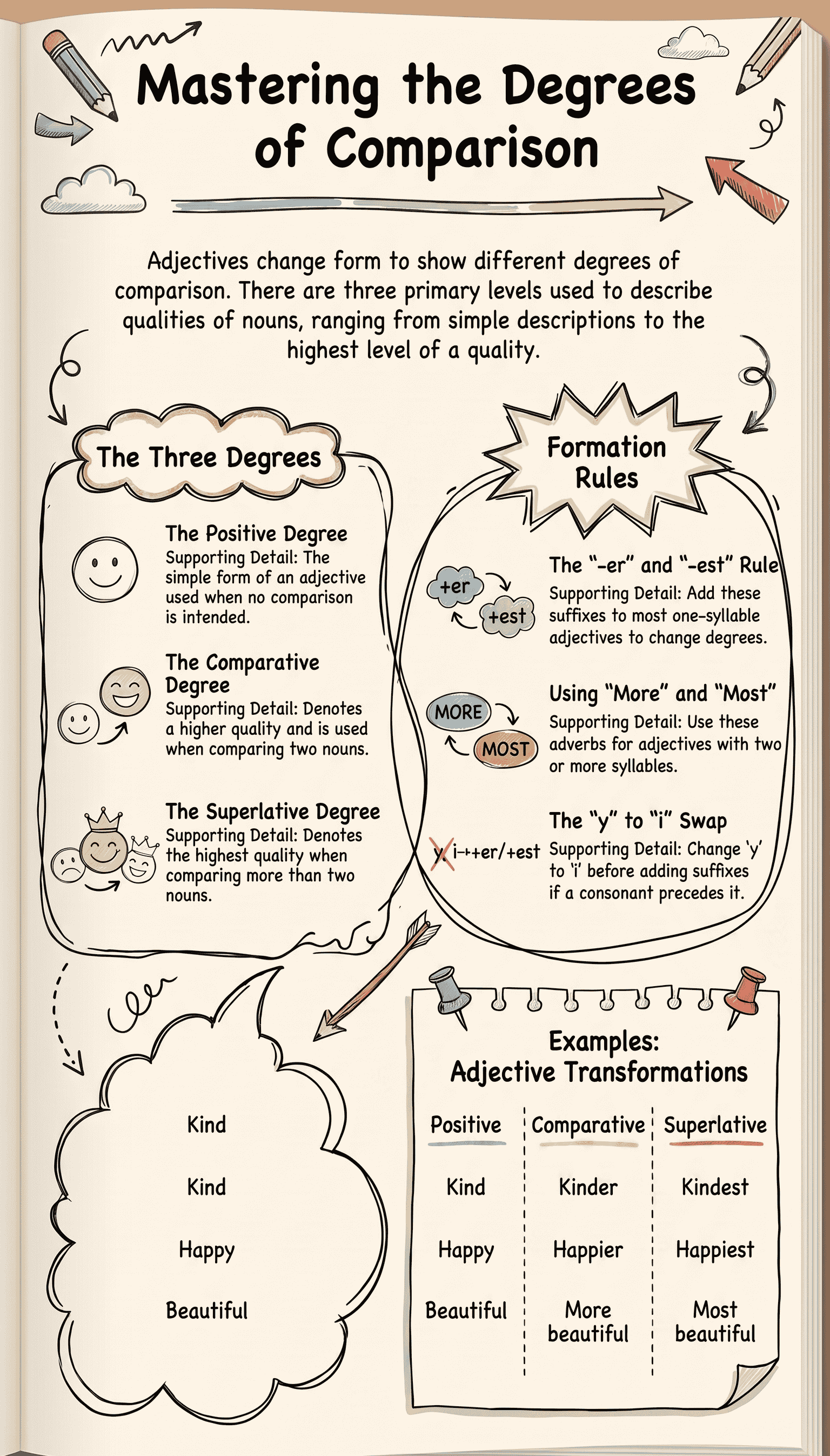
1. The Three Degrees of Comparison
- Positive Degree: The simplest form of the adjective, used when no comparison is being made (e.g., Aruna is a clever girl).
- Comparative Degree: Used when comparing exactly two nouns to show a higher degree of a quality (e.g., Aruna is cleverer than Niti).
- Superlative Degree: Denotes the highest quality and is used when comparing more than two nouns. The definite article "the" is used before it (e.g., Aruna is the cleverest girl in the class). Sometimes, the word "most" is used without making a direct comparison, just to show a very high degree of a quality (called the Superlative of Eminence).
2. Rules for Forming Degrees
- Add -er and -est to most one-syllable adjectives (e.g., small, smaller, smallest).
- If the word ends in "e", just add -r and -st (e.g., brave, braver, bravest).
- If the word ends in "y" with a consonant before it, change "y" to i before adding -er/-est (e.g., happy, happier, happiest).
- For short words ending in a single consonant with a short vowel before it, double the last consonant (e.g., red, redder, reddest).
- For longer adjectives (more than two syllables), use more and most before the word (e.g., beautiful, more beautiful, most beautiful).
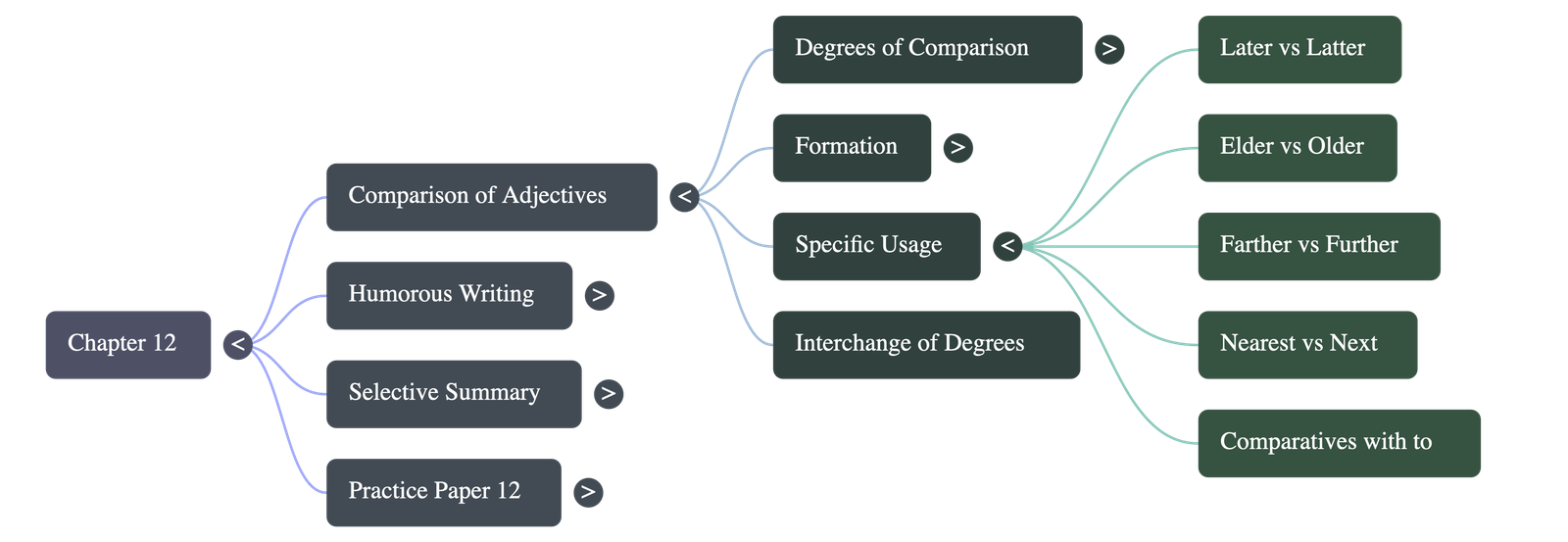
3. Special Rules and Correct Usage
- Comparatives followed by 'to': Words ending in -or like inferior, superior, junior, senior, and prior are followed by the word to instead of "than".
- Later/Latest vs. Latter/Last: Later and latest refer to time, whereas latter and last refer to position.
- Elder/Eldest vs. Older/Oldest: Elder and eldest are strictly for people in the same family and are never followed by "than". Older and oldest can be used for both people and things.
- Farther vs. Further: Farther means physical distance, while further means something additional.
- Nearest vs. Next: Nearest denotes distance, while next denotes position or sequence.
4. Interchange of Degrees
You can rewrite sentences by changing the degree of comparison without changing the meaning of the sentence.
- Positive: No other metal is as valuable as gold.
- Comparative: Gold is more valuable than any other metal.
- Superlative: Gold is the most valuable of all the metals.
B. Humorous Writing
This section explains how to create comic effects in writing, as humor doesn't just come naturally to everyone; it can be crafted using specific techniques.
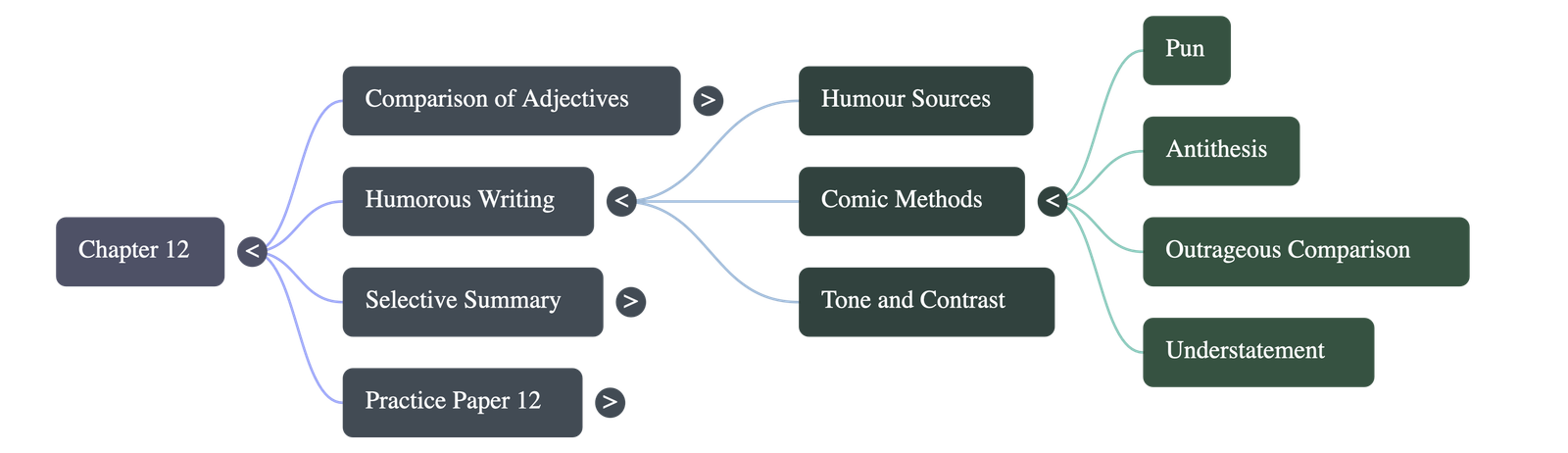
1. Sources of Humour
- Humour often comes from the unexpected (e.g., expecting a nice gift but unboxing a dead cockroach).
- It also arises from inappropriate behavior in specific situations (e.g., someone acting completely wild at a very formal party).
2. Literary Devices Used to Create Humour
- Pun: A play on words where a word has two meanings—one expected and one absurd in the given context.
- Antithesis: Balancing words or ideas sharply against each other for a witty, comic effect (e.g., "The only way to get rid of temptation is to yield to it").
- Outrageous Comparisons: Using wild, exaggerated comparisons to describe people or situations (e.g., describing a red-cheeked person as a balloon about to burst).
- Understatement: Playing down a massive disaster or extreme situation to make it sound incredibly ordinary (e.g., surviving a series of horrible accidents and just calling it "a trying day").
- Tone: Writing in a mock-serious tone, keeping a "straight face" while describing absurd situations, contrasting seriousness with sheer foolishness.
C. Selective Summary
This section teaches students how to properly summarize a text by selecting only the most vital information.
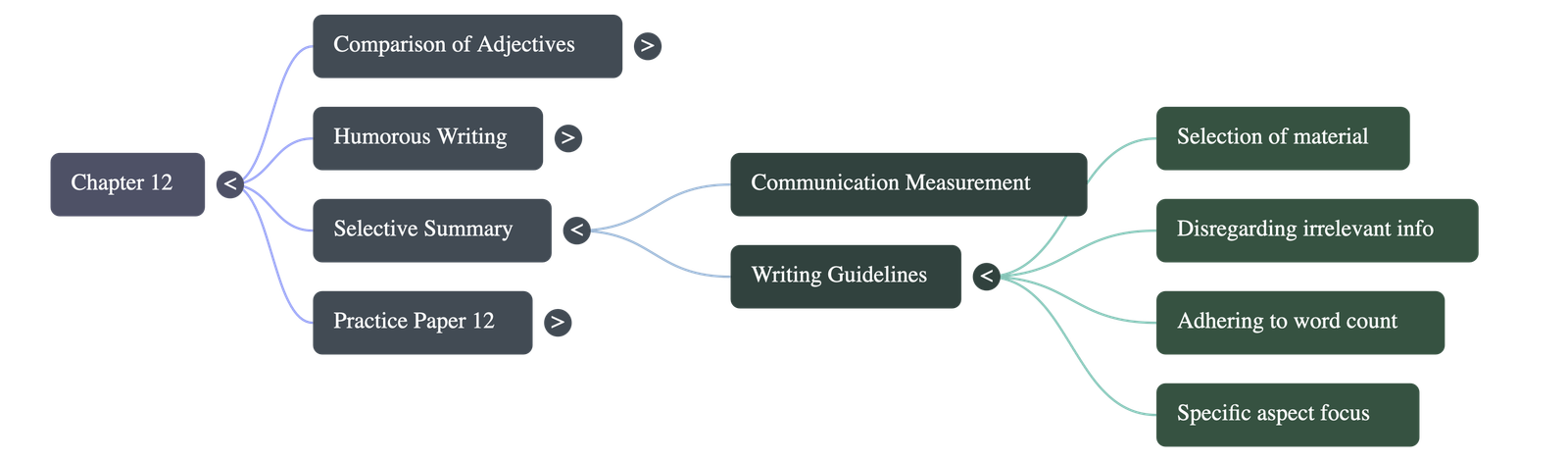
- Purpose: Summary writing tests a student's ability to clearly understand a text and express that understanding concisely.
- How to Write a Selective Summary:
- Students must look for specific items asked for in the prompt (e.g., summarize only a person's specific qualities or advantages/disadvantages).
- Any information in the original text that is not relevant to the specific prompt must be strictly ignored and discarded.
- The source material could be a continuous paragraph, a conversation, or a series of letters.
- The summary must adhere strictly to the instructed word limit.
- Application: This skill is often tested through short answer comprehension questions based on a provided passage (like the given example about Henry Ford).
D. Practice Paper - 12
This is a full-fledged examination practice paper designed to test various English language skills within specific time limits.
- Question 1 (Composition): Write a 300-350 word essay choosing from narrative (a first-time cruise), story writing (struggle to save a family), argumentative/reflective views on a statement, descriptive (memorable birthday), or a picture composition (based on an image of a busy outdoor market).
- Question 2 (Letter Writing): Choose between writing a formal letter to a Principal (requesting extended game periods) or an informal letter to a cousin (describing a medical camp).
- Question 3 (Notice & Email): Draft a formal notice for the school board and write a corresponding email to a neighboring school's Principal to gather relief funds for flood-affected people.
- Question 4 (Reading Comprehension): A narrative passage about a comical encounter with a man frantically searching all his pockets for a match, only to find a toothpick. It includes vocabulary testing, short-answer questions, and a 50-word summary task about the man's efforts.
- Question 5 (Grammar & Structural Usage):
- Fill in the blanks with the correct form of the given verbs in brackets.
- Fill in the blanks with appropriate prepositions/words.
- Join pairs of sentences without using the words 'and', 'but', or 'so'.
- Rewrite sentences according to specific instructions without changing their original meaning (e.g., changing from active to passive, using different conjunctions, or altering degrees of comparison).
Do checkout all questions & answers of this chapter.
Quick Navigation:
| | | |
1 / 1
Quick Navigation:
| | | |