Quick Navigation:
| | | |
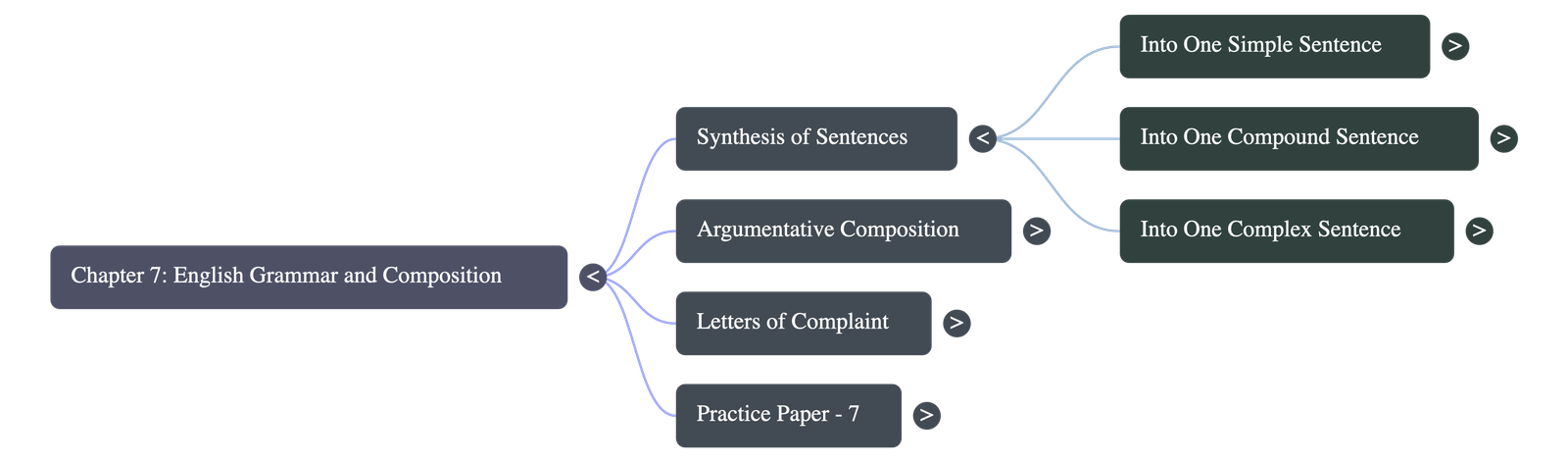
A. Synthesis of Sentences
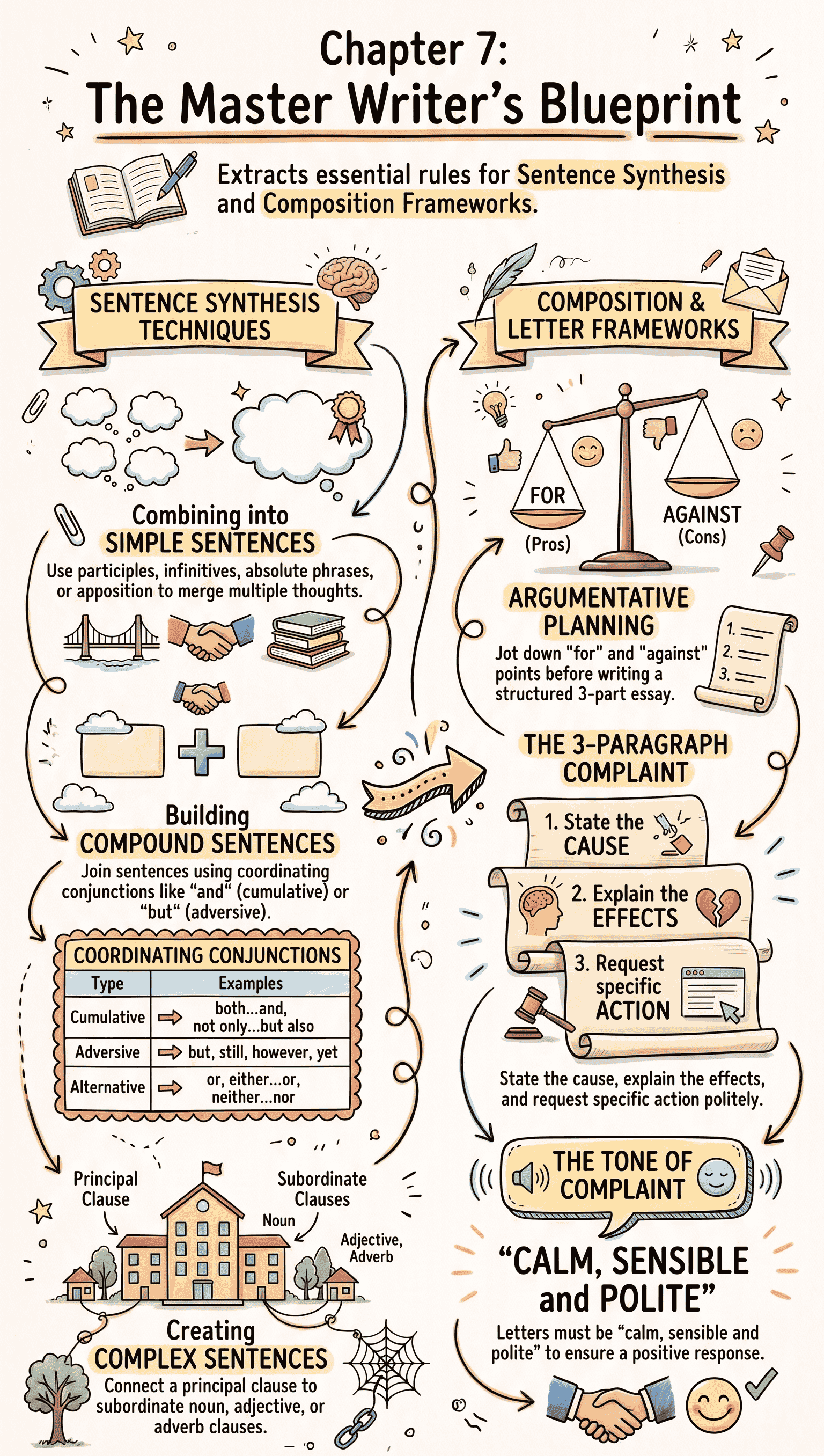
Synthesis is the process of combining two or more simple sentences into one new sentence. The new sentence can be Simple, Compound, or Complex.
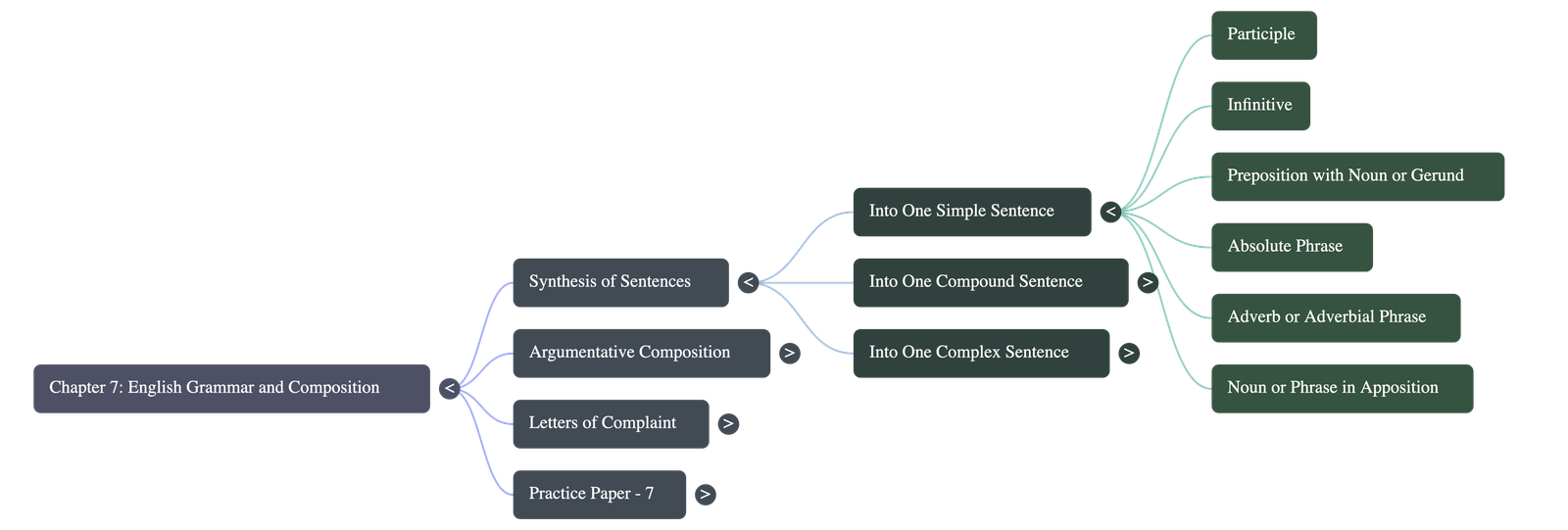
1. Combining into One Simple Sentence
- Using a Participle: Combines actions done by the same subject (e.g., "Being tired, he went to sleep.").
- Using an Infinitive: Expresses purpose using "to + verb" (e.g., "She is too fat to run.").
- Using a Preposition with a Noun or Gerund: Connects ideas using prepositions (e.g., "Besides giving them advice, he helped them with money.").
- Using an Absolute Phrase: Connects independent events (e.g., "The weather being fine, we played cricket.").
- Using an Adverb or Adverbial Phrase: Modifies the whole meaning (e.g., "He unfortunately forgot to bring the keys.").
- Using a Noun or Phrase in Apposition: Places descriptive phrases next to a noun (e.g., "Suresh, a good batsman, made a hundred runs.").
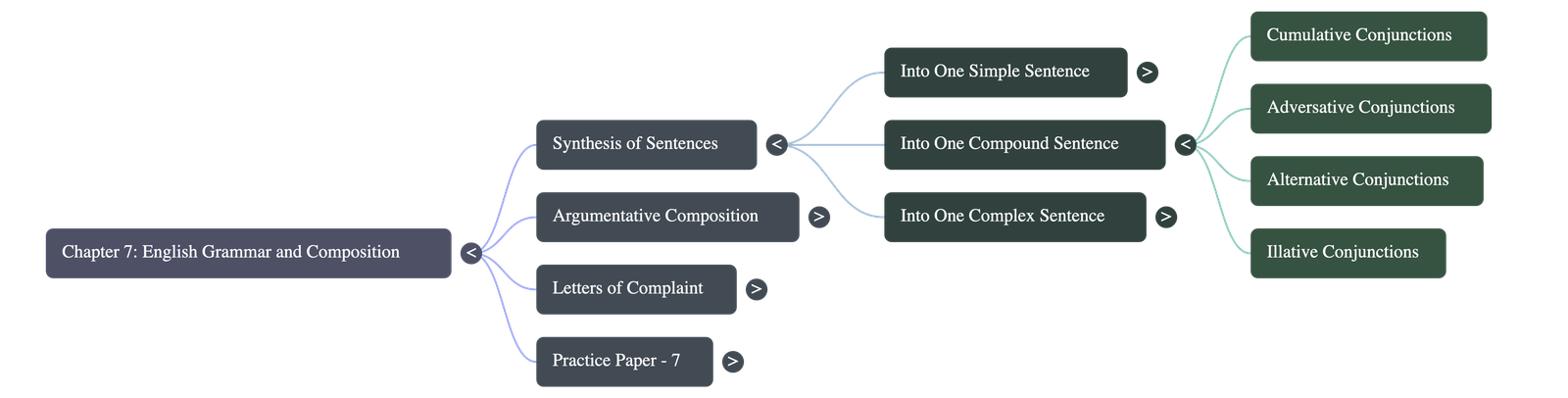
2. Combining into One Compound Sentence
Simple sentences are joined using Coordinating Conjunctions:
- Cumulative (Adding information): Uses words like both...and, not only...but also, as well as.
- Adversative (Showing contrast): Uses words like but, still, however, yet, nevertheless.
- Alternative (Showing choice): Uses words like or, either...or, neither...nor.
- Illative (Showing cause and effect): Uses words like therefore, for, so.
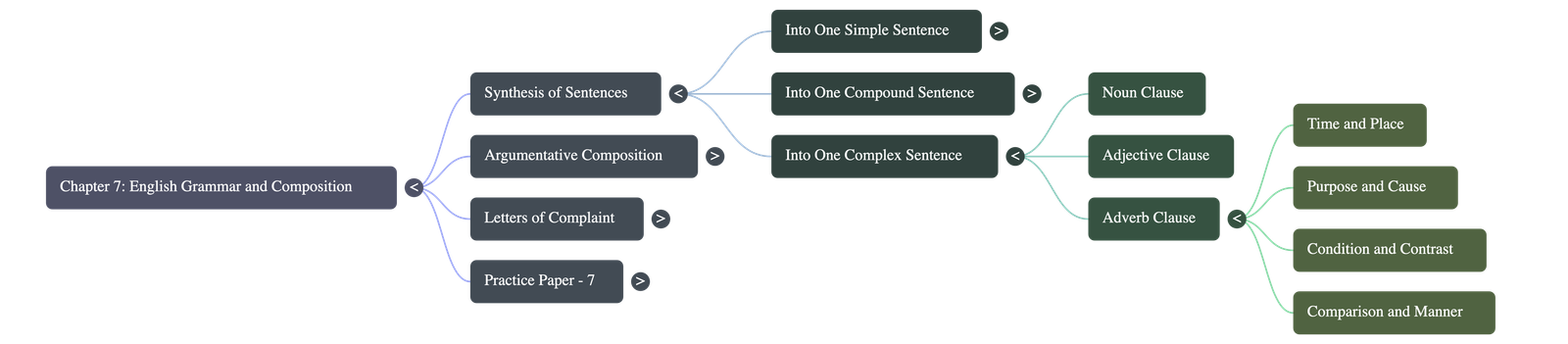
3. Combining into One Complex Sentence
Made of one Principal Clause and one or more Subordinate Clauses:
- Noun Clause: Does the work of a noun (e.g., "Our belief is that Ali is innocent.").
- Adjective Clause: Acts as an adjective describing a noun (e.g., "I met Rajiv's father who is a Police Inspector.").
- Adverb Clause: Acts as an adverb showing Time, Place, Purpose, Cause, Condition, Result, Comparison, etc. (e.g., "He cannot pass unless he works hard.").
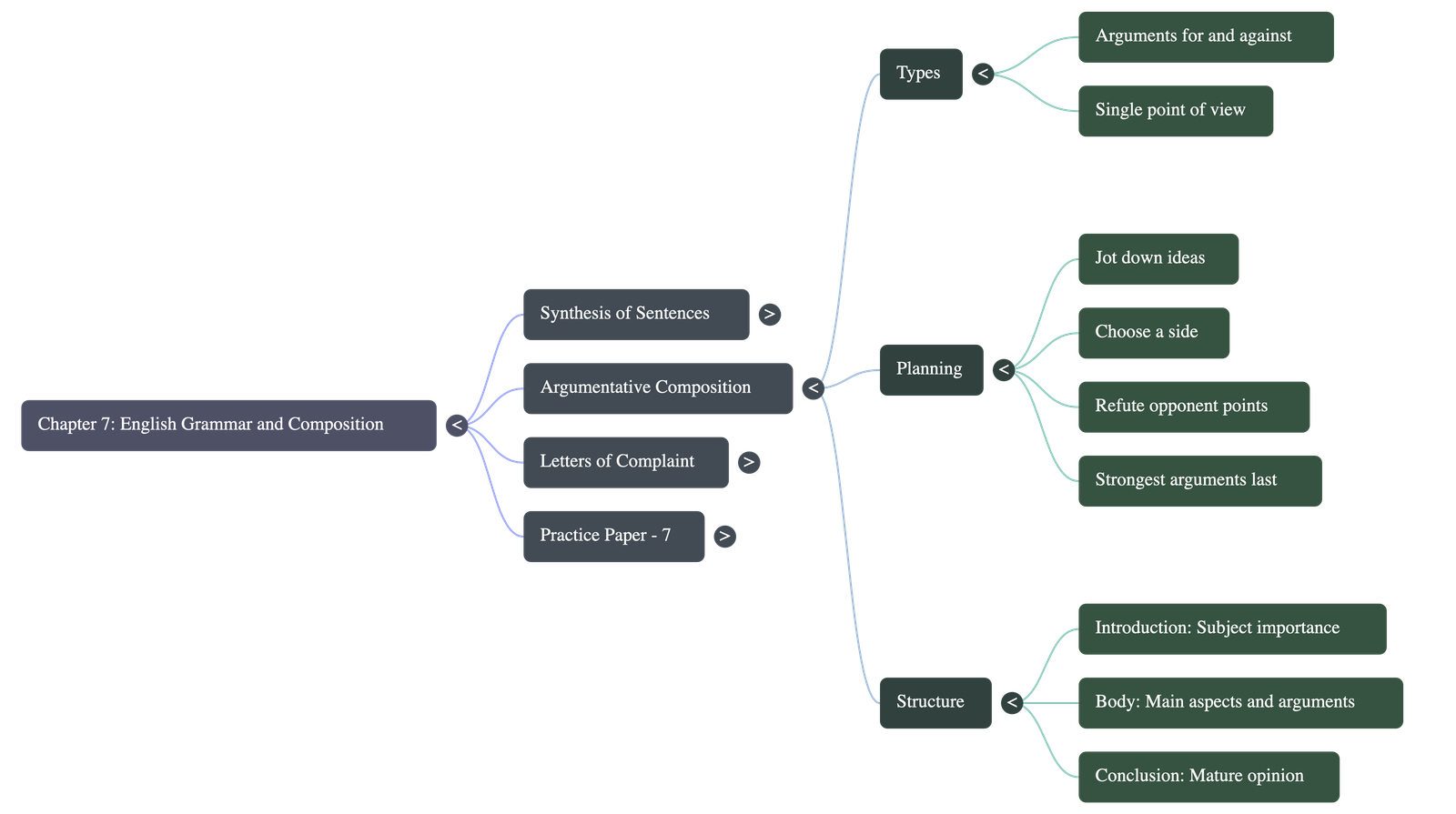
B. Argumentative Composition
Argumentative writing requires you to present arguments for or against a specific topic, or firmly stand on one side of a debate.
Steps for Planning:
- Jot down as many arguments and ideas as you can think of.
- Categorize your ideas under two clear headings: For and Against.
- Choose your side clearly before you begin writing.
- Present the opponent's viewpoint, but systematically refute (disprove) their arguments point by point.
- Save your strongest, most convincing arguments for the very end to leave a lasting impact.
Ideal Structure:
- Introduction: A brief opening that introduces the subject and highlights its importance.
- Body: Multiple paragraphs, with each paragraph focusing on one main aspect and presenting logical arguments (either for or against).
- Conclusion: A final, mature opinion that is clearly based on the arguments you presented in the body.
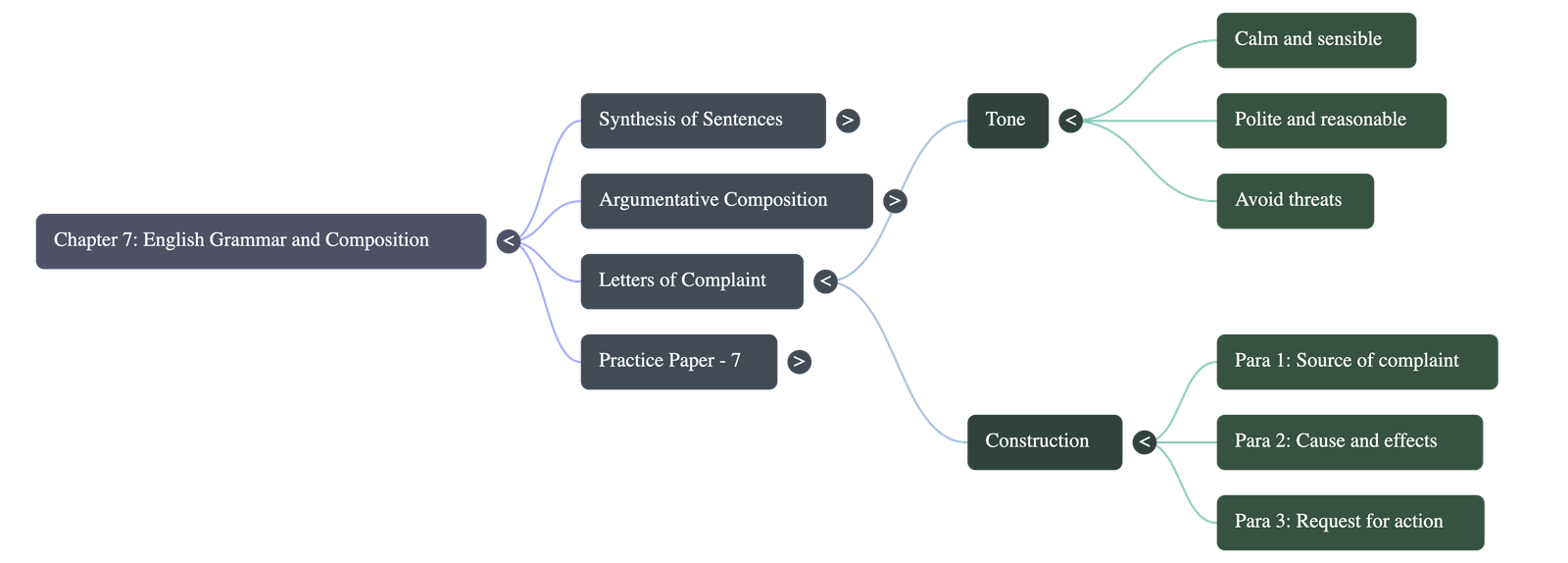
C. Letters of Complaint
A complaint letter must be carefully worded. It is completely ineffective to use threats or anger. The tone must always remain calm, sensible, polite, and reasonable.
Standard Three-Paragraph Rule:
- Paragraph 1 (The Issue): Make a general reference to the source of the complaint so the reader knows exactly what the letter is about.
- Paragraph 2 (The Details): Go into the specific details of the cause and explain the negative effects it is having. Be realistic and do not exaggerate the situation.
- Paragraph 3 (The Solution): Make a clear request for action. Offer sensible, polite suggestions to rectify the oversight without antagonizing the receiver.
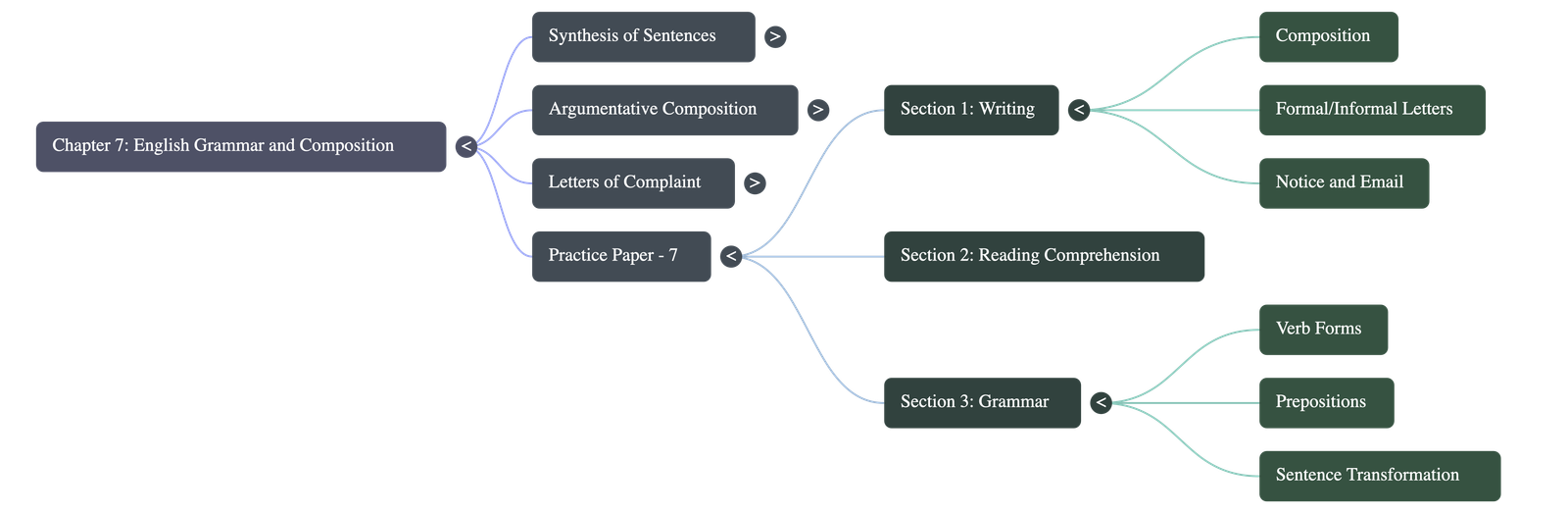
D. Practice Paper - 7
This section tests the student's overall grasp of language, writing skills, and grammar through practical application.
- Question 1 (Composition Writing): Requires writing a 300-350 word essay. Options include writing a short story based on necessity, narrating personal anecdotes, debating exam grades (argumentative), describing a village landscape, or writing a piece based on a given picture of a street food stall.
- Question 2 (Formal Letter Writing): Requires drafting official correspondence, such as writing to a Bank Manager for a higher studies loan appointment, or a letter of gratitude to a shopkeeper for keeping a forgotten item safe.
- Question 3 (Notice and Email): Practical communication tasks like drafting a formal school notice (for a trip to Mount Abu) and writing a corresponding official email to a travel agency to inquire about tour packages.
- Question 4 (Reading Comprehension): An unseen passage analyzing the Yukon River ecosystem, indigenous communities, the life-cycle of salmon, and the severe impacts of global warming and thawing permafrost on the environment. Includes vocabulary testing and short-answer questions.
- Question 5 (Applied Grammar): Tests grammar proficiency through:
- Filling in blanks with correct verb forms.
- Using appropriate prepositions and phrasal verbs in sentences.
- Joining pairs of sentences seamlessly without using "and", "but", or "so".
- Rewriting sentences strictly according to given instructions (e.g., beginning or ending with specific phrases like "In spite of" or "If").
Do checkout all questions & answers of this chapter.
Quick Navigation:
| | | |
1 / 1
Quick Navigation:
| | | |