Quick Navigation:
| | | | |
Quick Navigation:
| | | | |
Socio-Religious Reforms
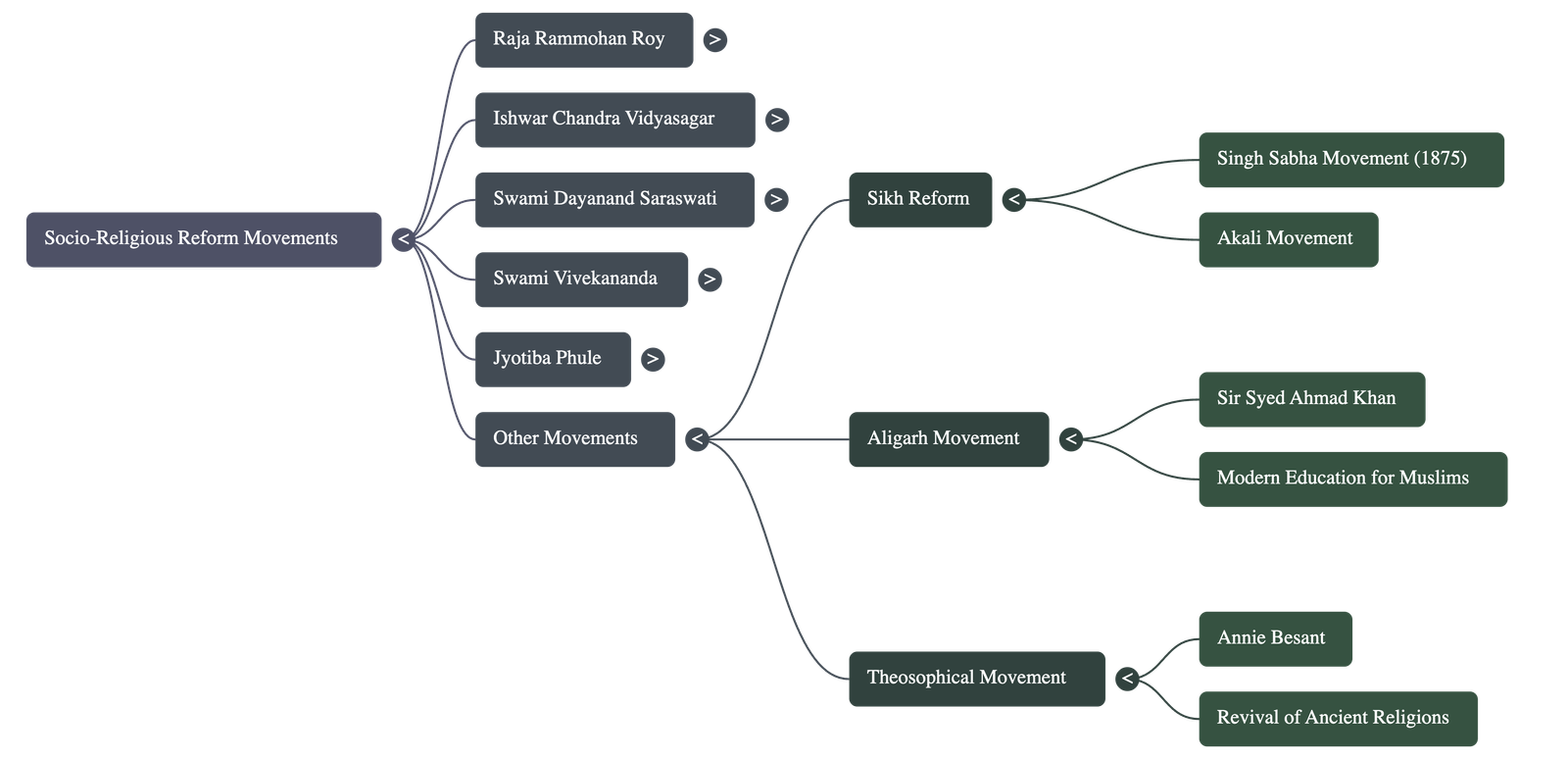
Based on the sources provided, here is a point-wise summary of the major socio-religious reform movements and figures discussed in the chapter:
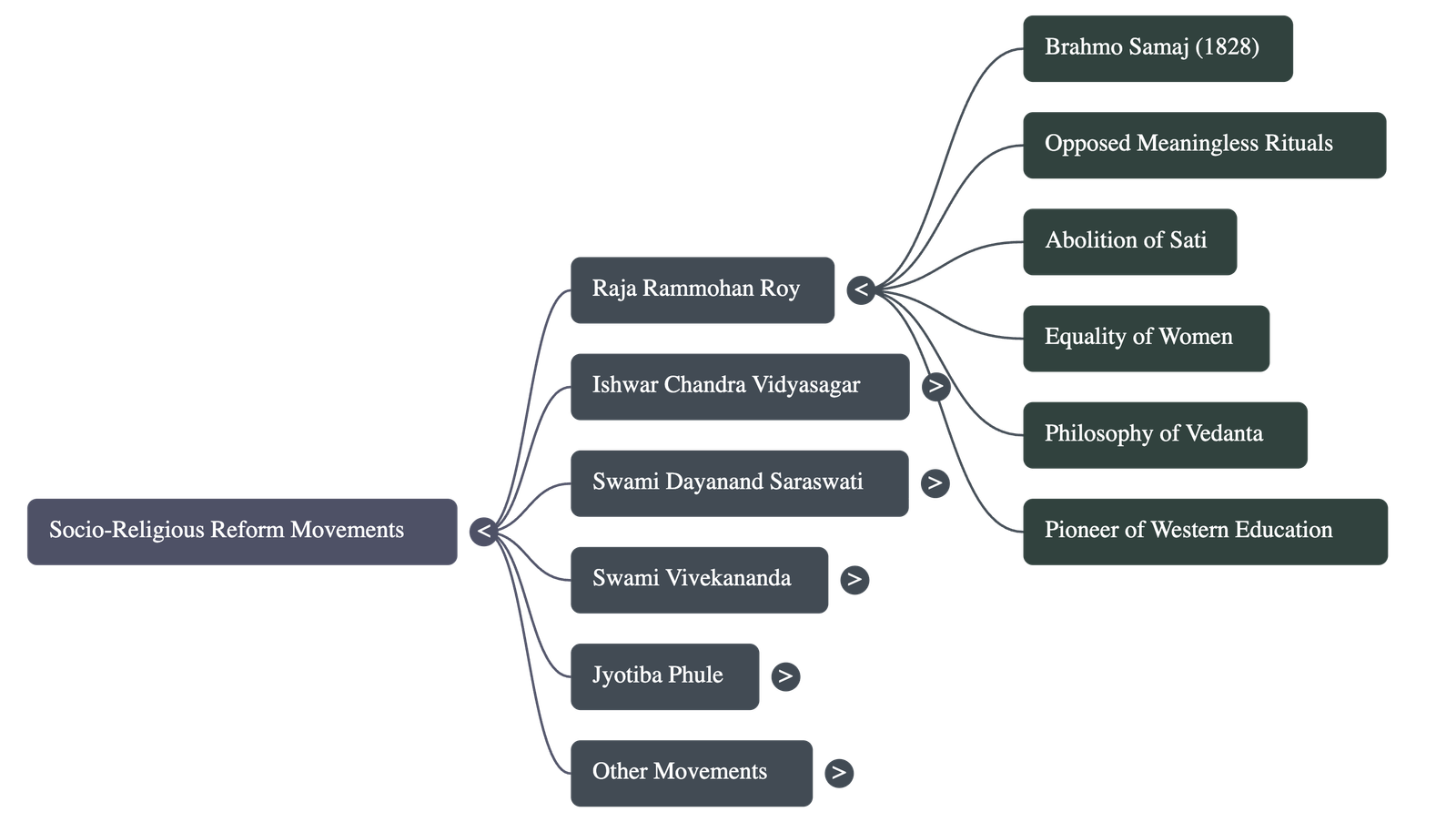
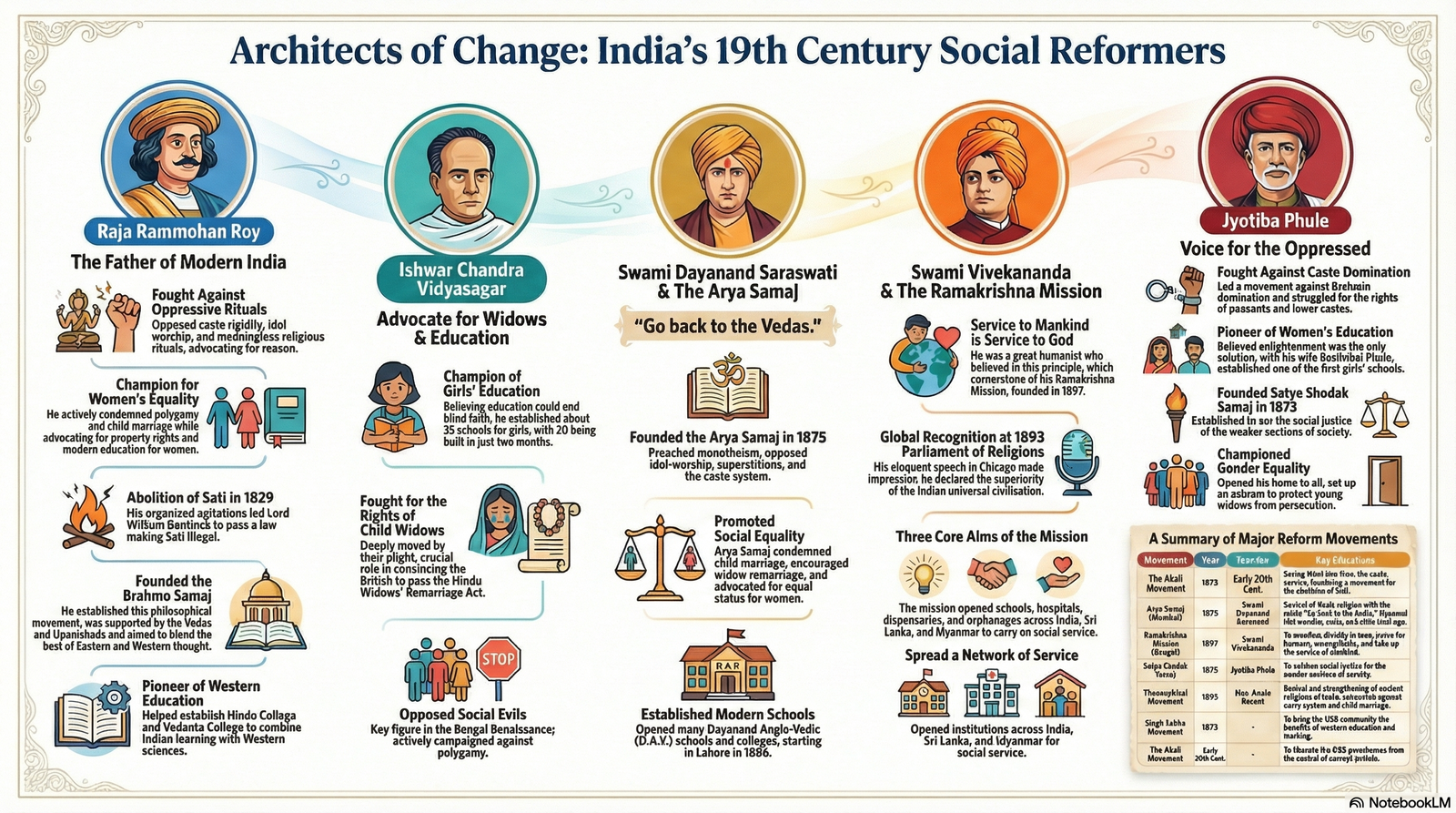
1. Raja Rammohan Roy and the Brahmo Samaj (1828)
- Founder of Modern India: Known as a pioneer of Western education, he combined traditional Indian learning with Western scientific studies.
- Social Reforms: He successfully campaigned against the practice of Sati, leading to it being declared illegal in 1829.
- Religious Ideals: He condemned meaningless rituals, idol worship, and the rigidity of the caste system, basing his philosophy on the Vedanta.
- Women’s Rights: He advocated for proper education for women, the remarriage of widows, and the end of polygamy and child marriage.
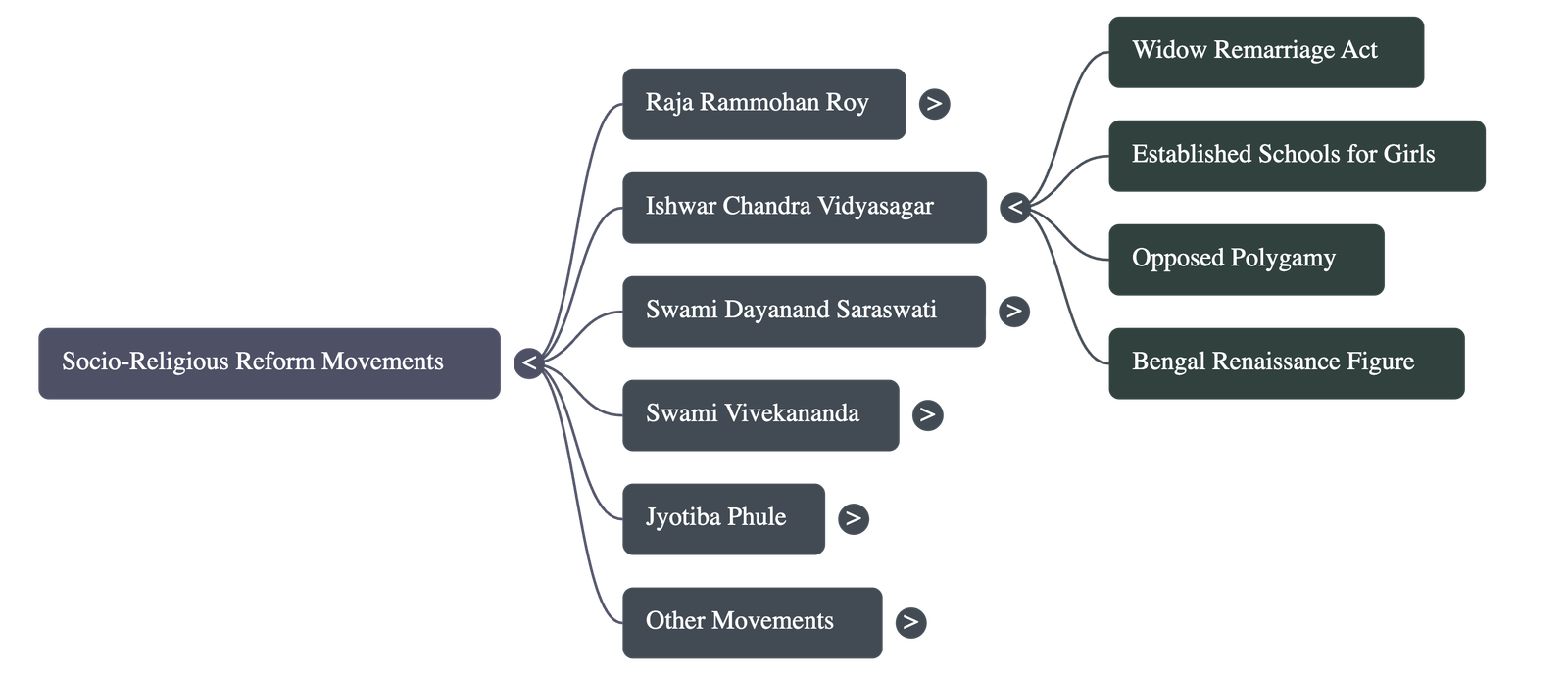
2. Ishwar Chandra Vidyasagar
- Widow Remarriage: He was a key figure in the Bengal Renaissance who played a vital role in the passage of the Hindu Widows' Remarriage Act.
- Education: As a special inspector of schools, he established numerous schools across Bengal, including 30 schools exclusively for girls.
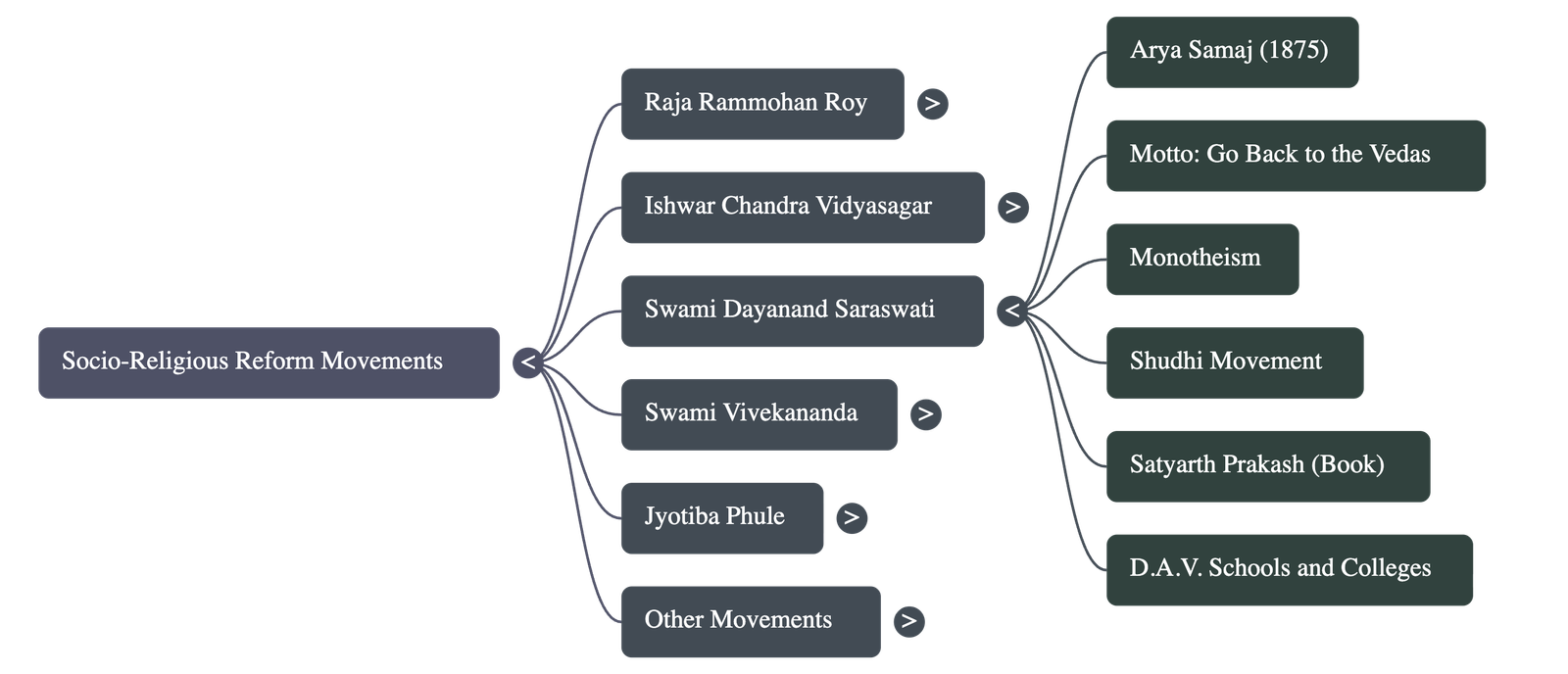
3. Swami Dayanand Saraswati and the Arya Samaj (1875)
- Vedic Revival: His central motto was "Go Back to the Vedas," as he believed the destiny of India lay in reviving Vedic principles.
- The Arya Samaj: Founded in 1875, this organization opposed idol worship, child marriage, and the caste system while supporting monotheism and the equality of women.
- Shuddhi Movement: This movement was started to bring Hindu converts back into the fold of Hinduism.
- Educational Impact: His followers established the Dayanand Anglo-Vedic (D.A.V.) schools and colleges to combine Vedic study with modern education.
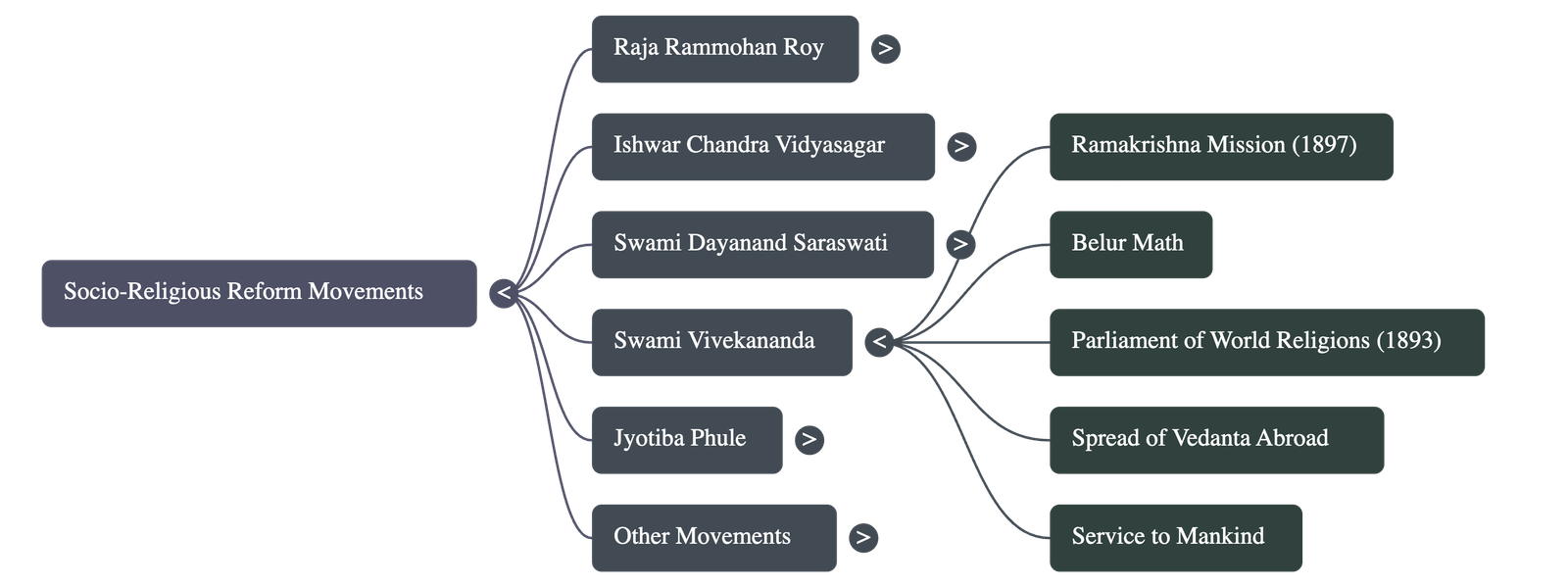
4. Swami Vivekananda and the Ramakrishna Mission (1897)
- Global Influence: Vivekananda represented Indian culture at the Parliament of World Religions in Chicago in 1893, declaring the superiority of Indian philosophy and spirituality.
- Core Philosophy: He emphasized the essential oneness of all religions and believed that service to mankind was the highest form of service to God.
- The Mission: He founded the Ramakrishna Mission to manifest divinity in man and promote harmony among different faiths.
5. Jyotiba Phule and the Satya Shodak Samaj (1873)
- Caste and Social Justice: He led a revolt against the domination of Brahmins and founded the Satya Shodak Samaj to seek social justice for the weaker sections of society.
- Education Pioneer: Phule and his wife, Savitribai Phule, were pioneers of education for girls and lower castes, opening several schools and an indigenous school for lower castes.
- Upliftment: He established an ashram for young widows and campaigned for widow remarriage.
6. Sikh Reform Movements
- Singh Sabha Movement (1873): Aimed to bring the benefits of Western education to the Sikh community and established a network of Khalsa schools and colleges.
- Akali Movement: An offshoot of the Singh Sabha, this movement sought to liberate gurudwaras from the control of corrupt priests (mahants).
7. Other Significant Movements
- Aligarh Movement (1875): Founded by Sir Syed Ahmad Khan, it aimed at the modernization of Indian Muslims through social reform and modern education.
- SNDP (1903): Founded by Shri Narayana Guru, this movement demanded temple entry for lower castes and simplified religious rituals.
- Theosophical Movement (1893): Led in India by Mrs. Annie Besant, it advocated for the revival of ancient religions and universal brotherhood.
Analogy for Understanding: You can think of these various reform movements as different architects working on the same old building. While some architects (like Rammohan Roy) focused on upgrading the windows to let in the light of Western education, others (like Dayanand Saraswati) insisted on strengthening the original Vedic foundation. Despite their different tools and styles, they all shared the same goal: renovating Indian society to make it stronger, more equitable, and more resilient.
Do checkout all questions & answers of this chapter.
Quick Navigation:
| | | | |
1 / 1
Quick Navigation:
| | | | |