The Great Uprising of 1857
The Great Uprising of 1857 was a pivotal event in Indian history, sparked by a combination of long-standing grievances and an immediate religious provocation. Below is a point-wise summary of the chapter:
1. Causes of the Uprising
The uprising was the result of accumulated anger across various sectors of Indian society:
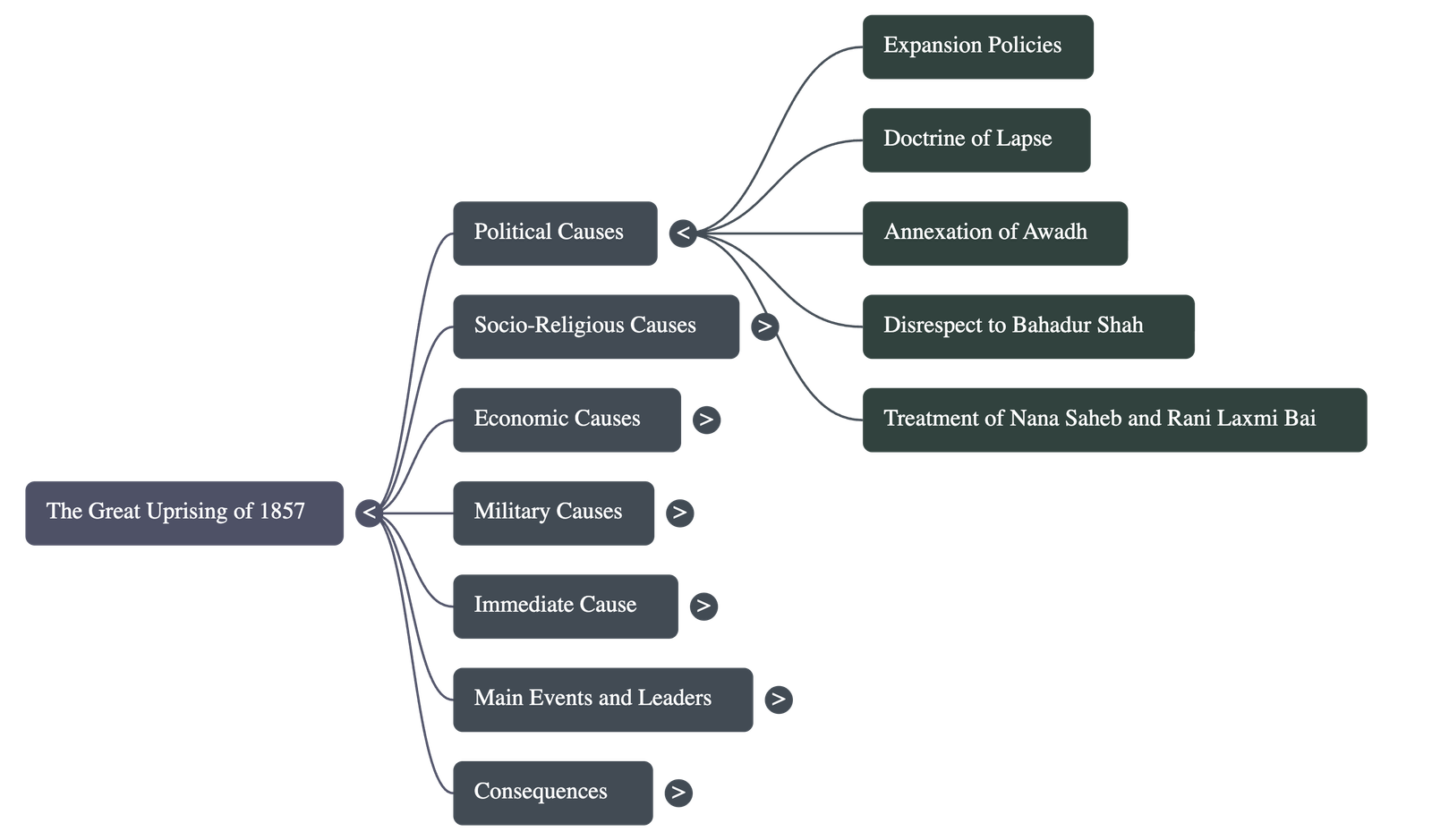
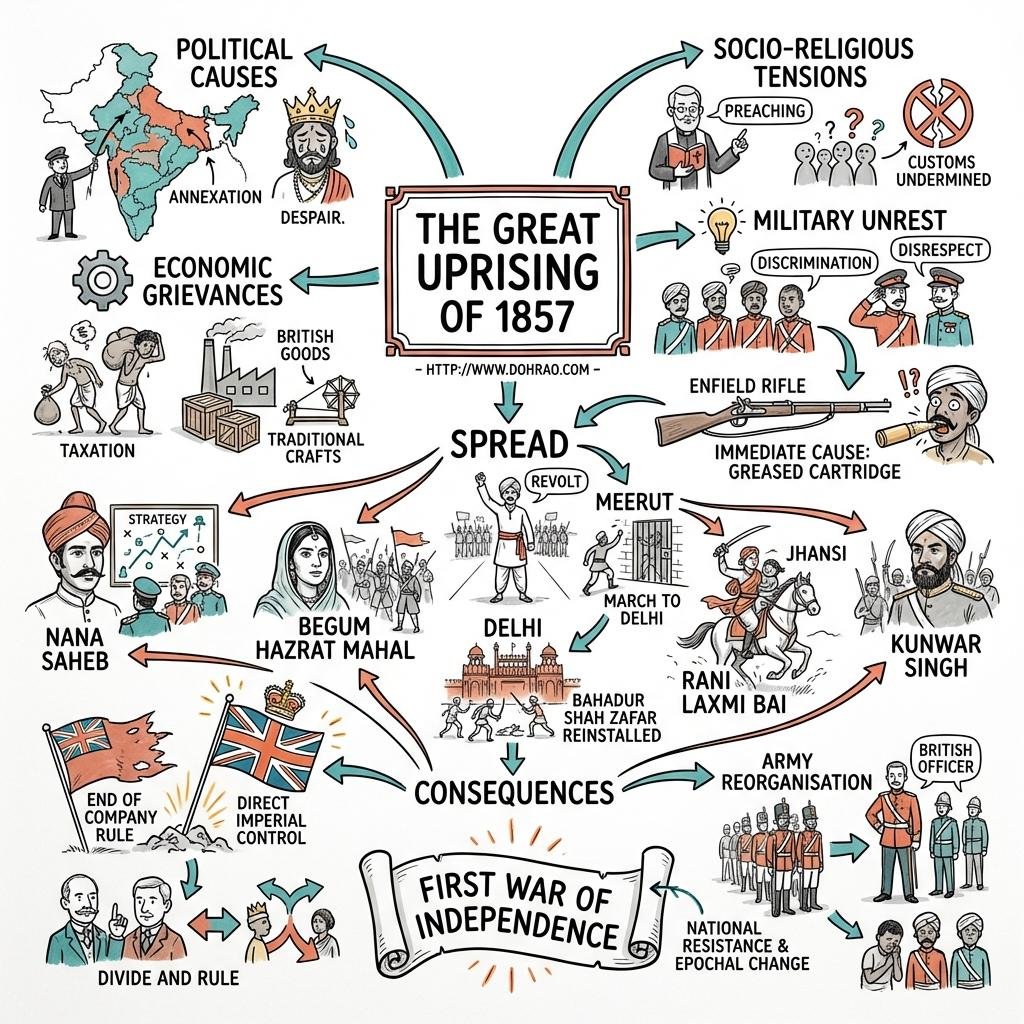
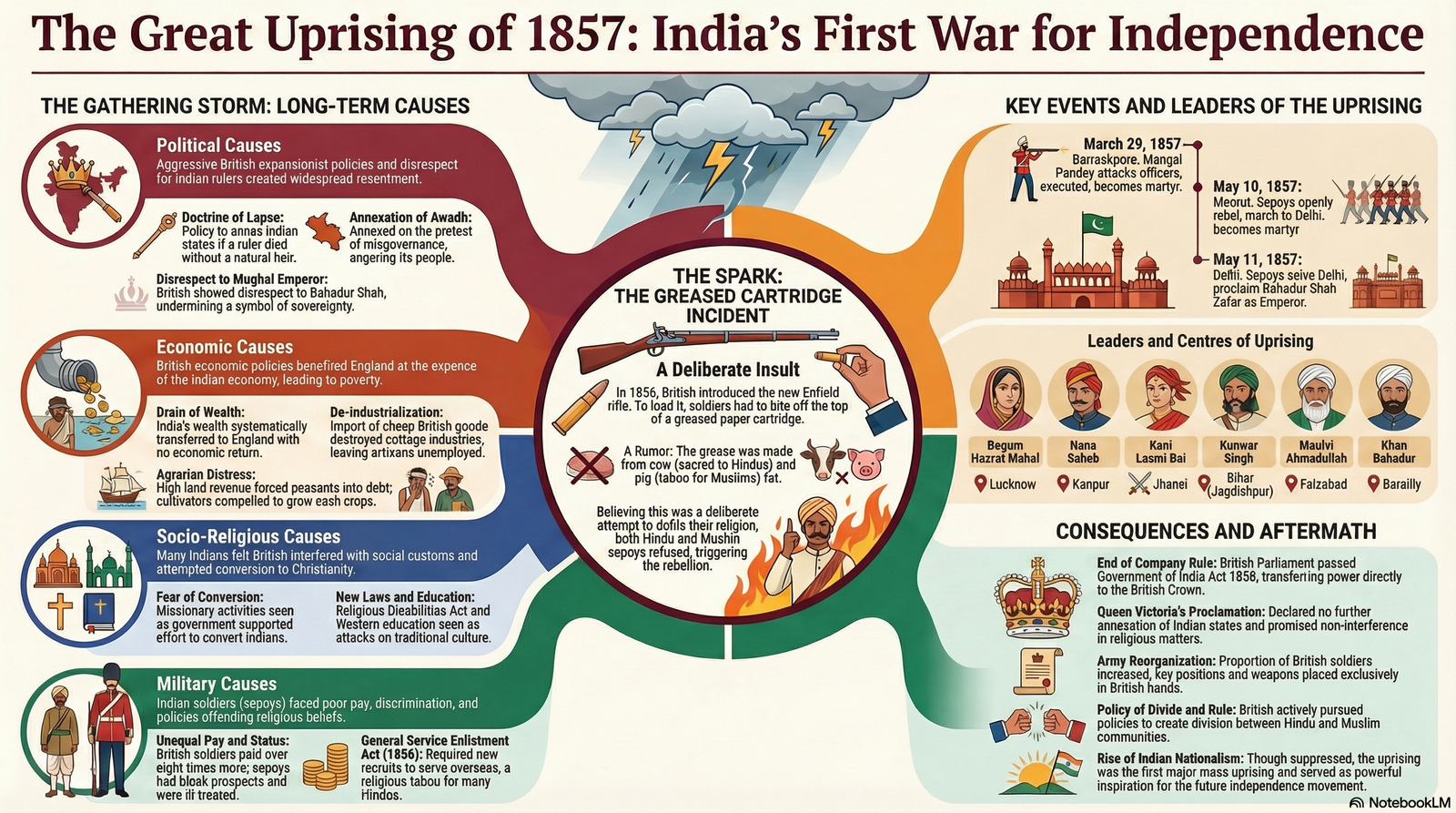
- Political Causes: British expansionist policies, such as the Doctrine of Lapse (where states without a natural heir were annexed) and the annexation of Awadh, created deep resentment among Indian rulers. Disrespect shown to the Mughal Emperor Bahadur Shah and the treatment of leaders like Nana Saheb also contributed to the unrest.
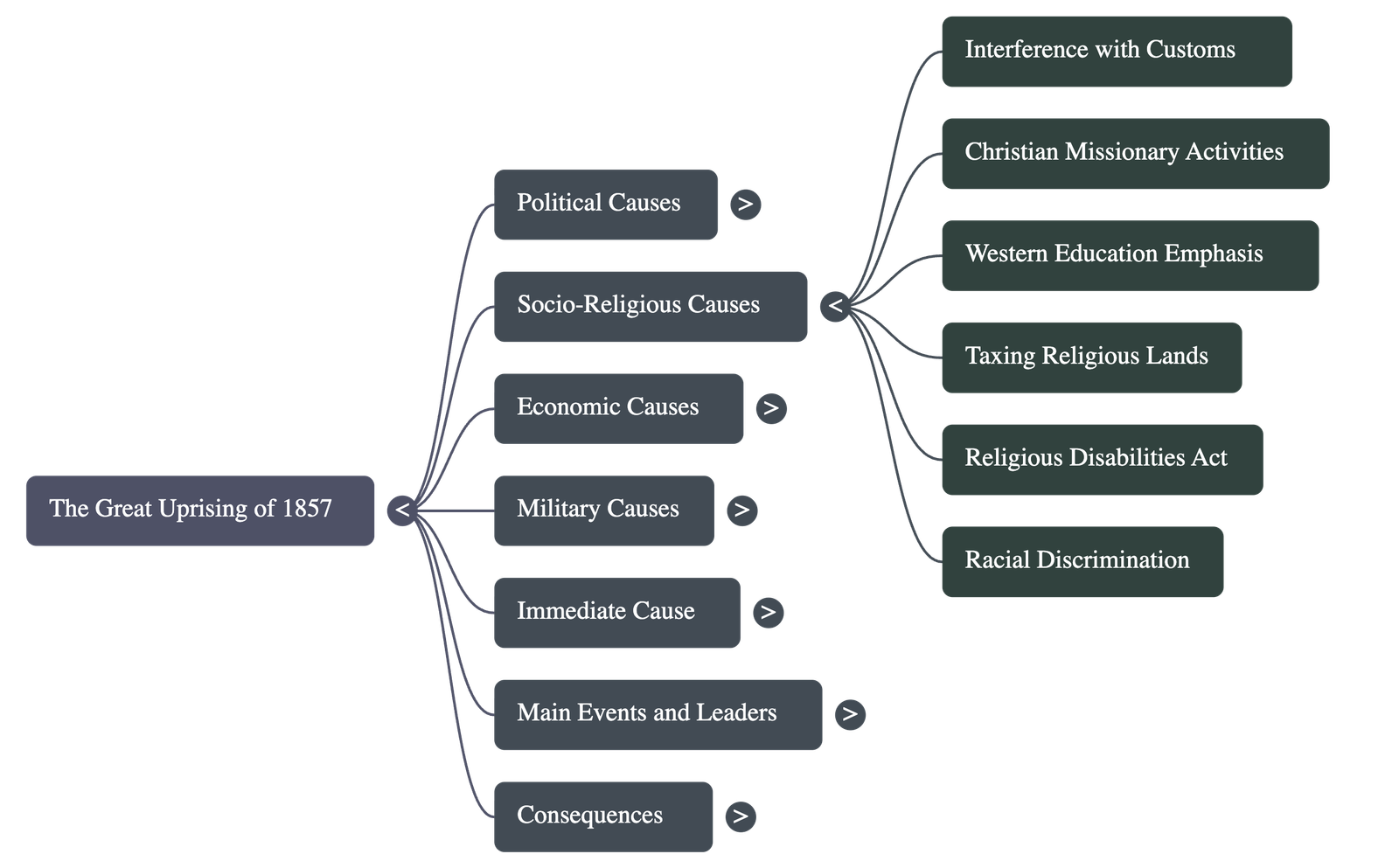
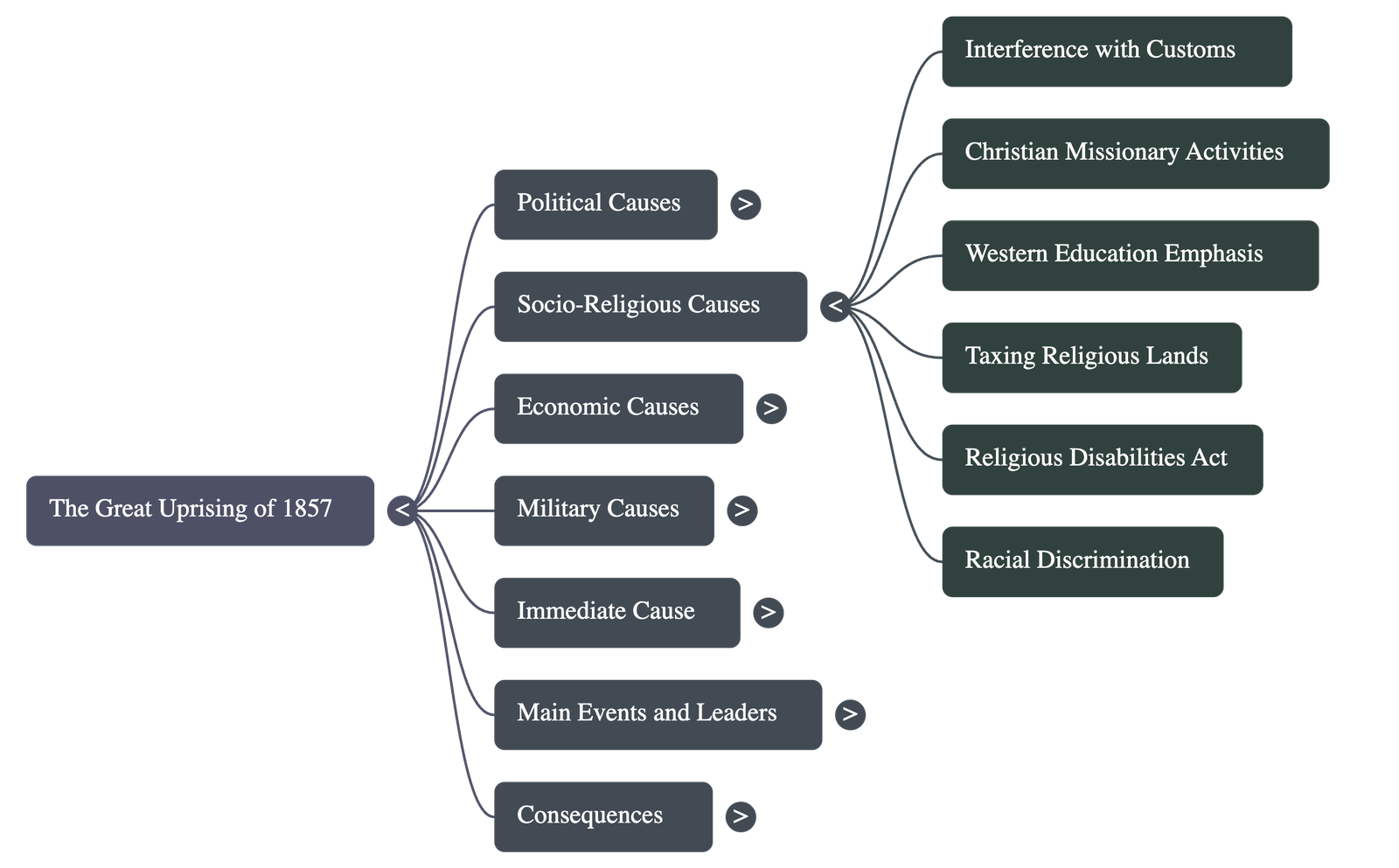
- Socio-Religious Causes: The British introduced Western education, which was seen as an attempt to discourage traditional Islamic and Hindu studies. Additionally, the Religious Disabilities Act allowed converts to Christianity to inherit ancestral property, which was viewed as an incentive to abandon one's faith. The taxation of lands belonging to temples and mosques further angered the people.
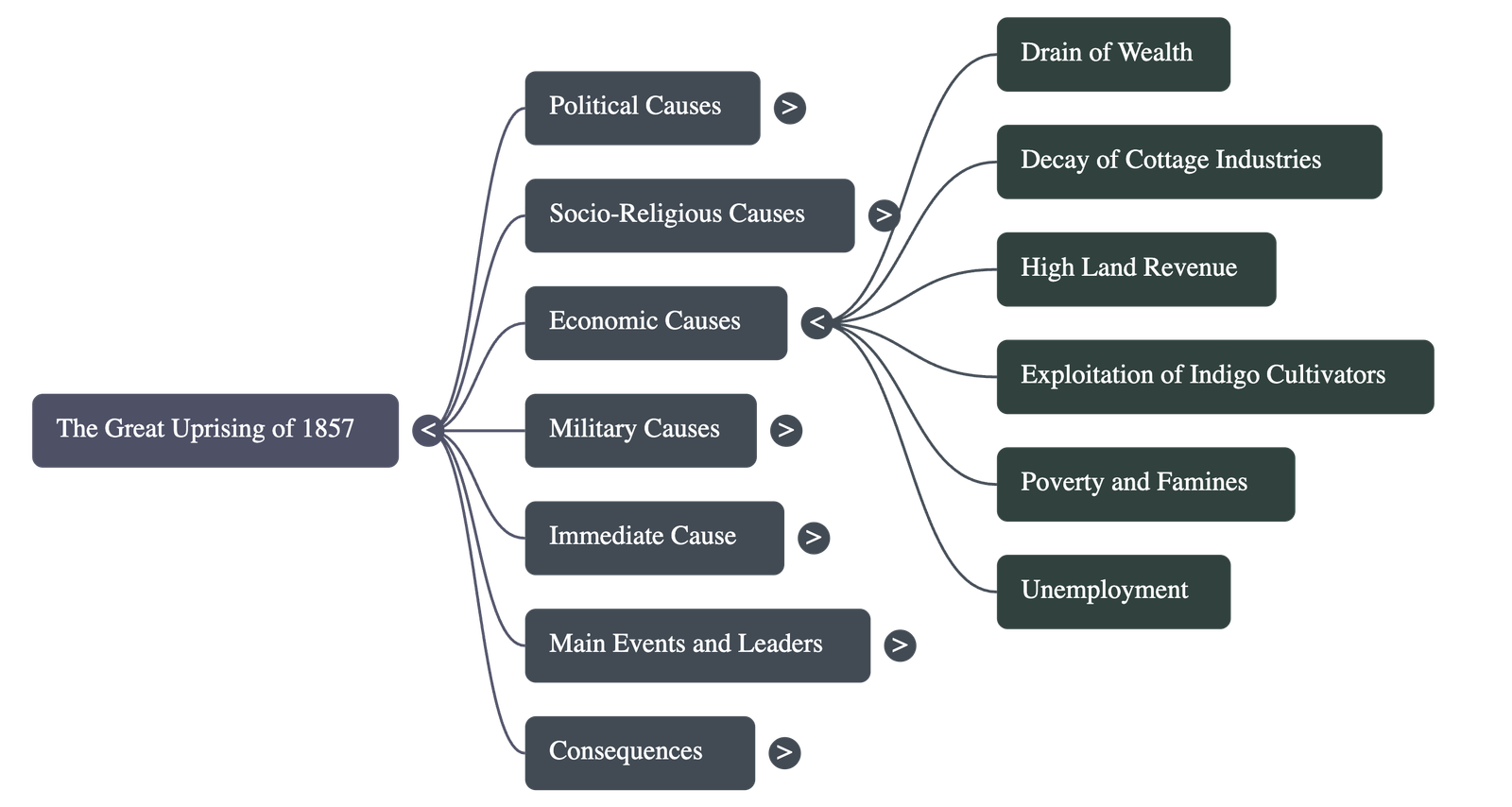
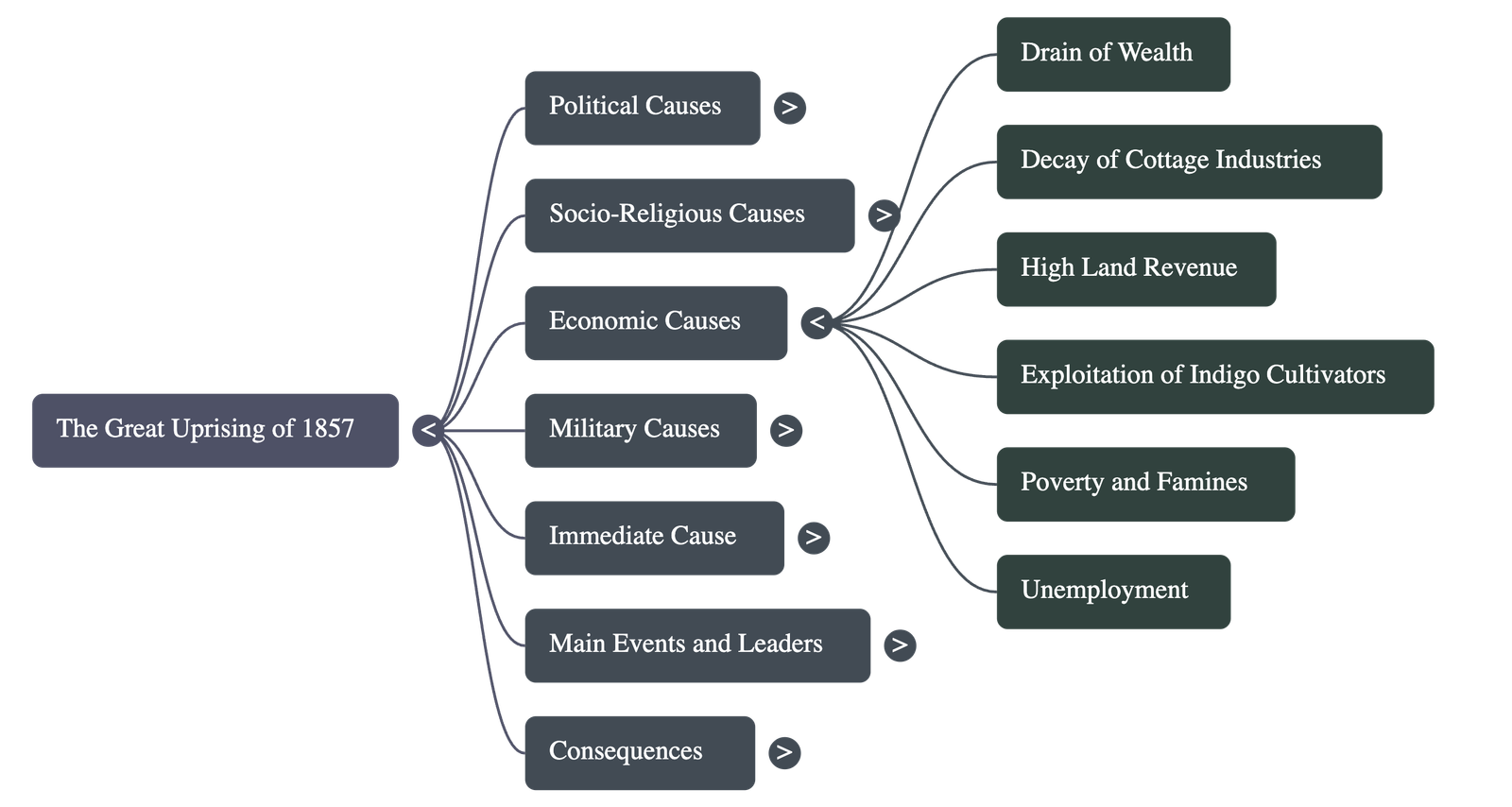
- Economic Causes: India was treated as an economic colony to serve British industries; raw materials like cotton and silk were exported cheaply while ready-made British goods were imported with nominal duties. This led to the Drain of Wealth to England and the ruin of Indian cottage industries and artisans. High land revenue also forced many peasants into debt or off their lands.
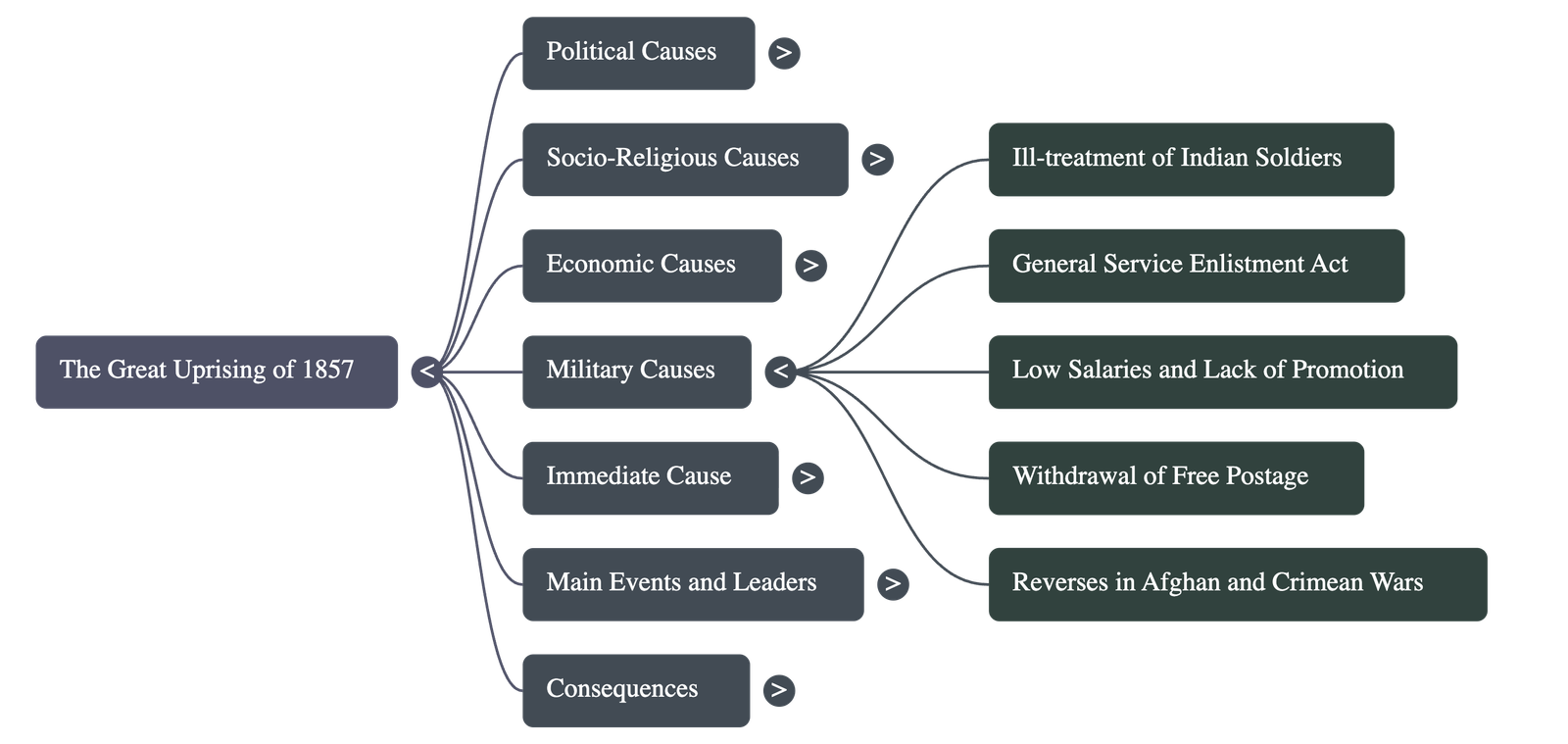
- Military Causes: Indian sepoys were poorly paid, ill-housed, and denied higher positions regardless of performance. The General Service Enlistment Act of 1856, which required sepoys to serve overseas, was seen as a threat to their caste.
2. The Immediate Cause
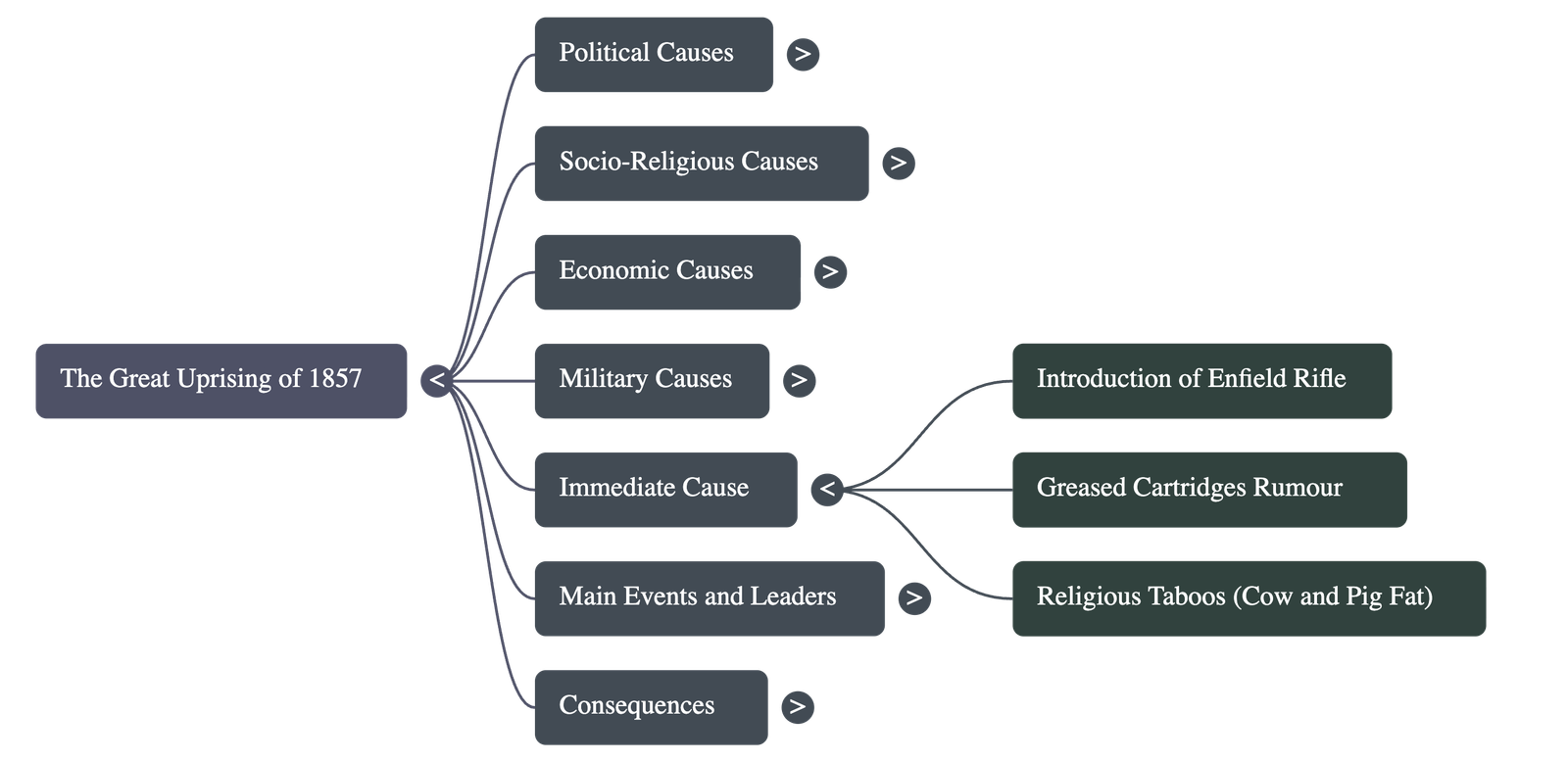
- In 1856, the British introduced the Enfield rifle, which required soldiers to bite off the ends of cartridges rumored to be greased with cow and pig fat.
- Because the cow is sacred to Hindus and the pig is taboo to Muslims, both groups saw this as a deliberate attempt to defile their religions.
3. Spread of the Uprising and Key Leaders
The rebellion spread rapidly across Northern and Central India:
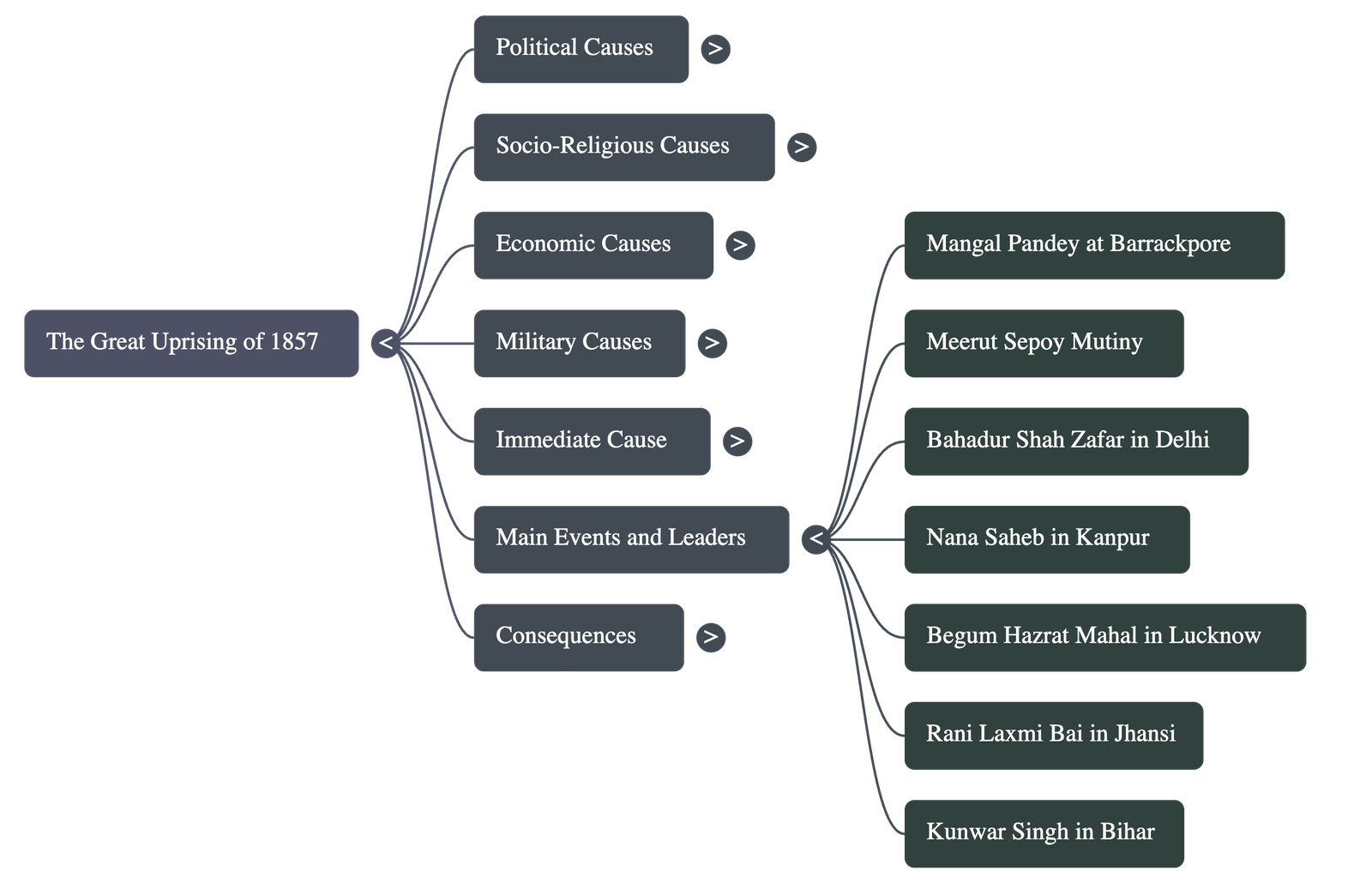
- Barrackpore: Mangal Pandey attacked a British officer on March 29, 1857, becoming a martyr for the cause.
- Delhi: Sepoys from Meerut seized Delhi and proclaimed Bahadur Shah Zafar as the Emperor of India.
- Lucknow: Led by Begum Hazrat Mahal.
- Kanpur: Led by Nana Saheb, supported by his general Tantia Tope.
- Central India: Rani Laxmi Bai of Jhansi fought heroically against British forces led by Sir Hugh Rose.
- Bihar: Led by Kunwar Singh, the zamindar of Jagdishpur.
4. Nature of the War
- While some historians have different views, many, including Vinayak Damodar Savarkar, describe it as the "First War of Independence".
- It is considered the first mass uprising where various sections of Indian society—kings, peasants, and soldiers—united against a common enemy.
5. Consequences of the Uprising
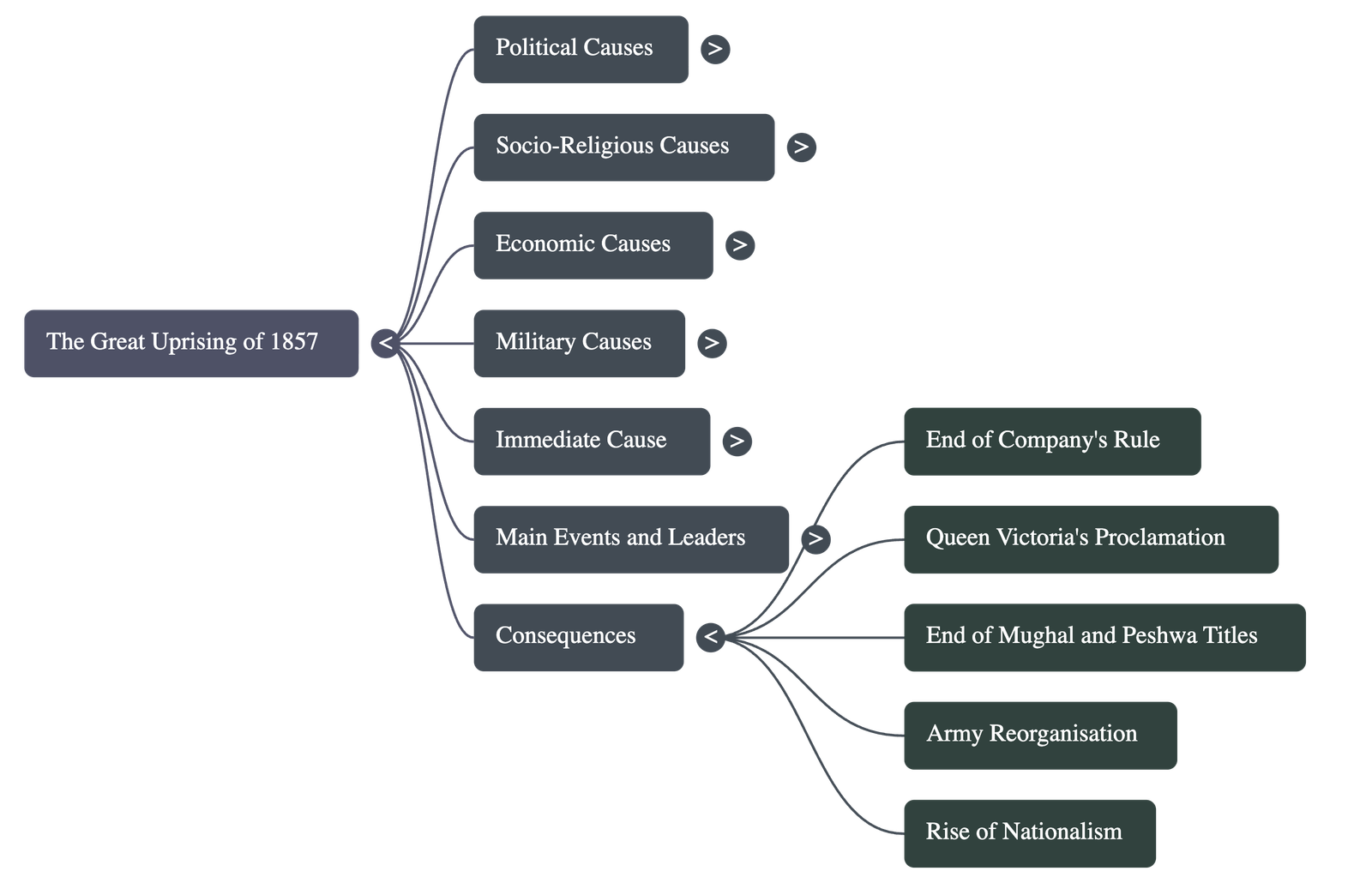
- End of Company Rule: The rule of the East India Company ended, and the British Crown took direct control of India.
- Policy Changes: The British adopted a policy of "Divide and Rule" to prevent Hindus and Muslims from uniting again.
- Military Reorganization: The ratio of European to Indian soldiers was increased, and sophisticated weapons were kept out of Indian hands.
- Rise of Nationalism: The sacrifices of leaders like Rani Laxmi Bai and Mangal Pandey served as a permanent source of inspiration for the later national movement.
Analogy for Understanding: Think of the Uprising as a massive forest fire. The political, economic, and social grievances were the dry timber that had been piling up for decades. The introduction of the greased cartridges was the single spark that set the entire forest ablaze, turning individual frustrations into a collective, uncontrollable fire.
Do checkout all questions & answers of this chapter.