Quick Navigation:
| | | | |
Quick Navigation:
| | | | |
British Policies and their Impact
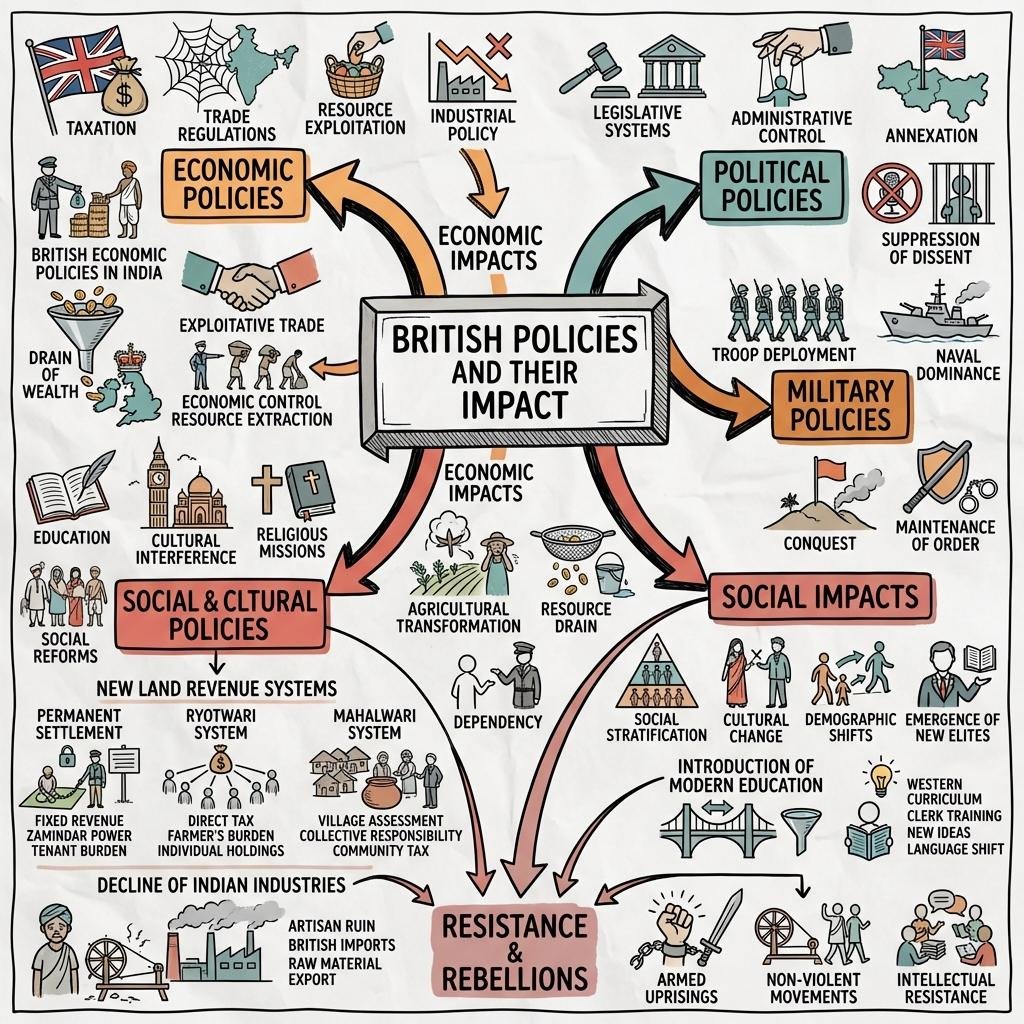
Based on the sources provided, here is a point-wise summary of the chapter regarding British policies and their impact on India:
- Core British Economic Objectives: The primary aim of British policies was to serve their own economic interests by securing cheap raw materials for industries in England and expanding the Indian market for their manufactured goods.
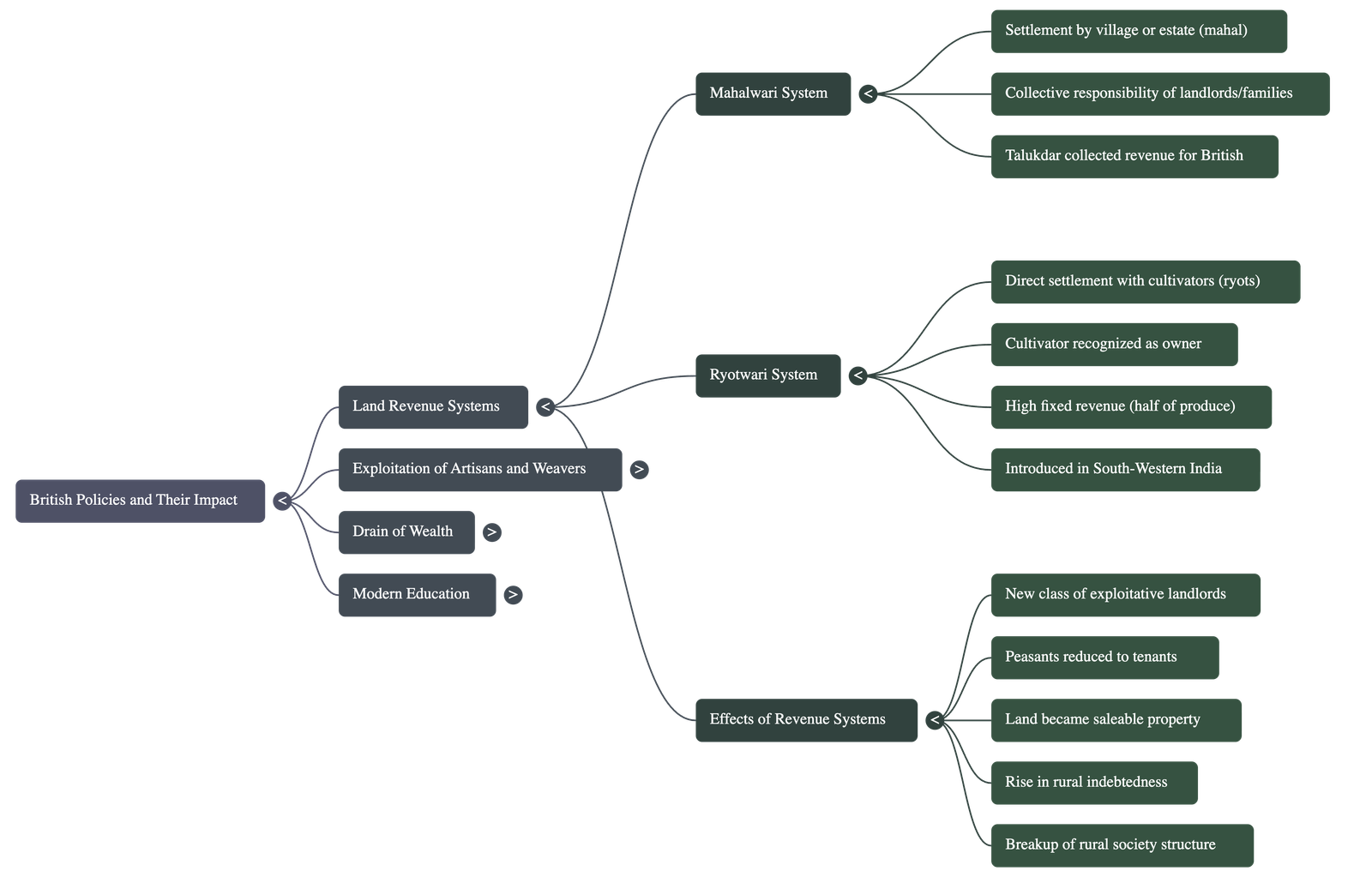
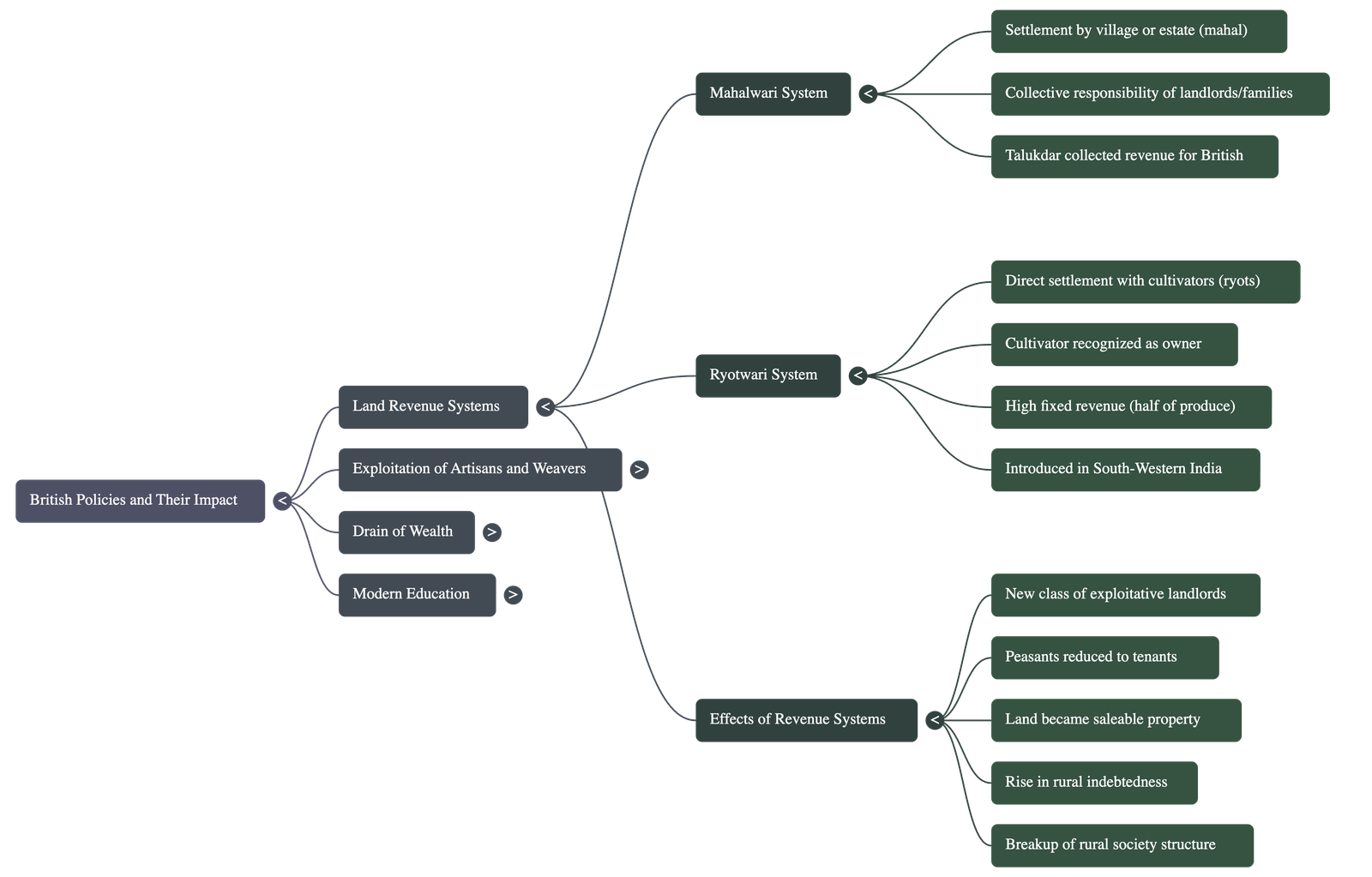
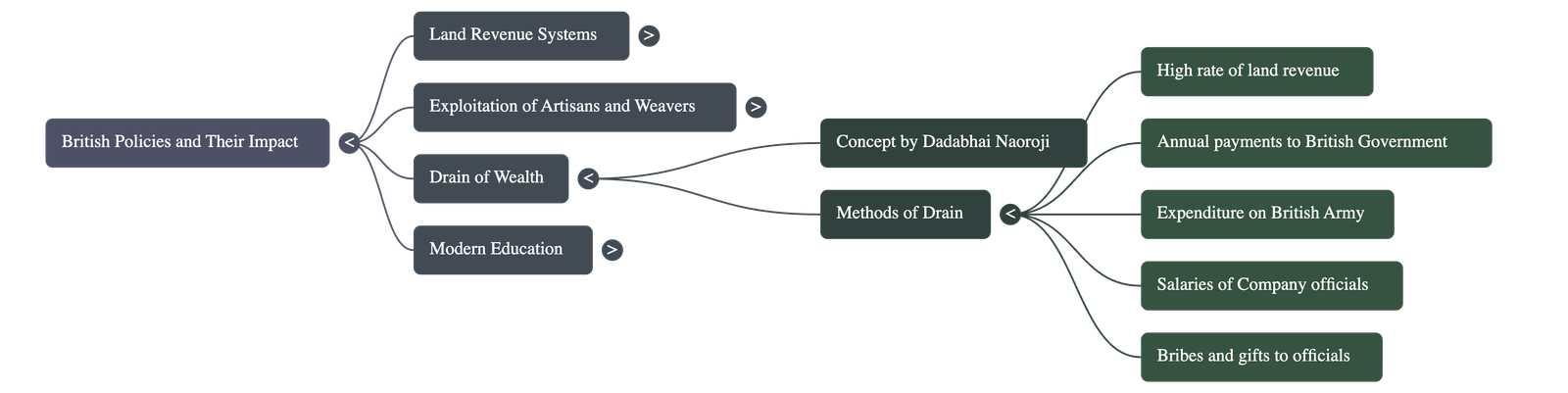
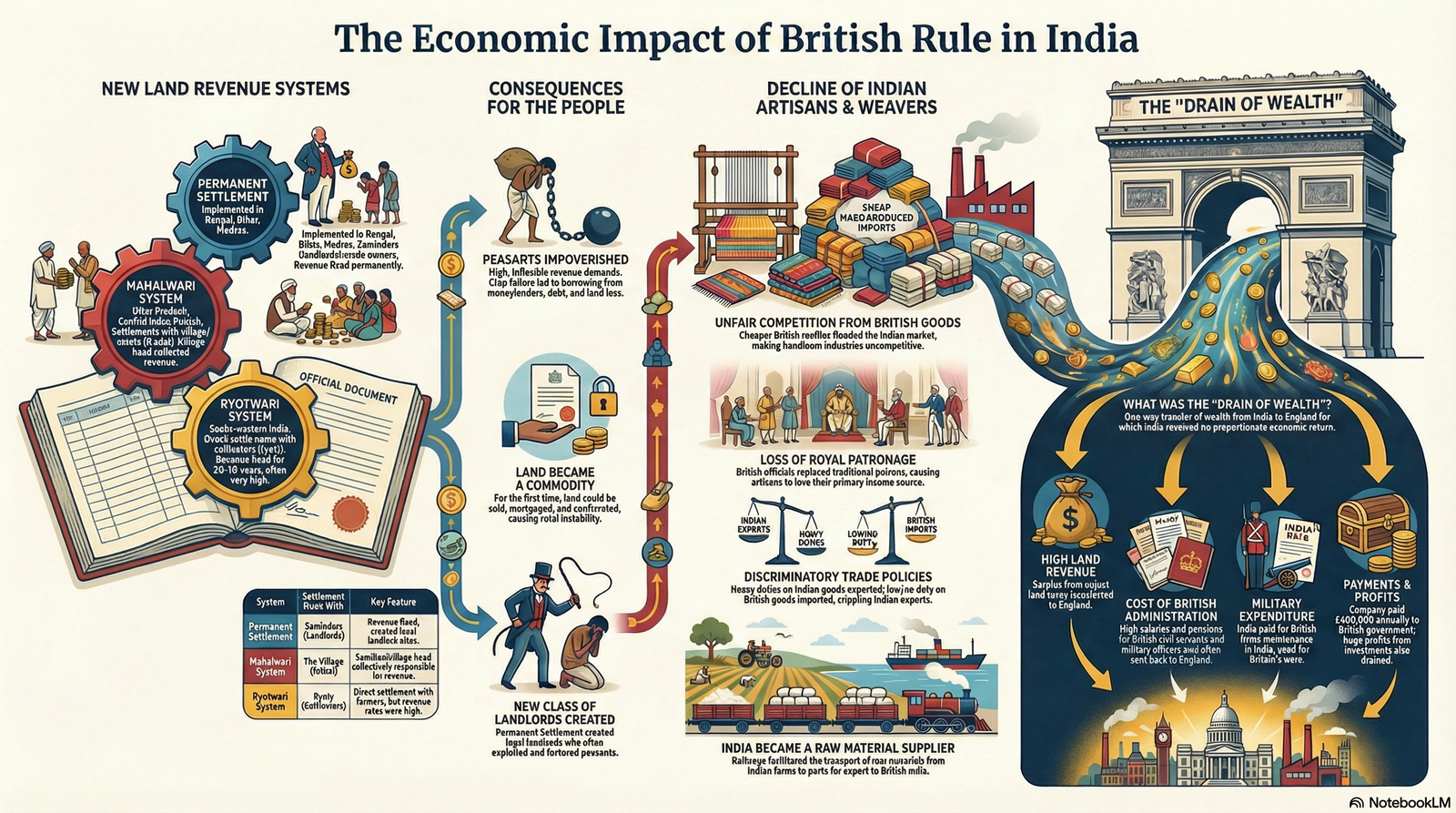
- Land Revenue Systems: The British introduced several systems to extract maximum revenue from the peasantry:
- Mahalwari System: Revenue settlements were made village by village or through an estate (mahal). The head of the mahal collected revenue and passed it to British collectors.
- Ryotwari System: The government made direct settlements with the cultivators (ryots), recognizing them as owners. However, the revenue was fixed very high (amounting to half the total produce) and the collectors were often harsh.
- Impact on Rural Society: These systems transformed land into a saleable and mortgageable commodity, created a new class of exploitative landlords, and led to the widespread impoverishment of peasants and the breakdown of traditional rural society.
- Decline of Indian Handicrafts: Indian artisans and weavers, who had been self-sufficient for generations, faced exploitation and decline under British rule. This was caused by:
- Competition with cheaper, machine-made British cloth.
- The loss of patronage from Indian princes and nobles.
- High duties placed on Indian exports while British imports entered India with no duty.
- The development of railways, which made it easier to transport cheap British goods into the Indian interior and export raw materials out of India.
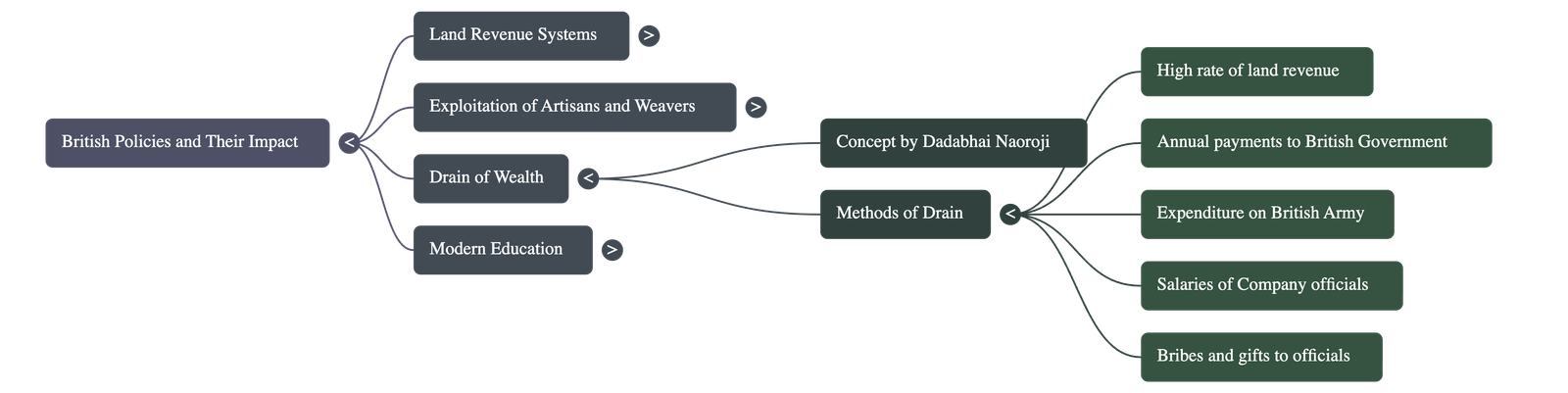
- The Drain of Wealth: This concept, exposed by Dadabhai Naoroji in his book Poverty and un-British Rule in India, describes the transfer of India's wealth to England without any proportionate return. Wealth was drained through:
- High land revenue and annual payments to the British government.
- Large sums spent on the British Army and the high salaries of civil servants.
- Bribes and gifts collected by Company officials.
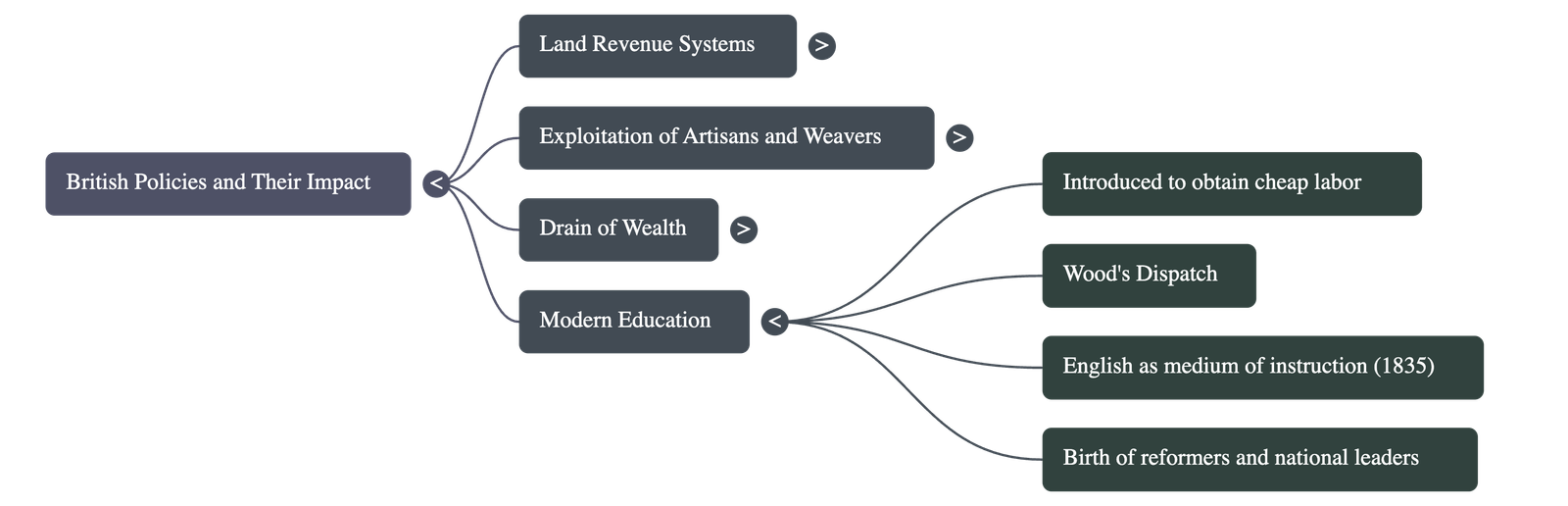
- Introduction of Modern Education: The British introduced modern western education, largely to obtain cheap labor (clerks) for their administrative operations.
- Wood’s Dispatch gave impetus to this system, and in 1835, English was made the medium of instruction.
- Impact: While intended to serve British interests, this education also gave rise to great reformers and leaders who used it to revive India’s cultural past and guide the nation.
To understand the economic impact of these policies, you might think of India during this period as a reservoir. The British built a series of "pipes" (revenue systems and trade policies) designed to pump the water out of the reservoir to their own fields in England, while simultaneously blocking the natural springs (local artisans) that used to keep the reservoir full.
Do checkout all questions & answers of this chapter.
Quick Navigation:
| | | | |
1 / 1
Quick Navigation:
| | | | |