Quick Navigation:
| | | | |
Quick Navigation:
| | | | |
Pointwise summary of Chapter 2: The Union Executive.
1. The Composition of the Union Executive
- The Union Executive is the branch of government responsible for implementing laws made by the Legislature.
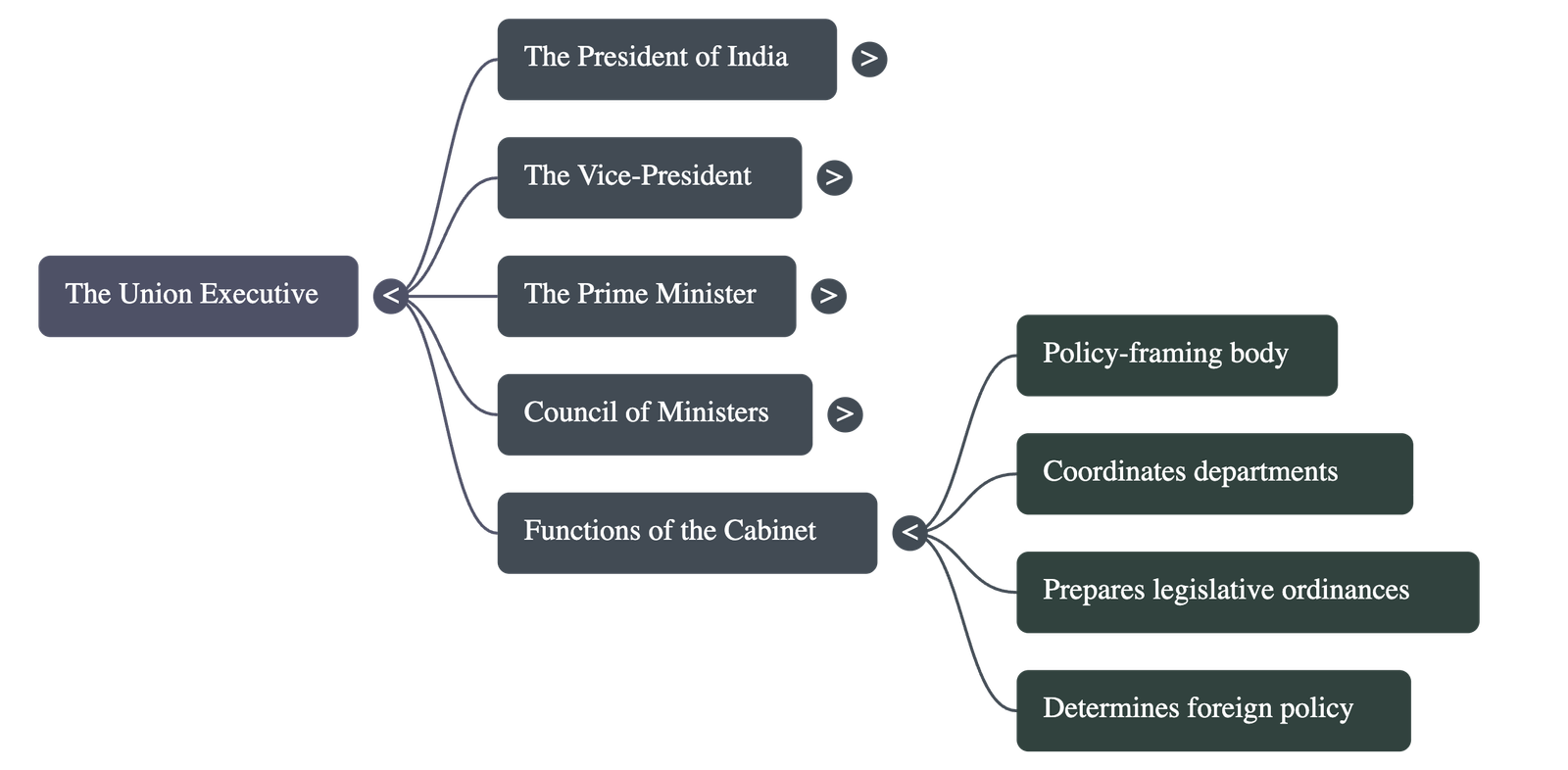
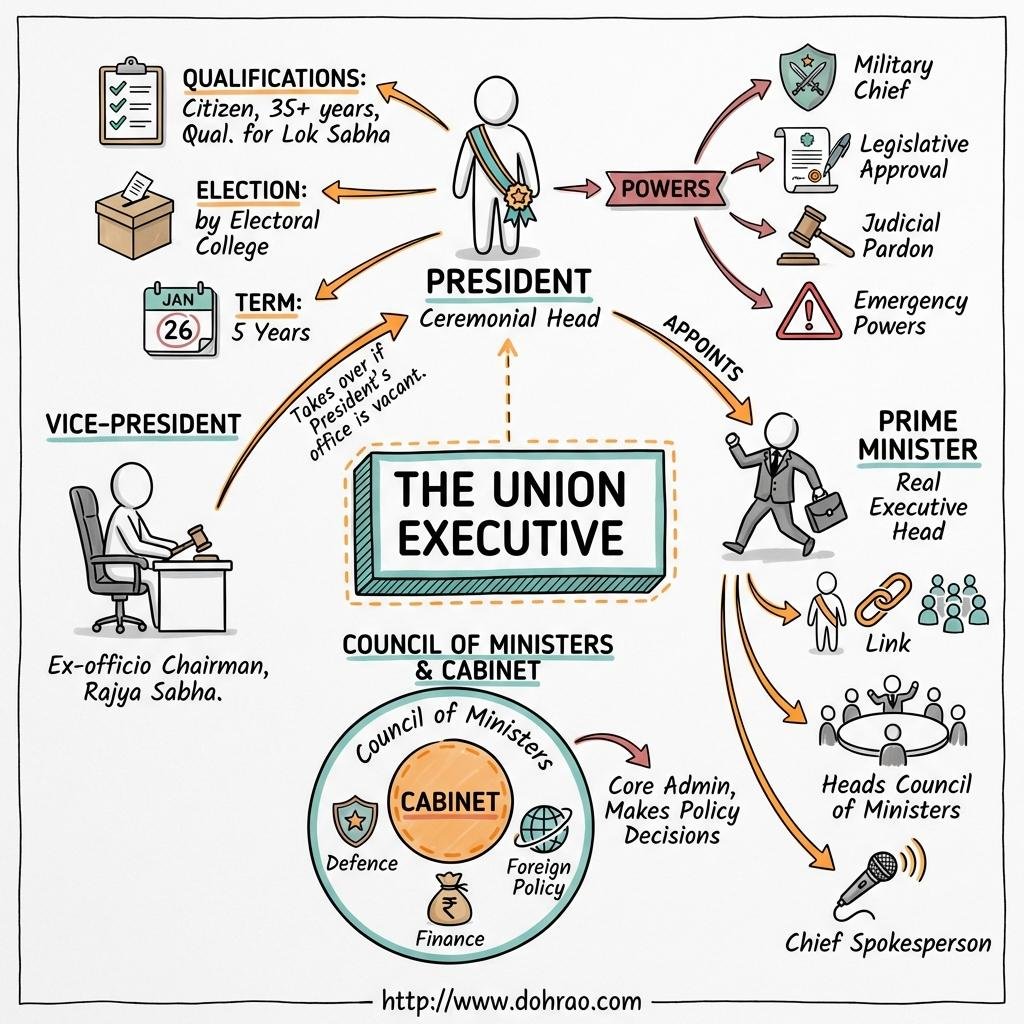
- It consists of the President, the Vice-President, the Prime Minister, and the Council of Ministers.
2. The President of India (Head of State)
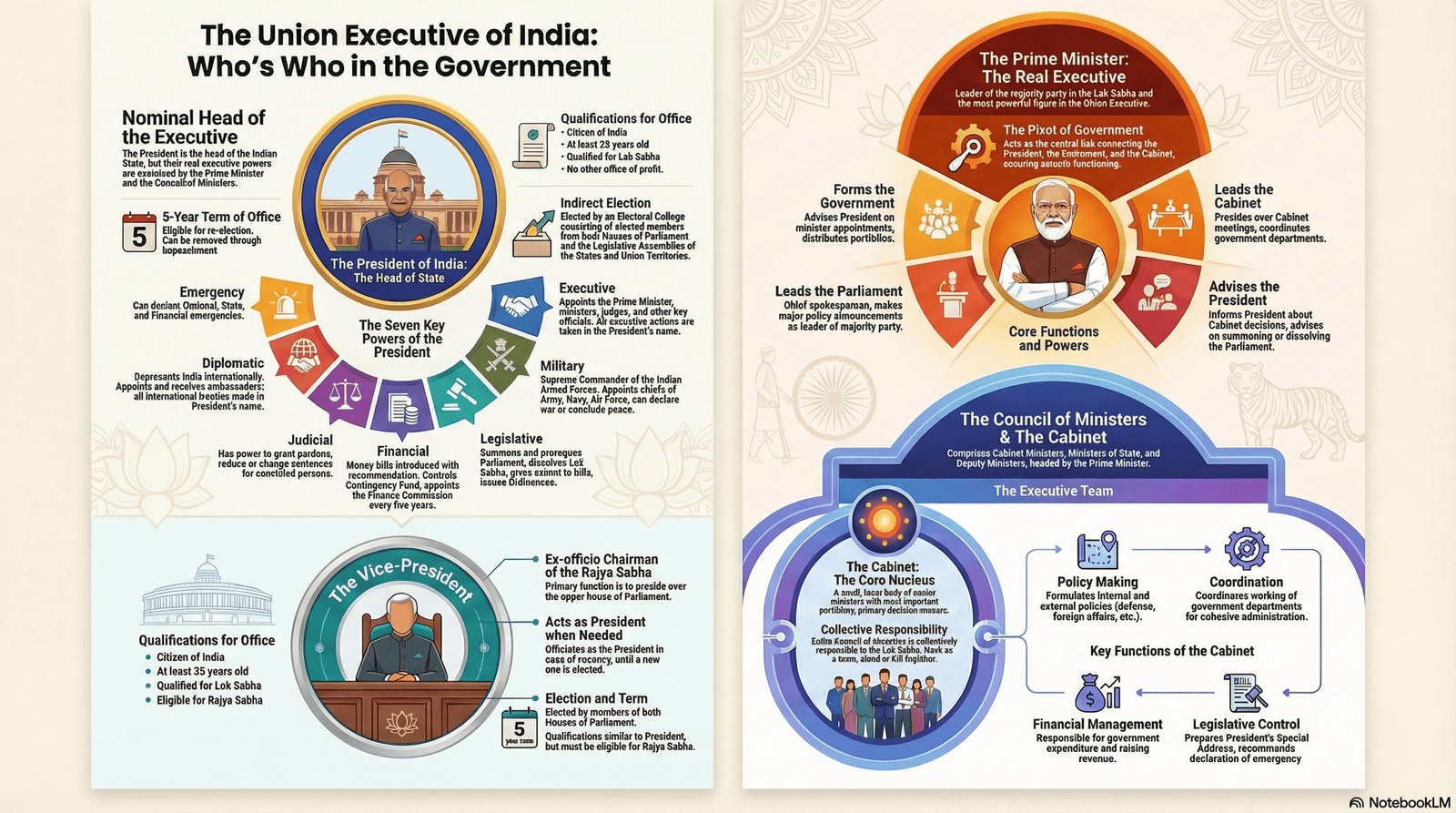
- The President is the nominal head of the State, while real executive powers are exercised by the Prime Minister.
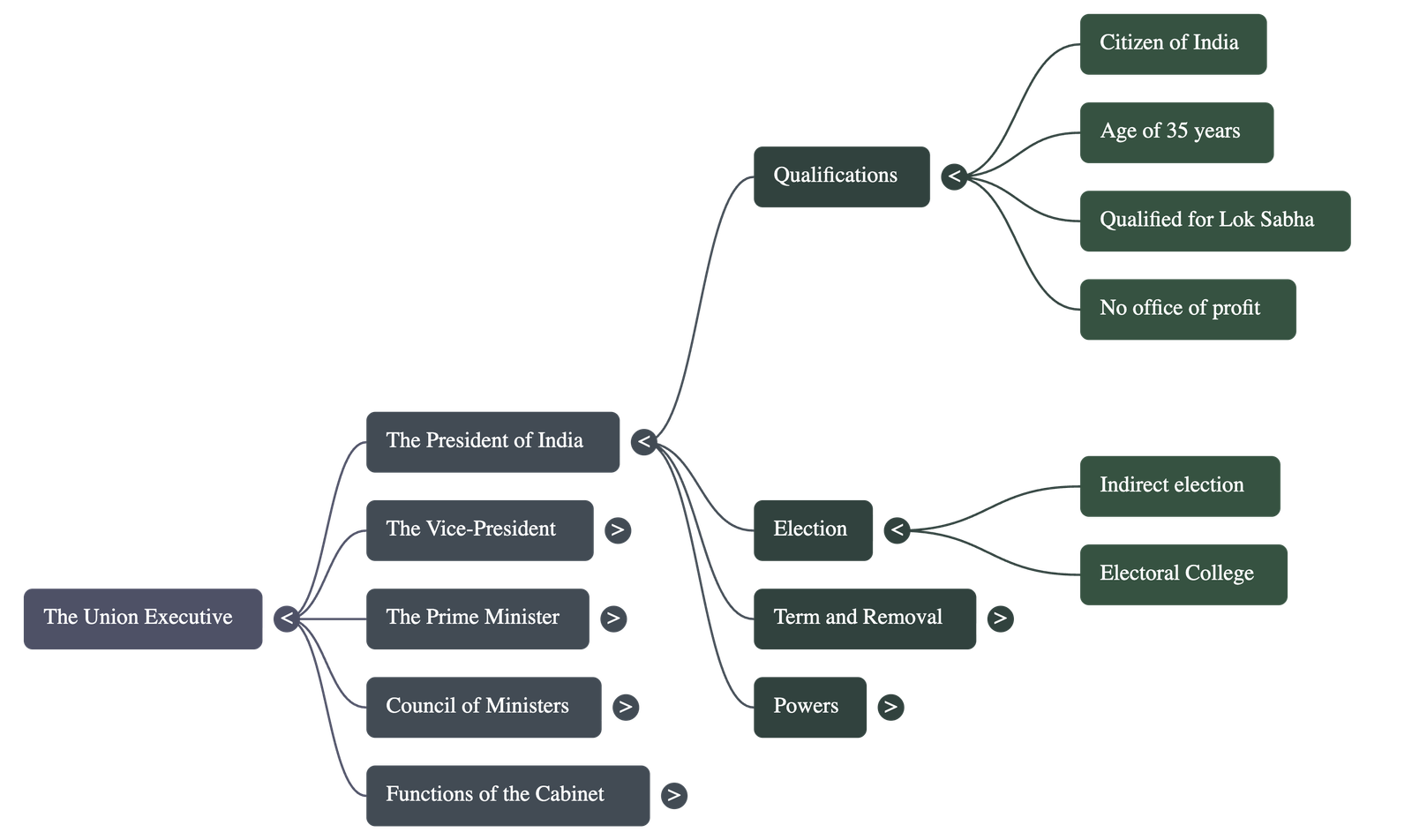
- Qualifications: To be President, one must be a citizen of India, at least 35 years old, qualified to be a member of the Lok Sabha, and hold no office of profit under the government.
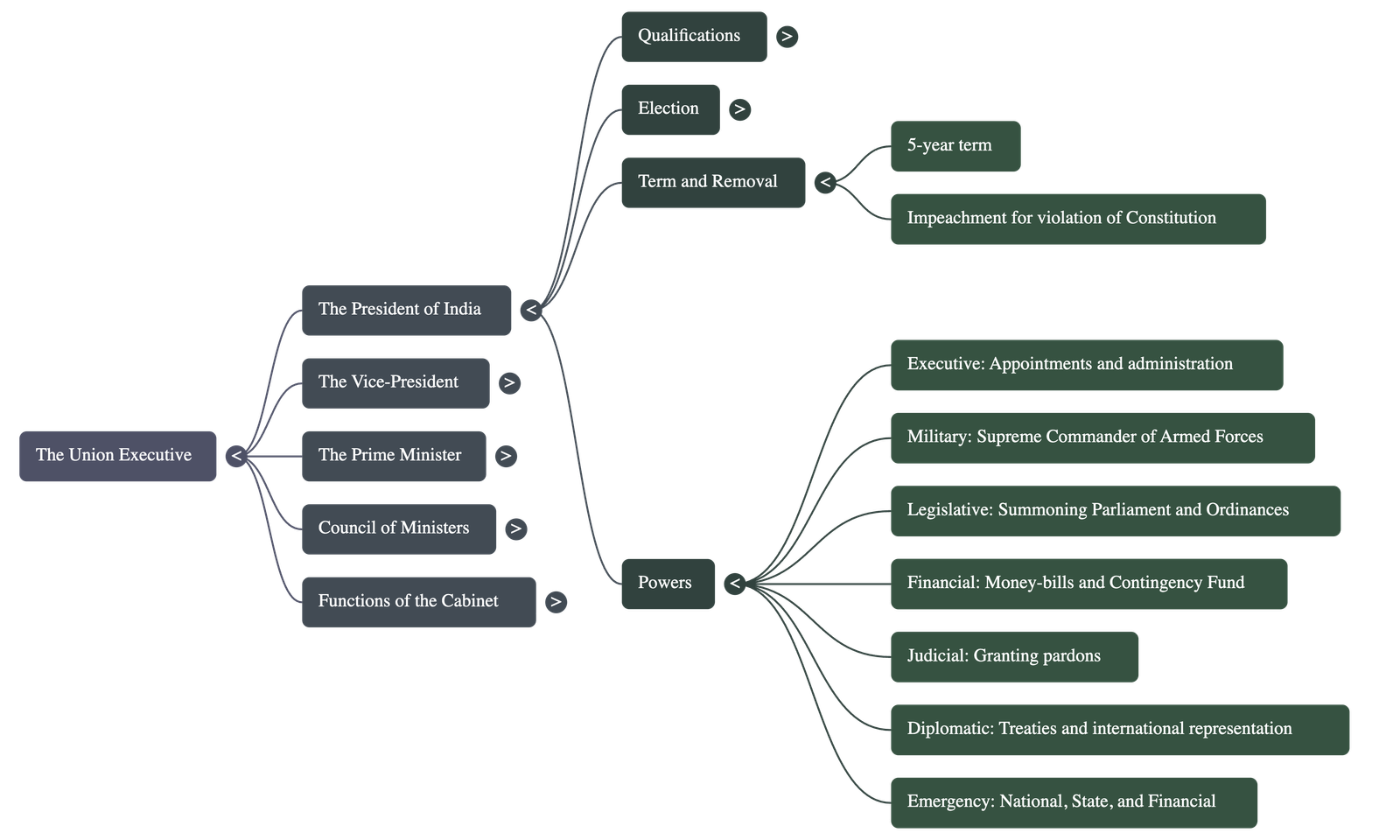
- Election and Term: The President is indirectly elected for a five-year term by an Electoral College consisting of elected members of both Houses of Parliament and State Legislative Assemblies.
- Removal: The President can be removed through a process called impeachment for violating the Constitution.
3. Powers of the President
- Executive: Appoints the Prime Minister, other ministers, the Attorney-General, Governors, and judges of the Supreme and High Courts.
- Military: Acts as the Chief Commander of the Armed Forces and has the power to declare war and make peace.
- Legislative: Summons and prorogues Parliament, addresses joint sessions, and must give assent to bills before they become law. The President can also issue Ordinances when Parliament is not in session.
- Financial: Money bills can only be introduced on the President's recommendation.
- Judicial: Has the power to grant pardons or reduce punishments.
- Emergency: Can declare three types of emergencies: National Emergency (security threat), State Emergency (breakdown of constitutional machinery), and Financial Emergency.
4. The Vice-President
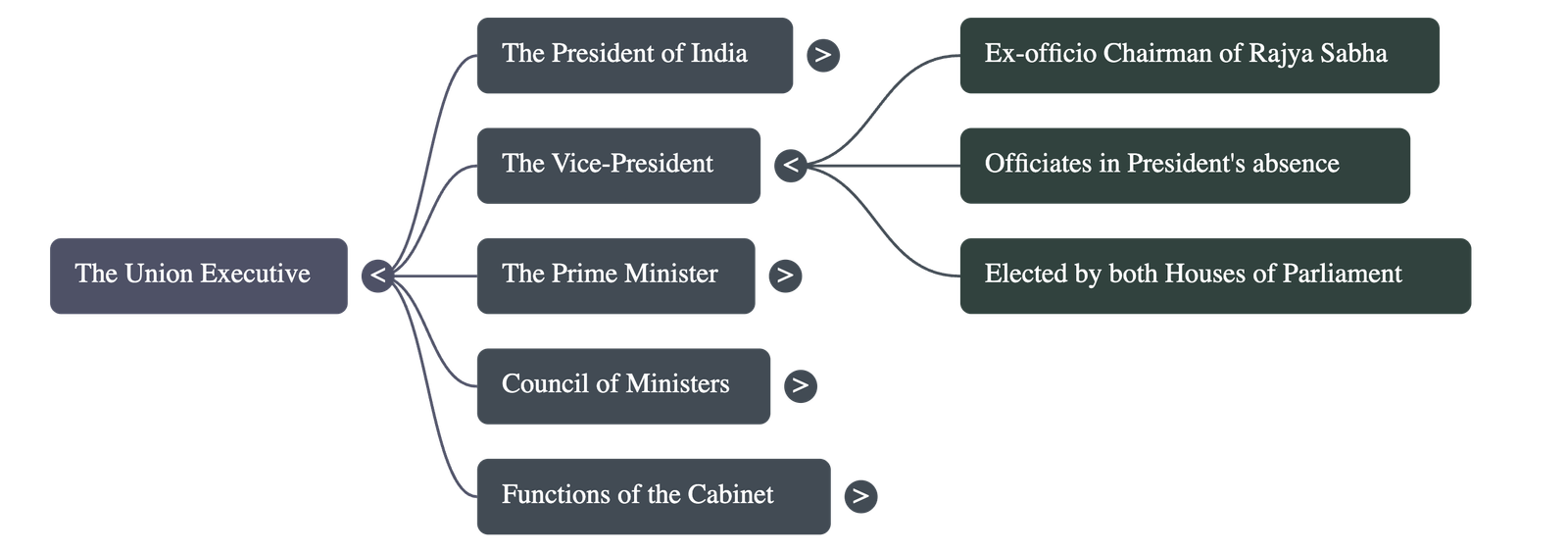
- The Vice-President is elected by members of both Houses of Parliament.
- The primary role is serving as the ex-officio Chairman of the Rajya Sabha.
- The Vice-President officiates as President in the event of the President's death, resignation, or removal.
5. The Prime Minister (The Real Executive)
- The Prime Minister is the leader of the majority party in the Lok Sabha and the real executive head of the country.
- Key Functions:
- Acts as the link between the President and the Council of Ministers.
- Advises the President on the appointment of other ministers and distributes portfolios.
- Presides over Cabinet meetings and is the chief spokesperson of the government in Parliament.
- Represents India at international conferences.
6. The Council of Ministers and the Cabinet
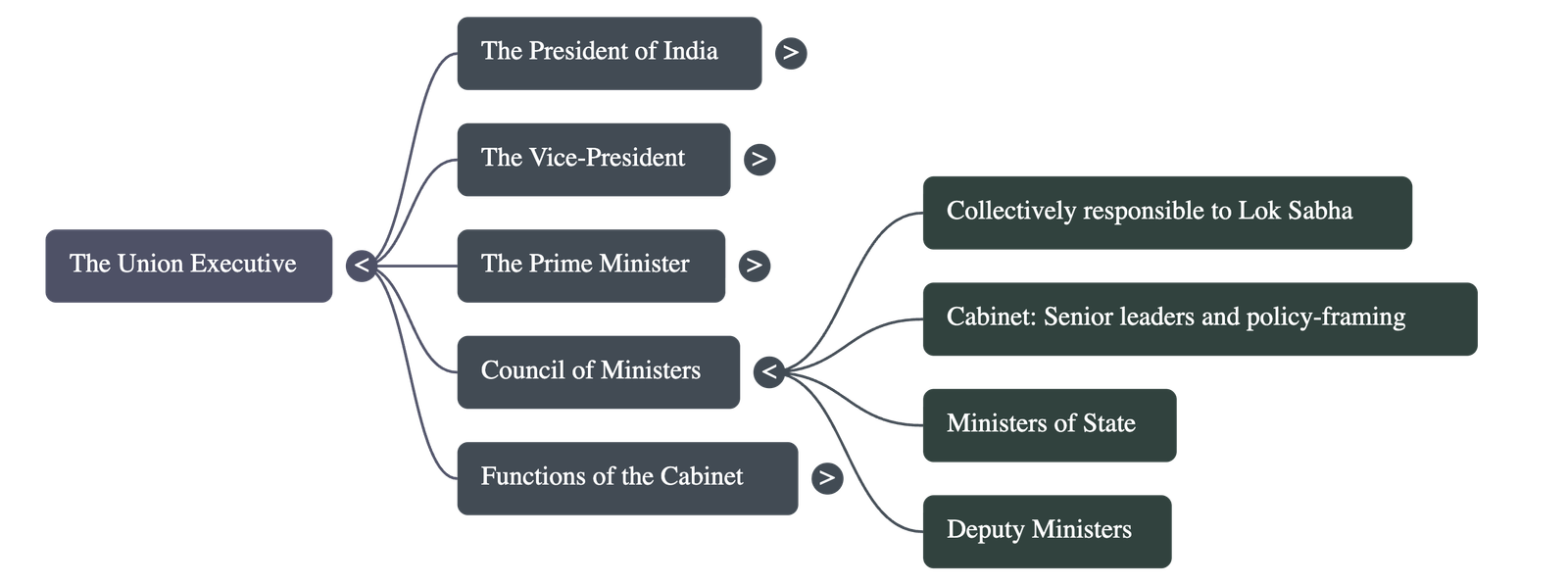
- The Council of Ministers consists of Cabinet Ministers, Ministers of State, and Deputy Ministers.
- The Cabinet is a small, trusted group of senior ministers who form the nucleus of the administration and decide major government policies.
- The Council of Ministers is collectively responsible to the Lok Sabha.
- Functions of the Cabinet include framing policies, coordinating various departments, and advising the President on issuing Ordinances or declaring emergencies.
Analogy: To understand the Union Executive, think of a large ocean liner. The President is like the owner of the ship; the vessel is registered in their name, and all official documents carry their seal. However, the Prime Minister is the Captain who actually steers the ship, makes the day-to-day decisions, and manages the crew (the Council of Ministers) to ensure the journey is successful.
Do checkout all questions & answers of this chapter.
Quick Navigation:
| | | | |
1 / 1
Quick Navigation:
| | | | |