The Growth of Nationalism
The following is a point-wise summary of the chapter on the growth of nationalism, the French Revolution, and the Napoleonic era:
1. Causes of the French Revolution
The revolution was triggered by a combination of social, economic, and intellectual factors:
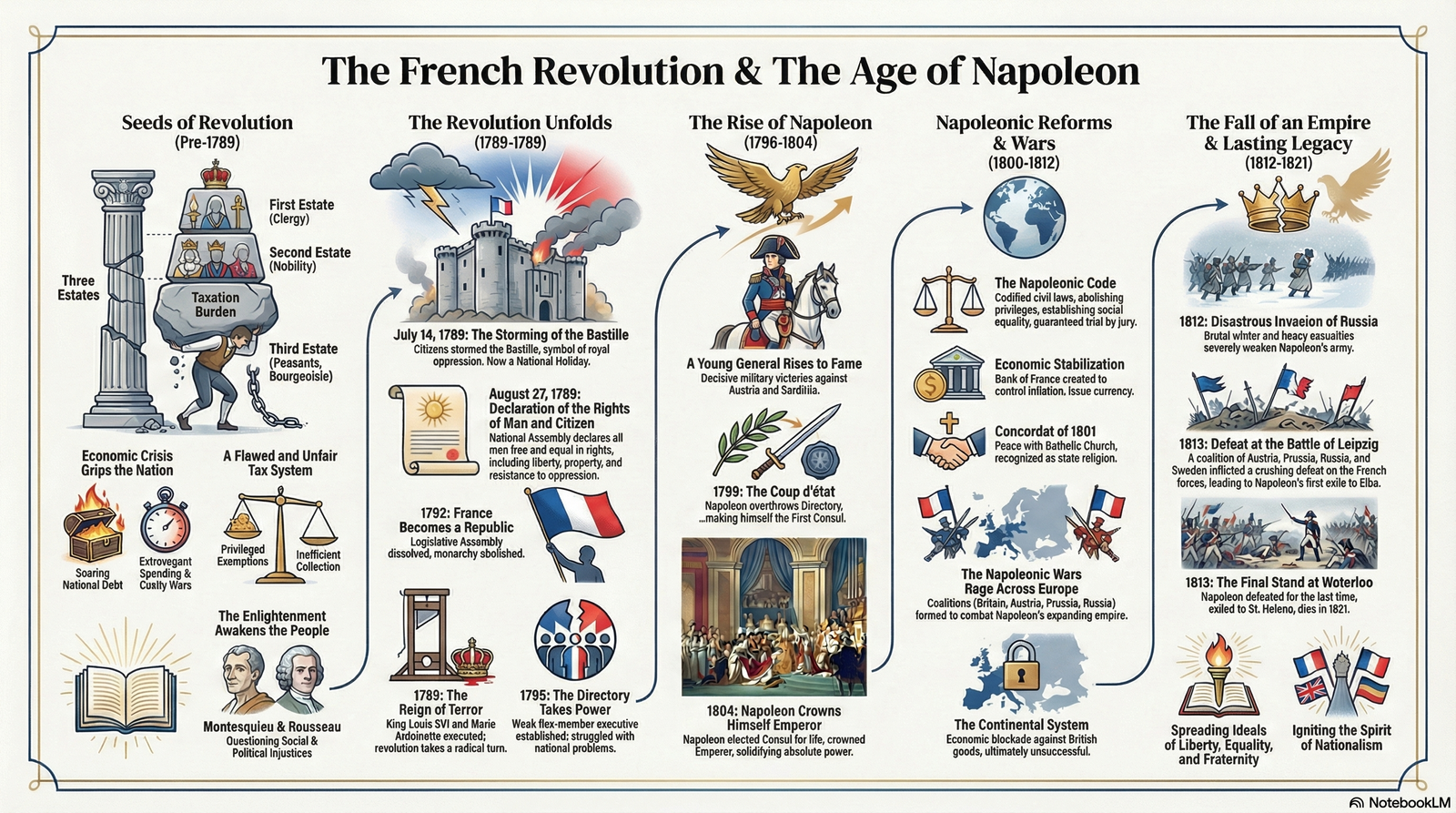
- Social Inequality: French society was divided into three estates. The first two (Clergy and Nobility) were privileged and exempt from taxes, while the Third Estate (peasants and the middle-class bourgeoisie) bore the entire tax burden and suffered from exploitation.
- Economic Crisis: The royal treasury was depleted due to the extravagant lifestyles of the ruling class and the massive national debt incurred from participating in various wars, such as the Seven Years' War and the American War of Independence.
- Faulty Taxation: The taxation system was disorganized and corrupt; the wealthy were exempt, while contractors who collected taxes from the poor often misappropriated funds for their own benefit.
- Role of Intellectuals: Thinkers like Montesquieu, Rousseau, and Diderot used their writings to expose social abuses and inequality, inspiring the French people to seek reform and independent thinking.
2. Major Events of the Revolution
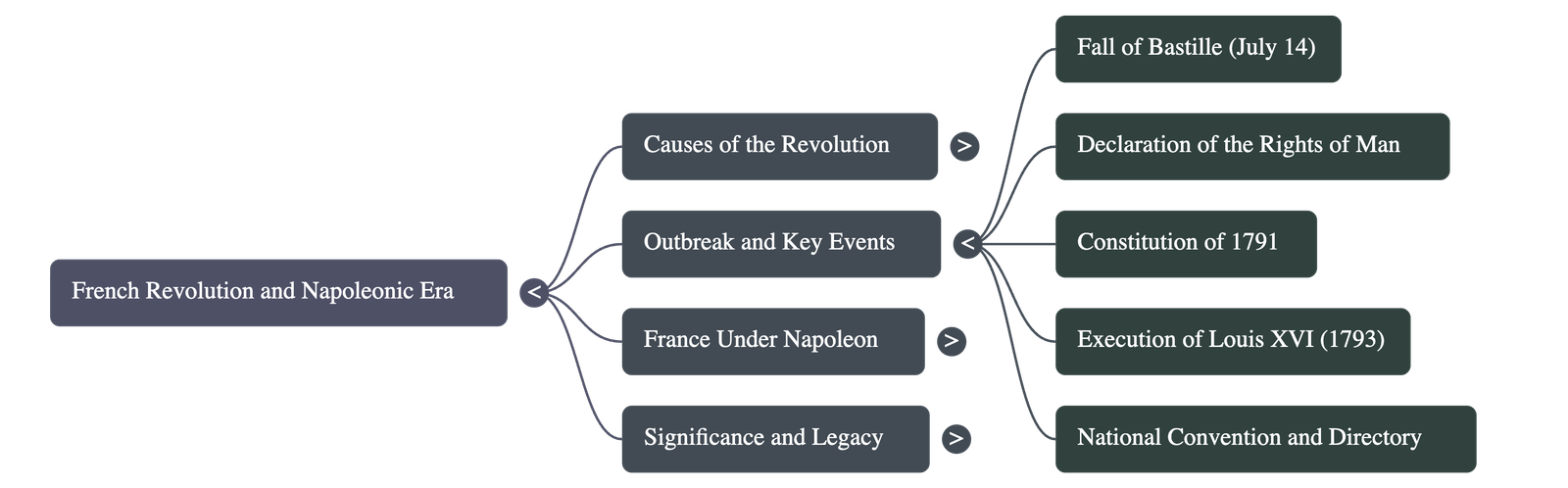
- The Fall of the Bastille (July 14, 1789): A turning point where a crowd captured the state prison, symbolizing the end of oppression and the victory of the people over the monarchy.
- Declaration of the Rights of Man and Citizen: Issued in August 1789, it proclaimed that all men are born free and equal in rights, including liberty, property, and security.
- The Constitution of 1791: France was converted into a limited monarchy, the National Legislative Assembly was established, and the Church was nationalized.
- The First Republic: In 1792, the monarchy was abolished, and a republican government was established under the National Convention. King Louis XVI and Marie Antoinette were later executed for treason.
3. The Rise of Napoleon Bonaparte
- Napoleon rose from a lieutenant in the army to a leader after defending the National Convention.
- He overthrew the Directory in 1799 and established the Consul, eventually crowning himself Emperor of France in 1804.
4. Napoleon's Reforms
- Economic & Religious: He established the Bank of France in 1800 to control the economy and signed the Concordat with the Pope to settle disputes with the Church.
- Code of Laws: His most significant reform was the Napoleonic Code, which codified civil laws, abolished privileges based on birth, and established social equality and trial by jury.
- Education: He reorganized the educational system and established the first Public School system in Europe.
5. Napoleon's Downfall
- The Continental System: Napoleon attempted to defeat Britain through economic warfare by forbidding European countries from trading with them, but this policy failed.
- Military Disasters: A failed invasion of Russia in 1812 decimated his army due to the harsh winter.
- Final Defeat: After being defeated at the Battle of Leipzig (1813), he made a brief comeback but was permanently defeated at the Battle of Waterloo in 1815 and exiled to the island of St. Helena.
6. Significance and Legacy
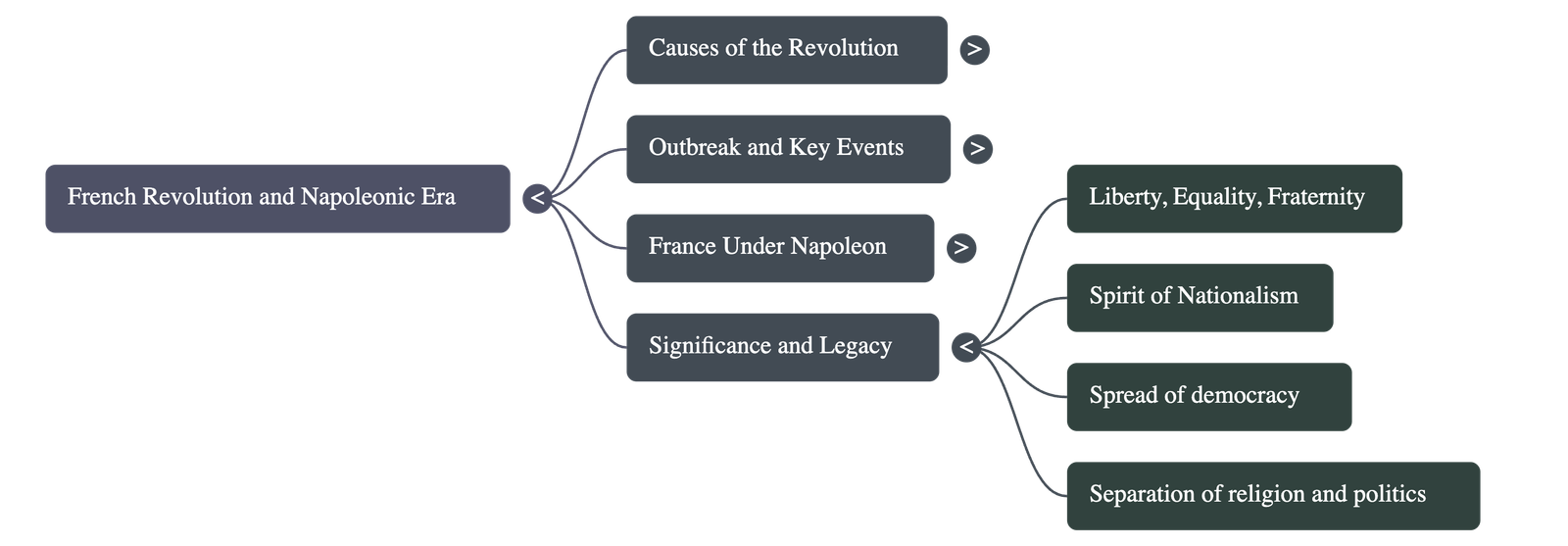
- The revolution popularized the ideals of liberty, equality, and fraternity.
- It separated religion from politics (secularism) and awakened a spirit of nationalism across Europe.
- Napoleon's rule contributed to the rise of nationalism in countries like Germany and Italy, eventually leading to their unification.
Analogy for Understanding: Think of the French Revolution like a pressure cooker. The social and economic injustices were the "heat" building up inside. The intellectuals were the ones pointing out that the "steam" needed to be released. The fall of the Bastille was the moment the "valve" blew off, leading to a complete change in how the "meal" (the government) was prepared. Napoleon later tried to organize that kitchen with his new set of rules (the Code of Laws), but his attempt to take over everyone else's kitchen led to his eventual removal.
Do checkout all questions & answers of this chapter.